4 Kingdoms (2 Kings), Chapter 3 (Codex Alexandrinus)
Introduction
4 Kingdoms (2 Kings) 3 in the Greek Old Testament (the Septuagint) as written in Codex Alexandrinus, a Greek Bible copied in the fifth century, probably in Egypt, and now in the British Library (Royal MS 1 D. V, the first of its four volumes). It is one of the three great early codices of the whole Greek Bible, with Codex Vaticanus and Codex Sinaiticus.
This entry meets the strict three-criteria standard of the Theosis Library:
- Manuscript scan: the pages of Codex Alexandrinus carrying this chapter (fol. 223r, fol. 223v), from the full-size photographic (autotype) facsimile published by the British Museum in 1879-1883, as digitised on the Internet Archive. The verse range of every page comes from the reduced photographic facsimile of 1930, which prints it beneath each plate, and the opening words of every page were read on the plate to confirm the page and the verse it begins with. Each section links to the page or pages that hold its verses. Folio numbers are those written at the head of each leaf and visible on the plates.
- Original text: Swete's edition, which here prints the text of Codex Vaticanus (Vat. gr. 1209), the base of his edition, and gives the readings of Alexandrinus only in his apparatus. The Greek column is therefore Vaticanus' text; where Alexandrinus differs, the plate shows what Alexandrinus reads.
- English translation: Sir Lancelot C. L. Brenton, The Septuagint Version of the Old Testament (1844; 1851 edition), a translation of the Greek, public domain, from the eBible.org text.
How was this verified? (Provenance)
Where on the image
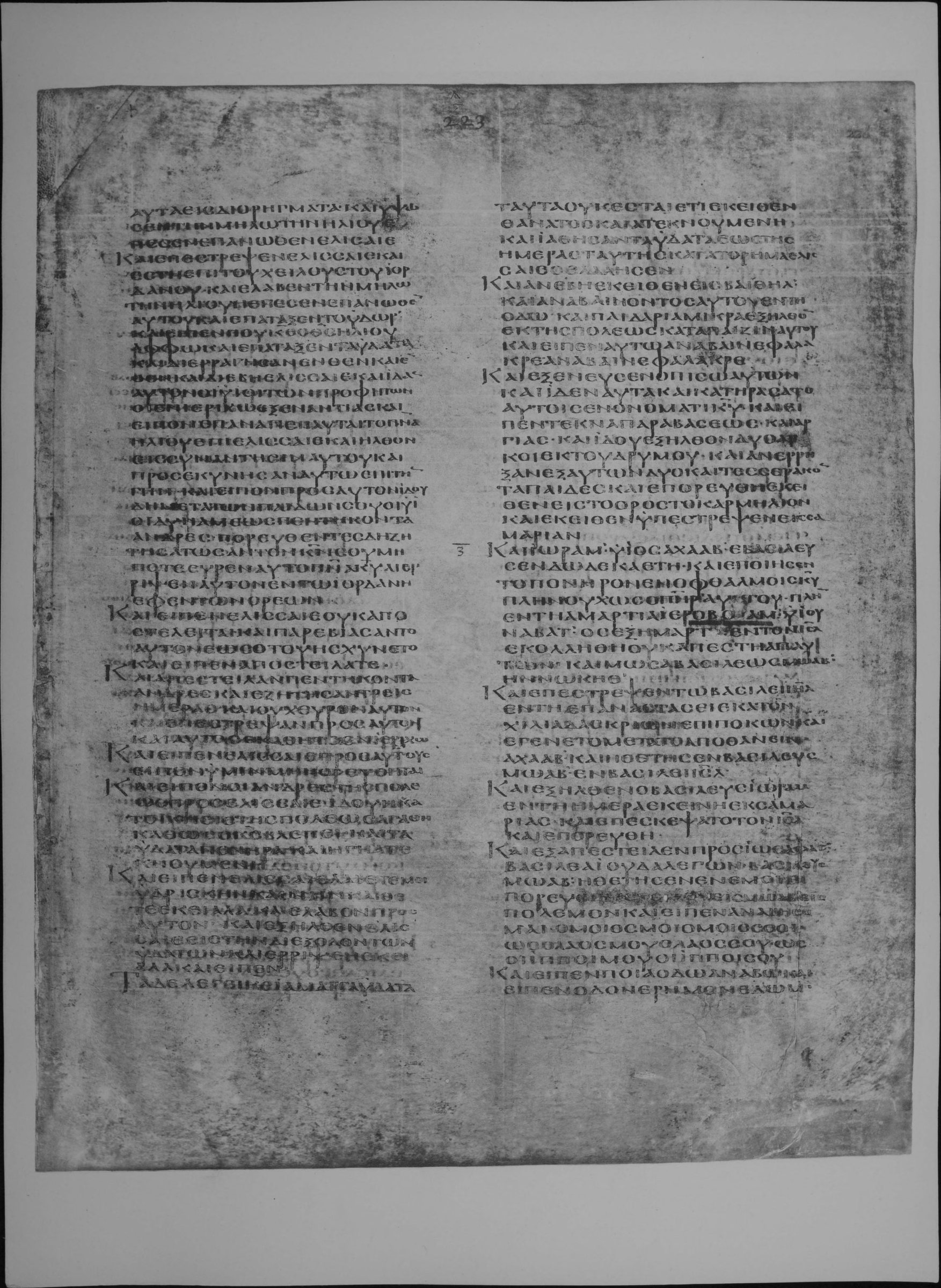
4 Kingdoms (2 Kings) 3:1-8 is on fol. 223r (full-size facsimile of 1879-83, Internet Archive codex-alexandrinus leaf 464). The 1930 reduced facsimile prints beneath this page: 2 Kings ii. 12-iii. 8. Checked on the plate: the page begins inside 4 Kingdoms (2 Kings) 2:12 (first words read: ΑΥΤΑ ΕΙΣ ΔΥΟ ΡΗΓΜΑΤΑ ΚΑΙ ΥΨΩΣΕΝ ΤΗΝ ΜΗΛΩΤΗΝ ΗΛΙΟΥ Η ΕΠΕΣΕΝ ΕΠΑΝΩΘΕΝ ΕΛΙΣΑΙΕ).
1Καὶ Ἰωρὰμ υἱὸς Ἀχαὰβ ἐβασίλευσεν ἐν Ἰσραὴλ ἐν ἔτει ὀκτωκαιδεκάτῳ Ἰωσαφὰθ βασιλεῖ Ἰούδα, καὶ ἐβασίλευσεν δώδεκα ἔτη. 2καὶ ἐποίησεν τὸ πονηρὸν ἐν ὀφθαλμοῖς Κυρίου, πλὴν οὐχ ὡς ὁ πατὴρ αὐτοῦ καὶ οὐχ ὡς ἡ μήτηρ αὐτοῦ, καὶ μετέστησεν τὰς στήλας τοῦ Βάαλ ἃς ἐποίησεν ὁ πατὴρ αὐτοῦ· 3πλὴν ἐν τῇ ἁμαρτίᾳ Ἰεροβοὰμ υἱοῦ Ναβὰτ ὃς ἐξήμαρτεν τὸν Ἰσραὴλ ἐκολλήθη, οὐκ ἀπέστη ἀπ᾽ αὐτῆς. 4Καὶ Μωσὰ βασιλεὺς Μωὰβ ἦν νωκήθ, καὶ ἐπέστρεψεν τῷ βασιλεῖ Ἰσραὴλ ἐν τῇ ἐπαναστάσει ἑκατὸν χιλιάδας ἀρνῶν καὶ ἑκατὸν χιλιάδας κριῶν ἐπιπόκων. 5καὶ ἐγένετο μετὰ τὸ ἀποθανεῖν Ἀχαὰβ καὶ ἠθέτησεν βασιλεὺς Μωὰβ ἐν βασιλεῖ Ἰσραήλ. 6καὶ ἐξῆλθεν ὁ βασιλεὺς Ἰωρὰμ ἐν τῇ ἡμέρᾳ ἐκείνῃ ἐκ Σαμαρείας καὶ ἐπεσκέψατο τὸν Ἰσραήλ· 7καὶ ἐπορεύθη καὶ ἐξαπέστειλεν πρὸς Ἰωσαφὰθ βασιλέα Ἰούδα λέγων Βασιλεὺς Μωὰβ ἠθέτησεν ἐν ἐμοί· εἰ πορεύσῃ μετ᾽ ἐμοῦ εἰς Μωὰβ εἰς πόλεμον; καὶ εἶπεν Ἀναβήσομαι· ὅμοιός μοι ὅμοιός σοι, ὡς ὁ λαός μου ὁ λαός σου, ὡς οἱ ἵπποι μου οἱ ἵπποι σου. 8καὶ εἶπεν Ποίᾳ ὁδῷ ἀναβῶ; καὶ εἶπεν Ὁδὸν ἔρημον Ἐδώμ.
1And Joram the son of Achaab began to reign in Israel in the eighteenth year of Josaphat king of Juda, and he reigned twelve years. 2And he did that which was evil in the sight of the Lord, only not as his father, nor as his mother: and he removed the pillars of Baal which his father had made. 3Only he adhered to the sin of Jeroboam the son of Nabat, who made Israel to sin; he departed not from it. 4And Mosa king of Moab was a sheep-master, and he rendered to the king of Israel in the beginning of the year, a hundred thousand lambs, and a hundred thousand rams, with the wool. 5And it came to pass, after the death of Achaab, that the king of Moab rebelled against the king of Israel. 6And king Joram went forth in that day out of Samaria, and numbered Israel. 7And he went and sent to Josaphat king of Juda, saying, The king of Moab has rebelled against me: wilt thou go with me against Moab to war? And he said, I will go up: thou art as I, I am as thou; as my people, so is thy people, as my horses, so are thy horses. 8And he said, What way shall I go up? and he said, The way of the wilderness of Edom.
Where on the image
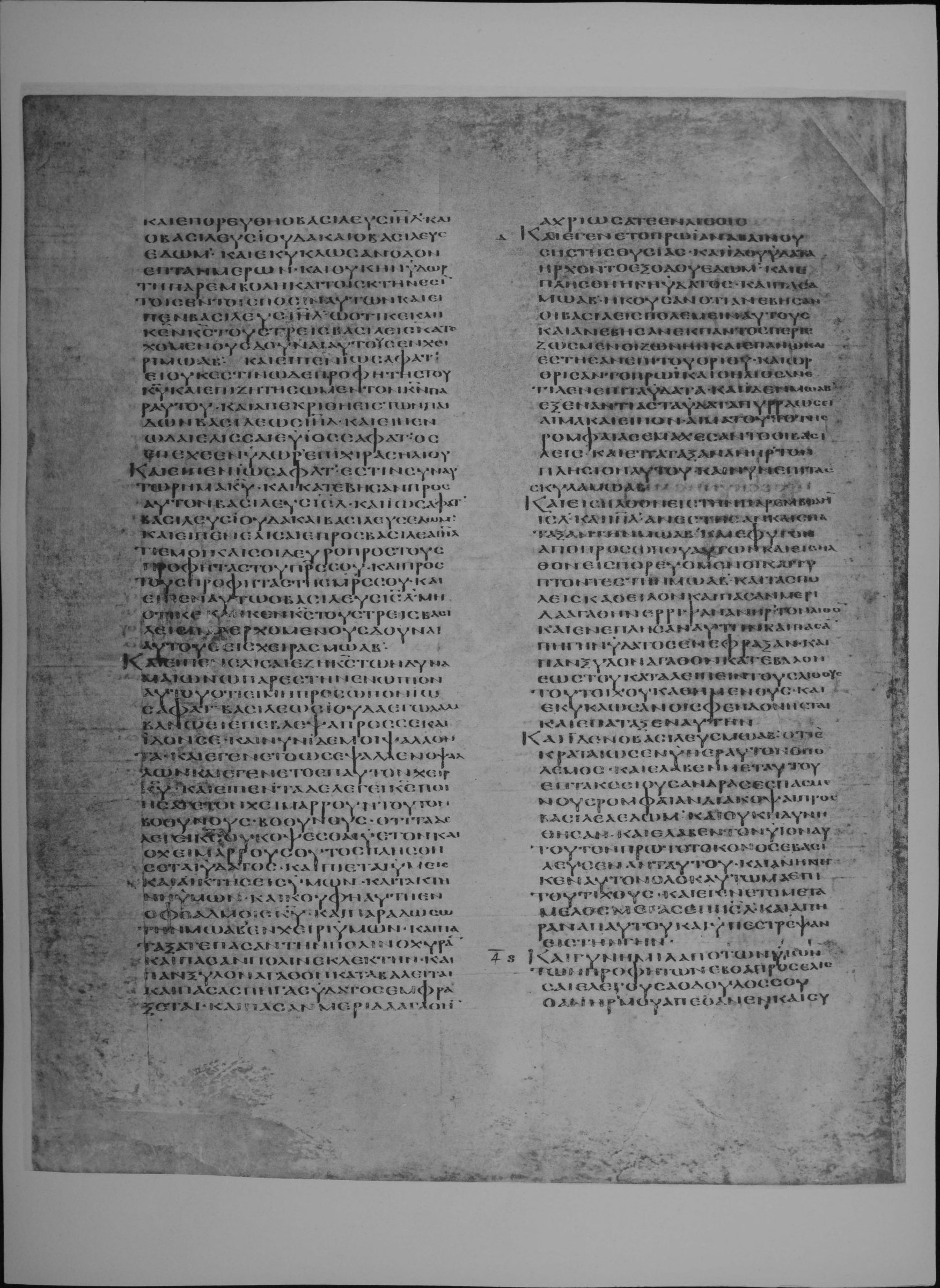
4 Kingdoms (2 Kings) 3:9-16 is on fol. 223v (full-size facsimile of 1879-83, Internet Archive codex-alexandrinus leaf 465). The 1930 reduced facsimile prints beneath this page: 2 Kings iii. 9-iv. 1. Checked on the plate: the page begins at the start of 4 Kingdoms (2 Kings) 3:9 (first words read: ΚΑΙ ΕΠΟΡΕΥΘΗ Ο ΒΑΣΙΛΕΥΣ ΙΣΡΑΗΛ ΚΑΙ Ο ΒΑΣΙΛΕΥΣ ΙΟΥΔΑ ΚΑΙ Ο ΒΑΣΙΛΕΥΣ ΕΔΩΜ).
9καὶ ἐπορεύθη ὁ βασιλεὺς Ἰσραὴλ καὶ ὁ βασιλεὺς Ἰούδα καὶ βασιλεὺς Ἐδώμ, καὶ ἐκύκλωσαν ὁδὸν ἑπτὰ ἡμερῶν· καὶ οὐκ ἦν ὕδωρ τῇ παρεμβολῇ καὶ τοῖς κτήνεσιν τοῖς ἐν τοῖς ποσὶν αὐτῶν. 10καὶ εἶπεν βασιλεὺς Ἰσραήλ Ὤ, ὅτι κέκληκεν Κύριος τοὺς τρεῖς βασιλεῖς παρερχομένους δοῦναι αὐτοὺς ἐν χειρὶ Μωάβ. 11καὶ εἶπεν Ἰωσαφάθ Οὐκ ἔστιν ὧδε προφήτης τοῦ κυρίου καὶ ἐπιζητήσωμεν τὸν κύριον παρ᾽ αὐτοῦ; καὶ ἀπεκρίθη εἷς τῶν παίδων βασιλέως Ἰσραὴλ καὶ εἶπεν Ὧδε Ἐλεισαῖε υἱὸς Ἰωσαφάθ, ὃς ἐπέχεεν ὕδωρ ἐπὶ χεῖρας Ἠλειού. 12καὶ εἶπεν Ἰωσαφάθ Ἔστιν αὐτῷ ῥῆμα· καὶ κατέβη πρὸς αὐτὸν βασιλεὺς Ἰσραὴλ καὶ Ἰωσαφὰθ βασιλεὺς Ἰούδα καὶ βασιλεὺς Ἐδώμ. 13καὶ εἶπεν Ἐλεισαῖε πρὸς βασιλέα Ἰσραήλ Τί ἐμοὶ καὶ σοί; δεῦρο πρὸς τοὺς προφήτας τοῦ πατρός σου. καὶ εἶπεν αὐτῷ ὁ βασιλεὺς Ἰσραήλ Μή, ὅτι κέκληκεν Κύριος τοὺς τρεῖς βασιλεῖς τοῦ παραδοῦναι αὐτοὺς εἰς χεῖρας Μωάβ. 14καὶ εἶπεν Ἐλεισαῖε Ζῇ Κύριος τῶν δυνάμεων ᾧ παρέστην ἐνώπιον αὐτοῦ, ὅτι εἰ μὴ πρόσωπον Ἰωσαφὰθ βασιλέως Ἰούδα ἐγὼ λαμβάνω, ἦ ἐπέβλεψα πρὸς σὲ καὶ εἶδόν σε· 15καὶ νῦν λάβε μοι ψάλλοντα. καὶ ἐγένετο ὡς ἔψαλλεν ὁ ψάλλων, καὶ ἐγένετο ἐπ᾽ αὐτὸν χεὶρ Κυρίου· 16καὶ εἶπεν Τάδε λέγει Κύριος Ποιήσατε τὸν χειμάρρουν τοῦτον βοθύνους βοθύνους.
9And the king of Israel went, and the king of Juda, and the king of Edom: and they fetched a compass of seven days' journey; and there was no water for the army, and for the cattle that went with them. 10And the king of Israel said, Alas! that the Lord should have called the three kings on their way, to give them into the hand of Moab. 11And Josaphat said, Is there not here a prophet of the Lord, that we may enquire of the Lord by him? And one of the servants of the king of Israel answered and said, There is here Elisaie son of Saphat, who poured water on the hands of Eliu. 12And Josaphat said, He has the word of the Lord. And the king of Israel, and Josaphat king of Juda, and the king of Edom, went down to him. 13And Elisaie said to the king of Israel, What have I to do with thee? go to the prophets of thy father, and the prophets of thy mother. And the king of Israel said to him, Has the Lord called the three kings to deliver them into the hands of Moab? 14And Elisaie said, As the Lord of hosts before whom I stand lives, unless I regarded the presence of Josaphat the king of Juda, I would not have looked on thee, nor seen thee. 15And now fetch me a harper. And it came to pass, as the harper harped, that the hand of the Lord came upon him. 16And he said, Thus saith the Lord, Make this valley full of trenches.
Where on the image
4 Kingdoms (2 Kings) 3:17-24 is on fol. 223v (full-size facsimile of 1879-83, Internet Archive codex-alexandrinus leaf 465). The 1930 reduced facsimile prints beneath this page: 2 Kings iii. 9-iv. 1. Checked on the plate: the page begins at the start of 4 Kingdoms (2 Kings) 3:9 (first words read: ΚΑΙ ΕΠΟΡΕΥΘΗ Ο ΒΑΣΙΛΕΥΣ ΙΣΡΑΗΛ ΚΑΙ Ο ΒΑΣΙΛΕΥΣ ΙΟΥΔΑ ΚΑΙ Ο ΒΑΣΙΛΕΥΣ ΕΔΩΜ).
17ὅτι τάδε λέγει Κύριος Οὐκ ὄψεσθε πνεῦμα καὶ οὐκ ὄψεσθε ὑετόν, καὶ ὁ χειμάρρους οὗτος πλησθήσεται ὕδατος, καὶ πίεσθε ὑμεῖς καὶ αἱ κτήσεις ὑμῶν καὶ τὰ κτήνη ὑμῶν. 18καὶ κοῦφος καὶ αὕτη ἐν ὀφθαλμοῖς Κυρίου· καὶ παραδώσω τὴν Μωὰβ ἐν χειρὶ ὑμῶν. 19καὶ πατάξετε πᾶσαν πόλιν ὀχυράν, καὶ πᾶν ξύλον ἀγαθὸν καταβαλεῖτε, καὶ πάσας πηγὰς ὕδατος ἐμφράξατε, καὶ πᾶσαν μερίδα ἀγαθὴν ἀχρειώσετε ἐν λίθοις. 20καὶ ἐγένετο τὸ πρωὶ ἀναβαινούσης τῆς θυσίας, καὶ ἰδοὺ ὕδατα ἤρχοντο ἐξ ὁδοῦ Ἐδώμ, καὶ ἐπλήσθη ἡ γῆ ὕδατος. 21καὶ πᾶσα Μωὰβ ἤκουσαν ὅτι ἀνέβησαν οἱ βασιλεῖς πολεμεῖν αὐτούς· καὶ ἀνεβόησαν ἐκ παντὸς περιεζωσμένοι ζώνην καὶ εἶπον Ὤ. καὶ ἔστησαν ἐπὶ τοῦ ὁρίου. 22καὶ ὤρθρισαν τὸ πρωί, καὶ ὁ ἥλιος ἀνέτειλεν ἐπὶ τὰ ὕδατα· καὶ εἶδεν Μωὰβ ἐξ ἐναντίας τὰ ὕδατα πυρρὰ ὡσεὶ αἷμα, 23καὶ εἶπαν Αἷμα τοῦτο τῆς ῥομφαίας· ἐμαχέσαντο οἱ βασιλεῖς, καὶ ἐπάταξεν ἀνὴρ τὸν πλησίον αὐτοῦ· καὶ νῦν ἐπὶ τὰ σκῦλα, Μωάβ. 24καὶ εἰσῆλθον εἰς τὴν παρεμβολὴν Ἰσραήλ· καὶ Ἰσραὴλ ἀνέστησαν καὶ ἐπάταξαν τὴν Μωάβ, καὶ ἔφυγον ἀπὸ προσώπου αὐτῶν. καὶ εἰσῆλθον εἰσπορευόμενοι καὶ τύπτοντες τὴν Μωάβ,
17For thus saith the Lord, Ye shall not see wind, neither shall ye see rain, yet this valley shall be filled with water, and ye, and your flocks, and your cattle shall drink. 18And this is a light thing in the eyes of the Lord: I will also deliver Moab into your hand. 19And ye shall smite every strong city, and ye shall cut down every good tree, and ye shall stop all wells of water, and spoil every good piece of land with stones. 20And it came to pass in the morning, when the sacrifice was offered, that, behold! waters came from the way of Edom, and the land was filled with water. 21And all Moab heard that the three kings were come up to fight against them; and they cried out on every side, even all that were girt with a girdle, and they said, Ho! and stood upon the border. 22And they rose early in the morning, and the sun rose upon the waters, and Moab saw the waters on the opposite side red as blood. 23And they said, This is the blood of the sword; and the kings have fought, and each man has smitten his neighbour; now then to the spoils, Moab. 24And they entered into the camp of Israel; and Israel arose and smote Moab, and they fled from before them; and they went on and smote Moab as they went.
Where on the image
4 Kingdoms (2 Kings) 3:25-27 is on fol. 223v (full-size facsimile of 1879-83, Internet Archive codex-alexandrinus leaf 465). The 1930 reduced facsimile prints beneath this page: 2 Kings iii. 9-iv. 1. Checked on the plate: the page begins at the start of 4 Kingdoms (2 Kings) 3:9 (first words read: ΚΑΙ ΕΠΟΡΕΥΘΗ Ο ΒΑΣΙΛΕΥΣ ΙΣΡΑΗΛ ΚΑΙ Ο ΒΑΣΙΛΕΥΣ ΙΟΥΔΑ ΚΑΙ Ο ΒΑΣΙΛΕΥΣ ΕΔΩΜ).
25καὶ τὰς πόλεις καθεῖλον· καὶ πᾶσαν μερίδα ἀγαθήν, ἔρριψαν ἀνὴρ τὸν λίθον καὶ ἐνέπλησαν αὐτήν, καὶ πᾶσαν πηγὴν ἐνέφραξαν, καὶ πᾶν ξύλον ἀγαθὸν κατέβαλον ἕως τοῦ καταλιπεῖν τοὺς λίθους τοῦ τοίχου καθῃρημένους· καὶ ἐκύκλευσαν οἱ σφενδονῆται καὶ ἐπάταξαν αὐτήν. 26καὶ εἶδεν ὁ βασιλεὺς Μωὰβ ὅτι ἐκραταίωσεν ὑπὲρ αὐτὸν ὁ πόλεμος, καὶ ἔλαβεν μεθ᾽ ἑαυτοῦ ἑπτακοσίους ἄνδρας ἐσπασμένους ῥομφαίαν διακόψαι πρὸς βασιλέα Ἐδώμ· καὶ οὐκ ἠδυνήθησαν. 27καὶ ἔλαβεν τὸν υἱὸν αὐτοῦ τὸν πρωτότοκον, ὃς ἐβασίλευσεν ἀντ᾽ αὐτοῦ, καὶ ἀνήνεγκεν αὐτὸν ὁλοκαύτωμα ἐπὶ τοῦ τείχους· καὶ ἐγένετο μετάμελος μέγας ἐπὶ Ἰσραήλ. καὶ ἀπῆραν ἀπ᾽ αὐτοῦ καὶ ἐπέστρεψαν εἰς τὴν γῆν.
25And they razed the cities, and cast every man his stone on every good piece of land and filled it; and they stopped every well, and cut down every good tree, until they left only the stones of the wall cast down; and the slingers compassed the land, and smote it. 26And the king of Moab saw that the battle prevailed against him; and he took with him seven hundred men that drew sword, to cut through to the king of Edom: and they could not. 27And he took his eldest son whom he had designed to reign in his stead, and offered him up for a whole-burnt-offering on the walls. And there was a great indignation against Israel; and they departed from him, and returned to their land.
Cite
Sources
- Source: Codex Alexandrinus (British Library Royal MS 1 D. V) via the British Museum photographic facsimiles of 1879-83 and 1930 (Internet Archive) + Swete's Septuagint + Brenton's English (holding institution)
- Critical edition: H. B. Swete, The Old Testament in Greek according to the Septuagint (1909)
← previous · → next · v cycle view · l back to library