4 Kingdoms (2 Kings), Chapter 4 (Codex Alexandrinus)
Introduction
4 Kingdoms (2 Kings) 4 in the Greek Old Testament (the Septuagint) as written in Codex Alexandrinus, a Greek Bible copied in the fifth century, probably in Egypt, and now in the British Library (Royal MS 1 D. V, the first of its four volumes). It is one of the three great early codices of the whole Greek Bible, with Codex Vaticanus and Codex Sinaiticus.
This entry meets the strict three-criteria standard of the Theosis Library:
- Manuscript scan: the pages of Codex Alexandrinus carrying this chapter (fol. 223v, fol. 224r, fol. 224v, fol. 225r), from the full-size photographic (autotype) facsimile published by the British Museum in 1879-1883, as digitised on the Internet Archive. The verse range of every page comes from the reduced photographic facsimile of 1930, which prints it beneath each plate, and the opening words of every page were read on the plate to confirm the page and the verse it begins with. Each section links to the page or pages that hold its verses. Folio numbers are those written at the head of each leaf and visible on the plates.
- Original text: Swete's edition, which here prints the text of Codex Vaticanus (Vat. gr. 1209), the base of his edition, and gives the readings of Alexandrinus only in his apparatus. The Greek column is therefore Vaticanus' text; where Alexandrinus differs, the plate shows what Alexandrinus reads.
- English translation: Sir Lancelot C. L. Brenton, The Septuagint Version of the Old Testament (1844; 1851 edition), a translation of the Greek, public domain, from the eBible.org text.
How was this verified? (Provenance)
Where on the image
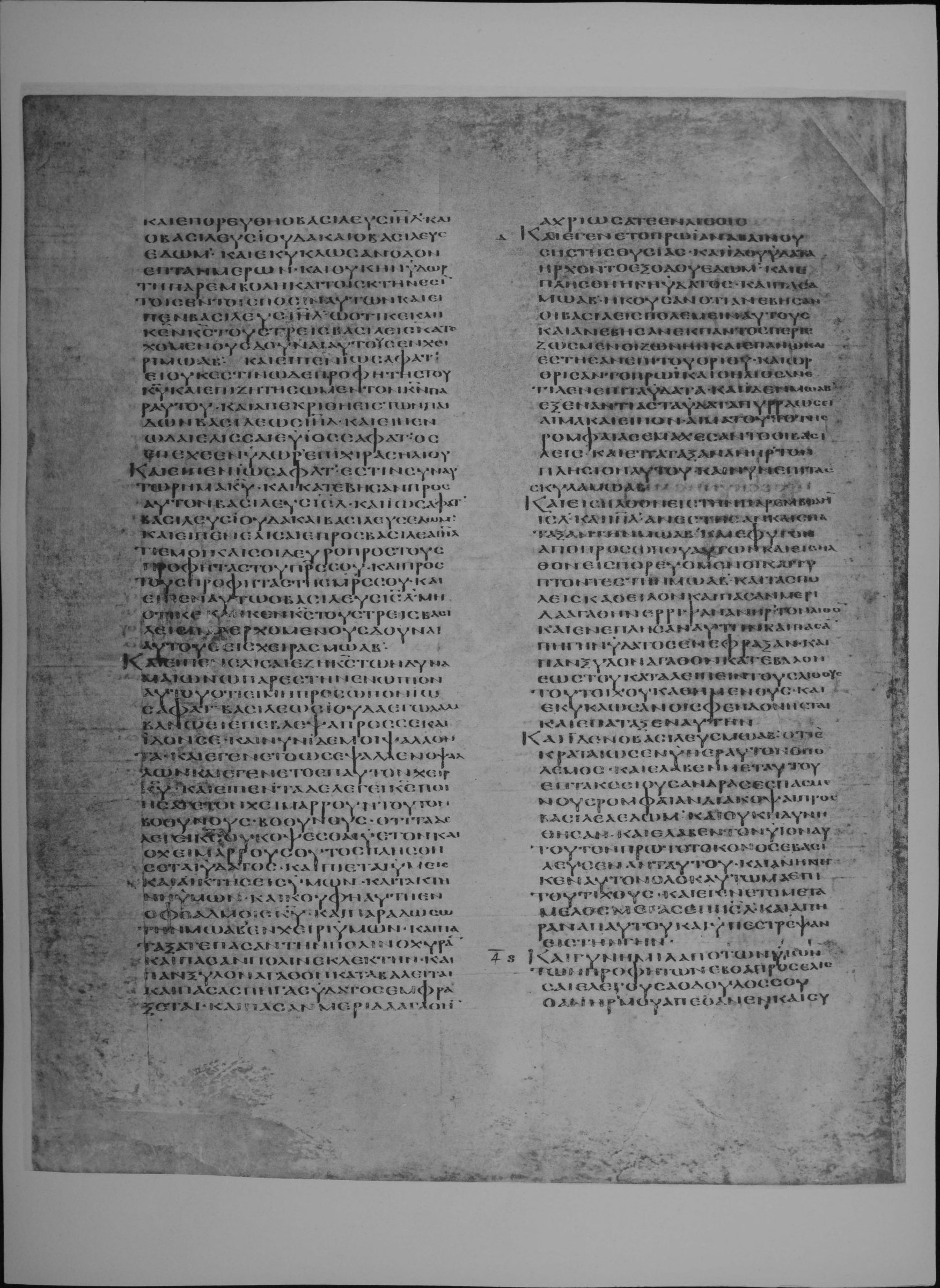
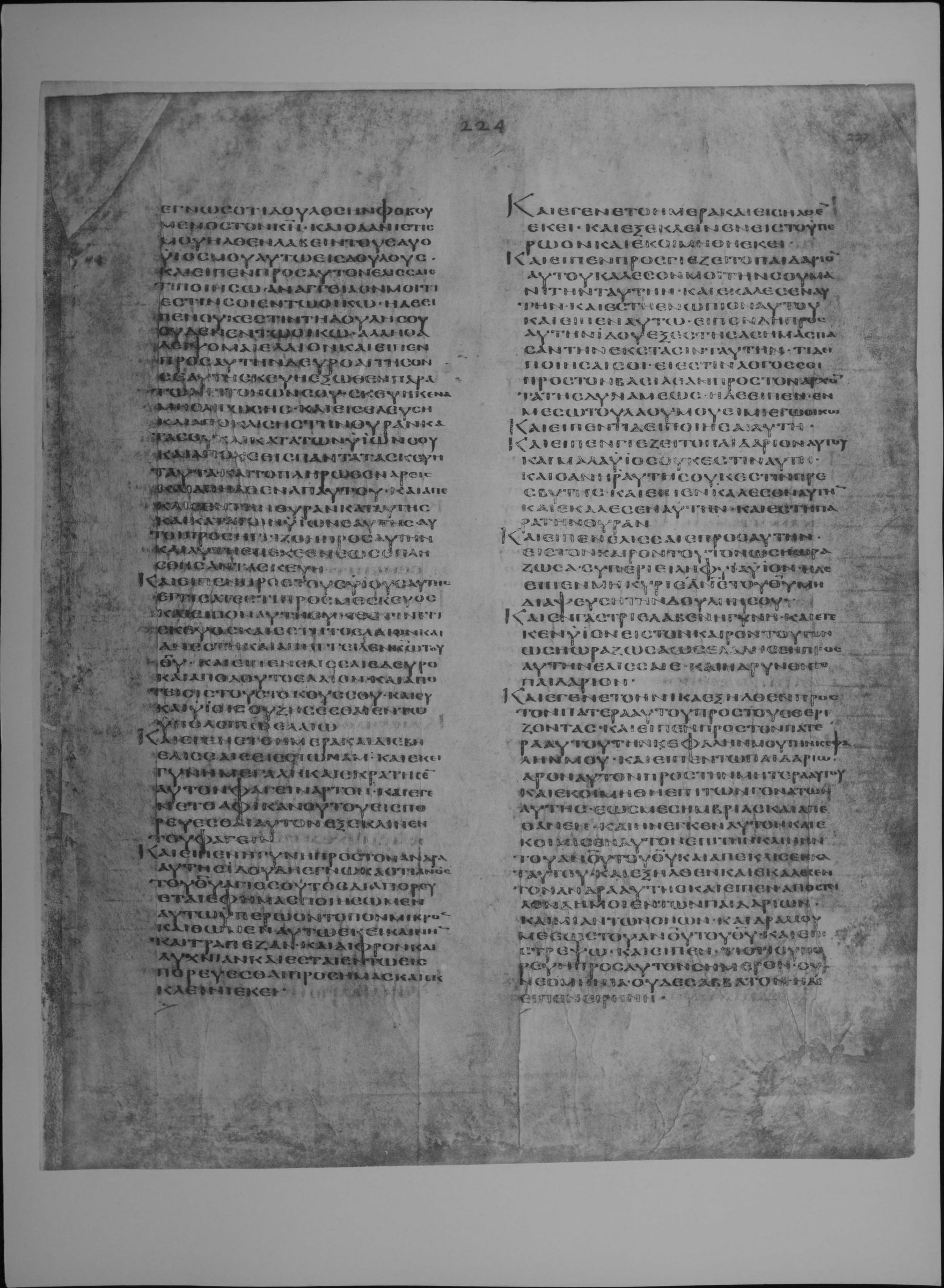
4 Kingdoms (2 Kings) 4:1 is on fol. 223v (full-size facsimile of 1879-83, Internet Archive codex-alexandrinus leaf 465). The 1930 reduced facsimile prints beneath this page: 2 Kings iii. 9-iv. 1. Checked on the plate: the page begins at the start of 4 Kingdoms (2 Kings) 3:9 (first words read: ΚΑΙ ΕΠΟΡΕΥΘΗ Ο ΒΑΣΙΛΕΥΣ ΙΣΡΑΗΛ ΚΑΙ Ο ΒΑΣΙΛΕΥΣ ΙΟΥΔΑ ΚΑΙ Ο ΒΑΣΙΛΕΥΣ ΕΔΩΜ). 4 Kingdoms (2 Kings) 4:1-8 is on fol. 224r (full-size facsimile of 1879-83, Internet Archive codex-alexandrinus leaf 466). The 1930 reduced facsimile prints beneath this page: 2 Kings iv. 1-23. Checked on the plate: the page begins inside 4 Kingdoms (2 Kings) 4:1 (first words read: ΣΥ ΕΓΝΩΣ ΟΤΙ ΔΟΥΛΟΣ ΗΝ ΦΟΒΟΥΜΕΝΟΣ ΤΟΝ ΚΝ ΚΑΙ Ο ΔΑΝΙΣΤΗΣ ΗΛΘΕΝ ΛΑΒΕΙΝ ΤΟΥΣ ΔΥΟ ΥΙΟΥΣ ΜΟΥ).
1Καὶ γυνὴ μία ἀπὸ τῶν υἱῶν τῶν προφητῶν ἐβόα πρὸς Ἐλεισαῖε λέγουσα Ὁ δοῦλός σου ὁ ἀνήρ μου ἀπέθανεν, καὶ σὺ ἔγνως ὅτι δοῦλος ἦν φοβούμενος τὸν κύριον· καὶ ὁ δανειστὴς ἦλθε λαβεῖν τοὺς δύο υἱούς μου ἑαυτῷ εἰς δούλους. 2καὶ εἶπεν Ἐλεισαῖε Τί ποιήσω σοι; τί ἔστιν σοι ἐν τῷ οἴκῳ; ἡ δὲ εἶπεν Οὐκ ἔστιν τῇ δούλῃ σου οὐθὲν ὅτι ἀλλ᾽ ἢ ὃ ἀλείψομαι ἔλαιον. 3καὶ εἶπεν πρὸς αὐτήν Δεῦρο αἴτησον σαυτῇ σκεύη ἔξωθεν παρὰ πάντων τῶν γειτόνων, σκεύη κενά· μὴ ὀλιγώσῃς. 4καὶ εἰσελεύσῃ καὶ ἀποκλείσεις τὴν θύραν κατὰ σοῦ καὶ κατὰ τῶν υἱῶν σου, καὶ ἀποχεεῖς εἰς τὰ σκεύη ταῦτα· καὶ τὸ πληρωθὲν ἀρεῖς. 5καὶ ἀπῆλθεν παρ᾽ αὐτοῦ, καὶ ἀπέκλεισεν τὴν θύραν κατ᾽ αὐτῆς καὶ κατὰ τῶν υἱῶν αὐτῆς· αὐτοὶ προσήγγιζον πρὸς αὐτήν, καὶ αὐτὴ ἐπέχεεν ἕως ἐπλήσθησαν τὰ σκεύη. 6καὶ εἶπεν πρὸς τοὺς υἱοὺς αὐτῆς Ἐγγίσατε ἔτι πρὸς μὲ τὸ σκεῦος· καὶ εἶπον αὐτῇ Οὐκ ἔστιν ἔτι σκεῦος· καὶ ἔστη τὸ ἔλαιον. 7καὶ ἦλθεν καὶ ἀπήγγειλεν τῷ ἀνθρώπῳ τοῦ θεοῦ· καὶ εἶπεν Ἐλεισαῖε Δεῦρο καὶ ἀπόδου τὸ ἔλαιον καὶ ἀποτίσεις τοὺς τόκους σου, καὶ σὺ καὶ οἱ υἱοί σου ζήσεσθε ἐν τῷ ἐπιλοίπῳ ἐλαίῳ. 8Καὶ ἐγένετο ἡμέρα καὶ διέβη Ἐλεισαῖε εἰς Σουμάν, καὶ ἐκεῖ γυνὴ μεγάλη καὶ ἐκράτησεν αὐτὸν φαγεῖν ἄρτον· καὶ ἐγένετο ἀφ᾽ ἱκανοῦ τοῦ εἰσπορεύεσθαι αὐτὸν ἐξέκλινεν τοῦ ἐκεῖ φαγεῖν.
1And one of the wives of the sons of the prophets cried to Elisaie, saying, Thy servant my husband is dead; and thou knowest that thy servant feared the Lord: and the creditor is come to take my two sons to be his servants. 2And Elisaie said, What shall I do for thee? tell me what thou hast in the house. And she said, Thy servant has nothing in the house, except oil wherewith I anoint myself. 3And he said to her, Go, borrow for thyself vessels without of all thy neighbours, even empty vessels; borrow not a few. 4And thou shalt go in and shut the door upon thee and upon thy sons, and thou shalt pour forth into these vessels, and remove that which is filled. 5And she departed from him, and shut the door upon herself and upon her sons: they brought the vessels near to her, and she poured in until the vessels were filled. 6And she said to her sons, Bring me yet a vessel. And they said to her, There is not a vessel more. And the oil stayed. 7And she came and told the man of God: and Elisaie said, Go, and sell the oil, and thou shalt pay thy debts, and thou and thy sons shall live of the remaining oil. 8And a day came, when Elisaie passed over to Soman, and there was a great lady there, and she constrained him to eat bread: and it came to pass as often as he went into the city, that he turned aside to eat there.
Where on the image
4 Kingdoms (2 Kings) 4:9-16 is on fol. 224r (full-size facsimile of 1879-83, Internet Archive codex-alexandrinus leaf 466). The 1930 reduced facsimile prints beneath this page: 2 Kings iv. 1-23. Checked on the plate: the page begins inside 4 Kingdoms (2 Kings) 4:1 (first words read: ΣΥ ΕΓΝΩΣ ΟΤΙ ΔΟΥΛΟΣ ΗΝ ΦΟΒΟΥΜΕΝΟΣ ΤΟΝ ΚΝ ΚΑΙ Ο ΔΑΝΙΣΤΗΣ ΗΛΘΕΝ ΛΑΒΕΙΝ ΤΟΥΣ ΔΥΟ ΥΙΟΥΣ ΜΟΥ).
9καὶ εἶπεν ἡ γυνὴ πρὸς τὸν ἄνδρα αὐτῆς Ἰδοὺ δὴ ἔγνων ὅτι ἄνθρωπος τοῦ θεοῦ ἅγιος οὗτος διαπορεύεται ἐφ᾽ ἡμᾶς διὰ παντός. 10ποιήσωμεν δὴ αὐτῷ ὑπερῷον, τόπον μικρόν, καὶ θῶμεν αὐτῷ ἐκεῖ κλίνην καὶ τράπεζαν καὶ δίφρον καὶ λυχνίαν· καὶ ἔσται ἐν τῷ εἰσπορεύεσθαι πρὸς ἡμᾶς καὶ ἐκκλινεῖ ἐκεῖ. 11καὶ ἐγένετο ἡμέρα καὶ εἰσῆλθεν ἐκεῖ, καὶ ἐξέκλινεν εἰς τὸ ὑπερῷον καὶ ἐκοιμήθη ἐκεῖ. 12καὶ εἶπεν πρὸς Γιεζεὶ τὸ παιδάριον αὐτοῦ Κάλεσόν μοι τὴν Σωμανεῖτιν ταύτην· καὶ ἐκάλεσεν αὐτήν, καὶ ἔστη ἐνώπιον αὐτοῦ. 13καὶ εἶπεν αὐτῷ Εἰπὸν δὴ πρὸς αὐτήν Ἰδοὺ ἐξέστησας ἡμῖν τὴν πᾶσαν ἔνκτησιν· τί δεῖ ποιῆσαί σοι; εἰ ἔστιν λόγος σοι πρὸς τὸν βασιλέα ἢ πρὸς τὸν ἄρχοντα τῆς δυνάμεως; ἡ δὲ εἶπεν Ἐν μέσῳ τοῦ λαοῦ ἐγώ εἰμι οἰκῶ. 14καὶ εἶπεν Τί δεῖ ποιῆσαι αὐτῇ; καὶ εἶπεν Γιεζεὶ τὸ παιδάριον αὐτοῦ Καὶ μάλα υἱὸς οὐκ ἔστιν αὐτῇ, καὶ ὁ ἀνὴρ αὐτῆς πρεσβύτης. 15καὶ ἐκάλεσεν αὐτήν, καὶ ἔστη παρὰ τὴν θύραν. 16καὶ εἶπεν Ἐλεισαῖε πρὸς αὐτήν Εἰς τὸν καιρὸν τοῦτον, ὡς ἡ ὥρα ζῶσα, σὺ περιειληφυῖα υἱόν· ἡ δὲ εἶπεν Μή, κύριε μου, μὴ διαψεύσῃ τὴν δούλην σου.
9And the woman said to her husband, See now, I know that this is a holy man of God who comes over continually to us. 10Let us now make for him an upper chamber, a small place; and let us put there for him a bed, and a table, and a stool, and a candlestick: and it shall come to pass that when he comes in to us, he shall turn in thither. 11And a day came, and he went in thither, and turned aside into the upper chamber, and lay there. 12And he said to Giezi his servant, Call me this Somanite. And he called her, and she stood before him. 13And he said to him, Say now to her, Behold, thou hast taken all this trouble for us; what should I do for thee? Hast thou any request to make to the king, or to the captain of the host? And she said, I dwell in the midst of my people. 14And he said to Giezi, What must we do for her? and Giezi his servant said, Indeed she has no son, and her husband is old. 15And he called her, and she stood by the door. 16And Elisaie said to her, At this time next year, as the season is, thou shalt be alive, and embrace a son. And she said, Nay, my lord, do not lie to thy servant.
Where on the image
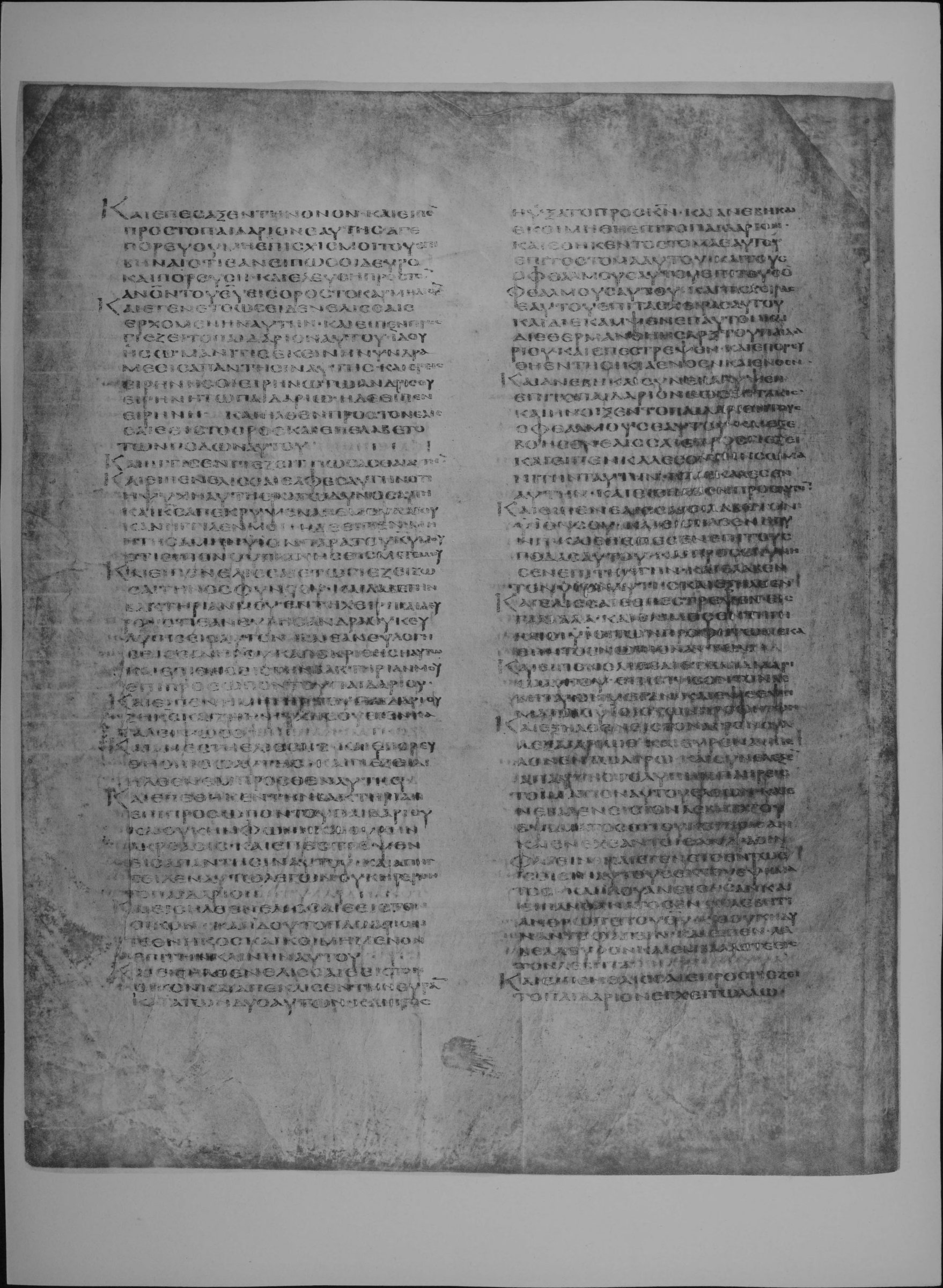
4 Kingdoms (2 Kings) 4:17-23 is on fol. 224r (full-size facsimile of 1879-83, Internet Archive codex-alexandrinus leaf 466). The 1930 reduced facsimile prints beneath this page: 2 Kings iv. 1-23. Checked on the plate: the page begins inside 4 Kingdoms (2 Kings) 4:1 (first words read: ΣΥ ΕΓΝΩΣ ΟΤΙ ΔΟΥΛΟΣ ΗΝ ΦΟΒΟΥΜΕΝΟΣ ΤΟΝ ΚΝ ΚΑΙ Ο ΔΑΝΙΣΤΗΣ ΗΛΘΕΝ ΛΑΒΕΙΝ ΤΟΥΣ ΔΥΟ ΥΙΟΥΣ ΜΟΥ). 4 Kingdoms (2 Kings) 4:24 is on fol. 224v (full-size facsimile of 1879-83, Internet Archive codex-alexandrinus leaf 467). The 1930 reduced facsimile prints beneath this page: 2 Kings iv. 24-41. Checked on the plate: the page begins at the start of 4 Kingdoms (2 Kings) 4:24 (first words read: ΚΑΙ ΕΠΕΣΑΞΕΝ ΤΗΝ ΟΝΟΝ ΚΑΙ ΕΙΠΕΝ ΠΡΟΣ ΤΟ ΠΑΙΔΑΡΙΟΝ ΑΥΤΗΣ ΑΠΕ ΠΟΡΕΥΟΥ).
17καὶ ἐν γαστρὶ ἔλαβεν ἡ γυνή, καὶ ἔτεκεν υἱὸν εἰς τὸν καιρὸν τοῦτον ὡς ἡ ὥρα ζῶσα, ὡς ἐλάλησεν πρὸς αὐτὴν Ἐλεισαῖε. 18καὶ ἡδρύνθη τὸ παιδάριον· καὶ ἐγένετο ἡνίκα ἐξῆλθεν πρὸς τὸν πατέρα αὐτοῦ πρὸς τοὺς θερίζοντας, 19καὶ εἶπεν πρὸς τὸν πατέρα αὐτοῦ Τὴν κεφαλήν μου, τὴν κεφαλήν μου· καὶ εἶπεν τῷ παιδαρίῳ Ἆρον αὐτὸν πρὸς τὴν μητέρα αὐτοῦ. 20καὶ ἐκοιμήθη ἐπὶ τῶν γονάτων αὐτῆς ἕως μεσημβρίας, καὶ ἀπέθανεν. 21καὶ ἀνήνεγκεν αὐτὸν καὶ ἐκοίμισεν αὐτὸν ἐπὶ τὴν κλίνην τοῦ ἀνθρώπου τοῦ θεοῦ, καὶ ἀπέκλεισεν κατ᾽ αὐτοῦ καὶ ἐξῆλθεν. 22καὶ ἐκάλεσεν τὸν ἄνδρα αὐτῆς καὶ εἶπεν Ἀπόστειλον δή μοι ἓν τῶν παιδαρίων καὶ μίαν τῶν ὄνων, καὶ δραμοῦμαι ἕως τοῦ ἀνθρώπου τοῦ θεοῦ καὶ ἐπιστρέψω. 23καὶ εἶπεν Τί ὅτι σὺ πορεύῃ πρὸς αὐτὸν σήμερον; οὐ νεομηνία οὐδὲ σάββατον· ἡ δὲ εἶπεν Εἰρήνη. 24καὶ ἐπέσαξεν τὴν ὄνον, καὶ εἶπεν πρὸς τὸ παιδάριον αὐτῆς Ἄγε πορεύου, μὴ ἐπίσχῃς μοι τοῦ ἐπιβῆναι, ὅτι ἐὰν εἴπω σοι
17And the woman conceived, and bore a son at the very time, as the season was, being alive, as Elisaie said to her. 18And the child grew: and it came to pass when he went out to his father to the reapers, 19that he said to his father, My head, my head. And his father said to a servant, Carry him to his mother. 20And he carried him to his mother, and he lay upon her knees till noon, and died. 21And she carried him up and laid him on the bed of the man of God; and she shut the door upon him, and went out. 22And she called her husband, and said, Send now for me one of the young men, and one of the asses, and I will ride quickly to the man of God, and return. 23And he said, Why art thou going to him to-day? It is neither new moon, nor the sabbath. And she said, It is well. 24And she saddled the ass, and said to her servant, Be quick, proceed: spare not on my account to ride, unless I shall tell thee. Go, and thou shalt proceed, and come to the man of God to mount Carmel.
Where on the image
4 Kingdoms (2 Kings) 4:25-32 is on fol. 224v (full-size facsimile of 1879-83, Internet Archive codex-alexandrinus leaf 467). The 1930 reduced facsimile prints beneath this page: 2 Kings iv. 24-41. Checked on the plate: the page begins at the start of 4 Kingdoms (2 Kings) 4:24 (first words read: ΚΑΙ ΕΠΕΣΑΞΕΝ ΤΗΝ ΟΝΟΝ ΚΑΙ ΕΙΠΕΝ ΠΡΟΣ ΤΟ ΠΑΙΔΑΡΙΟΝ ΑΥΤΗΣ ΑΠΕ ΠΟΡΕΥΟΥ).
25Δεῦρο καὶ πορεύσῃ, καὶ ἐλεύσῃ πρὸς τὸν ἄνθρωπον τοῦ θεοῦ εἰς τὸ ὄρος τὸ Καρμήλιον. καὶ ἐγένετο ὡς εἶδεν Ἐλεισαῖε ἐρχομένην αὐτήν, καὶ εἶπεν πρὸς Γιεζεὶ τὸ παιδάριον αὐτοῦ Ἰδοὺ δὴ ἡ Σωμανεῖτις ἐκείνη. 26νῦν δράμε εἰς ἀπαντὴν αὐτῆς καὶ ἐρεῖς Ἢ εἰρήνη σοι; ἢ εἰρήνη τῷ ἀνδρί σου; ἢ εἰρήνη τῷ παιδαρίῳ; ἡ δὲ εἶπεν Εἰρήνη. 27καὶ ἦλθεν πρὸς Ἐλεισαῖε εἰς τὸ ὄρος καὶ ἐπελάβετο τῶν ποδῶν αὐτοῦ· καὶ ἤγγισεν Γιεζεὶ ἀπεώσασθαι αὐτήν. καὶ εἶπεν Ἐλεισαῖε Ἄφες αὐτήν· ὅτι ἡ ψυχὴ αὐτῆς κατώδυνος αὐτῇ, καὶ Κύριος ἀπέκρυψεν ἀπ᾽ ἐμοῦ καὶ σοῦ καὶ οὐκ ἀνήγγειλέν μοι. 28ἡ δὲ εἶπεν Μὴ ᾐτησάμην υἱὸν παρὰ τοῦ κυρίου μου; ὅτι οὐκ εἶπα Οὐ πλανήσεις μετ᾽ ἐμοῦ; 29καὶ εἶπεν Ἐλεισαῖε τῷ Γιεζεί Ζῶσαι τὴν ὀσφύν σου καὶ λάβε τὴν βακτηρίαν μου ἐν τῇ χειρί σου καὶ δεῦρο· ὅτι ἐὰν εὕρῃς ἄνδρα οὐκ εὐλογήσεις αὐτόν, καὶ ἐὰν εὐλογήσῃ σε ἀνὴρ οὐκ ἀποκριθήσῃ αὐτῷ· καὶ ἐπιθήσεις τὴν βακτηρίαν μου ἐπὶ πρόσωπον τοῦ παιδαρίου. 30καὶ εἶπεν ἡ μήτηρ τοῦ παιδαρίου Ζῇ Κύριος καὶ ζῇ ἡ ψυχή σου, εἰ ἐνκαταλείψω σε· καὶ ἀνέστη Ἐλεισαῖε καὶ ἐπορεύθη ὀπίσω αὐτῆς. 31καὶ Γιεζεὶ διῆλθεν ἔμπροσθεν αὐτῆς, καὶ ἐπέθηκεν τὴν βακτηρίαν ἐπὶ πρόσωπον τοῦ παιδαρίου, καὶ οὐκ ἦν φωνὴ καὶ οὐκ ἦν ἀκρόασις· καὶ ἐπέστρεψεν εἰς ἀπαντὴν αὐτοῦ καὶ ἀπήγγειλεν αὐτῷ λέγων Οὐκ ἠγέρθη τὸ παιδάριον. 32καὶ εἰσῆλθεν Ἐλεισαῖε εἰς τὸν οἶκον, καὶ ἰδοὺ τὸ παιδάριον τεθνηκώς, κεκοιμισμένον ἐπὶ τὴν κλίνην αὐτοῦ.
25And she rode and came to the man of God to the mountain: and it came to pass when Elisaie saw her coming, that he said to Giezi his servant, See now, that Somanite comes. 26Now run to meet her, and thou shalt say, Is it well with thee? is it well with thy husband? is it well with the child? and she said, It is well. 27And she came to Elisaie to the mountain, and laid hold of his feet; and Giezi drew near to thrust her away. And Elisaie said, Let her alone, for her soul is much grieved in her, and the Lord has hidden it from me, and has not told it me. 28And she said, Did I ask a son of my lord? For did I not say, Do not deal deceitfully with me? 29And Elisaie said to Giezi, Gird up thy loins, and take my staff in thy hand, and go: if thou meet any man, thou shalt not salute him, and if a man salute thee thou shalt not answer him: and thou shalt lay my staff on the child's face. 30And the mother of the child said, As the Lord lives and as thy soul lives, I will not leave thee. And Elisaie arose, and went after her. 31And Giezi went on before her, and laid his staff on the child's face: but there was neither voice nor any hearing. So he returned to meet him, and told him, saying, The child is not awaked. 32And Elisaie went into the house, and, behold, the dead child was laid upon his bed.
Where on the image
4 Kingdoms (2 Kings) 4:33-40 is on fol. 224v (full-size facsimile of 1879-83, Internet Archive codex-alexandrinus leaf 467). The 1930 reduced facsimile prints beneath this page: 2 Kings iv. 24-41. Checked on the plate: the page begins at the start of 4 Kingdoms (2 Kings) 4:24 (first words read: ΚΑΙ ΕΠΕΣΑΞΕΝ ΤΗΝ ΟΝΟΝ ΚΑΙ ΕΙΠΕΝ ΠΡΟΣ ΤΟ ΠΑΙΔΑΡΙΟΝ ΑΥΤΗΣ ΑΠΕ ΠΟΡΕΥΟΥ).
33καὶ εἰσῆλθεν Ἐλεισαῖε εἰς τὸν οἶκον καὶ ἀπέκλεισεν τὴν θύραν κατὰ τῶν δύο ἑαυτῶν, καὶ προσηύξατο πρὸς Κύριον. 34καὶ ἀνέβη καὶ ἐκοιμήθη ἐπὶ τὸ παιδάριον, καὶ ἔθηκεν τὸ στόμα αὐτοῦ ἐπὶ τὸ στόμα αὐτοῦ καὶ τοὺς ὀφθαλμοὺς αὐτοῦ ἐπὶ τοὺς ὀφθαλμοὺς αὐτοῦ καὶ τὰς χεῖρας αὐτοῦ ἐπὶ τὰς χεῖρας αὐτοῦ, καὶ διέκαμψεν ἐπ᾽ αὐτόν· καὶ διεθερμάνθη ἡ σὰρξ τοῦ παιδαρίου. 35καὶ ἐπέστρεψεν καὶ ἐπορεύθη ἐν τῇ οἰκίᾳ ἔνθεν καὶ ἔνθεν, καὶ ἀνέβη καὶ συνέκαμψεν ἐπὶ τὸ παιδάριον ἕως ἑπτάκις· καὶ ἤνοιξεν τὸ παιδάριον τοὺς ὀφθαλμοὺς αὐτοῦ. 36καὶ ἐξεβόησεν Ἐλεισαῖε πρὸς Γιεζεὶ καὶ εἶπεν Κάλεσον τὴν Σωμανεῖτιν ταύτην· καὶ ἐκάλεσεν, καὶ εἰσῆλθεν πρὸς αὐτόν. καὶ εἶπεν Ἐλεισαῖε Λάβε τὸν υἱόν σου. 37καὶ εἰσῆλθεν ἡ γυνὴ καὶ ἔπεσεν ἐπὶ τοὺς πόδας αὐτοῦ καὶ προσεκύνησεν ἐπὶ τὴν γῆν, καὶ ἔλαβεν τὸν υἱὸν αὐτῆς καὶ ἐξῆλθεν. 38Καὶ Ἐλεισαῖε ἐπέστρεψεν εἰς Γάλγαλα· καὶ ὁ λιμὸς ἐν τῇ γῇ, καὶ οἱ υἱοὶ τῶν προφητῶν ἐκάθηντο ἐνώπιον αὐτοῦ· καὶ εἶπεν Ἐλεισαῖε τῷ παιδαρίῳ αὐτοῦ Ἐπίστησον τὸν λέβητα, καὶ ἕψε ἕψεμα τοῖς υἱοῖς τῶν προφητῶν. 39καὶ ἐξῆλθεν εἰς τὸν ἀγρὸν συνλέξαι ἀριώθ· καὶ εὗρεν ἄμπελον ἐν τῷ ἀγρῷ, καὶ συνέλεξεν ἀπ᾽ αὐτῆς τολύπην ἀγρίαν πλῆρες τὸ ἱμάτιον αὐτοῦ· καὶ ἐνέβαλεν εἰς τὸν λέβητα τοῦ ἑψέματος, ὅτι οὐκ ἔγνωσαν. 40καὶ ἐνέχει τοῖς ἀνδράσιν φαγεῖν· καὶ ἐγένετο ἐν τῷ ἐσθίειν αὐτοὺς ἐκ τοῦ ἑψέματος, καὶ ἰδοὺ ἀνεβόησαν καὶ εἶπαν Θάνατος ἐν τῷ λέβητι, ἄνθρωπε τοῦ θεοῦ· καὶ οὐκ ἠδύναντο φαγεῖν.
33And Elisaie went into the house, and shut the door upon themselves, the two, and prayed to the Lord. 34And he went up, and lay upon the child, and put his mouth upon his mouth, and his eyes upon his eyes, and his hands upon his hands; and bowed himself upon him, and the flesh of the child grew warm. 35And he returned, and walked up and down in the house: and he went up, and bowed himself on the child seven times; and the child opened his eyes. 36And Elisaie cried out to Giezi, and said, Call this Somanite. So he called her, and she came in to him: and Elisaie said, Take thy son. 37And the woman went in, and fell at his feet, and did obeisance bowing to the ground; and she took her son, and went out. 38And Elisaie returned to Galgala: and a famine was in the land; and the sons of the prophets sat before him: and Elisaie said to his servant, Set on the great pot, and boil pottage for the sons of the prophets. 39And he went out into the field to gather herbs, and found a vine in the field, and gathered of it wild gourds, his garment full; and he cast it into the caldron of pottage, for they knew them not. 40And he poured it out for the men to eat: and it came to pass, when they were eating of the pottage, that lo! they cried out, and said, There is death in the pot, O man of God. And they could not eat.
Where on the image
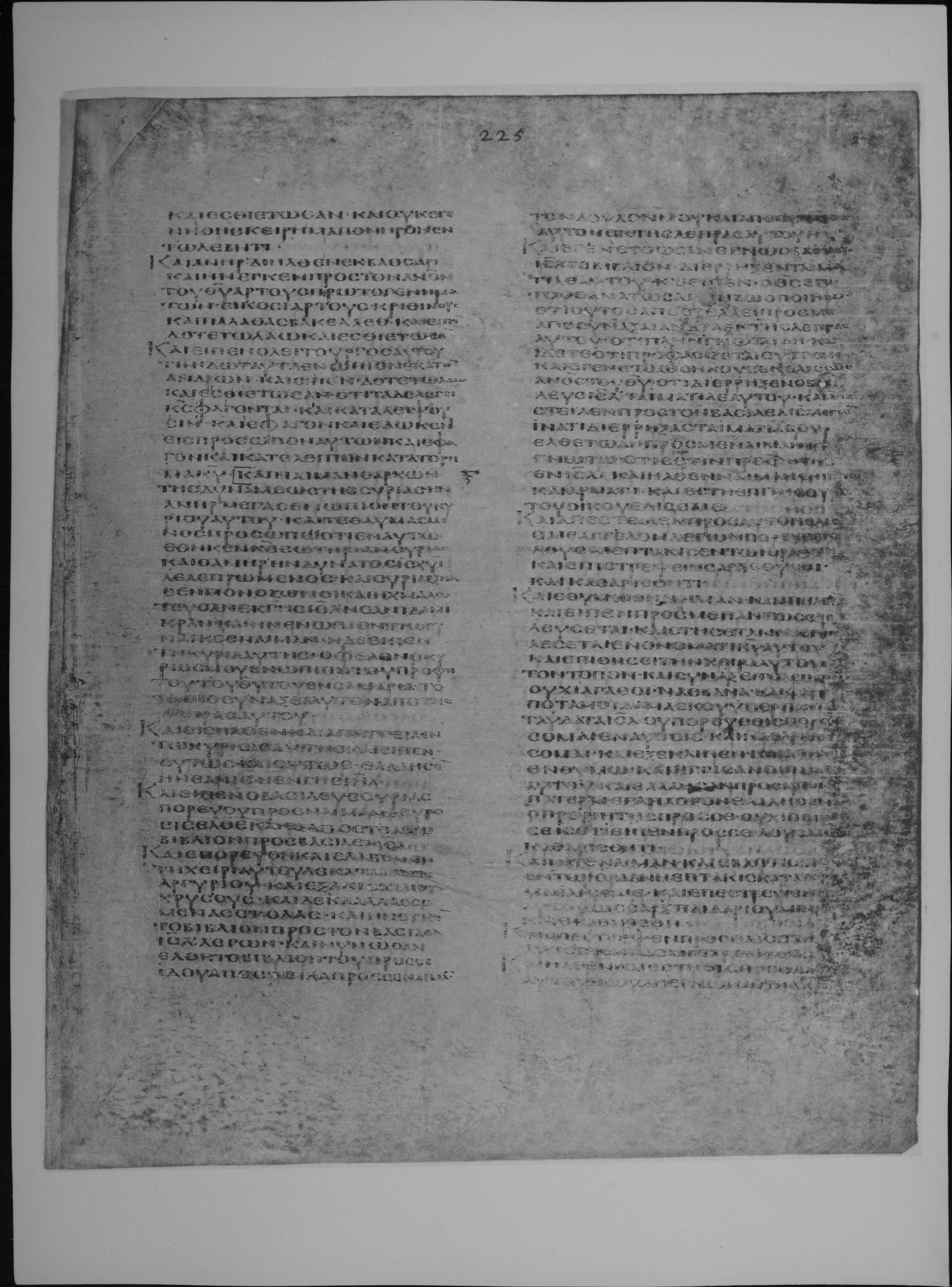
4 Kingdoms (2 Kings) 4:41 is on fol. 224v (full-size facsimile of 1879-83, Internet Archive codex-alexandrinus leaf 467). The 1930 reduced facsimile prints beneath this page: 2 Kings iv. 24-41. Checked on the plate: the page begins at the start of 4 Kingdoms (2 Kings) 4:24 (first words read: ΚΑΙ ΕΠΕΣΑΞΕΝ ΤΗΝ ΟΝΟΝ ΚΑΙ ΕΙΠΕΝ ΠΡΟΣ ΤΟ ΠΑΙΔΑΡΙΟΝ ΑΥΤΗΣ ΑΠΕ ΠΟΡΕΥΟΥ). 4 Kingdoms (2 Kings) 4:41-44 is on fol. 225r (full-size facsimile of 1879-83, Internet Archive codex-alexandrinus leaf 468). The 1930 reduced facsimile prints beneath this page: 2 Kings iv. 41-v. 15. Checked on the plate: the page begins inside 4 Kingdoms (2 Kings) 4:41 (first words read: ΚΑΙ ΕΙΠΕΝ ΕΓΧΕΑΤΕ ΤΩ ΛΑΩ ΚΑΙ ΕΣΘΙΕΤΩΣΑΝ ΚΑΙ ΟΥΚ ΕΓΕΝΗΘΗ ΕΚΕΙ ΡΗΜΑ ΠΟΝΗΡΟΝ ΕΝ ΤΩ ΛΕΒΗΤΙ).
41καὶ εἶπεν Λάβετε ἄλευρον καὶ ἐμβάλετε εἰς τὸν λέβητα· καὶ εἶπεν Ἐλεισαῖε πρὸς Γιεζεὶ τὸ παιδάριον Ἔγχει τῷ λαῷ καὶ ἐσθιέτωσαν· καὶ οὐκ ἐγενήθη ἔτι ἐκεῖ ῥῆμα πονηρὸν ἐν τῷ λέβητι. 42Καὶ ἀνὴρ διῆλθεν ἐκ Βαιθσαρεῖσα καὶ ἤνεγκεν πρὸς τὸν ἄνθρωπον τοῦ θεοῦ πρωτογενημάτων εἴκοσι ἄρτους κριθίνους καὶ παλάθας· καὶ εἶπεν Δότε τῷ λαῷ καὶ ἐσθιέτωσαν. 43καὶ εἶπεν ὁ λειτουργὸς αὐτοῦ Τί; δῶ τοῦτο ἐνώπιον ἑκατὸν ἀνδρῶν; καὶ εἶπεν Δὸς τῷ λαῷ καὶ ἐσθιέτωσαν, ὅτι τάδε λέγει Κύριος Φάγονται καὶ καταλείψουσιν. 44καὶ ἔφαγον καὶ κατέλιπον κατὰ τὸ ῥῆμα Κυρίου.
41And he said, Take meal, and cast it into the pot. And Elisaie said to his servant Giezi, Pour out for the people, and let them eat. And there was no longer there any hurtful thing in the pot. 42And there came a man over from Bætharisa, and brought to the man of God twenty barley loaves and cakes of figs, of the first-fruits. And he said, Give to the people, and let them eat. 43And his servant said, Why should I set this before a hundred men? and he said, Give to the people, and let them eat; for thus saith the Lord, They shall eat and leave. 44And they ate and left, according to the word of the Lord.
Cite
Sources
- Source: Codex Alexandrinus (British Library Royal MS 1 D. V) via the British Museum photographic facsimiles of 1879-83 and 1930 (Internet Archive) + Swete's Septuagint + Brenton's English (holding institution)
- Critical edition: H. B. Swete, The Old Testament in Greek according to the Septuagint (1909)
← previous · → next · v cycle view · l back to library