4 Maccabees, Chapter 13 (Codex Alexandrinus)
Introduction
4 Maccabees 13 in the Greek Old Testament (the Septuagint) as written in Codex Alexandrinus, a Greek Bible copied in the fifth century, probably in Egypt, and now in the British Library (Royal MS 1 D. VI, the second of its four volumes). It is one of the three great early codices of the whole Greek Bible, with Codex Vaticanus and Codex Sinaiticus.
This entry meets the strict three-criteria standard of the Theosis Library:
- Manuscript scan: the pages of Codex Alexandrinus carrying this chapter (fol. 519v, fol. 520r), from the full-size photographic (autotype) facsimile published by the British Museum in 1879-1883, as digitised on the Internet Archive. The verse range of every page comes from the reduced photographic facsimile of 1957, which prints it beneath each plate, and the opening words of every page were read on the plate to confirm the page and the verse it begins with. Each section links to the page or pages that hold its verses. Folio numbers are those written at the head of each leaf and visible on the plates.
- Original text: Swete's edition, which in the books of Maccabees prints the text of Codex Alexandrinus itself (Codex Vaticanus does not contain these books), with the readings of other manuscripts in his apparatus. Swete adds accents, breathings and punctuation and expands the abbreviated sacred names, so the plate shows the same text in unaccented capitals.
- English translation: Sir Lancelot C. L. Brenton, The Septuagint Version of the Old Testament (1844; 1851 edition), a translation of the Greek, public domain, from the eBible.org text.
How was this verified? (Provenance)
Where on the image
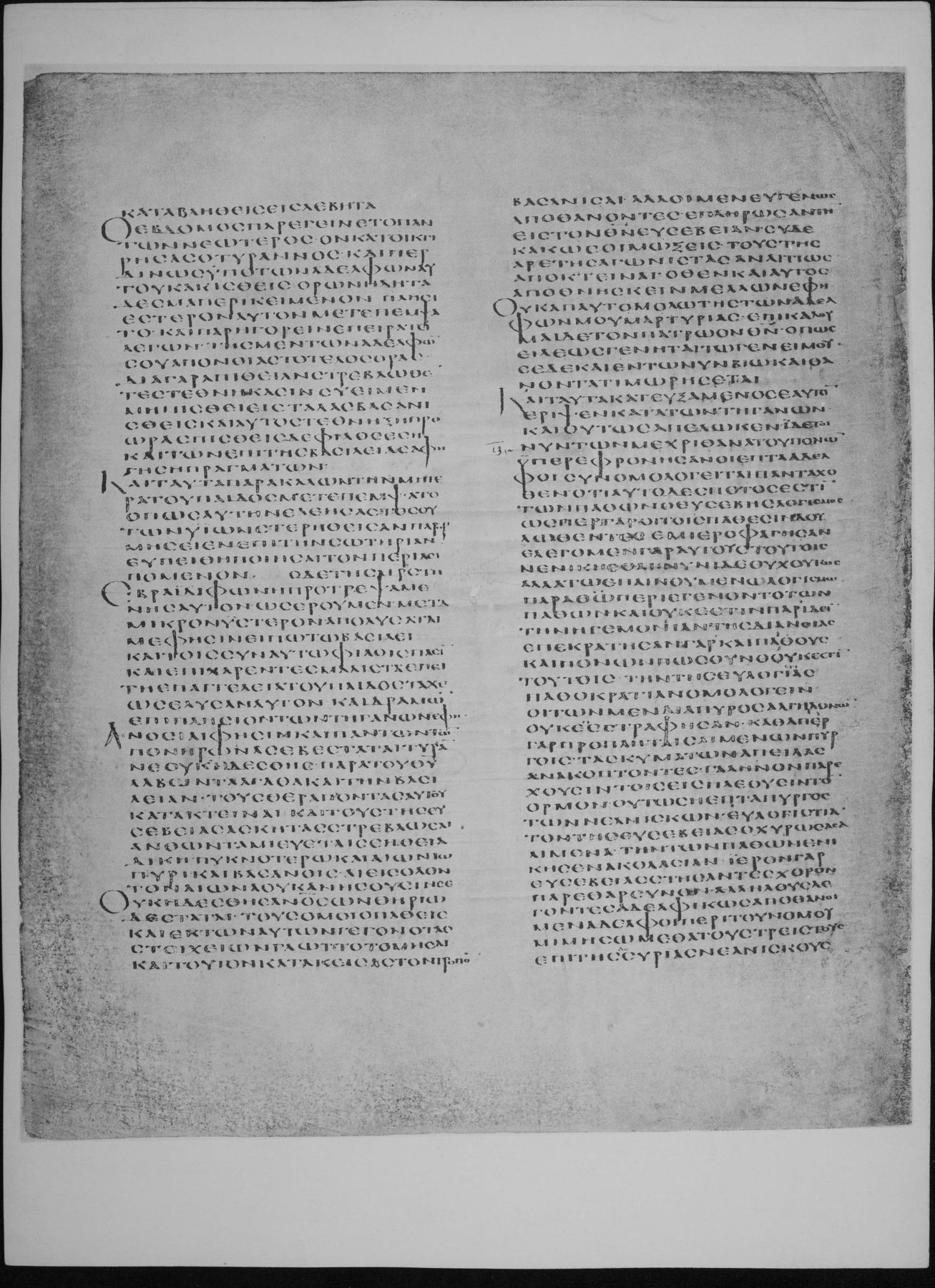
4 Maccabees 13:1-8 is on fol. 519v (full-size facsimile of 1879-83, Internet Archive codex-alexandrinus leaf 1045). The 1957 reduced facsimile prints beneath this page: 4 Maccabees xii. 1-xiii. 9. Checked on the plate: the page begins inside 4 Maccabees 12:1 (first words read: ΚΑΤΑΒΛΗΘΕΙΣ ΕΙΣ ΛΕΒΗΤΑ Ο ΕΒΔΟΜΟΣ ΠΑΡΕΓΕΙΝΕΤΟ ΠΑΝΤΩΝ ΝΕΩΤΕΡΟΣ).
1Εἰ δὲ τοίνυν τῶν μέχρι θανάτου πόνων ὑπερεφρόνησαν οἱ ἑπτὰ ἀδελφοί, συνομολογεῖται πανταχόθεν, ὅτι αὐτοδέσποτός ἐστιν τῶν παθῶν ὁ εὐσεβὴς λογισμός. 2ὥσπερ γὰρ οἱ τοῖς πάθεσιν δουλωθέντες ἐμιεροφάγησαν, ἐλέγομεν γὰρ αὐτοὺς τούτοις νενικῆσθαι· 3νυνὶ δὲ οὐχ οὕτως· ἀλλὰ τῷ ἐπαινουμένῳ λογισμῷ παρὰ θεῷ περιεγένοντο τῶν παθῶν. 4καὶ οὐκ ἔστιν παριδεῖν τὴν ἡγεμονίαν τῆς διανοίας· ἐπεκράτησαν γὰρ καὶ πάθους καὶ πόνων. 5πῶς οὖν οὐκ ἔστιν τούτοις τὴν τῆς εὐλογιστίας παθοκρατίαν ὁμολογεῖν, οἳ τῶν μὲν διὰ πυρὸς ἀλγηδόνων οὐκ ἐπεστράφησαν; 6καθάπερ γὰρ προβλῆτες λιμένων πύργοι τὰς κυμάτων ἀπειλὰς ἀνακόπτοντες, γαληνὸν παρέχουσιν τοῖς εἰσπλέουσιν τὸν ὅρμον· 7οὕτως ἡ ἑπτάπυργος τῶν νεανίσκων εὐλογιστία τὸν τῆς εὐσεβείας ὀχυρώσασα λιμένα τὴν τῶν παθῶν ἐνίκησεν ἀκολασίαν. 8ἱερὸν γὰρ εὐσεβείας στήσαντες χορὸν παρεθάρσυνον ἀλλήλους, λέγοντες
1If then, the seven brethren despised troubles even unto death, it is confessed on all sides that righteous reasoning is absolute master over the passions. 2For just as if, had they as slaves to the passions eaten of the unholy, we should have said that they had been conquered by them; 3now it is not so: but by means of the reasoning which is praised by God, they mastered their passions. 4And it is impossible to overlook the leadership of reflection: for it gained the victory over both passions and troubles. 5How, then, can we avoid according to these men mastery of passion through right reasoning, since they drew not back from the pains of fire? 6For just as by means of towers projecting in front of harbours men break the threatening waves, and thus assure a still course to vessels entering port, 7so that seven-towered right-reasoning of the young men, securing the harbour of religion, conquered the intemperance of passions. 8For having arranged a holy choir of piety, they encouraged one another, saying,
Where on the image
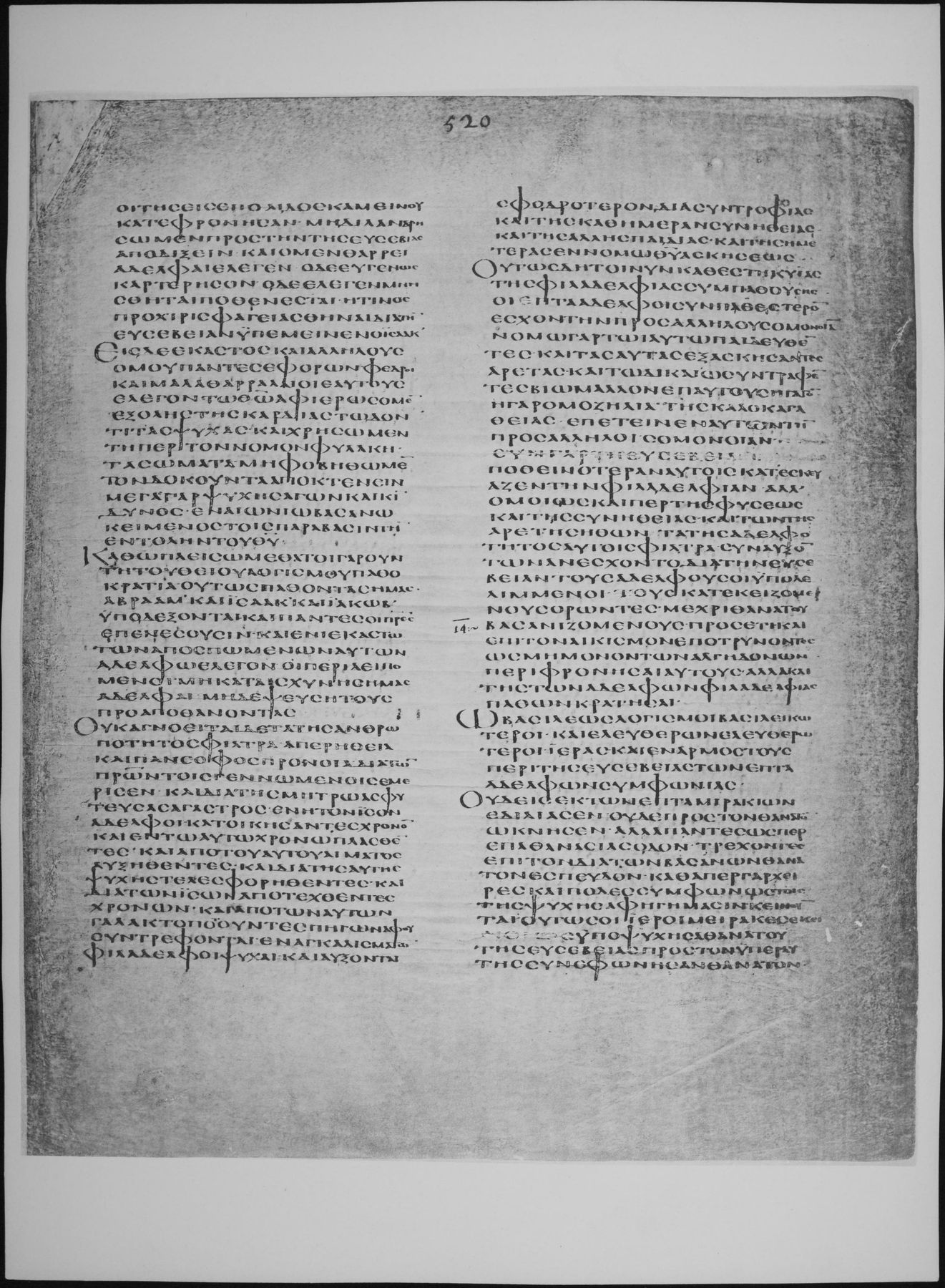
4 Maccabees 13:9 is on fol. 519v (full-size facsimile of 1879-83, Internet Archive codex-alexandrinus leaf 1045). The 1957 reduced facsimile prints beneath this page: 4 Maccabees xii. 1-xiii. 9. Checked on the plate: the page begins inside 4 Maccabees 12:1 (first words read: ΚΑΤΑΒΛΗΘΕΙΣ ΕΙΣ ΛΕΒΗΤΑ Ο ΕΒΔΟΜΟΣ ΠΑΡΕΓΕΙΝΕΤΟ ΠΑΝΤΩΝ ΝΕΩΤΕΡΟΣ). 4 Maccabees 13:9-16 is on fol. 520r (full-size facsimile of 1879-83, Internet Archive codex-alexandrinus leaf 1046). The 1957 reduced facsimile prints beneath this page: 4 Maccabees xiii. 9-xiv. 6. Checked on the plate: the page begins inside 4 Maccabees 13:9 (first words read: ΟΙ ΤΗΣ ΙΣΟΠΑΛΙΔΟΣ ΚΑΜΙΝΟΥ ΚΑΤΕΦΡΟΝΗΣΑΝ ΜΗ ΔΕΙΛΑΝΔΡΗΣΩΜΕΝ ΠΡΟΣ ΤΗΝ ΤΗΣ ΕΥΣΕΒΕΙΑΣ ΑΠΟΔΕΙΞΙΝ).
9Ἀδελφικῶς ἀποθάνοιμεν ἀδελφοὶ περὶ τοῦ νόμου· μιμησώμεθα τοὺς τρεῖς τοὺς ἐπὶ τῆς Συρίας νεανίσκους, οἳ τῆς ἰσοπάλιδος καμίνου κατεφρόνησαν. 10μὴ δειλανδρήσωμεν πρὸς τὴν τῆς εὐσεβίας ἀπόδειξιν. 11καὶ ὁ μέν Θάρρει, ἀδελφέ, ἔλεγεν· ὁ δέ Εὐγενῶς καρτέρησον. 12ὁ δὲ ἔλεγεν Μνήσθητε πόθεν ἐστέ, ἢ τίνος πατρὸς χειρὶ σφαγιασθῆναι διὰ τὴν εὐσέβειαν ὑπέμεινεν ὁ Ἰσαάκ. 13εἷς δὲ ἕκαστος καὶ ἀλλήλους ὁμοῦ πάντες ἐφορῶντες φαιδροὶ καὶ μάλα θαρραλέοι Ἑαυτούς, ἔλεγον, τῷ θεῷ ἀφιερώσομεν ἐξ ὅλης τῆς καρδίας τῷ δόντι τὰς ψυχάς, καὶ χρήσωμεν τῇ περὶ τὸν νόμον φυλακῇ τὰ σώματα. 14μὴ φοβηθῶμεν τὸν δοκοῦντα ἀποκτενεῖν. 15μέγας γὰρ ψυχῆς ἀγὼν καὶ κίνδυνος ἐν αἰωνίῳ βασάνῳ κείμενος τοῖς παραβᾶσιν τὴν ἐντολὴν τοῦ θεοῦ. 16καθοπλισώμεθα τοιγαροῦν τῇ τοῦ θείου λογισμοῦ παθοκρατίᾳ.
9Brothers, may we die brotherly for the law. Let us imitate the three young men in Assyria who despised the equally afflicting furnace. 10Let us not be cowards in the manifestation of piety. 11And one said, Courage, brother; and another, Nobly endure. 12And another, Remember of what stock ye are; and by the hand of what father Isaac endured to be slain for the sake of piety. 13And one and all, looking on each other serene and confident, said, Let us sacrifice with all our heart our souls to God who gave them, and employ our bodies for the keeping of the law. 14Let us not fear him who thinketh he killeth; 15for great is the trial of soul and danger of eternal torment laid up for those who transgress the commandment of God. 16Let us arm ourselves, therefore, in the abnegation of the divine reasoning.
Where on the image
4 Maccabees 13:17-24 is on fol. 520r (full-size facsimile of 1879-83, Internet Archive codex-alexandrinus leaf 1046). The 1957 reduced facsimile prints beneath this page: 4 Maccabees xiii. 9-xiv. 6. Checked on the plate: the page begins inside 4 Maccabees 13:9 (first words read: ΟΙ ΤΗΣ ΙΣΟΠΑΛΙΔΟΣ ΚΑΜΙΝΟΥ ΚΑΤΕΦΡΟΝΗΣΑΝ ΜΗ ΔΕΙΛΑΝΔΡΗΣΩΜΕΝ ΠΡΟΣ ΤΗΝ ΤΗΣ ΕΥΣΕΒΕΙΑΣ ΑΠΟΔΕΙΞΙΝ).
17οὕτως παθόντας ἡμᾶς Ἀβραὰμ καὶ Ἰσαὰκ καὶ Ἰακὼβ ὑποδέξονται, καὶ πάντες οἱ πατέρες ἐπαινέσουσιν. 18καὶ ἑνὶ ἑκάστῳ τῶν ἀποσπωμένων αὐτῶν ἀδελφῶν ἔλεγον οἱ περιλειπόμενοι Μὴ καταισχύνῃς ἡμᾶς, ἀδελφέ, μηδὲ ψεύσῃ τοὺς προαποθανόντας. 19Οὐκ ἀγνοεῖτε δὲ τὰ τῆς ἀνθρωπότητος φίλτρα, ἅπερ ἡ θεία καὶ πάνσοφος πρόνοια διὰ τῶν πατέρων τοῖς γεννωμένοις ἐμέρισεν, καὶ διὰ τῆς μητρῴας φυτεύσασα γαστρός· 20ἐν ᾗ τὸν ἴσον ἀδελφοὶ κατοικήσαντες χρόνον, καὶ ἐν τῷ αὐτῷ χρόνῳ πλασθέντες, καὶ ἀπὸ τοῦ αὐτοῦ αἵματος αὐξηθέντες, καὶ διὰ τῆς αὐτῆς ψυχῆς τελεσφορηθέντες, 21καὶ διὰ τῶν ἴσων ἀποτεχθέντες χρόνων, καὶ ἀπὸ τῶν αὐτῶν γαλακτοποτοῦντες πηγῶν, ἀφ᾽ οὗ συντρέφονται ἐναγκαλισμάτων φιλάδελφοι ψυχαί· 22καὶ αὔξονται σφοδρότερον διὰ συντροφίας καὶ τῆς καθ᾽ ἡμέραν συνηθείας καὶ τῆς ἄλλης παιδίας καὶ τῆς ἡμετέρας ἐν νόμῳ θεοῦ ἀσκήσεως. 23οὕτως δὴ τοίνυν καθεστηκυίας τῆς φιλαδελφίας συμπαθούσης, οἱ ἑπτὰ ἀδελφοὶ συνπαθέστερον ἔσχον τὴν πρὸς ἀλλήλους ὁμόνοιαν. 24νόμῳ γὰρ τῷ αὐτῷ παιδευθέντες, καὶ τὰς αὐτὰς ἐξασκήσαντες ἀρετάς, καὶ τῷ δικαίῳ συντραφέντες βίῳ, μᾶλλον ἐφ᾽ αὑτοὺς ἤγαγον.
17If we suffer thus, Abraham, and Isaac, and Jacob will receive us, and all the fathers will commend us. 18And as each one of the brethren was haled away, the rest exclaimed, Disgrace us not, O brother, nor falsify those who have died before you. 19Now you are not ignorant of the charm of brotherhood, which the Divine and all-wise Providence has imparted through fathers to children, and has engendered through the mother's womb. 20In which these brothers having remained an equal time, and having been formed for the same period, and been increased by the same blood, and having been perfected through the same principle of life, 21and having been brought forth at equal intervals, and having sucked milk from the same fountains, hence their brotherly souls are reared up lovingly together; 22and increase the more powerfully by reason of this simultaneous rearing, and by daily intercourse, and by other education, and exercise in the law of God. 23Brotherly love being thus sympathetically constituted, the seven brethren had a more sympathetic mutual harmony. 24For being educated in the same law, and practising the same virtues, and reared up in a just course of life, they increased this harmony with each other.
Where on the image
4 Maccabees 13:25-27 is on fol. 520r (full-size facsimile of 1879-83, Internet Archive codex-alexandrinus leaf 1046). The 1957 reduced facsimile prints beneath this page: 4 Maccabees xiii. 9-xiv. 6. Checked on the plate: the page begins inside 4 Maccabees 13:9 (first words read: ΟΙ ΤΗΣ ΙΣΟΠΑΛΙΔΟΣ ΚΑΜΙΝΟΥ ΚΑΤΕΦΡΟΝΗΣΑΝ ΜΗ ΔΕΙΛΑΝΔΡΗΣΩΜΕΝ ΠΡΟΣ ΤΗΝ ΤΗΣ ΕΥΣΕΒΕΙΑΣ ΑΠΟΔΕΙΞΙΝ).
25ἡ γὰρ ὁμοζηλία τῆς καλοκἀγαθίας ἐπέτεινεν αὐτῶν τὴν πρὸς ἀλλήλους ὁμόνοιαν· 26σὺν γὰρ τῇ εὐσεβείᾳ ποθεινοτέραν αὐτοῖς κατεσκεύαζεν τὴν φιλαδελφίαν. 27ἀλλ᾽ ὁμοίως καίπερ τῆς φύσεως καὶ τῆς συνηθείας καὶ τῶν τῆς ἀρετῆς ἠθῶν τὰ τῆς ἀδελφότητος αὐτοῖς φίλτρα συναυξόντων, ἀνέσχοντο διὰ τὴν εὐσέβειαν τοὺς ἀδελφοὺς οἱ ὑπολελιμμένοι τοὺς καταικιζομένους ὁρῶντες μέχρι θανάτου βασανιζομένους.
25For a like ardour for what is right and honourable increased their fellow-feeling towards each other. 26For it acting along with religion, made their brotherly feeling more desirable to them. 27And yet, although nature and intercourse and virtuous morals increased their brotherly love, those who were left endured to behold their brethren, who were ill-used for their religion, tortured even unto death.
Cite
Sources
- Source: Codex Alexandrinus (British Library Royal MS 1 D. VI) via the British Museum photographic facsimiles of 1879-83 and 1957 (Internet Archive) + Swete's Septuagint + Brenton's English (holding institution)
- Critical edition: H. B. Swete, The Old Testament in Greek according to the Septuagint (1909)
← previous · → next · v cycle view · l back to library