4 Maccabees, Chapter 14 (Codex Alexandrinus)
Introduction
4 Maccabees 14 in the Greek Old Testament (the Septuagint) as written in Codex Alexandrinus, a Greek Bible copied in the fifth century, probably in Egypt, and now in the British Library (Royal MS 1 D. VI, the second of its four volumes). It is one of the three great early codices of the whole Greek Bible, with Codex Vaticanus and Codex Sinaiticus.
This entry meets the strict three-criteria standard of the Theosis Library:
- Manuscript scan: the pages of Codex Alexandrinus carrying this chapter (fol. 520r, fol. 520v), from the full-size photographic (autotype) facsimile published by the British Museum in 1879-1883, as digitised on the Internet Archive. The verse range of every page comes from the reduced photographic facsimile of 1957, which prints it beneath each plate, and the opening words of every page were read on the plate to confirm the page and the verse it begins with. Each section links to the page or pages that hold its verses. Folio numbers are those written at the head of each leaf and visible on the plates.
- Original text: Swete's edition, which in the books of Maccabees prints the text of Codex Alexandrinus itself (Codex Vaticanus does not contain these books), with the readings of other manuscripts in his apparatus. Swete adds accents, breathings and punctuation and expands the abbreviated sacred names, so the plate shows the same text in unaccented capitals.
- English translation: Sir Lancelot C. L. Brenton, The Septuagint Version of the Old Testament (1844; 1851 edition), a translation of the Greek, public domain, from the eBible.org text.
How was this verified? (Provenance)
Where on the image
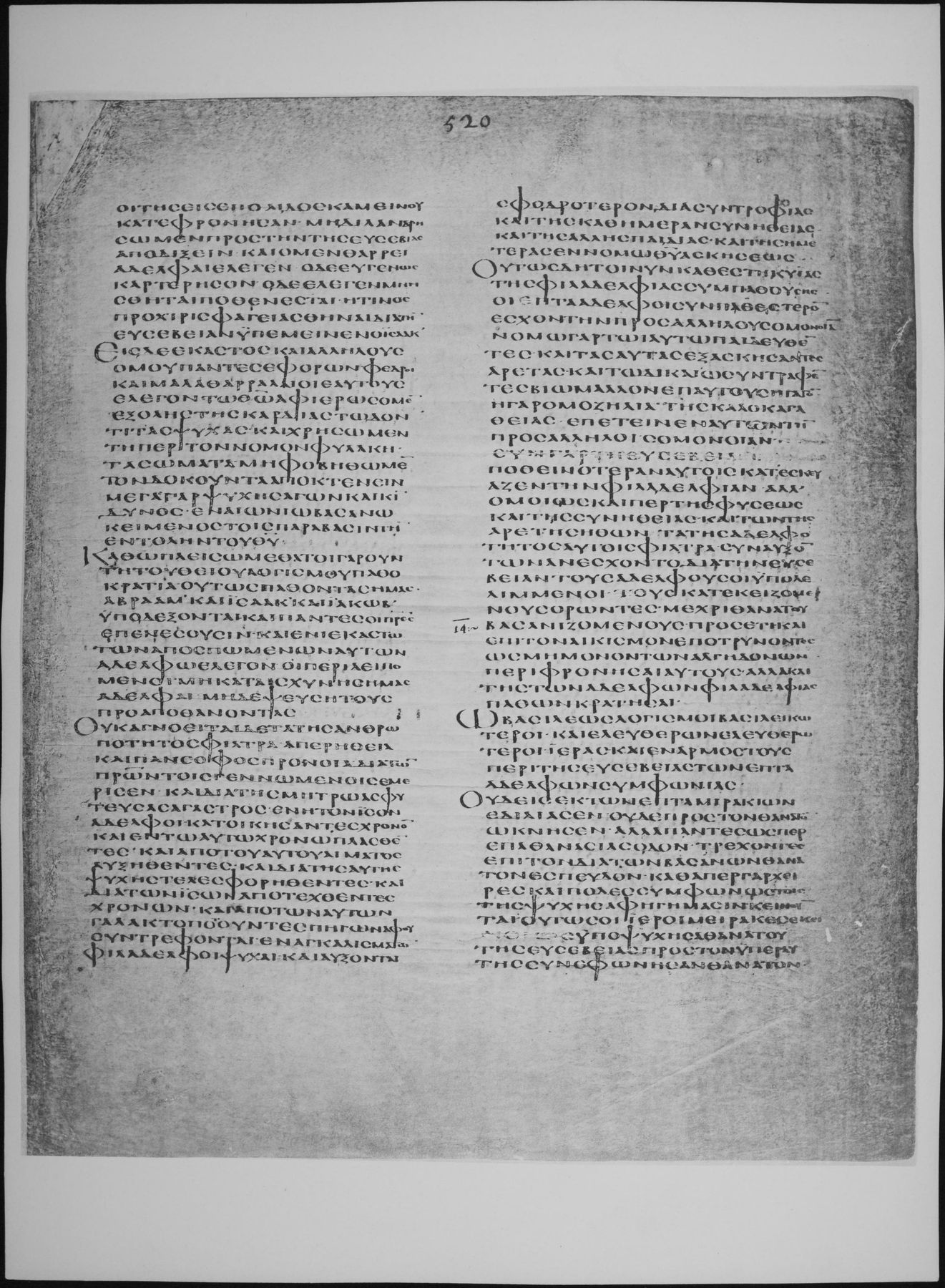
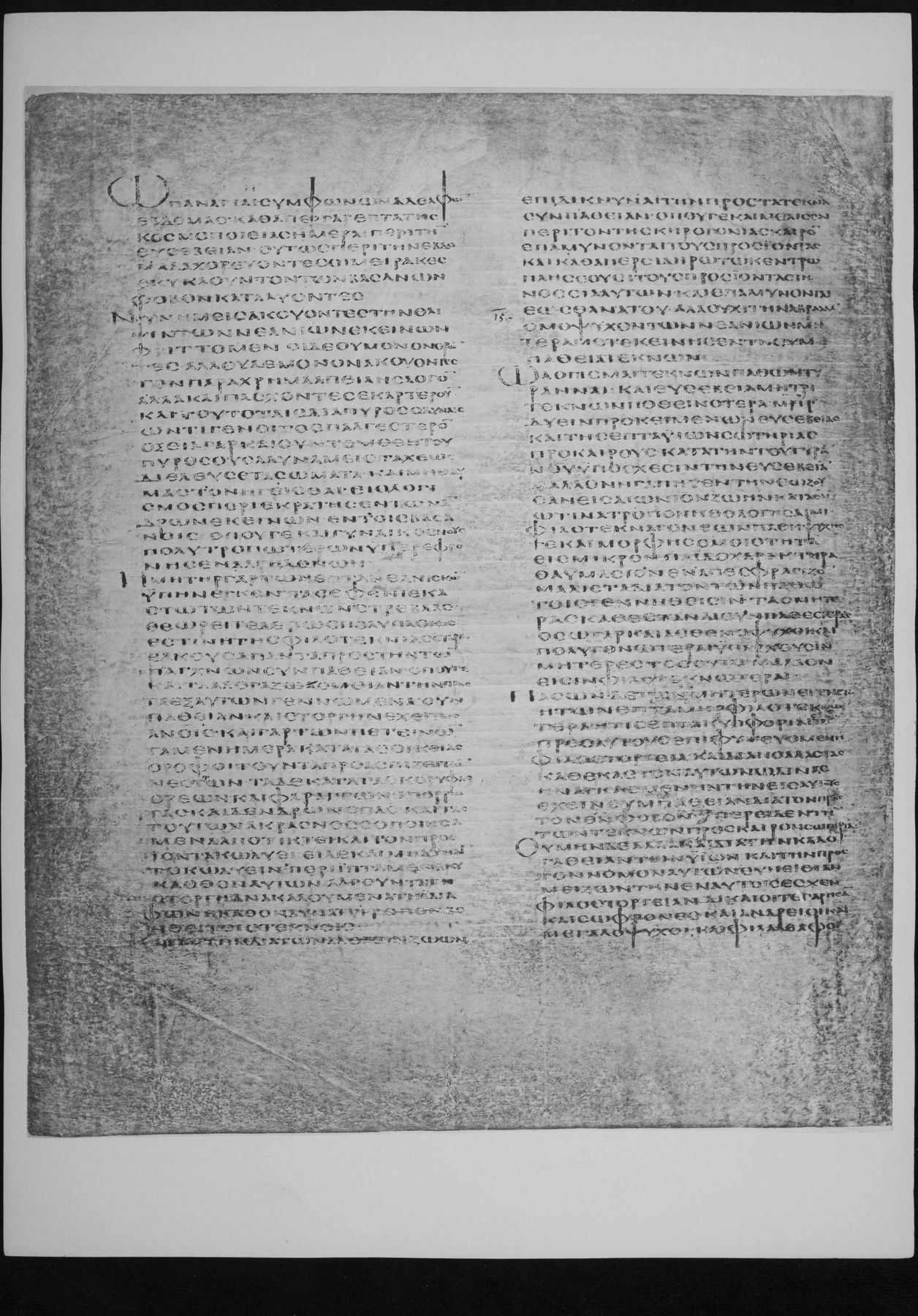
4 Maccabees 14:1-6 is on fol. 520r (full-size facsimile of 1879-83, Internet Archive codex-alexandrinus leaf 1046). The 1957 reduced facsimile prints beneath this page: 4 Maccabees xiii. 9-xiv. 6. Checked on the plate: the page begins inside 4 Maccabees 13:9 (first words read: ΟΙ ΤΗΣ ΙΣΟΠΑΛΙΔΟΣ ΚΑΜΙΝΟΥ ΚΑΤΕΦΡΟΝΗΣΑΝ ΜΗ ΔΕΙΛΑΝΔΡΗΣΩΜΕΝ ΠΡΟΣ ΤΗΝ ΤΗΣ ΕΥΣΕΒΕΙΑΣ ΑΠΟΔΕΙΞΙΝ). 4 Maccabees 14:7-8 is on fol. 520v (full-size facsimile of 1879-83, Internet Archive codex-alexandrinus leaf 1047). The 1957 reduced facsimile prints beneath this page: 4 Maccabees xiv. 7-xv. 10. Checked on the plate: the page begins at the start of 4 Maccabees 14:7 (first words read: Ω ΠΑΝΑΓΙΑ ΣΥΜΦΩΝΩΝ ΑΔΕΛΦΩΝ ΕΒΔΟΜΑΣ ΚΑΘΑΠΕΡ ΓΑΡ ΕΠΤΑ ΤΗΣ ΚΟΣΜΟΠΟΙΙΑΣ ΗΜΕΡΑΙ).
1προσέτι καὶ ἐπὶ τὸν αἰκισμὸν ἐποτρύνοντες, ὡς μὴ μόνον τῶν ἀλγηδόνων περιφρονῆσαι αὐτούς, ἀλλὰ καὶ τῆς τῶν ἀδελφῶν φιλαδελφίας παθῶν κρατῆσαι. 2Ὦ βασιλέως λογισμοὶ βασιλικώτεροι καὶ ἐλευθέρων ἐλευθερώτεροι· 3ὦ ἱερᾶς καὶ ἐναρμόστου περὶ τῆς εὐσεβείας τῶν ἑπτὰ ἀδελφῶν συμφωνίας. 4οὐδεὶς ἐκ τῶν ἑπτὰ μειρακίων ἐδειλίασεν, οὐδὲ πρὸς τὸν θάνατον ὤκνησεν· 5ἀλλὰ πάντες, ὥσπερ ἐπ᾽ ἀθανασίας ὁδὸν τρέχοντες, ἐπὶ τὸν διὰ τῶν βασάνων θάνατον ἔσπευδον. 6καθάπερ γὰρ χεῖρες καὶ πόδες συμφώνως τοῖς τῆς ψυχῆς ἀφηγήμασιν κινοῦνται· οὕτως οἱ ἱεροὶ μείρακες ἐκεῖνοι ὡς ὑπὸ ψυχῆς ἀθανάτου τῆς εὐσεβείας πρὸς τὸν ὑπὲρ αὐτῆς συνεφώνησαν θάνατον. 7ὦ πανάγιε συμφώνων ἀδελφῶν ἑβδομάς· καθάπερ γὰρ ἑπτὰ τῆς κοσμοποιίας ἡμέραι περὶ τὴν εὐσέβειαν, 8οὕτως περὶ τὴν ἑβδομάδα χορεύοντες οἱ μείρακες ἐκύκλουν, τὸν τῶν βασάνων φόβον καταλύοντες.
1And more than this, they even urged them on to this ill-treatment; so that they not only despised pains themselves, but they even got the better of their affections of brotherly love. 2O reasonings more royal than a king, and freer than freemen! 3Sacred and harmonious concert of the seven brethren as concerning piety! 4None of the seven youths turned cowardly, or shrank back from death. 5But all of them, as though running the road to immortality, hastened on to death through tortures. 6For just as hands and feet are moved sympathetically with the directions of the soul, so those holy youths agreed unto death for religion's sake, as through the immortal soul of religion. 7O holy seven of harmonious brethren! for as the seven days of creation, about religion, 8so the youths, circling around the number seven, annulled the fear of torments.
Where on the image
4 Maccabees 14:9-16 is on fol. 520v (full-size facsimile of 1879-83, Internet Archive codex-alexandrinus leaf 1047). The 1957 reduced facsimile prints beneath this page: 4 Maccabees xiv. 7-xv. 10. Checked on the plate: the page begins at the start of 4 Maccabees 14:7 (first words read: Ω ΠΑΝΑΓΙΑ ΣΥΜΦΩΝΩΝ ΑΔΕΛΦΩΝ ΕΒΔΟΜΑΣ ΚΑΘΑΠΕΡ ΓΑΡ ΕΠΤΑ ΤΗΣ ΚΟΣΜΟΠΟΙΙΑΣ ΗΜΕΡΑΙ).
9νῦν ἡμεῖς ἀκούοντες τὴν θλίψιν τῶν νεανιῶν ἐκείνων, φρίττομεν· οἱ δὲ οὐ μόνον ὁρῶντες, ἀλλ᾽ οὐδὲ μὸνον ἀκούοντες τὸν παραχρῆμα ἀπειλῆς λόγον, ἀλλὰ καὶ πάσχοντες, ἐκαρτέρουν καὶ τοῦτο ταῖς διὰ πυρὸς ὀδύναις. 10ὧν τί γένοιτο ἐπαλγέστερον; ὀξεῖα γὰρ καὶ σύντομος ἡ τοῦ πυρὸς οὖσα δύναμις ταχέως διέλυσε τὰ σώματα. 11Καὶ μὴ θαυμαστὸν ἡγεῖσθε εἰ ὁ λογισμὸς περιεκράτησεν τῶν ἀνδρῶν ἐκείνων ἐν ταῖς βασάνοις, ὅπου γε καὶ γυναικὸς νοῦς πολυτροπωτέρων ὑπερεφρόνησεν ἀλγηδόνων. 12ἡ μήτηρ γὰρ τῶν ἑπτὰ νεανίσκων ὑπήνεγκεν τὰς ἐφ᾽ ἑνὶ ἑκάστῳ τῶν τέκνων στρέβλας. 13θεωρεῖτε δὲ πῶς πολύπλοκός ἐστιν ἡ τῆς φιλοτεκνίας στοργή, ἕλκουσα πάντα πρὸς τὴν τῶν σπλάγχνων συνπάθειαν· 14ὅπου γε καὶ τὰ ἄλογα ζῷα ὁμοίαν τὴν πρὸς τὰ ἐξ αὐτῶν γεννώμενα συνπάθειαν καὶ στοργὴν ἔχει τοῖς ἀνθρώποις. 15καὶ γὰρ τῶν πετεινῶν, τὰ μὲν ἥμερα κατὰ τὰς οἰκίας ὀροφοιτοῦντα προασπίζει τῶν νεοττῶν· 16τὰ δὲ κατὰ τὰς κορυφὰς ὀρέων καὶ φαράγγων ἀπορρῶγας καὶ δένδρων ὀπὰς καὶ τὰς τούτων ἄκρας νοσσοποιησάμενα ἀποτίκτει, καὶ τὸν προσιόντα κωλύει·
9We now shudder at the recital of the affliction of those young men; but they not only beheld, and not only heard the immediate execution of the threat, but undergoing it, persevered; and that through the pains of fire. 10And what could be more painful? for the power of fire, being sharp and quick, speedily dissolved their bodies. 11And think it not wonderful that reasoning bore rule over those men in their torments, when even a woman's mind despised more manifold pains. 12For the mother of those seven youths endured the rackings of each of her children. 13And consider how comprehensive is the love of offspring, which draws every one to sympathy of affection, 14where irrational animals possess a similar sympathy and love for their offspring with men. 15The tame birds frequenting the roofs of our houses, defend their fledglings. 16Others build their nests, and hatch their young, in the tops of mountains and in the precipices of valleys, and the holes and tops of trees, and keep off the intruder.
Where on the image
4 Maccabees 14:17-20 is on fol. 520v (full-size facsimile of 1879-83, Internet Archive codex-alexandrinus leaf 1047). The 1957 reduced facsimile prints beneath this page: 4 Maccabees xiv. 7-xv. 10. Checked on the plate: the page begins at the start of 4 Maccabees 14:7 (first words read: Ω ΠΑΝΑΓΙΑ ΣΥΜΦΩΝΩΝ ΑΔΕΛΦΩΝ ΕΒΔΟΜΑΣ ΚΑΘΑΠΕΡ ΓΑΡ ΕΠΤΑ ΤΗΣ ΚΟΣΜΟΠΟΙΙΑΣ ΗΜΕΡΑΙ).
17εἰ δὲ καὶ μὴ δύναιντο κωλύειν, περιιπτάμενα κυκλόθεν αὐτῶν ἀλγοῦντα τῇ στοργῇ, ἀνακαλούμενα τῇ ἰδίᾳ φωνῇ, καθ᾽ ὃν δύναται τρόπον βοηθεῖ τοῖς τέκνοις. 18καὶ τί δεῖ τὴν διὰ τῶν ἀλόγων ζῴων ἐπιδεικνύναι τὴν πρὸς τὰ τέκνα συνπάθειαν; 19ὅπου γε καὶ μέλισσαι περὶ τὸν τῆς κηρογονίας καιρὸν ἐπαμύνονται τοὺς προσιόντας, καὶ καθάπερ σιδήρῳ τῷ κέντρῳ πλήσσουσι τοὺς προσιόντας τῇ νοσσιᾷ αὐτῶν, καὶ ἐπαμύνονται ἕως θανάτου. 20ἀλλ᾽ οὐχὶ τὴν Ἀβραὰμ ὁμόψυχον τῶν νεανιῶν μητέρα μετεκίνησεν ἡ συμπάθεια τέκνων.
17And if not able to do this, they fly circling round them in agony of affection, calling out in their own note, and save their offspring in whatever manner they are able. 18But why should we point attention to the sympathy toward children shewn by irrational animals? 19The very bees, at the season of honey-making, attack all who approach; and pierce with their sting, as with a sword, those who draw near their hive, and repel them even unto death. 20But sympathy with her children did not turn aside the mother of the young men, who had a spirit kindred with that of Abraham.
Cite
Sources
- Source: Codex Alexandrinus (British Library Royal MS 1 D. VI) via the British Museum photographic facsimiles of 1879-83 and 1957 (Internet Archive) + Swete's Septuagint + Brenton's English (holding institution)
- Critical edition: H. B. Swete, The Old Testament in Greek according to the Septuagint (1909)
← previous · → next · v cycle view · l back to library