4 Maccabees, Chapter 18 (Codex Alexandrinus)
Introduction
4 Maccabees 18 in the Greek Old Testament (the Septuagint) as written in Codex Alexandrinus, a Greek Bible copied in the fifth century, probably in Egypt, and now in the British Library (Royal MS 1 D. VI, the second of its four volumes). It is one of the three great early codices of the whole Greek Bible, with Codex Vaticanus and Codex Sinaiticus.
Numbering: Swete's Greek and Brenton's English number or divide some verses of this chapter differently (Swete 18:6-7 = Brenton 18:6-7). Each column keeps its own verse numbers, and sections are cut only where the two texts agree, so each section holds the same passage in both languages.
This entry meets the strict three-criteria standard of the Theosis Library:
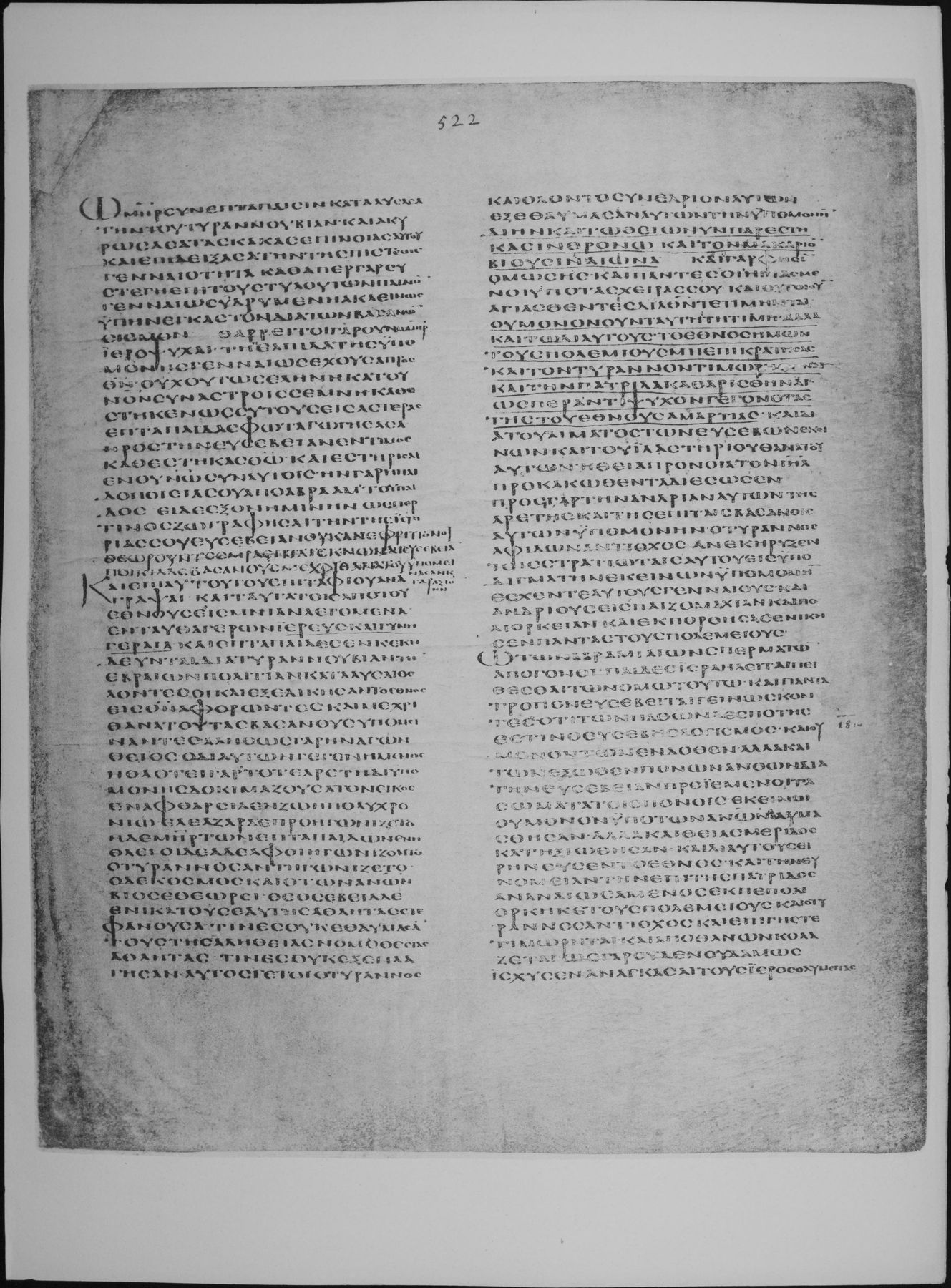
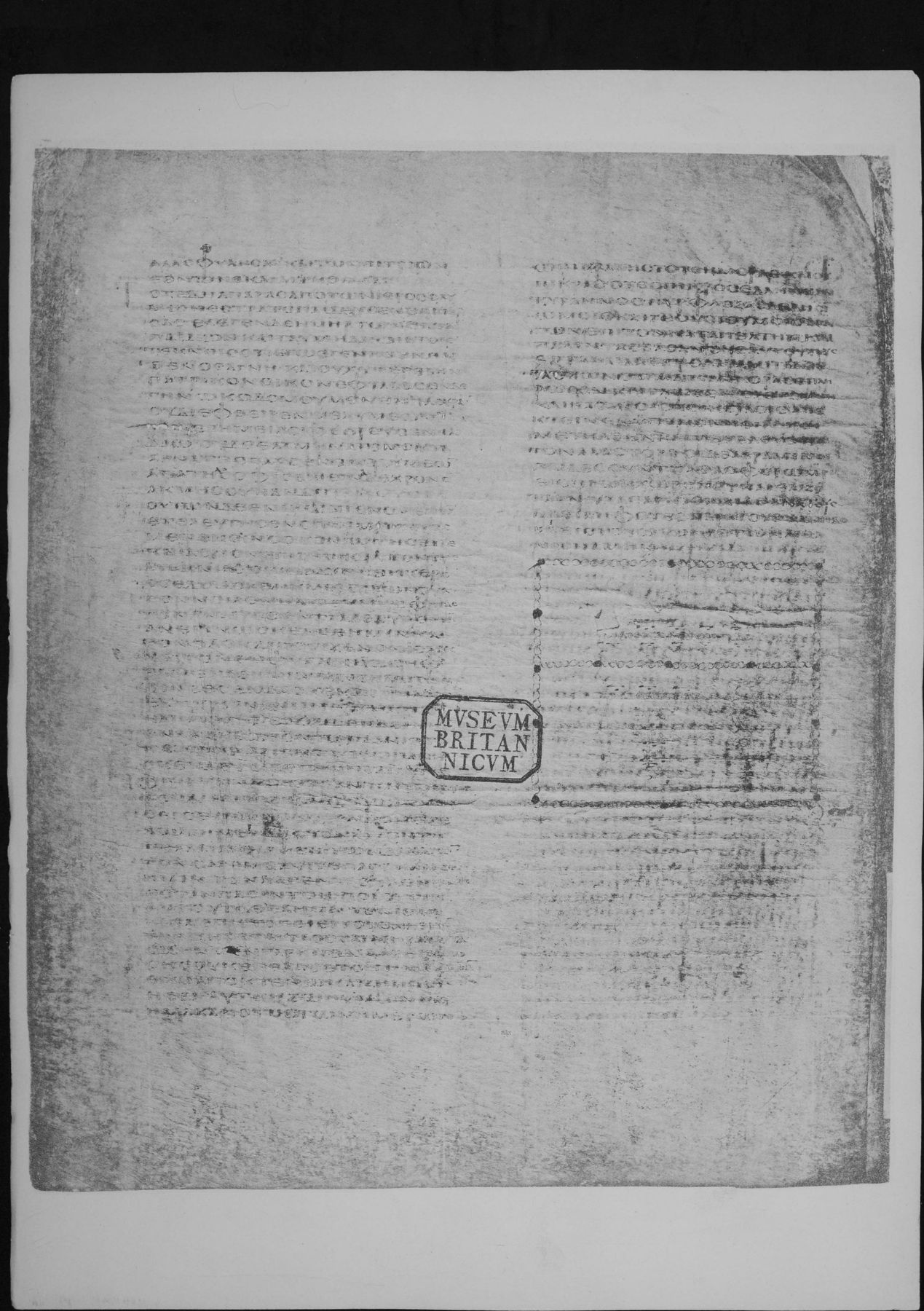
- Manuscript scan: the pages of Codex Alexandrinus carrying this chapter (fol. 522r, fol. 522v), from the full-size photographic (autotype) facsimile published by the British Museum in 1879-1883, as digitised on the Internet Archive. The verse range of every page comes from the reduced photographic facsimile of 1957, which prints it beneath each plate, and the opening words of every page were read on the plate to confirm the page and the verse it begins with. Each section links to the page or pages that hold its verses. Folio numbers are those written at the head of each leaf and visible on the plates.
- Original text: Swete's edition, which in the books of Maccabees prints the text of Codex Alexandrinus itself (Codex Vaticanus does not contain these books), with the readings of other manuscripts in his apparatus. Swete adds accents, breathings and punctuation and expands the abbreviated sacred names, so the plate shows the same text in unaccented capitals.
- English translation: Sir Lancelot C. L. Brenton, The Septuagint Version of the Old Testament (1844; 1851 edition), a translation of the Greek, public domain, from the eBible.org text.
How was this verified? (Provenance)
Where on the image
4 Maccabees 18:1-5 is on fol. 522r (full-size facsimile of 1879-83, Internet Archive codex-alexandrinus leaf 1050). The 1957 reduced facsimile prints beneath this page: 4 Maccabees xvii. 2-xviii. 5. Checked on the plate: the page begins at the start of 4 Maccabees 17:2 (first words read: Ω ΜΗΤΗΡ ΣΥΝ ΕΠΤΑ ΠΑΙΣΙΝ ΚΑΤΑΛΥΣΑΣΑ ΤΗΝ ΤΟΥ ΤΥΡΑΝΝΟΥ ΒΙΑΝ). 4 Maccabees 18:5-8 is on fol. 522v (full-size facsimile of 1879-83, Internet Archive codex-alexandrinus leaf 1051). The 1957 reduced facsimile prints beneath this page: 4 Maccabees xviii. 5-xviii. 24 [end]. Checked on the plate: the page begins inside 4 Maccabees 18:5 (first words read: ΑΛΛΟΦΥΛΗΣΑΙ ΚΑΙ ΤΩΝ ΠΑΤΡΙΩΝ ΕΘΩΝ ΕΚΔΙΑΙΤΗΘΗΝΑΙ). Note: the opening lines of the column are faint on the plate.
1Ὦ τῶν Ἀβραμιαίων σπερμάτων ἀπόγονοι παῖδες Ἰσραηλεῖται, πείθεσθε τῷ νόμῳ τούτῳ, καὶ πάντα τρόπον εὐσεβεῖτε· 2γινώσκοντες ὅτι τῶν παθῶν δεσπότης ἐστὶν ὁ εὐσεβὴς λογισμός, καὶ οὐ μόνον τῶν ἔνδοθεν ἀλλὰ καὶ τῶν ἔξωθεν πόνων· 3ἀνθ᾽ ὧν διὰ τὴν εὐσέβειαν προιέμενοι τὰ σώματα τοῖς πόνοις ἐκεῖνοι, οὐ μόνον ὑπὸ τῶν ἀνθρώπων ἐθαυμάσθησαν, ἀλλὰ καὶ θείας μερίδος κατηξιώθησαν. 4καὶ δι᾽ αὐτοὺς εἰρήνευσεν τὸ ἔθνος, καὶ τὴν εὐνομίαν τὴν ἐπὶ τῆς πατρίδος ἀνανεωσάμενος, ἐκπεπολιόρκηκε τοὺς πολεμίους. 5καὶ ὁ τύραννος Ἀντίοχος καὶ ἐπὶ γῆς τετιμώρηται, καὶ ἀποθανὼν κολάζεται· ὡς γὰρ οὐδὲν οὐδαμῶς ἴσχυσεν ἀναγκάσαι τοὺς Ἰεροσολυμείτας ἀλλοφυλῆσαι, καὶ τῶν πατρίων ἐθνῶν ἐκδιαιτηθῆναι, 6τότε δὴ ἀπάρας ἀπὸ τῶν Ἰεροσολύμων ἐστρατοπέδευσεν ἐπὶ Πέρσας. Ἔλεγεν δὲ ἡ μήτηρ τῶν ἑπτὰ παίδων καὶ ταῦτα ἡ δικαία τοῖς τέκνοις 7ὅτι Ἐγὼ ἐγενήθην παρθένος ἁγνή, καὶ οὐχ ὑπερέβην πατρικὸν οἶκον· ἐφύλασσον δὲ τὴν ᾠκοδομημένην πλευράν. 8οὐ διέφθειρέν με λυμεὼν τῆς ἐρημίας φθορεὺς ἐν πεδίῳ· οὐδὲ ἐλυμήνατό μου τὰ ἁγνὰ τῆς παρθενίας λυμεὼν ἀπάτης ὄφις· ἔμεινα δὲ χρόνον ἀκμῆς σὺν ἀνδρί.
1O Israelitish children, descendants of the seed of Abraham, obey this law, and in every way be religious. 2Knowing that religious reasoning is lord of the passions, and those not only inward but outward. 3Whence those persons giving up their bodies to pains for the sake of religion, were not only admired by men, but were deemed worthy of a divine portion. 4And the nation through them obtained peace, and having renewed the observance of the law in their country, drove the enemy out of the land. 5And the tyrant Antiochus was both punished upon earth, and is punished now he is dead; for when he was quite unable to compel the Israelites to adopt foreign customs, and to desert the manner of life of their fathers, 6then, departing from Jerusalem, he made war against the Persians. 7And the righteous mother of the seven children spake also as follows to her offspring: I was a pure virgin, and went not beyond my father's house; but I took care of the built-up rib. 8No destroyer of the desert, [or] ravisher of the plain, injured me; nor did the destructive, deceitful, snake, make spoil of my chaste virginity; and I remained with my husband during the period of my prime.
Where on the image
4 Maccabees 18:9-16 is on fol. 522v (full-size facsimile of 1879-83, Internet Archive codex-alexandrinus leaf 1051). The 1957 reduced facsimile prints beneath this page: 4 Maccabees xviii. 5-xviii. 24 [end]. Checked on the plate: the page begins inside 4 Maccabees 18:5 (first words read: ΑΛΛΟΦΥΛΗΣΑΙ ΚΑΙ ΤΩΝ ΠΑΤΡΙΩΝ ΕΘΩΝ ΕΚΔΙΑΙΤΗΘΗΝΑΙ). Note: the opening lines of the column are faint on the plate.
9τούτων δὲ ἐνηλίκων γενομένων ἐτελεύτησεν ὁ πατήρ. μακάριος μὲν ἐκεῖνος· τὸν γὰρ τῆς εὐτεκνίας βίον ἐπιζητήσας, τὸν τῆς ἀτεκνίας οὐκ ὠδυνήθη καιρόν· 10ὃς ἐδίδασκεν ὑμᾶς, ἔτι ὢν σὺν ἡμῖν, τὸν νόμον καὶ τοὺς προφήτας. 11τὸν ἀναιρεθέντα Ἅβελ ὑπὸ Κάιν ἀνεγίνωσκεν δὲ ἡμῖν, καὶ τὸν ὁλοκαρπούμενον Ἰσαάκ, καὶ τὸν ἐν φυλακῇ Ἰωσήφ· 12ἔλεγεν δὲ ἡμῖν τὸν ζηλωτὴν Φινεές, ἐδίδασκεν δὲ ὑμᾶς τοὺς ἐν πυρὶ Ἁνανίαν καὶ Ἀζαρίαν καὶ Μισαήλ· 13ἐδόξαζεν δὲ καὶ τὸν ἐν λάκκῳ λεόντων Δανιήλ, ὃν καὶ ἐμακάριζεν· 14ὑπεμίμνησκεν δὲ ὑμᾶς τὴν Ἠσαίου γραφὴν τὴν λέγουσαν Κἂν διὰ πυρὸς διέλθῃς, φλὸξ οὐ κατακαύσει σε. 15τὸν ὑμνογράφον ἐμελῴδει ἡμῖν Δαυεὶδ τὸν λέγοντα Πολλαὶ αἱ θλίψεις τῶν δικαίων. 16τὸν Σαλομῶντα ἐπαροιμίαζεν ἡμῖν τὸν λέγοντα Ξύλον ζωῆς ἐστιν πᾶσιν τοῖς ποιοῦσιν αὐτοῦ τὸ θέλημα.
9And these my children, having arrived at maturity, their father died: blessed was he! for having sought out a life of fertility in children, he was not grieved with a period of loss of children. 10And he used to teach you, when yet with you, the law and the prophets. 11He used to read to you the slaying of Abel by Cain, and the offering up of Isaac, and the imprisonment of Joseph. 12And he used to tell you of the zealous Phinehas; and informed you of Ananias and Azarias, and Misael in the fire. 13And he used to glorify Daniel, who was in the den of lions, and pronounce him blessed. 14And he used to put you in mind of the scripture of Esaias, which saith, Even if thou pass through the fire, it shall not burn thee. 15He chanted to you David, the hymn-writer, who saith, Many are the afflictions of the just. 16He declared the proverbs of Solomon, who saith, He is a tree of life to all those who do His will.
Where on the image
4 Maccabees 18:17-24 is on fol. 522v (full-size facsimile of 1879-83, Internet Archive codex-alexandrinus leaf 1051). The 1957 reduced facsimile prints beneath this page: 4 Maccabees xviii. 5-xviii. 24 [end]. Checked on the plate: the page begins inside 4 Maccabees 18:5 (first words read: ΑΛΛΟΦΥΛΗΣΑΙ ΚΑΙ ΤΩΝ ΠΑΤΡΙΩΝ ΕΘΩΝ ΕΚΔΙΑΙΤΗΘΗΝΑΙ). Note: the opening lines of the column are faint on the plate.
17τὸν Ἰεζεκιὴλ ἐπιστοποιεῖτο τὸν λέγοντα Εἰ ζήσεται τὰ ὀστᾶ τὰ ξηρὰ ταῦτα; 18ᾠδὴν μὲν γὰρ ἣν ἐδίδαξεν Μωσῆς οὐκ ἐπελάθετο τὴν διδάσκουσαν Ἐγὼ ἀποκτενῶ, καὶ ζῇν ποιήσω. 19Αὕτη ἡ ζωὴ ὑμῶν καὶ ἡ μακαριότης τῶν ἡμερῶν. 20Ὦ πικρᾶς τῆς τότε ἡμέρας, καὶ οὐ πικρᾶς, ὅτε ὁ πικρὸς Ἑλλήνων τύραννος πῦρ φλέξας λέβησιν ὠμοῖς, καὶ ζέουσι θυμοῖς ἀγαγὼν ἐπὶ τὸν καταπέλτην καὶ πάλιν τὰς βασάνους αὐτοῦ τοὺς ἑπτὰ παῖδας τῆς Ἀβραμίτιδος, 21τὰς τῶν ὀμμάτων κόρας ἐπήρωσεν, καὶ γλώσσας ἐξέτεμεν, καὶ βασάνοις ποικίλαις ἀπέκτεινεν. 22ὑπὲρ ὧν ἡ θεία δίκη μετῆλθεν καὶ μετελεύσεται τὸν ἀλάστορα. 23οἱ δὲ Ἀβραμιαῖοι παῖδες σὺν τῇ ἀθλοφόρῳ μητρὶ εἰς πατέρων χῶρον συναγελάζονται, ψυχὰς ἁγνὰς καὶ ἀθανάτους ἀπειληφότες παρὰ τοῦ θεοῦ· 24ᾧ ἡ δόξα εἰς τοὺς αἰῶνας τῶν αἰώνων. ἀμήν.
17He used to verify Ezekiel, who said, Shall these dry bones live? 18For he did not forget the song which Moses taught, proclaiming, I will kill, and I will make to live. 19This is our life, and the length of our days. 20O that bitter, and yet not bitter, day when the bitter tyrant of the Greeks, quenching fire with fire in his cruel caldrons, brought with boiling rage the seven sons of the daughter of Abraham to the catapelt, and to all his torments! 21He pierced the balls of their eyes, and cut out their tongues, and put them to death with varied tortures. 22Wherefore divine retribution pursued and will pursue the pestilent wretch. 23But the children of Abraham, with their victorious mother, are assembled together to the choir of their fathers; having received pure and immortal souls from God. 24To whom be glory for ever and ever. Amen.
Cite
Sources
- Source: Codex Alexandrinus (British Library Royal MS 1 D. VI) via the British Museum photographic facsimiles of 1879-83 and 1957 (Internet Archive) + Swete's Septuagint + Brenton's English (holding institution)
- Critical edition: H. B. Swete, The Old Testament in Greek according to the Septuagint (1909)
← previous · → next · v cycle view · l back to library