4 Maccabees, Chapter 17 (Codex Alexandrinus)
Introduction
4 Maccabees 17 in the Greek Old Testament (the Septuagint) as written in Codex Alexandrinus, a Greek Bible copied in the fifth century, probably in Egypt, and now in the British Library (Royal MS 1 D. VI, the second of its four volumes). It is one of the three great early codices of the whole Greek Bible, with Codex Vaticanus and Codex Sinaiticus.
This entry meets the strict three-criteria standard of the Theosis Library:
- Manuscript scan: the pages of Codex Alexandrinus carrying this chapter (fol. 521v, fol. 522r), from the full-size photographic (autotype) facsimile published by the British Museum in 1879-1883, as digitised on the Internet Archive. The verse range of every page comes from the reduced photographic facsimile of 1957, which prints it beneath each plate, and the opening words of every page were read on the plate to confirm the page and the verse it begins with. Each section links to the page or pages that hold its verses. Folio numbers are those written at the head of each leaf and visible on the plates.
- Original text: Swete's edition, which in the books of Maccabees prints the text of Codex Alexandrinus itself (Codex Vaticanus does not contain these books), with the readings of other manuscripts in his apparatus. Swete adds accents, breathings and punctuation and expands the abbreviated sacred names, so the plate shows the same text in unaccented capitals.
- English translation: Sir Lancelot C. L. Brenton, The Septuagint Version of the Old Testament (1844; 1851 edition), a translation of the Greek, public domain, from the eBible.org text.
How was this verified? (Provenance)
Where on the image
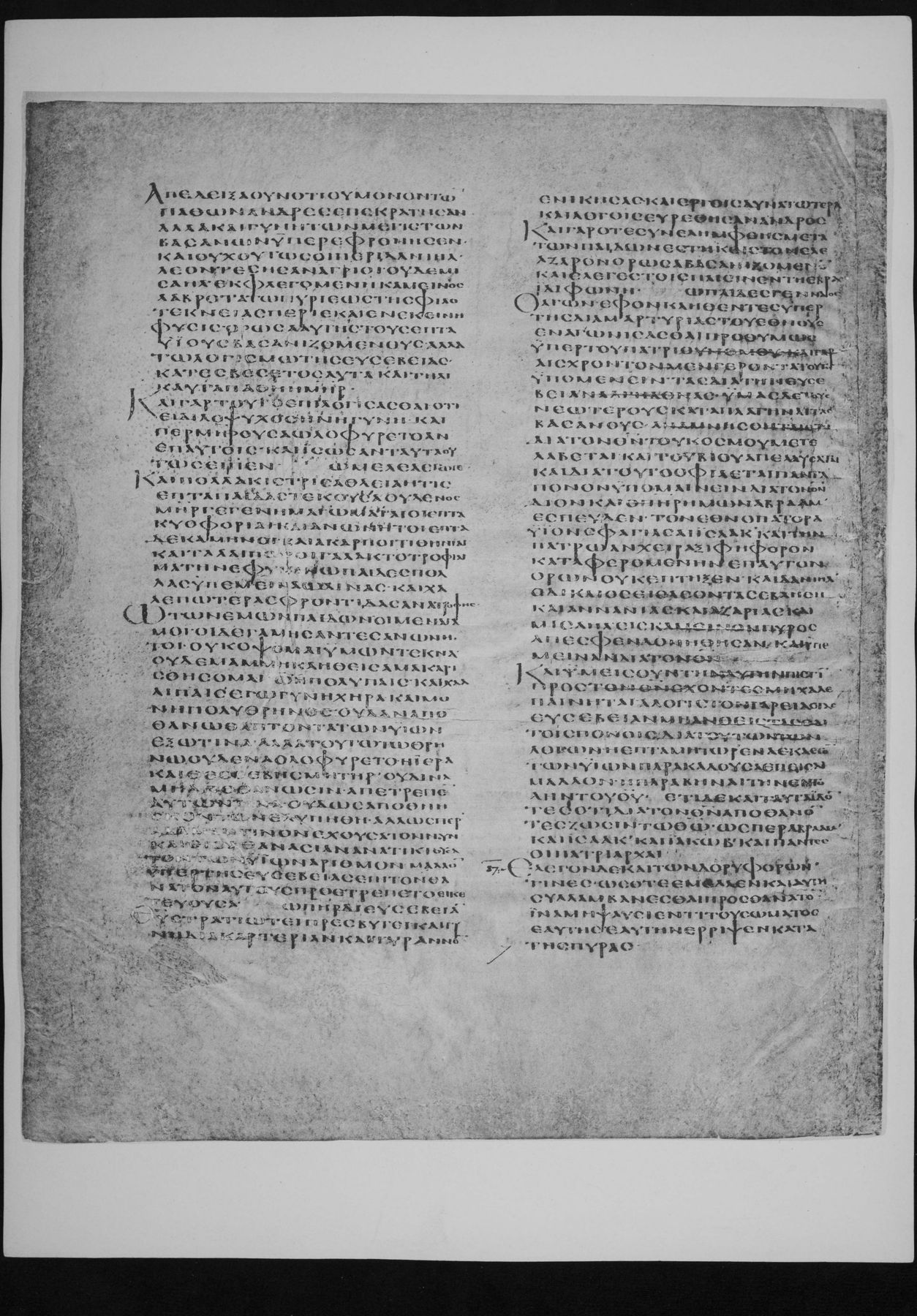
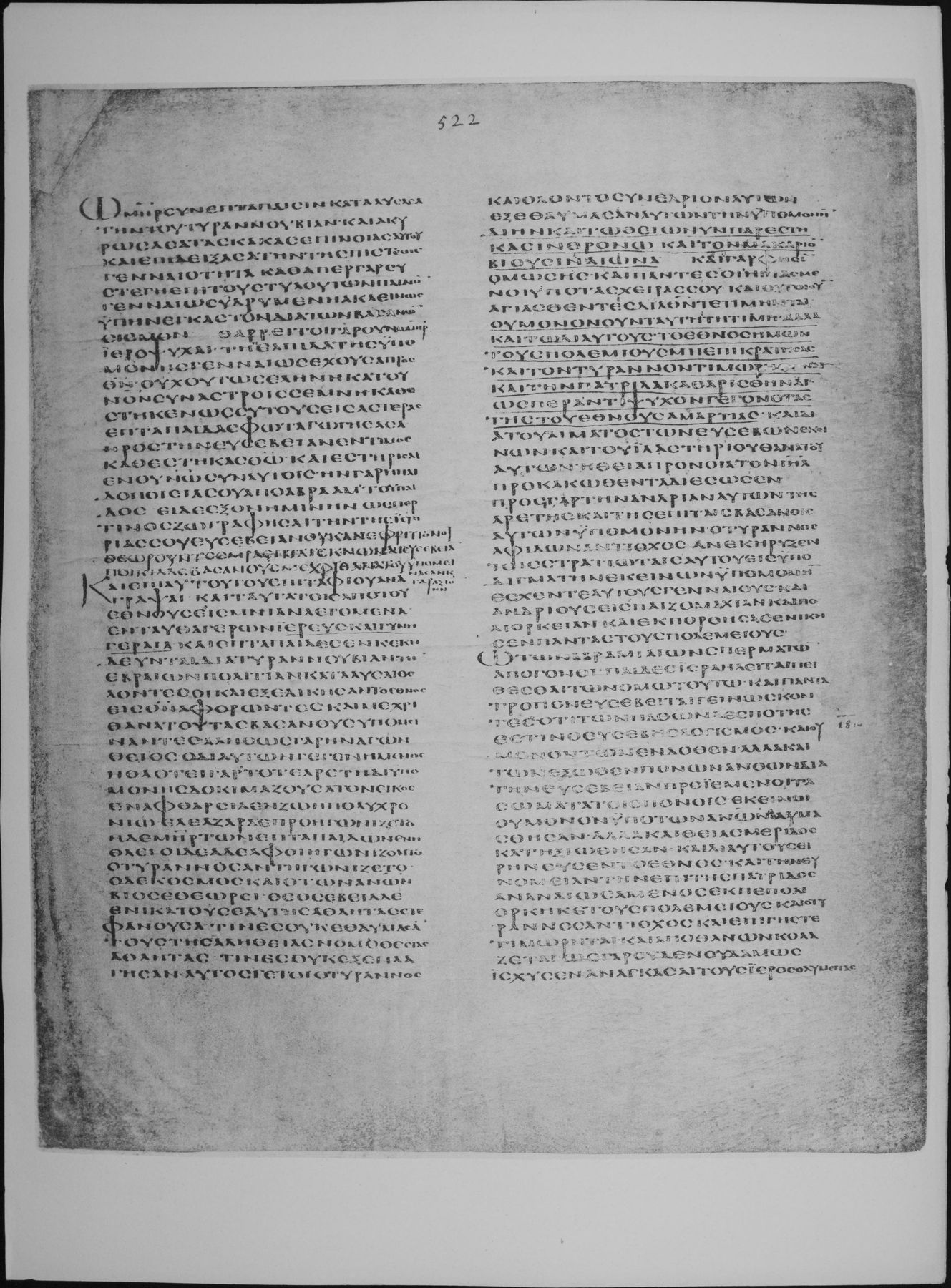
4 Maccabees 17:1 is on fol. 521v (full-size facsimile of 1879-83, Internet Archive codex-alexandrinus leaf 1049). The 1957 reduced facsimile prints beneath this page: 4 Maccabees xvi. 2-xvii. 1. Checked on the plate: the page begins at the start of 4 Maccabees 16:2 (first words read: ΑΠΕΔΕΙΞΑ ΟΥΝ ΟΤΙ ΟΥ ΜΟΝΟΝ ΤΩΝ ΠΑΘΩΝ ΑΝΔΡΕΣ ΕΠΕΚΡΑΤΗΣΑΝ ΑΛΛΑ ΚΑΙ ΓΥΝΗ ΤΩΝ ΜΕΓΙΣΤΩΝ ΒΑΣΑΝΩΝ ΥΠΕΡΕΦΡΟΝΗΣΕΝ). 4 Maccabees 17:2-8 is on fol. 522r (full-size facsimile of 1879-83, Internet Archive codex-alexandrinus leaf 1050). The 1957 reduced facsimile prints beneath this page: 4 Maccabees xvii. 2-xviii. 5. Checked on the plate: the page begins at the start of 4 Maccabees 17:2 (first words read: Ω ΜΗΤΗΡ ΣΥΝ ΕΠΤΑ ΠΑΙΣΙΝ ΚΑΤΑΛΥΣΑΣΑ ΤΗΝ ΤΟΥ ΤΥΡΑΝΝΟΥ ΒΙΑΝ).
1ἔλεγον δὲ καὶ τῶν δορυφόρων τινὲς ὡς ὅτε ἔμελλεν καὶ αὐτὴ συλλαμβάνεσθαι πρὸς θάνατον, ἵνα μὴ ψαύσειέν τι τοῦ σώματος αὐτῆς, ἑαυτὴν ἔρριψεν κατὰ τῆς πυρᾶς. 2Ὦ μήτηρ σὺν ἑπτὰ παισὶν καταλύσασα τὴν τοῦ τυράννου βίαν, καὶ ἀκυρώσασα τὰς κακὰς ἐπινοίας αὐτοῦ, καὶ ἐπιδείξασα τὴν τῆς πίστεως γενναιότητα. 3καθάπερ γὰρ σὺ στέγη ἐπὶ τοῦ στύλου τῶν παίδων γενναίως ἱδρυμένη, ἀκλινῶς ὑπήνεγκας τὸν διὰ τῶν βασάνων σεισμόν. 4θάρρει τοιγαροῦν, ὦ μήτηρ ἱερόψυχε, τὴν ἐλπίδα τῆς ὑπομονῆς γενναίως ἔχουσα πρὸς θεόν. 5οὐχ οὕτω σελήνη κατ᾽ οὐρανὸν σὺν ἄστροις σεμνὴ καθέστηκεν, ὡς σὺ τοὺς ἰσαστέρους ἑπτὰ παῖδας φωταγωγήσασα πρὸς τὴν εὐσέβειαν ἔντιμος καθέστηκας θεῷ, καὶ ἐστήρισαι ἐν οὐρανῷ σὺν αὐτοῖς. 6ἦν γὰρ ἡ παιδοποιία σου ἀπὸ Ἀβραὰμ τοῦ παιδός. 7Εἰ δὲ ἐξὸν ἡμῖν ἦν, ὥσπερ τινός, ζωγραφῆσαι τὴν τῆς ἱστορίας σου εὐσέβειαν, οὐκ ἂν ἔφριττον οἱ θεωροῦντες μητέρα ἑπτὰ τέκνων δι᾽ εὐσέβειαν ποικίλας βασάνους μέχρι θανάτου ὑπομείνασαν; 8καὶ γὰρ ἄξιον ἦν καὶ ἐπὶ αὐτοῦ τοῦ ἐπιταφίου ἀναγράψαι καὶ ταῦτα τοῖς ἀπὸ τοῦ ἔθνους εἰς μνείαν λεγόμενα
1And some of the spearbearers said, that when she herself was about to be seized for the purpose of being put to death, she threw herself upon the pile, rather than that they should touch her person. 2O thou mother, who together with seven children didst destroy the violence of the tyrant, and render void his wicked intentions, and exhibit the nobleness of faith! 3For thou, as a house bravely built upon the pillar of thy children, didst bear without swaying, the shock of tortures. 4Be of good cheer, therefore, O holy-minded mother! holding the firm [substance of the] hope of your steadfastness with God. 5Not so gracious does the moon appear with the stars in heaven, as thou art established honourable before God, and fixed in the firmament with thy sons whom thou didst illuminate with religion to the stars. 6For thy bearing of children was after the fashion of a child of Abraham. 7And, were it lawful for us to paint as on a tablet the religion of thy story, the spectators would not shudder at beholding the mother of seven children enduring for the sake of religion various tortures even unto death. 8And it had been a worthy thing to have inscribed upon the tomb itself these words as a memorial to those of the nation,
Where on the image
4 Maccabees 17:9-16 is on fol. 522r (full-size facsimile of 1879-83, Internet Archive codex-alexandrinus leaf 1050). The 1957 reduced facsimile prints beneath this page: 4 Maccabees xvii. 2-xviii. 5. Checked on the plate: the page begins at the start of 4 Maccabees 17:2 (first words read: Ω ΜΗΤΗΡ ΣΥΝ ΕΠΤΑ ΠΑΙΣΙΝ ΚΑΤΑΛΥΣΑΣΑ ΤΗΝ ΤΟΥ ΤΥΡΑΝΝΟΥ ΒΙΑΝ).
9Ἐνταῦθα γέρων ἱερεὺς, καὶ γυνὴ γεραιά, καὶ ἑπτὰ παῖδες ἐγκεκήδευνται διὰ τυράννου Βίαν, τὴν Ἐβραίων πολιτίαν καταλῦσαι θέλοντος. 10οἳ καὶ ἐξεδίκησαν τὸ ἔθνος εἰς θεὸν ἀφορῶντες, καὶ μέχρι θανάτου τὰς βασάνους ὑπομείναντες. 11ἀληθῶς γὰρ ἦν ἀγὼν θεῖος ὁ δι᾽ αὐτῶν γεγενημένος. 12ἠθλοθέτει γὰρ τότε ἀρετὴ δι᾽ ὑπομονῆς δοκιμάζουσα· τὸ νῖκος ἐν ἀφθαρσίᾳ ἐν ζωῇ πολυχρονίῳ. 13Ἐλεαζὰρ δὲ προηγωνίζετο· ἡ δὲ μήτηρ τῶν ἑπτὰ παίδων ἐνήθλει· οἱ δὲ ἀδελφοὶ ἠγωνίζοντο· 14ὁ τύραννος ἀντηγωνίζετο· ὁ δὲ κόσμος καὶ ὁ τῶν ἀνθρώπων βίος ἐθεώρει· 15θεοσέβεια δὲ ἐνίκα, τοὺς ἑαυτῆς ἀθλητὰς στεφανοῦσα. 16τίνες οὐκ ἐθαύμασαν τοὺς τῆς ἀληθείας νομοθεσίας ἀθλητάς; τίνες οὐκ ἐξεπλάγησαν;
9Here an aged priest, and an aged woman, and seven sons, are buried through the violence of a tyrant, who wished to destroy the polity of the Hebrews. 10These also avenged their nation, looking unto God, and enduring torments unto death. 11For it was a truly divine contest which was carried through by them. 12For at that time virtue presided over the contest, approving the victory through endurance, namely, immortality, eternal life. 13Eleazar was the first to contend: and the mother of the seven children entered the contest; and the brethren contended. 14The tyrant was the opposite; and the world and living men were the spectators. 15And reverence for God conquered, and crowned her own athletes. 16Who did not admire those champions of true legislation? who were not astonied?
Where on the image
4 Maccabees 17:17-24 is on fol. 522r (full-size facsimile of 1879-83, Internet Archive codex-alexandrinus leaf 1050). The 1957 reduced facsimile prints beneath this page: 4 Maccabees xvii. 2-xviii. 5. Checked on the plate: the page begins at the start of 4 Maccabees 17:2 (first words read: Ω ΜΗΤΗΡ ΣΥΝ ΕΠΤΑ ΠΑΙΣΙΝ ΚΑΤΑΛΥΣΑΣΑ ΤΗΝ ΤΟΥ ΤΥΡΑΝΝΟΥ ΒΙΑΝ).
17Αὐτός γέ τοι ὁ τύραννος καὶ ὅλον τὸ συνέδριον αὐτῶν ἐξεθαύμασαν αὐτῶν τὴν ὑπομονήν, 18δι᾽ ἣν καὶ τῷ θείῳ νῦν παρεστήκασιν θρόνῳ, καὶ τὸν μακάριον βιοῦσιν αἰῶνα· 19καὶ γάρ φησιν ὁ Μωσῆς Καὶ πάντες οἱ ἡγιασμένοι ὑπὸ τὰς χεῖράς σου. 20καὶ οὗτοι οὖν ἁγιασθέντες διὰ θεὸν τετίμηνται οὐ μόνον οὖν ταύτῃ τῇ τιμῇ, ἀλλὰ καὶ τῷ δι᾽ αὐτοὺς τὸ ἔθνος ἡμῶν τοὺς πολεμίους μὴ ἐπικρατῆσαι, 21καὶ τὸν τύραννον τιμωρηθῆναι καὶ τὴν πατρίδα καθαρισθῆναι· 22ὥσπερ ἀντίψυχον γεγονότας τῆς τοῦ ἔθνους ἁμαρτίας καὶ διὰ τοῦ αἵματος τῶν εὐσεβῶν ἐκείνων καὶ τοῦ ἱλαστηρίου θανάτου αὐτῶν, ἡ θεία πρόνοια τὸν Ἰσραὴλ προκακωθέντα διέσωσεν. 23πρὸς γὰρ τὴν ἀνδρίαν αὐτῶν τῆς ἀρετῆς καὶ τὴν ἐπὶ ταῖς βασάνοις αὐτῶν ὑπομονὴν ὁ τύραννος ἀφιδὼν Ἀντίοχος ἀνεκήρυξεν τοῖς στρατιώταις αὐτοῦ εἰς ὑπόδιγμα τὴν ἐκείνων ὑπομονήν· 24ἔσχεν τε αὐτοὺς γενναίους καὶ ἀνδρείους εἰς πεζομαχίαν καὶ πολιορκίαν· καὶ ἐκπορθήσας ἐνίκησεν πάντας τοὺς πολεμίους.
17The tyrant himself, and all their council, admired their endurance; 18through which, also, they now stand beside the divine throne, and live a blessed life. 19For Moses saith, And all the saints are under thy hands. 20These, therefore, having been sanctified through God, have been honoured not only with this honour, but that also by their means the enemy did not overcome our nation; 21and that the tyrant was punished, and their country purified. 22For they became the antipoise to the sin of the nation; and the Divine Providence saved Israel, aforetime afflicted, by the blood of those pious ones, and their propitiatory death. 23For the tyrant Antiochus, looking to their manly virtue, and to their endurance in torture, proclaimed that endurance as an example to his soldiers. 24And they proved to be to him noble and brave for land battles and sieges; and he conquered and stormed the towns of all his enemies.
Cite
Sources
- Source: Codex Alexandrinus (British Library Royal MS 1 D. VI) via the British Museum photographic facsimiles of 1879-83 and 1957 (Internet Archive) + Swete's Septuagint + Brenton's English (holding institution)
- Critical edition: H. B. Swete, The Old Testament in Greek according to the Septuagint (1909)
← previous · → next · v cycle view · l back to library