4 Maccabees, Chapter 4 (Codex Alexandrinus)
Introduction
4 Maccabees 4 in the Greek Old Testament (the Septuagint) as written in Codex Alexandrinus, a Greek Bible copied in the fifth century, probably in Egypt, and now in the British Library (Royal MS 1 D. VI, the second of its four volumes). It is one of the three great early codices of the whole Greek Bible, with Codex Vaticanus and Codex Sinaiticus.
This entry meets the strict three-criteria standard of the Theosis Library:
- Manuscript scan: the pages of Codex Alexandrinus carrying this chapter (fol. 514v, fol. 515r, fol. 515v), from the full-size photographic (autotype) facsimile published by the British Museum in 1879-1883, as digitised on the Internet Archive. The verse range of every page comes from the reduced photographic facsimile of 1957, which prints it beneath each plate, and the opening words of every page were read on the plate to confirm the page and the verse it begins with. Each section links to the page or pages that hold its verses. Folio numbers are those written at the head of each leaf and visible on the plates.
- Original text: Swete's edition, which in the books of Maccabees prints the text of Codex Alexandrinus itself (Codex Vaticanus does not contain these books), with the readings of other manuscripts in his apparatus. Swete adds accents, breathings and punctuation and expands the abbreviated sacred names, so the plate shows the same text in unaccented capitals.
- English translation: Sir Lancelot C. L. Brenton, The Septuagint Version of the Old Testament (1844; 1851 edition), a translation of the Greek, public domain, from the eBible.org text.
How was this verified? (Provenance)
Where on the image
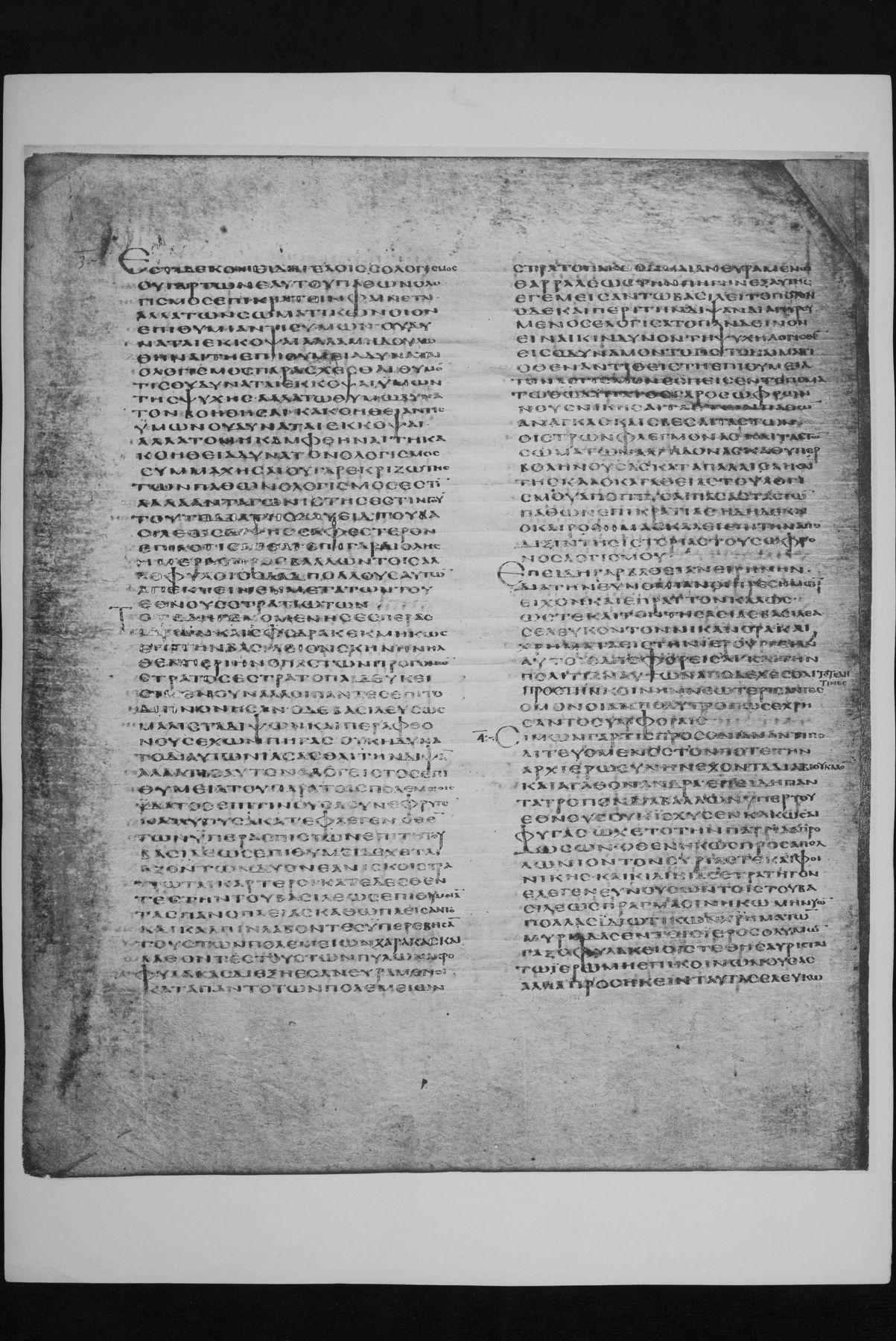
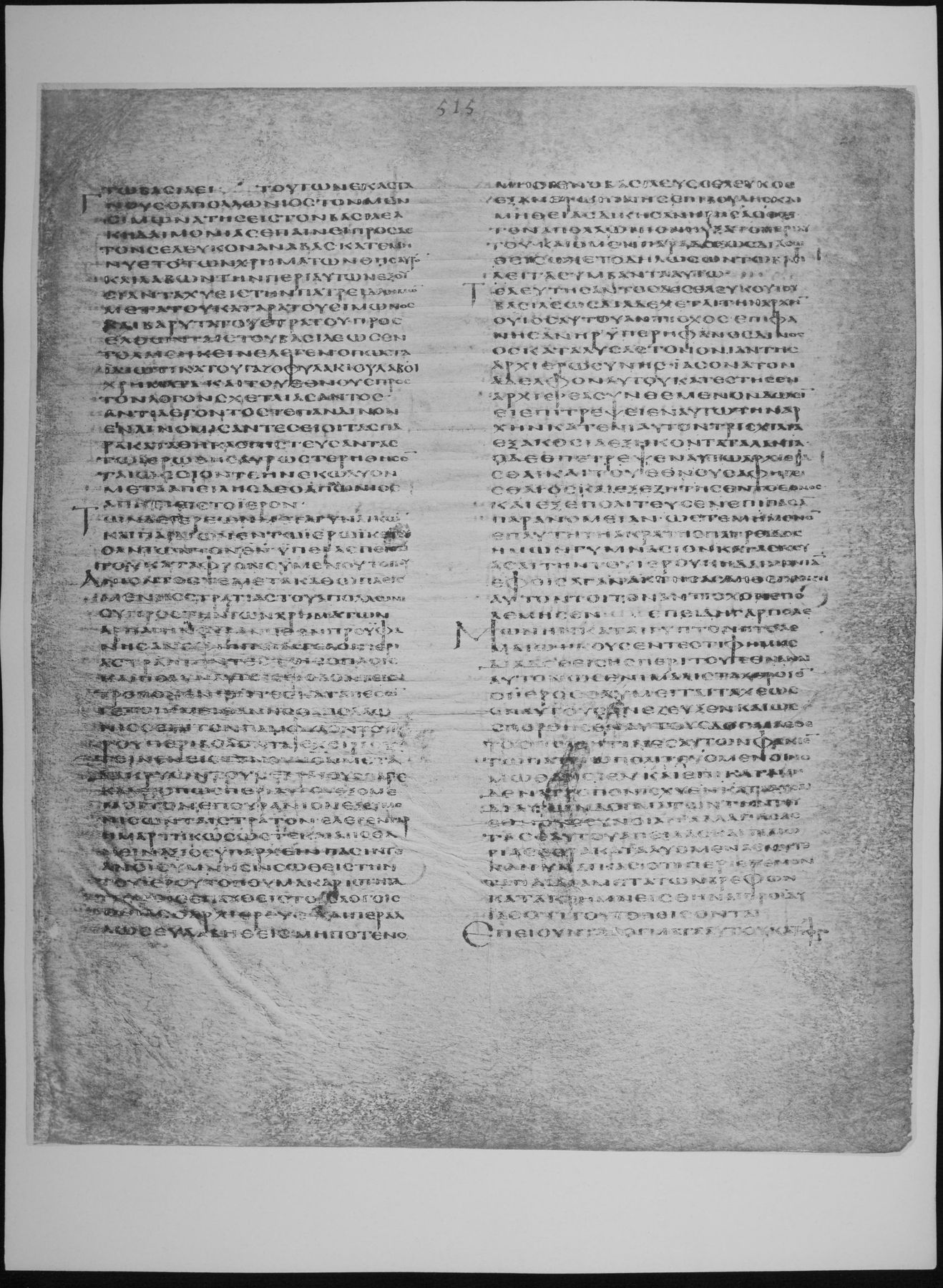
4 Maccabees 4:1-3 is on fol. 514v (full-size facsimile of 1879-83, Internet Archive codex-alexandrinus leaf 1035). The 1957 reduced facsimile prints beneath this page: 4 Maccabees iii. 1-iv. 3. Checked on the plate: the page begins at the start of 4 Maccabees 3:1 (first words read: ΕΣΤΙ ΔΕ ΚΟΜΙΔΗ ΓΕΛΟΙΟΣ Ο ΛΟΓΙΣΜΟΣ ΟΥ ΓΑΡ ΤΩΝ ΕΑΥΤΟΥ ΠΑΘΩΝ). 4 Maccabees 4:3-8 is on fol. 515r (full-size facsimile of 1879-83, Internet Archive codex-alexandrinus leaf 1036). The 1957 reduced facsimile prints beneath this page: 4 Maccabees iv. 3-iv. 26. Checked on the plate: the page begins inside 4 Maccabees 4:3 (first words read: ΤΩ ΒΑΣΙΛΕΙ ΤΟΥΤΩΝ ΕΚΑΣΤΑ ΓΝΟΥΣ Ο ΑΠΟΛΛΩΝΙΟΣ ΤΟΝ ΜΕΝ ΣΙΜΩΝΑ ΤΗΣ ΕΙΣ ΤΟΝ ΒΑΣΙΛΕΑ).
1Σίμων γάρ τις πρὸς Ὀνίαν ἀντιπολιτευόμενος τόν ποτε τὴν ἀρχιερωσύνην ἔχοντα διὰ βίου, καλὸν καὶ ἀγαθὸν ἄνδρα, ἐπειδὴ πάντα τρόπον διαβάλλων ὑπὲρ τοῦ ἔθνους οὐκ ἴσχυσεν κακῶσαι, φυγὰς ᾤχετο, τὴν πατρίδα προδώσων. 2ὅθεν ἥκων πρὸς Ἀπολλώνιον, τὸν Συρίας τε καὶ Φοινίκης καὶ Κιλικίας στρατηγόν, ἔλεγεν 3Εὔνους ὢν τοῖς τοῦ βασιλέως πράγμασιν ἥκω, μηνύων πολλὰς ἰδιωτικῶν χρημάτων μυριάδας ἐν τοῖς Ἰεροσολύμων γαζοφυλακίοις τεθησαυρίσθαι τῷ ἱερῷ μὴ ἐπικοινωνούσας, ἀλλὰ προσήκειν ταῦτα Σελεύκῳ τῷ βασιλεῖ. 4τούτων ἕκαστα γνοὺς ὁ Ἀπολλώνιος, τὸν μὲν Σίμωνα τῆς εἰς τὸν βασιλέα κηδεμονίας ἐπαινεῖ, πρὸς δὲ τὸν Σέλευκον ἀναβὰς κατεμήνυε τὸν τῶν χρημάτων θησαυρόν· 5καὶ λαβὼν τὴν περὶ αὐτῶν ἐξουσίαν, ταχὺ εἰς τὴν πατρίδα ἡμῶν μετὰ τοῦ καταράτου Σίμωνος καὶ βαρυτάτου στρατοῦ 6προσελθών, ταῖς τοῦ βασιλέως ἐντολαῖς ἥκειν ἔλεγεν, ὅπως τὰ ἰδιωτικὰ τοῦ γαζοφυλακίου λάβοι χρήματα. 7καὶ τοῦ ἔθνους πρὸς τὸν λόγον σχετλιάσαντος ἀντιλέγοντός τε, πάνδεινον εἶναι νομίσαντες εἰ οἱ τὰς παρακαταθήκας πιστεύσαντες τῷ ἱερῷ θησαυρῷ στερηθήσονται, ὡς οἷόν τε ἦν ἐκώλυον. 8μετὰ ἀπειλῆς δὲ ὁ Ἀπολλώνιος ἀπῄει εἰς τὸ ἱερόν.
1For a certain man named Simon, who was in opposition to Onias, who once held the high priesthood for life, and was an honourable and good man, after that by slandering him in every way, he could not injure him with the people, went away as an exile, with the intention of betraying his country. 2Whence coming to Apollonius, the military governor of Syria, and Phœnicia, and Cilicia, he said, 3Having good will to the king's affairs, I am come to inform thee that infinite private wealth is laid up in the treasuries of Jerusalem which do not belong to the temple, but pertain to king Seleucus. 4Apollonius, acquainting himself with the particulars of this, praised Simon for his care of the king's interests, and going up to Seleucus informed him of the treasure; 5and getting authority about it, and quickly advancing into our country with the accursed Simon and a very heavy force, 6he said that he came with the commands of the king that he should take the private money of the treasury. 7And the nation, indignant at this proclamation, and replying to the effect that it was extremely unfair that those who had committed deposits to the sacred treasury should be deprived of them, resisted as well as they could. 8But Apollonius went away with threats into the temple.
Where on the image
4 Maccabees 4:9-16 is on fol. 515r (full-size facsimile of 1879-83, Internet Archive codex-alexandrinus leaf 1036). The 1957 reduced facsimile prints beneath this page: 4 Maccabees iv. 3-iv. 26. Checked on the plate: the page begins inside 4 Maccabees 4:3 (first words read: ΤΩ ΒΑΣΙΛΕΙ ΤΟΥΤΩΝ ΕΚΑΣΤΑ ΓΝΟΥΣ Ο ΑΠΟΛΛΩΝΙΟΣ ΤΟΝ ΜΕΝ ΣΙΜΩΝΑ ΤΗΣ ΕΙΣ ΤΟΝ ΒΑΣΙΛΕΑ).
9τῶν δὲ ἱερέων μετὰ γυναικῶν καὶ παιδίων ἐν τῷ ἱερῷ ἱκετευσάντων τὸν θεὸν ὑπερασπίσαι τοῦ καταφρονουμένου τόπου, 10ἀνιόντος τε μετὰ καθωπλισμένης στρατιᾶς τοῦ Ἀπολλωνίου πρὸς τὴν τῶν χρημάτων ἁρπαγήν, οὐρανόθεν προυφάνησαν ἔφιπποι ἄγγελοι περιαστράπτοντες τοῖς ὅπλοις, καὶ πολὺν αὐτοῖς φόβον τε καὶ τρόμον ἐνιόντες. 11καταπεσών γε τοι ἡμιθανὴς ὁ Ἀπολλώνιος ἐπὶ τὸν πάμφυλον τοῦ ἱεροῦ περίβολον, τὰς χεῖρας ἐξέτεινεν εἰς τὸν οὐρανὸν καὶ μετὰ δακρύων τοὺς Ἐβραίους παρεκάλει ὅπως περὶ αὐτοῦ εὐξόμενοι, τὸν ἐπουράνιον ἐξευμενίσωνται στρατόν. 12ἔλεγεν γὰρ ἡμαρτηκώς, ὥστε καὶ ἀποθανεῖν ἄξιος ὑπάρχειν, πᾶσίν τε ἀνθρώποις ὑμνήσειν σωθεὶς τὴν τοῦ ἱεροῦ τόπου μακαριότητα. 13τούτοις ἐπαχθεὶς τοῖς λόγοις Ὀνίας ὁ ἀρχιερεύς, καίπερ ἄλλως εὐλαβηθεὶς μή ποτε νομίσειεν ὁ βασιλεὺς Σέλευκος ἐξ ἀνθρωπίνης ἐπιβουλῆς καὶ μὴ θείας δίκης ἀνῃρῆσθαι τὸν Ἀπολλώνιον, ηὔξατο περὶ αὐτοῦ. 14καὶ ὁ μὲν παραδόξως διασωθεὶς ᾤχετο, δηλώσων τῷ βασιλεῖ τὰ συμβάντα αὐτῷ. 15Τελευτήσαντος δὲ Σελεύκου τοῦ βασιλέως, διαδέχεται τὴν ἀρχὴν ὁ υἱὸς αὐτοῦ Ἀντίοχος Ἐπιφανής, ἀνὴρ ὑπερήφανος, δεινός· 16ὃς καταλύσας τὸν Ὀνίαν τῆς ἀρχιερωσύνης Ἰάσονα τὸν ἀδελφὸν αὐτοῦ κατέστησεν ἀρχιερέα,
9And the priests, with the women and children, having supplicated God to throw his shield over the holy, despised place, 10and Apollonius going up with his armed force to the seizure of the treasure,—there appeared from heaven angels riding on horseback, all radiant in armour, filling them with much fear and trembling. 11And Apollonius fell down half dead upon the court which is open to all nations, and extended his hands to heaven, and implored the Hebrews, with tears, to pray for him, and propitiate the heavenly host. 12For he said that he had sinned, so as to be consequently worthy of death; and that if he were saved, he would celebrate to all men the blessedness of the holy place. 13Onias the high priest, induced by these words, although for other reasons anxious that king Seleucus should not suppose that Apollonius was slain by human device and not by Divine punishment, prayed for him; 14and he being thus unexpectedly saved, departed to manifest to the king what had happened to him. 15But on the death of Seleucus the king, his son Antiochus Epiphanes succeeds to the kingdom: a man of haughty pride and terrible. 16Who having deposed Onias from the high priesthood, appointed his brother Jason to be high priest:
Where on the image
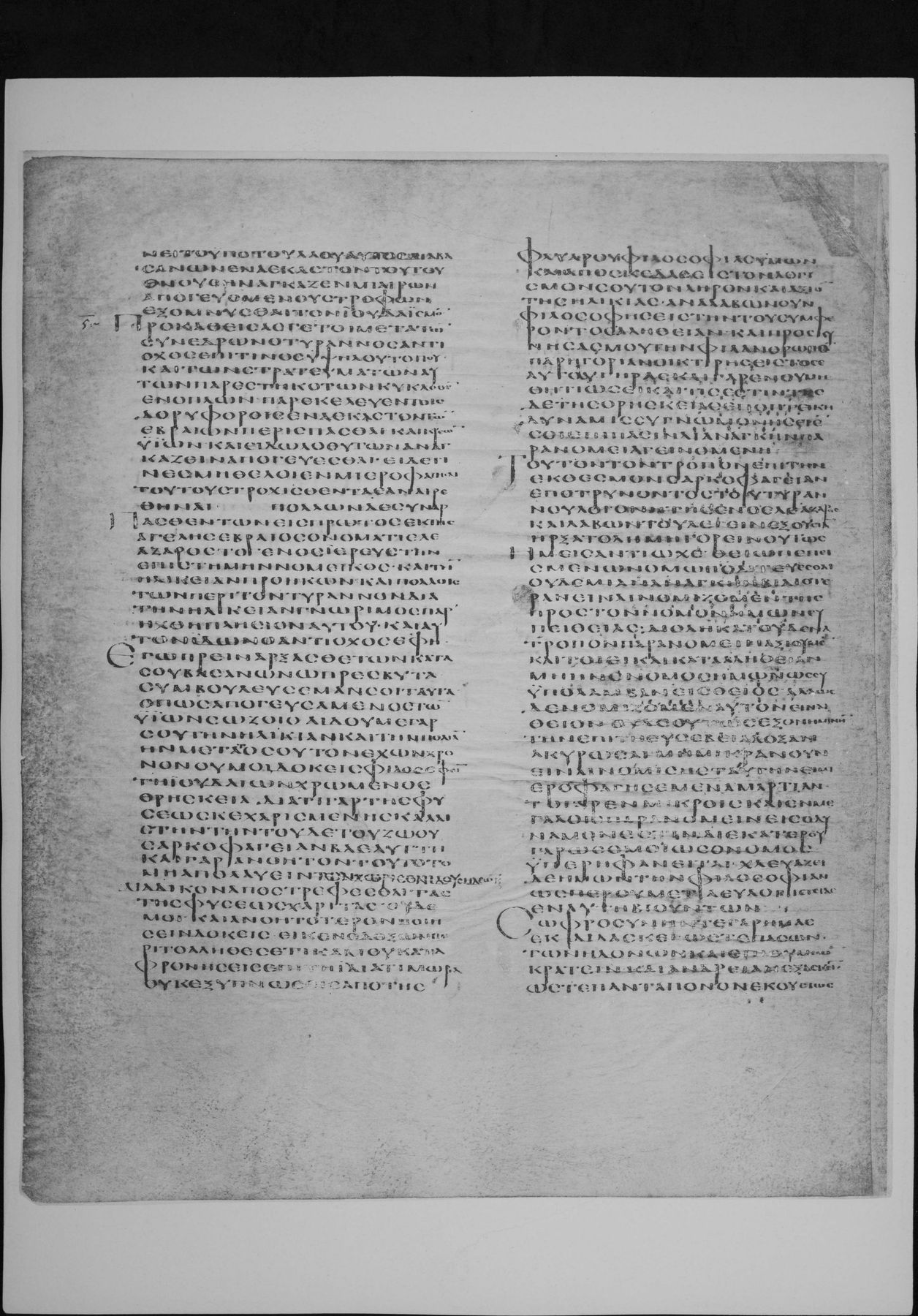
4 Maccabees 4:17-26 is on fol. 515r (full-size facsimile of 1879-83, Internet Archive codex-alexandrinus leaf 1036). The 1957 reduced facsimile prints beneath this page: 4 Maccabees iv. 3-iv. 26. Checked on the plate: the page begins inside 4 Maccabees 4:3 (first words read: ΤΩ ΒΑΣΙΛΕΙ ΤΟΥΤΩΝ ΕΚΑΣΤΑ ΓΝΟΥΣ Ο ΑΠΟΛΛΩΝΙΟΣ ΤΟΝ ΜΕΝ ΣΙΜΩΝΑ ΤΗΣ ΕΙΣ ΤΟΝ ΒΑΣΙΛΕΑ). 4 Maccabees 4:26 is on fol. 515v (full-size facsimile of 1879-83, Internet Archive codex-alexandrinus leaf 1037). The 1957 reduced facsimile prints beneath this page: 4 Maccabees iv. 26-v. 23. Checked on the plate: the page begins inside 4 Maccabees 4:26 (first words read: ΒΑΣΑΝΩΝ ΕΝΑ ΕΚΑΣΤΟΝ ΤΟΥ ΓΕΝΟΥΣ ΗΝΑΓΚΑΖΕΝ ΜΙΑΡΩΝ ΑΠΟΓΕΥΟΜΕΝΟΥΣ ΤΡΟΦΩΝ).
17συνθέμενον δώσειν, εἰ ἐπιτρέψειεν αὐτῷ τὴν ἀρχήν, κατ᾽ ἐνιαυτὸν τρισχίλια ἑξακόσια ἑξήκοντα τάλαντα. 18ὁ δὲ ἐπέτρεψεν αὐτῷ ἀρχιερᾶσθαι καὶ τοῦ ἔθνους ἀφηγεῖσθαι. 19ὃς καὶ ἐξεζήτησεν τὸ ἔθνος, καὶ ἐξεπολίτευσεν ἐπὶ πᾶσαν παρανομίαν· 20ὥστε μὴ μόνον ἐπ᾽ αὐτῇ τῇ ἄκρᾳ τῆς πατρίδος ἡμῶν γυμνάσιον κατασκευάσαι, ἀλλὰ καὶ καταλῦσαι τὴν τοῦ ἱεροῦ κηδεμονίαν. 21ἐφ᾽ οἷς ἀγανακτήσασα ἡ θεία δίκη αὐτόν τοι τὸν Ἀντίοχον ἐπολέμησεν. 22ἐπειδὴ γὰρ πολεμῶν ἦν κατ᾽ Αἴγυπτον Πτολεμαίῳ, ἤκουσέν τε ὅτι φήμης διαδοθείσης περὶ τοῦ τεθνάναι αὐτόν, ὡς ἔνι μάλιστα χαίροιεν οἱ Ἰεροσολυμεῖται, ταχέως ἐπ᾽ αὐτοὺς ἀνέζευξεν. 23καὶ ὡς ἐπόρθησεν αὐτούς, δόγμα ἔθετο ὅπως εἴ τινες αὐτῶν φάνοιεν τῷ πατρίῳ πολιτευόμενοι νόμῳ, θάνοιεν. 24καὶ ἐπεὶ κατὰ μηδένα τρόπον ἴσχυεν καταλῦσαι διὰ τῶν δογμάτων τὴν τοῦ ἔθνους εὔνοιαν, ἀλλὰ πάσας τὰς ἑαυτοῦ ἀπειλὰς καὶ τιμωρίας ἑώρα καταλυομένας, 25ὥστε καὶ γυναῖκας, ὅτι περιέτεμον τὰ παιδία, μετὰ τῶν βρεφῶν κατακρημνισθῆναι, προειδυίας ὅτι τοῦτο πείσονται· 26ἐπεὶ οὖν τὰ δόγματα αὐτοῦ κατεφρονεῖτο ὑπὸ τοῦ λαοῦ, αὐτὸς διὰ βασάνων ἕνα ἕκαστον τοῦ ἔθνους ἠνάγκαζεν, μιερῶν ἀπογευομένους τροφῶν, ἐξόμνυσθαι τὸν Ἰουδαισμόν.
17who had made a covenant, if he would give him this authority, to pay yearly three thousand six hundred and sixty talents. 18And he committed to him the high priesthood and rulership over the nation. 19And he both changed the manner of living of the people, and perverted their civil customs into all lawlessness. 20So that he not only erected a gymnasium on the very citadel of our country, [but neglected] the guardianship of the temple. 21At which Divine vengeance being grieved, instigated Antiochus himself against them. 22For being at war with Ptolemy in Egypt, he heard that on a report of his death being spread abroad, the inhabitants of Jerusalem had exceedingly rejoiced, and he quickly marched against them. 23And having subdued them, he established a decree that if any of them lived according to the laws of his country, he should die. 24And when he could by no means destroy by his decrees the obedience to the law of the nation, but saw all his threats and punishments without effect, 25for even women, because they continued to circumcise their children, were flung down a precipice along with them, knowing beforehand of the punishment. 26When, therefore, his decrees were disregarded by the people, he himself compelled by means of tortures every one of this race, by tasting forbidden meats, to abjure the Jewish religion.
Cite
Sources
- Source: Codex Alexandrinus (British Library Royal MS 1 D. VI) via the British Museum photographic facsimiles of 1879-83 and 1957 (Internet Archive) + Swete's Septuagint + Brenton's English (holding institution)
- Critical edition: H. B. Swete, The Old Testament in Greek according to the Septuagint (1909)
← previous · → next · v cycle view · l back to library