4 Maccabees, Chapter 3 (Codex Alexandrinus)
Introduction
4 Maccabees 3 in the Greek Old Testament (the Septuagint) as written in Codex Alexandrinus, a Greek Bible copied in the fifth century, probably in Egypt, and now in the British Library (Royal MS 1 D. VI, the second of its four volumes). It is one of the three great early codices of the whole Greek Bible, with Codex Vaticanus and Codex Sinaiticus.
This entry meets the strict three-criteria standard of the Theosis Library:
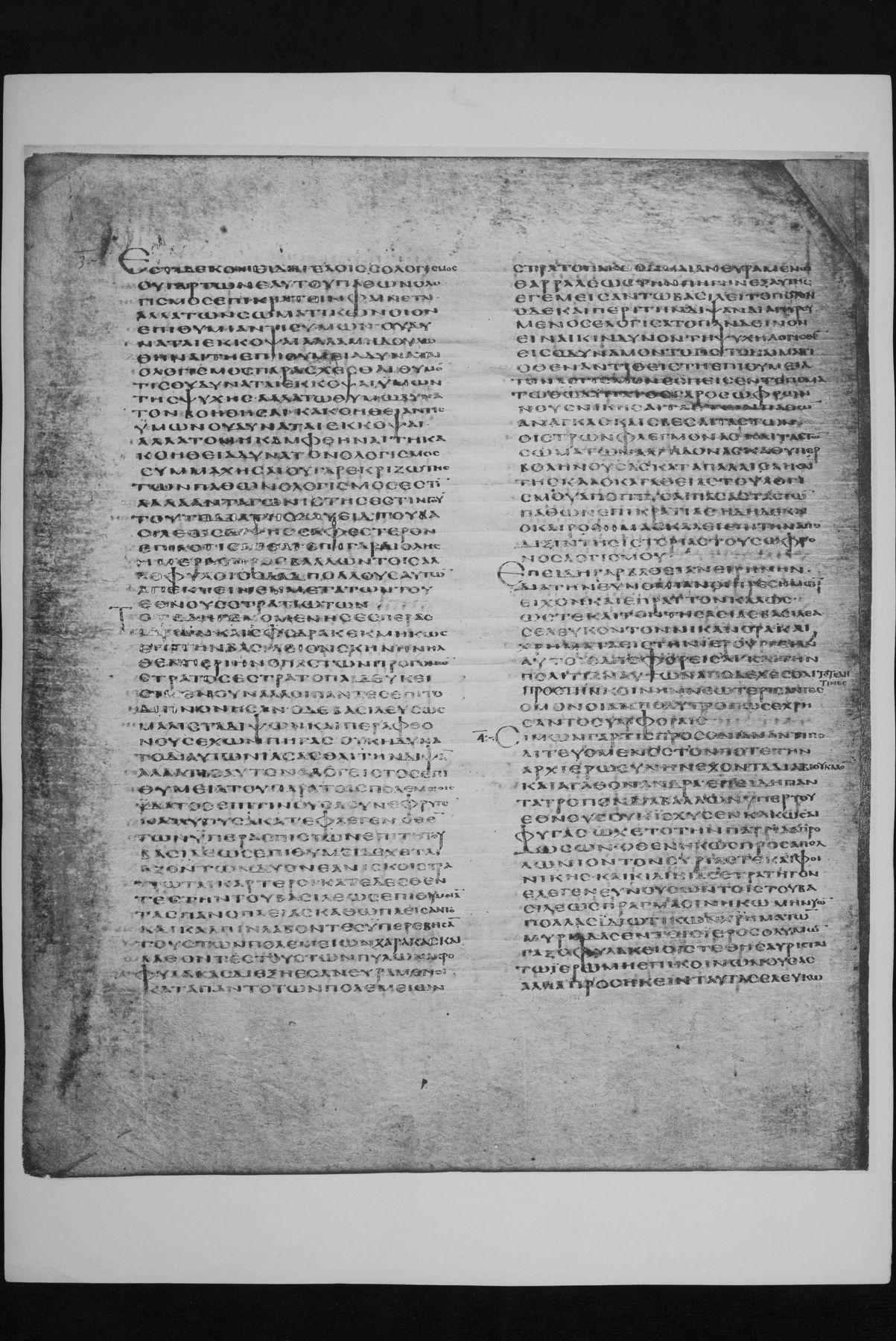
- Manuscript scan: the page of Codex Alexandrinus carrying this chapter (fol. 514v), from the full-size photographic (autotype) facsimile published by the British Museum in 1879-1883, as digitised on the Internet Archive. The verse range of every page comes from the reduced photographic facsimile of 1957, which prints it beneath each plate, and the opening words of every page were read on the plate to confirm the page and the verse it begins with. Each section links to the page or pages that hold its verses. Folio numbers are those written at the head of each leaf and visible on the plates.
- Original text: Swete's edition, which in the books of Maccabees prints the text of Codex Alexandrinus itself (Codex Vaticanus does not contain these books), with the readings of other manuscripts in his apparatus. Swete adds accents, breathings and punctuation and expands the abbreviated sacred names, so the plate shows the same text in unaccented capitals.
- English translation: Sir Lancelot C. L. Brenton, The Septuagint Version of the Old Testament (1844; 1851 edition), a translation of the Greek, public domain, from the eBible.org text.
How was this verified? (Provenance)
Where on the image
4 Maccabees 3:1-8 is on fol. 514v (full-size facsimile of 1879-83, Internet Archive codex-alexandrinus leaf 1035). The 1957 reduced facsimile prints beneath this page: 4 Maccabees iii. 1-iv. 3. Checked on the plate: the page begins at the start of 4 Maccabees 3:1 (first words read: ΕΣΤΙ ΔΕ ΚΟΜΙΔΗ ΓΕΛΟΙΟΣ Ο ΛΟΓΙΣΜΟΣ ΟΥ ΓΑΡ ΤΩΝ ΕΑΥΤΟΥ ΠΑΘΩΝ).
1ἔστι δὲ κομιδῇ γελοῖος ὁ λογισμός· οὐ γὰρ τῶν ἑαυτοῦ παθῶν ὁ λογισμὸς ἐπικρατεῖν φαίνεται, ἀλλὰ τῶν σωματικῶν. 2οἷον ἐπιθυμίαν τις ὑμῶν οὐ δύναται ἐκκόψαι, ἀλλὰ μὴ δουλωθῆναι τῇ ἐπιθυμίᾳ δύναται ὁ λογισμὸς παρασχέσθαι. 3θυμόν τις οὐ δύναται ἐκκόψαι ὑμῶν τῆς ψυχῆς, ἀλλὰ τῷ θυμῷ δυνατὸν βοηθῆσαι. 4κακοήθειάν τις ὑμῶν οὐ δύναται ἐκκόψαι, ἀλλὰ τὸ μὴ καμφθῆναι τῇ κακοηθείᾳ δυνατὸν ὁ λογισμὸς συμμαχῆσαι. 5οὐ γὰρ ἐκριζωτὴς τῶν παθῶν ὁ λογισμός ἐστιν, ἀλλὰ ἀνταγωνιστής. 6ἔστιν γοῦν τοῦτο διὰ τῆς Δαυεὶδ τοῦ βασιλέως δίψης σαφέστερον ἐπιλογίσασθαι. 7ἐπεὶ γὰρ δι᾽ ὅλης ἡμέρας προσβάλλων τοῖς ἀλλοφύλοις ὁ Δαυεὶδ πολλοὺς αὐτῶν ἀπέκτεινεν μετὰ τῶν τοῦ ἔθνους στρατιωτῶν, 8τότε δὴ γενομένης ἑσπέρας, ἱδρῶν καὶ σφόδρα κεκμηκώς, ἐπὶ τὴν βασίλειον σκηνὴν ἦλθεν, περὶ ἣν ὁ πᾶς τῶν προγόνων στρατὸς ἐστρατοπεδεύκει.
1The argument is exceedingly ridiculous: for reasoning does not appear to bear sway over its own affections, but over those of the body, 2in such a way as that any one of you may not be able to root out desire, but reasoning will enable you to avoid being enslaved to it. 3One may not be able to root out anger from the soul, but it is possible to withstand anger. 4Any one of you may not be able to eradicate malice, but reasoning has force to work with you to prevent your yielding to malice. 5For reasoning is not an eradicator, but an antagonist of the passions. 6And this may be more clearly comprehended from the thirst of King David. 7For after David had been attacking the Philistines the whole day, he with the soldiers of his nation slew many of them; 8then when evening came, sweating and very weary, he came to the royal tent, about which the entire host of our ancestors was encamped.
Where on the image
4 Maccabees 3:9-16 is on fol. 514v (full-size facsimile of 1879-83, Internet Archive codex-alexandrinus leaf 1035). The 1957 reduced facsimile prints beneath this page: 4 Maccabees iii. 1-iv. 3. Checked on the plate: the page begins at the start of 4 Maccabees 3:1 (first words read: ΕΣΤΙ ΔΕ ΚΟΜΙΔΗ ΓΕΛΟΙΟΣ Ο ΛΟΓΙΣΜΟΣ ΟΥ ΓΑΡ ΤΩΝ ΕΑΥΤΟΥ ΠΑΘΩΝ).
9οἱ μὲν οὖν ἄλλοι πάντες ἐπὶ τὸ δεῖπνον ἦσαν· 10ὁ δὲ βασιλεὺς ὡς μάλιστα διψῶν, καίπερ ἀφθόνους ἔχων πηγάς, οὐκ ἠδύνατο δι᾽ αὐτῶν ἰάσασθαι τὴν δίψαν. 11ἀλλά τις αὐτὸν ἀλόγιστος ἐπιθυμία τοῦ παρὰ τοῖς πολεμίοις ὕδατος ἐπιτείνουσα συνέφρυγε, καὶ λύουσα κατέφλεγεν. 12ὅθεν τῶν ὑπερασπιστῶν ἐπὶ τῇ τοῦ βασιλέως ἐπιθυμίᾳ σχετλιαζόντων, δύο νεανίσκοι στρατιῶται καρτεροί, καταιδεσθέντες τὴν τοῦ βασιλέως ἐπιθυμίαν, τὰς πανοπλίας καθωπλίσαντο, καὶ κάλπιν λαβόντες ὑπερέβησαν τοὺς τῶν πολεμίων χάρακας· 13καὶ λαθόντες τοὺς τῶν πυλῶν ἀκροφύλακας, διεξῄεσαν εὑράμενοι κατὰ πᾶν τὸ τῶν πολεμίων στρατόπεδον. 14καὶ ἀνευράμενοι θαρραλέως τήν πηγήν, ἐξ αὐτῆς ἐγέμισαν τῷ βασιλεῖ τὸ ποτόν. 15ὁ δὲ καὶ περὶ τὴν δίψαν διαπυρούμενος, ἐλογίσατο πάνδεινον εἶναι κίνδυνον τῇ ψυχῇ λογισθὲν ἰσοδύναμον τὸ ποτὸν αἵματι. 16ὅθεν ἀντιθεὶς τῇ ἐπιθυμίᾳ τὸν λογισμόν, ἔσπεισεν τὸ πόμα τῷ θεῷ.
9Now all the rest of them were at supper; 10but the king, being very much athirst, although he had numerous springs, could not by their means quench his thirst; 11but a certain irrational longing for the water in the enemy's camp grew stronger and fiercer upon him, and consumed him with languish. 12Wherefore his body-guards being troubled at this longing of the king, two valiant young soldiers, reverencing the desire of the king, put on their panoplies, and taking a pitcher, got over the ramparts of the enemies: 13and unperceived by the guardians of the gate, they went throughout the whole camp of the enemy in quest. 14And having boldly discovered the fountain, they filled out of it the draught for the king. 15But he, though parched up with thirst, reasoned that a draught reputed of equal value to blood, would be terribly dangerous to his soul. 16Wherefore, setting up reasoning in opposition to his desire, he poured out the draught to God.
Where on the image
4 Maccabees 3:17-21 is on fol. 514v (full-size facsimile of 1879-83, Internet Archive codex-alexandrinus leaf 1035). The 1957 reduced facsimile prints beneath this page: 4 Maccabees iii. 1-iv. 3. Checked on the plate: the page begins at the start of 4 Maccabees 3:1 (first words read: ΕΣΤΙ ΔΕ ΚΟΜΙΔΗ ΓΕΛΟΙΟΣ Ο ΛΟΓΙΣΜΟΣ ΟΥ ΓΑΡ ΤΩΝ ΕΑΥΤΟΥ ΠΑΘΩΝ).
17δυνατὸς γὰρ ὁ σώφρων νοῦς νικῆσαι τὰς τῶν παθῶν ἀνάγκας, καὶ σβέσαι τὰς τῶν οἴστρων φλεγμονάς, 18καὶ τὰς τῶν σωμάτων ἀλγηδόνας καθ᾽ ὑπερβολὴν οὔσας καταπαλαῖσαι, καὶ τῆς καλοκἀγαθίας τοῦ λογισμοῦ ἀποπτύσαι πάσας τὰς τῶν παθῶν ἐπικρατίας. 19Ἤδη δὲ καὶ ὁ καιρὸς ἡμᾶς καλεῖ ἐπὶ τὴν ἀπόδειξιν τῆς ἱστορίας τοῦ σώφρονος λογισμοῦ. 20ἐπειδὴ γὰρ βαθεῖαν εἰρήνην διὰ τὴν εὐνομίαν οἱ πατέρες ἡμῶν εἶχον, καὶ ἔπραττον καλῶς, ὥστε καὶ τὸν τῆς Ἀσίας βασιλέα Σέλευκον τὸν Νικάνορα καὶ χρήματα εἰς τὴν ἱερουργίαν αὐτοῖς ἀφορίσαι, καὶ τὴν πολιτίαν αὐτῶν ἀποδέχεσθαι· 21τότε δή τινες πρὸς τὴν κοινὴν νεωτερίσαντες ὁμόνοιαν πολυτρόπως ἐχρήσαντο συμφοραῖς.
17For the temperate mind has power to conquer the pressure of the passions, and to quench the fires of excitement, 18and to wrestle down the pains of the body, however excessive; and, through the excellency of reasoning, to abominate all the assaults of the passions. 19But the occasion now invites us to give an illustration of temperate reasoning from history. 20For at a time when our fathers were in possession of undisturbed peace through obedience to the law, and were prosperous, so that Seleucus Nicanor, the king of Asia, both assigned them money for divine service, and accepted their form of government, 21then certain persons, bringing in new things contrary to the general unanimity, in various ways fell into calamities.
Cite
Sources
- Source: Codex Alexandrinus (British Library Royal MS 1 D. VI) via the British Museum photographic facsimiles of 1879-83 and 1957 (Internet Archive) + Swete's Septuagint + Brenton's English (holding institution)
- Critical edition: H. B. Swete, The Old Testament in Greek according to the Septuagint (1909)
← previous · → next · v cycle view · l back to library