4 Maccabees, Chapter 6 (Codex Alexandrinus)
Introduction
4 Maccabees 6 in the Greek Old Testament (the Septuagint) as written in Codex Alexandrinus, a Greek Bible copied in the fifth century, probably in Egypt, and now in the British Library (Royal MS 1 D. VI, the second of its four volumes). It is one of the three great early codices of the whole Greek Bible, with Codex Vaticanus and Codex Sinaiticus.
This entry meets the strict three-criteria standard of the Theosis Library:
- Manuscript scan: the pages of Codex Alexandrinus carrying this chapter (fol. 516r, fol. 516v), from the full-size photographic (autotype) facsimile published by the British Museum in 1879-1883, as digitised on the Internet Archive. The verse range of every page comes from the reduced photographic facsimile of 1957, which prints it beneath each plate, and the opening words of every page were read on the plate to confirm the page and the verse it begins with. Each section links to the page or pages that hold its verses. Folio numbers are those written at the head of each leaf and visible on the plates.
- Original text: Swete's edition, which in the books of Maccabees prints the text of Codex Alexandrinus itself (Codex Vaticanus does not contain these books), with the readings of other manuscripts in his apparatus. Swete adds accents, breathings and punctuation and expands the abbreviated sacred names, so the plate shows the same text in unaccented capitals.
- English translation: Sir Lancelot C. L. Brenton, The Septuagint Version of the Old Testament (1844; 1851 edition), a translation of the Greek, public domain, from the eBible.org text.
How was this verified? (Provenance)
Where on the image
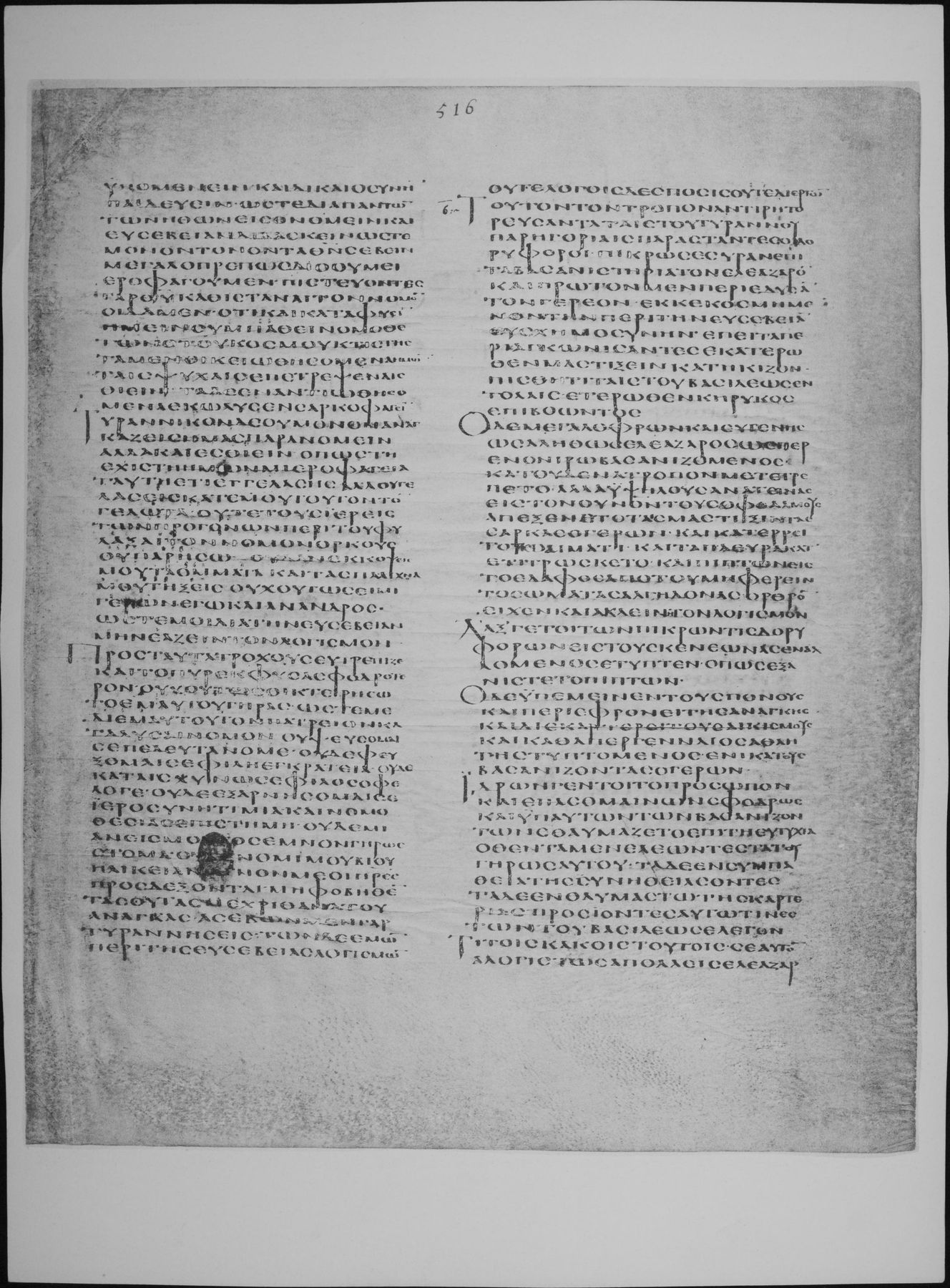
4 Maccabees 6:1-8 is on fol. 516r (full-size facsimile of 1879-83, Internet Archive codex-alexandrinus leaf 1038). The 1957 reduced facsimile prints beneath this page: 4 Maccabees v. 23-vi. 14. Checked on the plate: the page begins inside 4 Maccabees 5:23 (first words read: ΥΠΟΜΕΝΕΙΝ ΚΑΙ ΔΙΚΑΙΟΣΥΝΗΝ ΠΑΙΔΕΥΕΙ ΩΣΤΕ ΔΙΑ ΠΑΝΤΩΝ ΤΩΝ ΗΘΩΝ ΙΣΟΝΟΜΕΙΝ).
1Τοῦτον τὸν τρόπον ἀντιρητορεύσαντα ταῖς τοῦ τυράννου παρηγορίαις, παραστάντες οἱ δορυφόροι πικρῶς ἔσυραν ἐπὶ τὰ βασανιστήρια τὸν Ἐλεάζαρον. 2καὶ πρῶτον μὲν περιέδυσαν τὸν γεραιὸν ἐκκεκοσμημένον τὴν περὶ τὴν εὐσέβειαν εὐσχημοσύνην. 3ἔπειτα περιαγκωνίσαντες ἑκατέρωθεν, μάστιξιν κατῄκιζον, 4Πείσθητι ταῖς τοῦ βασιλέως ἐντολαῖς, ἑτέρωθεν κήρυκος ἐπιβοῶντος. 5ὁ δὲ μεγαλόφρων καὶ εὐγενὴς ὡς ἀληθῶς Ἐλεάζαρος, ὥσπερ ἐν ὀνείρῳ βασανιζόμενος κατ᾽ οὐδένα τρόπον μετετρέπετο. 6ἀλλὰ ὑψηλοὺς ἀνατείνας εἰς τὸν οὐρανὸν τοὺς ὀφθαλμούς, ἀπεξαίνετο ταῖς μάστιξιν τὰς σάρκας ὁ γέρων, καὶ κατερρεῖτο τῷ αἵματι, καὶ τὰ πλευρὰ κατετιτρώσκετο, 7καὶ πίπτων εἰς τὸ ἔδαφος, ἀπὸ τοῦ μὴ φέρειν τὸ σῶμα τὰς ἀλγηδόνας, ὀρθὸν εἶχεν καὶ ἀκλινῆ τὸν λογισμόν. 8λάξ γέ τοι τῶν πικρῶν τις δορυφόρων εἰς τοὺς κενεῶνας ἐναλλόμενος ἔτυπτεν, ὅπως ἐξανισταῖτο πίπτων.
1When Eleazar had in this manner answered the exhortations of the tyrant, the spearbearers came up, and rudely haled Eleazar to the instruments of torture. 2And first, they stripped the old man, adorned as he was with the comeliness of piety. 3Then tying back his arms and hands, they disdainfully used him with stripes; 4a herald opposite crying out, Obey the commands of the king. 5But Eleazar, the high-minded and truly noble, as one tortured in a dream, regarded it not at all. 6But raising his eyes on high to heaven, the old man's flesh was stripped off by the scourges, and his blood streamed down, and his sides were pierced through. 7And falling upon the ground, from his body having no power to support the pains, he yet kept his reasoning upright and unbending. 8Then one of the harsh spearbearers leaped upon his belly as he was falling, to force him upright.
Where on the image
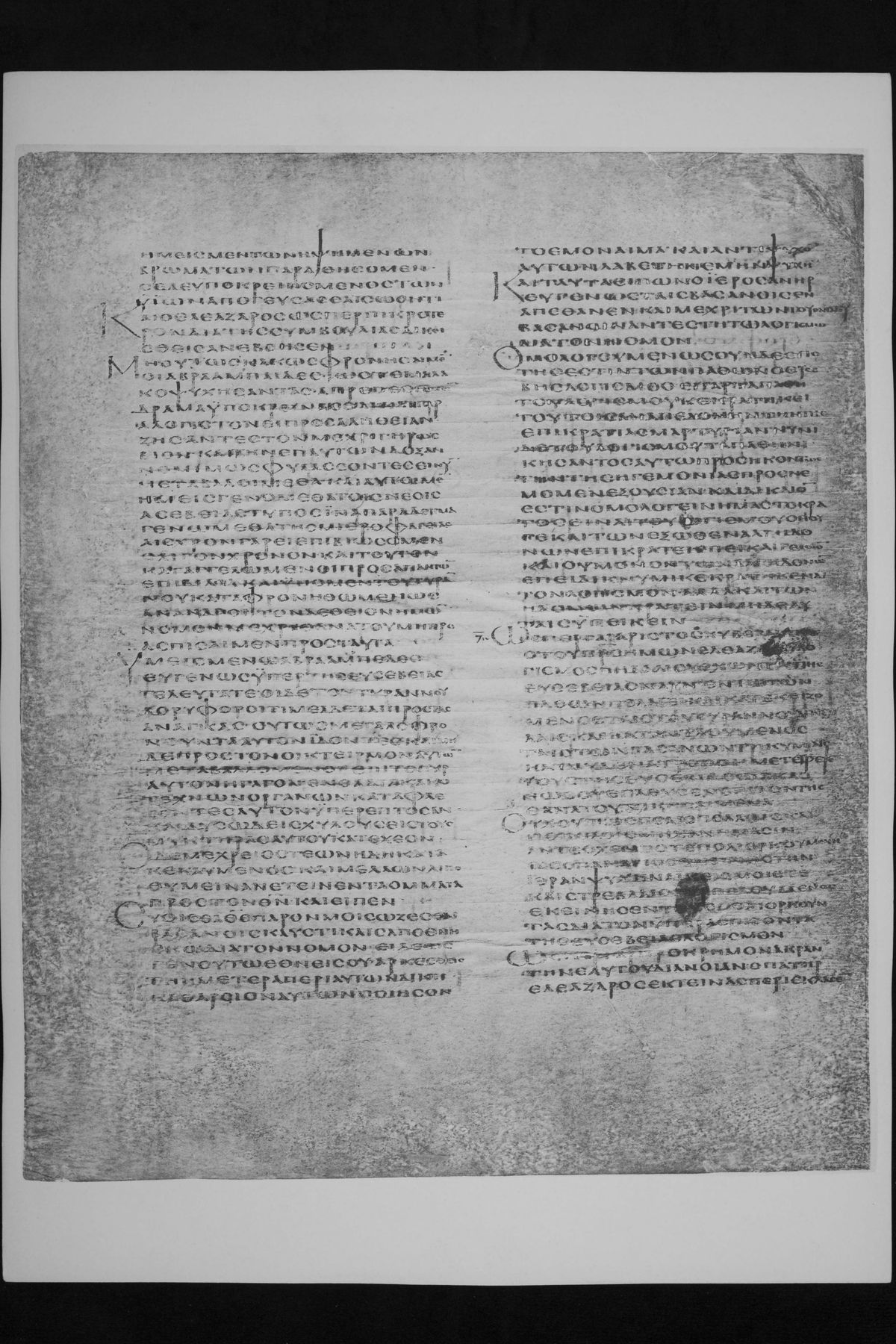
4 Maccabees 6:9-14 is on fol. 516r (full-size facsimile of 1879-83, Internet Archive codex-alexandrinus leaf 1038). The 1957 reduced facsimile prints beneath this page: 4 Maccabees v. 23-vi. 14. Checked on the plate: the page begins inside 4 Maccabees 5:23 (first words read: ΥΠΟΜΕΝΕΙΝ ΚΑΙ ΔΙΚΑΙΟΣΥΝΗΝ ΠΑΙΔΕΥΕΙ ΩΣΤΕ ΔΙΑ ΠΑΝΤΩΝ ΤΩΝ ΗΘΩΝ ΙΣΟΝΟΜΕΙΝ). 4 Maccabees 6:15-16 is on fol. 516v (full-size facsimile of 1879-83, Internet Archive codex-alexandrinus leaf 1039). The 1957 reduced facsimile prints beneath this page: 4 Maccabees vi. 15-vii. 5. Checked on the plate: the page begins at the start of 4 Maccabees 6:15 (first words read: ΗΜΕΙΣ ΜΕΝ ΤΩΝ ΗΨΗΜΕΝΩΝ ΒΡΩΜΑΤΩΝ ΠΑΡΑΘΗΣΟΜΕΝ ΣΥ ΔΕ ΥΠΟΚΡΙΝΟΜΕΝΟΣ ΤΩΝ ΥΕΙΩΝ).
9ὁ δὲ ὑπέμεινεν τοὺς πόνους καὶ περιεφρόνει τῆς ἀνάγκης καὶ διεκαρτέρει τοὺς αἰκισμούς, 10καὶ καθάπερ γενναῖος ἀθλητὴς τυπτόμενος ἐνίκα τοὺς βασανίζοντας ὁ γέρων. 11ἱδρῶν γέ τοι τὸ πρόσωπον, καὶ ἐπασθμαίνων σφοδρῶς, καὶ ὑπ᾽ αὐτῶν τῶν βασανιζόντων ἐθαυμάζετο ἐπὶ τῇ εὐτυχίᾳ. 12ὅθεν τὰ μὲν ἐλεῶντες τὰ τοῦ γήρως αὐτοῦ, 13τὰ δὲ ἐν συνπαθείᾳ τῆς συνηθείας ὄντες, τὰ δὲ ἐν θαυμαστῷ τῆς καρτερίας προσιόντες αὐτῷ τινες τῶν τοῦ βασιλέως ἔλεγον 14Τί τοῖς κακοῖς τούτοις σεαυτὸν ἀλογίστως ἀπόλλεις, Ἐλεαζάρ; 15ἡμεῖς μὲν τῶν ἡψημένων βρωμάτων παραθήσομεν· σὺ δὲ ὑποκρινόμενος τῶν ὑείων ἀπογεύσασθαι, σώθητι. 16Καὶ ὁ Ἐλεάζαρος, ὥσπερ πικρότερον διὰ τῆς συμβουλίας αἰκισθείς, ἀνεβόησεν
9But he endured the pains, and despised the cruelty, and persevered through the indignities; 10and like a noble athlete, the old man, when struck, vanquished his torturers. 11His countenance sweating, and he panting for breath, he was admired by the very torturers for his courage. 12Wherefore, partly in pity for his old age, 13partly from the sympathy of acquaintance, and partly in admiration of his endurance, some of the attendants of the king said, 14Why do you unreasonably destroy yourself, O Eleazar, with these miseries? 15We will bring you some meat cooked by yourself, and do you save yourself by pretending that you have eaten swine's flesh. 16And Eleazar, as though the advice more painfully tortured him, cried out,
Where on the image
4 Maccabees 6:17-24 is on fol. 516v (full-size facsimile of 1879-83, Internet Archive codex-alexandrinus leaf 1039). The 1957 reduced facsimile prints beneath this page: 4 Maccabees vi. 15-vii. 5. Checked on the plate: the page begins at the start of 4 Maccabees 6:15 (first words read: ΗΜΕΙΣ ΜΕΝ ΤΩΝ ΗΨΗΜΕΝΩΝ ΒΡΩΜΑΤΩΝ ΠΑΡΑΘΗΣΟΜΕΝ ΣΥ ΔΕ ΥΠΟΚΡΙΝΟΜΕΝΟΣ ΤΩΝ ΥΕΙΩΝ).
17Μὴ οὕτως κακῶς φρονήσαιμεν, οἱ Ἀβραὰμ παῖδες, ὥστε μαλακοψυχήσαντας ἀπρεπὲς ἡμῖν δρᾶμα ὑποκρίνασθαι. 18καὶ γὰρ ἀλόγιστον, εἰ πρὸς ἀλήθειαν ζήσαντες τὸν μέχρι γήρως βίον, καὶ τὴν ἐπ᾽ αὐτῶν δόξαν νομίμως φυλάσσοντες, εἰ νῦν μεταβαλοίμεθα, 19καὶ αὐτοὶ μὲν ἡμεῖς γενοίμεθα τοῖς νέοις ἀσεβείας τύπος, ἵνα παράδειγμα γενώμεθα τῆς μιεροφαγίας. 20αἰσχρὸν γὰρ εἰ ἐπιβιώσομεν ὀλίγον χρόνον, καὶ τοῦτον καταγελώμενοι πρὸς ἁπάντων ἐπὶ δειλίᾳ· 21καὶ ὑπὸ μὲν τοῦ τυράννου καταφρονηθῶμεν ὡς ἄνανδροι, τὸν δὲ θεῖον ἡμῶν νόμον μέχρι θανάτου μὴ προασπίσαιμεν. 22πρὸς ταῦτα ὑμεῖς μέν, ὦ Ἀβραὰμ παῖδες, εὐγενῶς ὑπὲρ τῆς εὐσεβείας τελευτᾶτε. 23οἱ δὲ τοῦ τυράννου δορυφόροι, τί μέλλετε; 24Πρὸς τὰς ἀνάγκας οὕτως μεγαλοφρονοῦντα αὐτὸν ἰδόντες, καὶ μηδὲ πρὸς τὸν οἰκτειρμὸν αὐτῶν μεταβαλλόμενοι, ἐπὶ τὸ πῦρ αὐτὸν ἤγαγον.
17Let not us who are children of Abraham be so evil advised as by giving way to make use of an unbecoming pretence; 18for it were irrational, if having lived up to old age in all truth, and having scrupulously guarded our character for it, we should now turn back, 19and ourselves should become a pattern of impiety to the young, as being an example of pollution eating. 20It would be disgraceful if we should live on some short time, and that scorned by all men for cowardice, 21and be condemned by the tyrant for unmanliness, by not contending to the death for our divine law. 22Wherefore do you, O children of Abraham, die nobly for your religion. 23Ye spearbearers of the tyrant, why do ye linger? 24Beholding him so high-minded against misery, and not changing at their pity, they led him to the fire:
Where on the image
4 Maccabees 6:25-32 is on fol. 516v (full-size facsimile of 1879-83, Internet Archive codex-alexandrinus leaf 1039). The 1957 reduced facsimile prints beneath this page: 4 Maccabees vi. 15-vii. 5. Checked on the plate: the page begins at the start of 4 Maccabees 6:15 (first words read: ΗΜΕΙΣ ΜΕΝ ΤΩΝ ΗΨΗΜΕΝΩΝ ΒΡΩΜΑΤΩΝ ΠΑΡΑΘΗΣΟΜΕΝ ΣΥ ΔΕ ΥΠΟΚΡΙΝΟΜΕΝΟΣ ΤΩΝ ΥΕΙΩΝ).
25ἔνθα διὰ κακοτέχνων ὀργάνων καταφλέγοντες αὐτὸν ὑπερίπτοσαν καὶ δυσώδεις χυλοὺς εἰς τοὺς μυκτῆρας αὐτοῦ κατέχεον. 26ὁ δὲ μέχρι ὀστέων ἤδη κατακεκαυμένος καὶ μέλλων λιποθυμεῖν, ἀνέτεινεν τὰ ὄμματα πρὸς τὸν θεόν, καὶ εἶπεν 27Σὺ οἶσθα, θεέ, παρόν μοι σώζεσθαι, βασάνοις καυστικαῖς ἀποθνήσκω διὰ τὸν νόμον. 28ἵλεως γενοῦ τῷ ἔθνει σου, ἀρκεσθεὶς τῇ ἡμετέρᾳ περὶ αὐτῶν δίκῃ. 29καθάρσιον αὐτῶν ποίησον τὸ ἐμὸν αἷμα, καὶ ἀντίψυχον αὐτῶν λάβε τὴν ἐμὴν ψυχήν. 30καὶ ταῦτα εἰπὼν ὁ ἱερὸς ἀνὴρ εὐγενῶς ταῖς βασάνοις ἐναπέθανεν, καὶ μέχρι τῶν τοῦ θανάτου βασάνων ἀντέστη τῷ λογισμῷ διὰ τὸν νόμον. 31ὁμολογουμένως οὖν δεσπότης ἐστιν τῶν παθῶν ὁ εὐσεβὴς λογισμός. 32εἰ γὰρ τὰ πάθη τοῦ λογισμοῦ κεκρατήκει, τούτοις ἂν ἀπεδόμην τὴν τῆς ἐπικρατίας μαρτυρίαν.
25then with their wickedly-contrived instruments they burnt him on the fire, and poured stinking fluids down into his nostrils. 26And he being at length burnt down to the bones, and about to expire, raised his eyes God-ward, and said, 27Thou knowest, O God, that when I might have been saved, I am slain for the sake of the law by tortures of fire. 28Be merciful to thy people, and be satisfied with the punishment of me on their account. 29Let my blood be a purification for them, and take my life in recompense for theirs. 30Thus speaking, the holy man departed, noble in his torments, and even to the agonies of death resisted in his reasoning for the sake of the law. 31Confessedly, therefore, religious reasoning is master of the passions. 32For had the passions been superior to reasoning, I would have given them the witness of this mastery.
Where on the image
4 Maccabees 6:33-35 is on fol. 516v (full-size facsimile of 1879-83, Internet Archive codex-alexandrinus leaf 1039). The 1957 reduced facsimile prints beneath this page: 4 Maccabees vi. 15-vii. 5. Checked on the plate: the page begins at the start of 4 Maccabees 6:15 (first words read: ΗΜΕΙΣ ΜΕΝ ΤΩΝ ΗΨΗΜΕΝΩΝ ΒΡΩΜΑΤΩΝ ΠΑΡΑΘΗΣΟΜΕΝ ΣΥ ΔΕ ΥΠΟΚΡΙΝΟΜΕΝΟΣ ΤΩΝ ΥΕΙΩΝ).
33νυνὶ δὲ τοῦ λογισμοῦ τὰ πάθη νικήσαντος, αὐτῷ προσηκόντως τὴν τῆς ἡγεμονίας προσνέμομεν ἐξουσίαν. 34καὶ δίκαιόν ἐστιν ὁμολογεῖν ἡμᾶς τὸ κράτος εἶναι τοῦ λογισμοῦ, ὅπου γε καὶ τῶν ἔξωθεν ἀλγηδόνων ἐπικρατεῖ· 35ἐπεὶ καὶ γελοῖον. καὶ οὐ μόνον τῶν ἀλγηδόνων ἐπιδείκνυμι κεκρατηκέναι τὸν λογισμόν, ἀλλὰ καὶ τῶν ἡδονῶν κρατεῖν, μηδὲ αὐταῖς ὑπείκειν.
33But now, since reasoning conquered the passions, we befittingly award it the authority of first place. 34And it is but fair that we should allow, that the power belongs to reasoning, since it masters external miseries. 35Ridiculous would it be were it not so; and I prove that reasoning has not only mastered pains, but that it is also superior to the pleasures, and withstands them.
Cite
Sources
- Source: Codex Alexandrinus (British Library Royal MS 1 D. VI) via the British Museum photographic facsimiles of 1879-83 and 1957 (Internet Archive) + Swete's Septuagint + Brenton's English (holding institution)
- Critical edition: H. B. Swete, The Old Testament in Greek according to the Septuagint (1909)
← previous · → next · v cycle view · l back to library