4 Maccabees, Chapter 7 (Codex Alexandrinus)
Introduction
4 Maccabees 7 in the Greek Old Testament (the Septuagint) as written in Codex Alexandrinus, a Greek Bible copied in the fifth century, probably in Egypt, and now in the British Library (Royal MS 1 D. VI, the second of its four volumes). It is one of the three great early codices of the whole Greek Bible, with Codex Vaticanus and Codex Sinaiticus.
This entry meets the strict three-criteria standard of the Theosis Library:
- Manuscript scan: the pages of Codex Alexandrinus carrying this chapter (fol. 516v, fol. 517r), from the full-size photographic (autotype) facsimile published by the British Museum in 1879-1883, as digitised on the Internet Archive. The verse range of every page comes from the reduced photographic facsimile of 1957, which prints it beneath each plate, and the opening words of every page were read on the plate to confirm the page and the verse it begins with. Each section links to the page or pages that hold its verses. Folio numbers are those written at the head of each leaf and visible on the plates.
- Original text: Swete's edition, which in the books of Maccabees prints the text of Codex Alexandrinus itself (Codex Vaticanus does not contain these books), with the readings of other manuscripts in his apparatus. Swete adds accents, breathings and punctuation and expands the abbreviated sacred names, so the plate shows the same text in unaccented capitals.
- English translation: Sir Lancelot C. L. Brenton, The Septuagint Version of the Old Testament (1844; 1851 edition), a translation of the Greek, public domain, from the eBible.org text.
How was this verified? (Provenance)
Where on the image
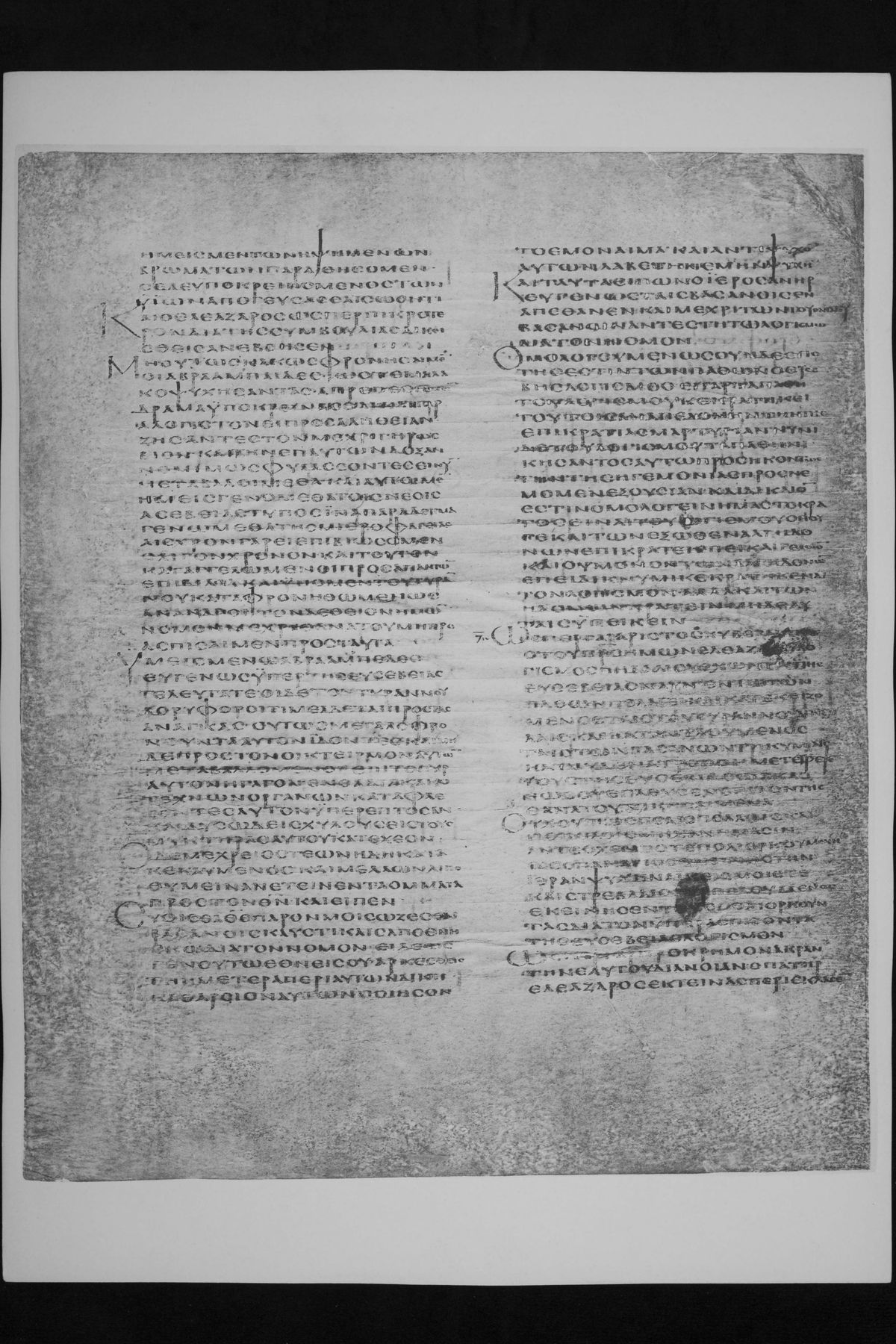
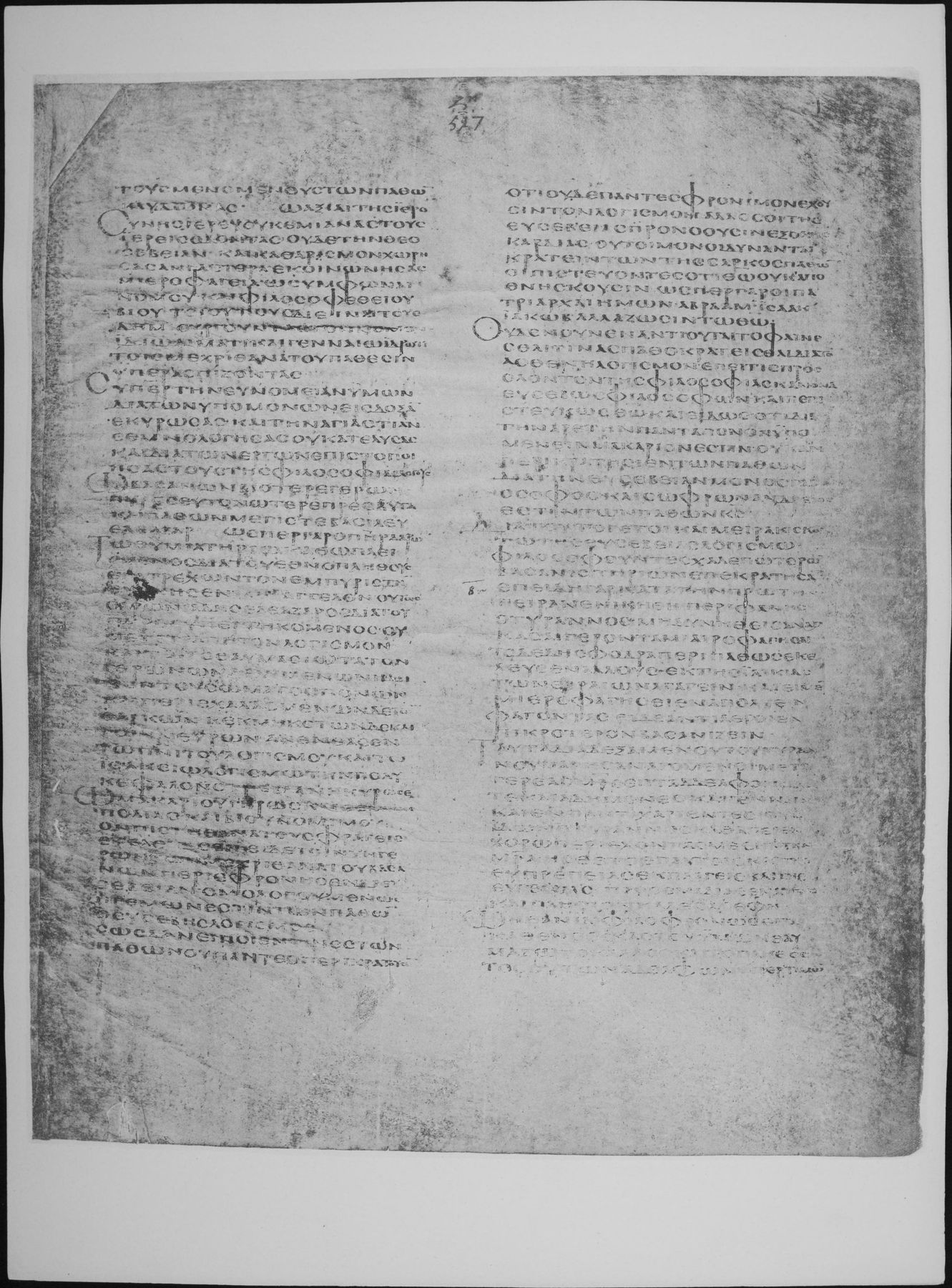
4 Maccabees 7:1-5 is on fol. 516v (full-size facsimile of 1879-83, Internet Archive codex-alexandrinus leaf 1039). The 1957 reduced facsimile prints beneath this page: 4 Maccabees vi. 15-vii. 5. Checked on the plate: the page begins at the start of 4 Maccabees 6:15 (first words read: ΗΜΕΙΣ ΜΕΝ ΤΩΝ ΗΨΗΜΕΝΩΝ ΒΡΩΜΑΤΩΝ ΠΑΡΑΘΗΣΟΜΕΝ ΣΥ ΔΕ ΥΠΟΚΡΙΝΟΜΕΝΟΣ ΤΩΝ ΥΕΙΩΝ). 4 Maccabees 7:5-8 is on fol. 517r (full-size facsimile of 1879-83, Internet Archive codex-alexandrinus leaf 1040). The 1957 reduced facsimile prints beneath this page: 4 Maccabees vii. 5-viii. 5. Checked on the plate: the page begins inside 4 Maccabees 7:5 (first words read: ΤΟΥΣ ΜΑΙΝΟΜΕΝΟΥΣ ΤΩΝ ΠΑΘΩΝ ΚΛΥΔΩΝΑΣ Ω ΑΞΙΕ ΤΗΣ ΙΕΡΩΣΥΝΗΣ ΙΕΡΕΥ).
1Ὥσπερ γὰρ ἄριστος κυβερνήτης ὁ τοῦ πατρὸς ἡμῶν Ἐλεαζάρου λογισμός, πηδαλιουχῶν τὴν τῆς εὐσεβείας ναῦν ἐν τῷ τῶν παθῶν πελάγει, 2καὶ καταικιζόμενος ταῖς τοῦ τυράννου ἀπειλαῖς καὶ καταντλούμενος ταῖς τῶν βασάνων τρικυμίαις, 3κατ᾽ οὐδένα τρόπον μετέτρεψεν τοὺς τῆς εὐσεβείας οἴακας, ἕως οὗ ἔπλευσεν ἐπὶ τὸν τῆς θανάτου νίκης λιμένα. 4οὐχ οὕτως πόλις πολλοῖς καὶ ποικίλοις μηχανήμασιν ἀντέσχεν ποτὲ πολιορκουμένη, ὡς ὁ πανάγιος ἐκεῖνος τὴν ἱερὰν ψυχὴν αἰκισμοῖς τε καὶ στρέβλαις πυρπολούμενος ἐκίνησεν τοὺς πολιορκοῦντας, διὰ τὸν ὑπερασπίζοντα τῆς εὐσεβείας λογισμόν. 5ὥσπερ γὰρ πρόκρημνον ἄκραν τὴν ἑαυτοῦ διάνοιαν ὁ πατὴρ Ἐλεάζαρος ἐκτεινας, περιέκλασεν τοὺς μαινομένους τῶν παθῶν κλύδωνας. 6Ὦ ἄξιε τῆς ἱερωσύνης ἱερεῦ, οὐκ ἐμίανας τοὺς ἱεροὺς ὀδόντας, οὐδὲ τὴν θεοσέβειαν καὶ καθαρισμὸν χωρήσασαν γαστέρα ἐκοινώνησας μιεροφαγίᾳ. 7ὦ σύμφωνε νόμου καὶ φιλόσοφε θείου βίου. 8τοιούτους δεῖ εἶναι τοὺς δημιουργοῦντας τὸν νόμον ἰδίῳ αἵματι, καὶ γενναίῳ ἱδρῶτι τοῖς μέχρι θανάτου πάθεσιν ὑπερασπίζοντας.
1The reasoning of our father Eleazar, like a first-rate pilot, steering the vessel of piety in the sea of passions, 2and flouted by the threats of the tyrant, and overwhelmed with the breakers of torture, 3in no way shifted the rudder of piety till it sailed into the harbour of victory over death. 4Not so has ever a city, when besieged, held out against many and various machines, as did that holy man, when his pious soul was tried with the fiery trial of tortures and rackings, move his besiegers through the religious reasoning that shielded him. 5For father Eleazar, projecting his disposition, broke the raging waves of the passions as with a jutting promontory. 6O priest, worthy of the priesthood! thou didst not pollute thy sacred teeth; nor make thy appetite, which had always embraced the clean and lawful, a partaker of profanity. 7O harmonizer with the law, and sage devoted to a divine life! 8Of such a character ought those to be who perform the duties of the law at the risk of their own blood, and defend it with generous sweat by sufferings even unto death.
Where on the image
4 Maccabees 7:9-16 is on fol. 517r (full-size facsimile of 1879-83, Internet Archive codex-alexandrinus leaf 1040). The 1957 reduced facsimile prints beneath this page: 4 Maccabees vii. 5-viii. 5. Checked on the plate: the page begins inside 4 Maccabees 7:5 (first words read: ΤΟΥΣ ΜΑΙΝΟΜΕΝΟΥΣ ΤΩΝ ΠΑΘΩΝ ΚΛΥΔΩΝΑΣ Ω ΑΞΙΕ ΤΗΣ ΙΕΡΩΣΥΝΗΣ ΙΕΡΕΥ).
9σύ, πάτερ, τὴν εὐνομίαν ἡμῶν διὰ τῶν ὑπομονῶν εἰς δόξαν ἐκύρωσας, καὶ τὴν ἁγιαστίαν σεμνολογήσας οὐ κατέλυσας, καὶ διὰ τῶν ἔργων ἐπιστοποίησας τοὺς τῆς φιλοσοφίας λόγους. 10ὦ βασάνων βιαιότερε γέρων, πυρὸς εὐτονώτερε πρεσβῦτα, καὶ παθῶν μέγιστε βασιλεῦ, Ἐλεαζάρ. 11Ὥσπερ γὰρ ὁ πατὴρ Ἀαρὼν τῷ θυμιατηρίῳ καθωπλισμένος, διὰ τοῦ ἐθνοπλήθους ἐπιτρέχων τὸν ἐμπυριστὴν ἐνίκησεν ἄγγελον, 12οὕτως ὁ Ἀαρωνίδης Ἐλεάζαρος διὰ τοῦ πυρὸς ὑπερτηκόμενος οὐ μετετράπη τὸν λογισμόν. 13καίτοι τὸ θαυμασιώτατον, γέρων ὤν, λελυμένων ἤδη τῶν τοῦ σώματος πόνων καὶ περικεχαλασμένων δὲ τῶν σαρκῶν, κεκμηκότων δὲ καὶ τῶν νεύρων, ἀνενέασεν 14τῷ πνεύματι τοῦ λογισμοῦ, καὶ τῷ Ἰσακείῳ λογισμῷ τὴν πολυκέφαλον στρέβλαν ἠκύρωσεν. 15ὦ μακαρίου γήρως καὶ σεμνῆς πολιᾶς καὶ βίου νομίμου, ὃν πιστὴ θανάτου σφραγὶς ἐτελείωσεν. 16Εἰ δὲ τοίνυν γέρων τῶν μέχρι θανάτου βασάνων περιεφρόνησεν δι᾽ εὐσέβειαν, ὁμολογουμένως ἡγεμών ἐστιν τῶν παθῶν ὁ εὐσεβὴς λογισμός.
9Thou, father, hast gloriously established our right government by thy endurance; and making of much account our service past, prevented its destruction, and, by thy deeds, hast made credible the words of philosophy. 10O aged man of more power than tortures, elder more vigorous than fire, greatest king over the passions, Eleazar! 11For as father Aaron, armed with a censer, hastening through the consuming fire, vanquished the flame-bearing angel, 12so Eleazar, the descendant of Aaron, wasted away by the fire, did not give up his reasoning. 13And, what is most wonderful, though an old man, though the labours of his body were now spent, and his fibres were relaxed, and his sinews worn out, he recovered youth. 14By the spirit of reasoning, and the reasoning of Isaac, he rendered powerless the many-headed instrument. 15O blessed old age, and reverend hoar head, and life obedient to the law, which the faithful seal of death perfected. 16If, then, an old man, through religion, despised tortures even unto death, confessedly religious reasoning is ruler of the passions.
Where on the image
4 Maccabees 7:17-24 is on fol. 517r (full-size facsimile of 1879-83, Internet Archive codex-alexandrinus leaf 1040). The 1957 reduced facsimile prints beneath this page: 4 Maccabees vii. 5-viii. 5. Checked on the plate: the page begins inside 4 Maccabees 7:5 (first words read: ΤΟΥΣ ΜΑΙΝΟΜΕΝΟΥΣ ΤΩΝ ΠΑΘΩΝ ΚΛΥΔΩΝΑΣ Ω ΑΞΙΕ ΤΗΣ ΙΕΡΩΣΥΝΗΣ ΙΕΡΕΥ).
17ἴσως δ᾽ ἂν εἴποιέν τινες, τῶν παθῶν οὐ πάντες περικρατοῦσιν· ὅτι οὐδὲ πάντες φρόνιμον ἔχουσιν τὸν λογισμόν. 18ἀλλ᾽ ὅσοι τῆς εὐσεβείας προνοοῦσιν ἐξ ὅλης καρδίας, οὗτοι μόνοι δύνανται κρατεῖν τῶν τῆς σαρκὸς παθῶν· 19οἱ πιστεύοντες, ὅτι θεῷ οὐκ ἀποθνήσκουσιν, ὥσπερ γὰρ οἱ πατριάρχαι ἡμῶν Ἀβραάμ, Ἰσαάκ, Ἰακώβ, ἀλλὰ ζῶσιν τῷ θεῷ. 20οὐδὲν οὖν ἐναντιοῦται τὸ φαίνεσθαί τινας παθοκρατεῖσθαι διὰ τὸν ἀσθενῆ λογισμόν. 21ἐπεὶ τίς πρὸς ὅλον τὸν τῆς φιλοσοφίας κανόνα εὐσεβῶς φιλοσοφῶν, καὶ πεπιστευκὼς θεῷ, 22καὶ εἰδὼς ὅτι διὰ τὴν ἀρετὴν πάντα πόνον ὑπομένειν μακάριόν ἐστιν, οὐκ ἂν περικρατήσειεν τῶν παθῶν διὰ τὴν εὐσέβειαν; 23μόνος γὰρ ὁ σοφὸς καὶ σώφρων ἀνδρεῖός ἐστιν τῶν παθῶν κύριος. 24διὰ τοῦτό γε τοι καὶ μειρακίσκοι τῷ τῆς εὐσεβείας λογισμῷ φιλοσοφοῦντες χαλεπωτέρων βασανιστηρίων ἐπεκράτησαν.
17But perhaps some might say, It is not all who conquer passions, as all do not possess wise reasoning. 18But they who have meditated upon religion with their whole heart, these alone can master the passions of the flesh: 19they who believe that to God they die not; for, as our forefathers, Abraham, Isaac, Jacob, they live to God. 20This circumstance, then, is by no means an objection, that some who have weak reasoning, are governed by their passions: 21since what person, walking religiously by the whole rule of philosophy, and believing in God, 22and knowing that it is a blessed thing to endure all kinds of hardships for virtue, would not, for the sake of religion, master his passion? 23For the wise and brave man only is lord over his passions. 24Whence it is, that even boys, imbued with the philosophy of religious reasoning, have conquered still more bitter tortures:
Cite
Sources
- Source: Codex Alexandrinus (British Library Royal MS 1 D. VI) via the British Museum photographic facsimiles of 1879-83 and 1957 (Internet Archive) + Swete's Septuagint + Brenton's English (holding institution)
- Critical edition: H. B. Swete, The Old Testament in Greek according to the Septuagint (1909)
← previous · → next · v cycle view · l back to library