Amos, Chapter 5 (Codex Alexandrinus)
Introduction
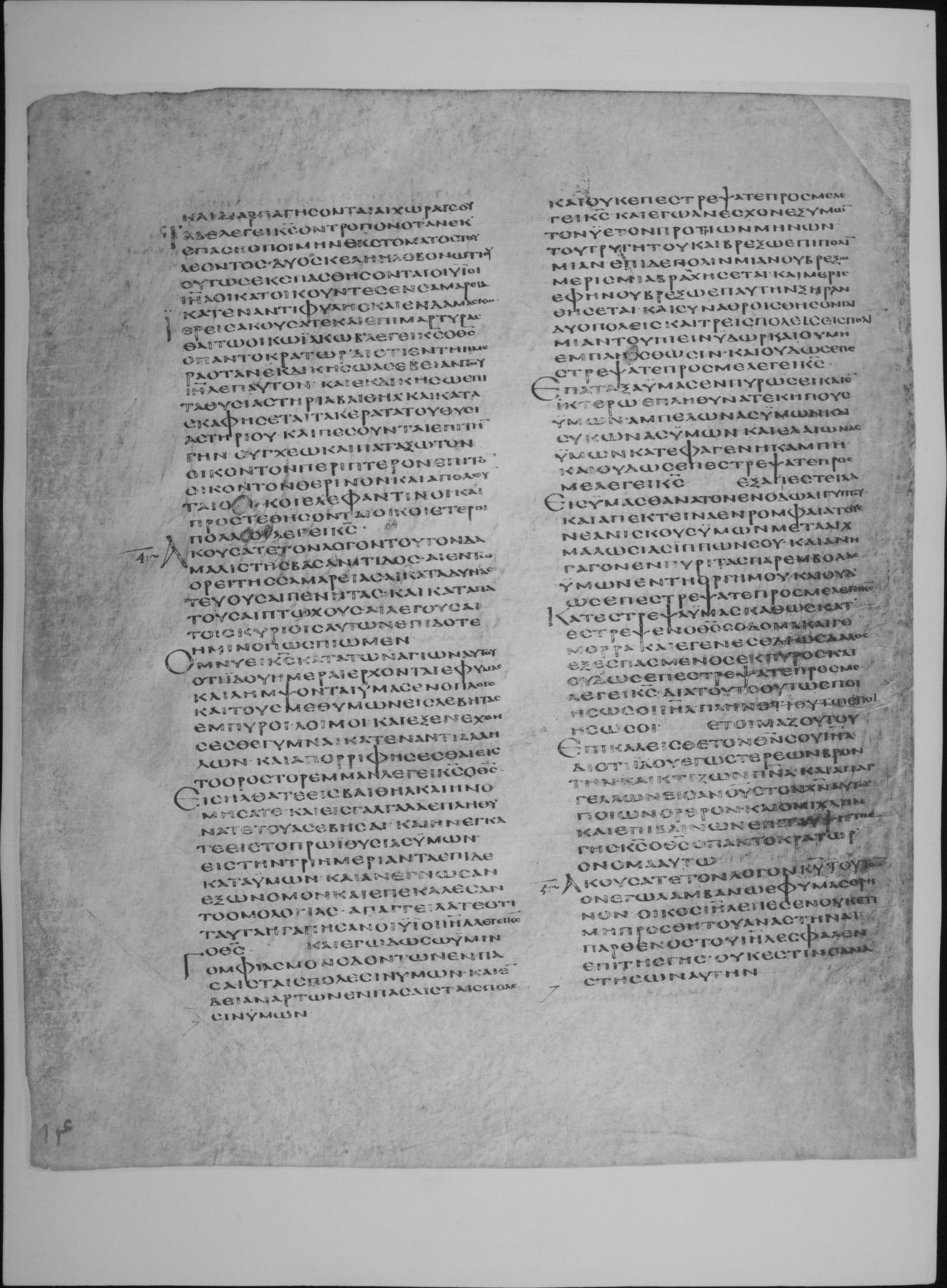
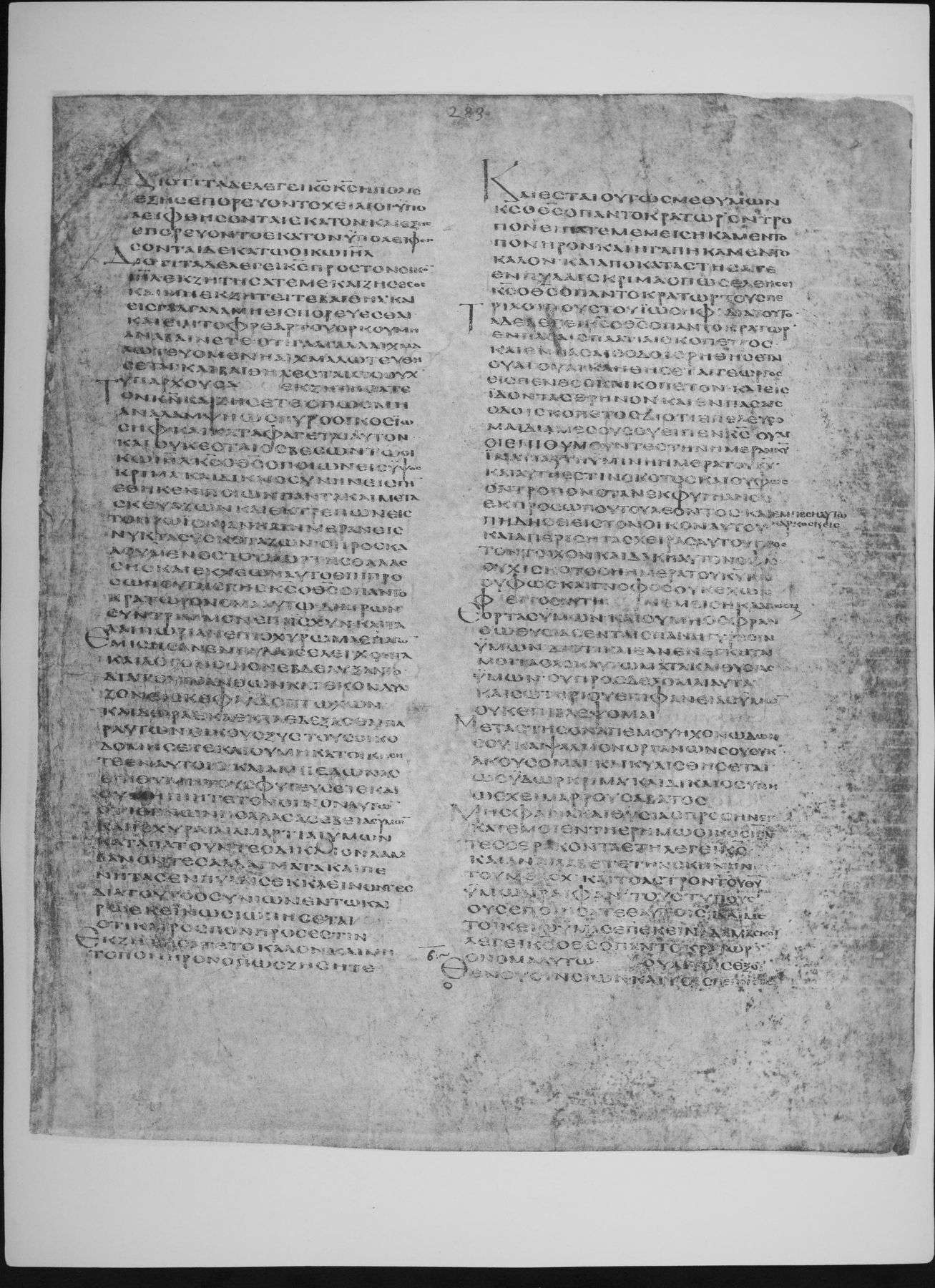
Amos 5 in the Greek Old Testament (the Septuagint) as written in Codex Alexandrinus, a Greek Bible copied in the fifth century, probably in Egypt, and now in the British Library (Royal MS 1 D. VI, the second of its four volumes). It is one of the three great early codices of the whole Greek Bible, with Codex Vaticanus and Codex Sinaiticus.
This entry meets the strict three-criteria standard of the Theosis Library:
- Manuscript scan: the pages of Codex Alexandrinus carrying this chapter (fol. 282v, fol. 283r), from the full-size photographic (autotype) facsimile published by the British Museum in 1879-1883, as digitised on the Internet Archive. The verse range of every page comes from the reduced photographic facsimile of 1936, which prints it beneath each plate, and the opening words of every page were read on the plate to confirm the page and the verse it begins with. Each section links to the page or pages that hold its verses. Folio numbers are those written at the head of each leaf and visible on the plates.
- Original text: Swete's edition, which here prints the text of Codex Vaticanus (Vat. gr. 1209), the base of his edition, and gives the readings of Alexandrinus only in his apparatus. The Greek column is therefore Vaticanus' text; where Alexandrinus differs, the plate shows what Alexandrinus reads.
- English translation: Sir Lancelot C. L. Brenton, The Septuagint Version of the Old Testament (1844; 1851 edition), a translation of the Greek, public domain, from the eBible.org text.
How was this verified? (Provenance)
Where on the image
Amos 5:1-2 is on fol. 282v (full-size facsimile of 1879-83, Internet Archive codex-alexandrinus leaf 589). The 1936 reduced facsimile prints beneath this page: Amos iii. 11-v. 2. Checked on the plate: the page begins inside Amos 3:11 (first words read: ΚΑΙ ΔΙΑΡΠΑΓΗΣΟΝΤΑΙ ΑΙ ΧΩΡΑΙ ΣΟΥ ΤΑΔΕ ΛΕΓΕΙ ΚΣ ΟΝ ΤΡΟΠΟΝ ΟΤΑΝ ΕΚΣΠΑΣΗ Ο ΠΟΙΜΗΝ). Amos 5:3-8 is on fol. 283r (full-size facsimile of 1879-83, Internet Archive codex-alexandrinus leaf 590). The 1936 reduced facsimile prints beneath this page: Amos v. 3-vi. 1. Checked on the plate: the page begins at the start of Amos 5:3 (first words read: ΔΙΟΤΙ ΤΑΔΕ ΛΕΓΕΙ ΚΣ Ο ΘΣ Η ΠΟΛΙΣ ΕΞ ΗΣ ΕΞΕΠΟΡΕΥΟΝΤΟ ΧΙΛΙΟΙ ΥΠΟΛΕΙΦΘΗΣΟΝΤΑΙ ΕΚΑΤΟΝ). Note: the page begins at the start of Amos 5:3, which Codex Alexandrinus opens ΔΙΟΤΙ where Swete's text has διὰ τοῦτο.
1Ἀκούσατε τὸν λόγον Κυρίου τοῦτον ὃν ἐγὼ λαμβάνω ἐφ᾽ ὑμᾶς θρῆνον Οἶκος Ἰσραὴλ 2ἔπεσεν, οὐκέτι μὴ προσθήσει τοῦ ἀναστῆναι· παρθένος τοῦ Ἰσραὴλ ἔσφαλεν ἐπὶ τῆς γῆς αὐτοῦ, οὐκ ἔστιν ὁ ἀναστήσων αὐτήν. 3διὰ τοῦτο τάδε λέγει κύριος Κύριος Ἡ πόλις ἐξ ἧς ἐξεπορεύοντο χίλιοι, ὑπολειφθήσονται ρ᾽, καὶ ἐξ ἧς ἐξεπορεύοντο ρ᾽, ὑπολειφθήσονται δέκα τῷ οἴκῳ Ἰσραήλ. 4διότι τάδε λέγει Κύριος πρὸς τὸν οἶκον Ἰσραήλ Ἐκζητήσατέ με, καὶ ζήσεσθε· 5καὶ μὴ ἐκζητεῖτε Βαιθὴλ καὶ εἰς Γάλγαλα μὴ εἰσπορεύεσθε, καὶ ἐπὶ τὸ φρέαρ τοῦ ὅρκου μὴ διαβαίνετε, ὅτι Γάλγαλα αἰχμαλωτευομένη αἰχμαλωτευθήσεται, καὶ Βαιθὴλ ἔσται ὡς οὐχ ὑπάρχουσα. 6ἐκζητήσατε τὸν κύριον, καὶ ζῆτε, ὅπως μὴ ἀναλάμψῃ ὡς πῦρ ὁ οἶκος Ἰωσὴφ καὶ καταφάγῃ αὐτόν, καὶ οὐκ ἔσται ὁ σβέσων τῷ οἴκῳ Ἰσραήλ. 7ὁ ποιῶν εἰς ὕψος κρίμα, καὶ δικαιοσύνην εἰς γῆν ἔθηκεν· 8ὁ ποιῶν πάντα καὶ μετασκευάζων, καὶ ἐκτρέπων εἰς τὸ πρωὶ σκιάν, καὶ ἡμέραν εἰς νύκτα συσκοτάζων· ὁ προσκαλούμενος τὸ ὕδωρ τῆς θαλάσσης καὶ ἐκχέων αὐτὸ ἐπὶ πρόσωπον τῆς γῆς, Κύριος ὄνομα αὐτῷ·
1Hear ye this word of the Lord, even a lamentation, which I take up against you. The house of Israel is fallen; it shall no more rise. 2The virgin of Israel has fallen upon his land; there is none that shall raise her up. 3Therefore thus saith the Lord God; The city out of which there went forth a thousand, in it there shall be left a hundred, and in that out of which there went forth a hundred, there shall be left ten to the house of Israel. 4Wherefore thus saith the Lord to the house of Israel, Seek ye me, and ye shall live. 5But seek not Bæthel, and go not in to Galgala, and cross not over to the Well of the Oath: for Galgala shall surely go into captivity, and Bæthel shall be as that which is not. 6Seek ye the Lord, and ye shall live; lest the house of Joseph blaze as fire, and it devour him, and there shall be none to quench it for the house of Israel. 7It is he that executes judgment in the height above, and he has established justice on the earth: 8who makes all things, and changes them, and turns darkness into the morning, and darkens the day into night: who calls for the water of the sea, and pours it out on the face of the earth: the Lord is his name:
Where on the image
Amos 5:9-16 is on fol. 283r (full-size facsimile of 1879-83, Internet Archive codex-alexandrinus leaf 590). The 1936 reduced facsimile prints beneath this page: Amos v. 3-vi. 1. Checked on the plate: the page begins at the start of Amos 5:3 (first words read: ΔΙΟΤΙ ΤΑΔΕ ΛΕΓΕΙ ΚΣ Ο ΘΣ Η ΠΟΛΙΣ ΕΞ ΗΣ ΕΞΕΠΟΡΕΥΟΝΤΟ ΧΙΛΙΟΙ ΥΠΟΛΕΙΦΘΗΣΟΝΤΑΙ ΕΚΑΤΟΝ). Note: the page begins at the start of Amos 5:3, which Codex Alexandrinus opens ΔΙΟΤΙ where Swete's text has διὰ τοῦτο.
9ὁ διαιρῶν συντριμμὸν ἐπ᾽ ἰσχύν, καὶ ταλαιπωρίαν ἐπὶ ὀχύρωμα ἐπάγων. 10ἐμίσησαν ἐν πύλαις ἐλέγχοντα, καὶ λόγον ὅσιον ἐβδελύξαντο. 11διὰ τοῦτο ἀνθ᾽ ὧν κατεκονδύλιζον πτωχούς, καὶ δῶρα ἐκλεκτὰ ἐδέξασθε παρ᾽ αὐτῶν, οἴκους ξεστοὺς ᾠκοδομήσατε καὶ οὐ μὴ κατοικήσητε ἐν αὐτοῖς, ἀμπελῶνας ἐπιθυμητοὺς ἐφυτεύσατε καὶ οὐ μὴ πίητε τὸν οἶνον ἐξ αὐτῶν. 12ὅτι ἔγνων πολλὰς ἀσεβείας ὑμῶν, καὶ ἰσχυραὶ αἱ ἁμαρτίαι ὑμῶν καταπατοῦσαι δίκαιον, λαμβάνοντες ἀνταλλάγματα καὶ πένητας ἐν πύλαις ἐκκλίνοντες. 13διὰ τοῦτο ὁ συνίων ἐν τῷ καιρῷ ἐκείνῳ σιωπήσεται, ὅτι καιρὸς πονηρῶν ἐστιν. 14ἐκζητήσατε τὸ καλὸν καὶ μὴ πονηρόν, ὅπως ζήσητε, καὶ ἔσται οὕτως μεθ᾽ ὑμῶν Κύριος ὁ θεὸς ὁ παντοκράτωρ· ὃν τρόπον εἴπατε 15Μεμισήκαμεν τὰ πονηρὰ καὶ ἠγαπήκαμεν τὰ καλά, καὶ ἀποκαταστήσατε ἐν πύλαις κρίμα, ὅπως ἐλεήσῃ Κύριος ὁ θεὸς ὁ παντοκράτωρ τοὺς περιλοίπους τοῦ Ἰωσήφ. 16διὰ τοῦτο τάδε λέγει Κύριος ὁ θεὸς ὁ παντοκράτωρ Ἐν πάσαις ταῖς πλατείαις κοπετός, καὶ ἐν πάσαις ταῖς ὁδοῖς ῥηθήσεται Οὐαὶ οὐαί· κληθήσεται γεωργὸς εἰς πένθος καὶ κοπετόν, καὶ εἰς εἰδότας θρῆνον,
9who dispenses ruin to strength, and brings distress upon the fortress. 10They hated him that reproved in the gates, and abhorred holy speech. 11Therefore because they have smitten the poor with their fists, and ye have received of them choice gifts; ye have built polished houses, but ye shall not dwell in them; ye have planted desirable vineyards, but ye shall not drink the wine of them. 12For I know your many transgressions, and your sins are great, trampling on the just, taking bribes, and turning aside the judgment of the poor in the gates. 13Therefore the prudent shall be silent at that time; for it is a time of evils. 14Seek good, and not evil, that ye may live: and so the Lord God Almighty shall be with you, as ye have said, 15We have hated evil, and loved good: and restore ye judgment in the gates; that the Lord God Almighty may have mercy on the remnant of Joseph. 16Therefore thus saith the Lord God Almighty; In all the streets shall be lamentations; and in all the ways shall it be said, Woe, woe! the husbandman shall be called to mourning and lamentation, and to them that are skilled in complaining.
Where on the image
Amos 5:17-24 is on fol. 283r (full-size facsimile of 1879-83, Internet Archive codex-alexandrinus leaf 590). The 1936 reduced facsimile prints beneath this page: Amos v. 3-vi. 1. Checked on the plate: the page begins at the start of Amos 5:3 (first words read: ΔΙΟΤΙ ΤΑΔΕ ΛΕΓΕΙ ΚΣ Ο ΘΣ Η ΠΟΛΙΣ ΕΞ ΗΣ ΕΞΕΠΟΡΕΥΟΝΤΟ ΧΙΛΙΟΙ ΥΠΟΛΕΙΦΘΗΣΟΝΤΑΙ ΕΚΑΤΟΝ). Note: the page begins at the start of Amos 5:3, which Codex Alexandrinus opens ΔΙΟΤΙ where Swete's text has διὰ τοῦτο.
17καὶ ἐν πάσαις ὁδοῖς κοπετός, διότι ἐλεύσομαι διὰ μέσου σου, εἶπεν Κύριος. 18οὐαὶ οἱ ἐπιθυμοῦντες τὴν ἡμέραν Κυρίου· ἵνα τί αὕτη ὑμῖν ἡ ἡμέρα τοῦ κυρίου; καὶ αὕτη ἐστὶν σκότος καὶ οὐ φῶς. 19ὃν τρόπον ἐὰν φύγῃ ἄνθρωπος ἐκ προσώπου τοῦ λέοντος, καὶ ἐμπέσῃ αὐτῷ ἡ ἄρκος, καὶ εἰσπηδήσῃ εἰς τὸν οἶκον αὐτοῦ καὶ ἀπερείσηται τὰς χεῖρας αὐτοῦ ἐπὶ τὸν τοῖχον, καὶ δάκῃ αὐτὸν ὄφις. 20οὐχὶ σκότος ἡ ἡμέρα τοῦ κυρίου καὶ οὐ φῶς; καὶ γνόφος οὐκ ἔχων φέγγος αὕτη; 21μεμίσηκα, ἀπῶσμαι ἑορτὰς ὑμῶν, καὶ οὐ μὴ ὀσφρανθῶ θυσίας ἐν ταῖς πανηγύρεσιν ὑμῶν. 22διότι ἐὰν ἐνέγκητέ μοι ὁλοκαυτώματα καὶ θυσίας ὑμῶν, οὐ προσδέξομαι, καὶ σωτηρίους ἐπιφανείας ὑμῶν οὐκ ἐπιβλέψομαι. 23μετάστησον ἀπ᾽ ἐμοῦ ἦχον ᾠδῶν σου, καὶ ψαλμὸν ὀργάνων σου οὐκ ἀκούσομαι· 24καὶ κυλισθήσεται ὡς ὕδωρ κρίμα, καὶ δικαιοσύνη ὡς χειμάρρους ἄβατος.
17And there shall be lamentation in all the ways; because I will pass through the midst of thee, saith the Lord. 18Woe to you that desire the day of the Lord! what is this day of the Lord to you? whereas it is darkness, and not light. 19As if a man should flee from the face of a lion, and a bear should meet him; and he should spring into his house, and lean his hands upon the wall, and a serpent should bite him. 20Is not the day of the Lord darkness, and not light? and is not this day gloom without brightness? 21I hate, I reject your feasts, and I will not smell your meat-offerings in your general assemblies. 22Wherefore if ye should bring me your whole-burnt-sacrifices and meat-offerings, I will not accept them: neither will I have respect to your grand peace-offerings. 23Remove from me the sound of thy songs, and I will not hear the music of thine instruments. 24But let judgment roll down as water, and righteousness as an impassable torrent.
Where on the image
Amos 5:25-27 is on fol. 283r (full-size facsimile of 1879-83, Internet Archive codex-alexandrinus leaf 590). The 1936 reduced facsimile prints beneath this page: Amos v. 3-vi. 1. Checked on the plate: the page begins at the start of Amos 5:3 (first words read: ΔΙΟΤΙ ΤΑΔΕ ΛΕΓΕΙ ΚΣ Ο ΘΣ Η ΠΟΛΙΣ ΕΞ ΗΣ ΕΞΕΠΟΡΕΥΟΝΤΟ ΧΙΛΙΟΙ ΥΠΟΛΕΙΦΘΗΣΟΝΤΑΙ ΕΚΑΤΟΝ). Note: the page begins at the start of Amos 5:3, which Codex Alexandrinus opens ΔΙΟΤΙ where Swete's text has διὰ τοῦτο.
25μὴ σφάγια καὶ θυσίας προσηνέγκατέ μοι ἐν τῇ ἐρήμῳ μ᾽ ἔτη, οἶκος Ἰσραήλ; 26καὶ ἀνελάβετε τὴν σκηνὴν τοῦ Μόλοχ καὶ τὸ ἄστρον τοῦ θεοῦ ὑμῶν Ῥαιφάν, τοὺς τύπους αὐτῶν οὓς ἐποιήσατε ἑαυτοῖς· 27καὶ μετοικιῶ ὑμᾶς ἐπέκεινα Δαμασκοῦ, λέγει Κύριος, ὁ θεὸς ὁ παντοκράτωρ ὄνομα αὐτῷ.
25Have ye offered to me victims and sacrifices, O house of Israel, forty years in the wilderness? 26Yea, ye took up the tabernacle of Moloch, and the star of your god Ræphan, the images of them which ye made for yourselves. 27And I will carry you away beyond Damascus, saith the Lord, the Almighty God is his name.
Cite
Sources
- Source: Codex Alexandrinus (British Library Royal MS 1 D. VI) via the British Museum photographic facsimiles of 1879-83 and 1936 (Internet Archive) + Swete's Septuagint + Brenton's English (holding institution)
- Critical edition: H. B. Swete, The Old Testament in Greek according to the Septuagint (1909)
← previous · → next · v cycle view · l back to library