Amos, Chapter 6 (Codex Alexandrinus)
Introduction
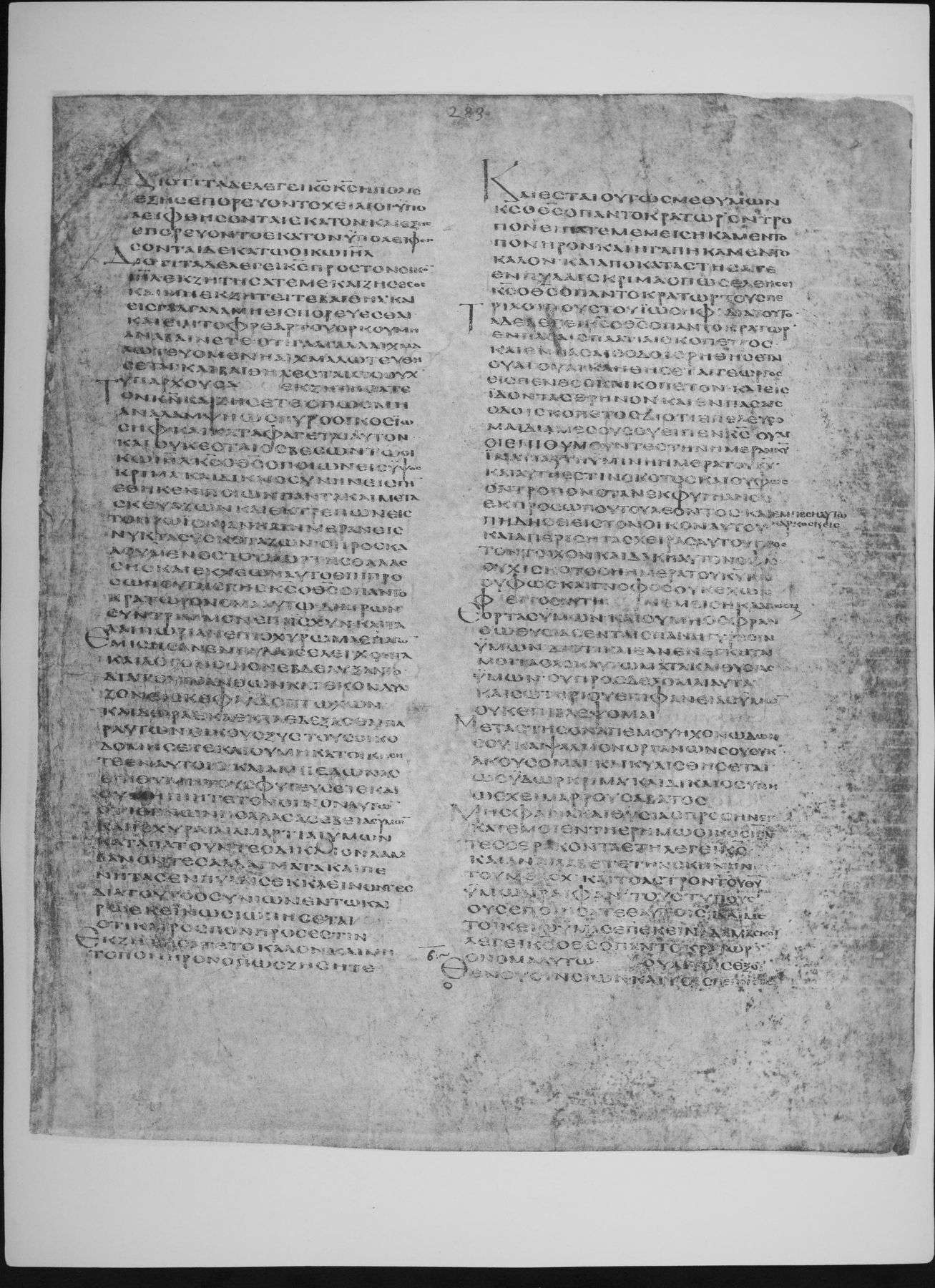
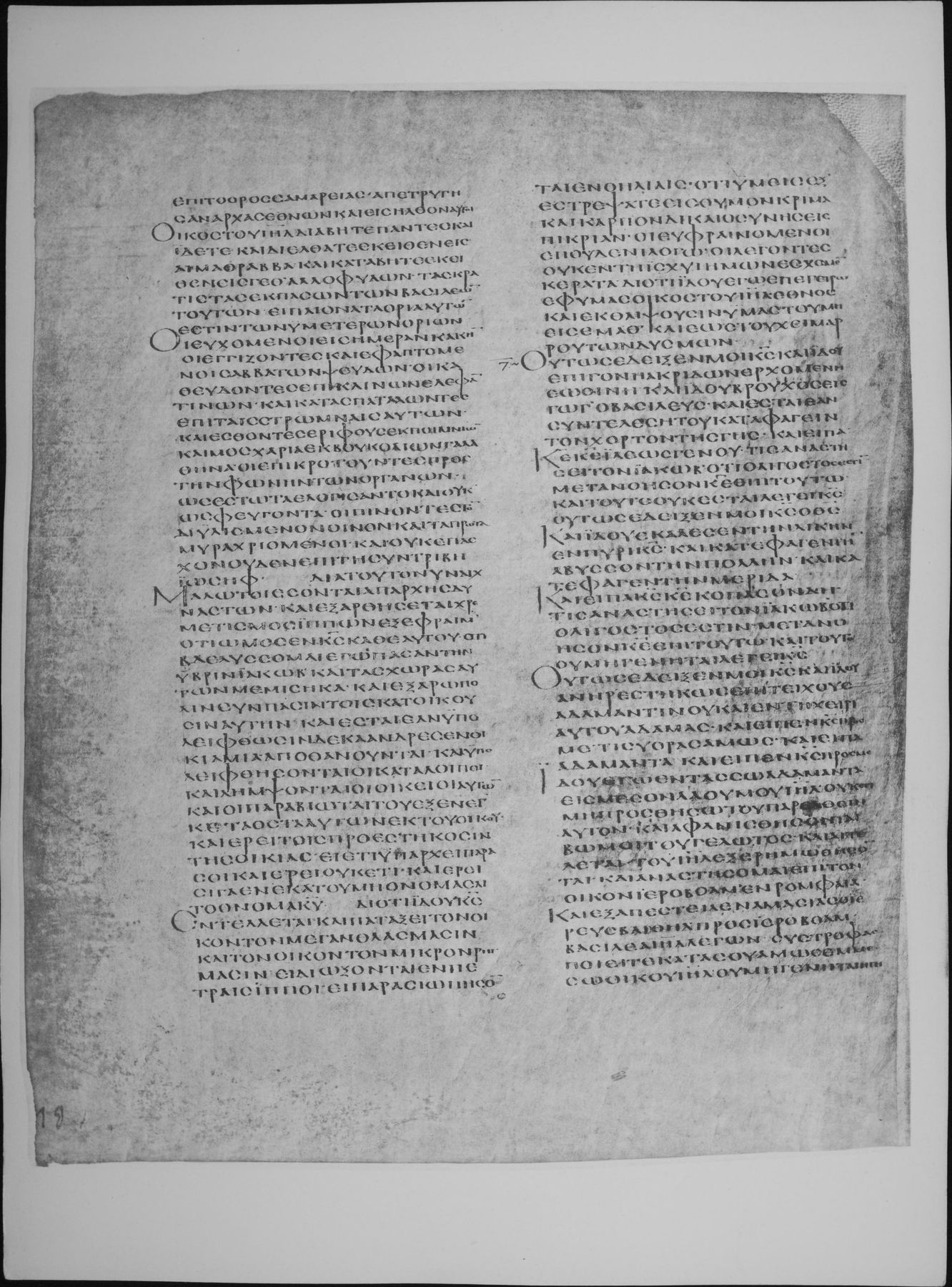
Amos 6 in the Greek Old Testament (the Septuagint) as written in Codex Alexandrinus, a Greek Bible copied in the fifth century, probably in Egypt, and now in the British Library (Royal MS 1 D. VI, the second of its four volumes). It is one of the three great early codices of the whole Greek Bible, with Codex Vaticanus and Codex Sinaiticus.
This entry meets the strict three-criteria standard of the Theosis Library:
- Manuscript scan: the pages of Codex Alexandrinus carrying this chapter (fol. 283r, fol. 283v), from the full-size photographic (autotype) facsimile published by the British Museum in 1879-1883, as digitised on the Internet Archive. The verse range of every page comes from the reduced photographic facsimile of 1936, which prints it beneath each plate, and the opening words of every page were read on the plate to confirm the page and the verse it begins with. Each section links to the page or pages that hold its verses. Folio numbers are those written at the head of each leaf and visible on the plates.
- Original text: Swete's edition, which here prints the text of Codex Vaticanus (Vat. gr. 1209), the base of his edition, and gives the readings of Alexandrinus only in his apparatus. The Greek column is therefore Vaticanus' text; where Alexandrinus differs, the plate shows what Alexandrinus reads.
- English translation: Sir Lancelot C. L. Brenton, The Septuagint Version of the Old Testament (1844; 1851 edition), a translation of the Greek, public domain, from the eBible.org text.
How was this verified? (Provenance)
Where on the image
Amos 6:1 is on fol. 283r (full-size facsimile of 1879-83, Internet Archive codex-alexandrinus leaf 590). The 1936 reduced facsimile prints beneath this page: Amos v. 3-vi. 1. Checked on the plate: the page begins at the start of Amos 5:3 (first words read: ΔΙΟΤΙ ΤΑΔΕ ΛΕΓΕΙ ΚΣ Ο ΘΣ Η ΠΟΛΙΣ ΕΞ ΗΣ ΕΞΕΠΟΡΕΥΟΝΤΟ ΧΙΛΙΟΙ ΥΠΟΛΕΙΦΘΗΣΟΝΤΑΙ ΕΚΑΤΟΝ). Note: the page begins at the start of Amos 5:3, which Codex Alexandrinus opens ΔΙΟΤΙ where Swete's text has διὰ τοῦτο. Amos 6:1-8 is on fol. 283v (full-size facsimile of 1879-83, Internet Archive codex-alexandrinus leaf 591). The 1936 reduced facsimile prints beneath this page: Amos vi. 1-vii. 10. Checked on the plate: the page begins inside Amos 6:1 (first words read: ΕΠΙ ΤΟ ΟΡΟΣ ΣΑΜΑΡΕΙΑΣ ΑΠΕΤΡΥΓΗΣΑΝ ΑΡΧΑΣ ΕΘΝΩΝ ΚΑΙ ΕΙΣΗΛΘΟΝ ΑΥΤΟΙ ΟΙΚΟΣ ΤΟΥ ΙΣΡΑΗΛ).
1Οὐαὶ τοῖς ἐξουθενοῦσιν Σειὼν καὶ τοῖς πεποιθόσιν ἐπὶ τὸ ὄρος Σαμαρείας· ἀπετρύγησαν ἀρχὰς ἐθνῶν, καὶ εἰσῆλθον αὐτοί. οἶκος τοῦ Ἰσραήλ, 2διάβητε πάντες καὶ ἴδετε, καὶ διέλθατε ἐκεῖθεν εἰς Ἑμὰθ Ῥαββά, καὶ κατάβητε ἐκεῖθεν εἰς Γὲθ ἀλλοφύλων, τὰς κρατίστας ἐκ πασῶν τῶν βασιλειῶν τούτων, εἰ πλέονα τὰ ὅρια αὐτῶν ἐστὶν τῶν ὑμετέρων ὁρίων. 3οἱ ἐρχόμενοι εἰς ἡμέραν κακήν, οἱ ἐγγίζοντες καὶ ἐφαπτόμενοι σαββάτων ψευδῶν, 4οἱ καθεύδοντες ἐπὶ κλινῶν ἐλεφαντίνων καὶ κατασπαταλῶντες ἐπὶ ταῖς στρωμναῖς αὐτῶν, καὶ ἔσθοντες ἐρίφους ἐκ ποιμνίων καὶ μοσχάρια ἐκ μέσου βουκολίων γαλαθηνά, 5οἱ ἐπικροτοῦντες πρὸς τὴν φωνὴν τῶν ὀργάνων, ὡς ἑστηκότα ἐλογίσαντο καὶ οὐχ ὡς φεύγοντα· 6οἱ πίνοντες τὸν διυλισμένον οἶνον, καὶ τὰ πρῶτα μύρα χριόμενοι, καὶ οὐκ ἔπασχον οὐδὲν ἐπὶ τῇ συντριβῇ Ἰωσήφ. 7διὰ τοῦτο νῦν αἰχμάλωτοι ἔσονται ἀπ᾽ ἀρχῆς δυναστῶν, καὶ ἐξαρθήσεται χρεμετισμὸς ἵππων ἐξ Ἐφράιμ. 8ὅτι ὤμοσεν Κύριος καθ᾽ ἑαυτοῦ διότι Βδελύσσομαι ἐγὼ πᾶσαν τὴν ὕβριν Ἰακώβ, καὶ τὰς χώρας αὐτοῦ μεμίσηκα, καὶ ἐξαρῶ πόλιν σὺν πᾶσιν τοῖς κατοικοῦσιν αὐτήν·
1Woe to them that set at nought Sion, and that trust in the mountain of Samaria: they have gathered the harvest of the heads of the nations, and they have gone in themselves. 2O house of Israel, pass by all of you, and see; and pass by thence to Ematrabba; and thence descend to Geth of the Philistines, the chief of all these kingdoms, see if their coasts are greater than your coasts. 3Ye who are approaching the evil day, who are drawing near and adopting false sabbaths; 4who sleep upon beds of ivory, and live delicately on their couches, and eat kids out of the flocks, and sucking calves out of the midst of the stalls; 5who excel in the sound of musical instruments; they have regarded them as abiding, not as fleeting pleasures; 6who drink strained wine, and anoint themselves with the best ointment: and have suffered nothing on occasion of the calamity of Joseph. 7Therefore now shall they depart into captivity from the dominion of princes, and the neighing of horses shall be cut off from Ephraim. 8For the Lord has sworn by himself, saying, Because I abhor all the pride of Jacob, I do also hate his countries, and I will cut off his city with all who inhabit it.
Where on the image
Amos 6:9-14 is on fol. 283v (full-size facsimile of 1879-83, Internet Archive codex-alexandrinus leaf 591). The 1936 reduced facsimile prints beneath this page: Amos vi. 1-vii. 10. Checked on the plate: the page begins inside Amos 6:1 (first words read: ΕΠΙ ΤΟ ΟΡΟΣ ΣΑΜΑΡΕΙΑΣ ΑΠΕΤΡΥΓΗΣΑΝ ΑΡΧΑΣ ΕΘΝΩΝ ΚΑΙ ΕΙΣΗΛΘΟΝ ΑΥΤΟΙ ΟΙΚΟΣ ΤΟΥ ΙΣΡΑΗΛ).
9καὶ ἔσται ἐὰν ὑπολειφθῶσιν δέκα ἐν οἰκίᾳ μιᾷ, καὶ ἀποθανοῦνται καὶ ὑπολειφθήσονται οἱ κατάλοιποι, 10καὶ λήμψονται οἱ οἰκεῖοι οἱ αὐτῶν καὶ παραβιῶνται τοῦ ἐξενέγκαι τὰ ὀστᾶ αὐτῶν ἐκ τοῦ οἴκου· καὶ ἐρεῖ τοῖς προεστηκόσι τῆς οἰκίας Εἰ ἔτι ὑπάρχει παρὰ σοί; καὶ ἐρεῖ Οὐκ ἔτι· καὶ ἐρεῖ Σίγα, ἕνεκα τοῦ μὴ ὀνομάσαι τὸ ὄνομα Κυρίου. 11διότι ἰδοὺ Κύριος ἐντέλλεται, καὶ πατάξει τὸν οἶκον τὸν μέγαν θλάσμασιν καὶ τὸν οἶκον τὸν μικρὸν ῥάγμασιν. 12εἰ διώξονται ἐν πέτραις ἵπποι; εἰ παρασιωπήσονται ἐν θηλείαις; ὅτι ἐξεστρέψατε εἰς θυμὸν κρίμα, καὶ καρπὸν δικαιοσύνης εἰς πικρίαν, 13οἱ εὐφραινόμενοι ἐπ᾽ οὐδενὶ λόγῳ, οἱ λέγοντες Οὐκ ἐν τῇ ἰσχύι ἡμῶν ἔσχομεν κέρατα; 14διότι ἰδοὺ ἐγὼ ἐπεγείρω ἐφ᾽ ὑμᾶς, οἶκος Ἰσραήλ, ἔθνος, λέγει Κύριος τῶν δυνάμεων, καὶ ἐκθλίψουσιν ὑμᾶς τοῦ μὴ εἰσελθεῖν εἰς Ἑμὰθ καὶ ὡς τοῦ χειμάρρου τῶν δυσμῶν.
9And it shall come to pass, if there be ten men left in one house, that they shall die. 10But a remnant shall be left behind, and their relations shall take them, and shall strenuously endeavour to carry forth their bones from the house: and one shall say to the heads of the house, Is there yet any one else with thee? And he shall say, No one else. And the other shall say, Be silent, that thou name not the name of the Lord. 11For, behold, the Lord commands, and he will smite the great house with breaches, and the little house with rents. 12Will horses run upon rocks? will they refrain from neighing at mares? for ye have turned judgment into poison, and the fruit of righteousness into bitterness: 13ye who rejoice at vanity, who say, Have we not possessed horns by our own strength? 14For behold, O house of Israel, I will raise up against you a nation, saith the Lord of hosts; and they shall afflict you so that ye shall not enter into Æmath, and as it were from the river of the wilderness.
Cite
Sources
- Source: Codex Alexandrinus (British Library Royal MS 1 D. VI) via the British Museum photographic facsimiles of 1879-83 and 1936 (Internet Archive) + Swete's Septuagint + Brenton's English (holding institution)
- Critical edition: H. B. Swete, The Old Testament in Greek according to the Septuagint (1909)
← previous · → next · v cycle view · l back to library