Deuteronomy, Chapter 13 (Codex Alexandrinus)
Introduction
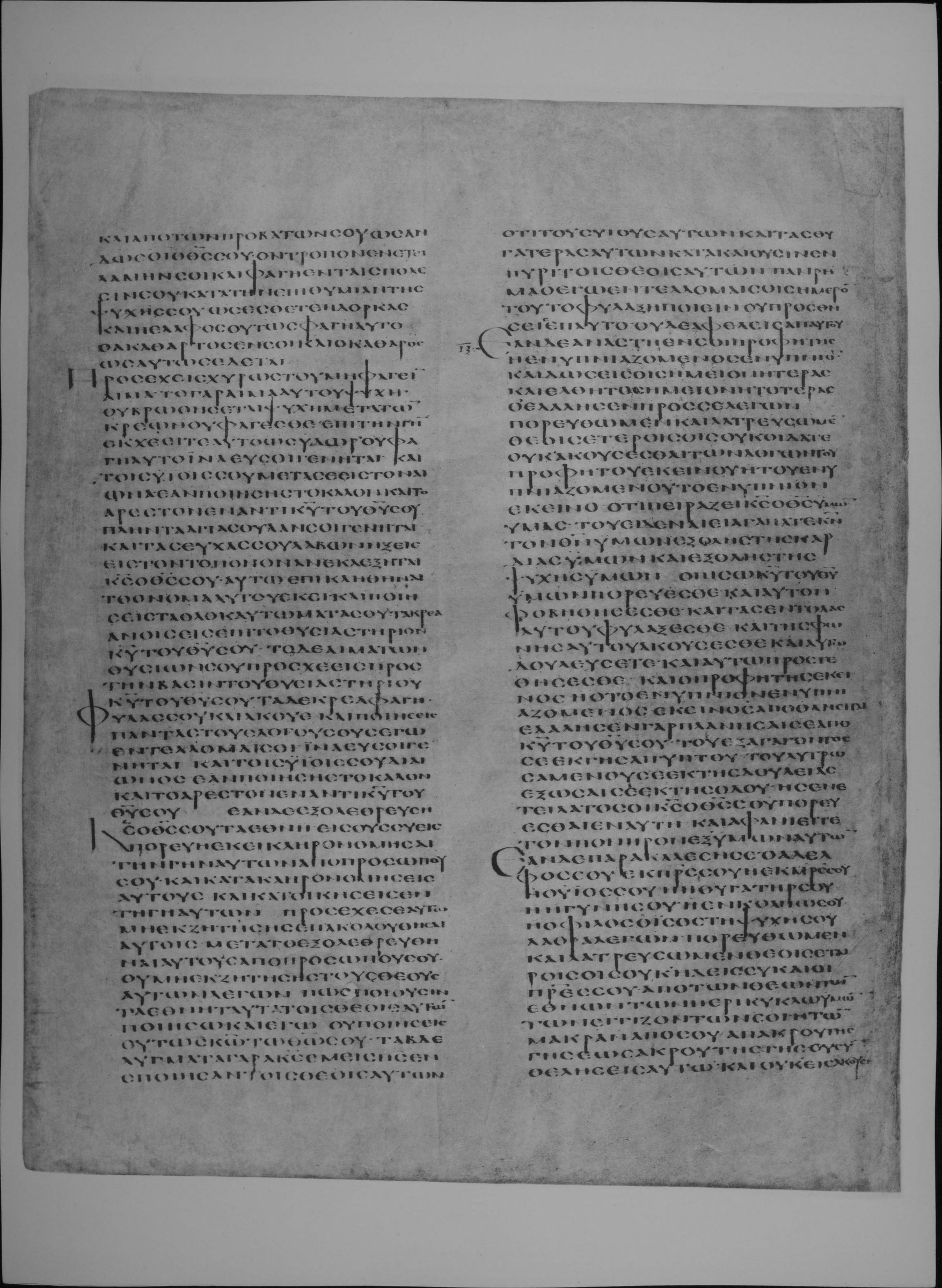
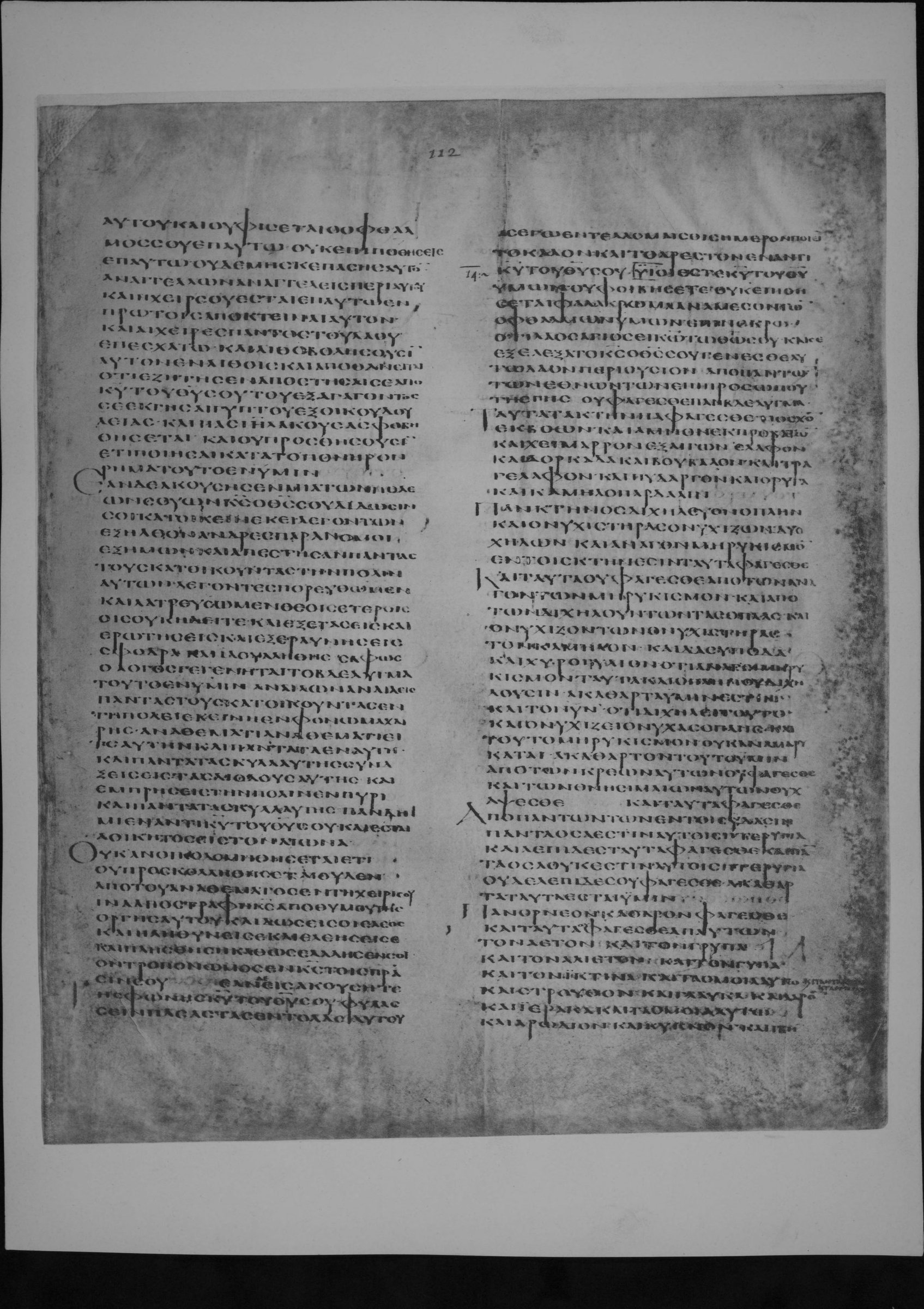
Deuteronomy 13 in the Greek Old Testament (the Septuagint) as written in Codex Alexandrinus, a Greek Bible copied in the fifth century, probably in Egypt, and now in the British Library (Royal MS 1 D. V, the first of its four volumes). It is one of the three great early codices of the whole Greek Bible, with Codex Vaticanus and Codex Sinaiticus, and for Genesis 1:1-46:28, which Codex Vaticanus has lost, it is the oldest surviving complete Greek text (older papyri such as the Berlin Genesis papyrus and Chester Beatty 961 survive only in part).
Numbering: Swete's Greek and Brenton's English number or divide some verses of this chapter differently (Swete 13:1-18 = Brenton 13:2-19). Each column keeps its own verse numbers, and sections are cut only where the two texts agree, so each section holds the same passage in both languages.
This entry meets the strict three-criteria standard of the Theosis Library:
- Manuscript scan: the pages of Codex Alexandrinus carrying this chapter (fol. 111v, fol. 112r), from the full-size photographic (autotype) facsimile published by the British Museum in 1879-1883, as digitised on the Internet Archive. The verse range of every page comes from the reduced photographic facsimile of 1915, which prints it beneath each plate, and the opening words of every page were read on the plate to confirm the page and the verse it begins with. Each section links to the page or pages that hold its verses. Folio numbers are those written at the head of each leaf and visible on the plates.
- Original text: Swete's edition, which here prints the text of Codex Vaticanus (Vat. gr. 1209), the base of his edition, and gives the readings of Alexandrinus only in his apparatus. The Greek column is therefore Vaticanus' text; where Alexandrinus differs, the plate shows what Alexandrinus reads.
- English translation: Sir Lancelot C. L. Brenton, The Septuagint Version of the Old Testament (1844; 1851 edition), a translation of the Greek, public domain, from the eBible.org text.
How was this verified? (Provenance)
Where on the image
Deuteronomy 13:1-8 is on fol. 111v (full-size facsimile of 1879-83, Internet Archive codex-alexandrinus leaf 243). The 1915 reduced facsimile prints beneath this page: Deut. xii. 21-xiii. 8. Checked on the plate: the page begins inside Deuteronomy 12:21 (first words read: ΚΑΙ ΑΠΟ ΤΩΝ ΠΡΟΒΑΤΩΝ ΣΟΥ ΩΝ ΑΝ ΔΩ Ο ΘΣ ΣΟΙ ΟΝ ΤΡΟΠΟΝ ΕΝΕΤΕΙΛΑΜΗΝ ΣΟΙ). Deuteronomy 13:8 is on fol. 112r (full-size facsimile of 1879-83, Internet Archive codex-alexandrinus leaf 244). The 1915 reduced facsimile prints beneath this page: Deut. xiii. 8-xiv. 17. Checked on the plate: the page begins inside Deuteronomy 13:8 (first words read: ΑΥΤΟΥ ΚΑΙ ΟΥ ΦΕΙΣΕΤΑΙ Ο ΟΦΘΑΛΜΟΣ ΣΟΥ ΕΠ ΑΥΤΩ ΟΥΚ ΕΠΙΠΟΘΗΣΕΙΣ ΕΠ ΑΥΤΩ).
1Ἐὰν δὲ ἀναστῇ ἐν σοὶ προφήτης ἢ ἐνυπνιαζόμενος τὸ ἐνύπνιον καὶ δῷ σοι σημεῖον ἢ τέρας, 2καὶ ἔλθῃ τὸ σημεῖον ἢ τὸ τέρας ὃ ἐλάλησεν πρὸς σὲ λέγων Πορευθῶμεν καὶ λατρεύσωμεν θεοῖς ἑτέροις οὓς οὐκ οἴδατε· 3οὐκ ἀκούσεσθε τῶν λόγων τοῦ προφήτου ἐκείνου ἢ τοῦ ἐνυπνιαζομένου τὸ ἐνύπνιον ἐκεῖνο· ὅτι πειράζει κύριος ὁ θεός σου ὑμᾶς, εἰδέναι εἰ ἀγαπᾶτε τὸν θεὸν ὑμῶν ἐξ ὅλης τῆς καρδίας σου καὶ ἐξ ὅλης τῆς ψυχῆς ὑμῶν. 4ὀπίσω Κυρίου τοῦ θεοῦ ὑμῶν πορεύεσθε, καὶ τοῦτον φοβηθήσεσθε καὶ τῆς φωνῆς αὐτοῦ ἀκούσεσθε καὶ αὐτῷ προστεθήσεσθε. 5καὶ ὁ προφήτης ἐκεῖνος ἢ ὁ τὸ ἐνύπνιον ἐνυπνιαζόμενος ἐκεῖνος ἀποθανεῖται· ἐλάλησεν γὰρ πλανῆσαί σε ἀπὸ Κυρίου τοῦ θεοῦ σου τοῦ ἐξαγαγόντος σε ἐκ γῆς Αἰγύπτου, τοῦ λυτρωσαμένου σε ἐκ τῆς δουλίας, ἐξῶσαί σε ἀπὸ τῆς ὁδοῦ ἧς ἐνετείλατό σοι Κύριος ὁ θεός σου πορεύεσθαι ἐν αὐτῇ· καὶ ἀφανιεῖς τὸν πονηρὸν ἐξ ὑμῶν αὐτῶν. 6Ἐὰν δὲ παρακαλέσῃ σε ὁ ἀδελφός σου ἐκ πατρός σου ἢ ἐκ μητρός σου, ἢ ὁ υἱός σου ἢ ἡ θυγάτηρ σου ἢ ἡ γυνὴ ἡ ἐν κόλπῳ σου, ἢ φίλος ἴσος τῆς ψυχῆς σου, λάθρα λέγων Βαδίσωμεν καὶ λατρεύσωμεν θεοῖς ἑτέροις οὓς οὐκ ᾔδεις σὺ καὶ οἱ πατέρες σου, 7ἀπὸ τῶν θεῶν τῶν ἐθνῶν τῶν περικύκλῳ ὑμῶν, τῶν ἐγγιζόντων σοι ἢ τῶν μακρὰν ἀπὸ σοῦ, ἀπ᾽ ἄκρου τῆς γῆς ἕως ἄκρου τῆς γῆς· 8οὐ συνθελήσεις αὐτῷ καὶ οὐκ εἰσακούσῃ αὐτοῦ, καὶ οὐ φείσεται ὁ ὀφθαλμός σου ἐπ᾽ αὐτῷ, οὐκ ἐπιποθήσεις ἐπ᾽ αὐτῷ οὐδ᾽ οὐ μὴ σκεπάσῃς αὐτόν.
2And if there arise within thee a prophet, or one who dreams a dream, and he gives thee a sign or a wonder, 3and the sign or the wonder come to pass which he spoke to thee, saying, Let us go and serve other gods, which ye know not; 4ye shall not hearken to the words of that prophet, or the dreamer of that dream, because the Lord thy God tries you, to know whether ye love your God with all your heart and with all your soul. 5Ye shall follow the Lord your God, and fear him, and ye shall hear his voice, and attach yourselves to him. 6And that prophet or that dreamer of a dream, shall die; for he has spoken to make thee err from the Lord thy God who brought thee out of the land of Egypt, who redeemed thee from bondage, to thrust thee out of the way which the Lord thy God commanded thee to walk in: so shalt thou abolish the evil from among you. 7And if thy brother by thy father or mother, or thy son, or daughter, or thy wife in thy bosom, or friend who is equal to thine own soul, entreat thee secretly, saying, Let us go and serve other gods, which neither thou nor thy fathers have known, 8of the gods of the nations that are round about you, who are near thee or at a distance from thee, from one end of the earth to the other; 9thou shalt not consent to him, neither shalt thou hearken to him; and thine eye shall not spare him, thou shalt feel no regret for him, neither shalt thou at all protect him:
Where on the image
Deuteronomy 13:9-18 is on fol. 112r (full-size facsimile of 1879-83, Internet Archive codex-alexandrinus leaf 244). The 1915 reduced facsimile prints beneath this page: Deut. xiii. 8-xiv. 17. Checked on the plate: the page begins inside Deuteronomy 13:8 (first words read: ΑΥΤΟΥ ΚΑΙ ΟΥ ΦΕΙΣΕΤΑΙ Ο ΟΦΘΑΛΜΟΣ ΣΟΥ ΕΠ ΑΥΤΩ ΟΥΚ ΕΠΙΠΟΘΗΣΕΙΣ ΕΠ ΑΥΤΩ).
9ἀναγγέλλων ἀναγγελεῖς περὶ αὐτοῦ, αἱ χεῖρές σου ἔσονται ἐπ᾽ αὐτὸν ἐν πρώτοις ἀποκτεῖναι αὐτόν, καὶ αἱ χεῖρες παντὸς τοῦ λαοῦ ἐπ᾽ ἐσχάτῳ· 10καὶ λιθοβολήσουσιν αὐτὸν ἐν λίθοις, καὶ ἀποθανεῖται, ὅτι ἐζήτησεν ἀποστῆσαί σε ἀπὸ Κυρίου τοῦ θεοῦ σου τοῦ ἐξαγαγόντος σε ἐκ γῆς Αἰγύπτου, ἐξ οἴκου δουλίας. 11καὶ πᾶς Ἰσραὴλ ἀκούσας φοβηθήσεται, καὶ οὐ προσθήσει ἔτι ποιῆσαι κατὰ τὸ ῥῆμα τὸ πονηρὸν τοῦτο ἐν ὑμῖν. 12Ἐὰν δὲ ἀκούσῃς ἐν μιᾷ τῶν πόλεών σου ὧν Κύριος ὁ θεός σου δίδωσίν σοι κατοικεῖν σε ἐκεῖ λεγόντων 13Ἐξήλθοσαν ἄνδρες παράνομοι ἐξ ὑμῶν, καὶ ἀπέστησαν πάντας τοὺς κατοικοῦντας τὴν γῆν αὐτῶν λέγοντες Πορευθῶμεν καὶ λατρεύσωμεν θεοῖς ἑτέροις οὓς οὐκ ᾔδειτε· 14καὶ ἐρωτήσεις καὶ ἐραυνήσεις σφόδρα, καὶ ἰδοὺ ἀληθῶς σαφῶς ὁ λόγος, γεγένηται τὸ βδέλυγμα τοῦτο ἐν ὑμῖν· 15ἀναιρῶν ἀνελεῖς πάντας τοὺς κατοικοῦντας ἐν τῇ γῇ ἐκείνῃ ἐν φόνῳ μαχαίρας, ἀναθέματι ἀναθεματιεῖτε αὐτὴν καὶ πάντα τὰ ἐν αὐτῇ· 16καὶ πάντα τὰ σκῦλα αὐτῆς συνάξεις εἰς τὰς διόδους αὐτῆς, καὶ ἐνπρήσεις τὴν πόλιν ἐν πυρὶ καὶ πάντα τὰ σκῦλα αὐτῆς πανδημεὶ ἐναντίον Κυρίου τοῦ θεοῦ σου· καὶ ἔσται ἀοίκητος εἰς τὸν αἰῶνα, οὐκ ἀνοικοδομηθήσεται ἔτι. 17καὶ οὐ προσκολληθήσεται ἐν τῇ χειρί σου οὐδὲν ἀπὸ τοῦ ἀναθέματος, ἵνα ἀποστραφῇ Κύριος ἀπὸ θυμοῦ τῆς ὀργῆς αὐτοῦ, καὶ δώσει σοι ἔλεος καὶ ἐλεήσει σε καὶ πληθυνεῖ σε ὃν τρόπον ὤμοσεν τοῖς πατράσιν σου, 18ἐὰν ἀκούσῃς τῆς φωνῆς Κυρίου τοῦ θεοῦ σου, φυλάσσειν τὰς ἐντολὰς αὐτοῦ ὅσας ἐγὼ ἐντέλλομαί σοι σήμερον, ποιεῖν τὸ ἀρεστὸν καὶ τὸ καλὸν ἐναντίον Κυρίου τοῦ θεοῦ σου.
10thou shalt surely report concerning him, and thy hands shall be upon him among the first to slay him, and the hands of all the people at the last. 11And they shall stone him with stones, and he shall die, because he sought to draw thee away from the Lord thy God who brought thee out of the land of Egypt, out of the house of bondage. 12And all Israel shall hear, and fear, and shall not again do according to this evil thing among you. 13And if in one of thy cities which the Lord God gives thee to dwell therein, thou shalt hear men saying, 14Evil men have gone out from you, and have caused all the inhabitants of their land to fall away, saying, Let us go and worship other gods, whom ye knew not, 15then thou shalt enquire and ask, and search diligently, and behold, if the thing is clearly true, and this abomination has taken place among you, 16thou shalt utterly destroy all the dwellers in that land with the edge of the sword; ye shall solemnly curse it, and all things in it. 17And all its spoils thou shalt gather into its public ways, and thou shalt burn the city with fire, and all its spoils publicly before the Lord thy God; and it shall be uninhabited for ever, it shall not be built again. 18And there shall nothing of the cursed thing cleave to thy hand, that the Lord may turn from his fierce anger, and shew thee mercy, and pity thee, and multiply thee, as he sware to thy fathers; 19if thou wilt hear the voice of the Lord thy God, to keep his commandments, all that I charge thee this day, to do that which is good and pleasing before the Lord thy God.
Cite
Sources
- Source: Codex Alexandrinus (British Library Royal MS 1 D. V) via the British Museum photographic facsimiles of 1879-83 and 1915 (Internet Archive) + Swete's Septuagint + Brenton's English (holding institution)
- Critical edition: H. B. Swete, The Old Testament in Greek according to the Septuagint (1909)
← previous · → next · v cycle view · l back to library