Deuteronomy, Chapter 14 (Codex Alexandrinus)
Introduction
Deuteronomy 14 in the Greek Old Testament (the Septuagint) as written in Codex Alexandrinus, a Greek Bible copied in the fifth century, probably in Egypt, and now in the British Library (Royal MS 1 D. V, the first of its four volumes). It is one of the three great early codices of the whole Greek Bible, with Codex Vaticanus and Codex Sinaiticus, and for Genesis 1:1-46:28, which Codex Vaticanus has lost, it is the oldest surviving complete Greek text (older papyri such as the Berlin Genesis papyrus and Chester Beatty 961 survive only in part).
Numbering: Swete's Greek and Brenton's English number or divide some verses of this chapter differently (Swete 14:14-28 = Brenton 14:15-29). Each column keeps its own verse numbers, and sections are cut only where the two texts agree, so each section holds the same passage in both languages.
This entry meets the strict three-criteria standard of the Theosis Library:
- Manuscript scan: the pages of Codex Alexandrinus carrying this chapter (fol. 112r, fol. 112v), from the full-size photographic (autotype) facsimile published by the British Museum in 1879-1883, as digitised on the Internet Archive. The verse range of every page comes from the reduced photographic facsimile of 1915, which prints it beneath each plate, and the opening words of every page were read on the plate to confirm the page and the verse it begins with. Each section links to the page or pages that hold its verses. Folio numbers are those written at the head of each leaf and visible on the plates.
- Original text: Swete's edition, which here prints the text of Codex Vaticanus (Vat. gr. 1209), the base of his edition, and gives the readings of Alexandrinus only in his apparatus. The Greek column is therefore Vaticanus' text; where Alexandrinus differs, the plate shows what Alexandrinus reads.
- English translation: Sir Lancelot C. L. Brenton, The Septuagint Version of the Old Testament (1844; 1851 edition), a translation of the Greek, public domain, from the eBible.org text.
How was this verified? (Provenance)
Where on the image
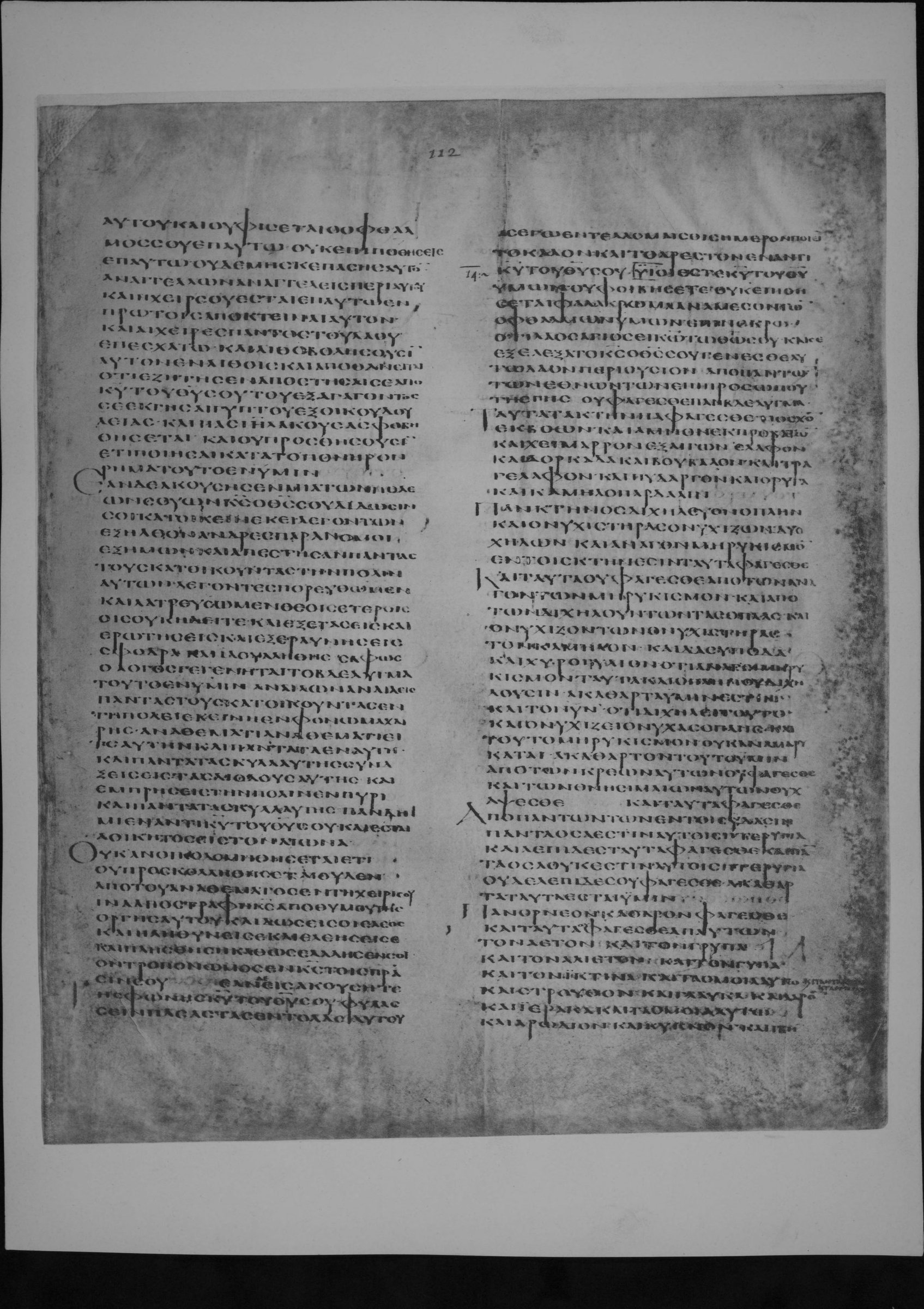
Deuteronomy 14:1-8 is on fol. 112r (full-size facsimile of 1879-83, Internet Archive codex-alexandrinus leaf 244). The 1915 reduced facsimile prints beneath this page: Deut. xiii. 8-xiv. 17. Checked on the plate: the page begins inside Deuteronomy 13:8 (first words read: ΑΥΤΟΥ ΚΑΙ ΟΥ ΦΕΙΣΕΤΑΙ Ο ΟΦΘΑΛΜΟΣ ΣΟΥ ΕΠ ΑΥΤΩ ΟΥΚ ΕΠΙΠΟΘΗΣΕΙΣ ΕΠ ΑΥΤΩ).
1Υἱοί ἐστε Κυρίου τοῦ θεοῦ ὑμῶν, οὐκ ἐπιθήσετε φαλάκρωμα ἀνὰ μέσον τῶν ὀφθαλμῶν ὑμῶν ἐπὶ νεκρῷ· 2ὅτι λαὸς ἅγιος εἶ Κυρίῳ τῷ θεῷ σου, καὶ σὲ ἐξελέξατο Κύριος ὁ θεός σου γενέσθαι σε αὐτῷ λαὸν περιούσιον ἀπὸ πάντων τῶν ἐθνῶν τῶν ἐπὶ προσώπου τῆς γῆς. 3Οὐ φάγεσθε πᾶν βδέλυγμα. 4ταῦτα κτήνη ἃ φάγεσθε· μόσχον ἐκ βοῶν, καὶ ἀμνὸν ἐκ προβάτων, καὶ χίμαρον ἐξ αἰγῶν, 5ἔλαφον καὶ δορκάδα καὶ πύγαργον, ὄρυγα καὶ καμηλοπάρδαλιν· 6πᾶν κτῆνος διχηλοῦν ὁπλὴν καὶ ὀνυχιστῆρας ὀνυχίζον δύο χηλῶν καὶ ἀνάγον μηρυκισμὸν ἐν τοῖς κτήνεσιν, ταῦτα φάγεσθε. 7καὶ ταῦτα οὐ φάγεσθε ἀπὸ τῶν ἀναγόντων μηρυκισμὸν καὶ ἀπὸ τῶν διχηλούντων τὰς ὁπλὰς καὶ ὀνυχιζόντων ὀνυχιστῆρας, τὸν κάμηλον καὶ δασύποδα καὶ χοιρογρύλλιον· ὅτι ἀνάγουσιν μηρυκισμὸν καὶ ὁπλὴν οὐ διχηλοῦσιν, ἀκάθαρτα ταῦτα ὑμῖν ἐστιν. 8καὶ τὸν ὗν, ὅτι διχηλεῖ ὁπλὴν τοῦτο καὶ ὀνυχίζει ὀνυχιστῆρας ὁπλῆς, καὶ τοῦτο μηρυκισμὸν οὐ μαρυκᾶται, ἀκάθαρτον τοῦτο ὑμῖν· ἀπὸ τῶν κρεῶν αὐτῶν οὐ φάγεσθε, τῶν θνησιμαίων αὐτῶν οὐχ ἅψεσθε.
1Ye are the children of the Lord your God: ye shall not make any baldness between your eyes for the dead. 2For thou art a holy people to the Lord thy God, and the Lord thy God has chosen thee to be a peculiar people to himself of all the nations on the face of the earth. 3Ye shall not eat any abominable thing. 4These are the beasts which ye shall eat; the calf of the herd, and lamb of the sheep, and kid of the goats; 5the stag, and doe, and pygarg, and wild goat, and camelopard. 6Every beast that divides the hoofs, and makes claws of two divisions, and that chews the cud among beasts, these ye shall eat. 7And these ye shall not eat of them that chew the cud, and of those that divide the hoofs, and make distinct claws; the camel, and the hare, and the rabbit; because they chew the cud, and do not divide the hoof, these are unclean to you. 8And as for the swine, because he divides the hoof, and makes claws of the hoof, yet he chews not the cud, he is unclean to you; ye shall not eat of their flesh, ye shall not touch their dead bodies.
Where on the image
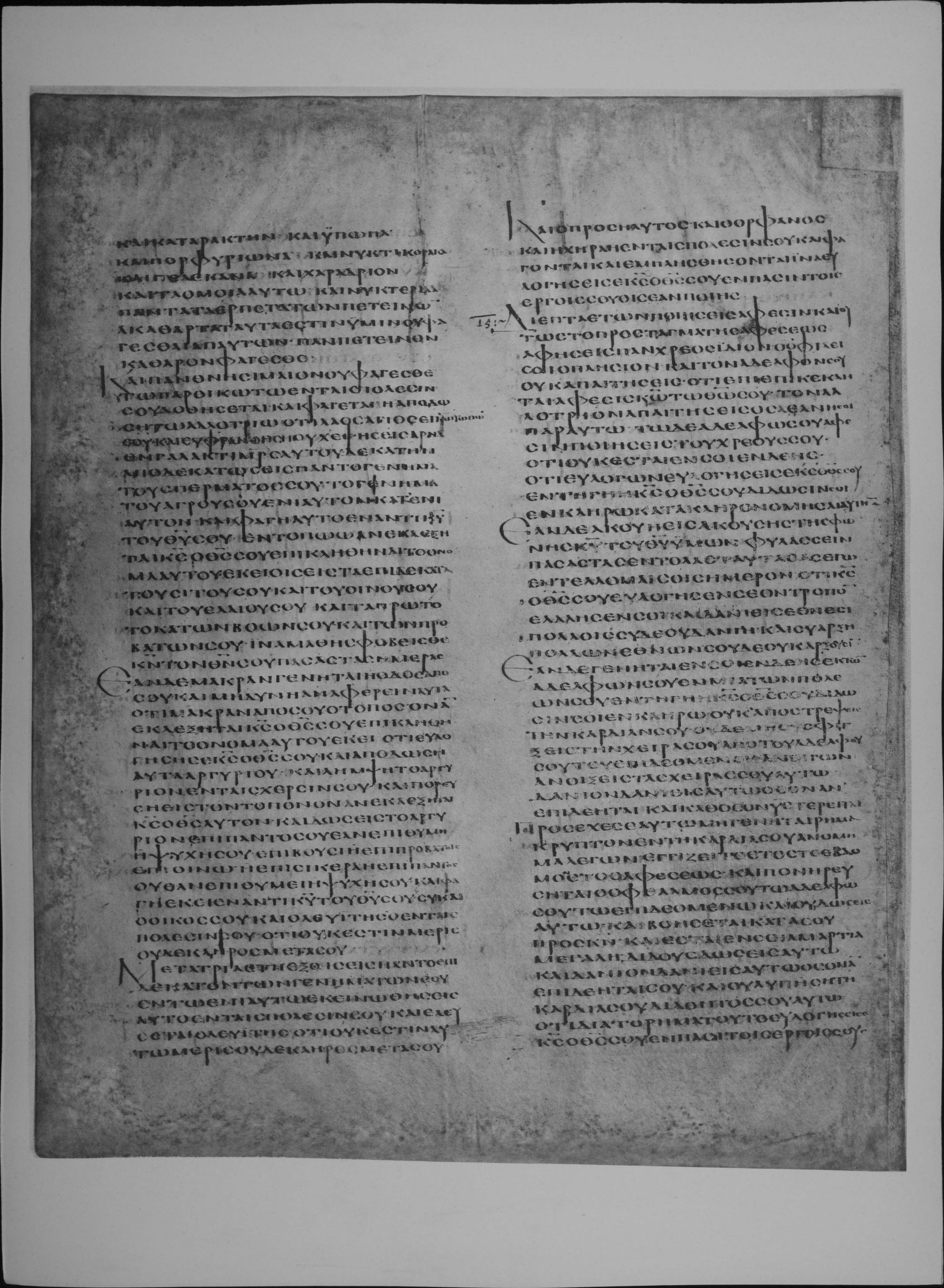
Deuteronomy 14:9-16 is on fol. 112r (full-size facsimile of 1879-83, Internet Archive codex-alexandrinus leaf 244). The 1915 reduced facsimile prints beneath this page: Deut. xiii. 8-xiv. 17. Checked on the plate: the page begins inside Deuteronomy 13:8 (first words read: ΑΥΤΟΥ ΚΑΙ ΟΥ ΦΕΙΣΕΤΑΙ Ο ΟΦΘΑΛΜΟΣ ΣΟΥ ΕΠ ΑΥΤΩ ΟΥΚ ΕΠΙΠΟΘΗΣΕΙΣ ΕΠ ΑΥΤΩ). Deuteronomy 14:16 is on fol. 112v (full-size facsimile of 1879-83, Internet Archive codex-alexandrinus leaf 245). The 1915 reduced facsimile prints beneath this page: Deut. xiv. 16-xv. 10. Checked on the plate: the page begins at the start of Deuteronomy 14:16 (first words read: ΚΑΙ ΚΑΤΑΡΑΚΤΗΝ ΚΑΙ ΥΠΟΠΑ ΚΑΙ ΠΟΡΦΥΡΙΩΝΑ ΚΑΙ ΧΑΡΑΔΡΙΟΝ). Note: the list of birds in Deut. 14:16-17 is in a different order in Codex Alexandrinus and is divided between this page and the preceding one (the captions give xiv. 17 as the last verse of the preceding page and xiv. 16 as the first of this one), so both pages are given for 14:16-17.
9Καὶ ταῦτα φάγεσθε ἀπὸ πάντων τῶν ἐν τῷ ὕδατι· πάντα ὅσα ἐστὶν ἐν αὐτοῖς πτερύγια καὶ λεπίδες φάγεσθε. 10καὶ πάντα ὅσα οὐκ ἔστιν αὐτοῖς πτερύγια καὶ λεπίδες οὐ φάγεσθε, ἀκάθαρτα ὑμῖν ἐστιν. 11Πᾶν ὄρνεον καθαρὸν φάγεσθε. 12καὶ ταῦτα οὐ φάγεσθε ἀπ᾽ αὐτῶν· τὸν ἀετὸν καὶ τὸν γρύπα καὶ τὸν ἁλιάετον, 13καὶ τὸν γύπα καὶ τὸν ἴκτινα καὶ τὰ ὅμοια αὐτῷ, 14καὶ στρουθὸν καὶ γλαῦκα καὶ λάρον, 15καὶ ἀρωδιὸν καὶ κύκνον καὶ εἶβιν, 16καὶ καταράκτην καὶ ἱέρακα καὶ τὰ ὅμοια αὐτῷ, καὶ ὔποπα καὶ νυκτικόρακα,
9And these ye shall eat of all that are in the water, ye shall eat all that have fins and scales. 10And all that have not fins and scales ye shall not eat; they are unclean to you. 11Ye shall eat every clean bird. 12And these of them ye shall not eat; the eagle, and the ossifrage, and the sea-eagle, 13and the vulture, and the kite and the like to it, 15and the sparrow, and the owl, and the sea-mew, 16and the heron, and the swan, and the stork, 17and the cormorant, and the hawk, and its like, and the hoopoe, and the raven,
Where on the image
Deuteronomy 14:17 is on fol. 112r (full-size facsimile of 1879-83, Internet Archive codex-alexandrinus leaf 244). The 1915 reduced facsimile prints beneath this page: Deut. xiii. 8-xiv. 17. Checked on the plate: the page begins inside Deuteronomy 13:8 (first words read: ΑΥΤΟΥ ΚΑΙ ΟΥ ΦΕΙΣΕΤΑΙ Ο ΟΦΘΑΛΜΟΣ ΣΟΥ ΕΠ ΑΥΤΩ ΟΥΚ ΕΠΙΠΟΘΗΣΕΙΣ ΕΠ ΑΥΤΩ). Deuteronomy 14:17-24 is on fol. 112v (full-size facsimile of 1879-83, Internet Archive codex-alexandrinus leaf 245). The 1915 reduced facsimile prints beneath this page: Deut. xiv. 16-xv. 10. Checked on the plate: the page begins at the start of Deuteronomy 14:16 (first words read: ΚΑΙ ΚΑΤΑΡΑΚΤΗΝ ΚΑΙ ΥΠΟΠΑ ΚΑΙ ΠΟΡΦΥΡΙΩΝΑ ΚΑΙ ΧΑΡΑΔΡΙΟΝ). Note: the list of birds in Deut. 14:16-17 is in a different order in Codex Alexandrinus and is divided between this page and the preceding one (the captions give xiv. 17 as the last verse of the preceding page and xiv. 16 as the first of this one), so both pages are given for 14:16-17.
17καὶ πελεκᾶνα καὶ χαραδριὸν καὶ τὰ ὅμοια αὐτῷ, καὶ πορφυρίωνα καὶ νυκτερίδα. 18πάντα τὰ ἑρπετὰ τῶν πετεινῶν ἀκάθαρτα ὑμῖν ἐστιν, οὐ φάγεσθε ἀπ᾽ αὐτῶν. 19πᾶν πετεινὸν καθαρὸν φάγεσθε. 20Πᾶν θνησιμαῖον οὐ φάγεσθε· τῷ παροίκῳ τῷ ἐν ταῖς πόλεσίν σου δοθήσεται καὶ φάγεται, ἢ ἀποδώσῃ τῷ ἀλλοτρίῳ· ὅτι λαὸς ἅγιος εἶ Κυρίῳ τῷ θεῷ σου. οὐχ ἑψήσεις ἄρνα ἐν γάλακτι μητρὸς αὐτοῦ. 21Δεκάτην ἀποδεκατώσεις παντὸς γενήματος τοῦ σπέρματός σου, τὸ γένημα τοῦ ἀγροῦ σου ἐνιαυτὸν κατ᾽ ἐνιαυτόν, 22καὶ φάγῃ αὐτὸ ἐν τῷ τόπῳ ᾧ ἂν ἐκλέξηται Κύριος ὁ θεός σου ἐπικληθῆναι τὸ ὄνομα αὐτοῦ ἐκεῖ· οἴσετε τὰ ἐπιδέκατα τοῦ σίτου σου καὶ τοῦ οἴνου σου καὶ τοῦ ἐλαίου σου, τὰ πρωτότοκα τῶν βοῶν σου καὶ τῶν προβάτων σου, ἵνα μάθῃς φοβεῖσθαι Κύριον τὸν θεόν σου πάσας τὰς ἡμέρας. 23ἐὰν δὲ μακρὰν γένηται ἀπὸ σοῦ ἡ ὁδός, καὶ μὴ δύνῃ ἀναφέρειν αὐτά, ὅτι μακρὰν ἀπὸ σοῦ ὁ τόπος ὃν ἂν ἐκλέξηται Κύριος ὁ θεός σου ἐπικληθῆναι τὸ ὄνομα αὐτοῦ ἐκεῖ, ὅτι εὐλογήσει σε Κύριος ὁ θεός σου· 24καὶ ἀποδώσῃ αὐτὰ ἀργυρίου, καὶ λήμψῃ τὸ ἀργύριον ἐν ταῖς χερσίν σου καὶ πορεύσῃ εἰς τὸν τόπον ὃν ἂν ἐκλέξηται Κύριος ὁ θεός σου αὐτόν·
18and the pelican, and the diver and the like to it, and the red-bill and the bat. 19All winged animals that creep are unclean to you; ye shall not eat of them. 20Ye shall eat every clean bird. 21Ye shall eat nothing that dies of itself; it shall be given to the sojourner in thy cities and he shall eat it, or thou shalt sell it to a stranger, because thou art a holy people to the Lord thy God. Thou shalt not boil a lamb in his mother's milk. 22Thou shalt tithe a tenth of all the produce of thy seed, the fruit of thy field year by year. 23And thou shalt eat it in the place which the Lord thy God shall choose to have his name called there; ye shall bring the tithe of thy corn and of thy wine, and of thine oil, the first-born of thy herd and of thy flock, that thou mayest learn to fear the Lord thy God always. 24And if the journey be too far for thee, and thou art not able to bring them, because the place is far from thee which the Lord thy God shall choose to have his name called there, because the Lord thy God will bless thee; 25then thou shalt sell them for money, and thou shalt take the money in thy hands, and thou shalt go to the place which the Lord thy God shall choose.
Where on the image
Deuteronomy 14:25-28 is on fol. 112v (full-size facsimile of 1879-83, Internet Archive codex-alexandrinus leaf 245). The 1915 reduced facsimile prints beneath this page: Deut. xiv. 16-xv. 10. Checked on the plate: the page begins at the start of Deuteronomy 14:16 (first words read: ΚΑΙ ΚΑΤΑΡΑΚΤΗΝ ΚΑΙ ΥΠΟΠΑ ΚΑΙ ΠΟΡΦΥΡΙΩΝΑ ΚΑΙ ΧΑΡΑΔΡΙΟΝ). Note: the list of birds in Deut. 14:16-17 is in a different order in Codex Alexandrinus and is divided between this page and the preceding one (the captions give xiv. 17 as the last verse of the preceding page and xiv. 16 as the first of this one), so both pages are given for 14:16-17.
25καὶ δώσεις ἀργύριον ἐπὶ παντὸς οὗ ἐὰν ἐπιθυμεῖ ἡ ψυχή σου· καὶ φάγῃ ἐκεῖ ἐναντίον Κυρίου τοῦ θεοῦ σου, καὶ εὐφρανθήσῃ σὺ καὶ ὁ υἱός σου 26καὶ ὁ Λευείτης ὁ ἐν ταῖς πόλεσίν σου, ὅτι οὐκ ἔστιν αὐτῷ μερὶς οὐδὲ κλῆρος μετὰ σοῦ. 27μετὰ τρία ἔτη ἐξοίσεις πᾶν τὸ ἐπιδέκατον τῶν γενημάτων σου. ἐν τῷ ἐνιαυτῷ ἐκείνῳ θήσεις αὐτὸ ἐν ταῖς πόλεσίν σου. 28καὶ ἐλεύσεται ὁ Λευείτης, ὅτι οὐκ ἔστιν αὐτῷ μερὶς οὐδὲ κλῆρος μετὰ σοῦ, καὶ ὁ προσήλυτος καὶ ὁ ὀρφανὸς καὶ ἡ χήρα ἡ ἐν ταῖς πόλεσίν σου, καὶ φάγονται καὶ ἐμπλησθήσονται, ἵνα εὐλογήσῃ σε Κύριος ὁ θεός σου ἐν πᾶσιν τοῖς ἔργοις οἷς ἐὰν ποιῇς.
26And thou shalt give the money for whatsoever thy soul shall desire, for oxen or for sheep, or for wine, or thou shalt lay it out on strong drink, or on whatsoever thy soul may desire, and thou shalt eat there before the Lord thy God, and thou shalt rejoice and thy house, 27and the Levite that is in thy cities, because he has not a portion or inheritance with thee. 28After three years thou shalt bring out all the tithes of thy fruits, in that year thou shalt lay it up in thy cities. 29And the Levite shall come, because he has no part or lot with thee, and the stranger, and the orphan, and the widow which is in thy cities; and they shall eat and be filled, that the Lord thy God may bless thee in all the works which thou shalt do.
Cite
Sources
- Source: Codex Alexandrinus (British Library Royal MS 1 D. V) via the British Museum photographic facsimiles of 1879-83 and 1915 (Internet Archive) + Swete's Septuagint + Brenton's English (holding institution)
- Critical edition: H. B. Swete, The Old Testament in Greek according to the Septuagint (1909)
← previous · → next · v cycle view · l back to library