Deuteronomy, Chapter 23 (Codex Alexandrinus)
Introduction
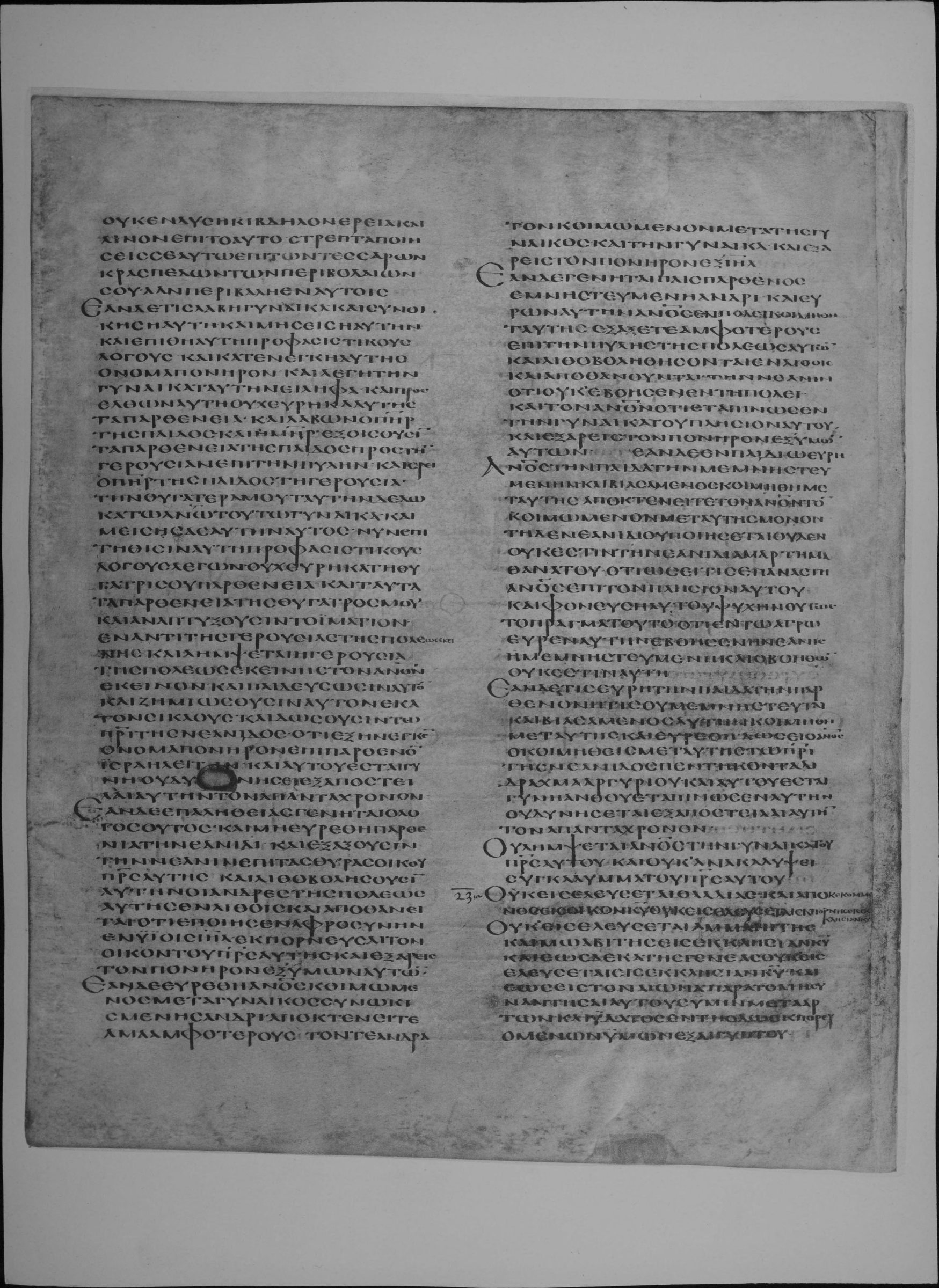
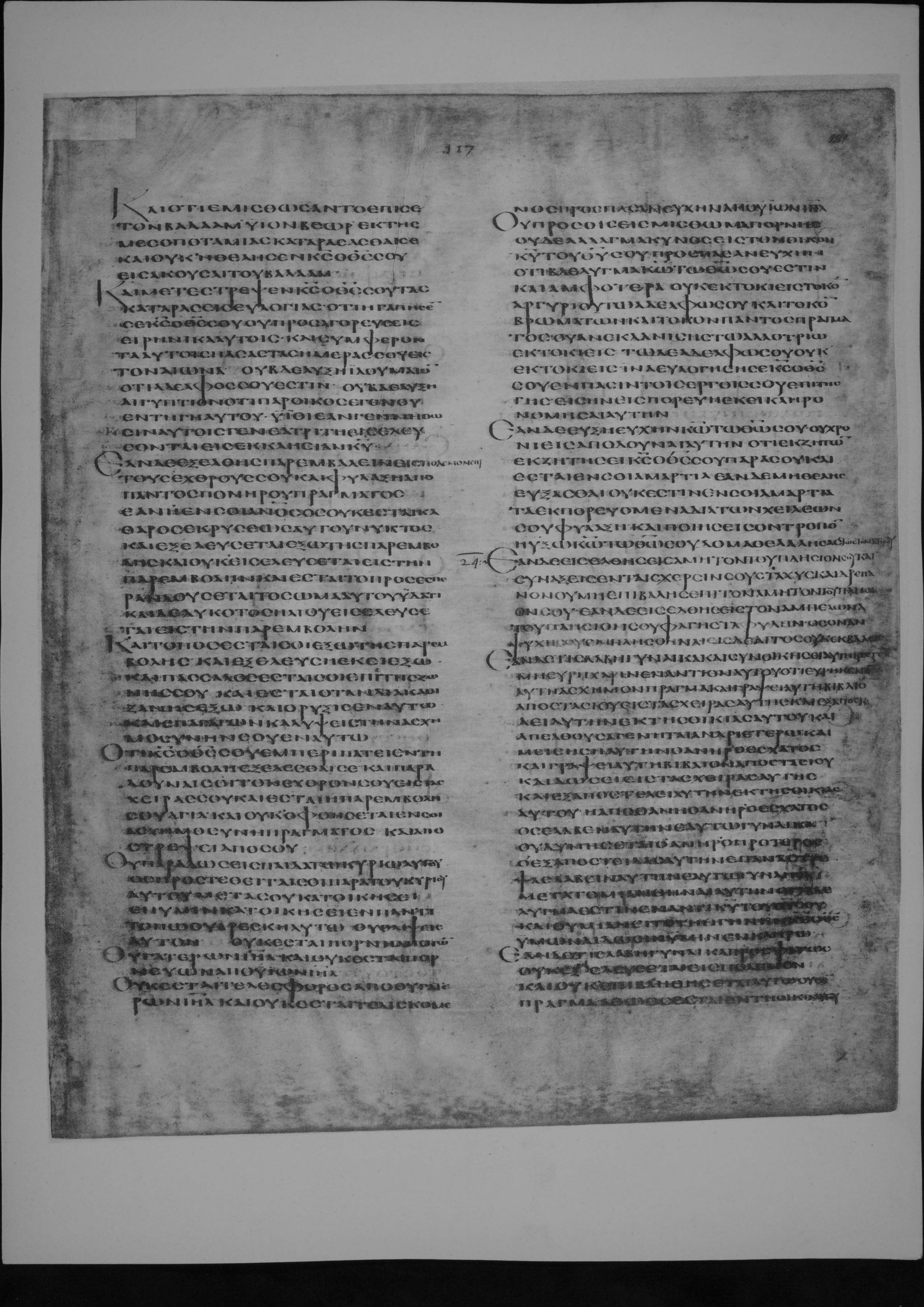
Deuteronomy 23 in the Greek Old Testament (the Septuagint) as written in Codex Alexandrinus, a Greek Bible copied in the fifth century, probably in Egypt, and now in the British Library (Royal MS 1 D. V, the first of its four volumes). It is one of the three great early codices of the whole Greek Bible, with Codex Vaticanus and Codex Sinaiticus, and for Genesis 1:1-46:28, which Codex Vaticanus has lost, it is the oldest surviving complete Greek text (older papyri such as the Berlin Genesis papyrus and Chester Beatty 961 survive only in part).
Numbering: Swete's Greek and Brenton's English number or divide some verses of this chapter differently (Swete 23:1 = Brenton 23:2; Swete 23:3 = Brenton 23:3-4; Swete 23:4-11 = Brenton 23:5-12; Swete 23:13 = Brenton 23:13-14; Swete 23:14-25 = Brenton 23:15-26). Each column keeps its own verse numbers, and sections are cut only where the two texts agree, so each section holds the same passage in both languages.
This entry meets the strict three-criteria standard of the Theosis Library:
- Manuscript scan: the pages of Codex Alexandrinus carrying this chapter (fol. 116v, fol. 117r), from the full-size photographic (autotype) facsimile published by the British Museum in 1879-1883, as digitised on the Internet Archive. The verse range of every page comes from the reduced photographic facsimile of 1915, which prints it beneath each plate, and the opening words of every page were read on the plate to confirm the page and the verse it begins with. Each section links to the page or pages that hold its verses. Folio numbers are those written at the head of each leaf and visible on the plates.
- Original text: Swete's edition, which here prints the text of Codex Vaticanus (Vat. gr. 1209), the base of his edition, and gives the readings of Alexandrinus only in his apparatus. The Greek column is therefore Vaticanus' text; where Alexandrinus differs, the plate shows what Alexandrinus reads.
- English translation: Sir Lancelot C. L. Brenton, The Septuagint Version of the Old Testament (1844; 1851 edition), a translation of the Greek, public domain, from the eBible.org text.
How was this verified? (Provenance)
Where on the image
Deuteronomy 23:1-4 is on fol. 116v (full-size facsimile of 1879-83, Internet Archive codex-alexandrinus leaf 253). The 1915 reduced facsimile prints beneath this page: Deut. xxii. 11-xxiii. 4. Checked on the plate: the page begins at the start of Deuteronomy 22:11 (first words read: ΟΥΚ ΕΝΔΥΣΗ ΚΙΒΔΗΛΟΝ ΕΡΙΑ ΚΑΙ ΛΙΝΟΝ ΕΝ ΤΩ ΑΥΤΩ ΣΤΡΕΠΤΑ ΠΟΙΗΣΕΙΣ ΣΕΑΥΤΩ). Deuteronomy 23:4-9 is on fol. 117r (full-size facsimile of 1879-83, Internet Archive codex-alexandrinus leaf 254). The 1915 reduced facsimile prints beneath this page: Deut. xxiii. 4-xxiv. 5. Checked on the plate: the page begins inside Deuteronomy 23:4 (first words read: ΚΑΙ ΟΤΙ ΕΜΙΣΘΩΣΑΝΤΟ ΕΠΙ ΣΕ ΤΟΝ ΒΑΛΑΑΜ ΥΙΟΝ ΒΕΩΡ ΕΚ ΤΗΣ ΜΕΣΟΠΟΤΑΜΙΑΣ).
1Οὐκ εἰσελεύσονται θλαδίας οὐδὲ ἀποκεκομμένος εἰς ἐκκλησίαν Κυρίου. 3οὐκ εἰσελεύσεται Ἀμμανείτης οὐδὲ Μωαβείτης εἰς ἐκκλησίαν Κυρίου· καὶ ἕως δεκάτης γενεᾶς οὐκ εἰσελεύσεται εἰς ἐκκλησίαν Κυρίου καὶ ἕως εἰς τὸν αἰῶνα, 4παρὰ τὸ μὴ συναντῆσαι αὐτοὺς ὑμῖν μετὰ ἄρτων καὶ ὕδατος ἐν τῇ ὁδῷ ἐκπορευομένων ὑμῶν ἐξ Αἰγύπτου, καὶ ὅτι ἐμισθώσαντο ἐπὶ σὲ τὸν Βαλαὰμ υἱὸν Βεὼρ ἐκ τῆς Μεσοποταμίας καταρᾶσθαι· 5καὶ οὐκ ἠθέλησεν Κύριος ὁ θεός σου εἰσακοῦσαι τοῦ Βαλαάμ, καὶ μετέστρεψεν Κύριος ὁ θεός σου τὰς κατάρας εἰς εὐλογίαν, ὅτι ἠγάπησέν σε Κύριος ὁ θεός σου. 6οὐ προσαγορεύσεις εἰρηνικὰ αὐτοῖς καὶ συμφέροντα αὐτοῖς πάσας τὰς ἡμέρας σου εἰς τὸν αἰῶνα. 7οὐ βδελύξῃ Ἰδουμαῖον, ὅτι ἀδελφός σού ἐστιν· οὐ βδελύξῃ Αἰγύπτιον, ὅτι πάροικος ἐγένου ἐν τῇ γῇ αὐτοῦ· 8υἱοὶ ἐὰν γενηθῶσιν αὐτοῖς, γενεᾷ τρίτῃ εἰσελεύσονται εἰς ἐκκλησίαν Κυρίου. 9Ἐὰν δὲ ἐξέλθῃς παρεμβαλεῖν ἐπὶ τοὺς ἐχθρούς σου, καὶ φυλάξῃ ἀπὸ παντὸς ῥήματος πονηροῦ.
2He that is fractured or mutilated in his private parts shall not enter into the assembly of the Lord. 3One born of a harlot shall not enter into the assembly of the Lord. 4The Ammanite and Moabite shall not enter into the assembly of the Lord, even until the tenth generation he shall not enter into the assembly of the Lord, even for ever: 5because they met you not with bread and water by the way, when ye went out of Egypt; and because they hired against thee Balaam the son of Beor of Mesopotamia to curse thee. 6But the Lord thy God would not hearken to Balaam; and the Lord thy God changed the curses into blessings, because the Lord thy God loved thee. 7Thou shalt not speak peaceably or profitably to them all thy days for ever. 8Thou shalt not abhor an Edomite, because he is thy brother; thou shalt not abhor an Egyptian, because thou wast a stranger in his land. 9If sons be born to them, in the third generation they shall enter into the assembly of the Lord. 10And if thou shouldest go forth to engage with thine enemies, then thou shalt keep thee from every wicked thing.
Where on the image
Deuteronomy 23:10-18 is on fol. 117r (full-size facsimile of 1879-83, Internet Archive codex-alexandrinus leaf 254). The 1915 reduced facsimile prints beneath this page: Deut. xxiii. 4-xxiv. 5. Checked on the plate: the page begins inside Deuteronomy 23:4 (first words read: ΚΑΙ ΟΤΙ ΕΜΙΣΘΩΣΑΝΤΟ ΕΠΙ ΣΕ ΤΟΝ ΒΑΛΑΑΜ ΥΙΟΝ ΒΕΩΡ ΕΚ ΤΗΣ ΜΕΣΟΠΟΤΑΜΙΑΣ).
10ἐὰν ᾖ ἐν σοὶ ἄνθρωπος ὃς οὐκ ἔσται καθαρὸς ἐκ ῥύσεως αὐτοῦ νυκτός, καὶ ἐξελεύσεται εἰς τὴν παρεμβολήν· 11καὶ ἔσται τὸ πρὸς ἑσπέραν λούσεται τὸ σῶμα αὐτοῦ ὕδατι, καὶ δεδυκότος ἡλίου εἰσελεύσεται εἰς τὴν παρεμβολήν. 13καὶ πάσσαλος ἔσται σοι ἐπὶ τῆς ζώνης σου, καὶ ἔσται ὅταν διακαθιζάνῃς ἔξω, καὶ ὀρύξεις ἐν αὐτῷ καὶ ἐπάγων καλύψεις τὴν ἀσχημοσύνην σου· 14ὅτι Κύριος ὁ θεός σου ἐνπεριπατεῖ ἐν τῇ παρεμβολῇ σου, ἐξελέσθαι σε καὶ παραδοῦναι τὸν ἐχθρόν σου πρὸ προσώπου σου· καὶ ἔσται ἡ παρεμβολή σου ἁγία, καὶ οὐκ ὀφθήσεται ἐν σοὶ ἀσχημοσύνη πράγματος, καὶ ἀποστρέψει ἀπὸ σοῦ. 15Οὐ παραδώσεις παῖδα τῷ κυρίῳ, ὃς προστέθειταί σοι παρὰ τοῦ κυρίου αὐτοῦ· 16μετὰ σοῦ κατοικήσει, ἐν ὑμῖν· κατοικήσει οὗ ἐὰν ἀρέσῃ αὐτῷ, οὐ θλίψεις αὐτόν. 17Οὐκ ἔσται πόρνη ἀπὸ θυγατέρων Ἰσραήλ, καὶ οὐκ ἔσται πορνεύων ἀπὸ υἱῶν Ἰσραήλ· οὐκ ἔσται τελεσφόρος ἀπὸ θυγατέρων Ἰσραήλ, καὶ οὐκ ἔσται τελισκόμενος ἀπὸ υἱῶν Ἰσραήλ. 18οὐ προσοίσεις μίσθωμα πόρνης οὐδὲ ἄλλαγμα κυνὸς εἰς τὸν οἶκον Κυρίου τοῦ θεοῦ σου πρὸς πᾶσαν εὐχήν, ὅτι βδέλυγμα Κυρίῳ τῷ θεῷ σού ἐστιν καὶ ἀμφότερα.
11If there should be in thee a man who is not clean by reason of his issue by night, then he shall go forth out of the camp, and he shall not enter into the camp. 12And it shall come to pass toward evening he shall wash his body with water, and when the sun has gone down, he shall go into the camp. 13And thou shalt have a place outside of the camp, and thou shalt go out thither, 14and thou shalt have a trowel on thy girdle; and it shall come to pass when thou wouldest relieve thyself abroad, that thou shalt dig with it, and shalt bring back the earth and cover thy nuisance. 15Because the Lord thy God walks in thy camp to deliver thee, and to give up thine enemy before thy face; and thy camp shall be holy, and there shall not appear in thee a disgraceful thing, and so he shall turn away from thee. 16Thou shalt not deliver a servant to his master, who coming from his master attaches himself to thee. 17He shall dwell with thee, he shall dwell among you where he shall please; thou shalt not afflict him. 18There shall not be a harlot of the daughters of Israel, and there shall not be a fornicator of the sons of Israel; there shall not be an idolatress of the daughters of Israel, and there shall not be an initiated person of the sons of Israel. 19Thou shalt not bring the hire of a harlot, nor the price of a dog into the house of the Lord thy God, for any vow; because even both are an abomination to the Lord thy God.
Where on the image
Deuteronomy 23:19-25 is on fol. 117r (full-size facsimile of 1879-83, Internet Archive codex-alexandrinus leaf 254). The 1915 reduced facsimile prints beneath this page: Deut. xxiii. 4-xxiv. 5. Checked on the plate: the page begins inside Deuteronomy 23:4 (first words read: ΚΑΙ ΟΤΙ ΕΜΙΣΘΩΣΑΝΤΟ ΕΠΙ ΣΕ ΤΟΝ ΒΑΛΑΑΜ ΥΙΟΝ ΒΕΩΡ ΕΚ ΤΗΣ ΜΕΣΟΠΟΤΑΜΙΑΣ).
19Οὐκ ἐκτοκιεῖς τῷ ἀδελφῷ σου τόκον ἀργυρίου καὶ τόκον βρωμάτων καὶ τόκον παντὸς πράγματος οὗ ἂν ἐκδανίσῃς· 20τῷ ἀλλοτρίῳ ἐκτοκιεῖς, τῷ δὲ ἀδελφῷ σου οὐκ ἐκτοκιεῖς, ἵνα εὐλογήσῃ σε Κύριος ὁ θεός σου ἐν πᾶσι τοῖς ἔργοις σου ἐπὶ τῆς γῆς εἰς ἣν εἰσπορεύῃ ἐκεῖ κληρονομεῖν αὐτήν. 21Ἐὰν δὲ εὔξῃ εὐχὴν Κυρίῳ τῷ θεῷ σου, οὐ χρονιεῖς ἀποδοῦναι αὐτήν, ὅτι ἐκζητῶν ἐκζητήσει Κύριος ὁ θεός σου παρὰ σοῦ, καὶ ἔσται ἐν σοὶ ἁμαρτία· 22ἐὰν δὲ μὴ θέλῃς εὔξασθαι, οὐκ ἔστιν ἐν σοὶ ἁμαρτία. 23τὰ ἐκπορευόμενα διὰ τῶν χειλέων σου φυλάξῃ, καὶ ποιήσεις ὃν τρόπον εὔξω τῷ θεῷ δόμα ὃ ἐλάλησας τῷ στόματί σου. 24Ἐὰν δὲ εἰσέλθῃς εἰς ἀμητὸν τοῦ πλησίον σου, καὶ συλλέξεις ἐν ταῖς χερσίν σου στάχυς, καὶ δρέπανον οὐ μὴ ἐπιβάλῃς ἐπ᾽ ἀμητὸν τοῦ πλησίον σου. 25Ἐὰν δὲ εἰσέλθῃς εἰς τὸν ἀμπελῶνα τοῦ πλησίον σου, φάγῃ σταφυλὴν ὅσον ψυχήν σου ἐμπλησθῆναι, εἰς δὲ ἄγγος οὐκ ἐμβαλεῖς.
20Thou shalt not lend to thy brother on usury of silver, or usury of meat, or usury of any thing which thou mayest lend out. 21Thou mayest lend on usury to a stranger, but to thy brother thou shalt not lend on usury; that the Lord thy God may bless thee in all thy works upon the land, into which thou art entering to inherit it. 22And if thou wilt vow a vow to the Lord thy God, thou shalt not delay to pay it; for the Lord thy God will surely require it of thee, and otherwise it shall be sin in thee. 23But if thou shouldest be unwilling to vow, it is not sin in thee. 24Thou shalt observe the words that proceed from between thy lips; and as thou hast vowed a gift to the Lord God, so shalt thou do that which thou hast spoken with thy mouth. 25And if thou shouldest go into the corn field of thy neighbour, then thou mayest gather the ears with thy hands; but thou shalt not put the sickle to thy neighbour's corn. 26And if thou shouldest go into the vineyard of thy neighbour, thou shalt eat grapes sufficient to satisfy thy desire; but thou mayest not put them into a vessel.
Cite
Sources
- Source: Codex Alexandrinus (British Library Royal MS 1 D. V) via the British Museum photographic facsimiles of 1879-83 and 1915 (Internet Archive) + Swete's Septuagint + Brenton's English (holding institution)
- Critical edition: H. B. Swete, The Old Testament in Greek according to the Septuagint (1909)
← previous · → next · v cycle view · l back to library