Deuteronomy, Chapter 22 (Codex Alexandrinus)
Introduction
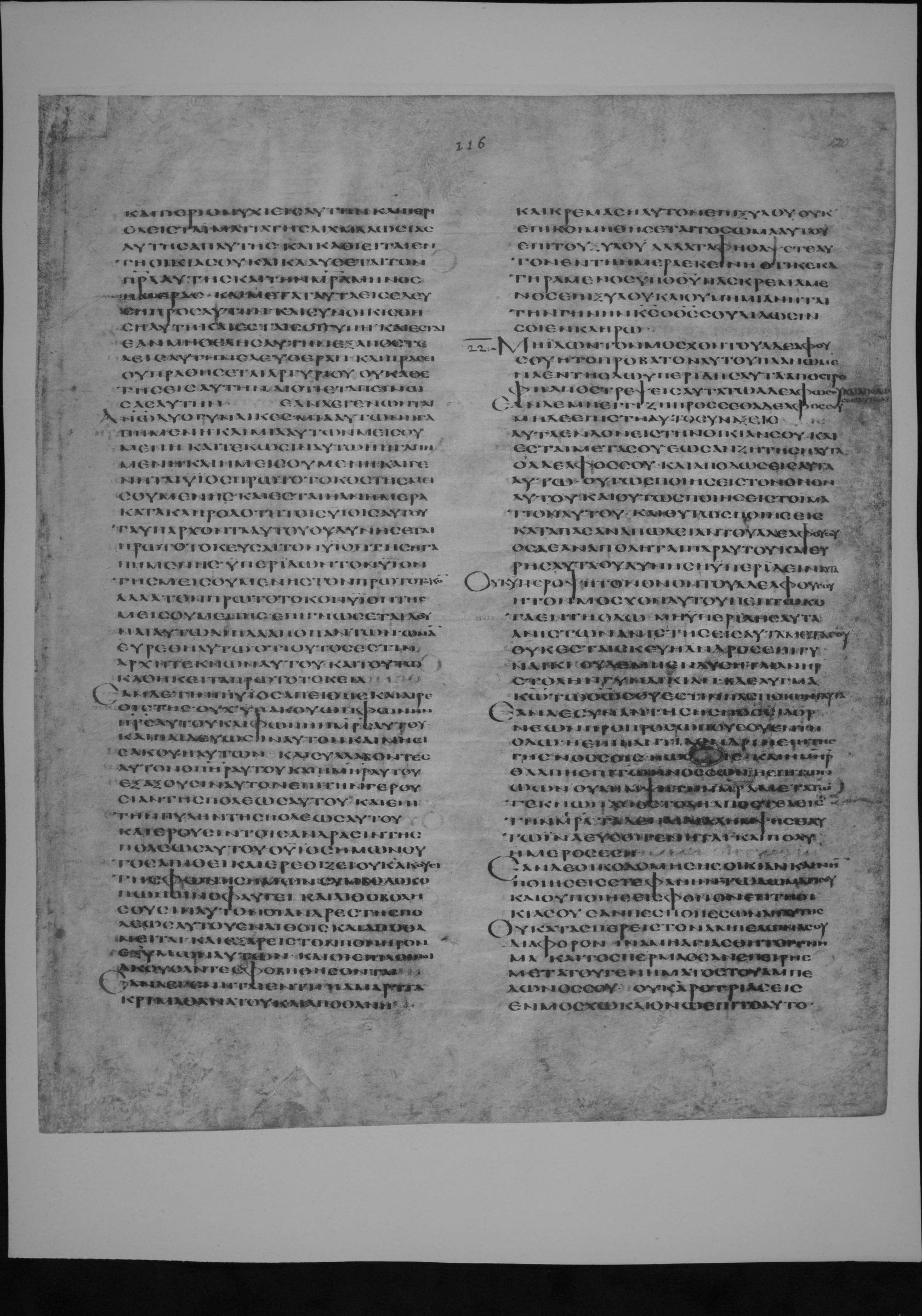
Deuteronomy 22 in the Greek Old Testament (the Septuagint) as written in Codex Alexandrinus, a Greek Bible copied in the fifth century, probably in Egypt, and now in the British Library (Royal MS 1 D. V, the first of its four volumes). It is one of the three great early codices of the whole Greek Bible, with Codex Vaticanus and Codex Sinaiticus, and for Genesis 1:1-46:28, which Codex Vaticanus has lost, it is the oldest surviving complete Greek text (older papyri such as the Berlin Genesis papyrus and Chester Beatty 961 survive only in part).
Numbering: Swete's Greek and Brenton's English number or divide some verses of this chapter differently (Swete 22:30 = Brenton 23:1). Each column keeps its own verse numbers, and sections are cut only where the two texts agree, so each section holds the same passage in both languages.
This entry meets the strict three-criteria standard of the Theosis Library:
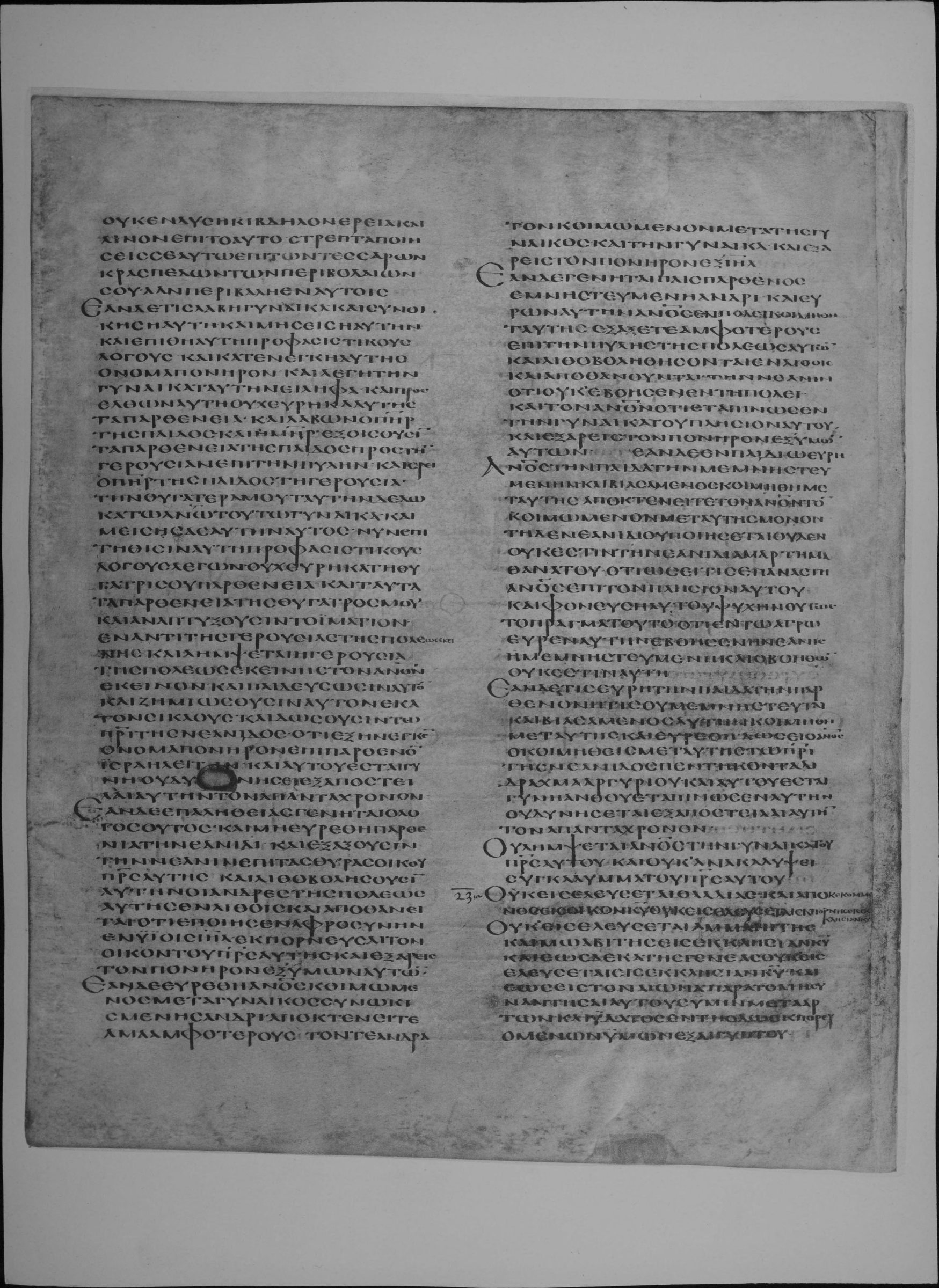
- Manuscript scan: the pages of Codex Alexandrinus carrying this chapter (fol. 116r, fol. 116v), from the full-size photographic (autotype) facsimile published by the British Museum in 1879-1883, as digitised on the Internet Archive. The verse range of every page comes from the reduced photographic facsimile of 1915, which prints it beneath each plate, and the opening words of every page were read on the plate to confirm the page and the verse it begins with. Each section links to the page or pages that hold its verses. Folio numbers are those written at the head of each leaf and visible on the plates.
- Original text: Swete's edition, which here prints the text of Codex Vaticanus (Vat. gr. 1209), the base of his edition, and gives the readings of Alexandrinus only in his apparatus. The Greek column is therefore Vaticanus' text; where Alexandrinus differs, the plate shows what Alexandrinus reads.
- English translation: Sir Lancelot C. L. Brenton, The Septuagint Version of the Old Testament (1844; 1851 edition), a translation of the Greek, public domain, from the eBible.org text.
How was this verified? (Provenance)
Where on the image
Deuteronomy 22:1-8 is on fol. 116r (full-size facsimile of 1879-83, Internet Archive codex-alexandrinus leaf 252). The 1915 reduced facsimile prints beneath this page: Deut. xxi. 12-xxii. 10. Checked on the plate: the page begins inside Deuteronomy 21:12 (first words read: ΚΑΙ ΠΕΡΙΟΝΥΧΙΕΙΣ ΑΥΤΗΝ ΚΑΙ ΠΕΡΙΕΛΕΙΣ ΤΑ ΙΜΑΤΙΑ ΤΗΣ ΑΙΧΜΑΛΩΣΙΑΣ ΑΠ ΑΥΤΗΣ).
1Μὴ ἰδὼν τὸν μόσχον τοῦ ἀδελφοῦ σου ἢ τὸ πρόβατον αὐτοῦ πλανώμενα ἐν τῇ ὁδῷ, μὴ ὑπερίδῃς αὐτά· ἀποστροφῇ ἀποστρέψεις αὐτὰ τῷ ἀδελφῷ σου καὶ ἀποδώσεις αὐτῷ. 2ἐὰν δὲ μὴ ἐγγίζῃ ὁ ἀδελφός σου πρὸς σὲ μηδὲ ἐπίστῃ αὐτόν, συνάξεις αὐτὸν ἔνδον εἰς τὴν οἰκίαν σου, καὶ ἔσται μετὰ σοῦ ἕως ἂν ζητήσῃ αὐτὰ ὁ ἀδελφός σου, καὶ ἀποδώσεις αὐτῷ. 3οὕτως ποιήσεις τὸν ὄνον αὐτοῦ, καὶ οὕτως ποιήσεις κατὰ πᾶσαν ἀπωλίαν τοῦ ἀδελφοῦ σου· ὅσα ἐὰν ἀπόληται παρ᾽ αὐτοῦ καὶ εὕρῃς, οὐ δυνήσῃ ὑπεριδεῖν. 4Οὐκ ὄψῃ τὸν ὄνον τοῦ ἀδελφοῦ σου ἢ τὸν μόσχον αὐτοῦ πεπτωκότας ἐν τῇ ὁδῷ· μὴ ὑπερίδῃς αὐτούς· ἀνιστῶν ἀναστήσεις μετ᾽ αὐτοῦ. 5Οὐκ ἔσται σκεύη ἀνδρὸς ἐπὶ γυναικί, οὐδὲ μὴ ἐνδύσηται ἀνὴρ στολὴν γυναικίαν· ὅτι βδέλυγμα Κυρίῳ τῷ θεῷ σού ἐστιν πᾶς ποιῶν ταῦτα. 6Ἐὰν δὲ συναντήσῃς νοσσιᾷ ὀρνέων πρὸ προσώπου σου ἐν τῇ ὁδῷ ἢ ἐπὶ παντὶ δένδρει ἢ ἐπὶ τῆς γῆς, νοσσοῖς ἢ ὠοῖς, καὶ ἡ μήτηρ θάλπῃ ἐπὶ τῶν νοσσῶν ἢ ἐπὶ τῶν ὠῶν, οὐ λήμψῃ τὴν μητέρα μετὰ τῶν τέκνων· 7ἀποστολῇ ἀποστελεῖς τὴν μητέρα, τὰ δὲ παιδία λήμψῃ σεαυτῷ, ἵνα εὖ σοι γένηται καὶ πολυήμερος γένῃ. 8Ἐὰν οἰκοδομήσῃς οἰκίαν καινήν, καὶ ποιήσεις στεφάνην τῷ δώματί σου· καὶ οὐ ποιήσεις φόνον ἐν τῇ οἰκίᾳ σου, ἐὰν πέσῃ ὁ πεσὼν ἀπ᾽ αὐτοῦ.
1When thou seest the calf of thy brother or his sheep wandering in the way, thou shalt not overlook them; thou shalt by all means turn them back to thy brother, and thou shalt restore them to him. 2And if thy brother do not come nigh thee, and thou dost not know him, thou shalt bring it into thy house within; and it shall be with thee until thy brother shall seek them, and thou shalt restore them to him. 3Thus shalt thou do to his ass, and thus shalt thou do to his garment, and thus shalt thou do to every thing that thy brother has lost; whatsoever shall have been lost by him, and thou shalt have found, thou shalt not have power to overlook. 4Thou shalt not see the ass of thy brother, or his calf, fallen in the way: thou shalt not overlook them, thou shalt surely help him to raise them up. 5The apparel of a man shall not be on a woman, neither shall a man put on a woman's dress; for every one that does these things is an abomination to the Lord thy God. 6And if thou shouldest come upon a brood of birds before thy face in the way or upon any tree, or upon the earth, young or eggs, and the mother be brooding on the young or the eggs, thou shalt not take the dam with the young ones. 7Thou shalt by all means let the mother go, but thou shalt take the young to thyself; that it may be well with thee, and that thou mayest live long. 8If thou shouldest build a new house, then shalt thou make a parapet to thy house; so thou shalt not bring blood-guiltiness upon thy house, if one should in any wise fall from it.
Where on the image
Deuteronomy 22:9-10 is on fol. 116r (full-size facsimile of 1879-83, Internet Archive codex-alexandrinus leaf 252). The 1915 reduced facsimile prints beneath this page: Deut. xxi. 12-xxii. 10. Checked on the plate: the page begins inside Deuteronomy 21:12 (first words read: ΚΑΙ ΠΕΡΙΟΝΥΧΙΕΙΣ ΑΥΤΗΝ ΚΑΙ ΠΕΡΙΕΛΕΙΣ ΤΑ ΙΜΑΤΙΑ ΤΗΣ ΑΙΧΜΑΛΩΣΙΑΣ ΑΠ ΑΥΤΗΣ). Deuteronomy 22:11-16 is on fol. 116v (full-size facsimile of 1879-83, Internet Archive codex-alexandrinus leaf 253). The 1915 reduced facsimile prints beneath this page: Deut. xxii. 11-xxiii. 4. Checked on the plate: the page begins at the start of Deuteronomy 22:11 (first words read: ΟΥΚ ΕΝΔΥΣΗ ΚΙΒΔΗΛΟΝ ΕΡΙΑ ΚΑΙ ΛΙΝΟΝ ΕΝ ΤΩ ΑΥΤΩ ΣΤΡΕΠΤΑ ΠΟΙΗΣΕΙΣ ΣΕΑΥΤΩ).
9Οὐ κατασπερεῖς τὸν ἀμπελῶνά σου δίφορον, ἵνα μὴ ἁγιασθῇ τὸ γένημα καὶ τὸ σπέρμα ὃ ἐὰν σπείρῃ μετὰ τοῦ γενήματος τοῦ ἀμπελῶνός σου. 10οὐκ ἀροτριάσεις ἐν μόσχῳ καὶ ὄνῳ ἐπὶ τὸ αὐτό. 11οὐκ ἐνδύσῃ κίβδηλον, ἔρια καὶ λίνον ἐν τῷ αὐτῷ. 12Στρεπτὰ ποιήσεις σεαυτῷ ἐπὶ τῶν τεσσάρων κρασπέδων τῶν περιβολαίων σου, ἃ ἐὰν περιβάλῃ ἐν αὐτοῖς. 13Ἐὰν δέ τις λάβῃ γυναῖκα καὶ συνοικήσῃ αὐτῇ, καὶ μισήσῃ αὐτήν, 14καὶ ἐπιθῇ αὐτῇ προφασιστικοὺς λόγους, καὶ κατενέγκῃ αὐτῆς ὄνομα πονηρὸν καὶ λέγῃ Τὴν γυναῖκα ταύτην εἴληφα, καὶ προσελθὼν αὐτῇ οὐχ εὕρηκα αὐτῆς τὰ παρθένια· 15καὶ λαβὼν ὁ πατὴρ τῆς παιδὸς καὶ ἡ μήτηρ ἐξοίσουσιν τὰ παρθένια τῆς παιδὸς πρὸς τὴν γερουσίαν ἐπὶ τὴν πύλην, 16καὶ ἐρεῖ ὁ πατὴρ τῆς παιδὸς τῇ γερουσίᾳ Τὴν θυγατέρα μου ταύτην δέδωκα τῷ ἀνθρώπῳ τούτῳ γυναῖκα, καὶ μισήσας αὐτὴν
9Thou shalt not sow thy vineyard with diverse seed, lest the fruit be devoted, and whatsoever seed thou mayest sow, with the fruit of thy vineyard. 10Thou shalt not plough with an ox and an ass together. 11Thou shalt not wear a mingled garment, woollen and linen together. 12Thou shalt make fringes on the four borders of thy garments, with which soever thou mayest be clothed. 13And if any one should take a wife, and dwell with her, and hate her, 14and attach to her reproachful words, and bring against her an evil name, and say, I took this woman, and when I came to her I found not her tokens of virginity: 15then the father and the mother of the damsel shall take and bring out the damsel's tokens of virginity to the elders of the city to the gate. 16And the father of the damsel shall say to the elders, I gave this my daughter to this man for a wife;
Where on the image
Deuteronomy 22:17-24 is on fol. 116v (full-size facsimile of 1879-83, Internet Archive codex-alexandrinus leaf 253). The 1915 reduced facsimile prints beneath this page: Deut. xxii. 11-xxiii. 4. Checked on the plate: the page begins at the start of Deuteronomy 22:11 (first words read: ΟΥΚ ΕΝΔΥΣΗ ΚΙΒΔΗΛΟΝ ΕΡΙΑ ΚΑΙ ΛΙΝΟΝ ΕΝ ΤΩ ΑΥΤΩ ΣΤΡΕΠΤΑ ΠΟΙΗΣΕΙΣ ΣΕΑΥΤΩ).
17νῦν οὗτος ἐπιτίθησιν αὐτῇ προφασιστικοὺς λόγους, λέγων Οὐχ εὕρηκα τῇ θυγατρί σου παρθένια, καὶ ταῦτα τὰ παρθένια τῆς θυγατρός μου, καὶ ἀναπτύξουσιν τὸ ἱμάτιον ἐναντίον τῆς γερουσίας τῆς πόλεως. 18καὶ λήμψεται ἡ γερουσία τῆς πόλεως ἐκείνης τὸν ἄνθρωπον ἐκεῖνον καὶ παιδεύσουσιν αὐτόν, 19καὶ ζημιώσουσιν αὐτὸν ἑκατὸν σίκλους καὶ δώσουσιν τῷ πατρὶ τῆς νεάνιδος, ὅτι ἐξήνεγκεν ὄνομα πονηρὸν ἐπὶ παρθένον Ἰσραηλεῖτιν· καὶ αὐτοῦ ἔσται γυνή, οὐ δυνήσεται ἐξαποστεῖλαι αὐτὴν τὸν ἅπαντα χρόνον. 20ἐὰν δὲ ἐπ᾽ ἀληθείας γένηται ὁ λόγος οὗτος καὶ μὴ εὑρεθῇ παρθένια τῇ νεάνιδι, 21καὶ ἐξάξουσιν τὴν νεᾶνιν ἐπὶ τὰς θύρας τοῦ πατρὸς αὐτῆς, καὶ λιθοβολήσουσιν αὐτὴν ἐν λίθοις καὶ ἀποθανεῖται, ὅτι ἐποίησεν ἀφροσύνην ἐν υἱοῖς Ἰσραήλ, ἐκπορνεῦσαι τὸν οἶκον τοῦ πατρὸς αὐτῆς· καὶ ἐξαρεῖς τὸν πονηρὸν ἐξ ὑμῶν αὐτῶν. 22Ἐὰν δὲ εὑρεθῇ ἄνθρωπος κοιμώμενος μετὰ γυναικὸς συνοικισμένης ἀνδρί, ἀποκτενεῖτε ἀμφοτέρους, τὸν ἄνδρα τὸν κοιμώμενον μετὰ τῆς γυναικὸς καὶ τὴν γυναῖκα· καὶ ἐξαρεῖς τὸν πονηρὸν ἐξ Ἰσραήλ. 23Ἐὰν δὲ γένηται παῖς παρθένος μεμνηστευμένη ἀνδρί, καὶ εὑρὼν αὐτὴν ἄνθρωπος ἐν πόλει κοιμηθῇ μετ᾽ αὐτῆς· 24ἐξάξετε ἀμφοτέρους ἐπὶ τὴν πύλην τῆς πόλεως αὐτῶν, καὶ λιθοβοληθήσονται ἐν λίθοις καὶ ἀποθανοῦνται· τὴν νεᾶνιν, ὅτι οὐκ ἐβόησεν ἐν τῇ πόλει, καὶ τὸν ἄνθρωπον, ὅτι ἐταπείνωσεν τὴν γυναῖκα τοῦ πλησίον· καὶ ἐξαρεῖς τὸν πονηρὸν ἐξ ὑμῶν αὐτῶν.
17and now he has hated her, and attaches reproachful words to her, saying, I have not found tokens of virginity with thy daughter; and these are the tokens of my daughter's virginity. And they shall unfold the garment before the elders of the city. 18And the elders of that city shall take that man, and shall chastise him, 19and shall fine him a hundred shekels, and shall give them to the father of the damsel, because he has brought forth an evil name against a virgin of Israel; and she shall be his wife: he shall never be able to put her away. 20But if this report be true, and the tokens of virginity be not found for the damsel; 21then shall they bring out the damsel to the doors of her father's house, and shall stone her with stones, and she shall die; because she has wrought folly among the children of Israel, to defile the house of her father by whoring: so thou shalt remove the evil one from among you. 22And if a man be found lying with a woman married to a man, ye shall kill them both, the man that lay with the woman, and the woman: so shalt thou remove the wicked one out of Israel. 23And if there be a young damsel espoused to a man, and a man should have found her in the city and have lain with her; 24ye shall bring them both out to the gate of their city, and they shall be stoned with stones, and they shall die; the damsel, because she cried not in the city; and the man, because he humbled his neighbour's spouse: so shalt thou remove the evil one from yourselves.
Where on the image
Deuteronomy 22:25-30 is on fol. 116v (full-size facsimile of 1879-83, Internet Archive codex-alexandrinus leaf 253). The 1915 reduced facsimile prints beneath this page: Deut. xxii. 11-xxiii. 4. Checked on the plate: the page begins at the start of Deuteronomy 22:11 (first words read: ΟΥΚ ΕΝΔΥΣΗ ΚΙΒΔΗΛΟΝ ΕΡΙΑ ΚΑΙ ΛΙΝΟΝ ΕΝ ΤΩ ΑΥΤΩ ΣΤΡΕΠΤΑ ΠΟΙΗΣΕΙΣ ΣΕΑΥΤΩ).
25Ἐὰν δὲ ἐν πεδίῳ εὕρῃ ἄνθρωπος τὴν παῖδα τὴν μεμνηστευμένην καὶ βιασάμενος κοιμηθῇ μετ᾽ αὐτῆς, ἀποκτενεῖτε τὸν κοιμώμενον μετ᾽ αὐτῆς μόνον, 26καὶ τῇ νεάνιδι οὐκ ἔστιν ἁμάρτημα θανάτου. ὡς εἴ τις ἐπαναστῇ ἄνθρωπος ἐπὶ τὸν πλησίον καὶ φονεύσῃ αὐτοῦ ψυχήν, οὕτως τὸ πρᾶγμα τοῦτο· 27ὅτι ἐν τῷ ἀγρῷ εὗρεν αὐτήν, ἐβόησεν ἡ νεᾶνις ἡ μεμνηστευμένη, καὶ οὐκ ἦν ὁ βοηθήσων αὐτῇ. 28Ἐὰν δέ τις εὕρῃ τὴν παῖδα τὴν παρθένον ἥτις οὐ μεμνήστευται, καὶ βιασάμενος κοιμηθῇ μετ᾽ αὐτῆς, καὶ εὑρεθῇ· 29δώσει ὁ ἄνθρωπος ὁ κοιμηθεὶς μετ᾽ αὐτῆς τῷ πατρὶ τῆς νεάνιδος πεντήκοντα δίδραχμα ἀργυρίου, καὶ αὐτοῦ ἔσται γυνή, ἀνθ᾽ ὧν ἐταπείνωσεν αὐτήν· οὐ δυνήσεται ἐξαποστεῖλαι αὐτὴν τὸν ἅπαντα χρόνον. 30Οὐ λήμψεται ἄνθρωπος τὴν γυναῖκα τοῦ πατρὸς αὐτοῦ, καὶ οὐκ ἀποκαλύψει συνκάλυμμα τοῦ πατρὸς αὐτοῦ.
25But if a man find in the field a damsel that is betrothed, and he should force her and lie with her, ye shall slay the man that lay with her only. 26And the damsel has not committed a sin worthy of death; as if a man should rise up against his neighbour, and slay him, so is this thing; 27because he found her in the field; the betrothed damsel cried, and there was none to help her. 28And if any one should find a young virgin who has not been betrothed, and should force her and lie with her, and be found, 29the man who lay with her shall give to the father of the damsel fifty silver didrachms, and she shall be his wife, because he has humbled her; he shall never be able to put her away. 23:1A man shall not take his father's wife, and shall not uncover his father's skirt.
Cite
Sources
- Source: Codex Alexandrinus (British Library Royal MS 1 D. V) via the British Museum photographic facsimiles of 1879-83 and 1915 (Internet Archive) + Swete's Septuagint + Brenton's English (holding institution)
- Critical edition: H. B. Swete, The Old Testament in Greek according to the Septuagint (1909)
← previous · → next · v cycle view · l back to library