Exodus, Chapter 1 (Codex Alexandrinus)
Introduction
Exodus 1 in the Greek Old Testament (the Septuagint) as written in Codex Alexandrinus, a Greek Bible copied in the fifth century, probably in Egypt, and now in the British Library (Royal MS 1 D. V, the first of its four volumes). It is one of the three great early codices of the whole Greek Bible, with Codex Vaticanus and Codex Sinaiticus, and for Genesis 1:1-46:28, which Codex Vaticanus has lost, it is the oldest surviving complete Greek text (older papyri such as the Berlin Genesis papyrus and Chester Beatty 961 survive only in part).
This entry meets the strict three-criteria standard of the Theosis Library:
- Manuscript scan: the pages of Codex Alexandrinus carrying this chapter (fol. 34r, fol. 34v), from the full-size photographic (autotype) facsimile published by the British Museum in 1879-1883, as digitised on the Internet Archive. The verse range of every page comes from the reduced photographic facsimile of 1915, which prints it beneath each plate, and the opening words of every page were read on the plate to confirm the page and the verse it begins with. Each section links to the page or pages that hold its verses. Folio numbers are those written at the head of each leaf and visible on the plates.
- Original text: Swete's edition, which here prints the text of Codex Vaticanus (Vat. gr. 1209), the base of his edition, and gives the readings of Alexandrinus only in his apparatus. The Greek column is therefore Vaticanus' text; where Alexandrinus differs, the plate shows what Alexandrinus reads.
- English translation: Sir Lancelot C. L. Brenton, The Septuagint Version of the Old Testament (1844; 1851 edition), a translation of the Greek, public domain, from the eBible.org text.
How was this verified? (Provenance)
Where on the image
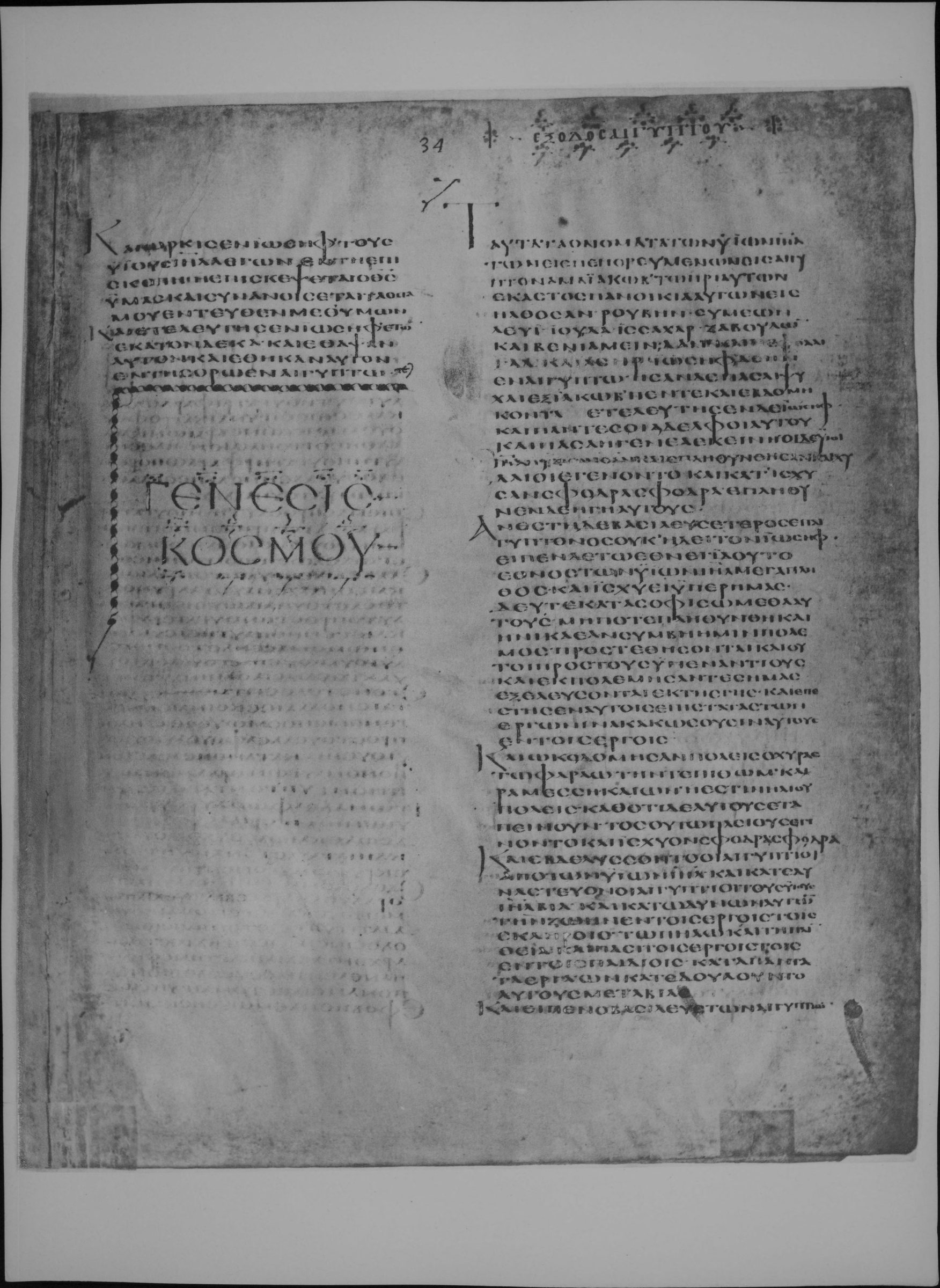
Exodus 1:1-8 is on fol. 34r (full-size facsimile of 1879-83, Internet Archive codex-alexandrinus leaf 88). The 1915 reduced facsimile prints beneath this page: Gen. l. 25-Exod. i. 15. Checked on the plate: the page begins at the start of Gen 50:25 (first words read: ΚΑΙ ΩΡΚΙΣΕΝ ΙΩΣΗΦ ΤΟΥΣ ΥΙΟΥΣ ΙΣΡΑΗΛ ΛΕΓΩΝ).
1ΤΑΥΤΑ τὰ ὀνόματα τῶν υἱῶν Ἰσραὴλ τῶν εἰσπεπορευμένων εἰς Αἴγυπτον ἅμα Ἰακὼβ τῷ πατρὶ αὐτῶν· ἕκαστος πανοικὶ αὐτῶν εἰσήλθοσαν· 2Ῥουβήν, Συμεών, Λευεί, Ἰούδας, 3Ἰσσαχάρ, Ζαβουλὼν καὶ Βενιαμείν, 4Δὰν καὶ Νεφθαλεί, Γὰδ καὶ Ἀσήρ. 5Ἰωσὴφ δὲ ἦν ἐν Αἰγύπτῳ· ἦσαν δὲ πᾶσαι ψυχαὶ ἐξ Ἰακὼβ πέντε καὶ ἑβδομήκοντα. 6Ἐτελεύτησεν δὲ Ἰωσὴφ καὶ πάντες οἱ ἀδελφοὶ αὐτοῦ καὶ πᾶσα ἡ γενεὰ ἐκείνη. 7οἱ δὲ υἱοὶ Ἰσραὴλ ηὐξήθησαν καὶ ἐπληθύνθησαν καὶ χυδαῖοι ἐγένοντο καὶ κατίσχυον σφόδρα σφόδρα· ἐπλήθυνεν δὲ ἡ γῆ αὐτούς. 8Ἀνέστη δὲ βασιλεὺς ἕτερος ἐπ᾽ Αἴγυπτον, ὃς οὐκ ᾔδει τὸν Ἰωσήφ.
1These are the names of the sons of Israel that came into Egypt together with Jacob their father; they came in each with their whole family. 2Ruben, Simeon, Levi, Judas, 3Issachar, Zabulon, Benjamin, 4Dan and Nephthalim, Gad and Aser. 5But Joseph was in Egypt. And all the souls born of Jacob were seventy-five. 6And Joseph died, and all his brethren, and all that generation. 7And the children of Israel increased and multiplied, and became numerous and grew exceedingly strong, and the land multiplied them. 8And there arose up another king over Egypt, who knew not Joseph.
Where on the image
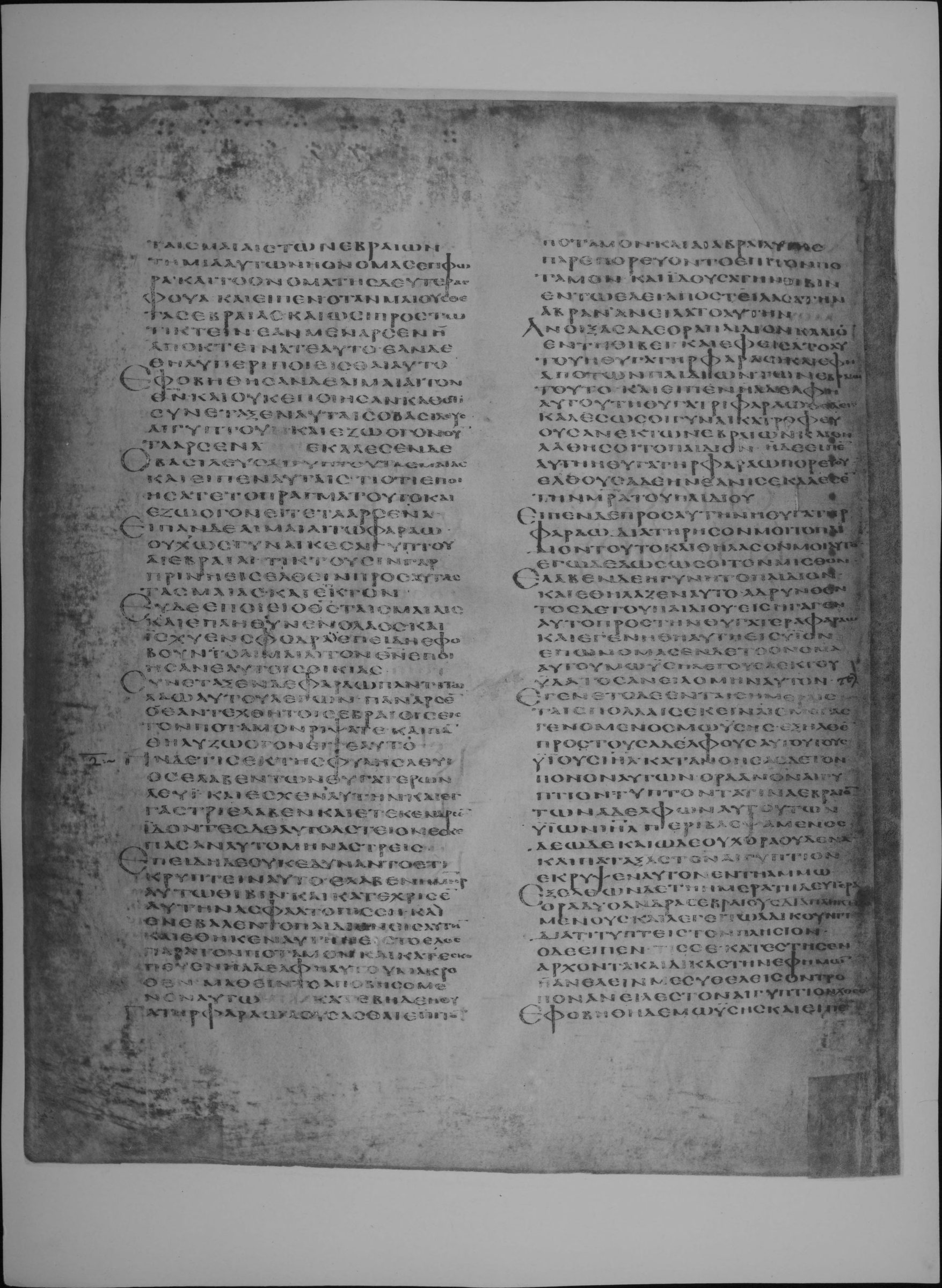
Exodus 1:9-15 is on fol. 34r (full-size facsimile of 1879-83, Internet Archive codex-alexandrinus leaf 88). The 1915 reduced facsimile prints beneath this page: Gen. l. 25-Exod. i. 15. Checked on the plate: the page begins at the start of Gen 50:25 (first words read: ΚΑΙ ΩΡΚΙΣΕΝ ΙΩΣΗΦ ΤΟΥΣ ΥΙΟΥΣ ΙΣΡΑΗΛ ΛΕΓΩΝ). Exodus 1:15-16 is on fol. 34v (full-size facsimile of 1879-83, Internet Archive codex-alexandrinus leaf 89). The 1915 reduced facsimile prints beneath this page: Exod. i. 15-ii. 14. Checked on the plate: the page begins inside Exodus 1:15 (first words read: ΤΑΙΣ ΜΑΙΑΙΣ ΤΩΝ ΕΒΡΑΙΩΝ ΤΗ ΜΙΑ ΑΥΤΩΝ Η ΟΝΟΜΑ ΣΕΠΦΩΡΑ).
9εἶπεν δὲ τῷ ἔθνει αὐτοῦ Ἰδοὺ τὸ γένος τῶν υἱῶν Ἰσραὴλ μέγα πλῆθος, καὶ ἰσχύει ὑπὲρ ἡμᾶς· 10δεῦτε οὖν κατασοφισώμεθα αὐτούς, μή ποτε πληθυνθῇ, καὶ ἡνίκα ἂν συμβῇ ἡμῖν πόλεμος προστεθήσονται καὶ οὗτοι πρὸς τοὺς ὑπεναντίους, καὶ ἐκπολεμήσαντες ἡμᾶς ἐξελεύσονται ἐκ τῆς γῆς. 11καὶ ἐπέστησεν αὐτοῖς ἐπιστάτας τῶν ἔργων, ἵνα κακώσωσιν αὐτοὺς ἐν τοῖς ἔργοις· καὶ ᾠκοδόμησαν πόλεις ὀχυρὰς τῷ Φαραώ, τήν τε Πειθὼ καὶ Ῥαμεσσὴ καὶ Ὤν, ἥ ἐστιν Ἡλίου πόλις. 12καθότι δὲ αὐτοὺς ἐταπείνουν, τοσούτῳ πλείους ἐγίνοντο, καὶ ἴσχυον σφόδρα σφόδρα· καὶ ἐβδελύσσοντο οἱ Αἰγύπτιοι ἀπὸ τῶν υἱῶν Ἰσραήλ. 13καὶ κατεδυνάστευον οἱ Αἰγύπτιοι τοὺς υἱοὺς Ἰσραὴλ βίᾳ, 14καὶ κατωδύνων αὐτῶν τὴν ζωὴν ἐν τοῖς ἔργοις τοῖς σκληροῖς, τῷ πηλῷ καὶ τῇ πλινθίᾳ καὶ πᾶσι τοῖς ἔργοις τοῖς ἐν τοῖς πεδίοις, κατὰ πάντα τὰ ἔργα ὧν κατεδουλοῦντο αὐτοὺς μετὰ βίας. 15Καὶ εἶπεν ὁ βασιλεὺς τῶν Αἰγυπτίων ταῖς μαίαις τῶν Ἐβραίων, τῇ μιᾷ αὐτῶν ᾗ ὄνομα Σεπφωρά, καὶ τὸ ὄνομα τῆς δευτέρας Φουά· 16καὶ εἶπεν Ὅταν μαιοῦσθε τὰς Ἐβραίας καὶ ὦσιν πρὸς τῷ τίκτειν, ἐὰν μὲν ἄρσεν ᾖ, ἀποκτείνατε αὐτό· ἐὰν δὲ θῆλυ, περιποιεῖσθε αὐτό.
9And he said to his nation, Behold, the race of the children of Israel is a great multitude, and is stronger than we: 10come then, let us deal craftily with them, lest at any time they be increased, and whensoever war shall happen to us, these also shall be added to our enemies, and having prevailed against us in war, they will depart out of the land. 11And he set over them task-masters, who should afflict them in their works; and they built strong cities for Pharao, both Pitho, and Ramesses, and On, which is Heliopolis. 12But as they humbled them, by so much they multiplied, and grew exceedingly strong; and the Egyptians greatly abhorred the children of Israel. 13And the Egyptians tyrannised over the children of Israel by force. 14And they embittered their life by hard labours, in the clay and in brick-making, and all the works in the plains, according to all the works, wherein they caused them to serve with violence. 15And the king of the Egyptians spoke to the midwives of the Hebrews; the name of the one was, Sepphora; and the name of the second, Phua. 16And he said, When ye do the office of midwives to the Hebrew women, and they are about to be delivered, if it be a male, kill it; but if a female, save it.
Where on the image
Exodus 1:17-22 is on fol. 34v (full-size facsimile of 1879-83, Internet Archive codex-alexandrinus leaf 89). The 1915 reduced facsimile prints beneath this page: Exod. i. 15-ii. 14. Checked on the plate: the page begins inside Exodus 1:15 (first words read: ΤΑΙΣ ΜΑΙΑΙΣ ΤΩΝ ΕΒΡΑΙΩΝ ΤΗ ΜΙΑ ΑΥΤΩΝ Η ΟΝΟΜΑ ΣΕΠΦΩΡΑ).
17ἐφοβήθησαν δὲ αἱ μαῖαι τὸν θεόν, καὶ οὐκ ἐποίησαν καθότι συνέταξεν αὐταῖς ὁ βασιλεὺς Αἰγύπτου, καὶ ἐζωογόνουν τὰ ἄρσενα. 18ἐκάλεσεν δὲ ὁ βασιλεὺς Αἰγύπτου τὰς μαίας καὶ εἶπεν αὐταῖς Τί ὅτι ἐποιήσατε τὸ πρᾶγμα τοῦτο καὶ ἐζωογονεῖτε τὰ ἄρσενα; 19εἶπαν δὲ αἱ μαῖαι τῷ Φαραώ Οὐχ ὡς γυναῖκες Αἰγύπτου αἱ Ἐβραῖαι, τίκτουσιν γὰρ πρὶν ἢ εἰσελθεῖν πρὸς αὐτὰς τὰς μαίας, καὶ ἔτικτον. 20εὖ δὲ ἐποίει ὁ θεὸς ταῖς μαίαις, καὶ ἐπλήθυνεν ὁ λαὸς καὶ ἴσχυεν σφόδρα. 21ἐπειδὴ ἐφοβοῦντο αἱ μαῖαι τὸν θεόν, ἐποίησαν ἑαυταῖς οἰκίας. 22Συνέταξεν δὲ Φαραὼ παντὶ τῷ λαῷ αὐτοῦ λέγων Πᾶν ἄρσεν ὃ ἐὰν τεχθῇ τοῖς Ἐβραίοις εἰς τὸν ποταμὸν ῥίψατε, καὶ πᾶν θῆλυ, ζωογονεῖτε αὐτό.
17But the midwives feared God, and did not as the king of Egypt appointed them; and they saved the male children alive. 18And the king of Egypt called the midwives, and said to them, Why is it that ye have done this thing, and saved the male children alive? 19And the midwives said to Pharao, The Hebrew women are not as the women of Egypt, for they are delivered before the midwives go in to them. So they bore children. 20And God did well to the midwives, and the people multiplied, and grew very strong. 21And as the midwives feared God, they established for themselves families. 22And Pharao charged all his people, saying, Whatever male child shall be born to the Hebrews, cast into the river; and every female, save it alive.
Cite
Sources
- Source: Codex Alexandrinus (British Library Royal MS 1 D. V) via the British Museum photographic facsimiles of 1879-83 and 1915 (Internet Archive) + Swete's Septuagint + Brenton's English (holding institution)
- Critical edition: H. B. Swete, The Old Testament in Greek according to the Septuagint (1909)
← previous · → next · v cycle view · l back to library