Exodus, Chapter 2 (Codex Alexandrinus)
Introduction
Exodus 2 in the Greek Old Testament (the Septuagint) as written in Codex Alexandrinus, a Greek Bible copied in the fifth century, probably in Egypt, and now in the British Library (Royal MS 1 D. V, the first of its four volumes). It is one of the three great early codices of the whole Greek Bible, with Codex Vaticanus and Codex Sinaiticus, and for Genesis 1:1-46:28, which Codex Vaticanus has lost, it is the oldest surviving complete Greek text (older papyri such as the Berlin Genesis papyrus and Chester Beatty 961 survive only in part).
This entry meets the strict three-criteria standard of the Theosis Library:
- Manuscript scan: the pages of Codex Alexandrinus carrying this chapter (fol. 34v, fol. 35r), from the full-size photographic (autotype) facsimile published by the British Museum in 1879-1883, as digitised on the Internet Archive. The verse range of every page comes from the reduced photographic facsimile of 1915, which prints it beneath each plate, and the opening words of every page were read on the plate to confirm the page and the verse it begins with. Each section links to the page or pages that hold its verses. Folio numbers are those written at the head of each leaf and visible on the plates.
- Original text: Swete's edition, which here prints the text of Codex Vaticanus (Vat. gr. 1209), the base of his edition, and gives the readings of Alexandrinus only in his apparatus. The Greek column is therefore Vaticanus' text; where Alexandrinus differs, the plate shows what Alexandrinus reads.
- English translation: Sir Lancelot C. L. Brenton, The Septuagint Version of the Old Testament (1844; 1851 edition), a translation of the Greek, public domain, from the eBible.org text.
How was this verified? (Provenance)
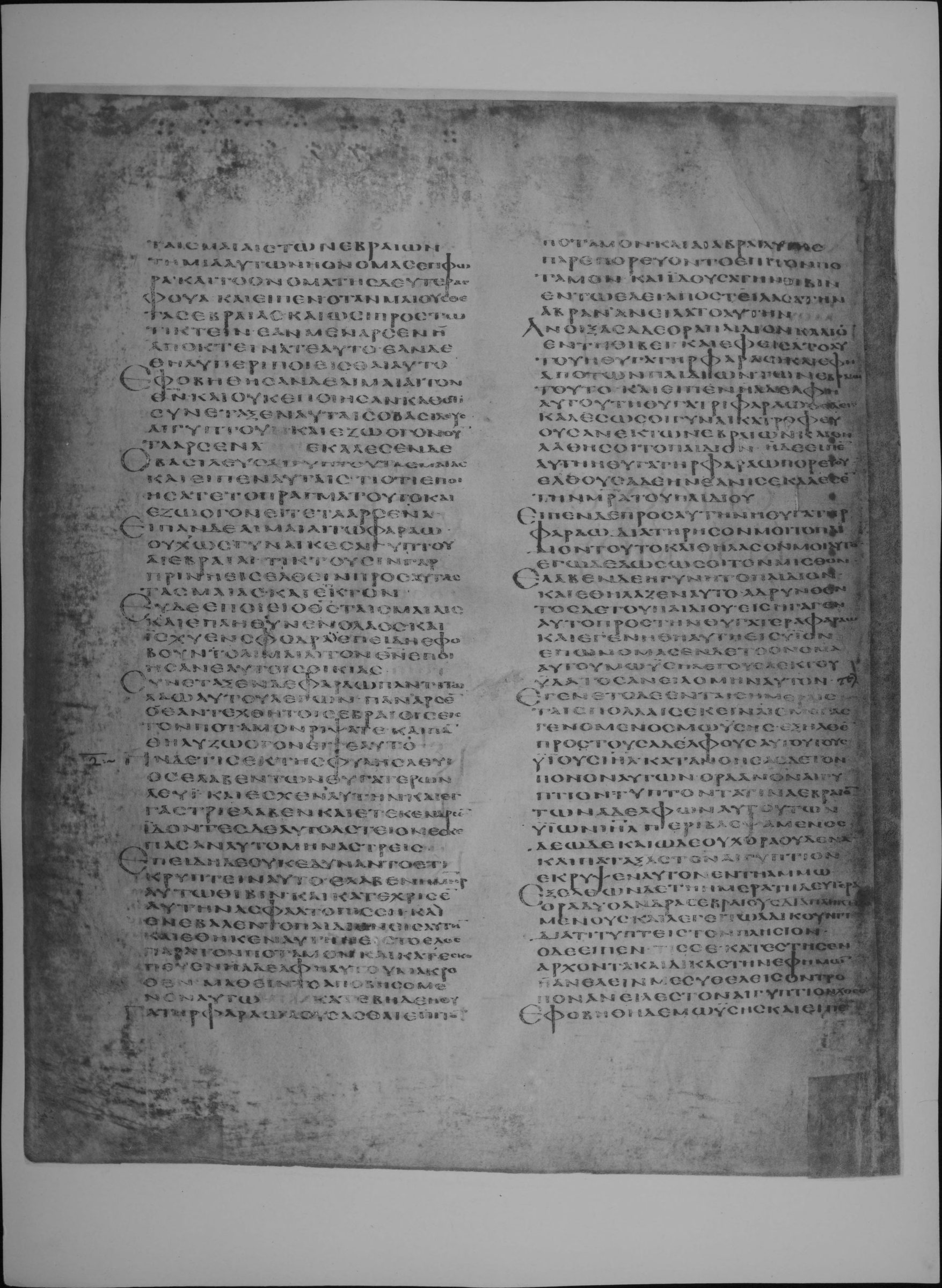
Where on the image
Exodus 2:1-8 is on fol. 34v (full-size facsimile of 1879-83, Internet Archive codex-alexandrinus leaf 89). The 1915 reduced facsimile prints beneath this page: Exod. i. 15-ii. 14. Checked on the plate: the page begins inside Exodus 1:15 (first words read: ΤΑΙΣ ΜΑΙΑΙΣ ΤΩΝ ΕΒΡΑΙΩΝ ΤΗ ΜΙΑ ΑΥΤΩΝ Η ΟΝΟΜΑ ΣΕΠΦΩΡΑ).
1Ἦν δέ τις ἐκ τῆς φυλῆς Λευεὶ ὃς ἔλαβεν τῶν θυγατέρων Λευεί. 2καὶ ἐν γαστρὶ ἔλαβεν καὶ ἔτεκεν ἄρσεν· ἰδόντες δὲ αὐτὸ ἀστεῖον ἐσκέπασαν αὐτὸ μῆνας τρεῖς. 3ἐπεὶ δὲ οὐκ ἠδύναντο αὐτὸ ἔτι κρύπτειν, ἔλαβεν αὐτῷ ἡ μήτηρ αὐτοῦ θῖβιν καὶ κατέχρισεν αὐτὴν ἀσφαλτοπίσσῃ καὶ ἐνέβαλεν τὸ παιδίον εἰς αὐτήν, καὶ ἔθηκεν αὐτὴν εἰς τὸ ἕλος παρὰ τὸν ποταμόν. 4καὶ κατεσκόπευεν ἡ ἀδελφὴ αὐτοῦ μακρόθεν μαθεῖν τί τὸ ἀποβησόμενον αὐτῷ. 5κατέβη δὲ ἡ θυγάτηρ Φαραὼ λούσασθαι ἐπὶ τὸν ποταμόν, καὶ αἱ ἅβραι αὐτῆς παρεπορεύοντο παρὰ τὸν ποταμόν· καὶ ἰδοῦσα τὴν θῖβιν ἐν τῷ ἕλει, ἀποστείλασα τὴν ἅβραν ἀνείλατο αὐτήν. 6ἀνοίξασα δὲ ὁρᾷ παιδίον κλαῖον ἐν τῇ θίβει· καὶ ἐφείσατο αὐτοῦ ἡ θυγάτηρ Φαραώ, καὶ ἔφη Ἀπὸ τῶν παιδίων τῶν Ἐβραίων τοῦτο. 7καὶ εἶπεν ἡ ἀδελφὴ αὐτοῦ τῇ θυγατρὶ Φαραώ Θέλεις καλέσω σοι γυναῖκα τροφεύουσαν ἐκ τῶν Ἐβραίων, καὶ θηλάσει σοι τὸ παιδίον; 8ἡ δὲ εἶπεν ἡ θυγάτηρ Φαραώ Πορεύου. ἐλθοῦσα δὲ ἡ νεᾶνις ἐκάλεσεν τὴν μητέρα τοῦ παιδίου.
1And there was a certain man of the tribe of Levi, who took to wife one of the daughters of Levi. 2And she conceived, and bore a male child; and having seen that he was fair, they hid him three months. 3And when they could no longer hide him, his mother took for him an ark, and besmeared it with bitumen, and cast the child into it, and put it in the ooze by the river. 4And his sister was watching from a distance, to learn what would happen to him. 5And the daughter of Pharao came down to the river to bathe; and her maids walked by the river's side, and having seen the ark in the ooze, she sent her maid, and took it up. 6And having opened it, she sees the babe weeping in the ark: and the daughter of Pharao had compassion on it, and said, This is one of the Hebrews' children. 7And his sister said to the daughter of Pharao, Wilt thou that I call to thee a nurse of the Hebrews, and shall she suckle the child for thee? 8And the daughter of Pharao said, Go: and the young woman went, and called the mother of the child.
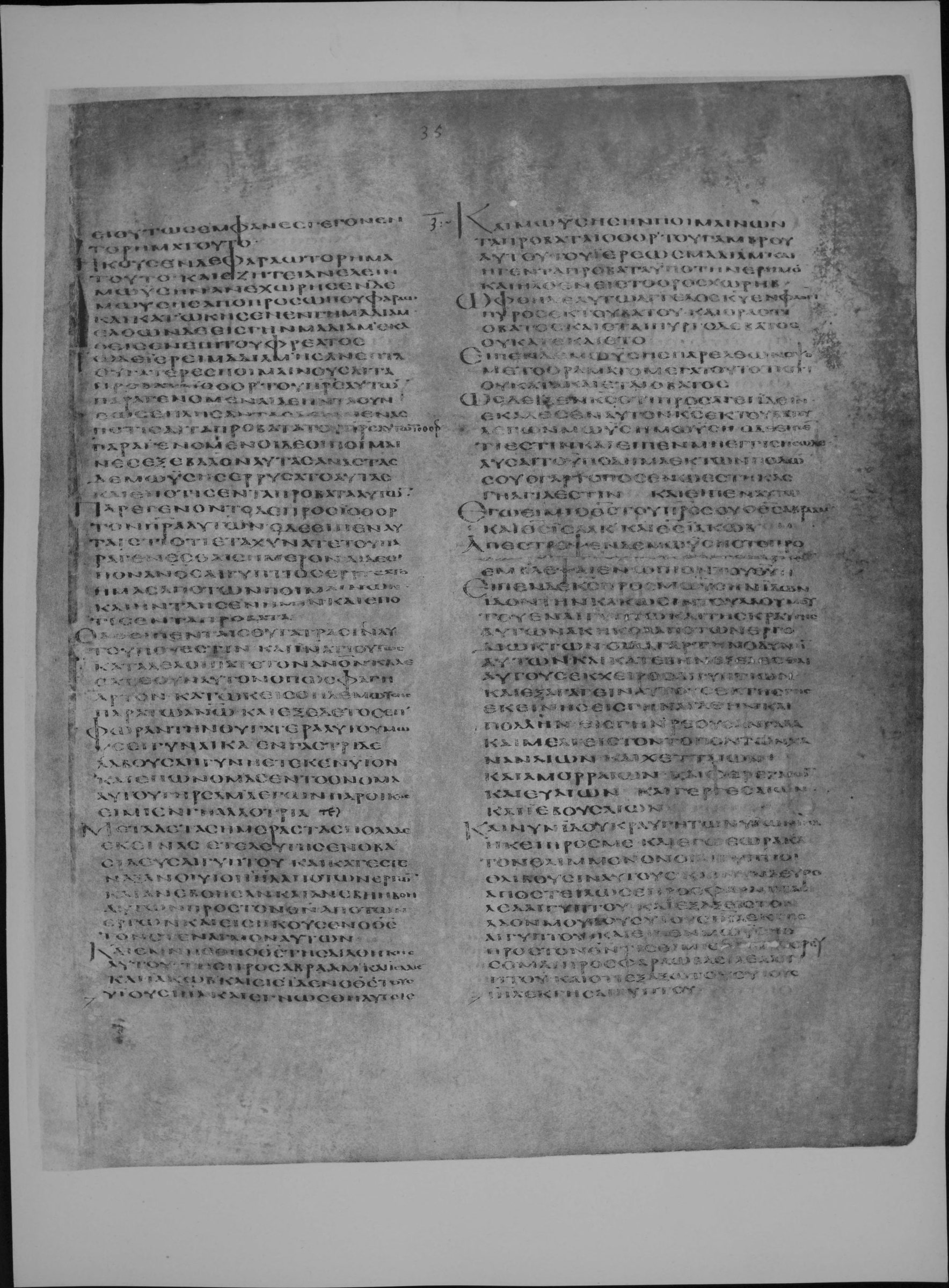
Where on the image
Exodus 2:9-14 is on fol. 34v (full-size facsimile of 1879-83, Internet Archive codex-alexandrinus leaf 89). The 1915 reduced facsimile prints beneath this page: Exod. i. 15-ii. 14. Checked on the plate: the page begins inside Exodus 1:15 (first words read: ΤΑΙΣ ΜΑΙΑΙΣ ΤΩΝ ΕΒΡΑΙΩΝ ΤΗ ΜΙΑ ΑΥΤΩΝ Η ΟΝΟΜΑ ΣΕΠΦΩΡΑ). Exodus 2:14-16 is on fol. 35r (full-size facsimile of 1879-83, Internet Archive codex-alexandrinus leaf 90). The 1915 reduced facsimile prints beneath this page: Exod. ii. 14-iii. 10. Checked on the plate: the page begins inside Exodus 2:14 (first words read: ΕΙ ΟΥΤΩΣ ΕΜΦΑΝΕΣ ΓΕΓΟΝΕΝ ΤΟ ΡΗΜΑ ΤΟΥΤΟ ΗΚΟΥΣΕΝ ΔΕ ΦΑΡΑΩ).
9εἶπεν δὲ πρὸς αὐτὴν ἡ θυγάτηρ Φαραώ Διατήρησόν μοι τὸ παιδίον τοῦτο καὶ θήλασόν μοι αὐτό, ἐγὼ δὲ δώσω σοι τὸν μισθόν. ἔλαβεν δὲ ἡ γυνὴ τὸ παιδίον καὶ ἐθήλαζεν αὐτό. 10ἁδρυνθέντος δὲ τοῦ παιδίου, εἰσήγαγεν αὐτὸ πρὸς τὴν θυγατέρα Φαραώ, καὶ ἐγενήθη αὐτῇ εἰς υἱόν· ἐπωνόμασεν δὲ τὸ ὄνομα αὐτοῦ Μωυσῆν λέγουσα Ἐκ τοῦ ὕδατος αὐτὸν ἀνειλόμην. 11Ἐγένετο δὲ ἐν ταῖς ἡμέραις ταῖς πολλαῖς ἐκείναις μέγας γενόμενος Μωυσῆς ἐξῆλθεν πρὸς τοὺς ἀδελφοὺς αὐτοῦ τοὺς υἱοὺς Ἰσραήλ. κατανοήσας δὲ τὸν πόνον αὐτῶν ὁρᾷ ἄνθρωπον Αἰγύπτιον τύπτοντά τινα Ἐβραῖον τῶν ἑαυτοῦ ἀδελφῶν τῶν υἱῶν Ἰσραήλ. 12περιβλεψάμενος δὲ ὧδε καὶ ὧδε οὐχ ὁρᾷ οὐδένα, καὶ πατάξας τὸν Αἰγύπτιον ἔκρυψεν αὐτὸν ἐν τῇ ἄμμῳ. 13ἐξελθὼν δὲ τῇ ἡμέρᾳ τῇ δευτέρᾳ ὁρᾷ δύο ἄνδρας Ἐβραίους διαπληκτιζομένους, καὶ λέγει τῷ ἀδικοῦντι Διὰ τί σὺ τύπτεις τὸν πλησίον; 14ὁ δὲ εἶπεν Τίς σε κατέστησεν ἄρχοντα καὶ δικαστὴν ἐφ᾽ ἡμῶν; μὴ ἀνελεῖν με σὺ θέλεις ὃν τρόπον ἀνεῖλες ἐχθὲς τὸν Αἰγύπτιον; ἐφοβήθη δὲ Μωυσῆς καὶ εἶπεν Εἰ οὕτως ἐμφανὲς γέγονεν τὸ ῥῆμα τοῦτο; 15ἤκουσεν δὲ Φαραὼ τὸ ῥῆμα τοῦτο, καὶ ἐζήτει ἀνελεῖν Μωυσῆν· ἀνεχώρησεν δὲ Μωυσῆς ἀπὸ προσώπου Φαραὼ καὶ ᾤκησεν ἐν γῇ Μαδιάμ· ἐλθὼν δὲ εἰς γῆν Μαδιὰμ ἐκάθισεν ἐπὶ τοῦ φρέατος. 16τῷ δὲ ἱερεῖ Μαδιὰμ ἦσαν ἑπτὰ θυγατέρες, ποιμαίνουσαι τὰ πρόβατα τοῦ πατρὸς αὐτῶν Ἰοθόρ· παραγενόμεναι δὲ ἤντλουν ἕως ἔπλησαν τὰς δεξαμενάς, ποτίσαι τὰ πρόβατα τοῦ πατρὸς αὐτῶν Ἰοθόρ.
9And the daughter of Pharao said to her, Take care of this child, and suckle it for me, and I will give thee the wages; and the woman took the child, and suckled it. 10And when the boy was grown, she brought him to the daughter of Pharao, and he became her son; and she called his name, Moses, saying, I took him out of the water. 11And it came to pass in that length of time, that Moses having grown, went out to his brethren the sons of Israel: and having noticed their distress, he sees an Egyptian smiting a certain Hebrew of his brethren the children of Israel. 12And having looked round this way and that way, he sees no one; and he smote the Egyptian, and hid him in the sand. 13And having gone out the second day he sees two Hebrew men fighting; and he says to the injurer, Wherefore smitest thou thy neighbour? 14And he said, Who made thee a ruler and a judge over us? wilt thou slay me as thou yesterday slewest the Egyptian? Then Moses was alarmed, and said, If it be thus, this matter has become known. 15And Pharao heard this matter, and sought to slay Moses; and Moses departed from the presence of Pharao, and dwelt in the land of Madiam; and having come into the land of Madiam, he sat on the well. 16And the priest of Madiam had seven daughters, feeding the flock of their father Jothor; and they came and drew water until they filled their pitchers, to water the flock of their father Jothor.
Where on the image
Exodus 2:17-25 is on fol. 35r (full-size facsimile of 1879-83, Internet Archive codex-alexandrinus leaf 90). The 1915 reduced facsimile prints beneath this page: Exod. ii. 14-iii. 10. Checked on the plate: the page begins inside Exodus 2:14 (first words read: ΕΙ ΟΥΤΩΣ ΕΜΦΑΝΕΣ ΓΕΓΟΝΕΝ ΤΟ ΡΗΜΑ ΤΟΥΤΟ ΗΚΟΥΣΕΝ ΔΕ ΦΑΡΑΩ).
17παραγενόμενοι δὲ οἱ ποιμένες ἐξέβαλλον αὐτάς· ἀναστὰς δὲ Μωυσῆς ἐρρύσατο αὐτάς, καὶ ἤντλησεν αὐταῖς καὶ ἐπότισεν τὰ πρόβατα αὐτῶν. 18παρεγένοντο δὲ πρὸς Ῥαγουὴλ τὸν πατέρα αὐτῶν· ὁ δὲ εἶπεν αὐταῖς Διὰ τί ἐταχύνατε τοῦ παραγενέσθαι σήμερον; 19αἱ δὲ εἶπαν Ἄνθρωπος Αἰγύπτιος ἐρρύσατο ἡμᾶς ἀπὸ τῶν ποιμένων, καὶ ἤντλησεν ἡμῖν καὶ ἐπότισεν τὰ πρόβατα ἡμῶν. 20ὁ δὲ εἶπεν ταῖς θυγατράσιν αὐτοῦ Καὶ ποῦ ἐστι; καὶ ἵνα τί καταλελοίπατε τὸν ἄνθρωπον; καλέσατε οὖν αὐτὸν ὅπως φάγῃ ἄρτον. 21κατῳκίσθη δὲ Μωυσῆς παρὰ τῷ ἀνθρώπῳ· καὶ ἐξέδοτο Σεπφώραν τὴν θυγατέρα αὐτοῦ Μωυσῇ γυναῖκα. 22ἐν γαστρὶ δὲ λαβοῦσα ἡ γυνὴ ἔτεκεν υἱόν· καὶ ἐπωνόμασεν Μωυσῆς τὸ ὄνομα αὐτοῦ Γηρσάμ, λέγων Ὅτι πάροικός εἰμι ἐν γῇ ἀλλοτρίᾳ. 23Μετὰ δὲ τὰς ἡμέρας τὰς πολλὰς ἐκείνας ἐτελεύτησεν ὁ βασιλεὺς Αἰγύπτου· καὶ κατεστέναξαν οἱ υἱοὶ Ἰσραὴλ ἀπὸ τῶν ἔργων καὶ ἀνεβόησαν, καὶ ἀνέβη ἡ βοὴ αὐτῶν πρὸς τὸν θεὸν ἀπὸ τῶν ἔργων. 24καὶ εἰσήκουσεν ὁ θεὸς τὸν στεναγμὸν αὐτῶν, καὶ ἐμνήσθη ὁ θεὸς τῆς διαθήκης αὐτοῦ τῆς πρὸς Ἀβραὰμ καὶ Ἰσαὰκ καὶ Ἰακώβ. 25καὶ ἔπιδεν ὁ θεὸς τοὺς υἱοὺς Ἰσραήλ, καὶ ἐγνώσθη αὐτοῖς.
17And the shepherds came, and were driving them away; and Moses rose up and rescued them, and drew water for them, and watered their sheep. 18And they came to Raguel their father; and he said to them, Why have ye come so quickly to-day? 19And they said, An Egyptian delivered us from the shepherds, and drew water for us and watered our sheep. 20And he said to his daughters, And where is he? and why have ye left the man? call him therefore, that he may eat bread. 21And Moses was established with the man, and he gave Sepphora his daughter to Moses to wife. 22And the woman conceived and bore a son, and Moses called his name Gersam, saying, I am a sojourner in a strange land. 23And in those days after a length of time, the king of Egypt died; and the children of Israel groaned because of their tasks, and cried, and their cry because of their tasks went up to God. 24And God heard their groanings, and God remembered his covenant made with Abraam and Isaac and Jacob. 25And God looked upon the children of Israel, and was made known to them.
Cite
Sources
- Source: Codex Alexandrinus (British Library Royal MS 1 D. V) via the British Museum photographic facsimiles of 1879-83 and 1915 (Internet Archive) + Swete's Septuagint + Brenton's English (holding institution)
- Critical edition: H. B. Swete, The Old Testament in Greek according to the Septuagint (1909)
← previous · → next · v cycle view · l back to library