Exodus, Chapter 20 (Codex Alexandrinus)
Introduction
Exodus 20 in the Greek Old Testament (the Septuagint) as written in Codex Alexandrinus, a Greek Bible copied in the fifth century, probably in Egypt, and now in the British Library (Royal MS 1 D. V, the first of its four volumes). It is one of the three great early codices of the whole Greek Bible, with Codex Vaticanus and Codex Sinaiticus, and for Genesis 1:1-46:28, which Codex Vaticanus has lost, it is the oldest surviving complete Greek text (older papyri such as the Berlin Genesis papyrus and Chester Beatty 961 survive only in part).
This entry meets the strict three-criteria standard of the Theosis Library:
- Manuscript scan: the pages of Codex Alexandrinus carrying this chapter (fol. 46r, fol. 46v), from the full-size photographic (autotype) facsimile published by the British Museum in 1879-1883, as digitised on the Internet Archive. The verse range of every page comes from the reduced photographic facsimile of 1915, which prints it beneath each plate, and the opening words of every page were read on the plate to confirm the page and the verse it begins with. Each section links to the page or pages that hold its verses. Folio numbers are those written at the head of each leaf and visible on the plates.
- Original text: Swete's edition, which here prints the text of Codex Vaticanus (Vat. gr. 1209), the base of his edition, and gives the readings of Alexandrinus only in his apparatus. The Greek column is therefore Vaticanus' text; where Alexandrinus differs, the plate shows what Alexandrinus reads.
- English translation: Sir Lancelot C. L. Brenton, The Septuagint Version of the Old Testament (1844; 1851 edition), a translation of the Greek, public domain, from the eBible.org text.
How was this verified? (Provenance)
Where on the image
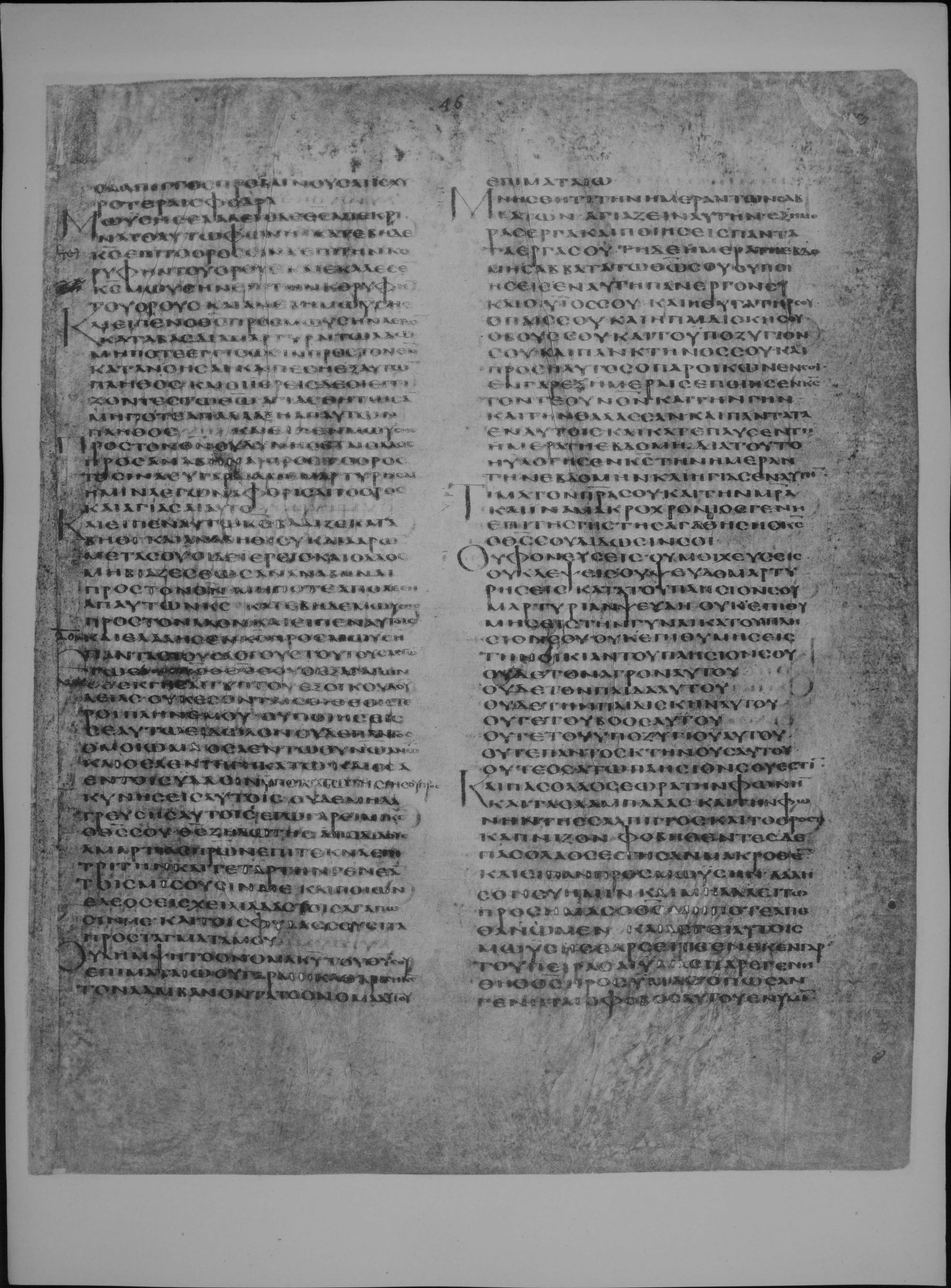
Exodus 20:1-8 is on fol. 46r (full-size facsimile of 1879-83, Internet Archive codex-alexandrinus leaf 112). The 1915 reduced facsimile prints beneath this page: Exod. xix. 19-xx. 20. Checked on the plate: the page begins inside Exodus 19:19 (first words read: ΣΑΛΠΙΓΓΟΣ ΠΡΟΒΑΙΝΟΥΣΑΙ ΙΣΧΥΡΟΤΕΡΑΙ ΣΦΟΔΡΑ ΜΩΥΣΗΣ ΕΛΑΛΗΣΕΝ Ο ΔΕ ΘΣ ΑΠΕΚΡΙΝΑΤΟ).
1Καὶ ἐλάλησεν Κύριος πάντας τοὺς λόγους τούτους λέγων 2Ἐγώ εἰμι Κύριος ὁ θεός σου, ὅστις ἐξήγαγόν σε ἐκ γῆς Αἰγύπτου, ἐξ οἴκου δουλίας. 3Οὐκ ἔσονταί σοι θεοὶ ἕτεροι πλὴν ἐμοῦ. 4Οὐ ποιήσεις σεαυτῷ εἴδωλον οὐδὲ παντὸς ὁμοίωμα, ὅσα ἐν τῷ οὐρανῷ ἄνω καὶ ὅσα ἐν τῇ γῇ κάτω καὶ ὅσα ἐν τοῖς ὕδασιν ὑποκάτω τῆς γῆς. 5οὐ προσκυνήσεις αὐτοῖς οὐδὲ μὴ λατρεύσῃς αὐτοῖς· ἐγὼ γάρ εἰμι Κύριος ὁ θεός σου, θεὸς ζηλωτής, ἀποδιδοὺς ἁμαρτίας πατέρων ἐπὶ τέκνα ἕως τρίτης καὶ τετάρτης γενεᾶς τοῖς μισοῦσίν με, 6καὶ ποιῶν ἔλεος εἰς χιλιάδας τοῖς ἀγαπῶσίν με καὶ τοῖς φυλάσσουσιν τὰ προστάγματά μου. 7Οὐ λήμψῃ τὸ ὄνομα Κυρίου τοῦ θεοῦ σου ἐπὶ ματαίῳ· οὐ γὰρ μὴ καθαρίσῃ Κύριος ὁ θεός σου τὸν λαμβάνοντα τὸ ὄνομα αὐτοῦ ἐπὶ ματαίῳ. 8Μνήσθητι τὴν ἡμέραν τῶν σαββάτων ἁγιάζειν αὐτήν·
1And the Lord spoke all these words, saying: 2I am the Lord thy God, who brought thee out of the land of Egypt, out of the house of bondage. 3Thou shalt have no other gods beside me. 4Thou shalt not make to thyself an idol, nor likeness of anything, whatever things are in the heaven above, and whatever are in the earth beneath, and whatever are in the waters under the earth. 5Thou shalt not bow down to them, nor serve them; for I am the Lord thy God, a jealous God, recompensing the sins of the fathers upon the children, to the third and fourth generation to them that hate me, 6and bestowing mercy on them that love me to thousands of them, and on them that keep my commandments. 7Thou shalt not take the name of the Lord thy God in vain; for the Lord thy God will not acquit him that takes his name in vain. 8Remember the sabbath day to keep it holy.
Where on the image
Exodus 20:9-16 is on fol. 46r (full-size facsimile of 1879-83, Internet Archive codex-alexandrinus leaf 112). The 1915 reduced facsimile prints beneath this page: Exod. xix. 19-xx. 20. Checked on the plate: the page begins inside Exodus 19:19 (first words read: ΣΑΛΠΙΓΓΟΣ ΠΡΟΒΑΙΝΟΥΣΑΙ ΙΣΧΥΡΟΤΕΡΑΙ ΣΦΟΔΡΑ ΜΩΥΣΗΣ ΕΛΑΛΗΣΕΝ Ο ΔΕ ΘΣ ΑΠΕΚΡΙΝΑΤΟ).
9ἓξ ἡμέρας ἐργᾷ καὶ ποιήσεις πάντα τὰ ἔργα σου, 10τῇ δὲ ἡμέρᾳ τῇ ἑβδόμῃ σάββατα Κυρίῳ τῷ θεῷ σου· οὐ ποιήσεις ἐν αὐτῇ πᾶν ἔργον, σὺ καὶ ὁ υἱός σου καὶ ἡ θυγάτηρ σου, ὁ παῖς σου καὶ ἡ παιδίσκη σου, ὁ βοῦς σου καὶ τὸ ὑποζύγιόν σου καὶ πᾶν κτῆνός σου, καὶ ὁ προσήλυτος ὁ παροικῶν ἐν σοί. 11ἐν γὰρ ἓξ ἡμέραις ἐποίησεν Κύριος τὸν οὐρανὸν καὶ τὴν γῆν καὶ πάντα τὰ ἐν αὐτοῖς, καὶ κατέπαυσεν τῇ ἡμέρᾳ τῇ ἑβδόμῃ· διὰ τοῦτο εὐλόγησεν Κύριος τὴν ἡμέραν τὴν ἑβδόμην καὶ ἡγίασεν αὐτήν. 12Τίμα τὸν πατέρα σου καὶ τὴν μητέρα, ἵνα εὖ σοι γένηται, καὶ ἵνα μακροχρόνιος γένῃ ἐπὶ τῆς γῆς τῆς ἀγαθῆς ἧς Κύριος ὁ θεός σου δίδωσίν σοι. 13Οὐ μοιχεύσεις. 14Οὐ κλέψεις. 15Οὐ φονεύσεις. 16Οὐ ψευδομαρτυρήσεις κατὰ τοῦ πλησίον σου μαρτυρίαν ψευδῆ.
9Six days thou shalt labour, and shalt perform all thy work. 10But on the seventh day is the sabbath of the Lord thy God; on it thou shalt do no work, thou, nor thy son, nor thy daughter, thy servant nor thy maidservant, thine ox nor thine ass, nor any cattle of thine, nor the stranger that sojourns with thee. 11For in six days the Lord made the heaven and the earth, and the sea and all things in them, and rested on the seventh day; therefore the Lord blessed the seventh day, and hallowed it. 12Honour thy father and thy mother, that it may be well with thee, and that thou mayest live long on the good land, which the Lord thy God gives to thee. 13Thou shalt not commit adultery. 14Thou shalt not steal. 15Thou shalt not kill. 16Thou shalt not bear false witness against thy neighbour.
Where on the image
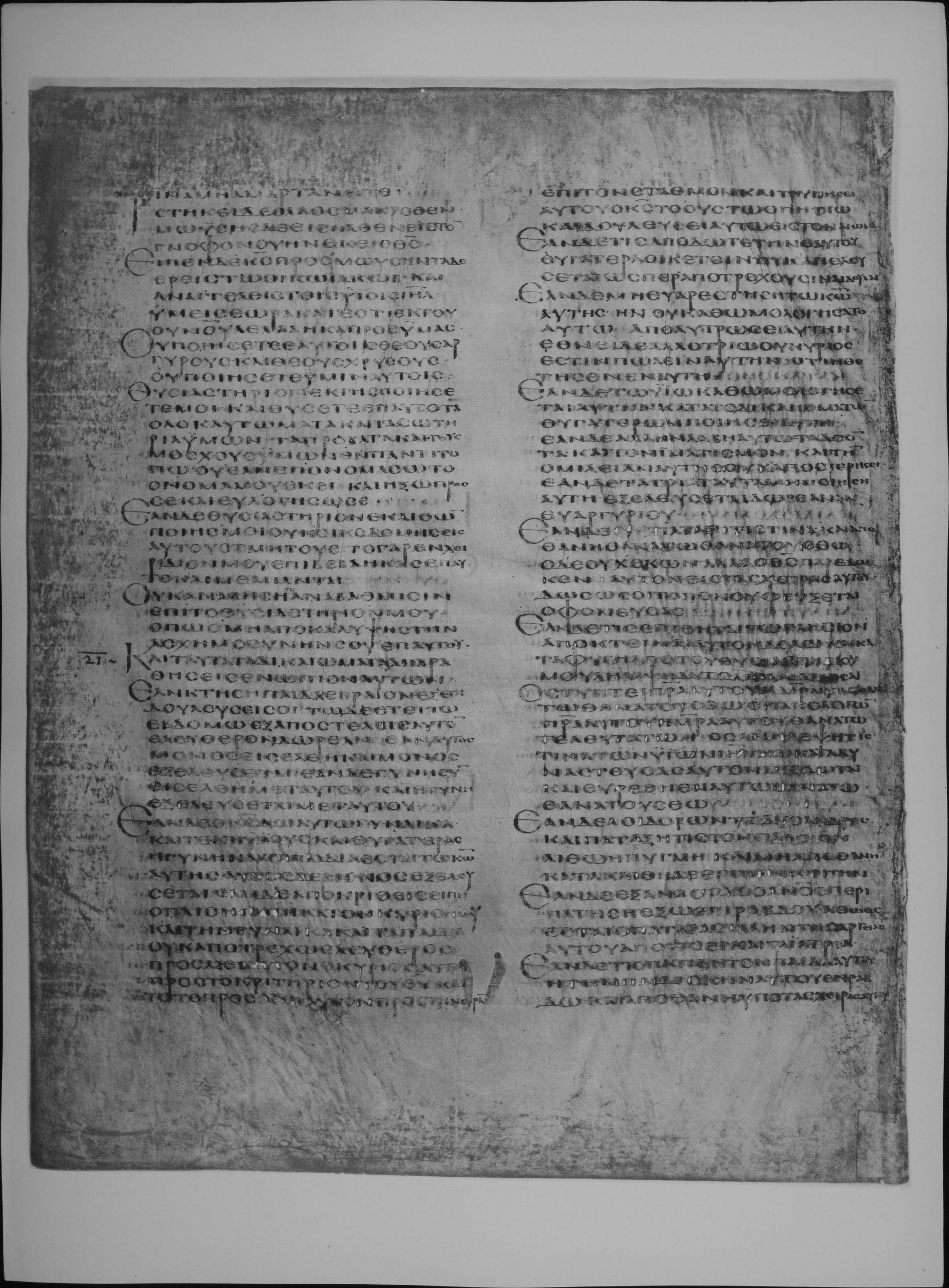
Exodus 20:17-20 is on fol. 46r (full-size facsimile of 1879-83, Internet Archive codex-alexandrinus leaf 112). The 1915 reduced facsimile prints beneath this page: Exod. xix. 19-xx. 20. Checked on the plate: the page begins inside Exodus 19:19 (first words read: ΣΑΛΠΙΓΓΟΣ ΠΡΟΒΑΙΝΟΥΣΑΙ ΙΣΧΥΡΟΤΕΡΑΙ ΣΦΟΔΡΑ ΜΩΥΣΗΣ ΕΛΑΛΗΣΕΝ Ο ΔΕ ΘΣ ΑΠΕΚΡΙΝΑΤΟ). Exodus 20:20-26 is on fol. 46v (full-size facsimile of 1879-83, Internet Archive codex-alexandrinus leaf 113). The 1915 reduced facsimile prints beneath this page: Exod. xx. 20-xxi. 20. Checked on the plate: the page begins inside Exodus 20:20 (first words read: ΙΝΑ ΜΗ ΑΜΑΡΤΑΝΗΤΕ ΙΣΤΗΚΕΙ ΔΕ Ο ΛΑΟΣ ΜΑΚΡΟΘΕΝ ΜΩΥΣΗΣ ΔΕ ΕΙΣΗΛΘΕΝ ΕΙΣ ΤΟΝ ΓΝΟΦΟΝ).
17Οὐκ ἐπιθυμήσεις τὴν γυναῖκα τοῦ πλησίον σου· οὐκ ἐπιθυμήσεις τὴν οἰκίαν τοῦ πλησίον σου οὔτε τὸν ἀγρὸν αὐτοῦ οὔτε τὸν παῖδα αὐτοῦ οὔτε τὴν παιδίσκην αὐτοῦ οὔτε τοῦ βοὸς αὐτοῦ οὔτε τοῦ ὑποζυγίου αὐτοῦ οὔτε παντὸς κτήνους αὐτοῦ οὔτε ὅσα τῷ πλησίον σού ἐστιν. 18Καὶ πᾶς ὁ λαὸς ἑώρα τὴν φωνὴν καὶ τὰς λαμπάδας καὶ τὴν φωνὴν τῆς σάλπιγγος καὶ τὸ ὄρος τὸ καπνίζον· φοβηθέντες δὲ πᾶς ὁ λαὸς ἔστησαν μακρόθεν, 19καὶ εἶπαν πρὸς Μωυσῆν Λάλησον σὺ ἡμῖν, καὶ μὴ λαλείτω πρὸς ἡμᾶς ὁ θεός, μὴ ἀποθάνωμεν. 20καὶ λέγει αὐτοῖς Μωσῆς Θαρσεῖτε· ἕνεκεν γὰρ τοῦ πειράσαι ὑμᾶς παρεγενήθη ὁ θεὸς πρὸς ὑμᾶς, ὅπως ἂν γένηται ὁ φόβος αὐτοῦ ἐν ὑμῖν, ἵνα μὴ ἁμαρτάνητε. 21ἱστήκει δὲ ὁ λαὸς μακρόθεν, Μωυσῆς δὲ εἰσῆλθεν εἰς τὸν γνόφον οὗ ἦν ὁ θεός. 22Εἶπεν δὲ Κύριος πρὸς Μωυσῆν Τάδε ἐρεῖς τῷ οἴκῳ Ἰακὼβ καὶ ἀναγγελεῖς τοῖς υἱοῖς Ἰσραήλ Ὑμεῖς ἑωράκατε ὅτι ἐκ τοῦ οὐρανοῦ λελάληκα πρὸς ὑμᾶς· 23οὐ ποιήσετε ὑμῖν αὐτοῖς θεοὺς ἀργυροῦς, καὶ θεοὺς χρυσοῦς οὐ ποιήσετε ὑμῖν ἑαυτοῖς. 24Θυσιαστήριον ἐκ γῆς ποιήσετέ μοι, καὶ θύσετε ἐπ᾽ αὐτοῦ τὰ ὁλοκαυτώματα ὑμῶν καὶ τὰ σωτήρια ὑμῶν καὶ τὰ πρόβατα καὶ τοὺς μόσχους ὑμῶν ἐν παντὶ τόπῳ οὗ ἐὰν ἐπονομάσω τὸ ὄνομά μου ἐκεῖ· καὶ ἥξω πρὸς σὲ καὶ εὐλογήσω σε. 25ἐὰν δὲ θυσιαστήριον ἐκ λίθων ποιῇς μοι, οὐκ οἰκοδομήσεις αὐτοὺς τμητούς· τὸ γὰρ ἐνχειρίδιόν σου ἐπιβέβληκας ἐπ᾽ αὐτοὺς καὶ μεμίανται. 26οὐκ ἀναβήσῃ ἐν ἀναβαθμίσιν ἐπὶ τὸ θυσιαστήριόν μου, ὅπως ἂν μὴ ἀποκαλύψῃς τὴν ἀσχημοσύνην σου ἐπ᾽ αὐτοῦ.
17Thou shalt not covet thy neighbour's wife; thou shalt not covet thy neighbour's house; nor his field, nor his servant, nor his maid, nor his ox, nor his ass, nor any of his cattle, nor whatever belongs to thy neighbour. 18And all the people perceived the thundering, and the flashes, and the voice of the trumpet, and the mountain smoking; and all the people feared and stood afar off, 19and said to Moses, Speak thou to us, and let not God speak to us, lest we die. 20And Moses says to them, Be of good courage, for God is come to you to try you, that his fear may be among you, that ye sin not. 21And the people stood afar off, and Moses went into the darkness where God was. 22And the Lord said to Moses, Thus shalt thou say to the house of Jacob, and thou shalt report it to the children of Israel, Ye have seen that I have spoken to you from heaven. 23Ye shall not make to yourselves gods of silver, and gods of gold ye shall not make to yourselves. 24Ye shall make to me an altar of earth; and upon it ye shall sacrifice your whole burnt-offerings, and your peace-offerings, and your sheep and your calves in every place, where I shall record my name; and I will come to thee and bless thee. 25And if thou wilt make to me an altar of stones, thou shalt not build them hewn stones; for thou hast lifted up thy tool upon them, and they are defiled. 26Thou shalt not go up to my altar by steps, that thou mayest not uncover thy nakedness upon it.
Cite
Sources
- Source: Codex Alexandrinus (British Library Royal MS 1 D. V) via the British Museum photographic facsimiles of 1879-83 and 1915 (Internet Archive) + Swete's Septuagint + Brenton's English (holding institution)
- Critical edition: H. B. Swete, The Old Testament in Greek according to the Septuagint (1909)
← previous · → next · v cycle view · l back to library