Exodus, Chapter 21 (Codex Alexandrinus)
Introduction
Exodus 21 in the Greek Old Testament (the Septuagint) as written in Codex Alexandrinus, a Greek Bible copied in the fifth century, probably in Egypt, and now in the British Library (Royal MS 1 D. V, the first of its four volumes). It is one of the three great early codices of the whole Greek Bible, with Codex Vaticanus and Codex Sinaiticus, and for Genesis 1:1-46:28, which Codex Vaticanus has lost, it is the oldest surviving complete Greek text (older papyri such as the Berlin Genesis papyrus and Chester Beatty 961 survive only in part).
This entry meets the strict three-criteria standard of the Theosis Library:
- Manuscript scan: the pages of Codex Alexandrinus carrying this chapter (fol. 46v, fol. 47r), from the full-size photographic (autotype) facsimile published by the British Museum in 1879-1883, as digitised on the Internet Archive. The verse range of every page comes from the reduced photographic facsimile of 1915, which prints it beneath each plate, and the opening words of every page were read on the plate to confirm the page and the verse it begins with. Each section links to the page or pages that hold its verses. Folio numbers are those written at the head of each leaf and visible on the plates.
- Original text: Swete's edition, which here prints the text of Codex Vaticanus (Vat. gr. 1209), the base of his edition, and gives the readings of Alexandrinus only in his apparatus. The Greek column is therefore Vaticanus' text; where Alexandrinus differs, the plate shows what Alexandrinus reads.
- English translation: Sir Lancelot C. L. Brenton, The Septuagint Version of the Old Testament (1844; 1851 edition), a translation of the Greek, public domain, from the eBible.org text.
How was this verified? (Provenance)
Where on the image
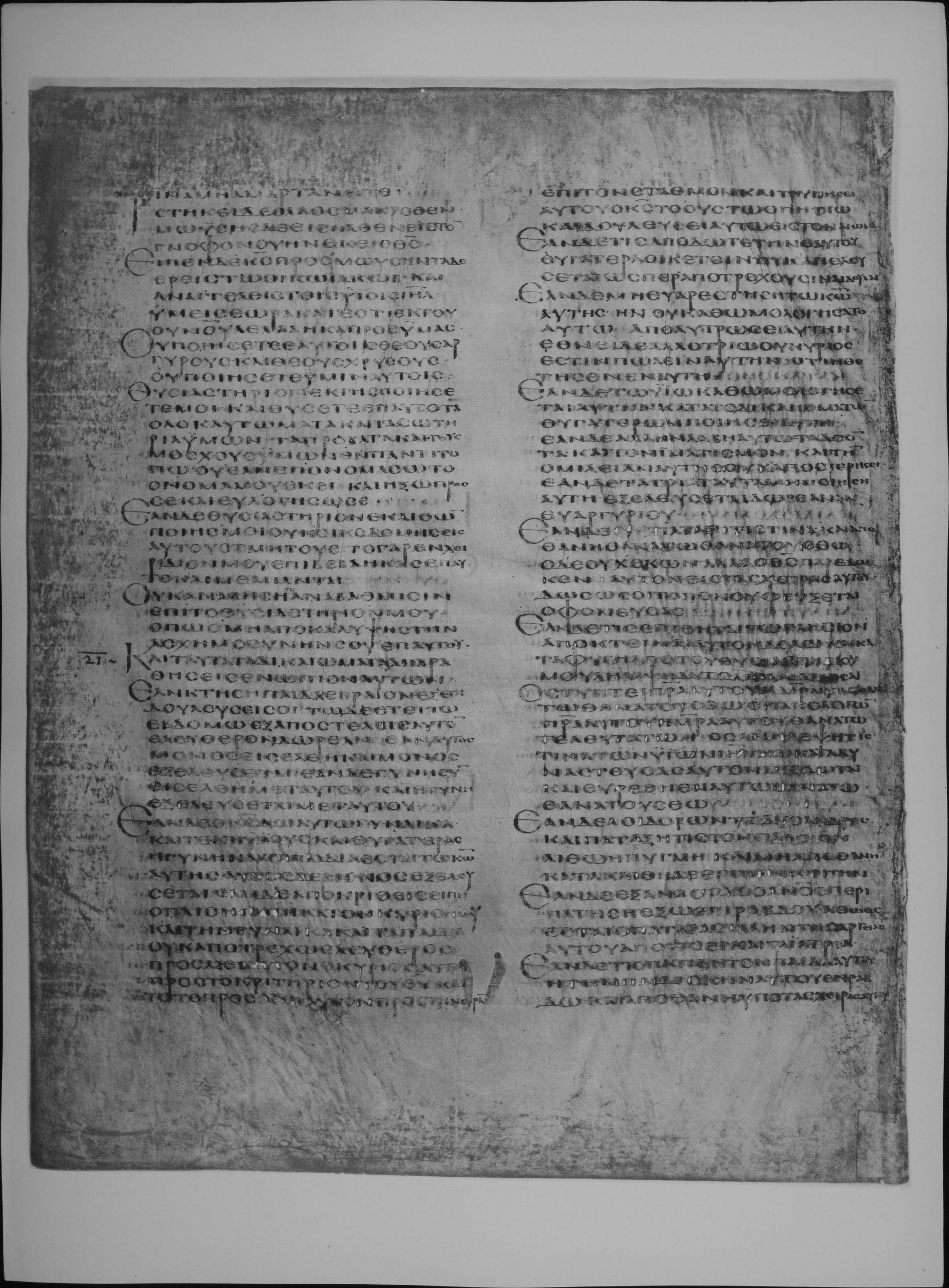
Exodus 21:1-8 is on fol. 46v (full-size facsimile of 1879-83, Internet Archive codex-alexandrinus leaf 113). The 1915 reduced facsimile prints beneath this page: Exod. xx. 20-xxi. 20. Checked on the plate: the page begins inside Exodus 20:20 (first words read: ΙΝΑ ΜΗ ΑΜΑΡΤΑΝΗΤΕ ΙΣΤΗΚΕΙ ΔΕ Ο ΛΑΟΣ ΜΑΚΡΟΘΕΝ ΜΩΥΣΗΣ ΔΕ ΕΙΣΗΛΘΕΝ ΕΙΣ ΤΟΝ ΓΝΟΦΟΝ).
1Καὶ ταῦτα τὰ δικαιώματα ἃ παραθήσῃ ἐνώπιον αὐτῶν. 2Ἐὰν κτήσῃ παῖδα Ἐβραῖον, ἓξ ἔτη δουλεύσει σοι· τῷ δὲ ἑβδόμῳ ἔτει ἀπελεύσεται ἐλεύθερος δωρεάν. 3ἐὰν αὐτὸς μόνος εἰσέλθῃ, καὶ μόνος ἐξελεύσεται· ἐὰν δὲ γυνὴ συνεισέλθῃ μετ᾽ αὐτοῦ, ἐξελεύσεται καὶ ἡ γυνὴ μετ᾽ αὐτοῦ. 4ἐὰν δὲ ὁ κύριος δῷ αὐτῷ γυναῖκα, καὶ τέκῃ αὐτῷ υἱοὺς ἢ θυγατέρας, ἡ γυνὴ καὶ τὰ παιδία ἔσται τῷ κυρίῳ αὐτοῦ, αὐτὸς δὲ μόνος ἐξελεύσεται. 5ἐὰν δὲ ἀποκριθεὶς εἴπῃ ὁ παῖς Ἠγάπηκα τὸν κύριόν μου καὶ τὴν γυναῖκα καὶ τὰ παιδία, οὐκ ἀποτρέχω ἐλεύθερος· 6προσάξει αὐτὸν ὁ κύριος αὐτοῦ πρὸς τὸ κριτήριον τοῦ θεοῦ, καὶ τότε προσάξει αὐτὸν ἐπὶ τὴν θύραν ἐπὶ τὸν σταθμόν, καὶ τρυπήσει ὁ κύριος αὐτοῦ τὸ οὖς τῷ ὀπητίῳ, καὶ δουλεύσει αὐτῷ εἰς τὸν αἰῶνα. 7Ἐὰν δέ τις ἀποδῶται τὴν ἑαυτοῦ θυγατέρα οἰκέτιν, οὐκ ἀπελεύσεται ὥσπερ ἀποτρέχουσιν αἱ δοῦλαι. 8ἐὰν μὴ εὐαρεστήσῃ τῷ κυρίῳ αὐτῆς ἣν αὑτῷ καθωμολογήσατο, ἀπολυτρώσει αὐτήν· ἔθνει δὲ ἀλλοτρίῳ οὐ κύριός ἐστιν πωλεῖν αὐτήν, ὅτι ἠθέτησεν ἐν αὐτῇ.
1And these are the ordinances which thou shalt set before them. 2If thou buy a Hebrew servant, six years shall he serve thee, and in the seventh year he shall go forth free for nothing. 3If he should have come in alone, he shall also go forth alone; and if his wife should have gone in together with him, his wife also shall go out. 4Moreover, if his master give him a wife, and she have born him sons or daughters, the wife and the children shall be his master's; and he shall go forth alone. 5And if the servant should answer and say, I love my master and wife and children, I will not go away free; 6his master shall bring him to the judgment-seat of God, and then shall he bring him to the door,—to the door-post, and his master shall bore his ear through with an awl, and he shall serve him for ever. 7And if any one sell his daughter as a domestic, she shall not depart as the maid-servants depart. 8If she be not pleasing to her master, after she has betrothed herself to him, he shall let her go free; but he is not at liberty to sell her to a foreign nation, because he has trifled with her.
Where on the image
Exodus 21:9-16 is on fol. 46v (full-size facsimile of 1879-83, Internet Archive codex-alexandrinus leaf 113). The 1915 reduced facsimile prints beneath this page: Exod. xx. 20-xxi. 20. Checked on the plate: the page begins inside Exodus 20:20 (first words read: ΙΝΑ ΜΗ ΑΜΑΡΤΑΝΗΤΕ ΙΣΤΗΚΕΙ ΔΕ Ο ΛΑΟΣ ΜΑΚΡΟΘΕΝ ΜΩΥΣΗΣ ΔΕ ΕΙΣΗΛΘΕΝ ΕΙΣ ΤΟΝ ΓΝΟΦΟΝ).
9ἐὰν δὲ τῷ υἱῷ καθομολογήσηται αὐτήν, κατὰ τὸ δικαίωμα τῶν θυγατέρων ποιήσει αὐτῇ. 10ἐὰν δὲ ἄλλην λάβῃ, τὰ δέοντα καὶ τὸν ἱματισμὸν καὶ τὴν ὁμιλίαν αὐτῆς οὐκ ἀποστερήσει. 11ἐὰν δὲ τὰ τρία ταῦτα μὴ ποιήσῃ αὐτῇ, ἐξελεύσεται δωρεὰν ἄνευ ἀργυρίου. 12Ἐὰν δὲ πατάξῃ τίς τινα καὶ ἀποθάνῃ, θανάτῳ θανατούσθω· 13ὁ δὲ οὐχ ἑκών, ἀλλὰ ὁ θεὸς παρέδωκεν εἰς τὰς χεῖρας αὐτοῦ, δώσω σοι τόπον οὗ φεύξεται ἐκεῖ ὁ φονεύσας. 14ἐὰν δέ τις ἐπιθῆται τῷ πλησίον ἀποκτεῖναι αὐτὸν δόλῳ καὶ καταφύγῃ, ἀπὸ τοῦ θυσιαστηρίου μου λήμψῃ αὐτὸν θανατῶσαι. 15Ὃς τύπτει πατέρα αὐτοῦ ἢ μητέρα αὐτοῦ, θανάτῳ θανατούσθω. 16Ὁ κακολογῶν πατέρα αὐτοῦ ἢ μητέρα αὐτοῦ τελευτήσει θανάτῳ.
9And if he should have betrothed her to his son, he shall do to her according to the right of daughters. 10And if he take another to himself, he shall not deprive her of necessaries and her apparel, and her companionship with him. 11And if he will not do these three things to her, she shall go out free without money. 12And if any man smite another and he die, let him be certainly put to death. 13But as for him that did it not willingly, but God delivered him into his hands, I will give thee a place whither the slayer may flee. 14And if any one lie in wait for his neighbour to slay him by craft, and he go for refuge, thou shalt take him from my altar to put him to death. 15Whoever smites his father or his mother, let him be certainly put to death. 16He that reviles his father or his mother shall surely die.
Where on the image
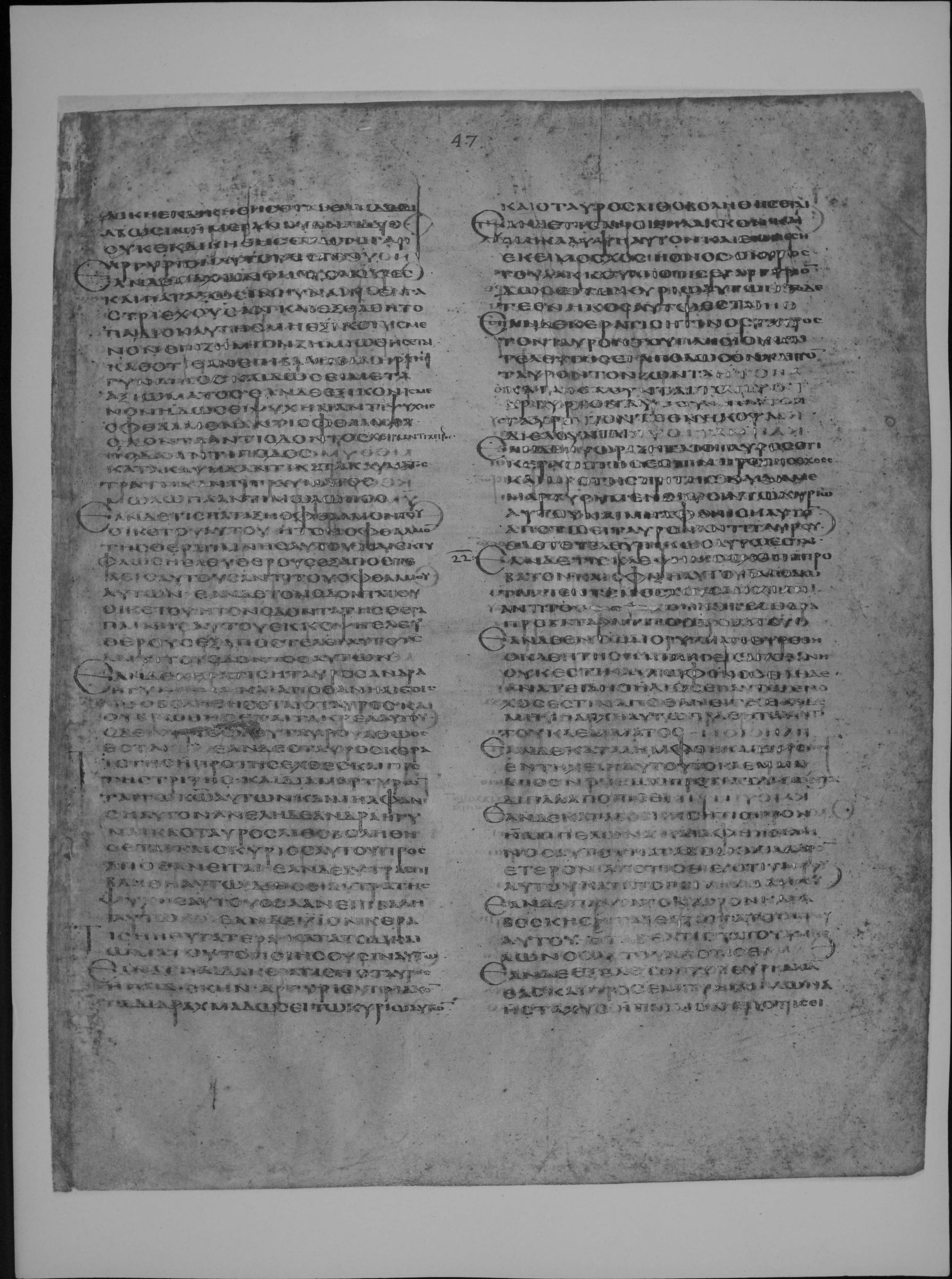
Exodus 21:17-20 is on fol. 46v (full-size facsimile of 1879-83, Internet Archive codex-alexandrinus leaf 113). The 1915 reduced facsimile prints beneath this page: Exod. xx. 20-xxi. 20. Checked on the plate: the page begins inside Exodus 20:20 (first words read: ΙΝΑ ΜΗ ΑΜΑΡΤΑΝΗΤΕ ΙΣΤΗΚΕΙ ΔΕ Ο ΛΑΟΣ ΜΑΚΡΟΘΕΝ ΜΩΥΣΗΣ ΔΕ ΕΙΣΗΛΘΕΝ ΕΙΣ ΤΟΝ ΓΝΟΦΟΝ). Exodus 21:20-24 is on fol. 47r (full-size facsimile of 1879-83, Internet Archive codex-alexandrinus leaf 114). The 1915 reduced facsimile prints beneath this page: Exod. xxi. 20-xxii. 6. Checked on the plate: the page begins inside Exodus 21:20 (first words read: ΔΙΚΗ ΕΚΔΙΚΗΘΗΤΩ ΕΑΝ ΔΕ ΔΙΑΒΙΩΣΗ ΗΜΕΡΑΝ ΜΙΑΝ Η ΔΥΟ ΟΥΚ ΕΚΔΙΚΗΘΗΣΕΤΑΙ).
17Ὃς ἐὰν κλέψῃ τίς τινα τῶν υἱῶν Ἰσραὴλ καὶ καταδυναστεύσας αὐτὸν ἀποδῶται, καὶ εὑρεθῇ ἐν αὐτῷ, θανάτῳ τελευτάτω. 18Ἐὰν δὲ λοιδορῶνται δύο ἄνδρες καὶ πατάξωσιν τὸν πλησίον λίθῳ ἢ πυγμῇ, καὶ μὴ ἀποθάνῃ, κατακλιθῇ δὲ ἐπὶ τὴν κοίτην, 19ἐὰν ἐξαναστὰς ὁ ἄνθρωπος περιπατήσῃ ἔξω ἐπὶ ῥάβδου, ἀθῷος ἔσται ὁ πατάξας· πλὴν τῆς ἀργίας αὐτοῦ ἀποτίσει καὶ τὰ ἰατρεῖα. 20Ἐὰν δέ τις πατάξῃ τὸν παῖδα αὐτοῦ ἢ τὴν παιδίσκην αὐτοῦ ἐν ῥάβδῳ, καὶ ἀποθάνῃ ὑπὸ τὰς χεῖρας αὐτοῦ, δίκῃ ἐκδικηθήτω. 21ἐὰν δὲ διαβιώσῃ ἡμέραν μίαν ἢ δύο, οὐκ ἐκδικηθήσεται· τὸ γὰρ ἀργύριον αὐτοῦ ἐστίν. 22Ἐὰν δὲ μάχωνται δύο ἄνδρες καὶ πατάξωσιν γυναῖκα ἐν γαστρὶ ἔχουσαν, καὶ ἐξέλθῃ τὸ παιδίον αὐτῆς μὴ ἐξεικονισμένον, ἐπιζήμιον ζημιωθήσεται· καθότι ἂν ἐπιβάλῃ ὁ ἀνὴρ τῆς γυναικός, δώσει μετὰ ἀξιώματος·. 23ἐὰν δὲ ἐξεικονισμένον ἦν, δώσει ψυχὴν ἀντὶ ψυχῆς, 24ὀφθαλμὸν ἀντὶ ὀφθαλμοῦ, ὀδόντα ἀντὶ ὀδόντος, χεῖρα ἀντὶ χειρός, πόδα ἀντὶ ποδός,
17Whosoever shall steal one of the children of Israel, and prevail over him and sell him, and he be found with him, let him certainly die. 18And if two men revile each other and smite the one the other with a stone or his fist, and he die not, but be laid upon his bed; 19if the man arise and walk abroad on his staff, he that smote him shall be clear; only he shall pay for his loss of time, and for his healing. 20And if a man smite his man-servant or his maid-servant, with a rod, and the party die under his hands, he shall be surely punished. 21But if the servant continue to live a day or two, let not the master be punished; for he is his money. 22And if two men strive and smite a woman with child, and her child be born imperfectly formed, he shall be forced to pay a penalty: as the woman's husband may lay upon him, he shall pay with a valuation. 23But if it be perfectly formed, he shall give life for life, 24eye for eye, tooth for tooth, hand for hand, foot for foot,
Where on the image
Exodus 21:25-32 is on fol. 47r (full-size facsimile of 1879-83, Internet Archive codex-alexandrinus leaf 114). The 1915 reduced facsimile prints beneath this page: Exod. xxi. 20-xxii. 6. Checked on the plate: the page begins inside Exodus 21:20 (first words read: ΔΙΚΗ ΕΚΔΙΚΗΘΗΤΩ ΕΑΝ ΔΕ ΔΙΑΒΙΩΣΗ ΗΜΕΡΑΝ ΜΙΑΝ Η ΔΥΟ ΟΥΚ ΕΚΔΙΚΗΘΗΣΕΤΑΙ).
25κατάκαυμα ἀντὶ κατακαύματος, τραῦμα ἀντὶ τραύματος, μώλωπα ἀντὶ μώλωπος. 26Ἐὰν δέ τις πατάξῃ τὸν ὀφθαλμὸν τοῦ οἰκέτου αὐτοῦ ἢ τὸν ὀφθαλμὸν τῆς θεραπαίνης αὐτοῦ, καὶ ἐκτυφλώσῃ, ἐλευθέρους ἐξαποστελεῖ αὐτοὺς ἀντὶ τοῦ ὀφθαλμοῦ αὐτῶν. 27ἐὰν δὲ τὸν ὀδόντα τοῦ οἰκέτου ἢ τὸν ὀδόντα τῆς θεραπαίνης αὐτοῦ ἐκκόψῃ, ἐλευθέρους ἐξαποστελεῖ αὐτοὺς ἀντὶ τοῦ ὀδόντος αὐτῶν. 28Ἐὰν δὲ κερατίσῃ ταῦρος ἄνδρα ἢ γυναῖκα, καὶ ἀποθάνῃ, λίθοις λιθοβοληθήσεται ὁ ταῦρος, καὶ οὐ βρωθήσεται τὰ κρέα αὐτοῦ· ὁ δὲ κύριος τοῦ ταύρου ἀθῷος ἔσται. 29ἐὰν δὲ ὁ ταῦρος κερατιστὴς ᾖ πρὸ τῆς ἐχθὲς καὶ πρὸ τῆς τρίτης, καὶ διαμαρτύρωνται τῷ κυρίῳ αὐτοῦ, καὶ μὴ ἀφανίσῃ αὐτόν, ἀνέλῃ δὲ ἄνδρα ἢ γυναῖκα, ὁ ταῦρος λιθοβοληθήσεται καὶ ὁ κύριος αὐτοῦ προσαποθανεῖται. 30ἐὰν δὲ λύτρα ἐπιβληθῇ αὐτῷ, δώσει λύτρα τῆς ψυχῆς αὐτοῦ ὅσα ἐὰν ἐπιβάλωσιν αὐτῷ. 31ἐὰν δὲ υἱὸν ἢ θυγατέρα κερατίσῃ, κατὰ τὸ δικαίωμα τοῦτο ποιήσουσιν αὐτῷ. 32ἐὰν δὲ παῖδα κερατίσῃ ὁ ταῦρος ἢ παιδίσκην, ἀργυρίου τριάκοντα δίδραχμα δώσει τῷ κυρίῳ αὐτῶν, καὶ ὁ ταῦρος λιθοβοληθήσεται.
25burning for burning, wound for wound, stripe for stripe. 26And if one smite the eye of his man-servant, or the eye of his maid-servant, and put it out, he shall let them go free for their eye's sake. 27And if he should smite out the tooth of his man-servant, or the tooth of his maid-servant, he shall send them away free for their tooth's sake. 28And if a bull gore a man or woman and they die, the bull shall be stoned with stones, and his flesh shall not be eaten; but the owner of the bull shall be clear. 29But if the bull should have been given to goring in former time, and men should have told his owner, and he have not removed him, but he should have slain a man or woman, the bull shall be stoned, and his owner shall die also. 30And if a ransom should be imposed on him, he shall pay for the ransom of his soul as much as they shall lay upon him. 31And if the bull gore a son or daughter, let them do to him according to this ordinance. 32And if the bull gore a man-servant or maid-servant, he shall pay to their master thirty silver didrachms, and the bull shall be stoned.
Where on the image
Exodus 21:33-36 is on fol. 47r (full-size facsimile of 1879-83, Internet Archive codex-alexandrinus leaf 114). The 1915 reduced facsimile prints beneath this page: Exod. xxi. 20-xxii. 6. Checked on the plate: the page begins inside Exodus 21:20 (first words read: ΔΙΚΗ ΕΚΔΙΚΗΘΗΤΩ ΕΑΝ ΔΕ ΔΙΑΒΙΩΣΗ ΗΜΕΡΑΝ ΜΙΑΝ Η ΔΥΟ ΟΥΚ ΕΚΔΙΚΗΘΗΣΕΤΑΙ).
33Ἐὰν δέ τις ἀνοίξῃ λάκκον ἢ λατομήσῃ, καὶ μὴ καλύψῃ αὐτόν, καὶ ἐμπέσῃ ἐκεῖ μόσχος ἢ ὄνος, 34ὁ κύριος τοῦ λάκκου ἀποτίσει· ἀργύριον δώσει τῷ κυρίῳ αὐτῶν· τὸ δὲ τετελευτηκὸς αὐτῷ ἔσται. 35Ἐὰν δὲ κερατίσῃ τίς τινος ταῦρος ταῦρον τοῦ πλησίον, καὶ τελευτήσῃ, ἀποδώσονται τὸν ταῦρον τὸν ζῶντα καὶ διελοῦνται τὸ ἀργύριον αὐτοῦ, καὶ τὸν ταῦρον τὸν τεθνηκότα διελοῦνται. 36ἐὰν δὲ γνωρίζηται ὁ ταῦρος ὅτι κερατιστής ἐστιν πρὸ τῆς ἐχθὲς καὶ πρὸ τῆς τρίτης ἡμέρας, καὶ μεμαρτυρημένοι ὦσιν τῷ κυρίῳ, καὶ μὴ ἀφανίσῃ αὐτόν, ἀποτίσει ταῦρον ἀντὶ ταύρου, ὁ δὲ τετελευτηκὼς αὐτῷ ἔσται.
33And if any one open a pit or dig a cavity in stone, and cover it not, and an ox or an ass fall in there, 34the owner of the pit shall make compensation; he shall give money to their owner, and the dead shall be his own. 35And if any man's bull gore the bull of his neighbour, and it die, they shall sell the living bull and divide the money, and they shall divide the dead bull. 36But if the bull be known to have been given to goring in time past, and they have testified to his owner, and he have not removed him, he shall repay bull for bull, but the dead shall be his own.
Cite
Sources
- Source: Codex Alexandrinus (British Library Royal MS 1 D. V) via the British Museum photographic facsimiles of 1879-83 and 1915 (Internet Archive) + Swete's Septuagint + Brenton's English (holding institution)
- Critical edition: H. B. Swete, The Old Testament in Greek according to the Septuagint (1909)
← previous · → next · v cycle view · l back to library