Exodus, Chapter 4 (Codex Alexandrinus)
Introduction
Exodus 4 in the Greek Old Testament (the Septuagint) as written in Codex Alexandrinus, a Greek Bible copied in the fifth century, probably in Egypt, and now in the British Library (Royal MS 1 D. V, the first of its four volumes). It is one of the three great early codices of the whole Greek Bible, with Codex Vaticanus and Codex Sinaiticus, and for Genesis 1:1-46:28, which Codex Vaticanus has lost, it is the oldest surviving complete Greek text (older papyri such as the Berlin Genesis papyrus and Chester Beatty 961 survive only in part).
Numbering: Swete's Greek and Brenton's English number or divide some verses of this chapter differently (Swete 4:25 = Brenton 4:25-26). Each column keeps its own verse numbers, and sections are cut only where the two texts agree, so each section holds the same passage in both languages.
This entry meets the strict three-criteria standard of the Theosis Library:
- Manuscript scan: the pages of Codex Alexandrinus carrying this chapter (fol. 35v, fol. 36r), from the full-size photographic (autotype) facsimile published by the British Museum in 1879-1883, as digitised on the Internet Archive. The verse range of every page comes from the reduced photographic facsimile of 1915, which prints it beneath each plate, and the opening words of every page were read on the plate to confirm the page and the verse it begins with. Each section links to the page or pages that hold its verses. Folio numbers are those written at the head of each leaf and visible on the plates.
- Original text: Swete's edition, which here prints the text of Codex Vaticanus (Vat. gr. 1209), the base of his edition, and gives the readings of Alexandrinus only in his apparatus. The Greek column is therefore Vaticanus' text; where Alexandrinus differs, the plate shows what Alexandrinus reads.
- English translation: Sir Lancelot C. L. Brenton, The Septuagint Version of the Old Testament (1844; 1851 edition), a translation of the Greek, public domain, from the eBible.org text.
How was this verified? (Provenance)
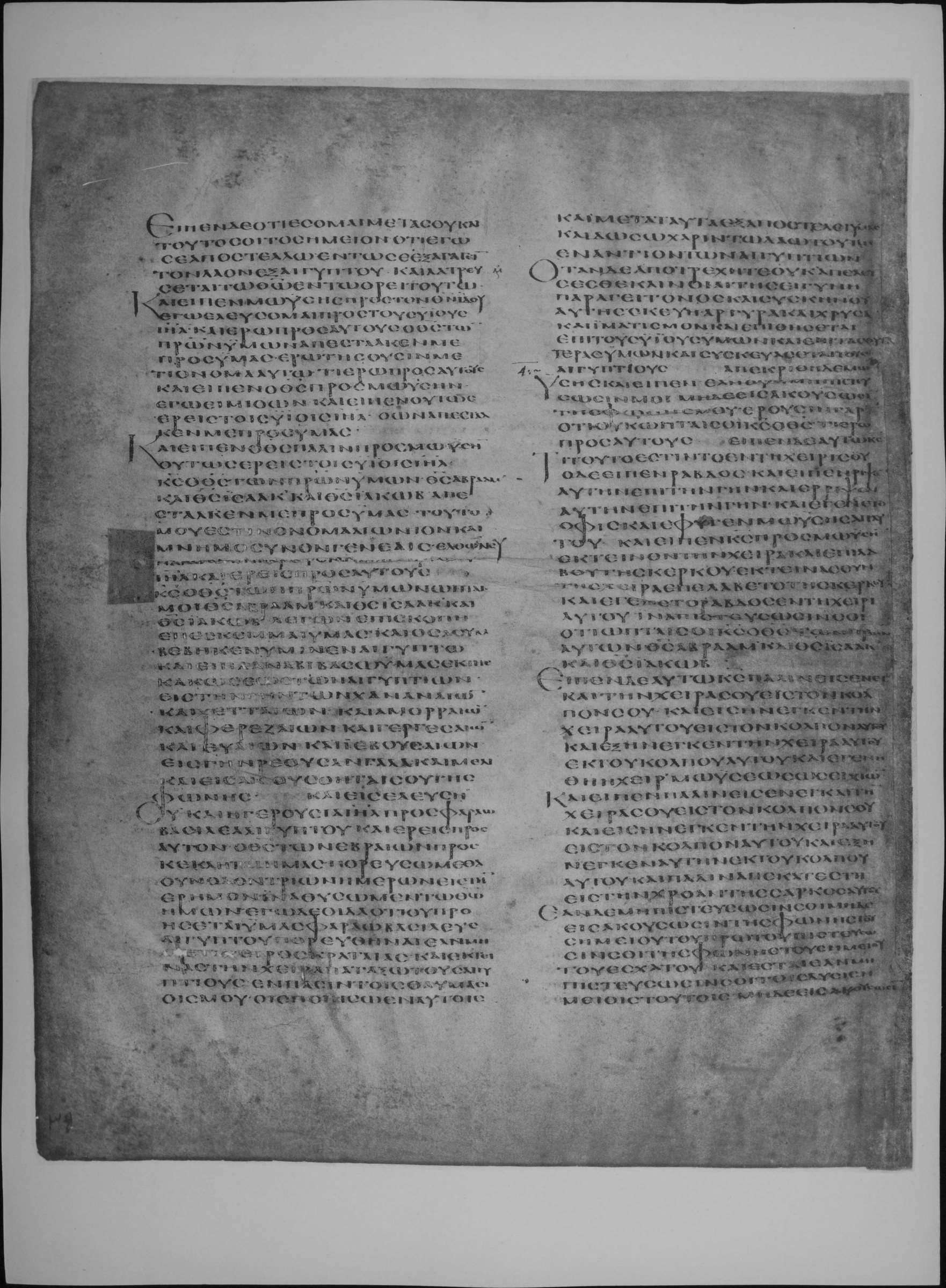
Where on the image
Exodus 4:1-8 is on fol. 35v (full-size facsimile of 1879-83, Internet Archive codex-alexandrinus leaf 91). The 1915 reduced facsimile prints beneath this page: Exod. iii. 11-iv. 8. Checked on the plate: the page begins at the start of Exodus 3:12 (first words read: ΕΙΠΕΝ ΔΕ ΟΤΙ ΕΣΟΜΑΙ ΜΕΤΑ ΣΟΥ ΚΑΙ ΤΟΥΤΟ ΣΟΙ ΤΟ ΣΗΜΕΙΟΝ). Note: the caption begins at iii. 11, but in Swete's numbering 3:11 ends the preceding page (its last lines read ΚΑΙ ΕΙΠΕΝ ΜΩΥΣΗΣ ΠΡΟΣ ΤΟΝ ΘΝ ΤΙΣ ΕΙΜΙ ΕΓΩ) and this page begins at 3:12, which Codex Alexandrinus opens with ΕΙΠΕΝ ΔΕ ΟΤΙ ΕΣΟΜΑΙ, without Swete's ὁ θεὸς Μωυσεῖ λέγων.
1Ἀπεκρίθη δὲ Μωυσῆς καὶ εἶπεν Ἐὰν μὴ πιστεύσωσίν μοι μηδὲ εἰσακούσωσιν τῆς φωνῆς μου, ἐροῦσιν γὰρ ὅτι Οὐκ ὦπταί σοι ὁ θεός, τί ἐρῶ πρὸς αὐτούς; 2εἶπεν δὲ αὐτῷ Κύριος Τί τοῦτό ἐστιν τὸ ἐν τῇ χειρί σου; ὁ δὲ εἶπεν Ῥάβδος. 3καὶ εἶπεν Ῥίψον αὐτὴν ἐπὶ τὴν γῆν. καὶ ἔρριψεν αὐτὴν ἐπὶ τὴν γῆν, καὶ ἐγένετο ὄφις· καὶ ἔφυγεν Μωυσῆς ἀπ᾽ αὐτοῦ. 4καὶ εἶπεν Κύριος πρὸς Μωυσῆν Ἔκτεινον τὴν χεῖρα καὶ ἐπιλαβοῦ τῆς κέρκου· ἐκτείνας οὖν τὴν χεῖρα ἐπελάβετο τῆς κέρκου, καὶ ἐγένετο ῥάβδος ἐν τῇ χειρὶ αὐτοῦ· 5ἵνα πιστεύσωσίν σοι ὅτι ὦπταί σοι ὁ θεὸς τῶν πατέρων αὐτῶν, θεὸς Ἀβραὰμ καὶ θεὸς Ἰσαὰκ καὶ θεὸς Ἰακώβ. 6εἶπεν δὲ αὐτῷ Κύριος πάλιν Εἰσένεγκον τὴν χεῖρά σου εἰς τὸν κόλπον σου. καὶ εἰσήνεγκεν τὴν χεῖρα αὐτοῦ εἰς τὸν κόλπον αὐτοῦ· καὶ ἐξήνεγκεν τὴν χεῖρα αὐτοῦ ἐκ τοῦ κόλπου αὐτοῦ, καὶ ἐγενήθη ἡ χεὶρ αὐτοῦ ὡσεὶ χιών. 7καὶ εἶπεν πάλιν Εἰσένεγκον τὴν χεῖρά σου εἰς τὸν κόλπον σου· καὶ εἰσήνεγκεν τὴν χεῖρα εἰς τὸν κόλπον αὐτοῦ· καὶ ἐξήνεγκεν αὐτὴν ἐκ τοῦ κόλπου αὐτοῦ, καὶ πάλιν ἀπεκατέστη εἰς τὴν χρόαν τῆς σαρκὸς αὐτῆς· 8ἐὰν δὲ μὴ πιστεύσωσίν σοι μηδὲ εἰσακούσωσιν τῆς φωνῆς τοῦ σημείου τοῦ πρώτου, πιστεύσουσίν σοι τῆς φωνῆς τοῦ σημείου τοῦ ἐσχάτου.
1And Moses answered and said, If they believe me not, and do not hearken to my voice (for they will say, God has not appeared to thee), what shall I say to them? 2And the Lord said to him, What is this thing that is in thine hand? and he said, A rod. 3And he said, Cast it on the ground: and he cast it on the ground, and it became a serpent, and Moses fled from it. 4And the Lord said to Moses, Stretch forth thine hand, and take hold of its tail: so he stretched forth his hand and took hold of the tail, 5and it became a rod in his hand,—that they may believe thee, that the God of thy fathers has appeared to thee, the God of Abraam, and God of Isaac, and God of Jacob. 6And the Lord said again to him, Put thine hand into thy bosom; and he put his hand into his bosom, and brought his hand out of his bosom, and his hand became as snow. 7And he said again, Put thy hand into thy bosom; and he put his hand into his bosom, and brought his hand out of his bosom, and it was again restored to the complexion of his other flesh. 8And if they will not believe thee, nor hearken to the voice of the first sign, they will believe thee because of the voice of the second sign.
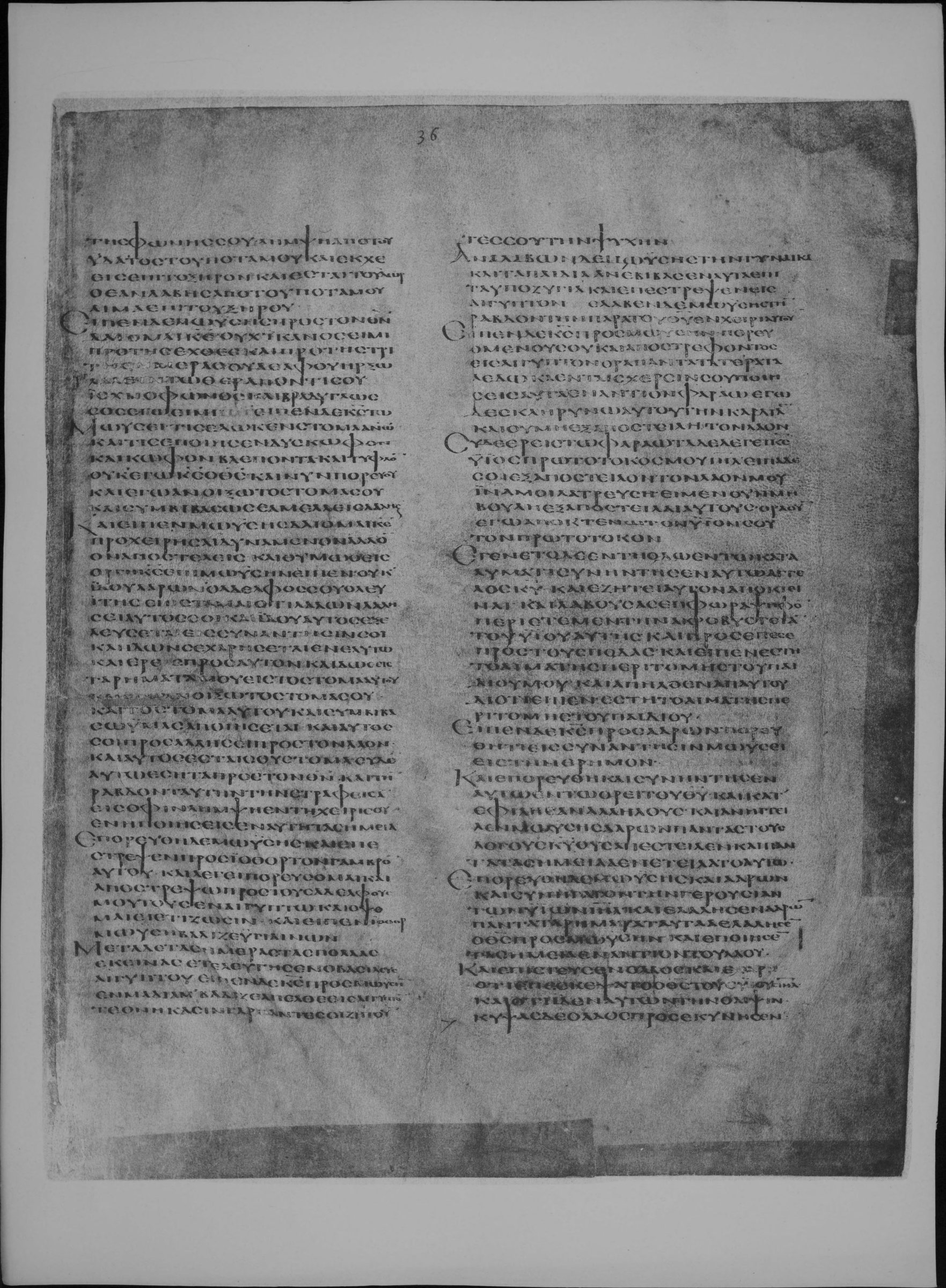
Where on the image
Exodus 4:9 is on fol. 35v (full-size facsimile of 1879-83, Internet Archive codex-alexandrinus leaf 91). The 1915 reduced facsimile prints beneath this page: Exod. iii. 11-iv. 8. Checked on the plate: the page begins at the start of Exodus 3:12 (first words read: ΕΙΠΕΝ ΔΕ ΟΤΙ ΕΣΟΜΑΙ ΜΕΤΑ ΣΟΥ ΚΑΙ ΤΟΥΤΟ ΣΟΙ ΤΟ ΣΗΜΕΙΟΝ). Note: the caption begins at iii. 11, but in Swete's numbering 3:11 ends the preceding page (its last lines read ΚΑΙ ΕΙΠΕΝ ΜΩΥΣΗΣ ΠΡΟΣ ΤΟΝ ΘΝ ΤΙΣ ΕΙΜΙ ΕΓΩ) and this page begins at 3:12, which Codex Alexandrinus opens with ΕΙΠΕΝ ΔΕ ΟΤΙ ΕΣΟΜΑΙ, without Swete's ὁ θεὸς Μωυσεῖ λέγων. Exodus 4:9-16 is on fol. 36r (full-size facsimile of 1879-83, Internet Archive codex-alexandrinus leaf 92). The 1915 reduced facsimile prints beneath this page: Exod. iv. 8-31. Checked on the plate: the page begins inside Exodus 4:9 (first words read: ΤΗΣ ΦΩΝΗΣ ΣΟΥ ΛΗΜΨΗ ΑΠΟ ΤΟΥ ΥΔΑΤΟΣ ΤΟΥ ΠΟΤΑΜΟΥ). Note: the caption begins at iv. 8, but the first line of the page is inside 4:9 in Swete's numbering.
9καὶ ἔσται ἐὰν μὴ πιστεύσωσίν σοι τοῖς δυσὶ σημείοις τούτοις μηδὲ εἰσακούσωσιν τῆς φωνῆς σου, λήμψῃ ἀπὸ τοῦ ὕδατος τοῦ ποταμοῦ καὶ ἐκχεεῖς ἐπὶ τὸ ξηρόν, καὶ ἔσται τὸ ὕδωρ ὃ ἐὰν λάβῃς ἀπὸ τοῦ ποταμοῦ αἷμα ἐπὶ τοῦ ξηροῦ. 10Εἶπεν δὲ Μωυσῆς πρὸς Κύριον Δέομαι, Κύριε, οὐχ ἱκανός εἰμι πρὸ τῆς ἐχθὲς οὐδὲ πρὸ τῆς τρίτης ἡμέρας οὐδὲ ἀφ᾽ οὗ ἤρξω λαλεῖν τῷ θεράποντί σου· ἰσχνόφωνος καὶ βραδύγλωσσος ἐγώ εἰμι. 11εἶπεν δὲ Κύριος πρὸς Μωυσῆν Τίς ἔδωκεν στόμα ἀνθρώπῳ, καὶ τίς ἐποίησεν δύσκωφον καὶ κωφόν, βλέποντα καὶ τυφλόν; οὐκ ἐγὼ ὁ θεός; 12καὶ νῦν πορεύου καὶ ἐγὼ ἀνοίξω τὸ στόμα σου, καὶ συμβιβάσω σε ὃ μέλλεις λαλῆσαι. 13καὶ εἶπεν Μωυσῆς Δέομαι, Κύριε, προχείρισαι δυνάμενον ἄλλον ὃν ἀποστελεῖς. 14καὶ θυμωθεὶς ὀργῇ Κύριος ἐπὶ Μωυσῆν εἶπεν Οὐκ ἰδοὺ Ἀαρὼν ὁ ἀδελφός σου ὁ Λευείτης; ἐπίσταμαι ὅτι λαλῶν λαλήσει αὐτός σοι· καὶ ἰδοὺ αὐτὸς ἐξελεύσεται εἰς συνάντησίν σοι, καὶ ἰδών σε χαρήσεται ἐν ἑαυτῷ. 15καὶ ἐρεῖς πρὸς αὐτὸν καὶ δώσεις τὰ ῥήματά μου εἰς τὸ στόμα αὐτοῦ· καὶ ἐγὼ ἀνοίξω τὸ στόμα σου καὶ τὸ στόμα αὐτοῦ· καὶ συμβιβάσω ὑμᾶς ἃ ποιήσετε. 16καὶ αὐτός σοι λαλήσει πρὸς τὸν λαόν, καὶ αὐτὸς ἔσται σου στόμα· σὺ δὲ αὐτῷ ἔσῃ τὰ πρὸς τὸν θεόν.
9And it shall come to pass if they will not believe thee for these two signs, and will not hearken to thy voice, that thou shalt take of the water of the river and pour it upon the dry land, and the water which thou shalt take from the river shall be blood upon the dry land. 10And Moses said to the Lord, I pray, Lord, I have not been sufficient in former times, neither from the time that thou hast begun to speak to thy servant: I am weak in speech, and slow-tongued. 11And the Lord said to Moses, Who has given a mouth to man, and who has made the very hard of hearing, and the deaf, the seeing and the blind? have not I, God? 12And now go and I will open thy mouth, and will instruct thee in what thou shalt say. 13And Moses said, I pray thee, Lord, appoint another able person whom thou shalt send. 14And the Lord was greatly angered against Moses, and said, Lo! is not Aaron the Levite thy brother? I know that he will surely speak to thee; and, behold, he will come forth to meet thee, and beholding thee he will rejoice within himself. 15And thou shalt speak to him; and thou shalt put my words into his mouth, and I will open thy mouth and his mouth, and I will instruct you in what ye shall do. 16And he shall speak for thee to the people, and he shall be thy mouth, and thou shalt be for him in things pertaining to God.
Where on the image
Exodus 4:17-24 is on fol. 36r (full-size facsimile of 1879-83, Internet Archive codex-alexandrinus leaf 92). The 1915 reduced facsimile prints beneath this page: Exod. iv. 8-31. Checked on the plate: the page begins inside Exodus 4:9 (first words read: ΤΗΣ ΦΩΝΗΣ ΣΟΥ ΛΗΜΨΗ ΑΠΟ ΤΟΥ ΥΔΑΤΟΣ ΤΟΥ ΠΟΤΑΜΟΥ). Note: the caption begins at iv. 8, but the first line of the page is inside 4:9 in Swete's numbering.
17καὶ τὴν ῥάβδον ταύτην τὴν στραφεῖσαν εἰς ὄφιν λήμψῃ ἐν τῇ χειρί σου, ἐν ᾗ ποιήσεις ἐν αὐτῇ τὰ σημεῖα. 18Ἐπορεύθη δὲ Μωυσῆς καὶ ἀπέστρεψεν πρὸς Ἰοθὸρ τὸν γαμβρὸν αὐτοῦ καὶ λέγει Πορεύσομαι καὶ ἀποστρέψω πρὸς τοὺς ἀδελφούς μου τοὺς ἐν Αἰγύπτῳ, καὶ ὄψομαι εἰ ἔτι ζῶσιν. καὶ εἶπεν Ἰοθὸρ Μωυσῇ Βάδιζε ὑγιαίνων. μετὰ δὲ τὰς ἡμέρας τὰς πολλὰς ἐκείνας ἐτελεύτησεν ὁ βασιλεὺς Αἰγύπτου. 19εἶπεν δὲ Κύριος πρὸς Μωυσῆν ἐν Μαδιάμ Βάδιζε ἄπελθε εἰς Αἴγυπτον· τεθνήκασιν γὰρ πάντες οἱ ζητοῦντές σου τὴν ψυχήν. 20ἀναλαβὼν δὲ Μωυσῆς τὴν γυναῖκα καὶ τὰ παιδία ἀνεβίβασεν αὐτὰ ἐπὶ τὰ ὑποζύγια, καὶ ἐπέστρεψεν εἰς Αἴγυπτον· ἔλαβεν δὲ Μωυσῆς τὴν ῥάβδον τὴν παρὰ τοῦ θεοῦ ἐν τῇ χειρὶ αὐτοῦ. 21εἶπεν δὲ Κύριος πρὸς Μωυσῆν Πορευομένου σου καὶ ἀποστρέφοντος εἰς Αἴγυπτον, ὅρα πάντα τὰ τέρατα ἃ ἔδωκα ἐν ταῖς χερσίν σου, ποιήσεις αὐτὰ ἐναντίον Φαραώ· ἐγὼ δὲ σκληρυνῶ τὴν καρδίαν αὐτοῦ, καὶ οὐ μὴ ἐξαποστείλῃ τὸν λαόν. 22σὺ δὲ ἐρεῖς τῷ Φαραώ Τάδε λέγει Κύριος Υἱὸς πρωτότοκός μου Ἰσραήλ· 23εἶπα δέ σοι Ἐξαπόστειλον τὸν λαόν μου ἵνα μοι λατρεύσῃ· εἰ μὲν οὖν μὴ βούλει ἐξαποστεῖλαι αὐτούς, ὅρα οὖν, ἐγὼ ἀποκτέννω τὸν υἱόν σου τὸν πρωτότοκον. 24Ἐγένετο δὲ ἐν τῇ ὁδῷ ἐν τῷ καταλύματι συνήντησεν αὐτῷ ἄγγελος Κυρίου, καὶ ἐζήτει αὐτὸν ἀποκτεῖναι.
17And this rod that was turned into a serpent thou shalt take in thine hand, wherewith thou shalt work miracles. 18And Moses went and returned to Jothor his father-in-law, and says, I will go and return to my brethren in Egypt, and will see if they are yet living. And Jothor said to Moses, Go in health. And in those days after some time, the king of Egypt died. 19And the Lord said to Moses in Madiam, Go, depart into Egypt, for all that sought thy life are dead. 20And Moses took his wife and his children, and mounted them on the beasts, and returned to Egypt; and Moses took the rod which he had from God in his hand. 21And the Lord said to Moses, When thou goest and returnest to Egypt, see—all the miracles I have charged thee with, thou shalt work before Pharao: and I will harden his heart, and he shall certainly not send away the people. 22And thou shalt say to Pharao, These things saith the Lord, Israel is my first-born. 23And I said to thee, Send away my people, that they may serve me: now if thou wilt not send them away, see, I will slay thy first-born son. 24And it came to pass that the angel of the Lord met him by the way in the inn, and sought to slay him.
Where on the image
Exodus 4:25-31 is on fol. 36r (full-size facsimile of 1879-83, Internet Archive codex-alexandrinus leaf 92). The 1915 reduced facsimile prints beneath this page: Exod. iv. 8-31. Checked on the plate: the page begins inside Exodus 4:9 (first words read: ΤΗΣ ΦΩΝΗΣ ΣΟΥ ΛΗΜΨΗ ΑΠΟ ΤΟΥ ΥΔΑΤΟΣ ΤΟΥ ΠΟΤΑΜΟΥ). Note: the caption begins at iv. 8, but the first line of the page is inside 4:9 in Swete's numbering.
25καὶ λαβοῦσα Σεπφώρα ψῆφον περιέτεμεν τὴν ἀκροβυστίαν τοῦ υἱοῦ αὐτῆς, καὶ προσέπεσεν πρὸς τοὺς πόδας καὶ εἶπεν Ἔστη τὸ αἷμα τῆς περιτομῆς τοῦ παιδίου μου. 27Εἶπεν δὲ Κύριος πρὸς Ἀαρών Πορεύθητι εἰς συνάντησιν Μωσεῖ εἰς τὴν ἔρημον· καὶ ἐπορεύθη καὶ συνήντησεν αὐτῷ ἐν τῷ ὄρει τοῦ θεοῦ, καὶ κατεφίλησαν ἀλλήλους. 28καὶ ἀνήγγειλεν Μωυσῆς τῷ Ἀαρὼν πάντας τοὺς λόγους Κυρίου οὓς ἀπέστειλεν καὶ πάντα τὰ ῥήματα ἃ ἐνετείλατο αὐτῷ. 29ἐπορεύθη δὲ Μωυσῆς καὶ Ἀαρών, καὶ συνήγαγον τὴν γερουσίαν τῶν υἱῶν Ἰσραήλ. 30καὶ ἐλάλησεν Ἀαρὼν πάντα τὰ ῥήματα ταῦτα ἃ ἐλάλησεν ὁ θεὸς πρὸς Μωυσῆν, καὶ ἐποίησεν τὰ σημεῖα ἐναντίον τοῦ λαοῦ. 31καὶ ἐπίστευσεν ὁ λαός, καὶ ἐχάρη ὅτι ἐπεσκέψατο ὁ θεὸς τοὺς υἱοὺς Ἰσραὴλ καὶ ὅτι εἶδεν αὐτῶν τὴν θλίψιν· κύψας δὲ ὁ λαὸς προσεκύνησεν.
25And Sepphora having taken a stone cut off the foreskin of her son, and fell at his feet and said, The blood of the circumcision of my son is staunched: 26and he departed from him, because she said, The blood of the circumcision of my son is staunched. 27And the Lord said to Aaron, Go into the wilderness to meet Moses; and he went and met him in the mount of God, and they kissed each other. 28And Moses reported to Aaron all the words of the Lord, which he sent, and all the things which he charged him. 29And Moses and Aaron went and gathered the elders of the children of Israel. 30And Aaron spoke all these words, which God spoke to Moses, and wrought the miracles before the people. 31And the people believed and rejoiced, because God visited the children of Israel, and because he saw their affliction: and the people bowed and worshipped.
Cite
Sources
- Source: Codex Alexandrinus (British Library Royal MS 1 D. V) via the British Museum photographic facsimiles of 1879-83 and 1915 (Internet Archive) + Swete's Septuagint + Brenton's English (holding institution)
- Critical edition: H. B. Swete, The Old Testament in Greek according to the Septuagint (1909)
← previous · → next · v cycle view · l back to library