Exodus, Chapter 3 (Codex Alexandrinus)
Introduction
Exodus 3 in the Greek Old Testament (the Septuagint) as written in Codex Alexandrinus, a Greek Bible copied in the fifth century, probably in Egypt, and now in the British Library (Royal MS 1 D. V, the first of its four volumes). It is one of the three great early codices of the whole Greek Bible, with Codex Vaticanus and Codex Sinaiticus, and for Genesis 1:1-46:28, which Codex Vaticanus has lost, it is the oldest surviving complete Greek text (older papyri such as the Berlin Genesis papyrus and Chester Beatty 961 survive only in part).
This entry meets the strict three-criteria standard of the Theosis Library:
- Manuscript scan: the pages of Codex Alexandrinus carrying this chapter (fol. 35r, fol. 35v), from the full-size photographic (autotype) facsimile published by the British Museum in 1879-1883, as digitised on the Internet Archive. The verse range of every page comes from the reduced photographic facsimile of 1915, which prints it beneath each plate, and the opening words of every page were read on the plate to confirm the page and the verse it begins with. Each section links to the page or pages that hold its verses. Folio numbers are those written at the head of each leaf and visible on the plates.
- Original text: Swete's edition, which here prints the text of Codex Vaticanus (Vat. gr. 1209), the base of his edition, and gives the readings of Alexandrinus only in his apparatus. The Greek column is therefore Vaticanus' text; where Alexandrinus differs, the plate shows what Alexandrinus reads.
- English translation: Sir Lancelot C. L. Brenton, The Septuagint Version of the Old Testament (1844; 1851 edition), a translation of the Greek, public domain, from the eBible.org text.
How was this verified? (Provenance)
Where on the image
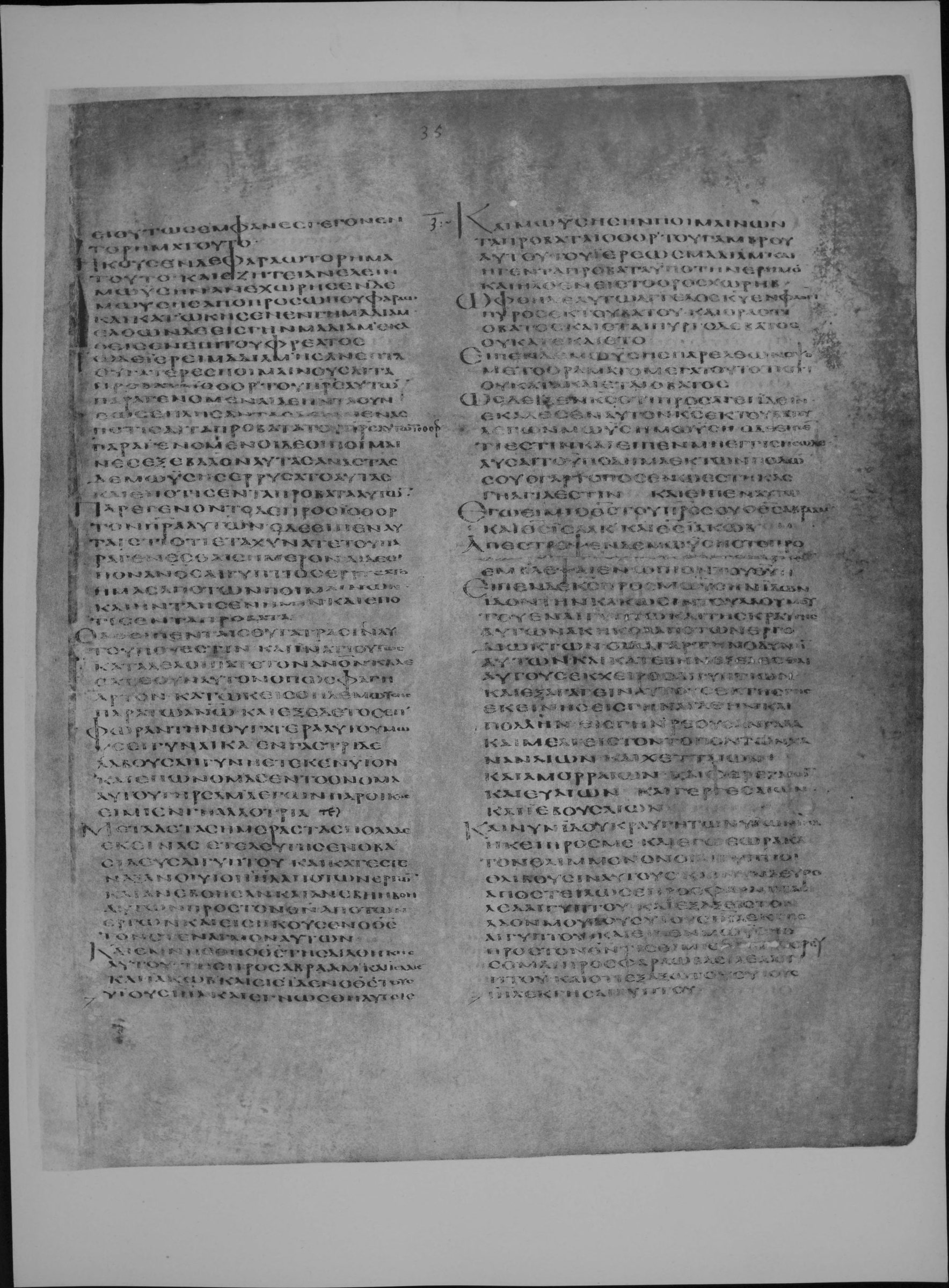
Exodus 3:1-8 is on fol. 35r (full-size facsimile of 1879-83, Internet Archive codex-alexandrinus leaf 90). The 1915 reduced facsimile prints beneath this page: Exod. ii. 14-iii. 10. Checked on the plate: the page begins inside Exodus 2:14 (first words read: ΕΙ ΟΥΤΩΣ ΕΜΦΑΝΕΣ ΓΕΓΟΝΕΝ ΤΟ ΡΗΜΑ ΤΟΥΤΟ ΗΚΟΥΣΕΝ ΔΕ ΦΑΡΑΩ).
1Καὶ Μωυσῆς ἦν ποιμαίνων τὰ πρόβατα Ἰοθὸρ τοῦ γαμβροῦ αὐτοῦ τοῦ ἱερέως Μαδιάμ, καὶ ἤγαγεν τὰ πρόβατα ὑπὸ τὴν ἔρημον καὶ ἦλθεν εἰς τὸ ὄρος Χωρήβ. 2ὤφθη δὲ αὐτῷ ἄγγελος Κυρίου ἐν πυρὶ φλογὸς ἐκ τοῦ βάτου· καὶ ὁρᾷ ὅτι ὁ βάτος καίεται πυρί, ὁ δὲ βάτος οὐ κατεκαίετο. 3εἶπεν δὲ Μωυσῆς Παρελθὼν ὄψομαι τὸ ὅραμα τὸ μέγα τοῦτο, ὅτι οὐ κατακαίεται ὁ βάτος. 4ὡς δὲ ἴδεν Κύριος ὅτι προσάγει ἰδεῖν, ἐκάλεσεν αὐτὸν Κύριος ἐκ τοῦ βάτου λέγων Μωυσῆ Μωυσῆ. ὁ δὲ εἶπεν Τί ἐστιν; 5ὁ δὲ εἶπεν Μὴ ἐγγίσῃς ὧδε· λῦσαι τὸ ὑπόδημα ἐκ τῶν ποδῶν σου, ὁ γὰρ τόπος ἐν ᾧ σὺ ἕστηκας γῆ ἁγία ἐστίν. 6καὶ εἶπεν Ἐγώ εἰμι ὁ θεὸς τοῦ πατρός σου, θεὸς Ἀβραὰμ καὶ θεὸς Ἰσαὰκ καὶ θεὸς Ἰακώβ. ἀπέστρεψεν δὲ Μωυσῆς τὸ πρόσωπον αὐτοῦ· εὐλαβεῖτο γὰρ κατεμβλέψαι ἐνώπιον τοῦ θεοῦ. 7εἶπεν δὲ Κύριος πρὸς Μωυσῆν Ἰδὼν ἴδον τὴν κάκωσιν τοῦ λαοῦ μου τοῦ ἐν Αἰγύπτῳ, καὶ τῆς κραυγῆς αὐτῶν ἀκήκοα ἀπὸ τῶν ἐργοδιωκτῶν· οἶδα γὰρ τὴν ὀδύνην αὐτῶν· 8καὶ κατέβην ἐξελέσθαι αὐτοὺς ἐκ χειρὸς Αἰγυπτίων καὶ ἐξαγαγεῖν αὐτοὺς ἐκ τῆς γῆς ἐκείνης, καὶ εἰσαγαγεῖν αὐτοὺς εἰς γῆν ἀγαθὴν καὶ πολλήν, εἰς γῆν ῥέουσαν γάλα καὶ μέλι, εἰς τὸν τόπον τῶν Χαναναίων καὶ Χετταίων καὶ Ἀμορραίων καὶ Φερεζαίων καὶ Γεργεσαίων καὶ Εὑαίων καὶ Ἰεβουσαίων.
1And Moses was feeding the flock of Jothor his father-in-law, the priest of Madiam; and he brought the sheep nigh to the wilderness, and came to the mount of Choreb. 2And an angel of the Lord appeared to him in flaming fire out of the bush, and he sees that the bush burns with fire,—but the bush was not consumed. 3And Moses said, I will go near and see this great sight, why the bush is not consumed. 4And when the Lord saw that he drew nigh to see, the Lord called him out of the bush, saying, Moses, Moses; and he said, What is it? 5And he said, Draw not nigh hither: loose thy sandals from off thy feet, for the place whereon thou standest is holy ground. 6And he said, I am the God of thy father, the God of Abraam, and the God of Isaac, and the God of Jacob; and Moses turned away his face, for he was afraid to gaze at God. 7And the Lord said to Moses, I have surely seen the affliction of my people that is in Egypt, and I have heard their cry caused by their task-masters; for I know their affliction. 8And I have come down to deliver them out of the hand of the Egyptians, and to bring them out of that land, and to bring them into a good and wide land, into a land flowing with milk and honey, into the place of the Chananites, and the Chettites, and Amorites, and Pherezites, and Gergesites, and Evites, and Jebusites.
Where on the image
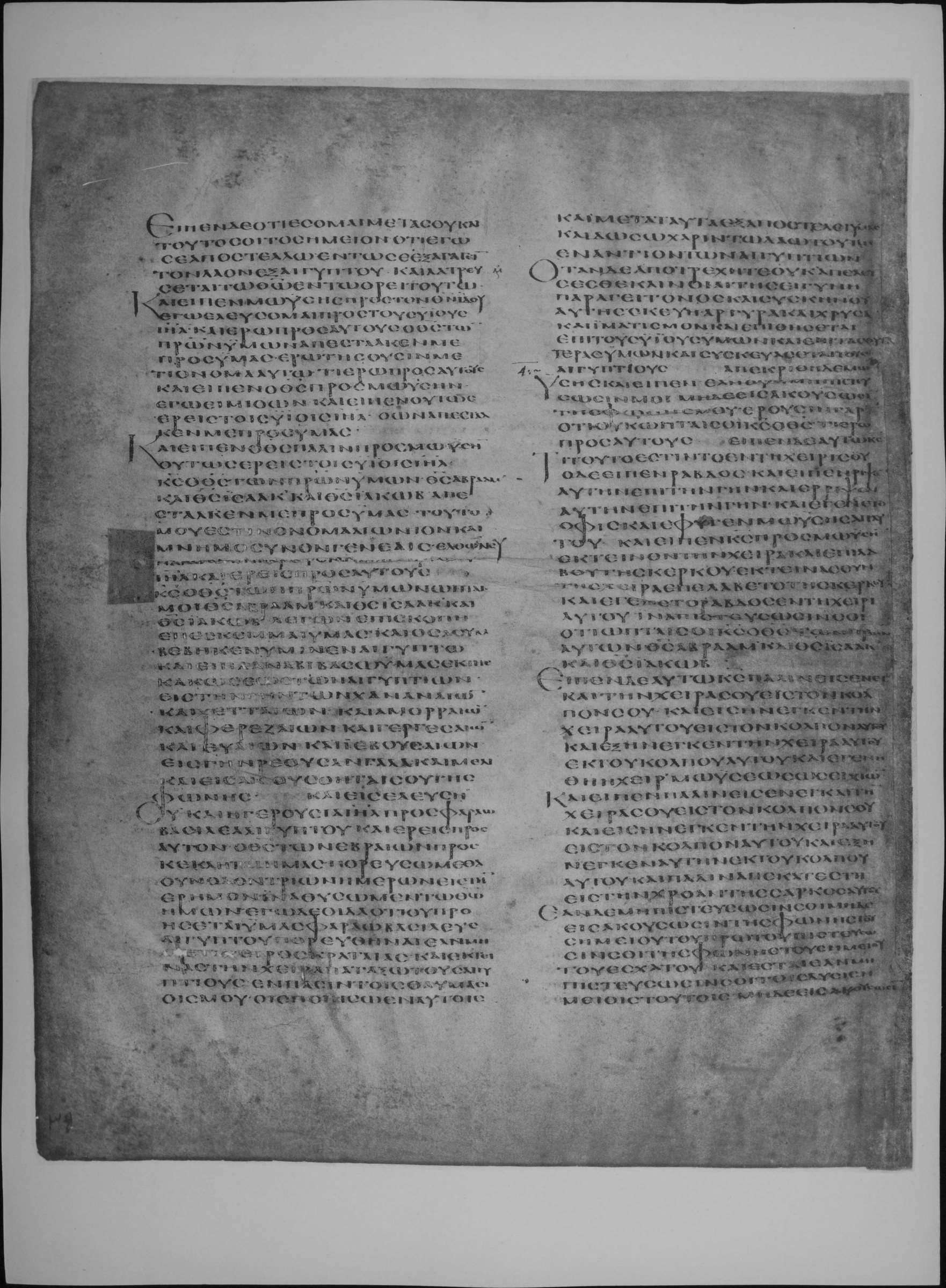
Exodus 3:9-11 is on fol. 35r (full-size facsimile of 1879-83, Internet Archive codex-alexandrinus leaf 90). The 1915 reduced facsimile prints beneath this page: Exod. ii. 14-iii. 10. Checked on the plate: the page begins inside Exodus 2:14 (first words read: ΕΙ ΟΥΤΩΣ ΕΜΦΑΝΕΣ ΓΕΓΟΝΕΝ ΤΟ ΡΗΜΑ ΤΟΥΤΟ ΗΚΟΥΣΕΝ ΔΕ ΦΑΡΑΩ). Exodus 3:12-16 is on fol. 35v (full-size facsimile of 1879-83, Internet Archive codex-alexandrinus leaf 91). The 1915 reduced facsimile prints beneath this page: Exod. iii. 11-iv. 8. Checked on the plate: the page begins at the start of Exodus 3:12 (first words read: ΕΙΠΕΝ ΔΕ ΟΤΙ ΕΣΟΜΑΙ ΜΕΤΑ ΣΟΥ ΚΑΙ ΤΟΥΤΟ ΣΟΙ ΤΟ ΣΗΜΕΙΟΝ). Note: the caption begins at iii. 11, but in Swete's numbering 3:11 ends the preceding page (its last lines read ΚΑΙ ΕΙΠΕΝ ΜΩΥΣΗΣ ΠΡΟΣ ΤΟΝ ΘΝ ΤΙΣ ΕΙΜΙ ΕΓΩ) and this page begins at 3:12, which Codex Alexandrinus opens with ΕΙΠΕΝ ΔΕ ΟΤΙ ΕΣΟΜΑΙ, without Swete's ὁ θεὸς Μωυσεῖ λέγων.
9καὶ νῦν ἰδοὺ κραυγὴ τῶν υἱῶν Ἰσραὴλ ἥκει πρὸς μέ, κἀγὼ ἑώρακα τὸν θλιμμὸν ὃν οἱ Αἰγύπτιοι θλίβουσιν αὐτούς. 10καὶ νῦν δεῦρο ἀποστείλω σε πρὸς Φαραὼ βασιλέα Αἰγύπτου, καὶ ἐξάξεις τὸν λαόν μου τοὺς υἱοὺς Ἰσραὴλ ἐκ γῆς Αἰγύπτου. 11Καὶ εἶπεν Μωυσῆς πρὸς τὸν θεόν Τίς εἰμι ἐγὼ ὅτι πορεύσομαι πρὸς Φαραὼ βασιλέα Αἰγύπτου, καὶ ὅτι ἐξάξω τοὺς υἱοὺς Ἰσραὴλ ἐκ γῆς Αἰγύπτου; 12εἶπεν δὲ ὁ θεὸς Μωυσεῖ λέγων Ὅτι ἔσομαι μετὰ σοῦ· καὶ τοῦτό σοι τὸ σημεῖον ὅτι ἐγώ σε ἐξαποστελῶ· ἐν τῷ ἐξαγαγεῖν σε τὸν λαόν μου ἐξ Αἰγύπτου, καὶ λατρεύσετε τῷ θεῷ ἐν τῷ ὄρει τούτῳ. 13καὶ εἶπεν Μωυσῆς πρὸς τὸν θεόν Ἰδοὺ ἐγὼ ἐξελεύσομαι πρὸς τοὺς υἱοὺς Ἰσραὴλ καὶ ἐρῶ πρὸς αὐτούς Ὁ θεὸς τῶν πατέρων ἡμῶν ἀπέσταλκέν με πρὸς ὑμᾶς· ἐρωτήσουσίν με Τί ὄνομα αὐτῷ; τί ἐρῶ πρὸς αὐτούς; 14καὶ εἶπεν ὁ θεὸς πρὸς Μωυσῆν λέγων Ἐγώ εἰμι ὁ ὤν· καὶ εἶπεν Οὕτως ἐρεῖς τοῖς υἱοῖς Ἰσραήλ Ὁ ὢν ἀπέσταλκέν με πρὸς ὑμᾶς. 15καὶ εἶπεν ὁ θεὸς πάλιν πρὸς Μωυσῆν Οὕτως ἐρεῖς τοῖς υἱοῖς Ἰσραήλ Κύριος ὁ θεὸς τῶν πατέρων ὑμῶν, θεὸς Ἀβραὰμ καὶ θεὸς Ἰσαὰκ καὶ θεὸς Ἰακώβ, ἀπέσταλκέν με πρὸς ὑμᾶς· τοῦτό μού ἐστιν ὄνομα αἰώνιον καὶ μνημόσυνον γενεῶν γενεαῖς. 16ἐλθὼν οὖν συνάγαγε τὴν γερουσίαν τῶν υἱῶν Ἰσραὴλ καὶ ἐρεῖς πρὸς αὐτούς Κύριος ὁ θεὸς τῶν πατέρων ὑμῶν ὦπταί μοι, θεὸς Ἀβραὰμ καὶ θεὸς Ἰσαὰκ καὶ θεὸς Ἰακώβ, λέγων Ἐπισκοπῇ ἐπέσκεμμαι ὑμᾶς καὶ ὅσα συμβέβηκεν ὑμῖν ἐν Αἰγύπτῳ·
9And now, behold, the cry of the children of Israel is come to me, and I have seen the affliction with which the Egyptians afflict them. 10And now come, I will send thee to Pharao king of Egypt, and thou shalt bring out my people the children of Israel from the land of Egypt. 11And Moses said to God, Who am I, that I should go to Pharao king of Egypt, and that I should bring out the children of Israel from the land of Egypt? 12And God spoke to Moses, saying, I will be with thee, and this shall be the sign to thee that I shall send thee forth,—when thou bringest out my people out of Egypt, then ye shall serve God in this mountain. 13And Moses said to God, Behold, I shall go forth to the children of Israel, and shall say to them, The God of our fathers has sent me to you; and they will ask me, What is his name? What shall I say to them? 14And God spoke to Moses, saying, I am THE BEING; and he said, Thus shall ye say to the children of Israel, THE BEING has sent me to you. 15And God said again to Moses, Thus shalt thou say to the sons of Israel, The Lord God of our fathers, the God of Abraam, and God of Isaac, and God of Jacob, has sent me to you: this is my name for ever, and my memorial to generations of generations. 16Go then and gather the elders of the children of Israel, and thou shalt say to them, The Lord God of our fathers has appeared to me, the God of Abraam, and God of Isaac, and God of Jacob, saying, I have surely looked upon you, and upon all the things which have happened to you in Egypt.
Where on the image
Exodus 3:17-22 is on fol. 35v (full-size facsimile of 1879-83, Internet Archive codex-alexandrinus leaf 91). The 1915 reduced facsimile prints beneath this page: Exod. iii. 11-iv. 8. Checked on the plate: the page begins at the start of Exodus 3:12 (first words read: ΕΙΠΕΝ ΔΕ ΟΤΙ ΕΣΟΜΑΙ ΜΕΤΑ ΣΟΥ ΚΑΙ ΤΟΥΤΟ ΣΟΙ ΤΟ ΣΗΜΕΙΟΝ). Note: the caption begins at iii. 11, but in Swete's numbering 3:11 ends the preceding page (its last lines read ΚΑΙ ΕΙΠΕΝ ΜΩΥΣΗΣ ΠΡΟΣ ΤΟΝ ΘΝ ΤΙΣ ΕΙΜΙ ΕΓΩ) and this page begins at 3:12, which Codex Alexandrinus opens with ΕΙΠΕΝ ΔΕ ΟΤΙ ΕΣΟΜΑΙ, without Swete's ὁ θεὸς Μωυσεῖ λέγων.
17καὶ εἶπεν Ἀναβιβάσω ὑμᾶς ἐκ τῆς κακώσεως τῶν Αἰγυπτίων εἰς τὴν γῆν τῶν Χαναναίων καὶ Χετταίων καὶ Ἀμορραίων καὶ Φερεζαίων καὶ Γεργεσαίων καὶ Εὑαίων καὶ Ἰεβουσαίων, εἰς γῆν ῥέουσαν γάλα καὶ μέλι. 18καὶ εἰσακούσονταί σου τῆς φωνῆς· καὶ εἰσελεύσῃ σὺ καὶ ἡ γερουσία Ἰσραὴλ πρὸς Φαραὼ βασιλέα Αἰγύπτου, καὶ ἐρεῖς πρὸς αὐτόν Ὁ θεὸς τῶν Ἐβραίων προσκέκληται ἡμᾶς· πορευσώμεθα οὖν ὁδὸν τριῶν ἡμερῶν εἰς τὴν ἔρημον, ἵνα θύσωμεν τῷ θεῷ ἡμῶν. 19ἐγὼ δὲ οἶδα ὅτι οὐ προήσεται ὑμᾶς Φαραὼ βασιλεὺς Αἰγύπτου πορευθῆναι, ἐὰν μὴ μετὰ χειρὸς κραταιᾶς· 20καὶ ἐκτείνας τὴν χεῖρα πατάξω τοὺς Αἰγυπτίους ἐν πᾶσι τοῖς θαυμασίοις μου οἷς ποιήσω ἐν αὐτοῖς, καὶ μετὰ ταῦτα ἐξαποστελεῖ ὑμᾶς. 21καὶ δώσω χάριν τῷ λαῷ τούτῳ ἐναντίον τῶν Αἰγυπτίων· ὅταν δὲ ἀποτρέχητε, οὐκ ἀπελεύσεσθε κενοί· 22αἰτήσει γυνὴ παρὰ γείτονος καὶ συσκήνου αὐτῆς σκεύη ἀργυρᾶ καὶ χρυσᾶ καὶ ἱματισμόν, καὶ ἐπιθήσετε ἐπὶ τοὺς υἱοὺς ὑμῶν καὶ ἐπὶ τὰς θυγατέρας ὑμῶν· καὶ σκυλεύσατε τοὺς Αἰγυπτίους.
17And he said, I will bring you up out of the affliction of the Egyptians to the land of the Chananites and the Chettites, and Amorites and Pherezites, and Gergesites, and Evites, and Jebusites, to a land flowing with milk and honey. 18And they shall hearken to thy voice, and thou and the elders of Israel shall go in to Pharao king of Egypt, and thou shalt say to him, The God of the Hebrews has called us; we will go then a journey of three days into the wilderness, that we may sacrifice to our God. 19But I know that Pharao king of Egypt will not let you go, save with a mighty hand; 20and I will stretch out my hand, and smite the Egyptians with all my wonders, which I shall work among them, and after that he will send you forth. 21And I will give this people favour in the sight of the Egyptians, and whenever ye shall escape, ye shall not depart empty. 22But every woman shall ask of her neighbour and fellow lodger, articles of gold and silver, and apparel; and ye shall put them upon your sons and upon your daughters,—and spoil ye the Egyptians.
Cite
Sources
- Source: Codex Alexandrinus (British Library Royal MS 1 D. V) via the British Museum photographic facsimiles of 1879-83 and 1915 (Internet Archive) + Swete's Septuagint + Brenton's English (holding institution)
- Critical edition: H. B. Swete, The Old Testament in Greek according to the Septuagint (1909)
← previous · → next · v cycle view · l back to library