Ezekiel, Chapter 26 (Codex Alexandrinus)
Introduction
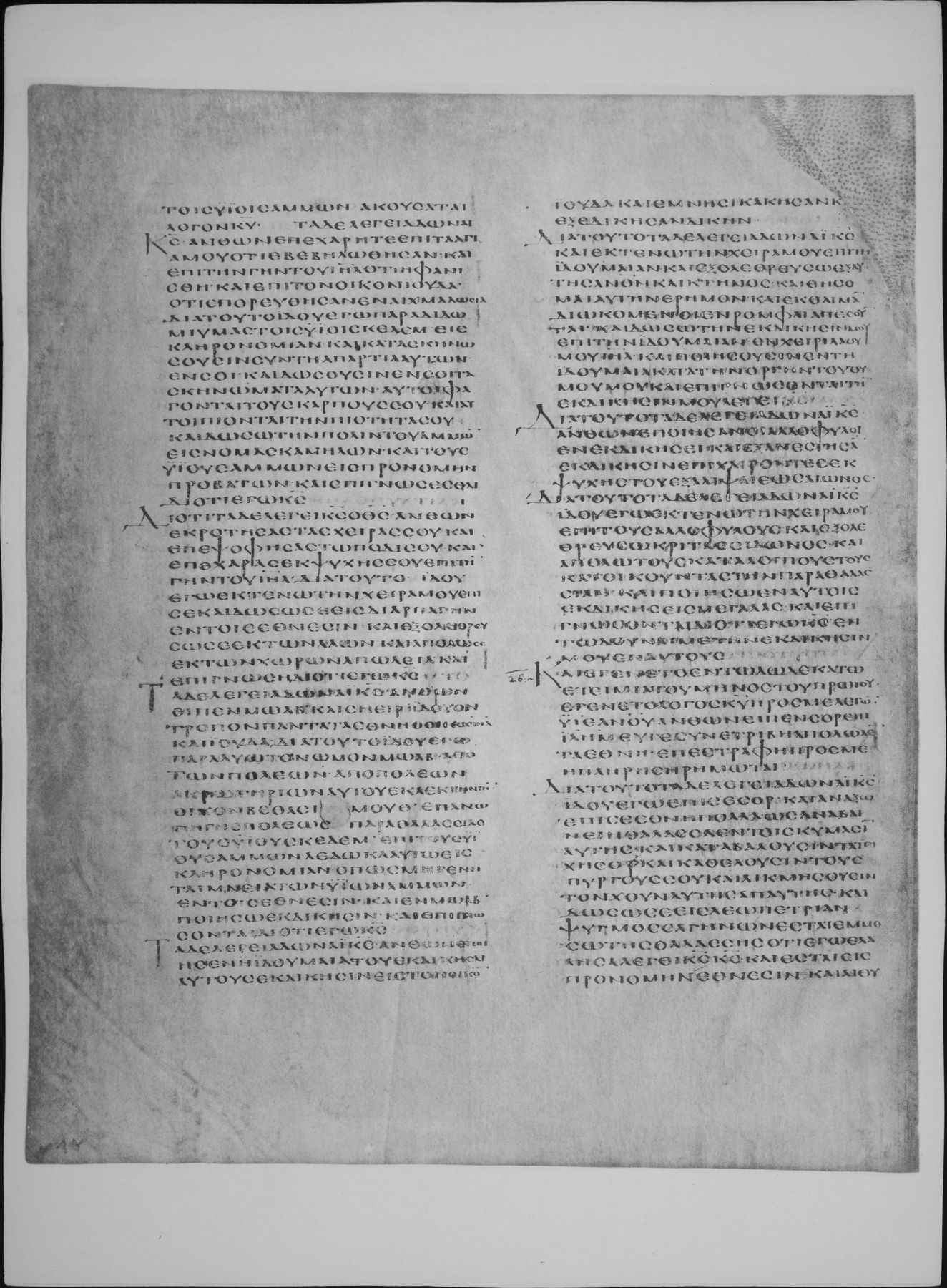
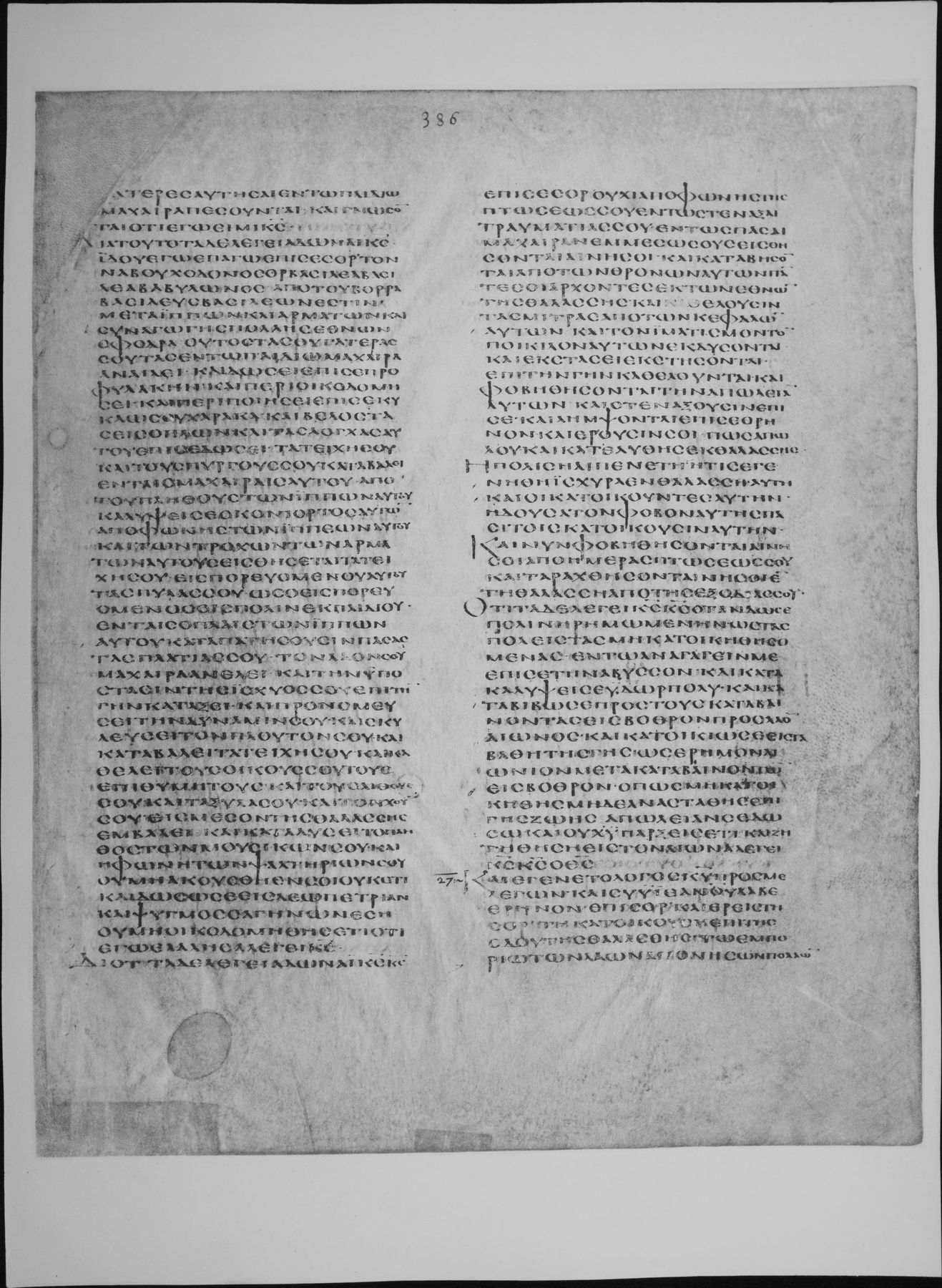
Ezekiel 26 in the Greek Old Testament (the Septuagint) as written in Codex Alexandrinus, a Greek Bible copied in the fifth century, probably in Egypt, and now in the British Library (Royal MS 1 D. VI, the second of its four volumes). It is one of the three great early codices of the whole Greek Bible, with Codex Vaticanus and Codex Sinaiticus.
This entry meets the strict three-criteria standard of the Theosis Library:
- Manuscript scan: the pages of Codex Alexandrinus carrying this chapter (fol. 385v, fol. 386r), from the full-size photographic (autotype) facsimile published by the British Museum in 1879-1883, as digitised on the Internet Archive. The verse range of every page comes from the reduced photographic facsimile of 1936, which prints it beneath each plate, and the opening words of every page were read on the plate to confirm the page and the verse it begins with. Each section links to the page or pages that hold its verses. Folio numbers are those written at the head of each leaf and visible on the plates.
- Original text: Swete's edition, which here prints the text of Codex Vaticanus (Vat. gr. 1209), the base of his edition, and gives the readings of Alexandrinus only in his apparatus. The Greek column is therefore Vaticanus' text; where Alexandrinus differs, the plate shows what Alexandrinus reads.
- English translation: Sir Lancelot C. L. Brenton, The Septuagint Version of the Old Testament (1844; 1851 edition), a translation of the Greek, public domain, from the eBible.org text.
How was this verified? (Provenance)
Where on the image
Ezekiel 26:1-6 is on fol. 385v (full-size facsimile of 1879-83, Internet Archive codex-alexandrinus leaf 795). The 1936 reduced facsimile prints beneath this page: Ezek. xxv. 3-xxvi. 6. Checked on the plate: the page begins inside Ezekiel 25:3 (first words read: ΤΟΙΣ ΥΙΟΙΣ ΑΜΜΩΝ ΑΚΟΥΣΑΤΕ ΛΟΓΟΝ ΚΥ ΤΑΔΕ ΛΕΓΕΙ ΑΔΩΝΑΙ ΚΣ ΑΝΘ ΩΝ ΕΠΕΧΑΡΗΤΕ). Ezekiel 26:6-8 is on fol. 386r (full-size facsimile of 1879-83, Internet Archive codex-alexandrinus leaf 796). The 1936 reduced facsimile prints beneath this page: Ezek. xxvi. 6-xxvii. 3. Checked on the plate: the page begins inside Ezekiel 26:6 (first words read: ΚΑΙ ΑΙ ΘΥΓΑΤΕΡΕΣ ΑΥΤΗΣ ΑΙ ΕΝ ΤΩ ΠΕΔΙΩ ΜΑΧΑΙΡΑ ΑΝΑΙΡΕΘΗΣΟΝΤΑΙ ΚΑΙ ΓΝΩΣΟΝΤΑΙ ΟΤΙ ΕΓΩ ΕΙΜΙ ΚΣ). Note: Ezek. 26:6 is divided between this page and the preceding one, as both captions show (xxvi. 6); this page begins ΑΙ ΘΥΓΑΤΕΡΕΣ ΑΥΤΗΣ.
1Καὶ ἐγενήθη ἐν τῷ ἑνδεκάτῳ ἔτει μιᾷ τοῦ μηνὸς ἐγένετο λόγος Κυρίου πρὸς μὲ λέγων 2Υἱὲ ἀνθρώπου, ἀνθ᾽ οὗ εἶπεν Σὸρ ἐπὶ Ἰερουσαλήμ Εὖγε συνετρίβη, ἀπόλωλεν τὰ ἔθνη, ἐπεστράφη πρὸς μέ, ἡ πλήρης ἠρήμωται· 3διὰ τοῦτο τάδε λέγει Κύριος Ἰδοὺ ἐγὼ ἐπὶ σέ, Σόρ, καὶ ἀνάξω ἐπὶ σὲ ἔθνη πολλὰ ὡς ἀναβαίνει ἡ θάλασσα τοῖς κύμασιν αὐτῆς. 4καὶ καταβαλοῦσιν τὰ τείχη Σόρ, καὶ καταβαλοῦσι τούς πύργους σου, καὶ λικμήσω τὸν χοῦν αὐτῆς ἀπ᾽ αὐτῆς, καὶ δώσω αὐτὴν εἰς λεωπετρίαν· 5ψυγμὸς σαγηνῶν ἔσται ἐν μέσῳ θαλάσσης, ὅτι ἐγὼ λελάληκα, λέγει Κύριος. καὶ ἔσται εἰς προνομὴν τοῖς ἔθνεσιν, 6καὶ αἱ θυγατέρες αὐτῆς ἐν πεδίῳ μαχαίρᾳ ἀναιρεθήσονται· καὶ γνώσονται ὅτι ἐγὼ Κύριος. 7ὅτι τάδε λέγει Κύριος Ἰδοὺ ἐγὼ ἐπάγω ἐπὶ σέ, Σόρ, τὸν Ναβουχοδονοσὸρ βασιλέα Βαβυλῶνος ἀπὸ τοῦ βορρᾶ· βασιλεὺς βασιλέων ἐστίν, μεθ᾽ ἵππων καὶ ἁρμάτων καὶ ἱππέων καὶ συναγωγῆς ἐθνῶν πολλῶν σφόδρα. 8οὗτος τὰς θυγατέρας σου τὰς ἐν τῷ πεδίῳ μαχαίρᾳ ἀνελεῖ, καὶ δώσει ἐπὶ σὲ προφυλακὴν καὶ περιοικοδομήσει, καὶ ποιήσει ἐπὶ σὲ κύκλῳ χάρακα καὶ περίστασιν ὅπλων, καὶ τὰς λόγχας αὐτοῦ ἀπέναντί σου δώσει·
1And it came to pass in the eleventh year, on the first day of the month, that the word of the Lord came to me, saying, 2Son of man, because Sor has said against Jerusalem, Aha, she is crushed: the nations are destroyed: she is turned to me: she that was full is made desolate: 3therefore thus saith the Lord; Behold, I am against thee, O Sor, and I will bring up many nations against thee, as the sea comes up with its waves. 4And they shall cast down the walls of Sor, and shall cast down thy towers: and I will scrape her dust from off her, and make her a bare rock. 5She shall be in the midst of the sea a place for repairing nets: for I have spoken it, saith the Lord: and it shall be a spoil for the nations. 6And her daughters which are in the field shall be slain with the sword, and they shall know that I am the Lord. 7For thus saith the Lord; Behold, I will bring up against thee, O Sor, Nabuchodonosor king of Babylon from the north: he is a king of kings, with horses, and chariots, and horsemen, and a concourse of very many nations. 8He shall slay thy daughters that are in the field with the sword, and shall set a watch against thee, and build forts around thee, and carry a rampart round against thee, and set up warlike works, and array his spears against thee.
Where on the image
Ezekiel 26:9-16 is on fol. 386r (full-size facsimile of 1879-83, Internet Archive codex-alexandrinus leaf 796). The 1936 reduced facsimile prints beneath this page: Ezek. xxvi. 6-xxvii. 3. Checked on the plate: the page begins inside Ezekiel 26:6 (first words read: ΚΑΙ ΑΙ ΘΥΓΑΤΕΡΕΣ ΑΥΤΗΣ ΑΙ ΕΝ ΤΩ ΠΕΔΙΩ ΜΑΧΑΙΡΑ ΑΝΑΙΡΕΘΗΣΟΝΤΑΙ ΚΑΙ ΓΝΩΣΟΝΤΑΙ ΟΤΙ ΕΓΩ ΕΙΜΙ ΚΣ). Note: Ezek. 26:6 is divided between this page and the preceding one, as both captions show (xxvi. 6); this page begins ΑΙ ΘΥΓΑΤΕΡΕΣ ΑΥΤΗΣ.
9τὰ τείχη σου καὶ τοὺς πύργους σου καταβαλεῖ ἐν ταῖς μαχαίραις αὐτοῦ. 10ἀπὸ τοῦ πλήθους τῶν ἵππων αὐτοῦ κατακαλύψει σε ὁ κονιορτὸς αὐτῶν, καὶ ἀπὸ τῆς φωνῆς τῶν ἱππέων αὐτοῦ καὶ τῶν τροχῶν τῶν ἁρμάτων αὐτοῦ σεισθήσεται τὰ τείχη σου, εἰσπορευομένου αὐτοῦ τὰς πύλας σου ὡς εἰσπορευόμενος εἰς πόλιν ἐκ πεδίου. 11ἐν ταῖς ὁπλαῖς τῶν ἵππων αὐτοῦ καταπατήσουσίν σου πάσας τὰς πλατείας· τὸν λαόν σου μαχαίρᾳ ἀνελεῖ, καὶ τὴν ὑπόστασίν σου τῆς ἰσχύος ἐπὶ τὴν γῆν κατάξει. 12καὶ προνομεύσει τὴν δύναμίν σου, καὶ σκυλεύσει τὰ ὑπάρχοντά σου, καὶ καταβαλεῖ σου τὰ τείχη καὶ τοὺς οἴκους τοὺς ἐπιθυμητούς σου καθελεῖ, καὶ τοὺς λίθους σου καὶ τὰ ξύλα σου καὶ τὸν χοῦν σου εἰς μέσον τῆς θαλάσσης σου ἐμβαλεῖ. 13καὶ καταλύσει τὸ πλῆθος τῶν μουσικῶν σου, καὶ ἡ φωνὴ τῶν ψαλτηρίων σου οὐ μὴ ἀκουσθῇ ἔτι. 14καὶ δώσω σε λεωπετρίαν, ψυγμὸς σαγηνῶν ἔσῃ· οὐ μὴ οἰκοδομηθῇς ἔτι, ὅτι ἐγὼ Κύριος ἐλάλησα, λέγει Κύριος. 15διότι τάδε λέγει κύριος Κύριος τῇ Σόρ Οὐκ ἀπὸ φωνῆς τῆς πτώσεώς σου ἐν τῷ στενάξαι τραυματίας, ἐν τῷ σπάσαι μάχαιραν ἐν μέσῳ σου, σεισθήσονται αἱ νῆσοι; 16καὶ καταβήσονται ἀπὸ τῶν θρόνων αὐτῶν πάντες οἱ ἄρχοντες ἐκ τῶν ἐθνῶν τῆς θαλάσσης, καὶ ἀφελοῦνται τὰς μίτρας ἀπὸ τῶν κεφαλῶν αὐτῶν, καὶ τὸν ἱματισμὸν τὸν ποικίλον αὐτῶν ἐκδύσονται· ἐκστάσει ἐκστήσονται, ἐπὶ γῆν καθεδοῦνται καὶ φοβηθήσονται τὴν ἀπωλίαν αὐτῶν, καὶ στενάξουσιν ἐπὶ σέ·
9He shall cast down with his swords thy walls and thy towers. 10By reason of the multitude of his horses their dust shall cover thee, and by reason of the sound of his horsemen and the wheels of his chariots thy walls shall be shaken, when he enters into thy gates, as one entering into a city from the plain. 11With the hoofs of his horses they shall trample all thy streets: he shall slay thy people with the sword, and shall bring down to the ground the support of thy strength. 12And he shall prey upon thy power, and plunder thy substance, and shall cast down thy walls, and break down thy pleasant houses: and he shall cast thy stones and thy timber and thy dust into the midst of thy sea. 13And he shall destroy the multitude of thy musicians, and the sound of thy psalteries shall be heard no more. 14And I will make thee a bare rock: thou shalt be a place to spread nets upon; thou shalt be built no more: for I the Lord have spoken it, saith the Lord. 15For thus saith the Lord God to Sor; Shall not the isles shake at the sound of thy fall, while the wounded are groaning, while they have drawn a sword in the midst of thee? 16And all the princes of the nations of the sea shall come down from their thrones, and shall take off their crowns from their heads, and shall take off their embroidered raiment: they shall be utterly amazed; they shall sit upon the ground, and fear their own destruction, and shall groan over thee.
Where on the image
Ezekiel 26:17-21 is on fol. 386r (full-size facsimile of 1879-83, Internet Archive codex-alexandrinus leaf 796). The 1936 reduced facsimile prints beneath this page: Ezek. xxvi. 6-xxvii. 3. Checked on the plate: the page begins inside Ezekiel 26:6 (first words read: ΚΑΙ ΑΙ ΘΥΓΑΤΕΡΕΣ ΑΥΤΗΣ ΑΙ ΕΝ ΤΩ ΠΕΔΙΩ ΜΑΧΑΙΡΑ ΑΝΑΙΡΕΘΗΣΟΝΤΑΙ ΚΑΙ ΓΝΩΣΟΝΤΑΙ ΟΤΙ ΕΓΩ ΕΙΜΙ ΚΣ). Note: Ezek. 26:6 is divided between this page and the preceding one, as both captions show (xxvi. 6); this page begins ΑΙ ΘΥΓΑΤΕΡΕΣ ΑΥΤΗΣ.
17καὶ λήμψονται ἐπὶ σὲ θρῆνον καὶ ἐροῦσίν σοι Πῶς κατελύθης ἐκ θαλάσσης, ἡ πόλις ἡ ἐπαινετή, ἡ δοῦσα τὸν φόβον αὐτῆς πᾶσι τοῖς κατοικοῦσιν αὐτήν; 18καὶ φοβηθήσονται αἱ νῆσοι ἀφ᾽ ἡμέρας πτώσεώς σου. 19ὅτι τάδε λέγει κύριος Κύριος Ὅταν δῶ σε πόλιν ἠρημωμένην ὡς τὰς πόλεις τὰς μὴ κατοικηθησομένας, ἐν τῷ ἀναγαγεῖν με ἐπὶ σὲ τὴν ἄβυσσον, καὶ κατακαλύψῃ σε ὕδωρ πολύ, 20καὶ καταβιβάσω σε πρὸς τοὺς καταβαίνοντας εἰς βόθρον πρὸς λαὸν αἰῶνος, καὶ κατοικιῶ σε εἰς βάθη τῆς γῆς ὡς ἔρημον αἰώνιον μετὰ καταβαινόντων εἰς βόθρον, ὅπως μὴ κατοικηθῇς μηδὲ ἀναστῇς ἐπὶ γῆς ζωῆς. 21ἀπώλειάν σε δώσω, καὶ οὐχ ὑπάρξεις ἔτι εἰς τὸν αἰῶνα, λέγει κύριος Κύριος.
17And they shall take up a lamentation for thee, and shall say to thee, How art thou destroyed from out of the sea, the renowned city, that brought her terror upon all her inhabitants. 18And the isles shall be alarmed at the day of thy fall. 19For thus saith the Lord God; When I shall make the city desolate, as the cities that shall not be inhabited, when I have brought the deep up upon thee, 20and great waters shall cover thee; and I shall bring thee down to them that go down to the pit, to the people of old time, and shall cause thee to dwell in the depths of the earth, as in everlasting desolation, with them that go down to the pit, that thou mayest not be inhabited, nor stand upon the land of life; 21I will make thee a destruction, and thou shalt be no more for ever, saith the Lord God.
Cite
Sources
- Source: Codex Alexandrinus (British Library Royal MS 1 D. VI) via the British Museum photographic facsimiles of 1879-83 and 1936 (Internet Archive) + Swete's Septuagint + Brenton's English (holding institution)
- Critical edition: H. B. Swete, The Old Testament in Greek according to the Septuagint (1909)
← previous · → next · v cycle view · l back to library