Ezekiel, Chapter 27 (Codex Alexandrinus)
Introduction
Ezekiel 27 in the Greek Old Testament (the Septuagint) as written in Codex Alexandrinus, a Greek Bible copied in the fifth century, probably in Egypt, and now in the British Library (Royal MS 1 D. VI, the second of its four volumes). It is one of the three great early codices of the whole Greek Bible, with Codex Vaticanus and Codex Sinaiticus.
This entry meets the strict three-criteria standard of the Theosis Library:
- Manuscript scan: the pages of Codex Alexandrinus carrying this chapter (fol. 386r, fol. 386v, fol. 387r), from the full-size photographic (autotype) facsimile published by the British Museum in 1879-1883, as digitised on the Internet Archive. The verse range of every page comes from the reduced photographic facsimile of 1936, which prints it beneath each plate, and the opening words of every page were read on the plate to confirm the page and the verse it begins with. Each section links to the page or pages that hold its verses. Folio numbers are those written at the head of each leaf and visible on the plates.
- Original text: Swete's edition, which here prints the text of Codex Vaticanus (Vat. gr. 1209), the base of his edition, and gives the readings of Alexandrinus only in his apparatus. The Greek column is therefore Vaticanus' text; where Alexandrinus differs, the plate shows what Alexandrinus reads.
- English translation: Sir Lancelot C. L. Brenton, The Septuagint Version of the Old Testament (1844; 1851 edition), a translation of the Greek, public domain, from the eBible.org text.
How was this verified? (Provenance)
Where on the image
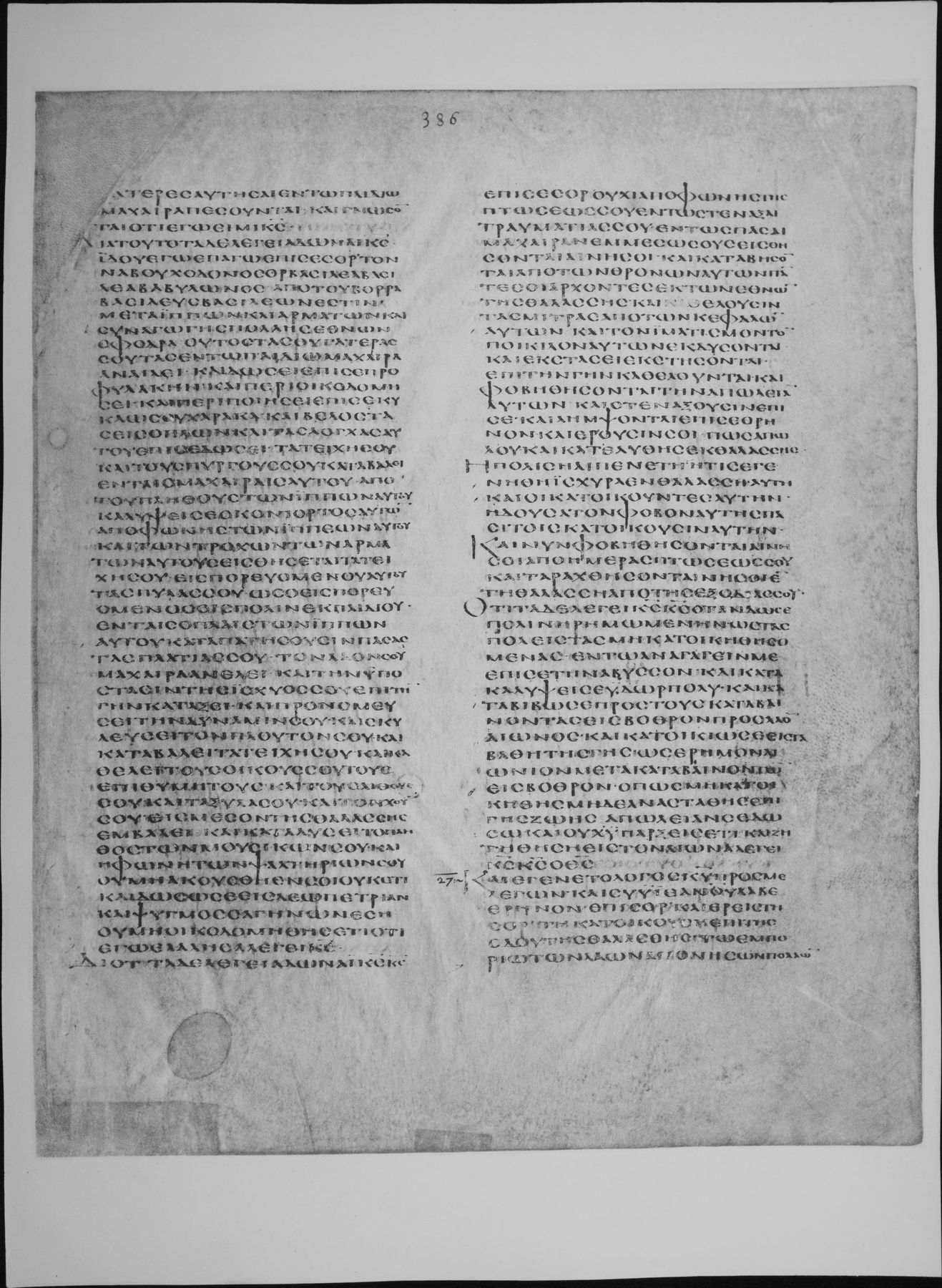
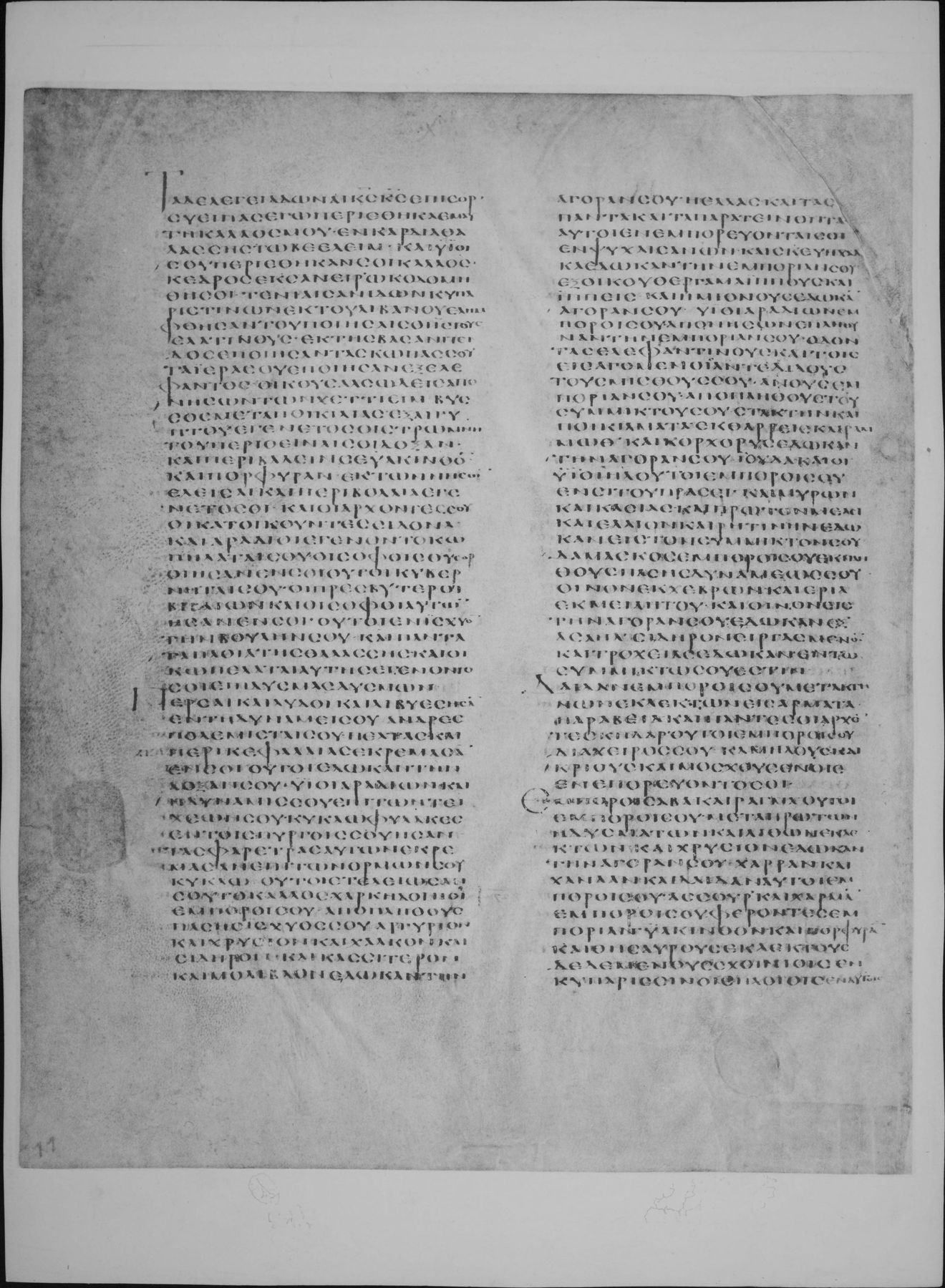
Ezekiel 27:1-3 is on fol. 386r (full-size facsimile of 1879-83, Internet Archive codex-alexandrinus leaf 796). The 1936 reduced facsimile prints beneath this page: Ezek. xxvi. 6-xxvii. 3. Checked on the plate: the page begins inside Ezekiel 26:6 (first words read: ΚΑΙ ΑΙ ΘΥΓΑΤΕΡΕΣ ΑΥΤΗΣ ΑΙ ΕΝ ΤΩ ΠΕΔΙΩ ΜΑΧΑΙΡΑ ΑΝΑΙΡΕΘΗΣΟΝΤΑΙ ΚΑΙ ΓΝΩΣΟΝΤΑΙ ΟΤΙ ΕΓΩ ΕΙΜΙ ΚΣ). Note: Ezek. 26:6 is divided between this page and the preceding one, as both captions show (xxvi. 6); this page begins ΑΙ ΘΥΓΑΤΕΡΕΣ ΑΥΤΗΣ. Ezekiel 27:3-8 is on fol. 386v (full-size facsimile of 1879-83, Internet Archive codex-alexandrinus leaf 797). The 1936 reduced facsimile prints beneath this page: Ezek. xxvii. 3-25. Checked on the plate: the page begins inside Ezekiel 27:3 (first words read: ΤΑΔΕ ΛΕΓΕΙ ΑΔΩΝΑΙ ΚΣ ΤΗ ΣΟΡ ΣΥ ΕΙΠΑΣ ΕΓΩ ΠΕΡΙΕΘΗΚΑ ΕΜΑΥΤΗ ΚΑΛΛΟΣ ΜΟΥ).
1Καὶ ἐγένετο λόγος Κυρίου πρὸς μὲ λέγων 2Υἱὲ ἀνθρώπου, καὶ σὺ λάβε ἐπὶ Σὸρ θρῆνον, 3καὶ ἐρεῖς τῇ Σὸρ τῇ κατοικούσῃ ἐπὶ τῆς εἰσόδου τῆς θαλάσσης, τῷ ἐμπορίῳ τῶν λαῶν ἀπὸ νήσων πολλῶν Τάδε λέγει Κύριος τῇ Σόρ Σὺ εἶπας Ἐγὼ περιέθηκα ἐμαυτῇ κάλλος μου, 4ἐν καρδίᾳ θαλάσσης τῷ Βεελεὶμ υἱοί σου περιέθηκάν σοι κάλλος. 5κέδρος ἐκ Σενεὶρ ᾠκοδομήθη σοι, ταινίαι σανίδων κυπαρίσσου ἐκ τοῦ Λιβάνου ἐλήμφθησαν τοῦ ποιῆσαί σοι ἱστοὺς ἐλατίνους· 6ἐκ τῆς Βασανίτιδος ἐποίησαν τὰς κώπας σου, τὰ ἱερά σου ἐποίησαν ἐξ ἐλέφαντος, οἴκους ἀλσώδεις ἀπὸ νήσων τῶν Χεττείν. 7βύσσος μετὰ ποικιλίας ἐξ Αἰγύπτου ἐγένετό σοι στρωμνή, τοῦ περιθεῖναί σοι δόξαν καὶ περιβαλεῖν σε ὑάκινθον καὶ πορφύραν ἐκ τῶν νήσων Ἐλεισαί, καὶ ἐγένετο περιβόλαιά σου. 8καὶ οἱ ἄρχοντές σου οἱ κατοικοῦντες Σειδῶνα καὶ Ἀράδιοι ἐγένοντο κωπηλάται σου· οἱ σοφοί σου, Σόρ, οἳ ἦσαν ἐν σοί, οὗτοι κυβερνῆταί σου·
1And the word of the Lord came to me, saying, 2And thou, son of man, take up a lamentation against Sor; 3and thou shalt say to Sor that dwells at the entrance of the sea, to the mart of the nations coming from many islands, Thus saith the Lord to Sor; 4In the heart of the sea thy sons have put beauty upon thee for Beelim. 5Cedar in Senir was employed for thee in building: boards of cypress timber were taken out of Libanus, and wood to make thee masts of fir. 6They made thine oars of wood out of the land of Basan; thy sacred utensils they made of ivory, thy shady houses of wood from the isles of Chetiim. 7Fine linen with embroidery from Egypt supplied thy couch, to put honour upon thee, and to clothe thee with blue and purple from the isles of Elisai; and they became thy coverings. 8And thy princes were the dwellers in Sidon, and the Aradians were thy rowers: thy wise men, O Sor, who were in thee, these were thy pilots.
Where on the image
Ezekiel 27:9-16 is on fol. 386v (full-size facsimile of 1879-83, Internet Archive codex-alexandrinus leaf 797). The 1936 reduced facsimile prints beneath this page: Ezek. xxvii. 3-25. Checked on the plate: the page begins inside Ezekiel 27:3 (first words read: ΤΑΔΕ ΛΕΓΕΙ ΑΔΩΝΑΙ ΚΣ ΤΗ ΣΟΡ ΣΥ ΕΙΠΑΣ ΕΓΩ ΠΕΡΙΕΘΗΚΑ ΕΜΑΥΤΗ ΚΑΛΛΟΣ ΜΟΥ).
9οἱ πρεσβύτεροι Βυβλίων καὶ οἱ σοφοὶ αὐτῶν ἦσαν ἐν σοί, οὗτοι ἐνίσχυον τὴν βουλήν σου· καὶ πάντα τὰ πλοῖα τῆς θαλάσσης καὶ οἱ κωπηλάται αὐτῶν ἐγένοντό σοι ἐπὶ δυσμὰς δυσμῶν. 10Πέρσαι καὶ Λυδοὶ καὶ Λίβυες ἦσαν ἐν τῇ δυνάμει σου, ἄνδρες πολεμισταί σου πέλτας καὶ περικεφαλαίας ἐκρέμασαν ἐν σοί, οὗτοι ἔδωκαν τὴν δόξαν σου. 11υἱοὶ Ἀραδίων καὶ ἡ δύναμίς σου ἐπὶ τῶν τειχέων σου· φύλακες ἐν τοῖς πύργοις σου ἦσαν, τὰς φαρέτρας αὐτῶν ἐκρέμασαν ἐπὶ τῶν ὅρμων σου κύκλῳ· οὗτοι ἐτελείωσάν σου τὸ κάλλος. 12Καρχηδόνιοι ἔμποροί σου ἀπὸ πλήθους πάσης ἰσχύος σου, ἀργύριον καὶ χρυσίον καὶ σίδηρον καὶ κασσίτερον καὶ μόλυβον ἔδωκαν τὴν ἀγοράν σου. 13ἡ Ἑλλάς, καὶ ἡ σύμπασα, καὶ τὰ παρατείνοντα, οὗτοι ἐνεπορεύοντό σοι ἐν ψυχαῖς ἀνθρώπων, καὶ σκεύη χαλκᾶ ἔδωκαν τὴν ἐμπορίαν σου· 14ἐξ οἴκου Θαιγραμὰ ἵπποι καὶ ἱππεῖς ἔδωκαν ἀγοράν σου. 15υἱοὶ Ῥοδίων ἔμποροι, ἀπὸ νήσων ἐπλήθυναν τὴν ἐμπορίαν σου ὀδόντας ἐλεφαντίνους, καὶ τοῖς εἰσαγομένοις ἀντεδίδους τοὺς μισθούς σου· 16ἀνθρώπους ἐμπορίαν σου ἀπὸ πλήθους τοῦ συμμίκτου σου, στακτὴν καὶ ποικίλματα ἐκ Θαρσείς· καὶ Λαμὼθ καὶ Χορχὸρ ἔδωκαν τὴν ἀγοράν σου.
9The elders of the Biblians, and their wise men, who were in thee, these helped thy counsel: and all the ships of the sea and their rowers traded for thee to the utmost west. 10Persians and Lydians and Libyans were in thine army: thy warriors hung in thee shields and helmets; these gave thee thy glory. 11The sons of the Aradians and thine army were upon thy walls; there were guards in thy towers: they hung their quivers on thy battlements round about; these completed thy beauty. 12The Carthaginians were thy merchants because of the abundance of all thy strength; they furnished thy market with silver, and gold, and iron, and tin, and lead. 13Greece, both the whole world, and the adjacent coasts, these traded with thee in the persons of men, and they gave as thy merchandise vessels of brass. 14Out of the house of Thogarma horses and horsemen furnished thy market. 15The sons of the Rhodians were thy merchants; from the islands they multiplied thy merchandise, even elephants' teeth: and to them that came in thou didst return thy prices, 16even men as thy merchandise, from the multitude of thy trading population, myrrh and embroidered works from Tharsis: Ramoth also and Chorchor furnished thy market.
Where on the image
Ezekiel 27:17-24 is on fol. 386v (full-size facsimile of 1879-83, Internet Archive codex-alexandrinus leaf 797). The 1936 reduced facsimile prints beneath this page: Ezek. xxvii. 3-25. Checked on the plate: the page begins inside Ezekiel 27:3 (first words read: ΤΑΔΕ ΛΕΓΕΙ ΑΔΩΝΑΙ ΚΣ ΤΗ ΣΟΡ ΣΥ ΕΙΠΑΣ ΕΓΩ ΠΕΡΙΕΘΗΚΑ ΕΜΑΥΤΗ ΚΑΛΛΟΣ ΜΟΥ).
17Ἰούδας καὶ οἱ υἱοὶ τοῦ Ἰσραήλ, οὗτοι ἔμποροί σου ἐν σίτου πράσει καὶ μύρων καὶ κασίᾳ, καὶ πρῶτον μέλι καὶ ἔλαιον καὶ ῥητίνην ἔδωκαν εἰς τὸν σύμμικτόν σου. 18Δαμασκὸς ἔμπορός σου ἐκ πλήθους πάσης δυνάμεώς σου· οἶνος ἐκ Χελβὼν καὶ ἔρια ἐκ Μειλήτου, καὶ οἶνον εἰς τὴν ἀγοράν σου ἔδωκαν. 19ἐξ Ἀσὴλ σίδηρος εἰργασμένος, καὶ τροχίας ἐν τῷ συμμίκτῳ σού ἐστιν. 20Δαιδὰν ἔμποροί σου μετὰ κτηνῶν ἐκλεκτῶν εἰς ἅρματα. 21ἡ Ἀραβία καὶ πάντες οἱ ἄρχοντες Κηδάρ, οὗτοι ἔμποροί σου διὰ χειρός σου, καμήλους καὶ κριοὺς καὶ ἀμνοὺς ἐν οἷς ἐμπορεύονταί σε. 22ἔμποροι Σαβὰ καὶ Ῥαμά, οὗτοι ἔμποροί σου μετὰ πρώτων ἡδυσμάτων καὶ λίθων χρηστῶν, καὶ χρυσίον ἔδωκαν τὴν ἀγοράν σου. 23Χαρρὰ καὶ Χανάα, οὗτοι ἔμποροί σου. Ἀσσοὺρ καὶ Χαρμὰν ἔμποροί σου, 24φέροντες ἐμπορίαν ὑάκινθον καὶ θησαυροὺς ἐκλεκτοὺς δεδεμένους σχοινίοις καὶ κυπαρίσσινα.
17Juda and the children of Israel, these were thy merchants; in the sale of corn and ointments and cassia: and they gave the best honey, and oil, and resin, to thy trading population. 18The people of Damascus were thy merchants by reason of the abundance of all thy power; wine out of Chelbon, and wool from Miletus; and they brought wine into thy market. 19Out of Asel came wrought iron, and there is the sound of wheels among thy trading population. 20The people of Dædan were thy merchants, with choice cattle for chariots. 21Arabia and all the princes of Kedar, these were thy traders with thee, bringing camels, and lambs, and rams, in which they trade with thee. 22The merchants of Sabba and Ramma, these were thy merchants, with choice spices, and precious stones: and they brought gold to thy market. 23Charra, and Chanaa, these were thy merchants: Assur, and Charman, were thy merchants: 24bringing for merchandise blue, and choice stores bound with cords, and cypress wood.
Where on the image
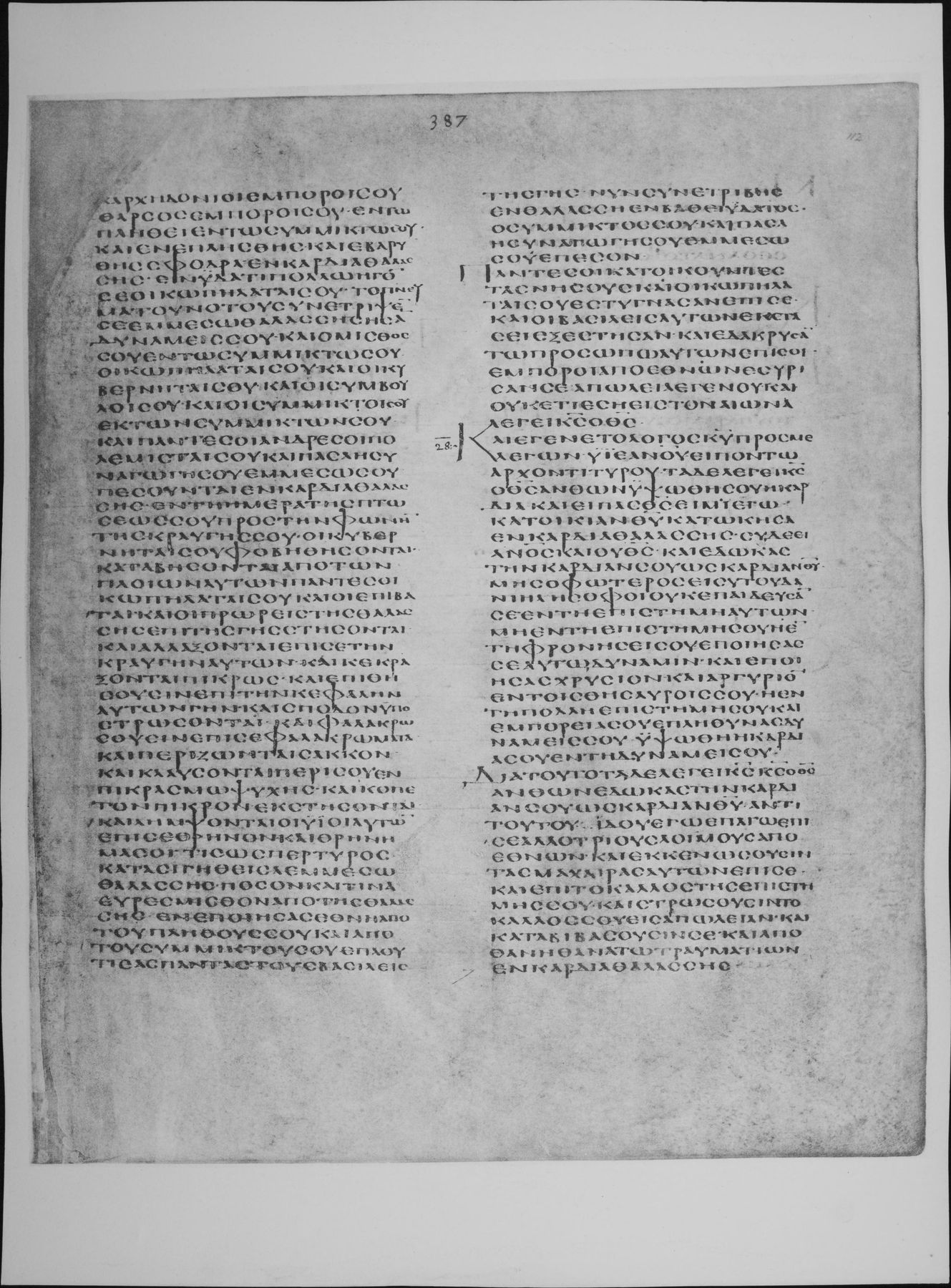
Ezekiel 27:25 is on fol. 386v (full-size facsimile of 1879-83, Internet Archive codex-alexandrinus leaf 797). The 1936 reduced facsimile prints beneath this page: Ezek. xxvii. 3-25. Checked on the plate: the page begins inside Ezekiel 27:3 (first words read: ΤΑΔΕ ΛΕΓΕΙ ΑΔΩΝΑΙ ΚΣ ΤΗ ΣΟΡ ΣΥ ΕΙΠΑΣ ΕΓΩ ΠΕΡΙΕΘΗΚΑ ΕΜΑΥΤΗ ΚΑΛΛΟΣ ΜΟΥ). Ezekiel 27:25-33 is on fol. 387r (full-size facsimile of 1879-83, Internet Archive codex-alexandrinus leaf 798). The 1936 reduced facsimile prints beneath this page: Ezek. xxvii. 25-xxviii. 8. Checked on the plate: the page begins inside Ezekiel 27:25 (first words read: ΚΑΡΧΗΔΟΝΙΟΙ ΕΜΠΟΡΟΙ ΣΟΥ ΘΑΡΣΟΣ ΕΜΠΟΡΟΙ ΣΟΥ ΕΝ ΤΩ ΠΛΗΘΕΙ ΕΝ ΤΩ ΣΥΜΜΙΚΤΩ ΣΟΥ). Note: Codex Alexandrinus' wording here differs from Swete's (Codex Vaticanus) text, so the opening words were identified by eye in Alexandrinus' wording of this verse.
25πλοῖα ἔμποροί σου ἐν τῷ πλήθει ἐν τῷ συμμίκτῳ σου, καὶ ἐνεπλήσθης καὶ ἐβαρύνθης σφόδρα ἐν καρδίᾳ θαλάσσης. 26ἐν ὕδατι πολλῷ ἦγόν σε οἱ κωπηλάται σου. τὸ πνεῦμα τοῦ νότου συνέτριψέν σε ἐν καρδίᾳ θαλάσσης· 27ἦσαν δυνάμεις σου, καὶ ὁ μισθός σου καὶ τῶν συμμίκτων σου, καὶ οἱ κωπηλάται σου καὶ οἱ κυβερνῆταί σου καὶ οἱ σύμβουλοί σου, καὶ οἱ σύμμικτοί σου ἐκ τῶν συμμίκτων σου, καὶ πάντες οἱ ἄνδρες οἱ πολεμισταί σου οἱ ἐν σοί· καὶ πᾶσα συναγωγή σου ἐν μέσῳ σου πεσοῦνται ἐν καρδίᾳ θαλάσσης ἐν τῇ ἡμέρᾳ τῆς πτώσεώς σου. 28πρὸς τὴν κραυγὴν τῆς φωνῆς σου οἱ κυβερνῆταί σου φόβῳ φοβηθήσονται, 29καὶ καταβήσονται ἀπὸ τῶν πλοίων πάντες οἱ κωπηλάται καὶ οἱ ἐπιβάται, καὶ οἱ πρωρεῖς τῆς θαλάσσης ἐπὶ τὴν γῆν στήσονται, 30καὶ ἀλαλάξουσιν ἐπὶ σὲ τῇ φωνῇ αὐτῶν καὶ κεκράξονται πικρόν, καὶ ἐπιθήσουσιν ἐπὶ τὴν κεφαλὴν αὐτῶν γῆν καὶ σποδὸν στρώσονται. 32καὶ λήμψονται ἐπὶ σὲ οἱ υἱοὶ αὐτῶν θρῆνον, θρήνημα Σόρ. 33πόσον τινὰ εὗρες μισθὸν ἀπὸ τῆς θαλάσσης; ἐνέπλησας ἔθνη ἀπὸ τοῦ πλήθους σου, καὶ ἀπὸ τοῦ συμμίκτου σου ἐπλούτισας πάντας βασιλεῖς τῆς γῆς.
25Ships were thy merchants, in abundance, with thy trading population: and thou wast filled and very heavily loaded in the heart of the sea. 26Thy rowers have brought thee into great waters: the south wind has broken thee in the heart of the sea. 27Thy forces, and thy gain, and that of thy traders, and thy rowers, and thy pilots, and thy counsellors, and they that traffic with thee, and all thy warriors that are in thee: and all thy company in the midst of thee shall perish in the heart of the sea, in the day of thy fall. 28At the cry of thy voice thy pilots shall be greatly terrified. 29And all the rowers and the mariners shall come down from the ships, and the pilots of the sea shall stand on the land. 30And they shall wail over thee with their voice, and cry bitterly, and put earth on their heads, and spread ashes under them. 32And their sons shall take up a lament for thee, even a lamentation for Sor, saying, 33How large a reward hast thou gained from the sea? thou hast filled nations out of thine abundance; and out of thy mixed merchandise thou hast enriched all the kings of the earth.
Where on the image
Ezekiel 27:34-36 is on fol. 387r (full-size facsimile of 1879-83, Internet Archive codex-alexandrinus leaf 798). The 1936 reduced facsimile prints beneath this page: Ezek. xxvii. 25-xxviii. 8. Checked on the plate: the page begins inside Ezekiel 27:25 (first words read: ΚΑΡΧΗΔΟΝΙΟΙ ΕΜΠΟΡΟΙ ΣΟΥ ΘΑΡΣΟΣ ΕΜΠΟΡΟΙ ΣΟΥ ΕΝ ΤΩ ΠΛΗΘΕΙ ΕΝ ΤΩ ΣΥΜΜΙΚΤΩ ΣΟΥ). Note: Codex Alexandrinus' wording here differs from Swete's (Codex Vaticanus) text, so the opening words were identified by eye in Alexandrinus' wording of this verse.
34νῦν συνετρίβης ἐν θαλάσσῃ, ἐν βάθει ὕδατος ὁ σύμμικτός σου, καὶ πᾶσα ἡ συναγωγή σου ἐν μέσῳ σου· ἔπεσον πάντες οἱ κωπηλάται σου. 35πάντες οἱ κατοικοῦντες τὰς νήσους ἐστύγνασαν ἐπὶ σέ, καὶ οἱ βασιλεῖς αὐτῶν ἐκστάσει ἐξέστησαν, καὶ ἐδάκρυσεν τὸ πρόσωπον αὐτῶν. 36ἔμποροι ἀπὸ ἐθνῶν ἐσύρισάν σε· ἀπώλεια ἐγένου, καὶ οὐκέτι ἔσῃ εἰς τὸν αἰῶνα.
34Now art thou broken in the sea, thy traders are in the deep water, and all thy company in the midst of thee: all thy rowers have fallen. 35All the dwellers in the islands have mourned over thee, and their kings have been utterly amazed, and their countenance has wept. 36Merchants from the nations have hissed at thee; thou art utterly destroyed, and shalt not be any more for ever.
Cite
Sources
- Source: Codex Alexandrinus (British Library Royal MS 1 D. VI) via the British Museum photographic facsimiles of 1879-83 and 1936 (Internet Archive) + Swete's Septuagint + Brenton's English (holding institution)
- Critical edition: H. B. Swete, The Old Testament in Greek according to the Septuagint (1909)
← previous · → next · v cycle view · l back to library