Ezekiel, Chapter 7 (Codex Alexandrinus)
Introduction
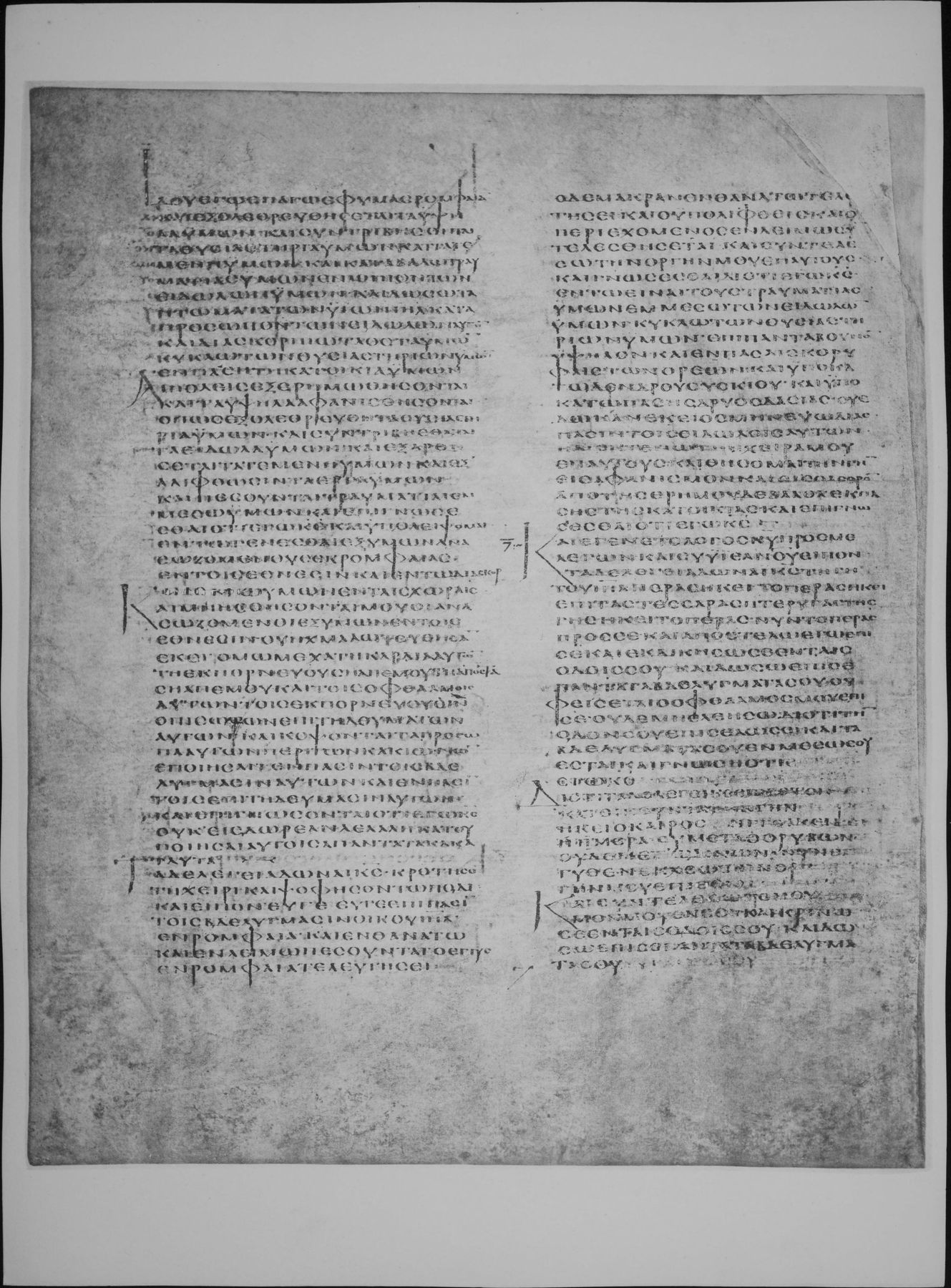
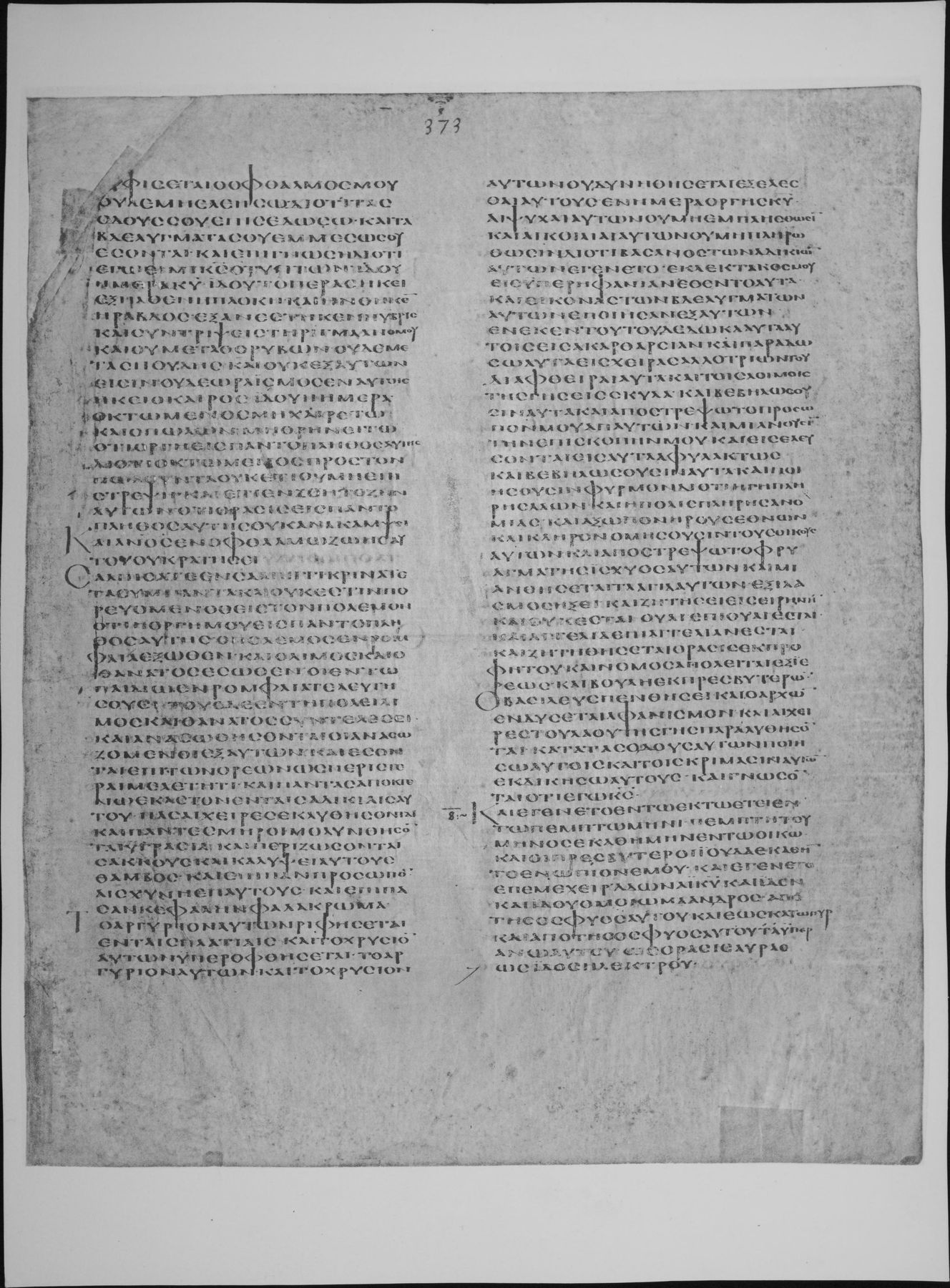
Ezekiel 7 in the Greek Old Testament (the Septuagint) as written in Codex Alexandrinus, a Greek Bible copied in the fifth century, probably in Egypt, and now in the British Library (Royal MS 1 D. VI, the second of its four volumes). It is one of the three great early codices of the whole Greek Bible, with Codex Vaticanus and Codex Sinaiticus.
Numbering: Swete's Greek and Brenton's English number or divide some verses of this chapter differently (Swete 7:1-2 = Brenton 7:1-2). Each column keeps its own verse numbers, and sections are cut only where the two texts agree, so each section holds the same passage in both languages.
This entry meets the strict three-criteria standard of the Theosis Library:
- Manuscript scan: the pages of Codex Alexandrinus carrying this chapter (fol. 372v, fol. 373r), from the full-size photographic (autotype) facsimile published by the British Museum in 1879-1883, as digitised on the Internet Archive. The verse range of every page comes from the reduced photographic facsimile of 1936, which prints it beneath each plate, and the opening words of every page were read on the plate to confirm the page and the verse it begins with. Each section links to the page or pages that hold its verses. Folio numbers are those written at the head of each leaf and visible on the plates.
- Original text: Swete's edition, which here prints the text of Codex Vaticanus (Vat. gr. 1209), the base of his edition, and gives the readings of Alexandrinus only in his apparatus. The Greek column is therefore Vaticanus' text; where Alexandrinus differs, the plate shows what Alexandrinus reads.
- English translation: Sir Lancelot C. L. Brenton, The Septuagint Version of the Old Testament (1844; 1851 edition), a translation of the Greek, public domain, from the eBible.org text.
How was this verified? (Provenance)
Where on the image
Ezekiel 7:1-7 is on fol. 372v (full-size facsimile of 1879-83, Internet Archive codex-alexandrinus leaf 769). The 1936 reduced facsimile prints beneath this page: Ezek. vi. 3-vii. 7. Checked on the plate: the page begins inside Ezekiel 6:3 (first words read: ΤΑΙΣ ΦΑΡΑΓΞΙΝ ΚΑΙ ΤΑΙΣ ΝΑΠΑΙΣ ΙΔΟΥ ΕΓΩ ΕΠΑΓΩ ΕΦ ΥΜΑΣ ΡΟΜΦΑΙΑΝ). Ezekiel 7:8 is on fol. 373r (full-size facsimile of 1879-83, Internet Archive codex-alexandrinus leaf 770). The 1936 reduced facsimile prints beneath this page: Ezek. vii. 8-viii. 2. Checked on the plate: the page begins at the start of Ezekiel 7:8 (first words read: ΦΕΙΣΕΤΑΙ Ο ΟΦΘΑΛΜΟΣ ΜΟΥ ΟΥΔΕ ΜΗ ΕΛΕΗΣΩ ΔΙΟΤΙ ΤΑΣ ΟΔΟΥΣ ΣΟΥ ΕΠΙ ΣΕ ΔΩΣΩ). Note: the caption gives vii. 8 and the preceding caption ends at vii. 7; Codex Alexandrinus arranges Ezek. 7:3-9 differently from Swete's text (the phrase read on the first line, ΦΕΙΣΕΤΑΙ Ο ΟΦΘΑΛΜΟΣ ΜΟΥ ΟΥΔΕ ΜΗ ΕΛΕΗΣΩ, recurs in these verses), so the page start follows the caption.
1Καὶ ἐγένετο λόγος Κυρίου πρὸς μὲ λέγων 2Καὶ σύ, υἱὲ ἀνθρώπου, εἰπόν Τάδε λέγει Κύριος τῇ γῇ τοῦ Ἰσραήλ Πέρας ἥκει, τὸ πέρας ἥκει ἐπὶ τὰς τέσσαρας πτέρυγας τῆς γῆς· 3ἥκει τὸ πέρας 4ἐπὶ σὲ τὸν κατοικοῦντα τὴν γῆν, ἥκει ὁ καιρός, ἤγγικεν ἡ ἡμέρα, οὐ μετὰ θορύβων οὐδὲ μετὰ ὠδίνων. 5νῦν ἐγγύθεν ἐκχεῶ τὴν ὀργήν μου ἐπὶ σέ, καὶ συντελέσω τὸν θυμόν μου ἐν σοί, καὶ κρινῶ σε ἐν ταῖς ὁδοῖς σου, καὶ δώσω ἐπὶ σὲ πάντα τὰ βδελύγματά σου· 6οὐ φείσεται ὁ ὀφθαλμός μου, οὐδὲ μὴ ἐλεήσω· διότι τὰς ὁδούς σου ἐπὶ σὲ δώσω, καὶ τὰ βδελύγματά σου ἐν μέσῳ σου ἔσονται, καὶ ἐπιγνώσῃ διότι ἐγώ εἰμι Κύριος ὁ τύπτων. 7νῦν τὸ πέρας πρὸς σέ, καὶ ἀποστελῶ ἐγὼ ἐπὶ σὲ καὶ ἐκδικήσω ἐν ταῖς ὁδοῖς σου, καὶ δώσω ἐπὶ σὲ πάντα τὰ βδελύγματά σου· 8οὐ φείσεται ὁ ὀφθαλμός μου, οὐδὲ μὴ ἐλεήσω· διότι τὴν ὁδόν σου ἐπὶ σὲ δώσω, καὶ τὰ βδελύγματά σου ἐν μέσῳ σου ἔσται, καὶ ἐπιγνώσῃ διότι ἐγὼ Κύριος.
1Moreover the word of the Lord came to me, saying, Also, thou, son of man, say, 2Thus saith the Lord; 3The end is come 4on thee, the inhabitant of the land: the time is come, the day has drawn nigh, not with tumult, nor with pangs. 5Now I will pour out mine anger upon thee near at hand, and I will accomplish my wrath on thee: and I will judge thee for thy ways, and recompense upon thee all thine abominations. 6Mine eye shall not spare, nor will I have any mercy: for I will recompense thy ways upon thee, and thine abominations shall be in the midst of thee; and thou shalt know that I am the Lord that smite thee. 7Now the end is come to thee, and I will send judgment upon thee: and I will take vengeance on thy ways, and will recompense all thine abominations upon thee. 8Mine eye shall not spare, nor will I have any mercy: for I will recompense thy way upon thee, and thine abominations shall be in the midst of thee; and thou shalt know that I am the Lord.
Where on the image
Ezekiel 7:9-16 is on fol. 373r (full-size facsimile of 1879-83, Internet Archive codex-alexandrinus leaf 770). The 1936 reduced facsimile prints beneath this page: Ezek. vii. 8-viii. 2. Checked on the plate: the page begins at the start of Ezekiel 7:8 (first words read: ΦΕΙΣΕΤΑΙ Ο ΟΦΘΑΛΜΟΣ ΜΟΥ ΟΥΔΕ ΜΗ ΕΛΕΗΣΩ ΔΙΟΤΙ ΤΑΣ ΟΔΟΥΣ ΣΟΥ ΕΠΙ ΣΕ ΔΩΣΩ). Note: the caption gives vii. 8 and the preceding caption ends at vii. 7; Codex Alexandrinus arranges Ezek. 7:3-9 differently from Swete's text (the phrase read on the first line, ΦΕΙΣΕΤΑΙ Ο ΟΦΘΑΛΜΟΣ ΜΟΥ ΟΥΔΕ ΜΗ ΕΛΕΗΣΩ, recurs in these verses), so the page start follows the caption.
9Διότι τάδε λέγει Κύριος 10Ἰδοὺ τὸ πέρας ἥκει, ἰδοὺ ἡ ἡμέρα Κυρίου· εἰ καὶ ἡ ῥάβδος ἤνθηκεν, ἡ ὕβρις ἐξανέστηκεν. 11καὶ συντρίψει στήριγμα ἀνόμου, καὶ οὐ μετὰ θορύβου οὐδὲ μετὰ σπουδῆς. 12ἥκει ὁ καιρός, ἰδοὺ ἡ ἡμέρα· ὁ κτώμενος μὴ χαιρέτω, καὶ ὁ πωλῶν μὴ θρηνείτω· 13διότι ὁ κτώμενος πρὸς τὸν πωλοῦντα οὐκέτι μὴ ἐπιστρέψῃ, καὶ ἄνθρωπος ἐν ὀφθαλμῷ ζωῆς αὐτοῦ οὐ κρατήσει. 14Σαλπίσατε ἐν σάλπιγγι καὶ κρίνατε τὰ σύμπαντα. 15ὁ πόλεμος ἐν ῥομφαίᾳ ἔξωθεν, καὶ ὁ λιμὸς καὶ ὁ θάνατος ἔσωθεν· ὁ ἐν τῷ πεδίῳ ἐν ῥομφαίᾳ τελευτήσει, τοὺς δ᾽ ἐν τῇ πόλει λιμὸς καὶ θάνατος συντελέσει. 16καὶ ἀνασωθήσονται οἱ ἀνασωζόμενοι ἐξ αὐτῶν καὶ ἔσονται ἐπὶ τῶν ὀρέων· πάντας ἀποκτενῶ, ἕκαστον ἐν ταῖς ἀδικίαις αὐτοῦ.
9For thus saith the Lord; Behold, the end is come. 10Behold, the day of the Lord! although the rod has blossomed, 11pride has sprung up, and will break the staff of the wicked one, and that not with tumult, nor with haste. 12The time is come, behold the day: let not the buyer rejoice, and let not the seller mourn. 13For the buyer shall never again return to the seller, neither shall a man cleave with the eye of hope to his life. 14Sound ye the trumpet, and pass sentence on all together. 15There shall be war with the sword without, and famine and pestilence within: he that is in the field shall die by the sword; and famine and pestilence shall destroy them that are in the city. 16But they that escape of them shall be delivered, and shall be upon the mountains: and I will slay all the rest, every one for his iniquities.
Where on the image
Ezekiel 7:17-24 is on fol. 373r (full-size facsimile of 1879-83, Internet Archive codex-alexandrinus leaf 770). The 1936 reduced facsimile prints beneath this page: Ezek. vii. 8-viii. 2. Checked on the plate: the page begins at the start of Ezekiel 7:8 (first words read: ΦΕΙΣΕΤΑΙ Ο ΟΦΘΑΛΜΟΣ ΜΟΥ ΟΥΔΕ ΜΗ ΕΛΕΗΣΩ ΔΙΟΤΙ ΤΑΣ ΟΔΟΥΣ ΣΟΥ ΕΠΙ ΣΕ ΔΩΣΩ). Note: the caption gives vii. 8 and the preceding caption ends at vii. 7; Codex Alexandrinus arranges Ezek. 7:3-9 differently from Swete's text (the phrase read on the first line, ΦΕΙΣΕΤΑΙ Ο ΟΦΘΑΛΜΟΣ ΜΟΥ ΟΥΔΕ ΜΗ ΕΛΕΗΣΩ, recurs in these verses), so the page start follows the caption.
17πᾶσαι χεῖρες ἐκλυθήσονται, καὶ πάντες μηροὶ μολυνθήσονται ὑγρασίας, 18καὶ περιζώσονται σάκκους, καὶ καλύψει αὐτοὺς θάμβος· καὶ ἐπὶ πᾶν πρόσωπον αἰσχύνη ἐπ᾽ αὐτούς, καὶ ἐπὶ πᾶσαν κεφαλὴν φαλάκρωμα. 19τὸ ἀργύριον αὐτῶν ῥιφήσεται ἐν ταῖς πλατείαις, καὶ τὸ χρυσίον αὐτῶν ὑπεροφθήσεται· αἱ ψυχαὶ αὐτῶν οὐ μὴ ἐμπλησθῶσιν, καὶ αἱ κοιλίαι αὐτῶν οὐ μὴ πληρωθῶσιν· διότι βάσανος τῶν ἀδικιῶν αὐτῶν ἐγένετο. 20ἐκλεκτὰ κόσμου εἰς ὑπερηφανίαν ἔθεντο αὐτά, καὶ εἰκόνας τῶν βδελυγμάτων αὐτῶν ἐποίησαν ἐξ αὐτῶν· ἕνεκεν τούτου δέδωκα αὐτὰ αὐτοῖς εἰς ἀκαθαρσίαν. 21καὶ παραδώσω αὐτὰ εἰς χεῖρας ἀλλοτρίων τοῦ διαρπάσαι αὐτά, καὶ τοῖς λοιμοῖς τῆς γῆς εἰς σκῦλα, καὶ βεβηλώσουσιν αὐτά. 22καὶ ἀποστρέψω τὸ πρόσωπόν μου ἀπ᾽ αὐτῶν, καὶ μιανοῦσιν τὴν ἐπισκοπήν μου, καὶ εἰσελεύσονται εἰς αὐτὰ ἀφυλάκτως καὶ βεβηλώσουσιν αὐτά, 23καὶ ποιήσουσι φυρμόν, διότι ἡ γῆ πλήρης λαῶν, καὶ ἡ πόλις πλήρης ἀνομίας. 24καὶ ἀποστρέψω τὸ φρύαγμα τῆς ἰσχύος αὐτῶν, καὶ μιανθήσεται τὰ ἅγια αὐτῶν.
17All hands shall be completely weakened, and all thighs shall be defiled with moisture. 18And they shall gird themselves with sackcloth, and amazement shall cover them; and shame shall be upon them, even upon every face, and baldness upon every head. 19Their silver shall be cast forth in the streets, and their gold shall be despised: their souls shall not be satisfied, and their bellies shall not be filled: for it was the punishment of their iniquities. 20As for their choice ornaments, they employed them for pride, and they made of them images of their abominations: therefore have I made them uncleanness to them. 21And I will deliver them into the hands of strangers to make them a prey, and to the pests of the earth for a spoil; and they shall profane them. 22And I will turn away my face from them, and they shall defile my charge, and shall go in to them unguardedly, and profane them. 23And they shall work uncleanness: because the land is full of strange nations, and the city is full of iniquity. 24And I will turn back the boasting of their strength; and their holy things shall be defiled.
Where on the image
Ezekiel 7:25-27 is on fol. 373r (full-size facsimile of 1879-83, Internet Archive codex-alexandrinus leaf 770). The 1936 reduced facsimile prints beneath this page: Ezek. vii. 8-viii. 2. Checked on the plate: the page begins at the start of Ezekiel 7:8 (first words read: ΦΕΙΣΕΤΑΙ Ο ΟΦΘΑΛΜΟΣ ΜΟΥ ΟΥΔΕ ΜΗ ΕΛΕΗΣΩ ΔΙΟΤΙ ΤΑΣ ΟΔΟΥΣ ΣΟΥ ΕΠΙ ΣΕ ΔΩΣΩ). Note: the caption gives vii. 8 and the preceding caption ends at vii. 7; Codex Alexandrinus arranges Ezek. 7:3-9 differently from Swete's text (the phrase read on the first line, ΦΕΙΣΕΤΑΙ Ο ΟΦΘΑΛΜΟΣ ΜΟΥ ΟΥΔΕ ΜΗ ΕΛΕΗΣΩ, recurs in these verses), so the page start follows the caption.
25ἐξιλασμὸς ἥξει καὶ ζητήσει εἰρήνην, καὶ οὐκ ἔσται. 26οὐαὶ ἐπὶ οὐαὶ ἔσται, καὶ ἀγγελία ἐπ᾽ ἀγγελίαν ἔσται, καὶ ζητηθήσεται ὅρασις ἐκ προφήτου, καὶ νόμος ἀπολεῖται ἐξ ἱερέως καὶ βουλὴ ἐκ πρεσβυτέρων. 27ἄρχων ἐνδύσεται ἀφανισμόν, καὶ αἱ χεῖρες τοῦ λαοῦ τῆς γῆς παραλυθήσονται· κατὰ τὰς ὁδοὺς αὐτῶν ποιήσω αὐτοῖς, καὶ ἐν τοῖς κρίμασιν αὐτῶν ἐκδικήσω αὐτούς, καὶ γνώσονται ὅτι ἐγὼ Κύριος.
25And though propitiation shall come, and one shall seek peace, yet there shall be none. 26There shall be woe upon woe, and there shall be message upon message; and a vision shall be sought from a prophet; but the law shall perish from the priest, and counsel from the elders. 27The prince shall clothe himself with desolation, and the hands of the people of the land shall be made feeble: I will do to them according to their ways, and according to their judgments will I punish them; and they shall know that I am the Lord.
Cite
Sources
- Source: Codex Alexandrinus (British Library Royal MS 1 D. VI) via the British Museum photographic facsimiles of 1879-83 and 1936 (Internet Archive) + Swete's Septuagint + Brenton's English (holding institution)
- Critical edition: H. B. Swete, The Old Testament in Greek according to the Septuagint (1909)
← previous · → next · v cycle view · l back to library