Ezekiel, Chapter 8 (Codex Alexandrinus)
Introduction
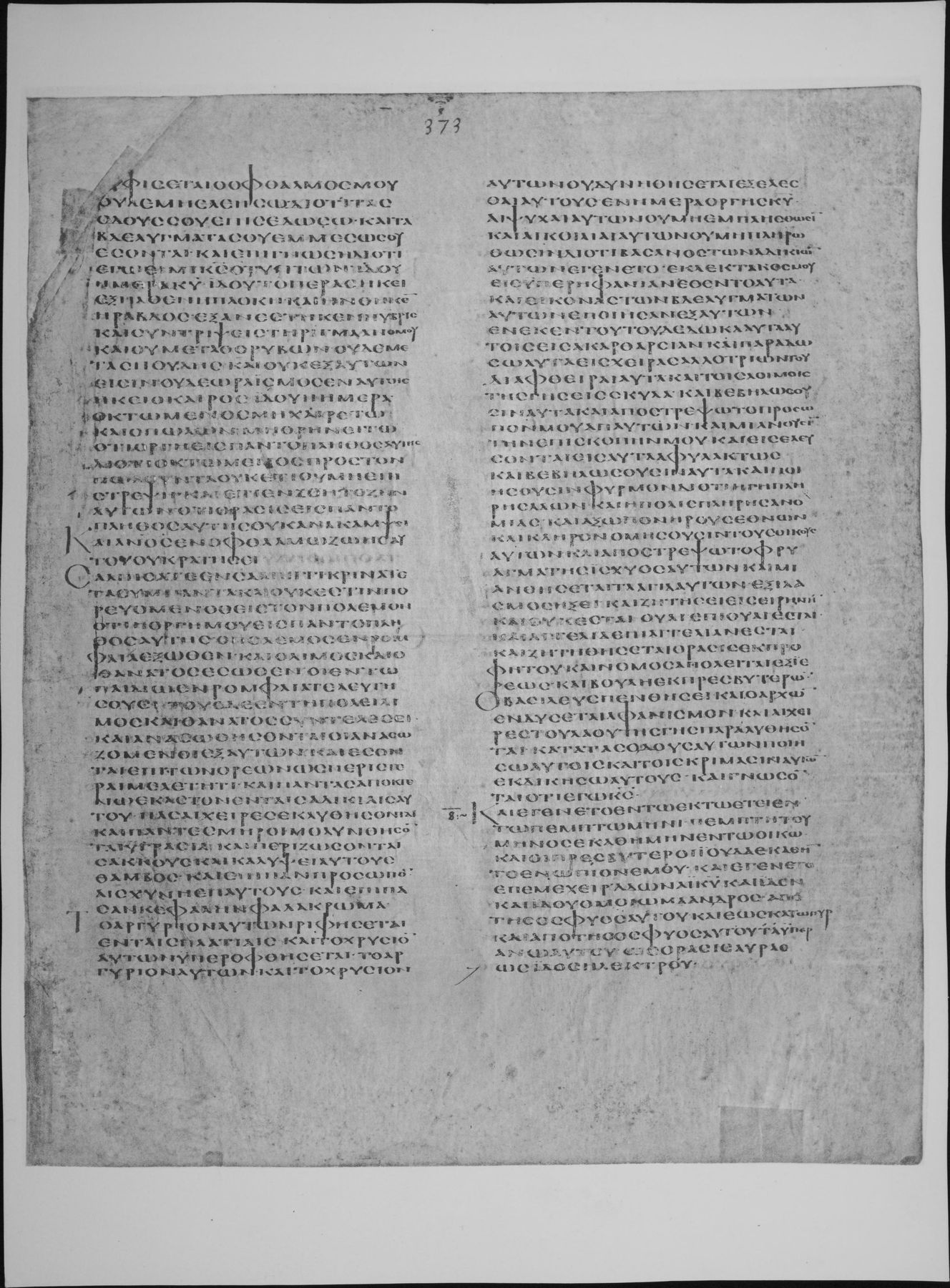
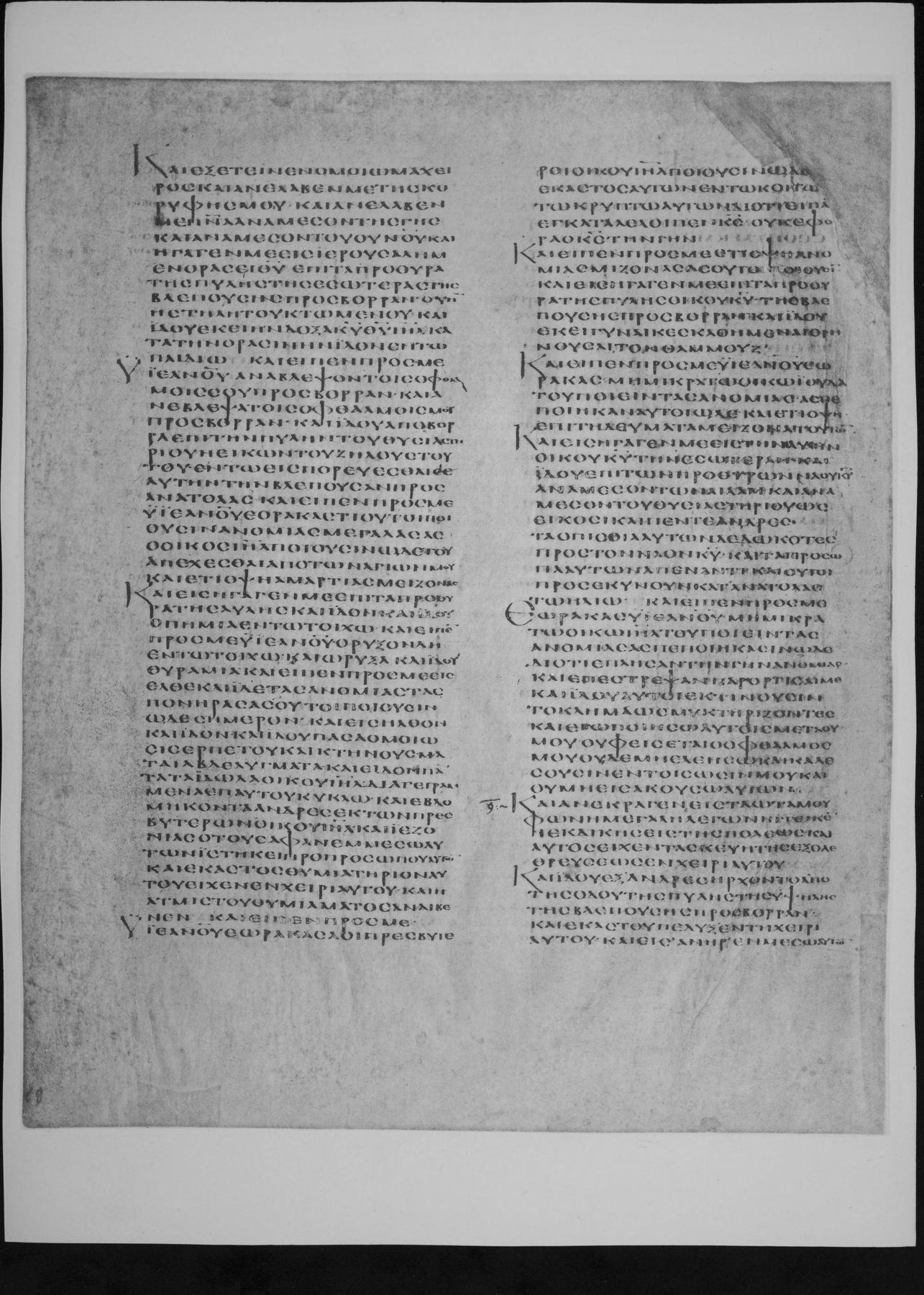
Ezekiel 8 in the Greek Old Testament (the Septuagint) as written in Codex Alexandrinus, a Greek Bible copied in the fifth century, probably in Egypt, and now in the British Library (Royal MS 1 D. VI, the second of its four volumes). It is one of the three great early codices of the whole Greek Bible, with Codex Vaticanus and Codex Sinaiticus.
This entry meets the strict three-criteria standard of the Theosis Library:
- Manuscript scan: the pages of Codex Alexandrinus carrying this chapter (fol. 373r, fol. 373v), from the full-size photographic (autotype) facsimile published by the British Museum in 1879-1883, as digitised on the Internet Archive. The verse range of every page comes from the reduced photographic facsimile of 1936, which prints it beneath each plate, and the opening words of every page were read on the plate to confirm the page and the verse it begins with. Each section links to the page or pages that hold its verses. Folio numbers are those written at the head of each leaf and visible on the plates.
- Original text: Swete's edition, which here prints the text of Codex Vaticanus (Vat. gr. 1209), the base of his edition, and gives the readings of Alexandrinus only in his apparatus. The Greek column is therefore Vaticanus' text; where Alexandrinus differs, the plate shows what Alexandrinus reads.
- English translation: Sir Lancelot C. L. Brenton, The Septuagint Version of the Old Testament (1844; 1851 edition), a translation of the Greek, public domain, from the eBible.org text.
How was this verified? (Provenance)
Where on the image
Ezekiel 8:1-2 is on fol. 373r (full-size facsimile of 1879-83, Internet Archive codex-alexandrinus leaf 770). The 1936 reduced facsimile prints beneath this page: Ezek. vii. 8-viii. 2. Checked on the plate: the page begins at the start of Ezekiel 7:8 (first words read: ΦΕΙΣΕΤΑΙ Ο ΟΦΘΑΛΜΟΣ ΜΟΥ ΟΥΔΕ ΜΗ ΕΛΕΗΣΩ ΔΙΟΤΙ ΤΑΣ ΟΔΟΥΣ ΣΟΥ ΕΠΙ ΣΕ ΔΩΣΩ). Note: the caption gives vii. 8 and the preceding caption ends at vii. 7; Codex Alexandrinus arranges Ezek. 7:3-9 differently from Swete's text (the phrase read on the first line, ΦΕΙΣΕΤΑΙ Ο ΟΦΘΑΛΜΟΣ ΜΟΥ ΟΥΔΕ ΜΗ ΕΛΕΗΣΩ, recurs in these verses), so the page start follows the caption. Ezekiel 8:3-8 is on fol. 373v (full-size facsimile of 1879-83, Internet Archive codex-alexandrinus leaf 771). The 1936 reduced facsimile prints beneath this page: Ezek. viii. 3-ix. 2. Checked on the plate: the page begins at the start of Ezekiel 8:3 (first words read: ΚΑΙ ΕΞΕΤΕΙΝΕΝ ΟΜΟΙΩΜΑ ΧΕΙΡΟΣ ΚΑΙ ΑΝΕΛΑΒΕΝ ΜΕ ΤΗΣ ΚΟΡΥΦΗΣ ΜΟΥ).
1Καὶ ἐγένετο ἐν τῷ ἕκτῳ ἔτει ἐν τῷ πέμπτῳ μηνὶ πέμπτῃ τοῦ μηνὸς ἐγὼ ἐκαθήμην ἐν τῷ οἴκῳ, καὶ οἱ πρεσβύτεροι Ἰούδα ἐκάθηντο ἐνώπιόν μου. καὶ ἐγένετο ἐπ᾽ ἐμὲ χεὶρ Κυρίου, 2καὶ ἴδον, καὶ ἰδοὺ ὁμοίωμα ἀνδρός· ἀπὸ τῆς ὀσφύος αὐτοῦ καὶ ἕως κάτω πῦρ, καὶ ἀπὸ τῆς ὀσφύος αὐτοῦ ὑπεράνω ὡς ὅρασις ἠλέκτρου. 3καὶ ἐξέτεινεν ὁμοίωμα χειρὸς καὶ ἀνέλαβέν με τῆς κορυφῆς μου, καὶ ἀνέλαβέν με πνεῦμα ἀνὰ μέσον τῆς γῆς καὶ οὐρανοῦ καὶ ἤγαγέν με εἰς Ἰερουσαλὴμ ἐν ὁράσει θεοῦ ἐπὶ τὰ πρόθυρα τῆς πύλης τῆς βλεπούσης εἰς βορρᾶν, οὗ ἦν ἡ στήλη τοῦ κτωμένου. 4καὶ ἰδοὺ ἐκεῖ ἦν δόξα Κυρίου θεοῦ Ἰσραὴλ κατὰ τὴν ὅρασιν ἣν ἴδον ἐν τῷ πεδίῳ. 5καὶ εἶπεν πρὸς μέ Υἱὲ ἀνθρώπου, ἀνάβλεψον τοῖς ὀφθαλμοῖς σου πρὸς βορρᾶν. καὶ ἀνέβλεψα τοῖς ὀφθαλμοῖς μου πρὸς βορρᾶν, καὶ ἰδοὺ ἀπὸ βορρᾶ ἐπὶ τὴν πύλην τῆς πρὸς ἀνατολάς. 6καὶ εἶπεν πρὸς μέ Υἱὲ ἀνθρώπου, ἑώρακας τί οὗτοι ποιοῦσιν; ἀνομίας μεγάλας ποιοῦσιν ὧδε, τοῦ ἀπέχεσθαι ἀπὸ τῶν ἁγίων μου· καὶ ἔτι ὄψῃ ἀνομίας μείζονας. 7καὶ εἰσήγαγέν με ἐπὶ τὰ πρόθυρα τῆς αὐλῆς, 8καὶ εἶπεν πρὸς μέ Υἱὲ ἀνθρώπου, ὄρυξον. καὶ ὤρυξα, καὶ ἰδοὺ θύρα.
1And it came to pass in the sixth year, in the fifth month, on the fifth day of the month, I was sitting in the house, and the elders of Juda were sitting before me: and the hand of the Lord came upon me. 2And I looked, and, behold, the likeness of a man: from his loins and downwards there was fire, and from his loins upwards there was as the appearance of amber. 3And he stretched forth the likeness of a hand, and took me up by the crown of my head; and the Spirit lifted me up between the earth and sky, and brought me to Jerusalem in a vision of God, to the porch of the gate that looks to the north, where was the pillar of the Purchaser. 4And, behold, the glory of the Lord God of Israel was there, according to the vision which I saw in the plain. 5And he said to me, Son of man, lift up thine eyes toward the north. So I lifted up mine eyes toward the north, and, behold, I looked from the north toward the eastern gate. 6And he said to me, Son of man, hast thou seen what these do? They commit great abominations here so that I should keep away from my sanctuary: and thou shalt see yet greater iniquities. 7And he brought me to the porch of the court. 8And he said to me, Son of man, dig: so I dug, and behold a door.
Where on the image
Ezekiel 8:9-18 is on fol. 373v (full-size facsimile of 1879-83, Internet Archive codex-alexandrinus leaf 771). The 1936 reduced facsimile prints beneath this page: Ezek. viii. 3-ix. 2. Checked on the plate: the page begins at the start of Ezekiel 8:3 (first words read: ΚΑΙ ΕΞΕΤΕΙΝΕΝ ΟΜΟΙΩΜΑ ΧΕΙΡΟΣ ΚΑΙ ΑΝΕΛΑΒΕΝ ΜΕ ΤΗΣ ΚΟΡΥΦΗΣ ΜΟΥ).
9καὶ εἶπεν πρὸς μέ Εἴσελθε καὶ ἴδε τὰς ἀνομίας ἃς οὗτοι ποιοῦσιν ὧδε. 10καὶ εἰσῆλθον καὶ ἴδον, καὶ ἰδοὺ μάταια βδελύγματα καὶ πάντα τὰ εἴδωλα οἴκου Ἰσραὴλ διαγεγραμμένα ἐπ᾽ αὐτοῦ κύκλῳ. 11καὶ ἑβδομήκοντα ἄνδρες ἐκ τῶν πρεσβυτέρων οἴκου Ἰσραήλ· Ἰεχονίας ὁ τοῦ Σαφὰν ἐν μέσῳ αὐτῶν ἱστήκει πρὸ προσώπου αὐτῶν, καὶ ἕκαστος θυμιατήριον αὐτοῦ εἶχεν ἐν τῇ χειρί, καὶ ἡ ἀτμὶς τοῦ θυμιάματος ἀνέβαινεν. 12καὶ εἶπεν πρὸς μέ Ἑόρακας, υἱὲ ἀνθρώπου, ἃ οἱ πρεσβύτεροι τοῦ οἴκου Ἰσραὴλ ποιοῦσιν, ἕκαστος αὐτῶν ἐν τῷ κοιτῶνι τῷ κρυπτῷ αὐτῶν; διότι εἶπαν Οὐχ ὁρᾷ ὁ κύριος, ἐγκαταλέλοιπεν Κύριος τὴν γῆν. 13καὶ εἶπεν πρὸς μέ Ἔτι ὄψει ἀνομίας μείζονας ἃς οὗτοι ποιοῦσιν. 14καὶ εἰσήγαγέν με ἐπὶ τὰ πρόθυρα τῆς πύλης οἴκου Κυρίου τῆς βλεπούσης πρὸς βορρᾶν, καὶ ἰδοὺ ἐκεῖ γυναῖκες καθήμεναι θρηνοῦσαι τὸν Θαμμούζ. 15καὶ εἶπεν πρὸς μέ Υἱὲ ἀνθρώπου, ἑόρακας; καὶ ἔτι ὄψει ἐπιτηδεύματα μείζονα τούτων. 16καὶ εἰσήγαγέν με εἰς τὴν αὐλὴν οἴκου Κυρίου τὴν ἐσωτέραν, καὶ ἐπὶ τῶν προθύρων τοῦ ναοῦ Κυρίου ἀνὰ μέσον τῶν αἰλὰμ καὶ ἀνὰ μέσον τοῦ θυσιαστηρίου ὡς εἴκοσι ἄνδρες, τὰ ὀπίσθια αὐτῶν πρὸς τὸν ναὸν τοῦ κυρίου καὶ τὰ πρόσωπα αὐτῶν ἀπέναντι, καὶ οὗτοι προσκυνοῦσιν τῷ ἡλίῳ. 17καὶ εἶπεν πρὸς μέ Ἑόρακας, υἱὲ ἀνθρώπου; μὴ μικρὰ τῷ οἴκῳ Ἰούδα τοῦ ποιεῖν τὰς ἀνομίας ἃς πεποιήκασιν ὧδε; διότι ἔπλησαν τὴν γῆν ἀνομίας, καὶ ἰδοὺ αὐτοὶ ὡς μυκτηρίζοντες. 18καὶ ἐγὼ ποιήσω αὐτοῖς μετὰ θυμοῦ· οὐ φείσεται ὁ ὀφθαλμός μου, οὐδὲ μὴ ἐλεήσω.
9And he said to me, Go in, and behold the iniquities which they practise here. 10So I went in and looked; and beheld vain abominations, and all the idols of the house of Israel, portrayed upon them round about. 11And seventy men of the elders of the house of Israel, and Jechonias the son of Saphan stood in their presence in the midst of them, and each one held his censer in his hand; and the smoke of the incense went up. 12And he said to me, Thou hast seen, son of man, what the elders of the house of Israel do, each one of them in their secret chamber: because they have said, The Lord sees not; The Lord has forsaken the earth. 13And he said to me, Thou shalt see yet greater iniquities which these do. 14And he brought me in to the porch of the house of the Lord that looks to the north; and, behold, there were women sitting there lamenting for Thammuz. 15And he said to me, Son of man, thou hast seen; but thou shalt yet see evil practices greater than these. 16And he brought me into the inner court of the house of the Lord, and at the entrance of the temple of the Lord, between the porch and the altar, were about twenty men, with their back parts toward the temple of the Lord, and their faces turned the opposite way; and these were worshipping the sun. 17And he said to me, Son of man, thou hast seen this. Is it a little thing to the house of Juda to practise the iniquities which they have practised here? for they have filled the land with iniquity: and, behold, these are as scorners. 18Therefore will I deal with them in wrath: mine eye shall not spare, nor will I have any mercy.
Cite
Sources
- Source: Codex Alexandrinus (British Library Royal MS 1 D. VI) via the British Museum photographic facsimiles of 1879-83 and 1936 (Internet Archive) + Swete's Septuagint + Brenton's English (holding institution)
- Critical edition: H. B. Swete, The Old Testament in Greek according to the Septuagint (1909)
← previous · → next · v cycle view · l back to library