2 Esdras (Ezra), Chapter 1 (Codex Alexandrinus)
Introduction
2 Esdras (Ezra) 1 in the Greek Old Testament (the Septuagint) as written in Codex Alexandrinus, a Greek Bible copied in the fifth century, probably in Egypt, and now in the British Library (Royal MS 1 D. VI, the second of its four volumes). It is one of the three great early codices of the whole Greek Bible, with Codex Vaticanus and Codex Sinaiticus.
2 Esdras: the Septuagint gives Ezra and Nehemiah as one book, 2 Esdras (Esdras B); its chapters 1-10 are the book of Ezra, numbered here as in Ezra.
This entry meets the strict three-criteria standard of the Theosis Library:
- Manuscript scan: the pages of Codex Alexandrinus carrying this chapter (fol. 447v, fol. 448r), from the full-size photographic (autotype) facsimile published by the British Museum in 1879-1883, as digitised on the Internet Archive. The verse range of every page comes from the reduced photographic facsimile of 1957, which prints it beneath each plate, and the opening words of every page were read on the plate to confirm the page and the verse it begins with. Each section links to the page or pages that hold its verses. Folio numbers are those written at the head of each leaf and visible on the plates.
- Original text: Swete's edition, which here prints the text of Codex Vaticanus (Vat. gr. 1209), the base of his edition, and gives the readings of Alexandrinus only in his apparatus. The Greek column is therefore Vaticanus' text; where Alexandrinus differs, the plate shows what Alexandrinus reads.
- English translation: Sir Lancelot C. L. Brenton, The Septuagint Version of the Old Testament (1844; 1851 edition), a translation of the Greek, public domain, from the eBible.org text.
How was this verified? (Provenance)
Where on the image
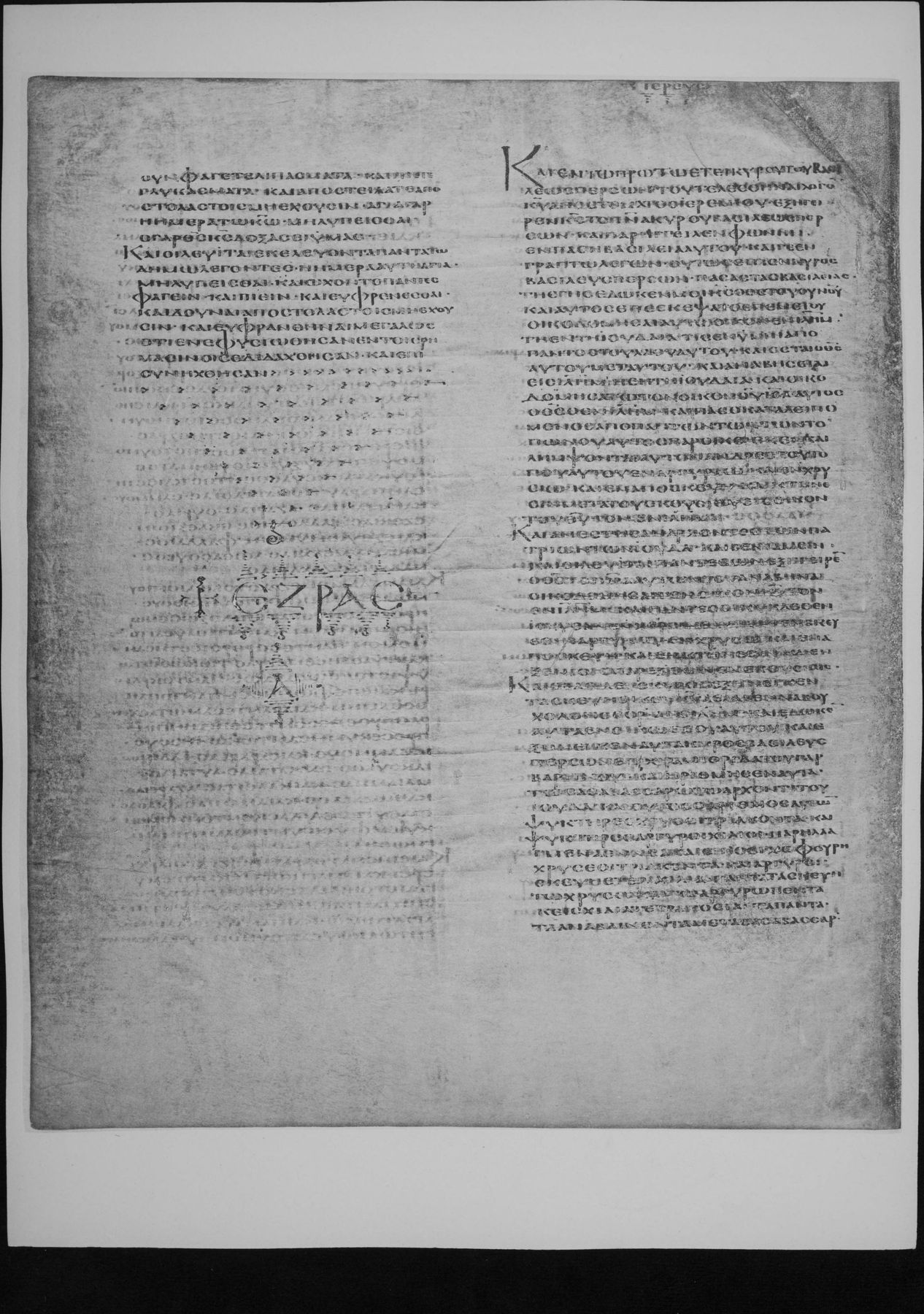
2 Esdras (Ezra) 1:1-8 is on fol. 447v (full-size facsimile of 1879-83, Internet Archive codex-alexandrinus leaf 919). The 1957 reduced facsimile prints beneath this page: 1 Esdras ix. 51 (52)-ix. 55 [end], 2 Esdras (Ezra) i. 1-i. 11. Checked on the plate: the page begins inside 1Es 9:51 (first words read: ΦΑΓΕΤΕ ΛΙΠΑΣΜΑΤΑ ΚΑΙ ΠΙΕΤΕ ΓΛΥΚΑΣΜΑΤΑ ΚΑΙ ΑΠΟΣΤΕΙΛΑΤΕ ΑΠΟΣΤΟΛΑΣ ΤΟΙΣ ΜΗ ΕΧΟΥΣΙΝ). Note: in 1 Esd. 9:51 Codex Alexandrinus adds ΚΑΙ ΠΙΕΤΕ ΓΛΥΚΑΣΜΑΤΑ, which Swete's text (Codex Vaticanus) lacks.
1ΚΑΙ ἐν τῷ πρώτῳ ἔτει Κύρου τοῦ βασιλέως Περσῶν, τοῦ τελεσθῆναι ἀπὸ στόματος Ἰερεμίου, ἐξήγειρεν τὸ πνεῦμα Κύρου βασιλέως Περσῶν, καὶ παρήγγειλεν φωνὴν ἐν πάσῃ βασιλείᾳ αὐτοῦ καὶ γε ἐν γραπτῷ λέγων 2Οὕτως εἶπεν Κῦρος βασιλεὺς Περσῶν Πάσας τὰς βασιλείας ἔδωκέν μοι ὁ θεὸς τοῦ οὐρανοῦ, καὶ αὐτὸς ἐπεσκέψατό με ἐπ᾽ ἐμὲ οἰκοδομῆσαι αὐτῷ οἶκον ἐν Ἰερουσαλὴμ τῇ ἐν Ἰούδᾳ. 3τίς ἐν ὑμῖν ἀπὸ παντὸς τοῦ λαοῦ αὐτοῦ; καὶ ἔσται ὁ θεὸς αὐτοῦ μετ᾽ αὐτοῦ, καὶ ἀναβήσεται εἰς Ἰερουσαλήμ. 4καὶ πᾶς ὁ καταλειπόμενος ἀπὸ πάντων τῶν τόπων οὗ αὐτὸς παροικεῖ ἐκεῖ, καὶ λήμψονται αὐτὸν ἄνδρες τοῦ τόπου αὐτοῦ ἐν ἀργυρίῳ καὶ χρυσίῳ καὶ ἀποσκευῇ καὶ κτήνεσιν μετὰ τοῦ ἑκουσίου εἰς οἶκον τοῦ θεοῦ τοῦ ἐν Ἰερουσαλήμ. 5καὶ ἀνέστησαν ἄρχοντες τῶν πατριῶν τῷ Ἰούδᾳ καὶ Βενιαμεὶν καὶ οἱ ἱερεῖς καὶ οἱ Λευεῖται, πάντων ὧν ἐξήγειρεν ὁ θεὸς τὸ πνεῦμα αὐτῶν τοῦ ἀναβῆναι οἰκοδομῆσαι τὸν οἶκον τὸν ἐν Ἰερουσαλήμ. 6καὶ πάντες οἱ κυκλόθεν ἐνίσχυσαν ἐν χερσὶν αὐτῶν ἐν σκεύεσιν ἀργυρίου, ἐν χρυσῷ, ἐν ἀποσκευῇ καὶ ἐν κτήνεσιν καὶ ἐν ξενίοις, παρὲξ τῶν ἑκουσίων. 7καὶ ὁ βασιλεὺς Κῦρος ἐξήνεγκεν τὰ σκεύη οἴκου, ἃ ἔλαβεν Ναβουχοδονοσὸρ ἀπὸ Ἰερουσαλὴμ καὶ ἔδωκεν αὐτὰ ἐν οἴκῳ θεοῦ αὐτοῦ· 8καὶ ἐξήνεγκεν αὐτὰ Κῦρος βασιλεὺς Περσῶν ἐπὶ χεῖρα Μιθραδάτου Τασβαρηνοῦ, καὶ ἠρίθμησεν αὐτὰ τῷ Σαβανασὰρ ἄρχοντι τοῦ Ἰούδα.
1Now in the first year of Cyrus king of the Persians, that the word of the Lord by the mouth of Jeremias might be fulfilled, the Lord stirred up the spirit of Cyrus king of the Persians, and he issued a proclamation through all his kingdom, and that in writing, saying, 2Thus said Cyrus king of the Persians, The Lord God of heaven has given me all the kingdoms of the earth, and he has given me a charge to build him a house in Jerusalem that is in Judea. 3Who is there among you of all his people? for his God shall be with him, and he shall go up to Jerusalem that is in Judea, and let him build the house of the God of Israel: he is the God that is in Jerusalem. 4And let every Jew that is left go from every place where he sojourns, and the men of his place shall help him with silver, and gold, and goods, and cattle, together with the voluntary offering for the house of God that is in Jerusalem. 5Then the chiefs of the families of Juda and Benjamin arose, and the priests, and the Levites, all whose spirit the Lord stirred up to go up to build the house of the Lord that is in Jerusalem. 6And all that were round about strengthened their hands with vessels of silver, with gold, with goods, and with cattle, and with presents, besides the voluntary offerings. 7And king Cyrus brought out the vessels of the house of the Lord, which Nabuchodonosor had brought from Jerusalem, and put in the house of his god. 8And Cyrus king of the Persians brought them out by the hand of Mithradates the treasurer, and he numbered them to Sasabasar, the chief man of Juda.
Where on the image
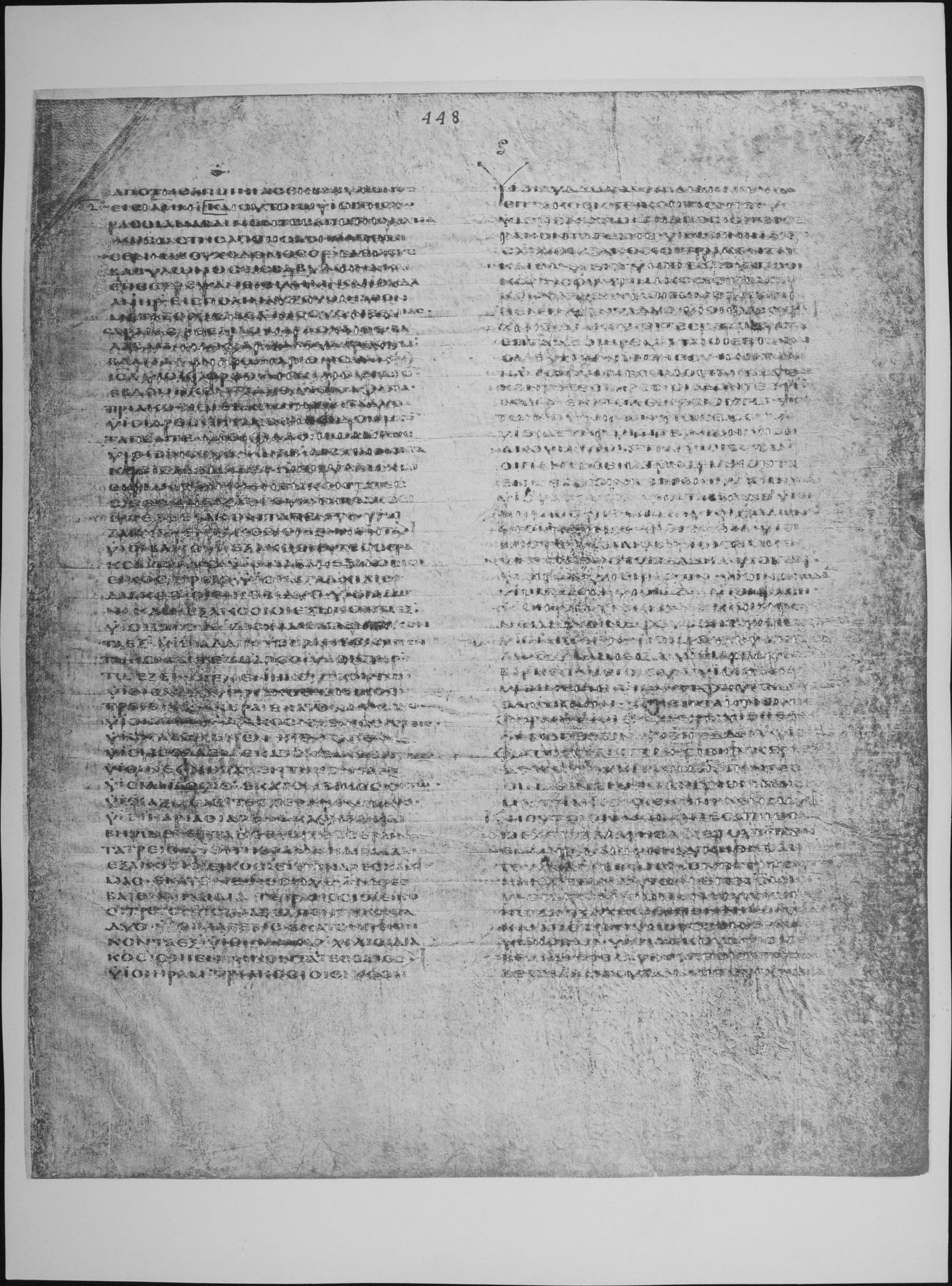
2 Esdras (Ezra) 1:9-11 is on fol. 447v (full-size facsimile of 1879-83, Internet Archive codex-alexandrinus leaf 919). The 1957 reduced facsimile prints beneath this page: 1 Esdras ix. 51 (52)-ix. 55 [end], 2 Esdras (Ezra) i. 1-i. 11. Checked on the plate: the page begins inside 1Es 9:51 (first words read: ΦΑΓΕΤΕ ΛΙΠΑΣΜΑΤΑ ΚΑΙ ΠΙΕΤΕ ΓΛΥΚΑΣΜΑΤΑ ΚΑΙ ΑΠΟΣΤΕΙΛΑΤΕ ΑΠΟΣΤΟΛΑΣ ΤΟΙΣ ΜΗ ΕΧΟΥΣΙΝ). Note: in 1 Esd. 9:51 Codex Alexandrinus adds ΚΑΙ ΠΙΕΤΕ ΓΛΥΚΑΣΜΑΤΑ, which Swete's text (Codex Vaticanus) lacks. 2 Esdras (Ezra) 1:11 is on fol. 448r (full-size facsimile of 1879-83, Internet Archive codex-alexandrinus leaf 920). The 1957 reduced facsimile prints beneath this page: 2 Esdras (Ezra) i. 11-ii. 61. Checked on the plate: the page begins inside 2 Esdras (Ezra) 1:11 (first words read: ΚΑΙ ΟΥΤΟΙ ΟΙ ΥΙΟΙ ΤΗΣ ΧΩΡΑΣ). Note: the first line of the column (the end of Ezra 1:11) is faint on the plate; the words given are the second line, the start of 2:1.
9καὶ οὗτος ὁ ἀριθμὸς αὐτῶν· Κυρίῳ χρυσοῖ τριάκοντα καὶ ἀργυροῖ χίλιοι, παρηγμένα ἐννέα καὶ εἴκοσι, 10κεφφουρῆς χρυσοῖ τριάκοντα καὶ ἀργυροῖ ἕξ, καὶ σκεύη ἕτερα χίλια. 11πάντα τὰ σκεύη τῷ χρυσῷ καὶ τῷ ἀργυρῷ πεντακισχίλια καὶ τετρακόσια, τὰ πάντα ἀναβαίνοντα ἀπὸ τῆς ἀποικίας ἐκ Βαβυλῶνος εἰς Ἰερουσαλήμ.
9And this is their number: thirty gold basons, and a thousand silver basons, nine and twenty changes, thirty golden goblets, 10and four hundred and ten double silver vessels, and a thousand other vessels. 11All the gold and silver vessels were five thousand four hundred, even all that went up with Sasabasar from the place of transportation, from Babylon to Jerusalem.
Cite
Sources
- Source: Codex Alexandrinus (British Library Royal MS 1 D. VI) via the British Museum photographic facsimiles of 1879-83 and 1957 (Internet Archive) + Swete's Septuagint + Brenton's English (holding institution)
- Critical edition: H. B. Swete, The Old Testament in Greek according to the Septuagint (1909)
← previous · → next · v cycle view · l back to library