2 Esdras (Ezra), Chapter 4 (Codex Alexandrinus)
Introduction
2 Esdras (Ezra) 4 in the Greek Old Testament (the Septuagint) as written in Codex Alexandrinus, a Greek Bible copied in the fifth century, probably in Egypt, and now in the British Library (Royal MS 1 D. VI, the second of its four volumes). It is one of the three great early codices of the whole Greek Bible, with Codex Vaticanus and Codex Sinaiticus.
2 Esdras: the Septuagint gives Ezra and Nehemiah as one book, 2 Esdras (Esdras B); its chapters 1-10 are the book of Ezra, numbered here as in Ezra.
This entry meets the strict three-criteria standard of the Theosis Library:
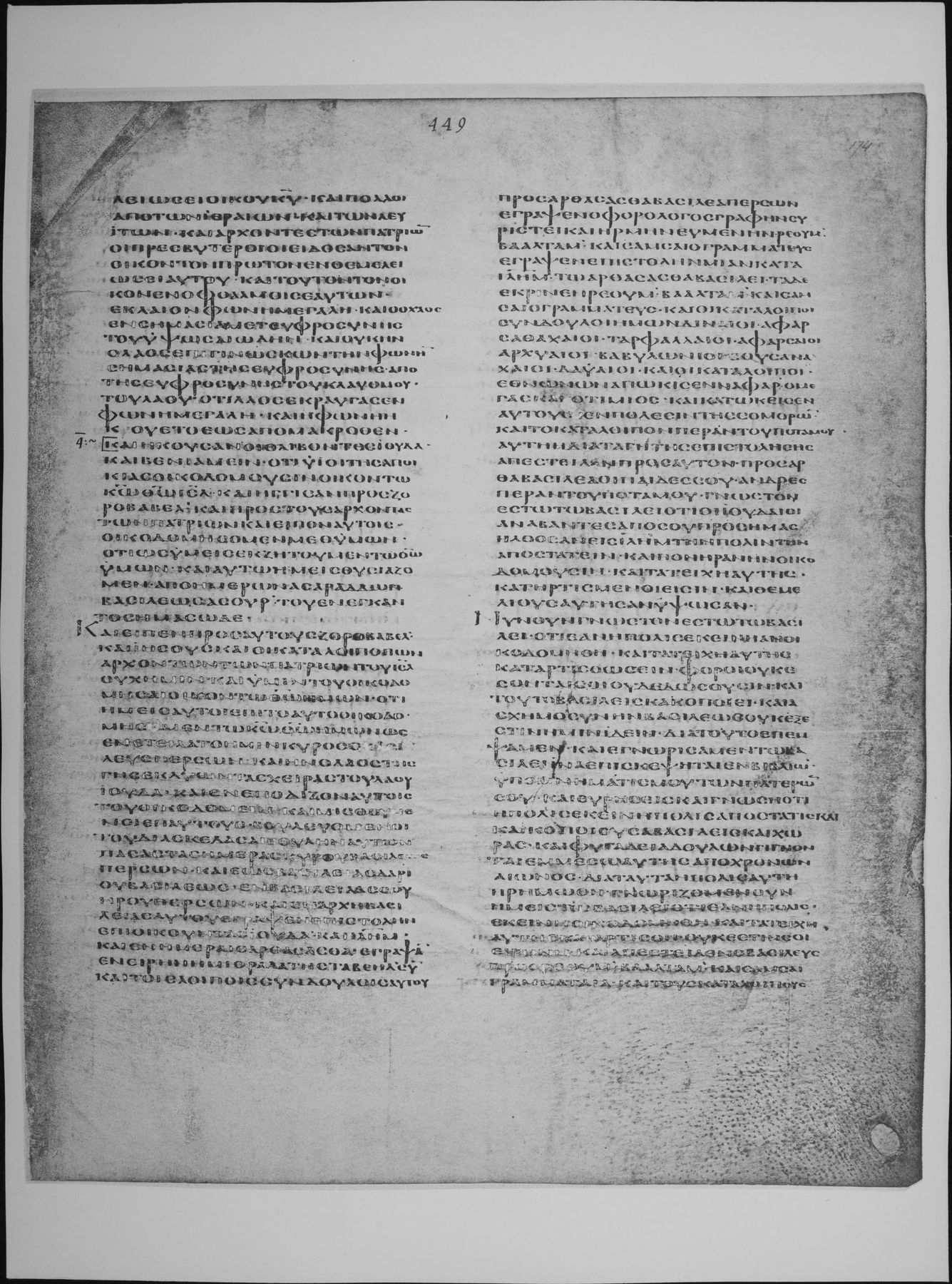
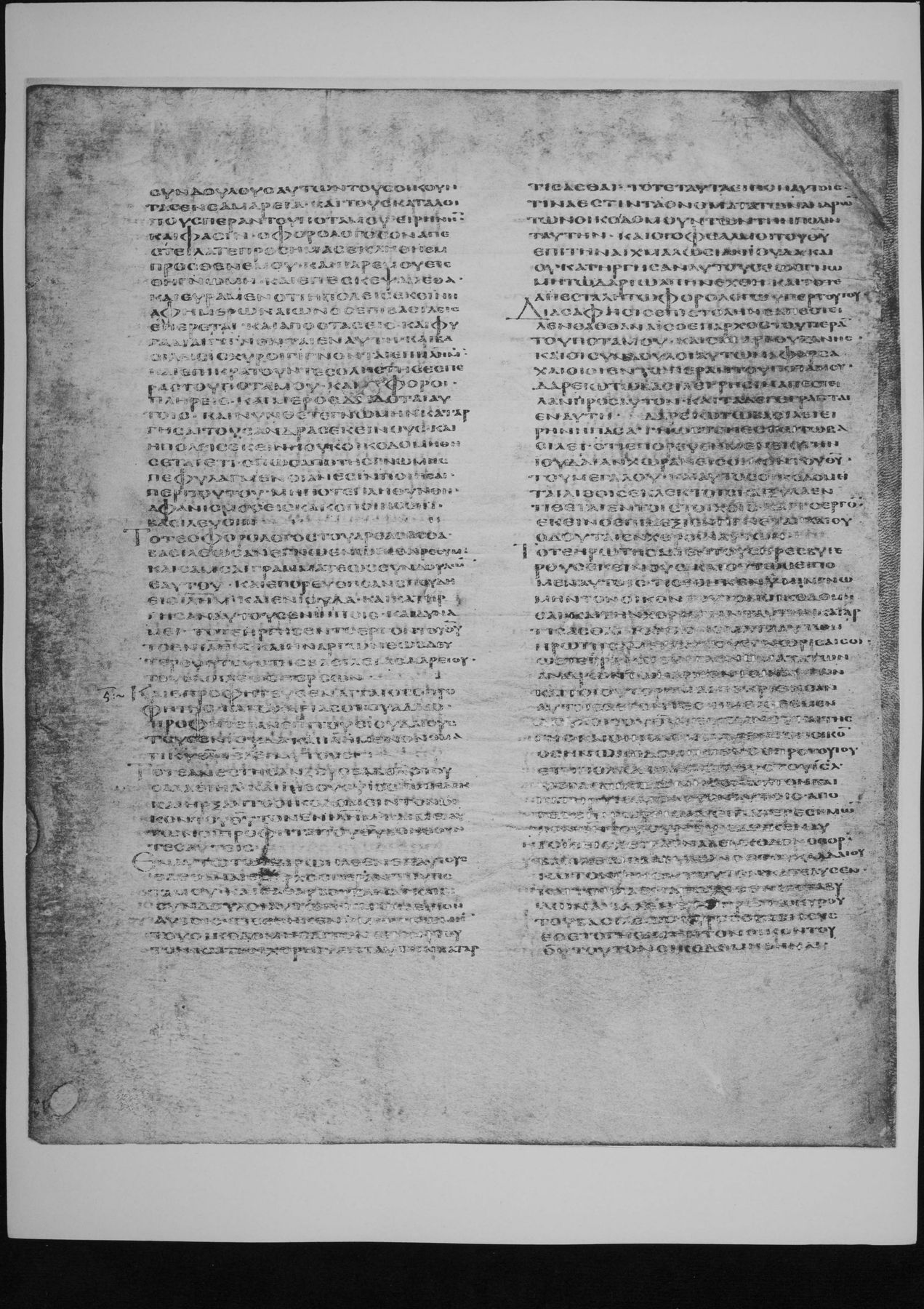
- Manuscript scan: the pages of Codex Alexandrinus carrying this chapter (fol. 449r, fol. 449v), from the full-size photographic (autotype) facsimile published by the British Museum in 1879-1883, as digitised on the Internet Archive. The verse range of every page comes from the reduced photographic facsimile of 1957, which prints it beneath each plate, and the opening words of every page were read on the plate to confirm the page and the verse it begins with. Each section links to the page or pages that hold its verses. Folio numbers are those written at the head of each leaf and visible on the plates.
- Original text: Swete's edition, which here prints the text of Codex Vaticanus (Vat. gr. 1209), the base of his edition, and gives the readings of Alexandrinus only in his apparatus. The Greek column is therefore Vaticanus' text; where Alexandrinus differs, the plate shows what Alexandrinus reads.
- English translation: Sir Lancelot C. L. Brenton, The Septuagint Version of the Old Testament (1844; 1851 edition), a translation of the Greek, public domain, from the eBible.org text.
How was this verified? (Provenance)
Where on the image
2 Esdras (Ezra) 4:1-8 is on fol. 449r (full-size facsimile of 1879-83, Internet Archive codex-alexandrinus leaf 922). The 1957 reduced facsimile prints beneath this page: 2 Esdras (Ezra) iii. 11-iv. 17. Checked on the plate: the page begins inside 2 Esdras (Ezra) 3:11 (first words read: ΟΙΚΟΥ ΚΥ ΚΑΙ ΠΟΛΛΟΙ ΑΠΟ ΤΩΝ ΙΕΡΕΩΝ ΚΑΙ ΤΩΝ ΛΕΥΙΤΩΝ ΚΑΙ ΑΡΧΟΝΤΕΣ ΤΩΝ ΠΑΤΡΙΩΝ).
1Καὶ ἤκουσαν οἱ θλίβοντες Ἰουδὰ καὶ Βενιαμὶν ὅτι οἱ υἱοὶ τῆς ἀποικίας οἰκοδομοῦσιν οἶκον τῷ κυρίῳ θεῷ Ἰσραήλ· 2καὶ ἤγγισαν πρὸς Ζοροβαβὲλ καὶ πρὸς τοὺς ἄρχοντας τῶν πατριῶν, καὶ εἶπαν αὐτοῖς Οἰκοδομήσομεν μεθ᾽ ὑμῶν, ὅτι ὡς ὑμεῖς ἐκζητοῦμεν τῷ θεῷ ἡμῶν, καὶ αὐτῷ ἡμεῖς θυσιάζομεν ἀπὸ ἡμερῶν Ἀσαρεαθὼν βασιλέως Ἀσσοὺρ τοῦ ἐνέγκαντος ἡμᾶς ὧδε. 3καὶ εἶπεν πρὸς αὐτοὺς Ζοροβαβὲλ καὶ Ἰησοῦς καὶ οἱ κατάλοιποι τῶν ἀρχόντων τῶν πατριῶν τοῦ Ἰσραήλ Οὐχ ἡμῖν καὶ ὑμῖν τοῦ οἰκοδομῆσαι οἶκον τῷ θεῷ ἡμῶν, ὅτι ἡμεῖς ἐπὶ τὸ αὐτὸ οἰκοδομήσομεν τῷ κυρίῳ θεῷ ἡμῶν, ὡς ἐνετείλατο ἡμῖν Κῦρος βασιλεὺς Περσῶν. 4καὶ ἦν ὁ λαὸς τῆς γῆς ἐκλύων χεῖρας λαοῦ Ἰούδα, καὶ ἐνεπόδιζον αὐτοὺς οἰκοδομεῖν, 5καὶ μισθούμενοι ἐπ᾽ αὐτοὺς βουλόμενοι διασκεδάσαι βουλὴν αὐτῶν, πάσας τὰς ἡμέρας Κύρου βασιλέως Περσῶν καὶ ἕως βασιλείας Δαρείου βασιλέως Περσῶν. 6καὶ ἐν βασιλείᾳ Ἀσθηροὺ ἐν ἀρχῇ βασιλείας αὐτοῦ ἔγραψεν ἐπὶ οἰκοῦντας Ἰουδὰ καὶ Ἰερουσαλήμ. 7καὶ ἐν ἡμέραις Ἀσαρθαθὰ ἔγραψεν ἐν εἰρήνῃ Μιθραδάτῃ Ταβεὴλ καὶ τοῖς λοιποῖς συνδούλοις· πρὸς βασιλέα Περσῶν ἔγραψεν ὁ φορολόγος γραφὴν Συριστὶ καὶ ἑρμηνευμένην. 8Ῥαοὺλ βαδαταμὲν καὶ Σαμασὰ ὁ γραμματεὺς ἔγραψαν ἐπιστολὴν μίαν κατὰ Ἰερουσαλὴμ τῷ Ἀρσαρθὰ βασιλεῖ.
1And they that afflicted Juda and Benjamin heard, that the children of the captivity were building a house to the Lord God of Israel. 2And they drew near to Zorobabel, and to the heads of families, and said to them, We will build with you; for as ye do, we seek to serve our God, and we do sacrifice to him from the days of Asaradan king of Assur, who brought us hither. 3Then Zorobabel, and Jesus and the rest of the heads of the families of Israel said to them, It is not for us and you to build a house to our God, for we ourselves will build together to the Lord our God, as Cyrus the king of the Persians commanded us. 4And the people of the land weakened the hands of the people of Juda, and hindered them in building, 5and continued hiring persons against them, plotting to frustrate their counsel, all the days of Cyrus king of the Persians, and until the reign of Darius king of the Persians. 6And in the reign of Assuerus, even in the beginning of his reign, they wrote a letter against the inhabitants of Juda and Jerusalem. 7And in the days of Arthasastha, Tabeel wrote peaceably to Mithradates and to the rest of his fellow-servants: the tribute-gatherer wrote to Arthasastha king of the Persians a writing in the Syrian tongue, and the same interpreted. 8Reum the chancellor, and Sampsa the scribe wrote an epistle against Jerusalem to king Arthasastha, saying,
Where on the image
2 Esdras (Ezra) 4:9-16 is on fol. 449r (full-size facsimile of 1879-83, Internet Archive codex-alexandrinus leaf 922). The 1957 reduced facsimile prints beneath this page: 2 Esdras (Ezra) iii. 11-iv. 17. Checked on the plate: the page begins inside 2 Esdras (Ezra) 3:11 (first words read: ΟΙΚΟΥ ΚΥ ΚΑΙ ΠΟΛΛΟΙ ΑΠΟ ΤΩΝ ΙΕΡΕΩΝ ΚΑΙ ΤΩΝ ΛΕΥΙΤΩΝ ΚΑΙ ΑΡΧΟΝΤΕΣ ΤΩΝ ΠΑΤΡΙΩΝ).
9τάδε ἔκρινεν Ῥαοὺμ βάαλ καὶ Σαμεὲ ὁ γραμματεὺς καὶ οἱ κατάλοιποι σύνδουλοι ἡμῶν, Δειναῖοι, Φαρεσθαχαῖοι, Ταραφαλλαῖοι, Ἀφρασαῖοι, Ἀρχοῦοι, Βαβυλώνιοι, Σουσυναχαῖοι οἳ εἰσὶν Ἠλαμαῖοι, 10καὶ οἱ κατάλοιποι ἐθνῶν ὧν ἀπῴκισεν Ἀσενναφὰρ ὁ μέγας καὶ ὁ τίμιος καὶ κατῴκισεν αὐτούς ἐν πόλεσιν τῆς Σωμωρὼν καὶ τὸ κατάλοιπον πέραν τοῦ ποταμοῦ. 11αὕτη ἡ διαταγὴ τῆς ἐπιστολῆς ἧς ἀπέστειλαν πρὸς αὐτόν Πρὸς Ἀρσαρθὰ βασιλέα παῖδές σου ἄνδρες πέραν τοῦ ποταμοῦ. 12γνωστὸν ἔστω τῷ βασιλεῖ ὅτι οἱ Ἰουδαῖοι ἀναβάντες ἀπὸ Κύρου ἐφ᾽ ἡμᾶς ἤλθοσαν εἰς Ἰερουσαλημ· τὴν ἀποστάτιν καὶ πονηρὰν οἰκοδομοῦσιν, καὶ τὰ τείχη αὐτῆς κατηρτισμένοι εἰσίν, καὶ θεμελίους αὐτῆς ἀνύψωσαν. 13νῦν οὖν γνωστὸν ἔστω τῷ βασιλεῖ ὅτι ἐὰν ἡ πόλις ἐκείνη οἰκοδομηθῇ καὶ τὰ τείχη αὐτῆς καταρτισθῶσιν, φόροι οὐκ ἔσονταί σοι οὐδὲ δώσουσιν· καὶ τοῦτο βασιλεῖς κακοποιεῖ. 14καὶ ἀσχημοσύνην βασιλέως οὐκ ἔξεστιν ἡμῖν ἰδεῖν· διὰ τοῦτο ἐπέμψαμεν καὶ ἐγνωρίσαμεν τῷ βασιλεῖ, 15ἵνα ἐπισκέψηται ἐν βιβλίῳ ὑπομνηματισμοῦ τῶν πατέρων σου, καὶ εὑρήσεις καὶ γνώσῃ ὅτι ἡ πόλις ἐκείνη πόλις ἀποστάτις, καὶ κακοποιοῦσα βασιλεῖς καὶ χώρας, καὶ φυγαδεῖα δούλων ἐν μέσῳ αὐτῆς ἀπὸ ἡμερῶν αἰῶνος· διὰ ταῦτα ἡ πόλις αὕτη ἠρημώθη. 16γνωρίζομεν ἡμεῖς τῷ βασιλεῖ ὅτι ἐὰν ἡ πόλις ἐκείνη οἰκοδομηθῇ καὶ τὰ τείχη αὐτῆς καταρτισθῇ, οὐκ ἔστιν σοι εἰρήνη.
9Thus has judged Reum the chancellor, and Sampsa the scribe, and the rest of our fellow-servants, the Dinæans, the Apharsathachæans, the Tarphalæans, the Apharsæans, the Archyæans, the Babylonians, the Susanachæans, Davæans, 10and the rest of the nations whom the great and noble Assenaphar removed, and settled them in the cities of Somoron, and the rest of them beyond the river. 11This is the purport of the letter, which they sent to him: Thy servants the men beyond the river to king Arthasastha. 12Be it known to the king, that the Jews who came up from thee to us have come to Jerusalem the rebellious and wicked city, which they are building, and its walls are set in order, and they have established the foundations of it. 13Now then be it known to the king, that if that city be built up, and its walls completed, thou shalt have no tribute, neither will they pay anything, and this injures kings. 14And it is not lawful for us to see the dishonour of the king: therefore have we sent and made known the matter to the king; 15that examination may be made in thy fathers' book of record; and thou shalt find, and thou shalt know that that city is rebellious, and does harm to kings and countries, and there are in the midst of it from very old time refuges for runaway slaves: therefore this city has been made desolate. 16We therefore declare to the king, that, if that city be built, and its walls be set up, thou shalt not have peace.
Where on the image
2 Esdras (Ezra) 4:17 is on fol. 449r (full-size facsimile of 1879-83, Internet Archive codex-alexandrinus leaf 922). The 1957 reduced facsimile prints beneath this page: 2 Esdras (Ezra) iii. 11-iv. 17. Checked on the plate: the page begins inside 2 Esdras (Ezra) 3:11 (first words read: ΟΙΚΟΥ ΚΥ ΚΑΙ ΠΟΛΛΟΙ ΑΠΟ ΤΩΝ ΙΕΡΕΩΝ ΚΑΙ ΤΩΝ ΛΕΥΙΤΩΝ ΚΑΙ ΑΡΧΟΝΤΕΣ ΤΩΝ ΠΑΤΡΙΩΝ). 2 Esdras (Ezra) 4:17-24 is on fol. 449v (full-size facsimile of 1879-83, Internet Archive codex-alexandrinus leaf 923). The 1957 reduced facsimile prints beneath this page: 2 Esdras (Ezra) iv. 17-v. 13. Checked on the plate: the page begins inside 2 Esdras (Ezra) 4:17 (first words read: ΣΥΝΔΟΥΛΟΙ ΑΥΤΩΝ ΤΟΥΣ ΟΙΚΟΥΝΤΑΣ ΕΝ ΣΑΜΑΡΕΙΑ ΚΑΙ ΤΟΥΣ ΚΑΤΑΛΟΙΠΟΥΣ ΠΕΡΑΝ ΤΟΥ ΠΟΤΑΜΟΥ).
17καὶ ἀπέστειλεν ὁ βασιλεὺς πρὸς Ῥαοὺμ βαλγὰμ καὶ Σαμεαὶς γραμματεία καὶ τοὺς καταλοίπους συνδούλους αὐτῶν τοὺς οἰκοῦντας ἐν Σαμαρείᾳ καὶ τοὺς καταλοίπους πέραν τοῦ ποταμοῦ εἰρήνην, καί φασιν 18Ὁ φορολόγος ὃν ἀπεστείλατε πρὸς ἡμᾶς ἐκλήθη ἔμπροσθεν ἐμοῦ. 19καὶ παρ᾽ ἐμοῦ ἐτέθη γνώμη καὶ ἐπεσκεψάμεθα, καὶ εὓραμεν ὅτι ἡ πόλις ἐκείνη ἀφ᾽ ἡμερῶν αἰῶνος ἐπὶ βασιλεῖς ἐπαίρεται, καὶ ἀποστάσεις καὶ φυγαδεῖα γίνονται ἐν αὐτῇ· 20καὶ βασιλεῖς ἰσχυροὶ γίνονται ἐπὶ Ἰερουαλήμ, καὶ ἐπικρατοῦντες ὅλης τῆς ἑσπέρας τοῦ ποταμοῦ, καὶ φόροι πλήρεις καὶ μέρος δίδοται αὐτοῖς. 21νῦν θέτε γνώμην καταργῆσαι τοὺς ἄνδρας ἐκείνους, καὶ ἡ πόλις ἐκείνη οὐκ οἰκοδομηθήσεται ἔτι ἀπὸ τῆς γνώμης. 22πεφυλαγμένοι ἦτε ἄνεσιν ποιῆσαι περὶ τούτου, μή ποτε πληθυνθῇ ἀφανισμὸς εἰς κακοποίησιν βασιλεῦσιν. 23τότε ὁ φορολόγος τοῦ Ἀρσαρθὰ βασιλέως ἀνέγνω ἐνώπιον Ῥαοὺμ καὶ Σαμεσὰ γραμματέως συνδούλων αὐτῶν· καὶ ἐπορεύθησαν ἐν σπουδῇ εἰς Ἰερουσαλὴμ καὶ ἐν Ἰούδᾳ, καὶ κατήργησαν αὐτοὺς ἐν ἵπποις καὶ δυνάμει. 24τότε ἤργησεν τὸ ἔργον οἴκου τοῦ θεοῦ τοῦ ἐν Ἰερουσαλήμ, καὶ ἦν ἀργῶν ἕως ἔτους δευτέρου Δαρείου τοῦ βασιλέως Περσῶν.
17Then the king sent to Reum the chancellor, and Sampsa the scribe, and the rest of their fellow-servants who dwelt in Samaria, and the rest beyond the river, saying, Peace; and he says, 18The tribute-gatherer whom ye sent to us, has been called before me. 19And a decree has been made by me, and we have examined, and found that that city of old time exalts itself against kings, and that rebellions and desertions take place within it. 20And there were powerful kings in Jerusalem, and they ruled over all the country beyond the river, and abundant revenues and tribute were given to them. 21Now therefore make a decree to stop the work of those men, and that city shall no more be built. 22See that ye be careful of the decree, not to be remiss concerning this matter, lest at any time destruction should abound to the harm of kings. 23Then the tribute-gatherer of king Arthasastha read the letter before Reum the chancellor, and Sampsa the scribe, and his fellow-servants: and they went in haste to Jerusalem and through Juda, and caused them to cease with horses and an armed force. 24Then ceased the work of the house of God in Jerusalem, and it was at a stand until the second year of the reign of Darius king of the Persians.
Cite
Sources
- Source: Codex Alexandrinus (British Library Royal MS 1 D. VI) via the British Museum photographic facsimiles of 1879-83 and 1957 (Internet Archive) + Swete's Septuagint + Brenton's English (holding institution)
- Critical edition: H. B. Swete, The Old Testament in Greek according to the Septuagint (1909)
← previous · → next · v cycle view · l back to library