2 Esdras (Ezra), Chapter 3 (Codex Alexandrinus)
Introduction
2 Esdras (Ezra) 3 in the Greek Old Testament (the Septuagint) as written in Codex Alexandrinus, a Greek Bible copied in the fifth century, probably in Egypt, and now in the British Library (Royal MS 1 D. VI, the second of its four volumes). It is one of the three great early codices of the whole Greek Bible, with Codex Vaticanus and Codex Sinaiticus.
2 Esdras: the Septuagint gives Ezra and Nehemiah as one book, 2 Esdras (Esdras B); its chapters 1-10 are the book of Ezra, numbered here as in Ezra.
This entry meets the strict three-criteria standard of the Theosis Library:
- Manuscript scan: the pages of Codex Alexandrinus carrying this chapter (fol. 448v, fol. 449r), from the full-size photographic (autotype) facsimile published by the British Museum in 1879-1883, as digitised on the Internet Archive. The verse range of every page comes from the reduced photographic facsimile of 1957, which prints it beneath each plate, and the opening words of every page were read on the plate to confirm the page and the verse it begins with. Each section links to the page or pages that hold its verses. Folio numbers are those written at the head of each leaf and visible on the plates.
- Original text: Swete's edition, which here prints the text of Codex Vaticanus (Vat. gr. 1209), the base of his edition, and gives the readings of Alexandrinus only in his apparatus. The Greek column is therefore Vaticanus' text; where Alexandrinus differs, the plate shows what Alexandrinus reads.
- English translation: Sir Lancelot C. L. Brenton, The Septuagint Version of the Old Testament (1844; 1851 edition), a translation of the Greek, public domain, from the eBible.org text.
How was this verified? (Provenance)
Where on the image
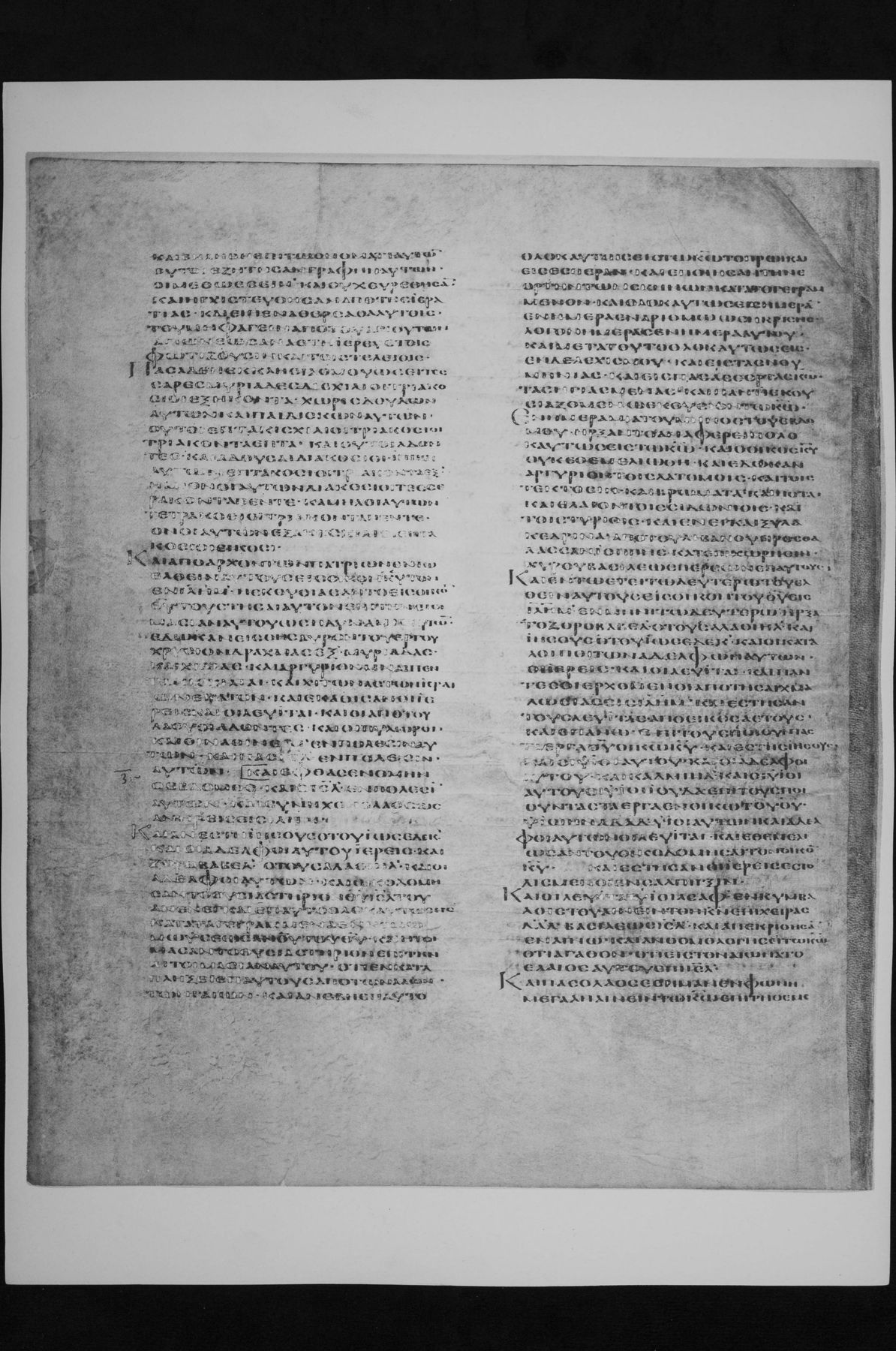
2 Esdras (Ezra) 3:1-8 is on fol. 448v (full-size facsimile of 1879-83, Internet Archive codex-alexandrinus leaf 921). The 1957 reduced facsimile prints beneath this page: 2 Esdras (Ezra) ii. 61-iii. 11. Checked on the plate: the page begins inside 2 Esdras (Ezra) 2:61 (first words read: ΚΑΙ ΕΚΛΗΘΗ ΕΠΙ ΤΩ ΟΝΟΜΑΤΙ ΑΥΤΩΝ ΟΥΤΟΙ ΕΖΗΤΗΣΑΝ ΓΡΑΦΗΝ ΑΥΤΩΝ).
1Καὶ ἔφθασεν ὁ μὴν ὁ ἕβδομος καὶ οἱ Ἰσραὴλ ἐν πόλεσιν αὐτῶν, καὶ συνήχθη ὁ λαὸς ὡς ἀνὴρ εἷς εἰς Ἰερουσαλήμ. 2καὶ ἀνέστη ὁ Ἰησοῦς ὁ τοῦ Ἰωσεδὲκ καὶ οἱ ἀδελφοὶ αὐτοῦ καὶ ᾠκοδόμησαν τὸ θυσιαστήριον θεοῦ Ἰσραήλ, τοῦ ἀνενέγκαι ἐπ᾽ αὐτὸ ὁλοκαυτώσεις κατὰ τὰ γεγραμμένα ἐν νόμῳ Μωυσῆ ἀνθρώπου τοῦ θεοῦ. 3καὶ ἡτοίμασαν τὸ θυσιαστήριον ἐπὶ τὴν ἑτοιμασίαν αὐτοῦ, καὶ ἀνέβη ἐπ᾽ αὐτὸ ὁλοκαύτωσις τῷ κυρίῳ τὸ πρωὶ καὶ εἰς ἑσπέραν. 4καὶ ἐποίησαν τὴν ἑορτὴν τῶν σκηνῶν κατὰ τὸ γεγραμμένον, καὶ ὁλοκαυτώσεις ἡμέραν ἐν ἡμέρᾳ ἐν ἀριθμῷ ὡς ἡ κρίσις, λόγον ἡμέρας ἐν ἡμέρᾳ· 5καὶ μετὰ τοῦτο ὁλοκαυτώσεις ἐνδελεχισμοῦ, καὶ εἰς τὰς νουμηνίας καὶ εἰς πάσας ἑορτὰς τὰς ἡγιασμένας, καὶ παντὶ ἑκουσιαζομένῳ ἑκούσιον τῷ κυρίῳ. 6ἐν ἡμέρᾳ μιᾷ τοῦ μηνὸς τοῦ ἑβδόμου ἤρξαντο ἀναφέρειν ὁλοκαυτώσεις τῷ κυρίῳ· καὶ ὁ οἶκος Κυρίου οὐκ ἐθεμελιώθη. 7καὶ ἔδωκαν ἀργύριον τοῖς λατόμοις καὶ τοῖς τέκτοσιν, καὶ βρώματα καὶ ποτὰ καὶ ἔλαιον τοῖς Σηδαμεὶν καὶ τοῖς Σωρεὶν ἐνέγκαι ξύλα κέδρινα ἀπὸ τοῦ Λιβάνου πρὸς θάλασσαν Ἰόππης, κατ᾽ ἐπιχώρησιν Κύρου βασιλέως Περσῶν ἐπ᾽ αὐτούς. 8Καὶ ἐν τῷ ἔτει τῷ δευτέρῳ τοῦ ἐλθεῖν αὐτοὺς εἰς οἶκον τοῦ θεοῦ εἰς Ἰερουσαλήμ, ἐν μηνὶ τῷ δευτέρῳ, ἤρξατο Ζοροβαβὲλ ὁ τοῦ Σαλαθιὴλ καὶ Ἰησοῦς ὁ τοῦ Ἰωσεδὲκ καὶ οἱ κατάλοιποι τῶν ἀδελφῶν οἱ ἱερεῖς καὶ οἱ Λευεῖται καὶ πάντες οἱ ἐρχόμενοι ἀπὸ τῆς αἰχμαλωσίας εἰς Ἰερουσαλήμ, καὶ ἔστησαν τοὺς Λευείτας ἀπὸ εἰκοσαετοῦς καὶ ἐπάνω ἐπὶ τὰ ἔργα Κυρίου.
1And the seventh month came on, and the children of Israel were in their cities, and the people assembled as one man at Jerusalem. 2Then stood up Jesus the son of Josedec, and his brethren the priests, and Zorobabel the son of Salathiel, and his brethren, and they built the altar of the God of Israel, to offer upon it whole-burnt-offerings, according to the things that were written in the law of Moses the man of God. 3And they set up the altar on its place, for there was a terror upon them because of the people of the lands: and the whole-burnt-offering was offered up upon it to the Lord morning and evening. 4And they kept the feast of tabernacles, according to that which was written, and offered whole-burnt-offerings daily in number according to the ordinance, the exact daily rate. 5And after this the perpetual whole-burnt-offering, and offering for the season of new moon, and for all the hallowed feasts to the Lord, and for every one that offered a free-will-offering to the Lord. 6On the first day of the seventh month they began to offer whole-burnt-offerings to the Lord: but the foundation of the house of the Lord was not laid. 7And they gave money to the stone-hewers and carpenters, and meat and drink, and oil, to the Sidonians, and Tyrians, to bring cedar trees from Libanus to the sea of Joppa, according to the grant of Cyrus king of the Persians to them. 8And in the second year of their coming to the house of God in Jerusalem, in the second month, began Zorobabel the son of Salathiel, and Jesus the son of Josedec, and the rest of their brethren the priests and the Levites, and all who came from the captivity to Jerusalem, and they appointed the Levites, from twenty years old and upward, over the workmen in the house of the Lord.
Where on the image
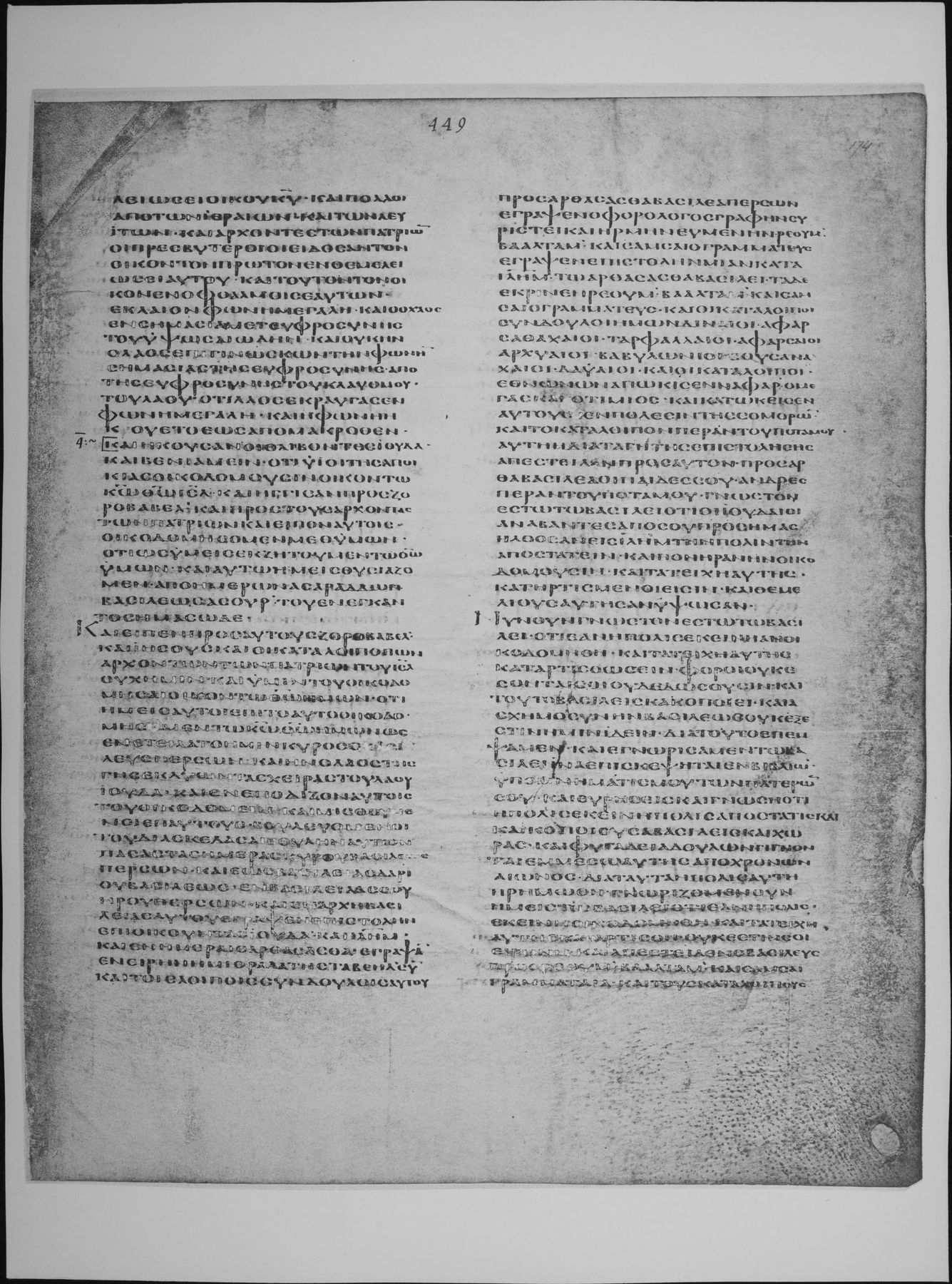
2 Esdras (Ezra) 3:9-11 is on fol. 448v (full-size facsimile of 1879-83, Internet Archive codex-alexandrinus leaf 921). The 1957 reduced facsimile prints beneath this page: 2 Esdras (Ezra) ii. 61-iii. 11. Checked on the plate: the page begins inside 2 Esdras (Ezra) 2:61 (first words read: ΚΑΙ ΕΚΛΗΘΗ ΕΠΙ ΤΩ ΟΝΟΜΑΤΙ ΑΥΤΩΝ ΟΥΤΟΙ ΕΖΗΤΗΣΑΝ ΓΡΑΦΗΝ ΑΥΤΩΝ). 2 Esdras (Ezra) 3:11-13 is on fol. 449r (full-size facsimile of 1879-83, Internet Archive codex-alexandrinus leaf 922). The 1957 reduced facsimile prints beneath this page: 2 Esdras (Ezra) iii. 11-iv. 17. Checked on the plate: the page begins inside 2 Esdras (Ezra) 3:11 (first words read: ΟΙΚΟΥ ΚΥ ΚΑΙ ΠΟΛΛΟΙ ΑΠΟ ΤΩΝ ΙΕΡΕΩΝ ΚΑΙ ΤΩΝ ΛΕΥΙΤΩΝ ΚΑΙ ΑΡΧΟΝΤΕΣ ΤΩΝ ΠΑΤΡΙΩΝ).
9καὶ ἔστη Ἰησοῦς καὶ οἱ υἱοὶ αὐτοῦ καὶ οἱ ἀδελφοὶ αὐτοῦ, Καδμιὴλ καὶ οἱ υἱοὶ αὐτοῦ υἱοὶ Ἰούδα, ἐπὶ τοὺς ποιοῦντας τὰ ἔργα ἐν οἴκῳ τοῦ θεοῦ· υἱοὶ Ἡναάδ, υἱοὶ αὐτῶν καὶ ἀδελφοὶ αὐτῶν οἱ Λευεῖται. 10καὶ ἐθεμελίωσαν τοῦ οἰκοδομῆσαι τὸν οἶκον Κυρίου· καὶ ἔστησαν οἱ ἱερεῖς ἐστολισμένοι ἐν σάλπιγξιν καὶ οἱ Λευεῖται υἱοὶ Ἀσὰφ τοῦ αἰνεῖν τὸν κύριον ἐπὶ χεῖρας Δαυεὶδ βασιλέως Ἰσραήλ. 11καὶ ἀπεκρίθησαν ἐν αἴνῳ καὶ ἀνθομολογήσει τῷ κυρίῳ Ὃτι ἀγαθόν, ὅτι εἰς τὸν αἰῶνα τὸ ἔλεος αὐτοῦ ἐπὶ Ἰσραήλ. καὶ πᾶς ὁ λαὸς ἐσήμαινον φωνὴν μεγάλην αἰνεῖν τῷ κυρίῳ ἐπὶ θεμελιώσει οἴκου Κυρίου. 12καὶ πολλοὶ ἀπὸ τῶν ἱερέων καὶ τῶν Λευειτῶν καὶ ἄρχοντες τῶν πατριῶν οἱ πρεσβύτεροι οἵ εἴδοσαν τὸν οἶκον τὸν πρῶτον ἐν θεμελιώσει αὐτοῦ, καὶ τοῦτον τὸν οἶκον ἐν ὀφθαλμοῖς αὐτῶν, ἔκλαιον φωνῇ μεγάλῃ, καὶ ὄχλος ἐν σημασίᾳ μετ᾽ εὐφροσύνης τοῦ ὑψῶσαι ᾠδήν. 13καὶ οὐκ ἦν λαὸς ἐπιγινώσκων φωνὴν σημασίας τῆς εὐφροσύνης ἀπὸ τῆς φωνῆς τοῦ κλαυθμοῦ, ὅτι ὁ λαὸς ἐκραύγασεν φωνῇ μεγάλῃ, καὶ ἠκούετο ἕως ἀπὸ μακρόθεν.
9And Jesus and his sons and his brethren stood, Cadmiel and his sons the sons of Juda, over them that wrought the works in the house of God: the sons of Enadad, their sons and their brethren the Levites. 10And they laid a foundation for building the house of the Lord: and the priests in their robes stood with trumpets and the Levites the sons of Asaph with cymbals, to praise the Lord, according to the order of David king of Israel. 11And they answered each other with praise and thanksgiving to the Lord, saying, For it is good, for his mercy to Israel endures for ever. And all the people shouted with a loud voice to praise the Lord at the laying the foundation of the house of the Lord. 12But many of the priests and the Levites, and the elder men, heads of families, who had seen the former house on its foundation, and who saw this house with their eyes, wept with a loud voice: but the multitude shouted with joy to raise a song. 13And the people did not distinguish the voice of the glad shout from the voice of the weeping of the people: for the people shouted with a loud voice, and the voice was heard even from afar off.
Cite
Sources
- Source: Codex Alexandrinus (British Library Royal MS 1 D. VI) via the British Museum photographic facsimiles of 1879-83 and 1957 (Internet Archive) + Swete's Septuagint + Brenton's English (holding institution)
- Critical edition: H. B. Swete, The Old Testament in Greek according to the Septuagint (1909)
← previous · → next · v cycle view · l back to library