2 Esdras (Ezra), Chapter 8 (Codex Alexandrinus)
Introduction
2 Esdras (Ezra) 8 in the Greek Old Testament (the Septuagint) as written in Codex Alexandrinus, a Greek Bible copied in the fifth century, probably in Egypt, and now in the British Library (Royal MS 1 D. VI, the second of its four volumes). It is one of the three great early codices of the whole Greek Bible, with Codex Vaticanus and Codex Sinaiticus.
2 Esdras: the Septuagint gives Ezra and Nehemiah as one book, 2 Esdras (Esdras B); its chapters 1-10 are the book of Ezra, numbered here as in Ezra.
Numbering: Swete's Greek and Brenton's English number or divide some verses of this chapter differently (Swete 8:6 = Brenton 8:5-6). Each column keeps its own verse numbers, and sections are cut only where the two texts agree, so each section holds the same passage in both languages.
This entry meets the strict three-criteria standard of the Theosis Library:
- Manuscript scan: the pages of Codex Alexandrinus carrying this chapter (fol. 451r, fol. 451v, fol. 452r), from the full-size photographic (autotype) facsimile published by the British Museum in 1879-1883, as digitised on the Internet Archive. The verse range of every page comes from the reduced photographic facsimile of 1957, which prints it beneath each plate, and the opening words of every page were read on the plate to confirm the page and the verse it begins with. Each section links to the page or pages that hold its verses. Folio numbers are those written at the head of each leaf and visible on the plates.
- Original text: Swete's edition, which here prints the text of Codex Vaticanus (Vat. gr. 1209), the base of his edition, and gives the readings of Alexandrinus only in his apparatus. The Greek column is therefore Vaticanus' text; where Alexandrinus differs, the plate shows what Alexandrinus reads.
- English translation: Sir Lancelot C. L. Brenton, The Septuagint Version of the Old Testament (1844; 1851 edition), a translation of the Greek, public domain, from the eBible.org text.
How was this verified? (Provenance)
Where on the image
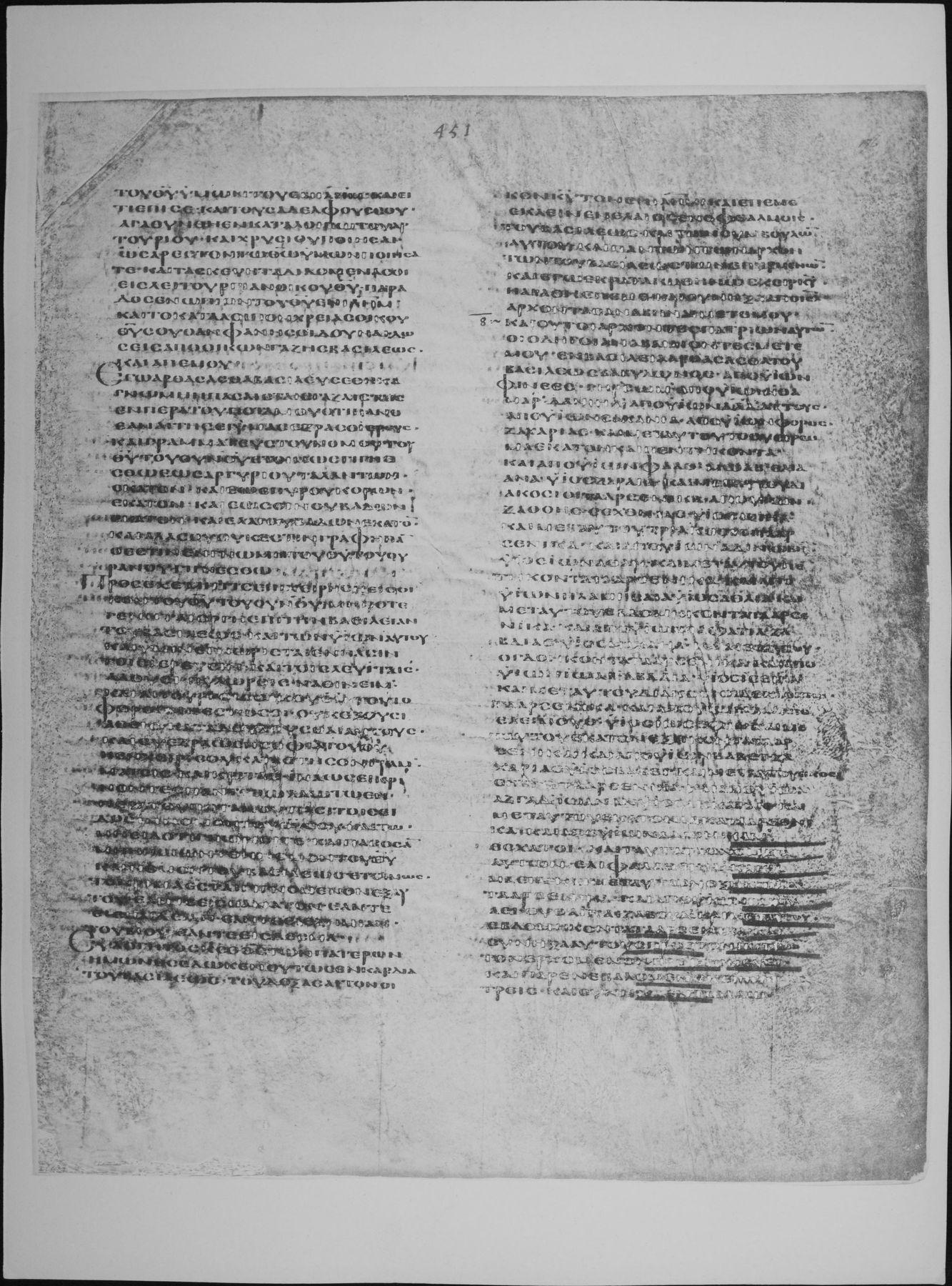
2 Esdras (Ezra) 8:1-9 is on fol. 451r (full-size facsimile of 1879-83, Internet Archive codex-alexandrinus leaf 926). The 1957 reduced facsimile prints beneath this page: 2 Esdras (Ezra) vii. 17-viii. 15. Checked on the plate: the page begins inside 2 Esdras (Ezra) 7:17 (first words read: ΚΑΙ ΕΙ ΤΙ ΕΠΙ ΣΕ ΚΑΙ ΤΟΥΣ ΑΔΕΛΦΟΥΣ ΣΟΥ ΑΓΑΘΥΝΘΗ ΕΝ ΚΑΤΑΛΟΙΠΩ ΤΟΥ ΑΡΓΥΡΙΟΥ). Note: the first words of the column are faint on the plate; the words given are the first that can be read with confidence.
1Καὶ οὗτοι οἱ ἄρχοντες πατριῶν αὐτῶν, οἱ ὁδηγοὶ ἀναβαίνοντες μετ᾽ ἐμοῦ ἐν βασιλείᾳ Ἀρθασθὰ τοῦ βασιλέως Βαβυλῶνος. 2ἀπὸ υἱῶν Φεινεές, Γηρσώμ· ἀπὸ υἱῶν Ἰθαμάρ, Δανιήλ· ἀπὸ υἱῶν Δαυείδ, Τούς· 3ἀπὸ υἱῶν Σαναχιὰ ἀπὸ υἱῶν Φορός, Ζαχαρίας, καὶ μετ᾽ αὐτοῦ τὸ σύστρεμμα ἑκατὸν καὶ πεντήκοντα· 4ἀπὸ υἱῶν Φααθμωάβ, Ἐλιανὰ υἱὸς Ζαρειά, καὶ μετ᾽ αὐτοῦ διακόσιοι τὰ ἀρσενικά· 6καὶ ἀπὸ υἱῶν Ἀδείν, Ὠβὴθ υἱὸς Ἰωναθάν, καὶ μετ᾽ αὐτοῦ πεντήκοντα τὰ ἀρσενικά· 7καὶ ἀπὸ υἱῶν Ἠλά, Ἰοσειὰ υἱὸς Ἀθελεί, καὶ μετ᾽ αὐτοῦ ἑβδομήκοντα τὰ ἀρσενικά· 8καὶ ἀπὸ υἱῶν Σαφατειά, Ζαβδειὰ υἱὸς Μειχαήλ, καὶ μετ᾽ αὐτοῦ ὀγδοήκοντα τὰ ἀρσενικά· 9καὶ ἀπὸ υἱῶν Ἰωάβ, Ἀδειὰ υἱὸς Ἰεμά, καὶ μετ᾽ αὐτοῦ διακόσιοι δέκα ὀκτὼ τὰ ἀρσενικά·
1And these are the heads of their families, the leaders that went up with me in the reign of Arthasastha the king of Babylon. 2Of the sons of Phinees; Gerson: of the sons of Ithamar; Daniel: of the sons of David; Attus. 3Of the sons of Sachania, and of the sons of Phoros; Zacharias: and with him a company of a hundred and fifty. 4Of the sons of Phaath-Moab; Eliana the son of Saraia, and with him two hundred that were males. 5And of the sons of Zathoes; Sechenias the son of Aziel, and with him three hundred males. 6And of the sons of Adin; Obeth the son of Jonathan, and with him fifty males. 7And of the sons of Elam; Isæas the son of Athelia, and with him seventy males. 8And of the sons of Saphatia; Zabadias the son of Michael, and with him eighty males. 9And of the sons of Joab; Abadia the son of Jeiel, and with him two hundred and eighteen males.
Where on the image
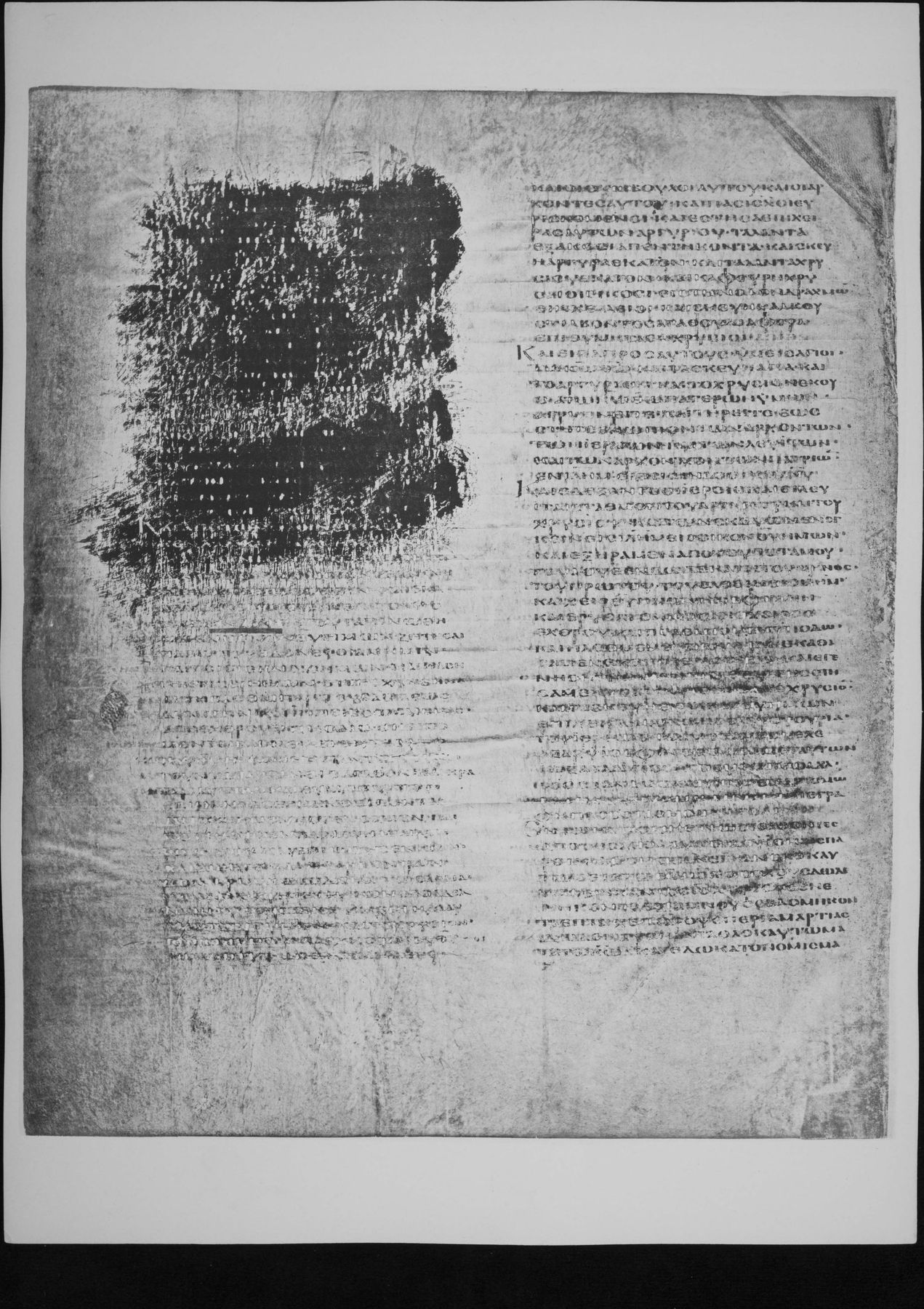
2 Esdras (Ezra) 8:10-15 is on fol. 451r (full-size facsimile of 1879-83, Internet Archive codex-alexandrinus leaf 926). The 1957 reduced facsimile prints beneath this page: 2 Esdras (Ezra) vii. 17-viii. 15. Checked on the plate: the page begins inside 2 Esdras (Ezra) 7:17 (first words read: ΚΑΙ ΕΙ ΤΙ ΕΠΙ ΣΕ ΚΑΙ ΤΟΥΣ ΑΔΕΛΦΟΥΣ ΣΟΥ ΑΓΑΘΥΝΘΗ ΕΝ ΚΑΤΑΛΟΙΠΩ ΤΟΥ ΑΡΓΥΡΙΟΥ). Note: the first words of the column are faint on the plate; the words given are the first that can be read with confidence. 2 Esdras (Ezra) 8:15-17 is on fol. 451v (full-size facsimile of 1879-83, Internet Archive codex-alexandrinus leaf 927). The 1957 reduced facsimile prints beneath this page: 2 Esdras (Ezra) viii. 15-viii. 36. Checked on the plate: the page begins inside 2 Esdras (Ezra) 8:15 (first words read: ΚΑΙ ΟΙ ΣΥΜΒΟΥΛΟΙ ΑΥΤΟΥ ΚΑΙ ΟΙ ΑΡΧΟΝΤΕΣ ΑΥΤΟΥ ΚΑΙ ΠΑΣ ΙΣΡΑΗΛ). Note: the upper part of column 1 is darkened on the leaf and cannot be read on either facsimile, so the page start follows the caption (viii. 15); the words given are the first line of column 2 (Ezra 8:25), which confirm the page.
10καὶ ἀπὸ υἱῶν Σαλειμοὺθ υἱὸς Ἰωσεφειά, καὶ μετ᾽ αὐτοῦ ἑκατὸν ἑξήκοντα τὰ ἀρσενικά· 11καὶ ἀπὸ υἱῶν Βαβεί, καὶ Ἀζαριὰ υἱὸς Βαβεί, καὶ μετ᾽ αὐτοῦ ἑβδομήκοντα ὀκτὼ τὰ ἀρσενικά· 12καὶ ἀπὸ υἱῶν Ἀστάδ, Ἰωνὰν υἱὸς Ἁκατάν, καὶ μετ᾽ αὐτοῦ ἑκατὸν δέκα τὰ ἀρσενικά· 13καὶ ἀπὸ υἱῶν Ἀδανεικὰμ ἔσχατοι, καὶ ταῦτα τὰ ὀνόματα αὐτῶν· Ἀλειφὰτ καὶ Εὐειὰ καὶ Σαμαιά, ἑξήκοντα τὰ ἀρσενικά· 14καὶ ἀπὸ υἱῶν Βαγὸ Οὐθί, καὶ, μετ᾽ αὐτοῦ ὀγδοήκοντα τὰ ἀρσενικά· 15Καὶ συνῆξα αὐτοὺς πρὸς τὸν ποταμὸν τὸν ἐρχόμενον πρὸς τὸν Εὐείμ, καὶ παρενεβάλομεν ἐκεῖ ἡμέρας τρεῖς· καὶ συνῆκα ἐν τῷ λαῷ καὶ ἐν τοῖς ἱερεῦσιν, καὶ ἀπὸ υἱῶν Λευεὶ οὐχ εὗρον ἐκεῖ. 16καὶ ἀπέστειλα τῷ Ἐλεαζάρ, τῷ Ἀριήλ, τῷ Σαμαιὰ καὶ τῷ Ἀλωνὰμ καὶ τῷ Ἀρὲβ καὶ τῷ Ἐλναθὰμ καὶ τῷ Ναθὰν καὶ τῷ Ζαχαρίᾳ καὶ τῷ Μεσουὰμ ἄνδρας· καὶ τῷ Ἀρεὶβ καὶ τῷ Ἐαναθὰν συνιόντας. 17καὶ ἐξήνεγκα αὐτοὺς ἐπὶ ἄρχοντος ἐν ἀργυρίῳ τοῦ τόπου, καὶ ἔθηκα ἐν στόματι αὐτῶν λόγους λαλῆσαι πρὸς τοὺς ἀδελφοὺς αὐτῶν τῶν Ἀθανείμ ἐν ἀργυρίῳ τόπου τοῦ ἐνέγκαι ἡμῖν ᾄδοντας εἰς οἶκον θεοῦ ἡμῶν.
10And of the sons of Baani; Selimuth the son of Josephia, and with him a hundred and sixty males. 11And of the sons of Babi; Zacharias the son of Babi, and with him twenty-eight males. 12And of the sons of Asgad; Joanan the son of Accatan, and with him a hundred and ten males. 13And of the sons of Adonicam were the last, and these were their names, Eliphalat, Jeel, and Samæa, and with them sixty males. 14And of the sons of Baguæ, Uthai, and Zabud, and with him seventy males. 15And I gathered them to the river that comes to Evi, and we encamped there three days: and I reviewed the people and the priests, and found none of the sons of Levi there. 16And I sent men of understanding to Eleazar, to Ariel, to Semeias, and to Alonam, and to Jarib, and to Elnatham, and to Nathan, and to Zacharias, and to Mesollam, and to Joarim, and to Elnathan. 17And I forwarded them to the rulers with the money of the place, and I put words in their mouth to speak to their brethren the Athinim with the money of the place, that they should bring us singers for the house of our God.
Where on the image
2 Esdras (Ezra) 8:18-25 is on fol. 451v (full-size facsimile of 1879-83, Internet Archive codex-alexandrinus leaf 927). The 1957 reduced facsimile prints beneath this page: 2 Esdras (Ezra) viii. 15-viii. 36. Checked on the plate: the page begins inside 2 Esdras (Ezra) 8:15 (first words read: ΚΑΙ ΟΙ ΣΥΜΒΟΥΛΟΙ ΑΥΤΟΥ ΚΑΙ ΟΙ ΑΡΧΟΝΤΕΣ ΑΥΤΟΥ ΚΑΙ ΠΑΣ ΙΣΡΑΗΛ). Note: the upper part of column 1 is darkened on the leaf and cannot be read on either facsimile, so the page start follows the caption (viii. 15); the words given are the first line of column 2 (Ezra 8:25), which confirm the page.
18καὶ ἤλθοσαν ἡμῖν, ὡς χεὶρ θεοῦ ἡμῶν ἀγαθὴ ἐφ᾽ ἡμᾶς, ἀνὴρ σαχὼχ ἀπὸ υἱῶν Μοολεὶ υἱοῦ Λευεὶ υἱοῦ Ἰσραήλ· καὶ ἀρχὴν ἤλθοσαν υἱοὶ αὐτοῦ καὶ ἀδελφοὶ αὐτοῦ ὀκτὼ καὶ δέκα· 19καὶ τὸν Ἁσεβειὰ καὶ τὸν Ὠσαίαν ἀπὸ υἱῶν Μεραρει, ἀδελφοὶ αὐτοῦ καὶ υἱοὶ αὐτῶν εἴκοσι· 20καὶ ἀπὸ τῶν Ναθεινεὶμ ὧν ἔδωκεν Δαυεὶδ καὶ οἱ ἄρχοντες εἰς δουλείαν τῶν Λευειτῶν, Ναθεινεὶμ διακόσιοι καὶ εἴκοσι· πάντες συνήχθησαν ἐν ὀνόμασιν. 21καὶ ἐκάλεσα ἐκεῖ νηστείαν ἐπὶ τὸν ποταμὸν Θουὲ τοῦ ταπεινωθῆναι ἐνώπιον θεοῦ ἡμῶν, ζητῆσαι παρ᾽ αὐτοῦ ὁδὸν εὐθεῖαν ἡμῖν καὶ τοῖς τέκνοις ἡμῶν καὶ πάσῃ τῇ κτήσει ἡμῶν. 22ὅτι ᾐσχύνθην αἰτήσασθαι παρὰ τοῦ βασιλέως δύναμιν καὶ ἱππεῖς σῶσαι ἡμᾶς ἀπὸ ἐχθροῦ ἐν τῇ ὁδῷ, ὅτι εἴπαμεν τῷ βασιλεῖ λέγοντες Χεὶρ θεοῦ ἡμῶν ἐπὶ πάντας τοὺς ζητοῦντας αὐτὸν εἰς ἀγαθόν, καὶ κράτος αὐτοῦ καὶ θυμὸς αὐτοῦ ἐπὶ πάντας ἐν καταλείποντας αὐτόν. 23καὶ ἐνηστεύσαμεν καὶ ἐζητήσαμεν παρὰ τοῦ θεοῦ ἡμῶν περὶ τούτου, καὶ ἐπήκουσεν ἡμῖν. 24καὶ διέστειλα ἀπὸ ἀρχόντων τῶν ἱερέων δώδεκα, τῷ Σαραιά, Ἁσαβιά, καὶ μετ᾽ αὐτῶν ἀπὸ ἀδελφῶν αὐτῶν δώδεκα. 25καὶ ἔστησα αὐτοῖς τὸ ἀργύριον καὶ τὸ χρυσίον καὶ τὰ σκεύη ἀπαρχῆς οἴκου θεοῦ ἡμῶν, ἃ ὕψωσεν ὁ βασιλεὺς καὶ οἱ σύμβουλοι αὐτοῦ καὶ οἱ ἄρχοντες αὐτοῦ καὶ πᾶς Ἰσραὴλ οἱ εὑρισκόμενοι.
18And they came to us, as the good hand of our God was upon us, even a man of understanding of the sons of Mooli, the son of Levi, the son of Israel, and at the commencement came his sons and his brethren, eighteen. 19And Asebia, and Isaia of the sons of Merari, his brethren and his sons, twenty. 20And of the Nathinim, whom David and the princes had appointed for the service of the Levites there were two hundred and twenty Nathinim; all were gathered by their names. 21And I proclaimed there a fast, at the river Aüe, that we should humble ourselves before our God, to seek of him a straight way for us, and for our children, and for all our property. 22For I was ashamed to ask of the king a guard and horsemen to save us from the enemy in the way: for we had spoken to the king, saying, The hand of our God is upon all that seek him, for good; but his power and his wrath are upon all that forsake him. 23So we fasted, and asked of our God concerning this; and he hearkened to us. 24And I gave charge to twelve of the chiefs of the priests, to Saraia, to Asabia, and ten of their brethren with them. 25And I weighed to them the silver, and the gold, and the vessels of the first-fruits of the house of our God, which the king, and his councillors, and his princes, and all Israel that were found, had dedicated.
Where on the image
2 Esdras (Ezra) 8:26-33 is on fol. 451v (full-size facsimile of 1879-83, Internet Archive codex-alexandrinus leaf 927). The 1957 reduced facsimile prints beneath this page: 2 Esdras (Ezra) viii. 15-viii. 36. Checked on the plate: the page begins inside 2 Esdras (Ezra) 8:15 (first words read: ΚΑΙ ΟΙ ΣΥΜΒΟΥΛΟΙ ΑΥΤΟΥ ΚΑΙ ΟΙ ΑΡΧΟΝΤΕΣ ΑΥΤΟΥ ΚΑΙ ΠΑΣ ΙΣΡΑΗΛ). Note: the upper part of column 1 is darkened on the leaf and cannot be read on either facsimile, so the page start follows the caption (viii. 15); the words given are the first line of column 2 (Ezra 8:25), which confirm the page.
26καὶ ἔστησα ἐπὶ χεῖρας αὐτῶν ἀργυρίου τάλαντα ἑξακόσια καὶ πεντήκοντα, καὶ σκεύη ἀργυρᾶ ἑκατόν, καὶ τάλαντα χρυσίου ἑκατόν· 27καὶ καφουδὴθ χρυσοῖ εἴκοσι εἰς τὴν ὁδὸν χαμανεὶμ χίλιοι, καὶ σκεύη χαλκοῦ στίλβοντος ἀγαθοῦ διάφορα, ἐπιθυμητὰ ἐν χρυσίῳ. 28καὶ εἶπα πρὸς αὐτούς Ὑμεῖς ἅγιοι τῷ κυρίῳ, καὶ τὰ σκεύη ἅγια καὶ τὸ ἀργύριον καὶ τὸ χρυσίον ἑκούσια τῷ κυρίῳ θεῷ πατέρων ἡμῶν· 29ἀγρυπνεῖτε καὶ τηρεῖτε, ἕως στῆτε ἐνώπιον ἀρχόντων τῶν ἱερέων καὶ τῶν Λευειτῶν καὶ τῶν ἀρχόντων τῶν πατριῶν ἐν Ἰερουσαλήμ, εἰς σκηνὰς οἴκου Κυρίου. 30καὶ ἐδέξαντο οἱ ἱερεῖς καὶ οἱ Λευεῖται σταθμὸν τοῦ ἀργυρίου καὶ τοῦ χρυσίου καὶ τῶν σκευῶν, ἐνεγκεῖν εἰς Ἰερουσαλὴμ εἰς οἶκον θεοῦ ἡμῶν. 31Καὶ ἐξήραμεν ἀπὸ τοῦ ποταμοῦ Θουὲ ἐν τῇ δωδεκάτῃ τοῦ μηνὸς τοῦ πρώτου τοῦ ἐλθεῖν εἰς Ἰερουσαλὴμ· καὶ χεὶρ θεοῦ ἡμῶν ἦν ἐφ᾽ ἡμῖν, καὶ ἐρύσατο ἡμᾶς ἀπὸ χειρὸς ἐχθροῦ καὶ πολεμίου ἐν τῇ ὁδῷ. 32καὶ ἤλθομεν εἰς Ἰερουσαλήμ, καὶ ἐκαθίσαμεν ἐκεῖ ἡμέρας τρεῖς. 33καὶ ἐγενήθη τῇ ἡμέρᾳ τῇ τετάρτῃ ἐστήσαμεν τὸ ἀργύριον καὶ τὸ χρυσίον καὶ τὰ σκεύη ἐν οἴκῳ θεοῦ ἡμῶν ἐπὶ χεῖρα Μερειμὼθ υἱοῦ Οὐρεία τοῦ ἱερέως, καὶ μετ᾽ αὐτοῦ Ἐλεαζὰρ υἱὸς Φεινεές, καὶ μετ᾽ αὐτῶν Ἰωζαβὰδ υἱὸς Ἰησοῦ καὶ Νοαδεὶ ἀπὸ Ἐβανναιὰ οἱ Λευεῖται·
26I even weighed into their hands six hundred and fifty talents of silver, and a hundred silver vessels, and a hundred talents of gold; 27and twenty golden bowls, weighing about a thousand drachms, and superior vessels of fine shining brass, precious as gold. 28And I said to them, Ye are holy to the Lord; and the vessels are holy; and the silver and the gold are freewill-offerings to the Lord God of our fathers. 29Be watchful and keep them, until ye weigh them before the chief priests and the Levites, and the chiefs of families in Jerusalem, at the chambers of the house of the Lord. 30So the priests and the Levites took the weight of the silver, and the gold, and the vessels, to bring to Jerusalem into the house of our God. 31And we departed from the river of Aüe on the twelfth day of the first month, to come to Jerusalem: and the hand of our God was upon us, and delivered us from the hand of the enemy and adversary in the way. 32And we came to Jerusalem, and abode there three days. 33And it came to pass on the fourth day that we weighed the silver, and the gold, and the vessels, in the house of our God, into the hand of Merimoth the son of Uria the priest; and with him was Eleazar the son of Phinees, and with them Jozabad the son of Jesus, and Noadia the son of Banaia, the Levites.
Where on the image
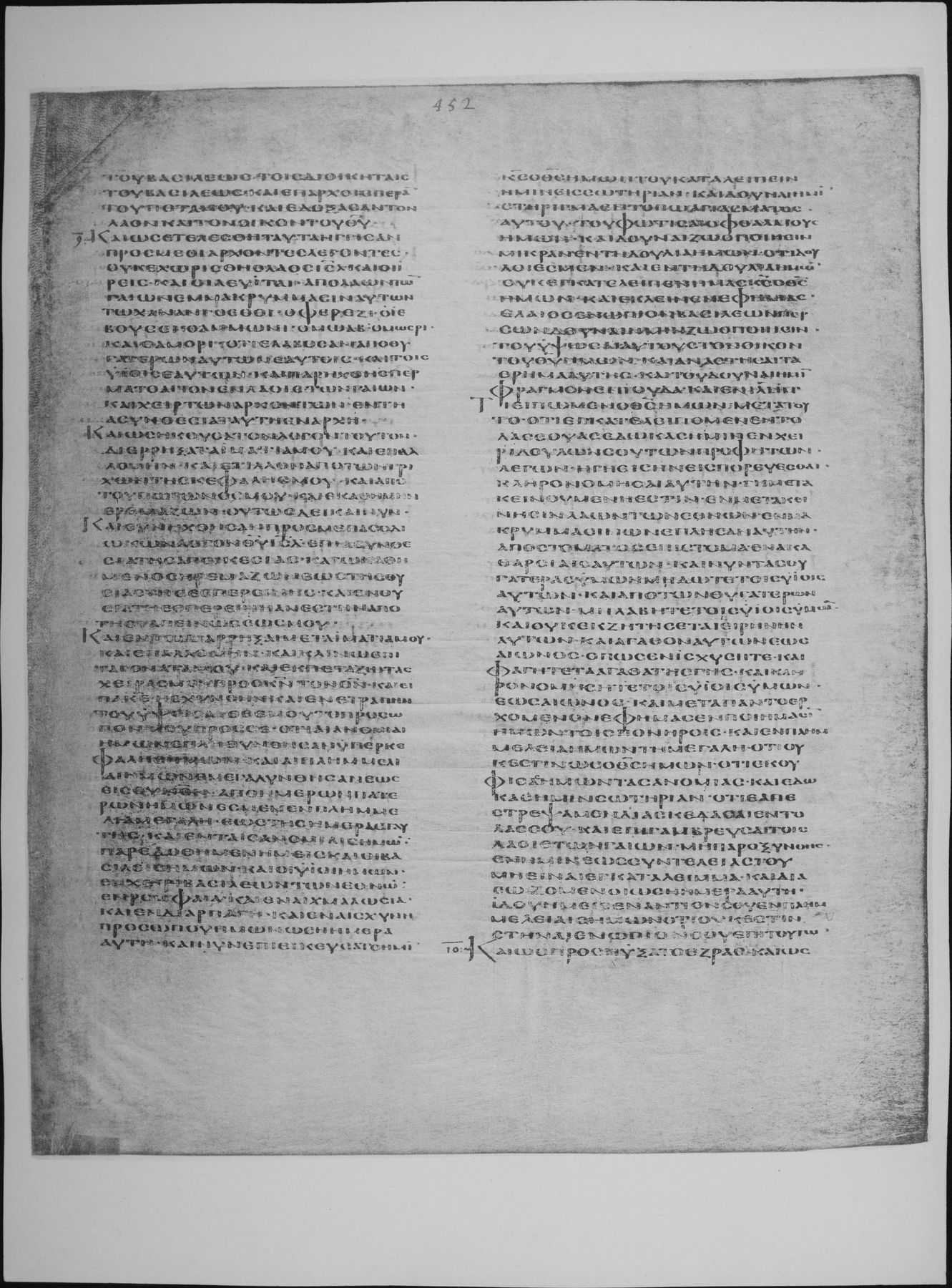
2 Esdras (Ezra) 8:34-36 is on fol. 451v (full-size facsimile of 1879-83, Internet Archive codex-alexandrinus leaf 927). The 1957 reduced facsimile prints beneath this page: 2 Esdras (Ezra) viii. 15-viii. 36. Checked on the plate: the page begins inside 2 Esdras (Ezra) 8:15 (first words read: ΚΑΙ ΟΙ ΣΥΜΒΟΥΛΟΙ ΑΥΤΟΥ ΚΑΙ ΟΙ ΑΡΧΟΝΤΕΣ ΑΥΤΟΥ ΚΑΙ ΠΑΣ ΙΣΡΑΗΛ). Note: the upper part of column 1 is darkened on the leaf and cannot be read on either facsimile, so the page start follows the caption (viii. 15); the words given are the first line of column 2 (Ezra 8:25), which confirm the page. 2 Esdras (Ezra) 8:36 is on fol. 452r (full-size facsimile of 1879-83, Internet Archive codex-alexandrinus leaf 928). The 1957 reduced facsimile prints beneath this page: 2 Esdras (Ezra) viii. 36-x. 1. Checked on the plate: the page begins inside 2 Esdras (Ezra) 8:36 (first words read: ΤΟΥ ΒΑΣΙΛΕΩΣ ΤΟΙΣ ΔΙΟΙΚΗΤΑΙΣ ΤΟΥ ΒΑΣΙΛΕΩΣ ΚΑΙ ΕΠΑΡΧΟΙΣ ΠΕΡΑΝ ΤΟΥ ΠΟΤΑΜΟΥ).
34ἐν ἀριθμῷ καὶ ἐν σταθμῷ τὰ πάντα, καὶ ἐγράφη πᾶς ὁ σταθμός. ἐν τῷ καιρῷ ἐκείνῳ 35διελθόντες ἐκ τῆς αἰχμαλωσίας υἱοὶ τῆς παροικίας προσήνεγκαν ὁλοκαυτώσεις τῷ θεῷ Ἰσραήλ, μόσχους δώδεκα περὶ παντὸς Ἰσραήλ, κριοὺς ἐνενήκοντα ἕξ, ἀμνοὺς ἑβδομήκοντα καὶ ἑπτά, χιμάρους περὶ ἁμαρτίας δώδεκα, τὰ πάντα ὁλοκαυτωμάτων. 36καὶ ἔδωκαν τὸ νόμισμα τοῦ βασιλέως τοῖς διοικηταῖς τοῦ βασιλέως καὶ ἐπάρχοις πέραν τοῦ ποταμοῦ· καὶ ἐδόξασαν τὸν λαὸν καὶ τὸν οἶκον τοῦ θεοῦ.
34All things were reckoned by number and weight, and the whole weight was written down. 35At that time the children of the banishment that came from the captivity offered whole-burnt-offerings to the God of Israel, twelve calves for all Israel, ninety-six rams, seventy-seven lambs, twelve goats for a sin-offering: all whole-burnt-offerings to the Lord. 36And they gave the king's mandate to the king's lieutenants, and the governors beyond the river: and they honoured the people and the house of God.
Cite
Sources
- Source: Codex Alexandrinus (British Library Royal MS 1 D. VI) via the British Museum photographic facsimiles of 1879-83 and 1957 (Internet Archive) + Swete's Septuagint + Brenton's English (holding institution)
- Critical edition: H. B. Swete, The Old Testament in Greek according to the Septuagint (1909)
← previous · → next · v cycle view · l back to library