Genesis, Chapter 17 (Codex Alexandrinus)
Introduction
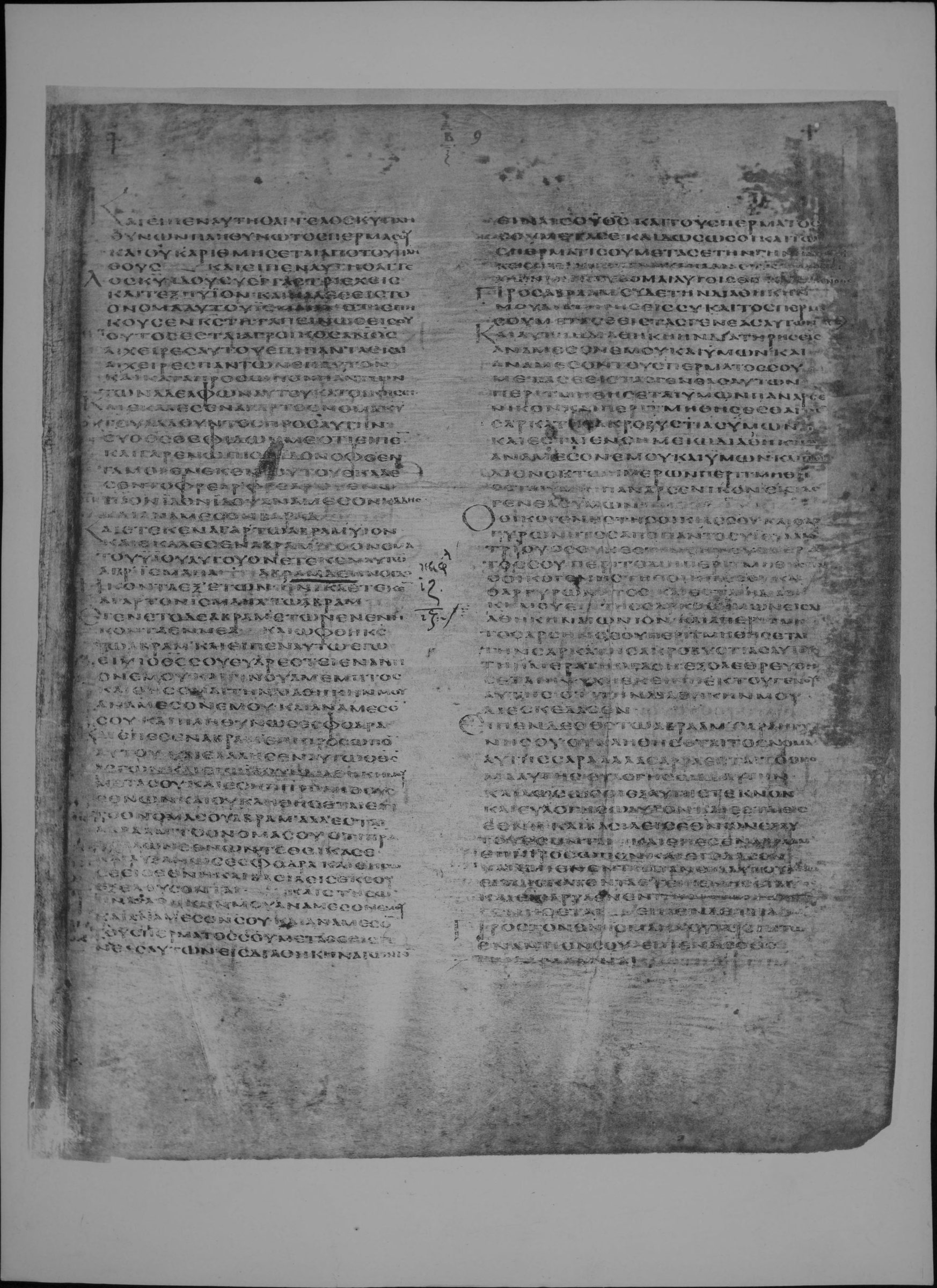
Genesis 17 in the Greek Old Testament (the Septuagint) as written in Codex Alexandrinus, a Greek Bible copied in the fifth century, probably in Egypt, and now in the British Library (Royal MS 1 D. V, the first of its four volumes). It is one of the three great early codices of the whole Greek Bible, with Codex Vaticanus and Codex Sinaiticus, and for Genesis 1:1-46:28, which Codex Vaticanus has lost, it is the oldest surviving complete Greek text (older papyri such as the Berlin Genesis papyrus and Chester Beatty 961 survive only in part).
This entry meets the strict three-criteria standard of the Theosis Library:
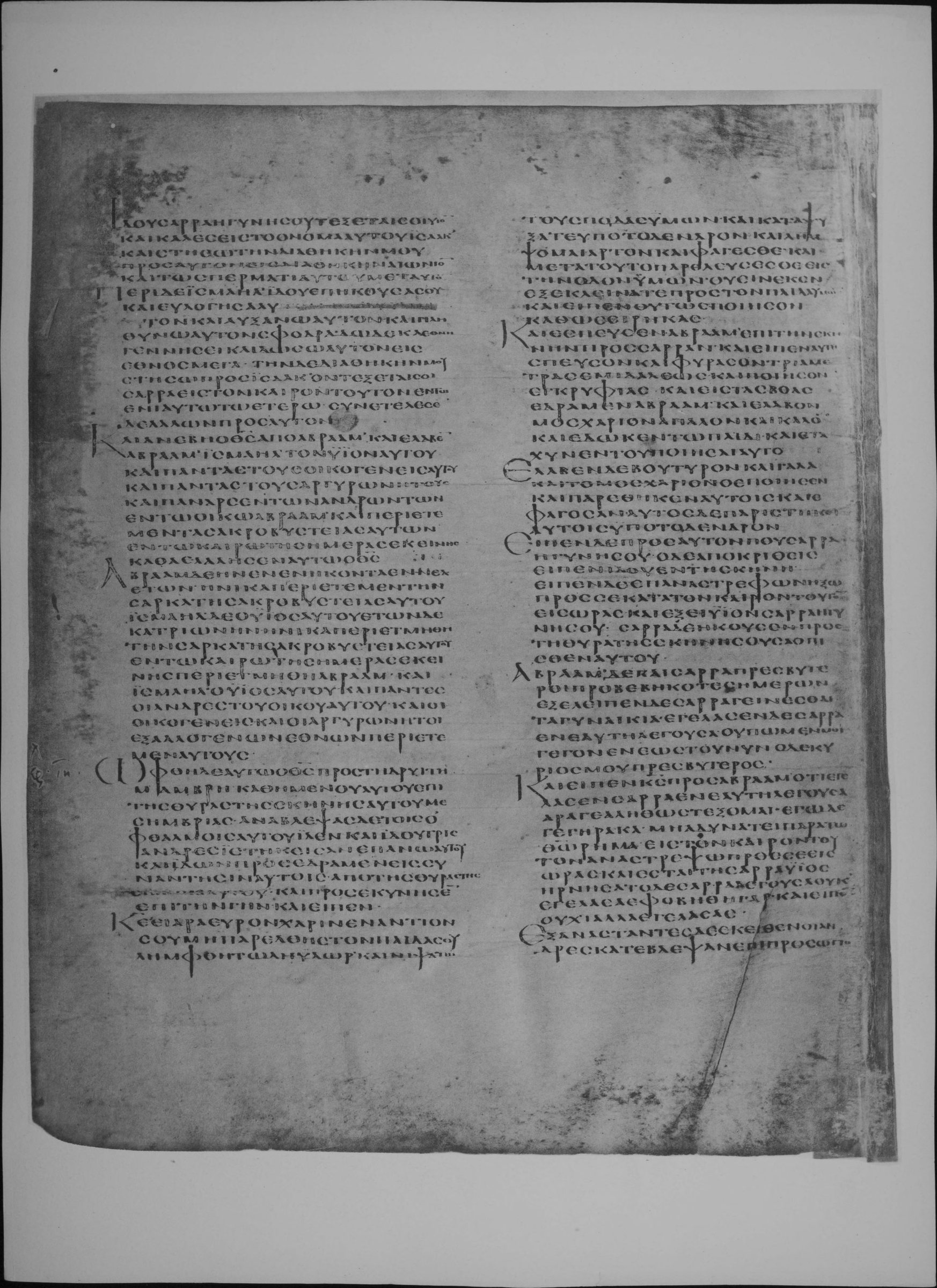
- Manuscript scan: the pages of Codex Alexandrinus carrying this chapter (fol. 9r, fol. 9v), from the full-size photographic (autotype) facsimile published by the British Museum in 1879-1883, as digitised on the Internet Archive. The verse range of every page comes from the reduced photographic facsimile of 1915, which prints it beneath each plate, and the opening words of every page were read on the plate to confirm the page and the verse it begins with. Each section links to the page or pages that hold its verses. Folio numbers are those written at the head of each leaf and visible on the plates.
- Original text: Swete's edition, which in Genesis 1:1-46:28 prints the text of Codex Alexandrinus itself (Codex Vaticanus has lost these chapters), with the spelling of A for the most part. Swete adds accents, breathings and punctuation and expands the abbreviated sacred names, so the plate shows the same text in unaccented capitals.
- English translation: Sir Lancelot C. L. Brenton, The Septuagint Version of the Old Testament (1844; 1851 edition), a translation of the Greek, public domain, from the eBible.org text.
How was this verified? (Provenance)
Where on the image
Genesis 17:1-8 is on fol. 9r (full-size facsimile of 1879-83, Internet Archive codex-alexandrinus leaf 38). The 1915 reduced facsimile prints beneath this page: Gen. xvi. 10-xvii. 19. Checked on the plate: the page begins at the start of Genesis 16:10 (first words read: ΚΑΙ ΕΙΠΕΝ ΑΥΤΗ Ο ΑΓΓΕΛΟΣ ΚΥ ΠΛΗΘΥΝΩΝ ΠΛΗΘΥΝΩ ΤΟ ΣΠΕΡΜΑ ΣΟΥ).
1Ἐγένετο δὲ Ἀβρὰμ ἐτῶν ἐνενήκοντα ἐννέα, καὶ ὤφθη Κύριος τῷ Ἀβρὰμ καὶ εἶπεν αὐτῷ Ἐγώ εἰμι ὁ θεός σου· εὐαρέστει ἐναντίον ἐμοῦ, καὶ γίνου ἄμεμπτος· 2καὶ θήσομαι τὴν διαθήκην μου ἀνὰ μέσον ἐμοῦ καὶ ἀνὰ μέσον σοῦ, καὶ πληθυνῶ σε σφόδρα. 3καὶ ἔπεσεν Ἀβρὰμ ἐπὶ πρόσωπον αὐτοῦ, καὶ ἐλάλησεν αὐτῷ ὁ θεὸς λέγων 4Καὶ ἐγώ, ἰδοὺ ἡ διαθήκη μου μετὰ σοῦ· καὶ ἔσῃ πατὴρ πλήθους ἐθνῶν. 5καὶ οὐ κληθήσεται ἔτι τὸ ὄνομά σου Ἀβράμ, ἀλλ᾽ ἔσται Ἀβραὰμ τὸ ὄνομά σου· ὅτι πατέρα πολλῶν ἐθνῶν τέθεικά σε. 6καὶ αὐξανῶ σε σφόδρα, καὶ θήσω σε εἰς ἔθνη, καὶ βασιλεῖς ἐκ σοῦ ἐξελεύσονται. 7καὶ στήσω τὴν διαθήκην μου ἀνὰ μέσον ἐμοῦ καὶ ἀνὰ μέσον σοῦ καὶ ἀνὰ μέσον τοῦ σπέρματός σου μετὰ σὲ εἰς γενεὰς αὐτῶν εἰς διαθήκην αἰώνιον, εἶναί σου θεὸς καὶ τοῦ σπέρματός σου μετὰ σέ. 8καὶ δώσω σοι καὶ τῷ σπέρματί σου μετὰ σὲ τὴν γῆν ἣν παροικεῖς, πᾶσαν τὴν γῆν Χανάαν, εἰς κατάσχεσιν αἰώνιον· καὶ ἔσομαι αὐτοῖς θεός.
1And Abram was ninety-nine years old, and the Lord appeared to Abram and said to him, I am thy God, be well-pleasing before me, and be blameless. 2And I will establish my covenant between me and thee, and I will multiply thee exceedingly. 3And Abram fell upon his face, and God spoke to him, saying, 4And I, behold! my covenant is with thee, and thou shalt be a father of a multitude of nations. 5And thy name shall no more be called Abram, but thy name shall be Abraam, for I have made thee a father of many nations. 6And I will increase thee very exceedingly, and I will make nations of thee, and kings shall come out of thee. 7And I will establish my covenant between thee and thy seed after thee, to their generations, for an everlasting covenant, to be thy God, and the God of thy seed after thee. 8And I will give to thee and to thy seed after thee the land wherein thou sojournest, even all the land of Chanaan for an everlasting possession, and I will be to them a God.
Where on the image
Genesis 17:9-16 is on fol. 9r (full-size facsimile of 1879-83, Internet Archive codex-alexandrinus leaf 38). The 1915 reduced facsimile prints beneath this page: Gen. xvi. 10-xvii. 19. Checked on the plate: the page begins at the start of Genesis 16:10 (first words read: ΚΑΙ ΕΙΠΕΝ ΑΥΤΗ Ο ΑΓΓΕΛΟΣ ΚΥ ΠΛΗΘΥΝΩΝ ΠΛΗΘΥΝΩ ΤΟ ΣΠΕΡΜΑ ΣΟΥ).
9καὶ εἶπεν ὁ θεὸς πρὸς Ἀβραάμ Σὺ δὲ τὴν διαθήκην μου διατηρήσεις, σὺ καὶ τὸ σπέρμα σου μετὰ σὲ εἰς τὰς γενεὰς αὐτῶν. 10καὶ αὕτη ἡ διαθήκη ἣν διατηρήσεις ἀνὰ μέσον ἐμοῦ καὶ ὑμῶν, καὶ ἀνὰ μέσον τοῦ σπέρματός σου μετὰ σὲ εἰς τὰς γενεὰς αὐτῶν· περιτμηθήσεται ὑμῶν πᾶν ἀρσενικόν. 11καὶ περιτμηθήσεσθε τὴν σάρκα τῆς ἀκροβυστίας ὑμῶν, καὶ ἔσται ἐν σημείῳ διαθήκης ἀνὰ μέσον ἐμοῦ καὶ ὑμῶν. 12καὶ παιδίον ὀκτὼ ἡμερῶν περιτμηθήσεται ὑμῖν πᾶν ἀρσενικὸν εἰς τὰς γενεὰς ὑμῶν· ὁ οἰκογενὴς τῆς οἰκίας σου καὶ ὁ ἀργυρώνητος ἀπὸ παντὸς υἱοῦ ἀλλοτρίου, ὃς οὐκ ἔστιν ἐκ τοῦ σπέρματός σου, 13περιτομῇ περιτμηθήσεται, ὁ οἰκογενὴς τῆς οἰκίας σου καὶ ὁ ἀργυρώνητος. καὶ ἔσται ἡ διαθήκη μου ἐπὶ τῆς σαρκὸς ὑμῶν εἰς διαθήκην αἰώνιον. 14καὶ ἀπερίτμητος ἄρσην, ὃς οὐ περιτμηθήσεται τὴν σάρκα τῆς ἀκροβυστίας αὐτοῦ τῇ ἡμέρᾳ τῇ ὀγδόῃ, ἐξολεθρευθήσεται ἡ ψυχὴ ἐκείνη ἐκ τοῦ γένους αὐτῆς· ὅτι τὴν διαθήκην μου διεσκέδασεν. 15Εἶπεν δὲ ὁ θεὸς τῷ Ἀβραάμ Σάρα ἡ γυνή σου, οὐ κληθήσεται τὸ ὄνομα αὐτῆς Σάρα, ἀλλὰ Σάρρα ἔσται τὸ ὄνομα αὐτῆς· 16εὐλογήσω δὲ αὐτήν, καὶ δώσω σοι ἐξ αὐτῆς τέκνον. καὶ εὐλογήσω αὐτόν, καὶ ἔσται εἰς ἔθνη, καὶ βασιλεῖς ἐθνῶν ἐξ αὐτοῦ ἔσονται.
9And God said to Abraam, Thou also shalt fully keep my covenant, thou and thy seed after thee for their generations. 10And this is the covenant which thou shalt fully keep between me and you, and between thy seed after thee for their generations; every male of you shall be circumcised. 11And ye shall be circumcised in the flesh of your foreskin, and it shall be for a sign of a covenant between me and you. 12And the child of eight days old shall be circumcised by you, every male throughout your generations, and the servant born in the house and he that is bought with money, of every son of a stranger, who is not of thy seed. 13He that is born in thy house, and he that is bought with money shall be surely circumcised, and my covenant shall be on your flesh for an everlasting covenant. 14And the uncircumcised male, who shall not be circumcised in the flesh of his foreskin on the eighth day, that soul shall be utterly destroyed from its family, for he has broken my covenant. 15And God said to Abraam, Sara thy wife—her name shall not be called Sara, Sarrha shall be her name. 16And I will bless her, and give thee a son of her, and I will bless him, and he shall become nations, and kings of nations shall be of him.
Where on the image
Genesis 17:17-19 is on fol. 9r (full-size facsimile of 1879-83, Internet Archive codex-alexandrinus leaf 38). The 1915 reduced facsimile prints beneath this page: Gen. xvi. 10-xvii. 19. Checked on the plate: the page begins at the start of Genesis 16:10 (first words read: ΚΑΙ ΕΙΠΕΝ ΑΥΤΗ Ο ΑΓΓΕΛΟΣ ΚΥ ΠΛΗΘΥΝΩΝ ΠΛΗΘΥΝΩ ΤΟ ΣΠΕΡΜΑ ΣΟΥ). Genesis 17:19-24 is on fol. 9v (full-size facsimile of 1879-83, Internet Archive codex-alexandrinus leaf 39). The 1915 reduced facsimile prints beneath this page: Gen. xvii. 19-xviii. 16. Checked on the plate: the page begins inside Genesis 17:19 (first words read: ΙΔΟΥ ΣΑΡΡΑ Η ΓΥΝΗ ΣΟΥ ΤΕΞΕΤΑΙ ΣΟΙ ΥΙΟΝ ΚΑΙ ΚΑΛΕΣΕΙΣ ΤΟ ΟΝΟΜΑ ΑΥΤΟΥ).
17καὶ ἔπεσεν Ἀβραὰμ ἐπὶ πρόσωπον καὶ ἐγέλασεν καὶ εἶπεν ἐν τῇ διανοίᾳ αὐτοῦ λέγων Εἰ τῷ ἑκατονταετεῖ γενήσεται υἱός, καὶ εἰ Σάρρᾳ ἐνενήκοντα ἐτῶν γενήσεται; 18εἶπεν δὲ Ἀβραὰμ πρὸς τὸν θεόν Ἰσμαὴλ οὗτος ζήτω ἐναντίον σου. 19εἶπεν δὲ ὁ θεὸς πρὸς Ἀβραάμ Ναί· ἰδοὺ Σάρρα ἡ γυνή σου τέξεταί σοι υἱόν, καὶ καλέσεις τὸ ὄνομα αὐτοῦ Ἰσαάκ· καὶ στήσω τὴν διαθήκην μου πρὸς αὐτὸν εἰς διαθήκην αἰώνιον, καὶ τῷ σπέρματι αὐτοῦ μετ᾽ αὐτόν. 20περὶ δὲ Ἰσμαὴλ ἰδοὺ ἐπήκουσά σου· καὶ εὐλόγησα αὐτόν, καὶ αὐξανῶ αὐτὸν καὶ πληθυνῶ αὐτὸν σφόδρα· δώδεκα ἔθνη γεννήσει, καὶ δώσω αὐτὸν εἰς ἔθνος μέγα. 21τὴν δὲ διαθήκην μου στήσω πρὸς Ἰσαάκ, ὃν τέξεταί σοι Σάρρα εἰς τὸν καιρὸν τοῦτον ἐν τῷ ἐνιαυτῷ τῷ ἑτέρῳ. 22συνετέλεσεν δὲ λαλῶν πρὸς αὐτόν, καὶ ἀνέβη ὁ θεὸς ἀπὸ Ἀβραάμ. 23Καὶ ἔλαβεν Ἀβραὰμ Ἰσμαὴλ τὸν υἱὸν αὐτοῦ καὶ πάντας τοὺς οἰκογενεῖς αὐτοῦ καὶ πάντας τοὺς ἀργυρωνήτους καὶ πᾶν ἄρσεν τῶν ἀνδρῶν τῶν ἐν τῷ οἴκῳ Ἀβραάμ, καὶ περιέτεμεν τὰς ἀκροβυστίας αὐτῶν ἐν τῷ καιρῷ τῆς ἡμέρας ἐκείνης, καθὰ ἐλάλησεν αὐτῷ ὁ θεός. 24Ἀβραὰμ δὲ ἦν ἐνενήκοντα ἐννέα ἐτῶν, ἡνίκα περιέτεμεν τὴν σάρκα τῆς ἀκροβυστίας αὐτοῦ·
17And Abraam fell upon his face, and laughed; and spoke in his heart, saying, Shall there be a child to one who is a hundred years old, and shall Sarrha who is ninety years old, bear? 18And Abraam said to God, Let this Ismael live before thee. 19And God said to Abraam, Yea, behold, Sarrha thy wife shall bear thee a son, and thou shalt call his name Isaac; and I will establish my covenant with him, for an everlasting covenant, to be a God to him and to his seed after him. 20And concerning Ismael, behold, I have heard thee, and, behold, I have blessed him, and will increase him and multiply him exceedingly; twelve nations shall he beget, and I will make him a great nation. 21But I will establish my covenant with Isaac, whom Sarrha shall bear to thee at this time, in the next year. 22And he left off speaking with him, and God went up from Abraam. 23And Abraam took Ismael his son, and all his home-born servants, and all those bought with money, and every male of the men in the house of Abraam, and he circumcised their foreskins in the time of that day, according as God spoke to him. 24And Abraam was ninety-nine years old, when he was circumcised in the flesh of his foreskin.
Where on the image
Genesis 17:25-27 is on fol. 9v (full-size facsimile of 1879-83, Internet Archive codex-alexandrinus leaf 39). The 1915 reduced facsimile prints beneath this page: Gen. xvii. 19-xviii. 16. Checked on the plate: the page begins inside Genesis 17:19 (first words read: ΙΔΟΥ ΣΑΡΡΑ Η ΓΥΝΗ ΣΟΥ ΤΕΞΕΤΑΙ ΣΟΙ ΥΙΟΝ ΚΑΙ ΚΑΛΕΣΕΙΣ ΤΟ ΟΝΟΜΑ ΑΥΤΟΥ).
25Ἰσμαὴλ δὲ ὁ υἱὸς αὐτοῦ ἐτῶν δέκα τριῶν ἦν, ἡνίκα περιετμήθη τὴν σάρκα τῆς ἀκροβυστίας αὐτοῦ. 26ἐν τῷ καιρῷ τῆς ἡμέρας ἐκείνης περιετμήθη Ἀβραὰμ καὶ Ἰσμαὴλ ὁ υἱὸς αὐτοῦ· 27καὶ πάντες οἱ ἄνδρες τοῦ οἴκου αὐτοῦ καὶ οἱ οἰκογενεῖς καὶ οἱ ἀργυρώνητοι ἐξ ἀλλογενῶν ἐθνῶν, περιέτεμεν αὐτούς.
25And Ismael his son was thirteen years old when he was circumcised in the flesh of his foreskin. 26And at the period of that day, Abraam was circumcised, and Ismael his son, 27and all the men of his house, both those born in the house, and those bought with money of foreign nations.
Cite
Sources
- Source: Codex Alexandrinus (British Library Royal MS 1 D. V) via the British Museum photographic facsimiles of 1879-83 and 1915 (Internet Archive) + Swete's Septuagint + Brenton's English (holding institution)
- Critical edition: H. B. Swete, The Old Testament in Greek according to the Septuagint (1909)
← previous · → next · v cycle view · l back to library