Genesis, Chapter 18 (Codex Alexandrinus)
Introduction
Genesis 18 in the Greek Old Testament (the Septuagint) as written in Codex Alexandrinus, a Greek Bible copied in the fifth century, probably in Egypt, and now in the British Library (Royal MS 1 D. V, the first of its four volumes). It is one of the three great early codices of the whole Greek Bible, with Codex Vaticanus and Codex Sinaiticus, and for Genesis 1:1-46:28, which Codex Vaticanus has lost, it is the oldest surviving complete Greek text (older papyri such as the Berlin Genesis papyrus and Chester Beatty 961 survive only in part).
This entry meets the strict three-criteria standard of the Theosis Library:
- Manuscript scan: the pages of Codex Alexandrinus carrying this chapter (fol. 9v, fol. 10r), from the full-size photographic (autotype) facsimile published by the British Museum in 1879-1883, as digitised on the Internet Archive. The verse range of every page comes from the reduced photographic facsimile of 1915, which prints it beneath each plate, and the opening words of every page were read on the plate to confirm the page and the verse it begins with. Each section links to the page or pages that hold its verses. Folio numbers are those written at the head of each leaf and visible on the plates.
- Original text: Swete's edition, which in Genesis 1:1-46:28 prints the text of Codex Alexandrinus itself (Codex Vaticanus has lost these chapters), with the spelling of A for the most part. Swete adds accents, breathings and punctuation and expands the abbreviated sacred names, so the plate shows the same text in unaccented capitals.
- English translation: Sir Lancelot C. L. Brenton, The Septuagint Version of the Old Testament (1844; 1851 edition), a translation of the Greek, public domain, from the eBible.org text.
How was this verified? (Provenance)
Where on the image
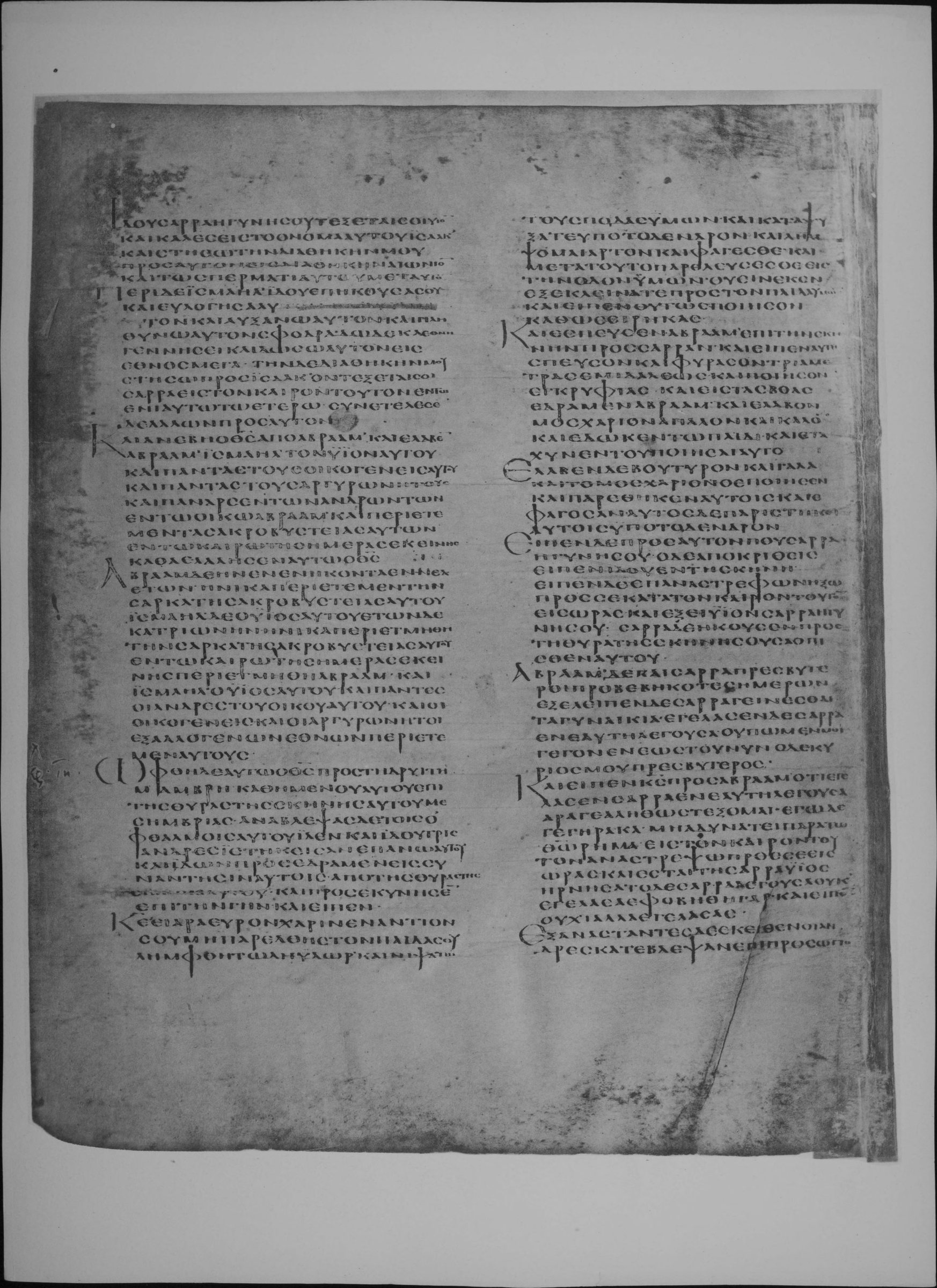
Genesis 18:1-8 is on fol. 9v (full-size facsimile of 1879-83, Internet Archive codex-alexandrinus leaf 39). The 1915 reduced facsimile prints beneath this page: Gen. xvii. 19-xviii. 16. Checked on the plate: the page begins inside Genesis 17:19 (first words read: ΙΔΟΥ ΣΑΡΡΑ Η ΓΥΝΗ ΣΟΥ ΤΕΞΕΤΑΙ ΣΟΙ ΥΙΟΝ ΚΑΙ ΚΑΛΕΣΕΙΣ ΤΟ ΟΝΟΜΑ ΑΥΤΟΥ).
1Ὤφθη δὲ αὐτῷ ὁ θεὸς πρὸς τῇ δρυὶ τῇ Μαμβρή, καθημένου αὐτοῦ ἐπὶ τῆς θύρας τῆς σκηνῆς αὐτοῦ μεσημβρίας. 2ἀναβλέψας δὲ τοῖς ὀφθαλμοῖς αὐτοῦ ἴδεν, καὶ ἰδοὺ τρεῖς ἄνδρες ἱστήκεισαν ἐπάνω αὐτοῦ. καὶ ἰδὼν προσέδραμεν εἰς συνάντησιν αὐτοῖς ἀπὸ τῆς θύρας τῆς σκηνῆς αὐτοῦ, καὶ προσεκύνησεν ἐπὶ τὴν γῆν· 3καὶ εἶπεν Κύριε, εἰ ἄρα εὗρον χάριν ἐναντίον σου, μὴ παρέλθῃς τὸν παῖδά σου. 4λημφθήτω δὴ ὕδωρ, καὶ νιψάτω τοὺς πόδας ὑμῶν· καὶ καταψύξατε ὑπὸ τὸ δένδρον. 5καὶ λήμψομαι ἄρτον, καὶ φάγεσθε· καὶ μετὰ τοῦτο παρελεύσεσθε εἰς τὴν ὁδὸν ὑμῶν, οὗ εἵνεκεν ἐξεκλίνατε πρὸς τὸν παῖδα ὑμῶν. καὶ εἶπεν Οὕτως ποίησον καθὼς εἴρηκας. 6καὶ ἔσπευσεν Ἀβραὰμ ἐπὶ τὴν σκηνὴν πρὸς Σάρραν καὶ εἶπεν αὐτῇ Σπεῦσον καὶ φύρασον τρία μέτρα σεμιδάλεως καὶ ποίησον ἐγκρυφίας. 7καὶ εἰς τὰς βόας ἔδραμεν Ἀβραάμ, καὶ ἔλαβον μοσχάριον ἁπαλὸν καὶ καλόν, καὶ ἔδωκεν τῷ παιδί, καὶ ἐτάχυνεν τοῦ ποιῆσαι αὐτό. 8ἔλαβεν δὲ βούτυρον καὶ γάλα καὶ τὸ μοσχάριον ὃ ἐποίησεν, καὶ παρέθηκεν αὐτοῖς, καὶ ἐφάγοσαν· αὐτὸς δὲ παριστήκει αὐτοῖς ὑπὸ τὸ δένδρον.
1And God appeared to him by the oak of Mambre, as he sat by the door of his tent at noon. 2And he lifted up his eyes and beheld, and lo! three men stood before him; and having seen them he ran to meet them from the door of his tent, and did obeisance to the ground. 3And he said, Lord, if indeed I have found grace in thy sight, pass not by thy servant. 4Let water now be brought, and let them wash your feet, and do ye refresh yourselves under the tree. 5And I will bring bread, and ye shall eat, and after this ye shall depart on your journey, on account of which refreshment ye have turned aside to your servant. And he said, So do, as thou hast said. 6And Abraam hasted to the tent to Sarrha, and said to her, Hasten, and knead three measures of fine flour, and make cakes. 7And Abraam ran to the kine, and took a young calf, tender and good, and gave it to his servant, and he hasted to dress it. 8And he took butter and milk, and the calf which he had dressed; and he set them before them, and they did eat, and he stood by them under the tree.
Where on the image
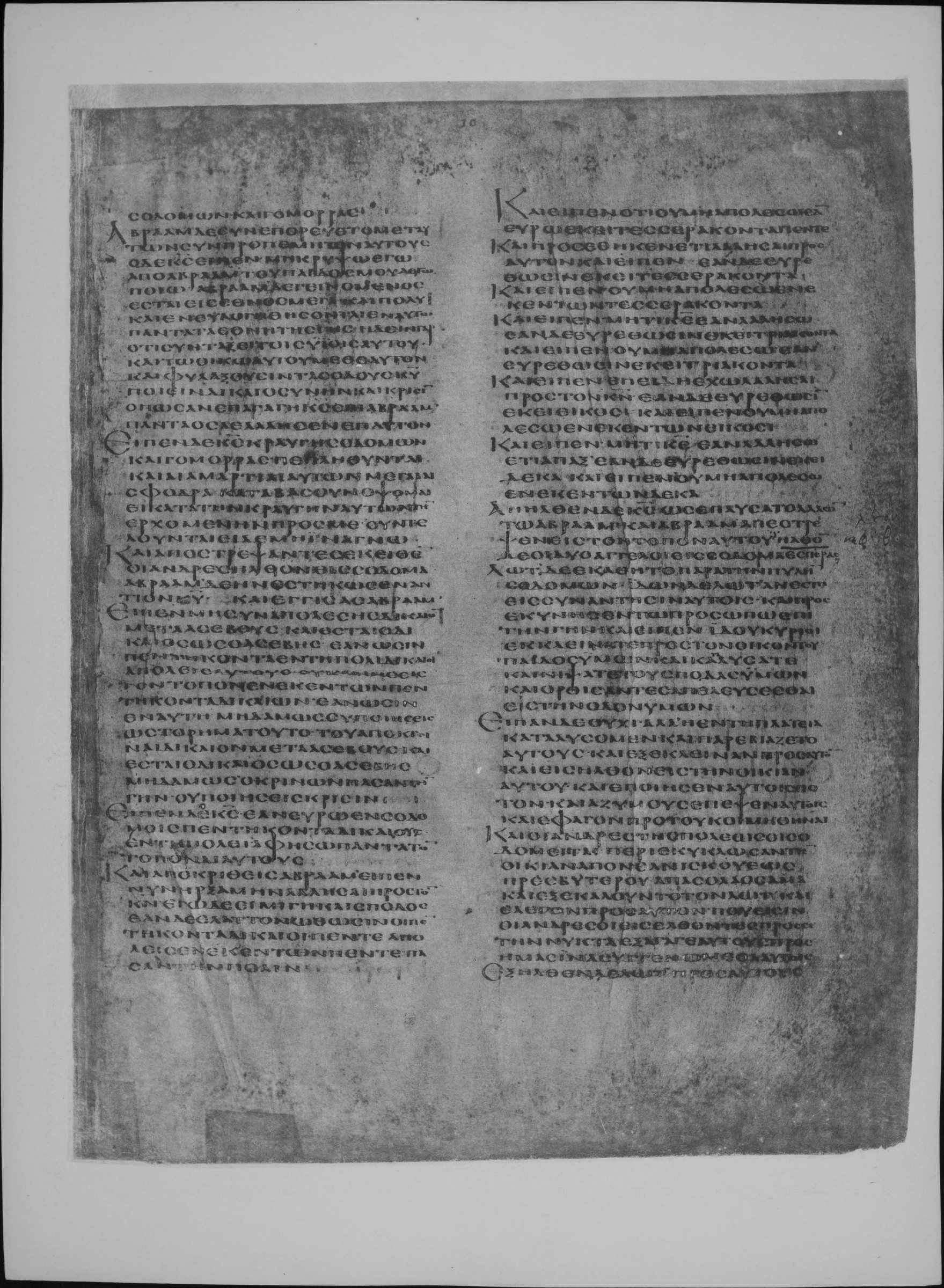
Genesis 18:9-16 is on fol. 9v (full-size facsimile of 1879-83, Internet Archive codex-alexandrinus leaf 39). The 1915 reduced facsimile prints beneath this page: Gen. xvii. 19-xviii. 16. Checked on the plate: the page begins inside Genesis 17:19 (first words read: ΙΔΟΥ ΣΑΡΡΑ Η ΓΥΝΗ ΣΟΥ ΤΕΞΕΤΑΙ ΣΟΙ ΥΙΟΝ ΚΑΙ ΚΑΛΕΣΕΙΣ ΤΟ ΟΝΟΜΑ ΑΥΤΟΥ). Genesis 18:16 is on fol. 10r (full-size facsimile of 1879-83, Internet Archive codex-alexandrinus leaf 40). The 1915 reduced facsimile prints beneath this page: Gen. xviii. 16-xix. 6. Checked on the plate: the page begins inside Genesis 18:16 (first words read: ΣΟΔΟΜΩΝ ΚΑΙ ΓΟΜΟΡΡΑΣ ΑΒΡΑΑΜ ΔΕ ΣΥΝΕΠΟΡΕΥΕΤΟ ΜΕΤ ΑΥΤΩΝ).
9εἶπεν δὲ πρὸς αὐτόν Ποῦ Σάρρα ἡ γυνή σου; ὁ δὲ ἀποκριθεὶς εἶπεν Ἰδοὺ ἐν τῇ σκηνῇ. 10εἶπεν δέ Ἐπαναστρέφων ἣξω πρὸς σὲ κατὰ τὸν καιρὸν τοῦτον εἰς ὣρας, καὶ ἕξει υἱὸν Σάρρα ἡ γυνή σου. Σάρρα δὲ ἤκουσεν πρὸς τῇ θύρᾳ τῆς σκηνῆς, οὖσα ὄπισθεν αὐτοῦ. 11Ἀβραὰμ δὲ καὶ Σάρρα πρεσβύτεροι προβεβηκότες ἡμερῶν· ἐξέλειπεν δὲ Σάρρᾳ γίνεσθαι τὰ γυναίκια. 12ἐγέλασεν δὲ Σάρρα ἐν ἑαυτῇ λέγουσα Οὔπω μέν μοι γέγονεν ἕως τοῦ νῦν· ὁ δὲ κύριός μου πρεσβύτερος. 13καὶ εἶπεν Κύριος πρὸς Ἀβραάμ Ὅτι ἐγέλασεν Σάρρα ἐν ἑαυτῇ λέγουσα Ἆρά γε ἀληθῶς τέξομαι; ἐγὼ δὲ γεγήρακα. 14μὴ ἀδυνατεῖ παρὰ τῷ θεῷ ῥῆμα; εἰς τὸν καιρὸν τοῦτον ἀναστρέψω πρὸς σὲ εἰς ὥρας, καὶ ἔσται τῇ Σάρρᾳ υἱός. 15ἠρνήσατο δὲ Σάρρα λέγουσα Οὐκ ἐγέλασα· ἐφοβήθη γάρ. καὶ εἶπεν Οὐχί, ἀλλὰ ἐγέλασας. 16Ἐξαναστάντες δὲ ἐκεῖθεν οἱ ἄνδρες κατέβλεψαν ἐπὶ πρόσωπον Σοδόμων καὶ Γομόρρας· Ἀβραὰμ δὲ συνεπορεύετο μετ᾽ αὐτῶν συνπροπέμπων αὐτούς.
9And he said to him, Where is Sarrha thy wife? And he answered and said, Behold! in the tent. 10And he said, I will return and come to thee according to this period seasonably, and Sarrha thy wife shall have a son; and Sarrha heard at the door of the tent, being behind him. 11And Abraam and Sarrha were old, advanced in days, and the custom of women ceased with Sarrha. 12And Sarrha laughed in herself, saying, The thing has not as yet happened to me, even until now, and my lord is old. 13And the Lord said to Abraam, Why is it that Sarrha has laughed in herself, saying, Shall I then indeed bear? but I am grown old. 14Shall anything be impossible with the Lord? At this time I will return to thee seasonably, and Sarrha shall have a son. 15But Sarrha denied, saying, I did not laugh, for she was afraid. And he said to her, Nay, but thou didst laugh. 16And the men having risen up from thence looked towards Sodom and Gomorrha. And Abraam went with them, attending them on their journey.
Where on the image
Genesis 18:17-24 is on fol. 10r (full-size facsimile of 1879-83, Internet Archive codex-alexandrinus leaf 40). The 1915 reduced facsimile prints beneath this page: Gen. xviii. 16-xix. 6. Checked on the plate: the page begins inside Genesis 18:16 (first words read: ΣΟΔΟΜΩΝ ΚΑΙ ΓΟΜΟΡΡΑΣ ΑΒΡΑΑΜ ΔΕ ΣΥΝΕΠΟΡΕΥΕΤΟ ΜΕΤ ΑΥΤΩΝ).
17ὁ δὲ κύριος εἶπεν Μὴ κρύψω ἐγὼ ἀπὸ Ἀβραὰμ τοῦ παιδός μου ἃ ἐγὼ ποιῶ; 18Ἀβραὰμ δὲ γινόμενος ἔσται εἰς ἔθνος μέγα καὶ πολύ, καὶ ἐνευλογηθήσονται ἐν αὐτῷ πάντα τὰ ἔθνη τῆς γῆς. 19ᾔδειν γὰρ ὅτι συντάξει τοῖς υἱοῖς αὐτοῦ καὶ τῷ οἴκῳ αὐτοῦ μεθ᾽ ἑαυτόν, καὶ φυλάξουσιν τὰς ὁδοὺς Κυρίου ποιεῖν δικαιοσύνην καὶ κρίσιν, ὅπως ἂν ἐπαγάγῃ Κύριος ἐπὶ Ἀβραὰμ πάντα ὅσα ἐλάλησεν ἐπ᾽ αὐτόν. 20εἶπεν δὲ Κύριος Κραυγὴ Σοδόμων καὶ Γομόρρας πεπλήθυνται, καὶ αἱ ἁμαρτίαι αὐτῶν μεγάλαι σφόδρα. 21καταβὰς οὖν ὄψομαι εἰ κατὰ τὴν κραυγὴν αὐτῶν τὴν ἐρχομένην πρὸς μὲ συντελοῦνται· εἰ δὲ μή, ἵνα γνῶ. 22Καὶ ἀποστρέψαντες ἐκεῖθεν οἱ ἄνδρες ἦλθον εἰς Σόδομα· Ἀβραὰμ δὲ ἦν ἑστηκὼς ἐναντίον Κυρίου. 23καὶ ἐγγίσας Ἀβραὰμ εἶπεν Μὴ συναπολέσῃς δίκαιον μετὰ ἀσεβοῦς, καὶ ἔσται ὁ δίκαιος ὡς ὁ ἀσεβής. 24ἐὰν ὦσιν πεντήκοντα ἐν τῇ πόλει δίκαιοι, ἀπολεῖς αὐτούς; οὐκ ἀνήσεις τὸν τόπον ἕνεκεν τῶν πεντήκοντα δικαίων, ἐὰν ὦσιν ἐν αὐτῇ;
17And the Lord said, Shall I hide from Abraam my servant what things I intend to do? 18But Abraam shall become a great and populous nation, and in him shall all the nations of the earth be blest. 19For I know that he will order his sons, and his house after him, and they will keep the ways of the Lord, to do justice and judgment, that the Lord may bring upon Abraam all things whatsoever he has spoken to him. 20And the Lord said, The cry of Sodom and Gomorrha has been increased towards me, and their sins are very great. 21I will therefore go down and see, if they completely correspond with the cry which comes to me, and if not, that I may know. 22And the men having departed thence, came to Sodom; and Abraam was still standing before the Lord. 23And Abraam drew nigh and said, Wouldest thou destroy the righteous with the wicked, and shall the righteous be as the wicked? 24Should there be fifty righteous in the city, wilt thou destroy them? wilt thou not spare the whole place for the sake of the fifty righteous, if they be in it?
Where on the image
Genesis 18:25-33 is on fol. 10r (full-size facsimile of 1879-83, Internet Archive codex-alexandrinus leaf 40). The 1915 reduced facsimile prints beneath this page: Gen. xviii. 16-xix. 6. Checked on the plate: the page begins inside Genesis 18:16 (first words read: ΣΟΔΟΜΩΝ ΚΑΙ ΓΟΜΟΡΡΑΣ ΑΒΡΑΑΜ ΔΕ ΣΥΝΕΠΟΡΕΥΕΤΟ ΜΕΤ ΑΥΤΩΝ).
25μηδαμῶς σὺ ποιήσεις ὡς τὸ ῥῆμα τοῦτο, τοῦ ἀποκτεῖναι δίκαιον μετὰ ἀσεβοῦς, καὶ ἔσται ὁ δίκαιος ὡς ὁ ἀσεβής· μηδαμῶς. ὁ κρίνων πᾶσαν τὴν γῆν, οὐ ποιήσεις κρίσιν; 26εἶπεν δὲ Κύριος Ἐὰν εὕρω ἐν Σοδόμοις πεντήκοντα δικαίους ἐν τῇ πόλει, ἀφήσω πάντα τὸν τόπον δι᾽ αὐτούς. 27καὶ ἀποκριθεὶς Ἀβραὰμ εἶπεν Νῦν ἠρξάμην λαλῆσαι πρὸς τὸν κύριον, ἐγὼ δέ εἰμι γῆ καὶ σποδός· 28ἐὰν δὲ ἐλαττονωθῶσιν οἱ πεντήκοντα δίκαιοι πέντε, ἀπολεῖς ἕνεκεν τῶν πέντε πᾶσαν τὴν πόλιν; καὶ εἶπεν ὅτι Οὐ μὴ ἀπολέσω ἐὰν εὕρω ἐκεῖ τεσσεράκοντα πέντε. 29καὶ προσέθηκεν ἔτι λαλῆσαι πρὸς αὐτὸν καὶ εἶπεν Ἐὰν δὲ εὑρεθῶσιν ἐκεῖ τεσσεράκοντα; καὶ εἶπεν Οὐ μὴ ἀπολέσω ἕνεκεν τῶν τεσσεράκοντα. 30καὶ εἶπεν Μή τι, κύριε, ἐὰν λαλήσω· ἐὰν δὲ εὑρεθῶσιν ἐκεῖ τριάκοντα; καὶ εἶπεν Οὐ μὴ ἀπολέσω ἐὰν εὑρεθῶσιν ἐκεῖ τριάκοντα. 31καὶ εἶπεν Ἐπειδὴ ἔχω λαλῆσαι πρὸς τὸν κύριον, ἐὰν δὲ εὑρεθῶσιν ἐκεῖ εἴκοσι; καὶ εἶπεν Οὐ μὴ ἀπολέσω ἕνεκεν τῶν εἴκοσι. 32καὶ εἶπεν Μή τι, κύριε, ἐὰν λαλήσω ἔτι ἅπαξ· ἐὰν δὲ εὑρεθῶσιν ἐκεῖ δέκα; καὶ εἶπεν Οὐ μὴ ἀπολέσω ἕνεκεν τῶν δέκα. 33ἀπῆλθεν δὲ Κύριος ὡς ἐπαύσατο λαλῶν τῷ Ἀβραάμ, καὶ Ἀβραὰμ ἀπέστρεψεν εἰς τὸν τὸπον αὐτοῦ.
25By no means shalt thou do as this thing is so as to destroy the righteous with the wicked, so the righteous shall be as the wicked: by no means. Thou that judgest the whole earth, shalt thou not do right? 26And the Lord said, If there should be in Sodom fifty righteous in the city, I will spare the whole city, and the whole place for their sakes. 27And Abraam answered and said, Now I have begun to speak to my Lord, and I am earth and ashes. 28But if the fifty righteous should be diminished to forty-five, wilt thou destroy the whole city because of the five wanting? And he said, I will not destroy it, if I should find there forty-five. 29And he continued to speak to him still, and said, But if there should be found there forty? And he said, I will not destroy it for the forty's sake. 30And he said, Will there be anything against me, Lord, if I shall speak? but if there be found there thirty? And he said, I will not destroy it for the thirty's sake. 31And he said, Since I am able to speak to the Lord, what if there should be found there twenty? And he said, I will not destroy it, if I should find there twenty. 32And he said, Will there be anything against me, Lord, if I speak yet once? but if there should be found there ten? And he said, I will not destroy it for the ten's sake. 33And the Lord departed, when he left off speaking to Abraam, and Abraam returned to his place.
Cite
Sources
- Source: Codex Alexandrinus (British Library Royal MS 1 D. V) via the British Museum photographic facsimiles of 1879-83 and 1915 (Internet Archive) + Swete's Septuagint + Brenton's English (holding institution)
- Critical edition: H. B. Swete, The Old Testament in Greek according to the Septuagint (1909)
← previous · → next · v cycle view · l back to library