Genesis, Chapter 21 (Codex Alexandrinus)
Introduction
Genesis 21 in the Greek Old Testament (the Septuagint) as written in Codex Alexandrinus, a Greek Bible copied in the fifth century, probably in Egypt, and now in the British Library (Royal MS 1 D. V, the first of its four volumes). It is one of the three great early codices of the whole Greek Bible, with Codex Vaticanus and Codex Sinaiticus, and for Genesis 1:1-46:28, which Codex Vaticanus has lost, it is the oldest surviving complete Greek text (older papyri such as the Berlin Genesis papyrus and Chester Beatty 961 survive only in part).
This entry meets the strict three-criteria standard of the Theosis Library:
- Manuscript scan: the pages of Codex Alexandrinus carrying this chapter (fol. 11v, fol. 12r), from the full-size photographic (autotype) facsimile published by the British Museum in 1879-1883, as digitised on the Internet Archive. The verse range of every page comes from the reduced photographic facsimile of 1915, which prints it beneath each plate, and the opening words of every page were read on the plate to confirm the page and the verse it begins with. Each section links to the page or pages that hold its verses. Folio numbers are those written at the head of each leaf and visible on the plates.
- Original text: Swete's edition, which in Genesis 1:1-46:28 prints the text of Codex Alexandrinus itself (Codex Vaticanus has lost these chapters), with the spelling of A for the most part. Swete adds accents, breathings and punctuation and expands the abbreviated sacred names, so the plate shows the same text in unaccented capitals.
- English translation: Sir Lancelot C. L. Brenton, The Septuagint Version of the Old Testament (1844; 1851 edition), a translation of the Greek, public domain, from the eBible.org text.
How was this verified? (Provenance)
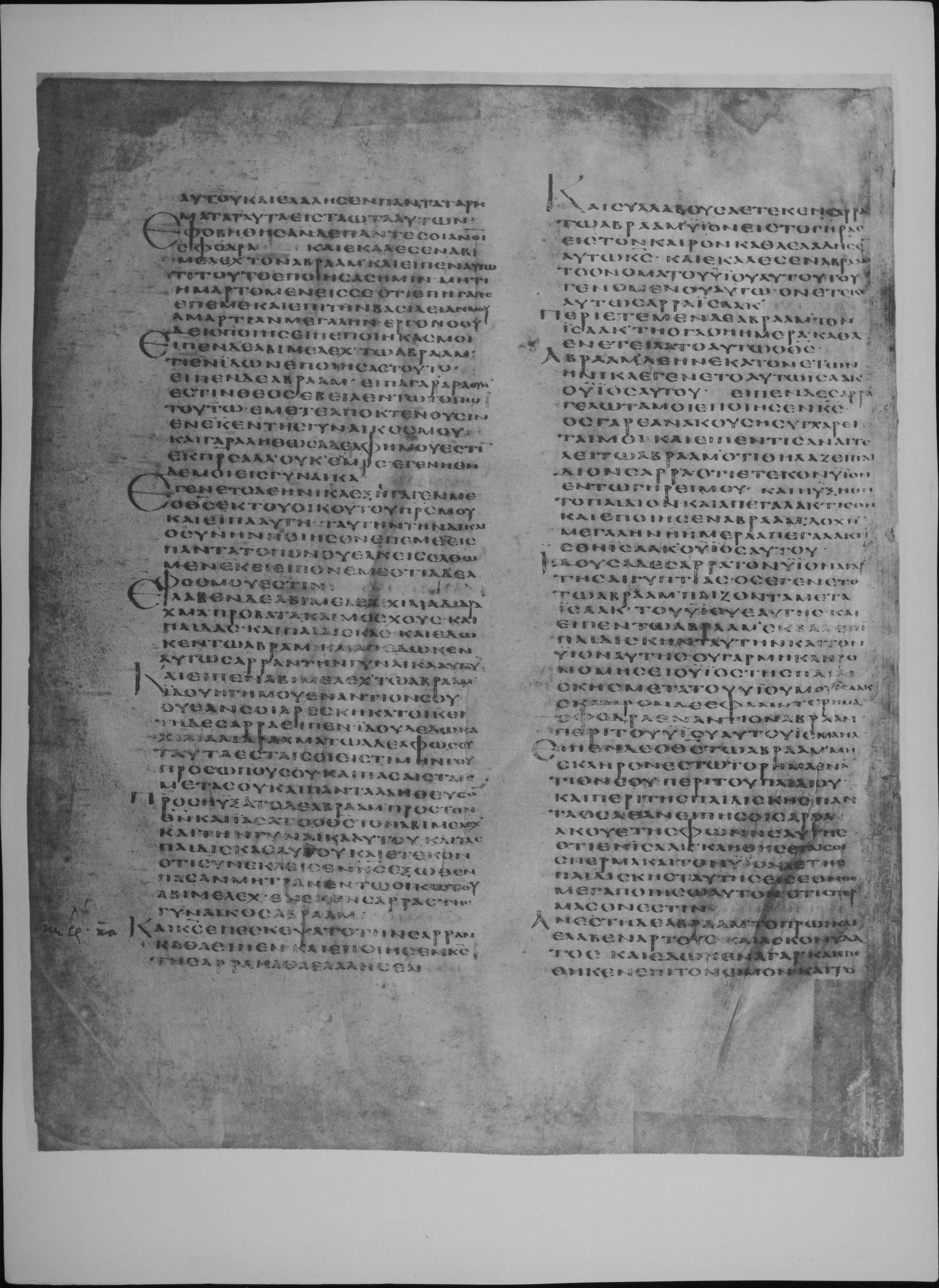
Where on the image
Genesis 21:1-8 is on fol. 11v (full-size facsimile of 1879-83, Internet Archive codex-alexandrinus leaf 43). The 1915 reduced facsimile prints beneath this page: Gen. xx. 8-xxi. 14. Checked on the plate: the page begins inside Genesis 20:8 (first words read: ΑΥΤΟΥ ΚΑΙ ΕΛΑΛΗΣΕΝ ΠΑΝΤΑ ΤΑ ΡΗΜΑΤΑ ΤΑΥΤΑ ΕΙΣ ΤΑ ΩΤΑ ΑΥΤΩΝ).
1Καὶ Κύριος ἐπεσκέψατο τὴν Σάρραν, καθὰ εἶπεν· καὶ ἐποίησεν Κύριος τῇ Σάρρᾳ καθὰ ἐλάλησεν. 2καὶ συλλαβοῦσα ἔτεκεν Σάρρα τῷ Ἀβραὰμ υἱὸν εἰς τὸ γῆρας, εἰς τὸν καιρὸν καθὰ ἐλάλησεν αὐτῷ Κύριος. 3καὶ ἐκάλεσεν Ἀβραὰμ τὸ ὄνομα τοῦ υἱοῦ αὐτοῦ τοῦ γενομένου αὐτῷ, ὃν ἔτεκεν αὐτῷ Σάρρα, Ἰσαάκ· 4περιέτεμεν δὲ Ἀβραὰμ τὸν Ἰσαὰκ τῇ ὀγδόῃ ἡμέρᾳ, καθὰ ἐνετείλατο αὐτῷ ὁ θεός. 5Ἀβραὰμ δὲ ἦν ἑκατὸν ἐτῶν, ἡνίκα ἐγένετο αὐτῷ Ἰσαὰκ ὁ υἱὸς αὐτοῦ. 6εἶπεν δὲ Σάρρα Γέλωτά μοι ἐποίησεν Κύριος· ὃς γὰρ ἐὰν ἀκούσῃ συγχαρεῖταί μοι. 7καὶ εἶπεν Τίς ἀναγγελεῖ τῷ Ἀβραάμ ὅτι θηλάζει παιδίον Σάρρα; ὅτι ἔτεκον υἱὸν ἐν τῷ γήρει μου. 8Καὶ ηὐξήθη τὸ παιδίον καὶ ἀπεγαλακτίσθη· καὶ ἐποίησεν Ἀβραὰμ δοχὴν μεγάλην ᾗ ἡμέρᾳ ἀπεγαλακτίσθη Ἰσαὰκ ὁ υἱὸς αὐτοῦ.
1And the Lord visited Sarrha, as he said, and the Lord did to Sarrha, as he spoke. 2And she conceived and bore to Abraam a son in old age, at the set time according as the Lord spoke to him. 3And Abraam called the name of his son that was born to him, whom Sarrha bore to him, Isaac. 4And Abraam circumcised Isaac on the eighth day, as God commanded him. 5And Abraam was a hundred years old when Isaac his son was born to him. 6And Sarrha said, The Lord has made laughter for me, for whoever shall hear shall rejoice with me. 7And she said, Who shall say to Abraam that Sarrha suckles a child? for I have born a child in my old age. 8And the child grew and was weaned, and Abraam made a great feast the day that his son Isaac was weaned.
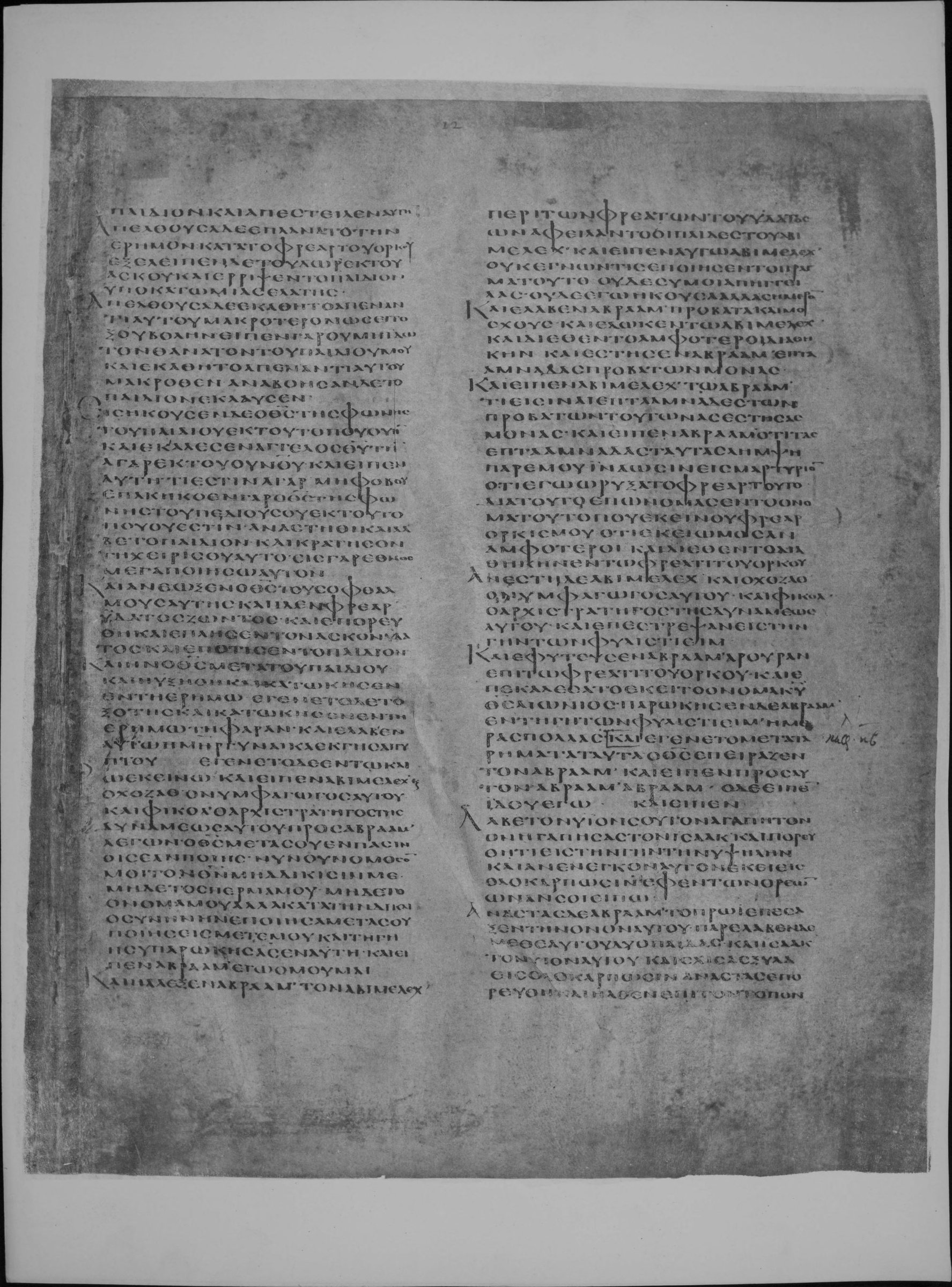
Where on the image
Genesis 21:9-14 is on fol. 11v (full-size facsimile of 1879-83, Internet Archive codex-alexandrinus leaf 43). The 1915 reduced facsimile prints beneath this page: Gen. xx. 8-xxi. 14. Checked on the plate: the page begins inside Genesis 20:8 (first words read: ΑΥΤΟΥ ΚΑΙ ΕΛΑΛΗΣΕΝ ΠΑΝΤΑ ΤΑ ΡΗΜΑΤΑ ΤΑΥΤΑ ΕΙΣ ΤΑ ΩΤΑ ΑΥΤΩΝ). Genesis 21:14-16 is on fol. 12r (full-size facsimile of 1879-83, Internet Archive codex-alexandrinus leaf 44). The 1915 reduced facsimile prints beneath this page: Gen. xxi. 14-xxii. 3. Checked on the plate: the page begins inside Genesis 21:14 (first words read: ΠΑΙΔΙΟΝ ΚΑΙ ΑΠΕΣΤΕΙΛΕΝ ΑΥΤΗΝ ΑΠΕΛΘΟΥΣΑ ΔΕ ΕΠΛΑΝΑΤΟ ΤΗΝ ΕΡΗΜΟΝ).
9ἰδοῦσα δὲ Σάρρα τὸν υἱὸν Ἁγὰρ τῆς Αἰγυπτίας, ὃς ἐγένετο τῷ Ἀβραάμ, παίζοντα μετὰ Ἰσαὰκ τοῦ υἱοῦ ἑαυτῆς, 10καὶ εἶπεν τῷ Ἀβραάμ Ἔκβαλε τὴν παιδίσκην ταύτην καὶ τὸν υἱὸν αὐτῆς· οὐ γὰρ μὴ κληρονομήσει ὁ υἱὸς τῆς παιδίσκης μετὰ τοῦ υἱοῦ μου Ἰσαάκ. 11σκληρὸν δὲ ἐφάνη τὸ ῥῆμα σφόδρα ἐναντίον Ἀβραὰμ περὶ τοῦ υἱοῦ αὐτοῦ Ἰσμαήλ. 12εἶπεν δὲ ὁ θεὸς τῷ Ἀβραάμ Μὴ σκληρὸν ἔστω τὸ ῥῆμα ἐναντίον σου περὶ τοῦ παιδίου καὶ περὶ τῆς παιδίσκης· πάντα ὅσα ἐὰν εἴπῃ σοι Σάρρα, ἄκουε τῆς φωνῆς αὐτῆς· ὅτι ἐν Ἰσαὰκ κληθήσεταί σοι σπέρμα. 13καὶ τὸν υἱὸν δὲ τῆς παιδίσκης ταύτης, εἰς ἔθνος μέγα ποιήσω αὐτόν, ὅτι σπέρμα σόν ἐστιν. 14ἀνέστη δὲ Ἀβραὰμ τὸ πρωί, καὶ ἔλαβεν ἄρτους καὶ ἀσκὸν ὕδατος καὶ ἔδωκεν Ἁγάρ· καὶ ἐπέθηκεν ἐπὶ τὸν ὦμον καὶ τὸ παιδίον, καὶ ἀπέστειλεν αὐτήν· ἀπελθοῦσα δὲ ἐπλανᾶτο τὴν ἔρημον, κατὰ τὸ φρέαρ τοῦ ὅρκου. 15ἐξέλειπεν δὲ τὸ ὕδωρ ἐκ τοῦ ἀσκοῦ, καὶ ἔρριψεν τὸ παιδίον ὑποκάτω μιᾶς ἐλάτης· 16ἀπελθοῦσα δὲ ἐκάθητο ἀπέναντι αὐτοῦ μακρότερον, ὡσεὶ τόξου βολήν· εἶπεν γάρ Οὐ μὴ ἴδω τὸν θάνατον τοῦ παιδίου μου. καὶ ἐκάθητο ἀπέναντι αὐτοῦ μακρόθεν· ἀναβοῆσαν δὲ τὸ παιδίον ἔκλαυσεν.
9And Sarrha having seen the son of Agar the Egyptian who was born to Abraam, sporting with Isaac her son, 10then she said to Abraam, Cast out this bondwoman and her son, for the son of this bondwoman shall not inherit with my son Isaac. 11But the word appeared very hard before Abraam concerning his son. 12But God said to Abraam, Let it not be hard before thee concerning the child, and concerning the bondwoman; in all things whatsoever Sarrha shall say to thee, hear her voice, for in Isaac shall thy seed be called. 13And moreover I will make the son of this bondwoman a great nation, because he is thy seed. 14And Abraam rose up in the morning and took loaves and a skin of water, and gave them to Agar, and he put the child on her shoulder, and sent her away, and she having departed wandered in the wilderness near the well of the oath. 15And the water failed out of the skin, and she cast the child under a fir tree. 16And she departed and sat down opposite him at a distance, as it were a bow-shot, for she said, Surely I cannot see the death of my child: and she sat opposite him, and the child cried aloud and wept.
Where on the image
Genesis 21:17-24 is on fol. 12r (full-size facsimile of 1879-83, Internet Archive codex-alexandrinus leaf 44). The 1915 reduced facsimile prints beneath this page: Gen. xxi. 14-xxii. 3. Checked on the plate: the page begins inside Genesis 21:14 (first words read: ΠΑΙΔΙΟΝ ΚΑΙ ΑΠΕΣΤΕΙΛΕΝ ΑΥΤΗΝ ΑΠΕΛΘΟΥΣΑ ΔΕ ΕΠΛΑΝΑΤΟ ΤΗΝ ΕΡΗΜΟΝ).
17εἰσήκουσεν δὲ ὁ θεὸς τῆς φωνῆς τοῦ παιδίου ἐκ τοῦ τόπου οὗ ἦν, καὶ ἐκάλεσεν ἄγγελος θεοῦ τὴν Ἁγὰρ ἐκ τοῦ οὐρανοῦ καὶ εἶπεν αὐτῇ Τί ἐστιν, Ἁγάρ; μὴ φοβοῦ· ἐπακήκοεν γὰρ ὁ θεὸς τῆς φωνῆς τοῦ παιδίου σου ἐκ τοῦ τόπου οὗ ἐστίν. 18ἀνάστηθι καὶ λάβε τὸ παιδίον, καὶ κράτησον τῇ χειρί σου αὐτό· εἰς γάρ ἔθνος μέγα ποιήσω αὐτόν. 19καὶ ἀνέῳξεν ὁ θεὸς τοὺς ὀφθαλμοὺς αὐτῆς, καὶ ἴδεν φρέαρ ὕδατος ζῶντος· καὶ ἐπορεύθη καὶ ἔπλησεν τὸν ἀσκὸν ὕδατος καὶ ἐπότισεν τὸ παιδίον. 20καὶ ἦν ὁ θεὸς μετὰ τοῦ παιδίου, καὶ ηὐξήθη καὶ κατῴκησεν ἐν τῇ ἐρήμῳ· ἐγένετο δὲ τοξότης. 21καὶ κατῴκησεν ἐν τῇ ἐρήμῳ τῇ Φαράν· καὶ ἔλαβεν αὐτῷ ἡ μήτηρ γυναῖκα ἐκ γῆς Αἰγύπτου. 22Ἐγένετο δὲ ἐν τῷ καιρῷ ἐκείνῳ καὶ εἶπεν Ἀβιμέλεχ καὶ Ὀχοζὰθ ὁ νυμφαγωγὸς αὐτοῦ καὶ Φικὸλ ὁ ἀρχιστράτηγος τῆς δυνάμεως αὐτοῦ πρὸς Ἀβραὰμ λέγων Ὁ θεὸς μετὰ σοῦ ἐν πᾶσιν οἷς ἐὰν ποιῇς. 23νῦν οὖν ὄμοσόν μοι τὸν θεόν, μὴ ἀδικήσειν με μηδὲ τὸ σπέρμα μου μηδὲ τὸ ὄνομά μου· ἀλλὰ κατὰ τὴν δικαιοσύνην ἣν ἐποίησα μετὰ σοῦ ποιήσεις μετ᾽ ἐμοῦ, καὶ τῇ γῇ ᾗ σὺ παρῴκησας ἐν αὐτῇ. 24καὶ εἶπεν Ἀβραάμ Ἐγὼ ὀμοῦμαι.
17And God heard the voice of the child from the place where he was, and an angel of God called Agar out of heaven, and said to her, What is it, Agar? fear not, for God has heard the voice of the child from the place where he is. 18Rise up, and take the child, and hold him in thine hand, for I will make him a great nation. 19And God opened her eyes, and she saw a well of springing water; and she went and filled the skin with water, and gave the child drink. 20And God was with the child, and he grew and dwelt in the wilderness, and became an archer. 21And he dwelt in the wilderness, and his mother took him a wife out of Pharan of Egypt. 22And it came to pass at that time that Abimelech spoke, and Ochozath his friend, and Phichol the chief captain of his host, to Abraam, saying, God is with thee in all things, whatsoever thou mayest do. 23Now therefore swear to me by God that thou wilt not injure me, nor my seed, nor my name, but according to the righteousness which I have performed with thee thou shalt deal with me, and with the land in which thou hast sojourned. 24And Abraam said, I will swear.
Where on the image
Genesis 21:25-34 is on fol. 12r (full-size facsimile of 1879-83, Internet Archive codex-alexandrinus leaf 44). The 1915 reduced facsimile prints beneath this page: Gen. xxi. 14-xxii. 3. Checked on the plate: the page begins inside Genesis 21:14 (first words read: ΠΑΙΔΙΟΝ ΚΑΙ ΑΠΕΣΤΕΙΛΕΝ ΑΥΤΗΝ ΑΠΕΛΘΟΥΣΑ ΔΕ ΕΠΛΑΝΑΤΟ ΤΗΝ ΕΡΗΜΟΝ).
25καὶ ἤλεγξεν Ἀβραὰμ τὸν Ἀβιμέλεχ περὶ τῶν φρεάτων τοῦ ὕδατος ὧν ἀφείλαντο οἱ παῖδες τοῦ Ἀβιμέλεχ. 26καὶ εἶπεν αὐτῷ Ἀβιμέλεχ Οὐκ ἔγνων τίς ἐποίησεν τὸ πρᾶγμα τοῦτο· οὐδὲ σύ μοι ἀπήγγειλας, οὐδὲ ἐγὼ ἤκουσα ἀλλὰ σήμερον. 27καὶ ἔλαβεν Ἀβραὰμ πρόβατα καὶ μόσχους καὶ ἔδωκεν τῷ Ἀβιμέλεχ· καὶ διέθεντο ἀμφότεροι διαθήκην. 28καὶ ἔστησεν Ἀβραὰμ ἑπτὰ ἀμνάδας προβάτων μόνας. 29καὶ εἶπεν Ἀβιμέλεχ τῷ Ἀβραάμ Τί εἰσιν αἱ ἑπτὰ ἀμνάδες τῶν προβάτων τούτων ἃς ἔστησας μόνας; 30καὶ εἶπεν Ἀβραὰμ ὅτι Τὰς ἑπτὰ ἀμνάδας ταύτας λήμψῃ παρ᾽ ἐμοῦ, ἵνα ὦσιν εἰς μαρτύριον ὅτι ἐγὼ ὤρυξα τὸ φρέαρ τοῦτο. 31διὰ τοῦτο ἐπωνόμασεν τὸ ὄνομα τοῦ τόπου ἐκείνου Φρέαρ ὁρκισμοῦ, ὅτι ἐκεῖ ὤμοσαν ἀμφότεροι. 32καὶ διέθεντο διαθήκην ἐν τῷ φρέατι τοῦ ὅρκου. ἀνέστη δὲ Ἀβιμέλεχ καὶ Ὀχοζὰθ ὁ νυμφαγωγὸς αὐτοῦ καὶ Φικὸλ ὁ ἀρχιστράτηγος τῆς δυνάμεως αὐτοῦ, καὶ ἐπέστρεψαν εἰς τὴν γῆν τῶν Φυλιστιείμ. 33καὶ ἐφύτευσεν Ἀβραὰμ ἄρουραν ἐπὶ τῷ φρέατι τοῦ ὅρκου, καὶ ἐπεκαλέσατο ἐκεῖ τὸ ὄνομα Κυρίου, Θεὸς αἰώνιος. 34παρῴκησεν δὲ Ἀβραὰμ ἐν τῇ γῇ τῶν Φυλιστιεὶμ ἡμέρας πολλάς.
25And Abraam reproved Abimelech because of the wells of water, which the servants of Abimelech took away. 26And Abimelech said to him, I know not who has done this thing to thee, neither didst thou tell it me, neither heard I it but only to-day. 27And Abraam took sheep and calves, and gave them to Abimelech, and both made a covenant. 28And Abraam set seven ewe-lambs by themselves. 29And Abimelech said to Abraam, What are these seven ewe-lambs which thou hast set alone? 30And Abraam said, Thou shalt receive the seven ewe-lambs of me, that they may be for me as a witness, that I dug this well. 31Therefore he named the name of that place, The Well of the Oath, for there they both swore. 32And they made a covenant at the well of the oath. And there rose up Abimelech, Ochozath his friend, and Phichol the commander-in-chief of his army, and they returned to the land of the Phylistines. 33And Abraam planted a field at the well of the oath, and called there on the name of the Lord, the everlasting God. 34And Abraam sojourned in the land of the Phylistines many days.
Cite
Sources
- Source: Codex Alexandrinus (British Library Royal MS 1 D. V) via the British Museum photographic facsimiles of 1879-83 and 1915 (Internet Archive) + Swete's Septuagint + Brenton's English (holding institution)
- Critical edition: H. B. Swete, The Old Testament in Greek according to the Septuagint (1909)
← previous · → next · v cycle view · l back to library