Genesis, Chapter 23 (Codex Alexandrinus)
Introduction
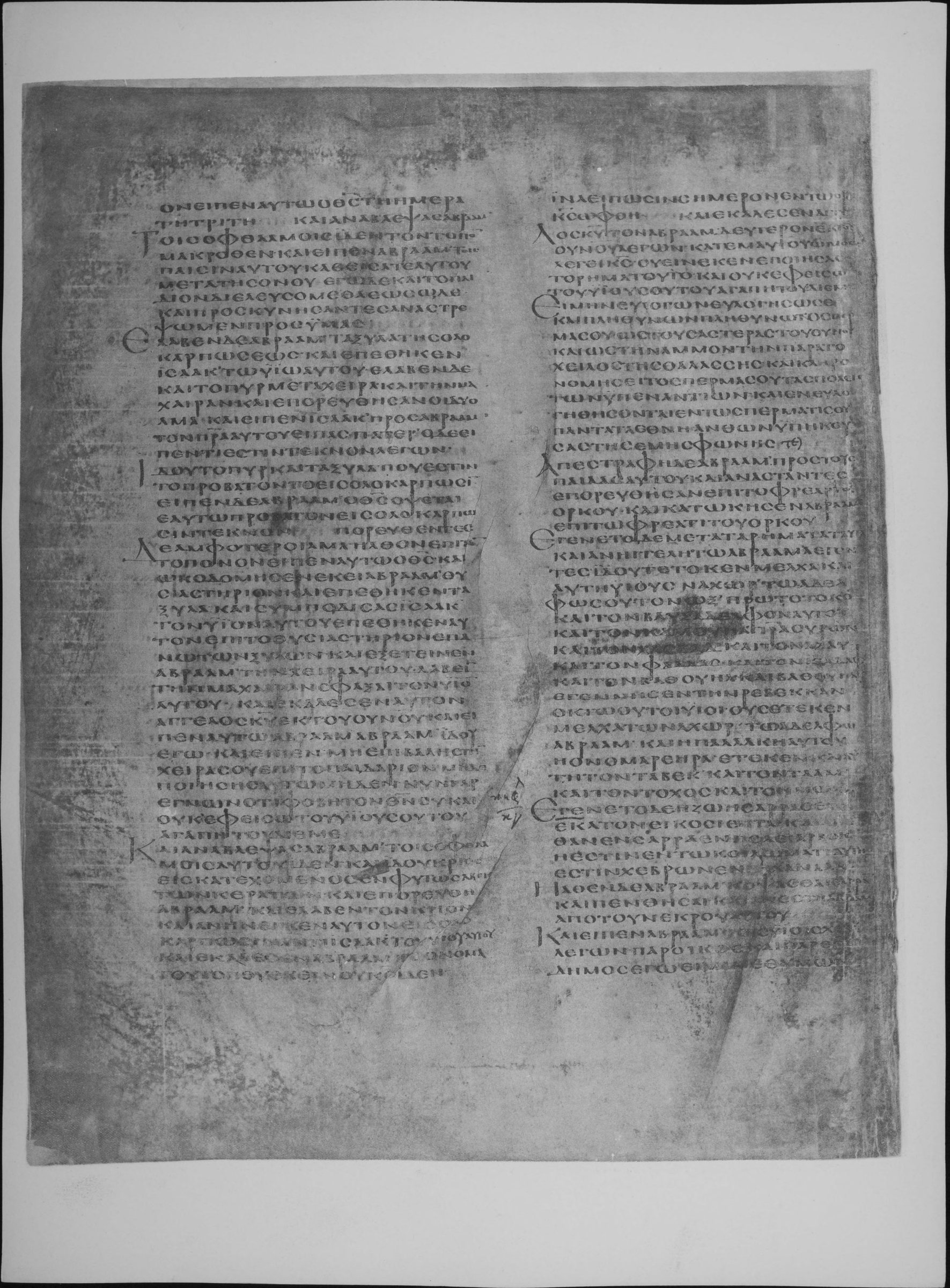
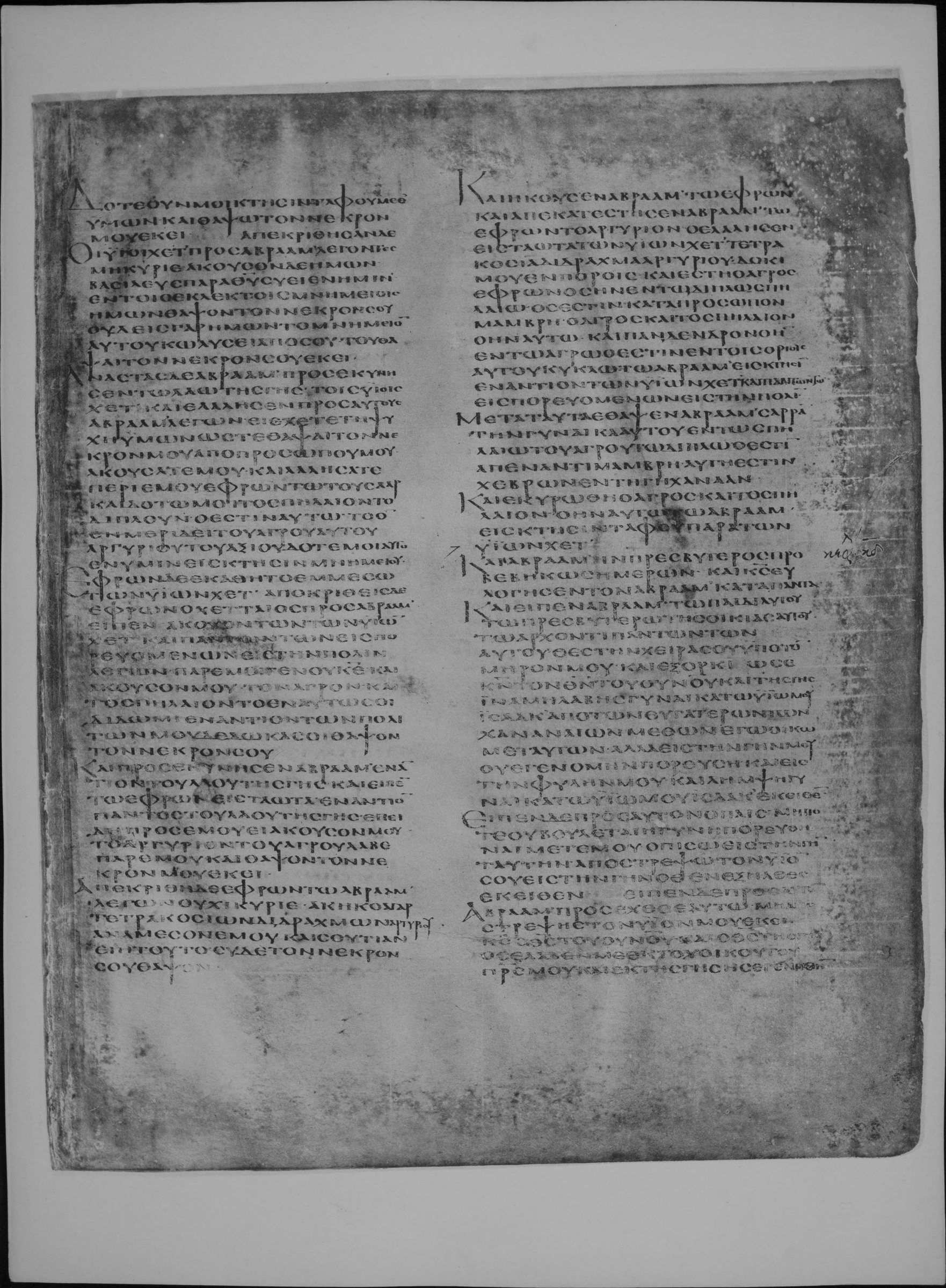
Genesis 23 in the Greek Old Testament (the Septuagint) as written in Codex Alexandrinus, a Greek Bible copied in the fifth century, probably in Egypt, and now in the British Library (Royal MS 1 D. V, the first of its four volumes). It is one of the three great early codices of the whole Greek Bible, with Codex Vaticanus and Codex Sinaiticus, and for Genesis 1:1-46:28, which Codex Vaticanus has lost, it is the oldest surviving complete Greek text (older papyri such as the Berlin Genesis papyrus and Chester Beatty 961 survive only in part).
This entry meets the strict three-criteria standard of the Theosis Library:
- Manuscript scan: the pages of Codex Alexandrinus carrying this chapter (fol. 12v, fol. 13r), from the full-size photographic (autotype) facsimile published by the British Museum in 1879-1883, as digitised on the Internet Archive. The verse range of every page comes from the reduced photographic facsimile of 1915, which prints it beneath each plate, and the opening words of every page were read on the plate to confirm the page and the verse it begins with. Each section links to the page or pages that hold its verses. Folio numbers are those written at the head of each leaf and visible on the plates.
- Original text: Swete's edition, which in Genesis 1:1-46:28 prints the text of Codex Alexandrinus itself (Codex Vaticanus has lost these chapters), with the spelling of A for the most part. Swete adds accents, breathings and punctuation and expands the abbreviated sacred names, so the plate shows the same text in unaccented capitals.
- English translation: Sir Lancelot C. L. Brenton, The Septuagint Version of the Old Testament (1844; 1851 edition), a translation of the Greek, public domain, from the eBible.org text.
How was this verified? (Provenance)
Where on the image
Genesis 23:1-4 is on fol. 12v (full-size facsimile of 1879-83, Internet Archive codex-alexandrinus leaf 45). The 1915 reduced facsimile prints beneath this page: Gen. xxii. 3-xxiii. 4. Checked on the plate: the page begins inside Genesis 22:3 (first words read: ΟΝ ΕΙΠΕΝ ΑΥΤΩ Ο ΘΣ ΤΗ ΗΜΕΡΑ ΤΗ ΤΡΙΤΗ ΚΑΙ ΑΝΑΒΛΕΨΑΣ ΑΒΡΑΑΜ). Genesis 23:4-8 is on fol. 13r (full-size facsimile of 1879-83, Internet Archive codex-alexandrinus leaf 46). The 1915 reduced facsimile prints beneath this page: Gen. xxiii. 4-xxiv. 7. Checked on the plate: the page begins inside Genesis 23:4 (first words read: ΔΟΤΕ ΟΥΝ ΜΟΙ ΚΤΗΣΙΝ ΤΑΦΟΥ ΜΕΘ ΥΜΩΝ ΚΑΙ ΘΑΨΩ ΤΟΝ ΝΕΚΡΟΝ ΜΟΥ).
1Ἐγένετο δὲ ἡ ζωὴ Σάρρας ἔτη ἑκατὸν εἴκοσι ἑπτά. 2καὶ ἀπέθανεν Σάρρα ἐν πόλει Ἀρβόκ, ἥ ἐστιν ἐν τῷ κοιλώματι· αὕτη ἐστὶν Χεβρὼν ἐν γῇ Χανάαν. ἦλθεν δὲ Ἀβραὰμ κόψασθαι Σάρραν καὶ πενθῆσαι. 3καὶ ἀνέστη Ἀβραὰμ ἀπὸ τοῦ νεκροῦ αὐτοῦ· καὶ εἶπεν Ἀβραὰμ τοῖς υἱοῖς Χὲτ λέγων 4Πάροικος καὶ παρεπίδημος ἐγώ εἰμι μεθ᾽ ὑμῶν· δότε οὖν μοι κτῆσιν τάφου μεθ᾽ ὑμῶν, καὶ θάψω τὸν νεκρόν μου ἐκεῖ. 5ἀπεκρίθησαν δὲ οἱ υἱοὶ Χὲτ πρὸς Ἀβραὰμ λέγοντες 6Μή, κύριε· ἄκουσον δὲ ἡμῶν. βασιλεὺς παρὰ θεοῦ σὺ εἶ ἐν ἡμῖν· ἐν τοῖς ἐκλεκτοῖς μνημείοις ἡμῶν θάψον τὸν νεκρόν σου· οὐδεὶς γὰρ ἡμῶν τὸ μνημεῖον αὐτοῦ κωλύσει ἀπὸ σοῦ, τοῦ θάψαι τὸν νεκρόν σου ἐκεῖ. 7ἀναστὰς δὲ Ἀβραὰμ προσεκύνησεν τῷ λαῷ τῆς γῆς, τοῖς υἱοῖς Χέτ. 8καὶ ἐλάλησεν πρὸς αὐτοὺς Ἀβραὰμ λέγων Εἰ ἔχετε τῇ ψυχῇ ὑμῶν ὥστε θάψαι τὸν νεκρόν μου ἀπὸ προσώπου μου, ἀκούσατέ μου καὶ λαλήσατε περὶ ἐμοῦ Ἐφρὼν τῷ τοῦ Σάαρ·
1And the life of Sarrha was an hundred and twenty-seven years. 2And Sarrha died in the city of Arboc, which is in the valley, this is Chebron in the land of Chanaan; and Abraam came to lament for Sarrha and to mourn. 3And Abraam stood up from before his dead; and Abraam spoke to the sons of Chet, saying, 4I am a sojourner and a stranger among you, give me therefore possession of a burying-place among you, and I will bury my dead away from me. 5And the sons of Chet answered to Abraam, saying, Not so, Sir, 6but hear us; thou art in the midst of us a king from God; bury thy dead in our choice sepulchres, for not one of us will by any means withhold his sepulchre from thee, so that thou shouldest not bury thy dead there. 7And Abraam rose up and did obeisance to the people of the land, to the sons of Chet. 8And Abraam spoke to them, saying, If ye have it in your mind that I should bury my dead out of my sight, hearken to me, and speak for me to Ephron the son of Saar.
Where on the image
Genesis 23:9-16 is on fol. 13r (full-size facsimile of 1879-83, Internet Archive codex-alexandrinus leaf 46). The 1915 reduced facsimile prints beneath this page: Gen. xxiii. 4-xxiv. 7. Checked on the plate: the page begins inside Genesis 23:4 (first words read: ΔΟΤΕ ΟΥΝ ΜΟΙ ΚΤΗΣΙΝ ΤΑΦΟΥ ΜΕΘ ΥΜΩΝ ΚΑΙ ΘΑΨΩ ΤΟΝ ΝΕΚΡΟΝ ΜΟΥ).
9καὶ δότω μοι τὸ σπήλαιον τὸ διπλοῦν ὅ ἐστιν αὐτῷ, τὸ ὂν ἐν μερίδι τοῦ ἀγροῦ αὐτοῦ· ἀργυρίου τοῦ ἀξίου δότε μοι αὐτὸ ἐν ὑμῖν εἰς κτῆσιν μνημείου. 10Ἐφρὼν δὲ ἐκάθητο ἐν μέσῳ τῶν υἱῶν Χέτ· ἀποκριθεὶς δὲ Ἐφρὼν ὁ Χετταῖος πρὸς Ἀβραὰμ εἶπεν, ἀκουόντων τῶν υἱῶν Χὲτ καὶ πάντων τῶν εἰσπορευομένων εἰς τὴν πόλιν, λέγων 11Παρ᾽ ἐμοὶ γενοῦ, κύριε, καὶ ἄκουσόν μου. τὸν ἀγρὸν καὶ τὸ σπήλαιον τὸ ἐν αὐτῷ σοὶ δίδωμι· ἐναντίον τῶν πολιτῶν μου δέδωκά σοι· θάψον τὸν νεκρόν σου. 12καὶ προσεκύνησεν Ἀβραὰμ ἐναντίον τοῦ λαοῦ τῆς γῆς· 13καὶ εἶπεν τῷ Ἐφρὼν εἰς τὰ ὦτα ἐναντίον παντὸς τοῦ λαοῦ τῆς γῆς Ἐπειδὴ πρὸς ἐμοῦ εἶ, ἄκουσόν μου· τὸ ἀργύριον τοῦ ἀγροῦ λάβε παρ᾽ ἐμοῦ, καὶ θάψον τὸν νεκρόν μου ἐκεῖ. 14ἀπεκρίθη δὲ Ἐφρὼν τῷ Ἀβραὰμ λέγων 15Οὐχί, κύριε, ἀκήκοα γάρ· τετρακοσίων διδράχμων ἀργυρίου· ἀνὰ μέσον ἐμοῦ καὶ σοῦ τί ἂν εἴη τοῦτο; σὺ δὲ τὸν νεκρόν σου θάψον. 16καὶ ἤκουσεν Ἀβραὰμ τῷ Ἐφρών· καὶ ἀπεκατέστησεν Ἀβραὰμ τῷ Ἐφρὼν τὸ ἀργύριον ὃ ἐλάλησεν εἰς τὰ ὦτα τῶν υἱῶν Χέτ, τετρακόσια δίδραχμα ἀργυρίου δοκίμου ἐνπόροις.
9And let him give me the double cave which he has, which is in a part of his field, let him give it me for the money it is worth for possession of a burying-place among you. 10Now Ephron was sitting in the midst of the children of Chet, and Ephron the Chettite answered Abraam and spoke in the hearing of the sons of Chet, and of all who entered the city, saying, 11Attend to me, my lord, and hear me, I give to thee the field and the cave which is in it; I have given it thee before all my countrymen; bury thy dead. 12And Abraam did obeisance before the people of the land. 13And he said in the ears of Ephron before the people of the land, Since thou art on my side, hear me; take the price of the field from me, and I will bury my dead there. 14But Ephron answered Abraam, saying, 15Nay, my lord, I have heard indeed, the land is worth four hundred silver didrachms, but what can this be between me and thee? nay, do thou bury thy dead. 16And Abraam hearkened to Ephron, and Abraam rendered to Ephron the money, which he mentioned in the ears of the sons of Chet, four hundred didrachms of silver approved with merchants.
Where on the image
Genesis 23:17-20 is on fol. 13r (full-size facsimile of 1879-83, Internet Archive codex-alexandrinus leaf 46). The 1915 reduced facsimile prints beneath this page: Gen. xxiii. 4-xxiv. 7. Checked on the plate: the page begins inside Genesis 23:4 (first words read: ΔΟΤΕ ΟΥΝ ΜΟΙ ΚΤΗΣΙΝ ΤΑΦΟΥ ΜΕΘ ΥΜΩΝ ΚΑΙ ΘΑΨΩ ΤΟΝ ΝΕΚΡΟΝ ΜΟΥ).
17καὶ ἔστη ὁ ἀγρὸς Ἐφρών, ὃς ἦν ἐν τῷ διπλῷ σπηλαίῳ ὅς ἐστιν κατὰ πρόσωπον Μαμβρή, ὁ ἀγρὸς καὶ τὸ σπήλαιον ὃ ἦν αὐτῷ, καὶ πᾶν δένδρον ὃ ἦν ἐν τῷ ἀγρῷ, ὅ ἐστιν ἐν τοῖς ὁρίοις αὐτοῦ κύκλῳ, 18τῷ Ἀβραὰμ εἰς κτῆσιν ἐναντίον τῶν υἱῶν Χὲτ καὶ πάντων τῶν εἰσπορευομένων εἰς τὴν πόλιν. 19μετὰ ταῦτα ἔθαψεν Ἀβραὰμ Σάρραν τὴν γυναῖκα αὐτοῦ ἐν τῷ σπηλαίῳ τοῦ ἀγροῦ τῷ διπλῷ, ὅ ἐστιν ἀπέναντι Μαμβρή· αὕτη ἐστὶν Χεβρὼν ἐν τῇ γῇ Χανάαν. 20καὶ ἐκυρώθη ὁ ἀγρὸς καὶ τὸ σπήλαιον ὃ ἦν αὐτῷ τῷ Ἀβραὰμ εἰς κτῆσιν τάφου παρὰ τῶν υἱῶν Χέτ.
17And the field of Ephron, which was in Double Cave, which is opposite Mambre, the field and the cave, which was in it, and every tree which was in the field, and whatever is in its borders round about, were made sure 18to Abraam for a possession, before the sons of Chet, and all that entered into the city. 19After this Abraam buried Sarrha his wife in the Double Cave of the field, which is opposite Mambre, this is Chebron in the land of Chanaan. 20So the field and the cave which was in it were made sure to Abraam for possession of a burying place, by the sons of Chet.
Cite
Sources
- Source: Codex Alexandrinus (British Library Royal MS 1 D. V) via the British Museum photographic facsimiles of 1879-83 and 1915 (Internet Archive) + Swete's Septuagint + Brenton's English (holding institution)
- Critical edition: H. B. Swete, The Old Testament in Greek according to the Septuagint (1909)
← previous · → next · v cycle view · l back to library