Genesis, Chapter 25 (Codex Alexandrinus)
Introduction
Genesis 25 in the Greek Old Testament (the Septuagint) as written in Codex Alexandrinus, a Greek Bible copied in the fifth century, probably in Egypt, and now in the British Library (Royal MS 1 D. V, the first of its four volumes). It is one of the three great early codices of the whole Greek Bible, with Codex Vaticanus and Codex Sinaiticus, and for Genesis 1:1-46:28, which Codex Vaticanus has lost, it is the oldest surviving complete Greek text (older papyri such as the Berlin Genesis papyrus and Chester Beatty 961 survive only in part).
This entry meets the strict three-criteria standard of the Theosis Library:
- Manuscript scan: the pages of Codex Alexandrinus carrying this chapter (fol. 14v, fol. 15r, fol. 15v), from the full-size photographic (autotype) facsimile published by the British Museum in 1879-1883, as digitised on the Internet Archive. The verse range of every page comes from the reduced photographic facsimile of 1915, which prints it beneath each plate, and the opening words of every page were read on the plate to confirm the page and the verse it begins with. Each section links to the page or pages that hold its verses. Folio numbers are those written at the head of each leaf and visible on the plates.
- Original text: Swete's edition, which in Genesis 1:1-46:28 prints the text of Codex Alexandrinus itself (Codex Vaticanus has lost these chapters), with the spelling of A for the most part. Swete adds accents, breathings and punctuation and expands the abbreviated sacred names, so the plate shows the same text in unaccented capitals.
- English translation: Sir Lancelot C. L. Brenton, The Septuagint Version of the Old Testament (1844; 1851 edition), a translation of the Greek, public domain, from the eBible.org text.
How was this verified? (Provenance)
Where on the image
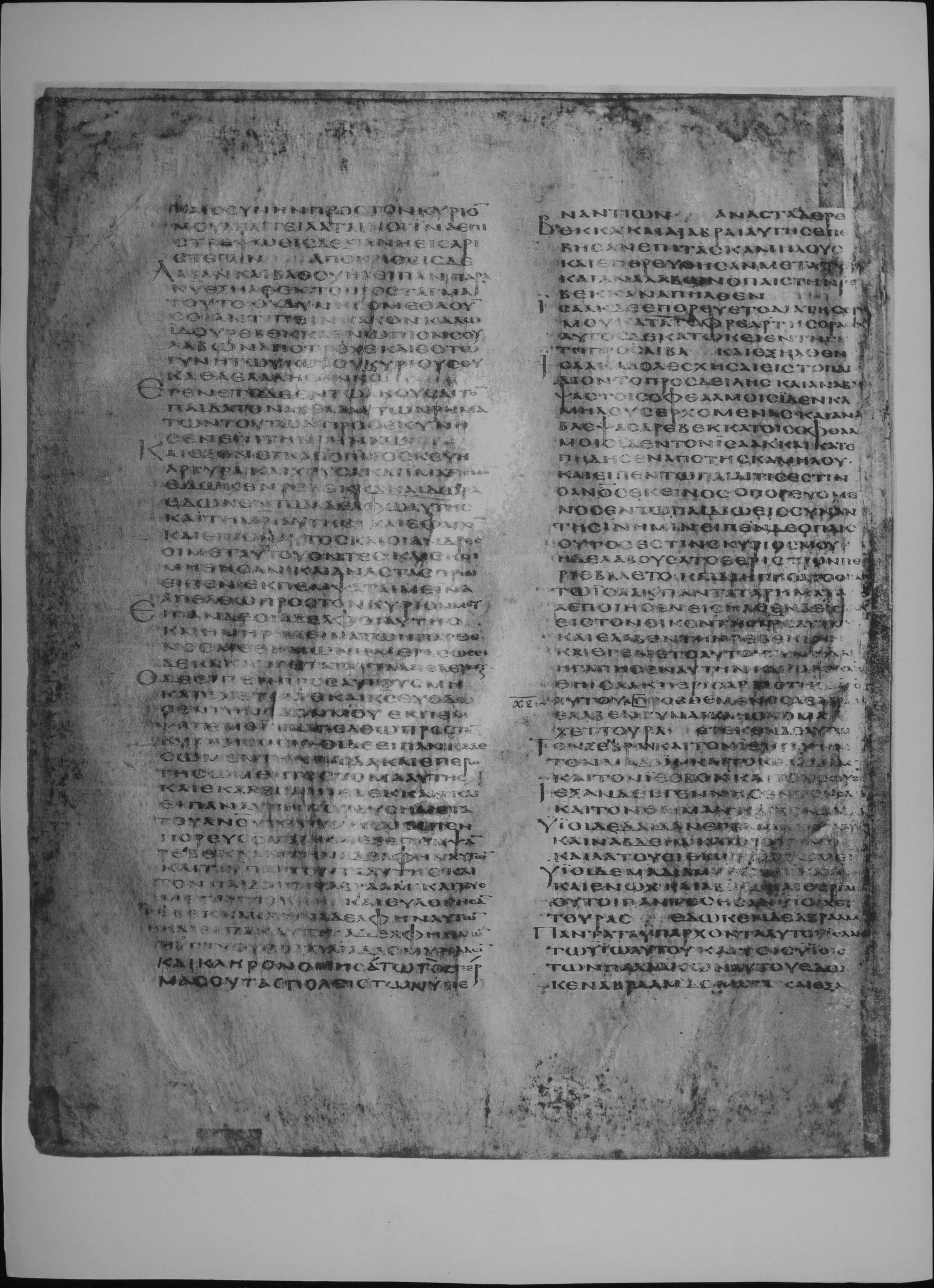
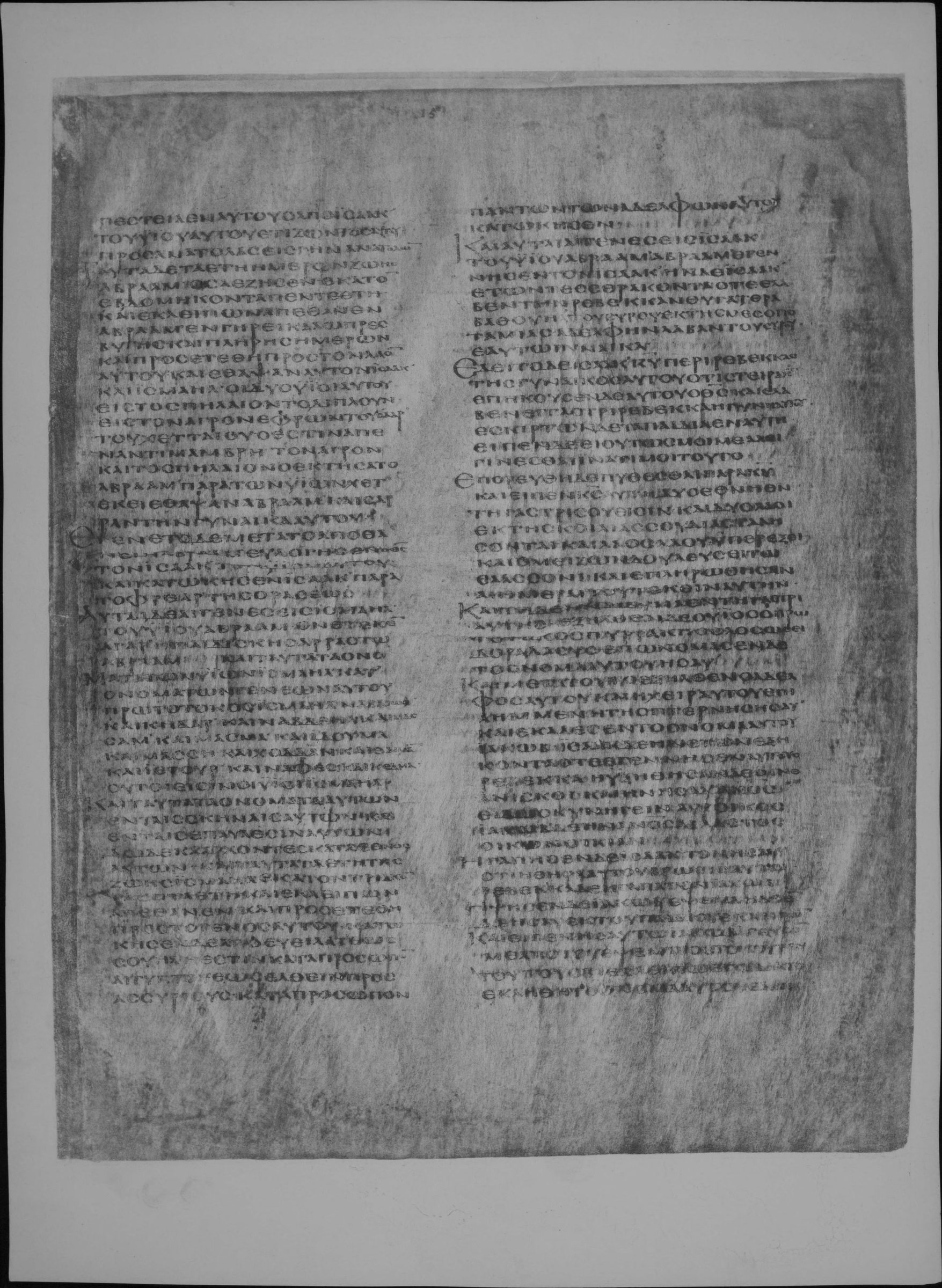
Genesis 25:1-6 is on fol. 14v (full-size facsimile of 1879-83, Internet Archive codex-alexandrinus leaf 49). The 1915 reduced facsimile prints beneath this page: Gen. xxiv. 49-xxv. 6. Checked on the plate: the page begins inside Genesis 24:49 (first words read: ΕΛΕΟΣ ΚΑΙ ΔΙΚΑΙΟΣΥΝΗΝ ΠΡΟΣ ΤΟΝ ΚΥΡΙΟΝ ΜΟΥ ΑΠΑΓΓΕΙΛΑΤΕ ΜΟΙ). Genesis 25:6-8 is on fol. 15r (full-size facsimile of 1879-83, Internet Archive codex-alexandrinus leaf 50). The 1915 reduced facsimile prints beneath this page: Gen. xxv. 6-30. Checked on the plate: the page begins inside Genesis 25:6 (first words read: ΑΠΕΣΤΕΙΛΕΝ ΑΥΤΟΥΣ ΑΠΟ ΙΣΑΑΚ ΤΟΥ ΥΙΟΥ ΑΥΤΟΥ ΕΤΙ ΖΩΝΤΟΣ ΑΥΤΟΥ).
1Προσθέμενος δὲ Ἀβραὰμ ἔλαβεν γυναῖκα ᾗ ὄνομα Χεττούρα. 2ἔτεκεν δὲ αὐτῷ τὸν Ζεβρὰν καὶ τὸν Ἰεξὰν καὶ τὸν Μαδαὶμ καὶ τὸν Μαδιὰμ καὶ τὸν Ἰεσβὸκ καὶ τὸν Σωύε. 3Ἰεξὰν δὲ ἐγέννησεν τὸν Σαβὰν καὶ τὸν Θαιμὰν καὶ τὸν Δαιδάν· υἱοὶ δὲ Δαιδὰν ἐγένοντο Ῥαγουὴλ καὶ Ναβδεὴλ καὶ Ἀσουρὶμ καὶ Δατουσιεὶμ καὶ Λοωμείμ· 4υἱοὶ δὲ Μαδιὰμ Γεφὰρ καὶ Ἄφερ καὶ Ἑνὼχ καὶ Ἀβιρὰ καὶ Θεργαμά. οὗτοι πάντες ἦσαν υἱοὶ Χεττούρας. 5ἔδωκεν δὲ Ἀβραὰμ πάντα τὰ ὑπάρχοντα αὐτοῦ Ἰσαὰκ τῷ υἱῷ αὐτοῦ· 6καὶ τοῖς υἱοῖς τῶν παλλακῶν αὐτοῦ ἔδωκεν Ἀβραὰμ δόματα, καὶ ἐξαπέστειλεν αὐτοὺς ἀπὸ Ἰσαὰκ τοῦ υἱοῦ αὐτοῦ ἔτι ζῶντος αὐτοῦ πρὸς ἀνατολὰς εἰς γῆν ἀνατολῶν. 7ταῦτα δὲ τὰ ἔτη ἡμερῶν ζωῆς Ἀβραὰμ ὅσα ἔζησεν, ἑκατὸν ἑβδομήκοντα πέντε ἔτη· 8καὶ ἐκλείπων ἀπέθανεν Ἀβραὰμ ἐν γήρει καλῷ πρεσβύτης καὶ πλήρης ἡμερῶν, καὶ προσετέθη πρὸς τὸν λαὸν αὐτοῦ.
1And Abraam again took a wife, whose name was Chettura. 2And she bore to him Zombran, and Jezan, and Madal, and Madiam, and Jesboc, and Soie. 3And Jezan begot Saba and Dedan. And the sons of Dedan were the Assurians and the Latusians, and Laomim. 4And the sons of Madiam were Gephar and Aphir, and Enoch, and Abeida, and Eldaga; all these were sons of Chettura. 5But Abraam gave all his possessions to Isaac his son. 6But to the sons of his concubines Abraam gave gifts, and he sent them away from his son Isaac, while he was yet living, to the east into the country of the east. 7And these were the years of the days of the life of Abraam as many as he lived, a hundred and seventy-five years. 8And Abraam failing died in a good old age, an old man and full of days, and was added to his people.
Where on the image
Genesis 25:9-16 is on fol. 15r (full-size facsimile of 1879-83, Internet Archive codex-alexandrinus leaf 50). The 1915 reduced facsimile prints beneath this page: Gen. xxv. 6-30. Checked on the plate: the page begins inside Genesis 25:6 (first words read: ΑΠΕΣΤΕΙΛΕΝ ΑΥΤΟΥΣ ΑΠΟ ΙΣΑΑΚ ΤΟΥ ΥΙΟΥ ΑΥΤΟΥ ΕΤΙ ΖΩΝΤΟΣ ΑΥΤΟΥ).
9καὶ ἔθαψαν αὐτὸν Ἰσαὰκ καὶ Ἰσμαὴλ οἱ δύο υἱοὶ αὐτοῦ εἰς τὸ σπήλαιον τὸ διπλοῦν, εἰς τὸν ἀγρὸν Ἐφρὼν τοῦ Σάαρ τοῦ Χετταίου, ὅ ἐστιν ἀπέναντι Μαμβρή, 10τὸν ἀγρὸν καὶ τὸ σπήλαιον ὃ ἐκτήσατο Ἀβραὰμ παρὰ τῶν υἱῶν Χέτ· ἐκεῖ ἔθαψαν Ἀβραὰμ καὶ Σάρραν τὴν γυναῖκα αὐτοῦ. 11ἐγένετο δὲ μετὰ τὸ ἀποθανεῖν Ἀβραὰμ εὐλόγησεν ὁ θεὸς τὸν Ἰσαὰκ τὸν υἱὸν αὐτοῦ· καὶ κατῴκησεν Ἰσαὰκ παρὰ τὸ φρέαρ τῆς ὁράσεως. 12Αὗται δὲ αἱ γενέσεις Ἰσμαὴλ τοῦ υἱοῦ Ἀβραάμ, ὃν ἔτεκεν Ἁγὰρ ἡ παιδίσκη Σάρρας τῷ Ἀβραάμ. 13καὶ ταῦτα τὰ ὀνόματα τῶν υἱῶν Ἰσμαὴλ κατ᾽ ὄνομα τῶν γενεῶν αὐτοῦ· πρωτότοκος Ἰσμαὴλ Ναβαιώθ, καὶ Κηδὰρ καὶ Ναβδεὴλ καὶ Μασσὰμ 14καὶ Μασμὰ καὶ Ἰδουμὰ καὶ Μασσὴ 15καὶ Χοδδὰν καὶ Θαιμὰν καὶ Ἰετοὺρ καὶ Ναφὲς καὶ Κέδμα. 16οὗτοί εἰσιν οἱ υἱοὶ Ἰσμαήλ, καὶ ταῦτα τὰ ὀνόματα αὐτῶν ἐν ταῖς σκηναῖς αὐτῶν καὶ ἐν ταῖς ἐπαύλεσιν αὐτῶν· δώδεκα ἄρχοντες κατὰ ἔθνος αὐτῶν.
9And Isaac and Ismael his sons buried him in the double cave, in the field of Ephron the son of Saar the Chettite, which is over against Mambre: 10even the field and the cave which Abraam bought of the sons of Chet; there they buried Abraam and Sarrha his wife. 11And it came to pass after Abraam was dead, that God blessed Isaac his son, and Isaac dwelt by the well of the vision. 12And these are the generations of Ismael the son of Abraam, whom Agar the Egyptian the hand-maid of Sarrha bore to Abraam. 13And these are the names of the sons of Ismael, according to the names of their generations. The firstborn of Ismael, Nabaioth, and Kedar, and Nabdeel, and Massam, 14and Masma, and Duma, and Masse, 15and Choddan, and Thæman, and Jetur, and Naphes, and Kedma. 16These are the sons of Ismael, and these are their names in their tents and in their dwellings, twelve princes according to their nations.
Where on the image
Genesis 25:17-24 is on fol. 15r (full-size facsimile of 1879-83, Internet Archive codex-alexandrinus leaf 50). The 1915 reduced facsimile prints beneath this page: Gen. xxv. 6-30. Checked on the plate: the page begins inside Genesis 25:6 (first words read: ΑΠΕΣΤΕΙΛΕΝ ΑΥΤΟΥΣ ΑΠΟ ΙΣΑΑΚ ΤΟΥ ΥΙΟΥ ΑΥΤΟΥ ΕΤΙ ΖΩΝΤΟΣ ΑΥΤΟΥ).
17καὶ ταῦτα τὰ ἔτη τῆς ζωῆς Ἰσμαήλ, ἑκατὸν τριάκοντα ἑπτὰ ἔτη· καὶ ἐκλείπων ἀπέθανεν καὶ προσετέθη πρὸς τὸ γένος αὐτοῦ. 18κατῴκησεν δὲ ἀπὸ Εὑειλὰτ ἕως Σουήλ, ἥ ἐστιν κατὰ πρόσωπον Αἰγύπτου ἕως ἐλθεῖν πρὸς Ἀσσυρίους· κατὰ πρόσωπον πάντων τῶν ἀδελφῶν αὐτοῦ κατῴκησεν. 19Καὶ αὗται αἱ γενέσεις Ἰσαὰκ τοῦ υἱοῦ Ἀβραάμ· Ἀβραὰμ ἐγέννησεν τὸν Ἰσαάκ. 20ἦν δὲ Ἰσαὰκ ἐτῶν τεσσεράκοντα ὅτε ἔλαβεν τὴν Ῥεβέκκαν θυγατέρα Βαθουὴλ τοῦ Σύρου ἐκ τῆς Μεσοποταμίας, ἀδελφὴν Λαβὰν τοῦ Σύρου, ἑαυτῷ γυναῖκα. 21ἐδεῖτο δὲ Ἰσαὰκ Κυρίου περὶ Ῥεβέκκας τῆς γυναικὸς αὐτοῦ, ὅτι στεῖρα ἦν· ἐπήκουσεν δὲ αὐτοῦ ὁ θεός, καὶ ἔλαβεν ἐν γαστρὶ Ῥεβέκκα ἡ γυνὴ αὐτοῦ. 22ἐσκίρτων δὲ τὰ παιδία ἐν αὐτῇ· εἶπεν δέ Εἰ οὕτως μοι μέλλει γίνεσθαι, ἵνα τί μοι τοῦτο; ἐπορεύθη δὲ πυθέσθαι παρὰ Κυρίου. 23καὶ εἶπεν Κύριος αὐτῇ Δύο ἔθνη ἐν τῇ γαστρί σού εἰσιν, καὶ δύο λαοὶ ἐκ τῆς κοιλίας σου διασταλήσονται· καὶ λαὸς λαοῦ ὑπερέξει, καὶ ὁ μείζων δουλεύσει τῷ ἐλάσσονι. 24καὶ ἐπληρώθησαν αἱ ἡμέραι τοῦ τεκεῖν αὐτήν· καὶ τῇδε ἦν δίδυμα ἐν τῇ γαστρὶ αὐτῆς.
17And these are the years of the life of Ismael, a hundred and thirty-seven years; and he failed and died, and was added to his fathers. 18And he dwelt from Evilat to Sur, which is opposite Egypt, until one comes to the Assyrians; he dwelt in the presence of all his brethren. 19And these are the generations of Isaac the son of Abraam. 20Abraam begot Isaac. And Isaac was forty years old when he took to wife Rebecca, daughter of Bathuel the Syrian, out of Syrian Mesopotamia, sister of Laban the Syrian. 21And Isaac prayed the Lord concerning Rebecca his wife, because she was barren; and the Lord heard him, and his wife Rebecca conceived in her womb. 22And the babes leaped within her; and she said, If it will be so with me, why is this to me? And she went to enquire of the Lord. 23And the Lord said to her, There are two nations in thy womb, and two peoples shall be separated from thy belly, and one people shall excel the other, and the elder shall serve the younger. 24And the days were fulfilled that she should be delivered, and she had twins in her womb.
Where on the image
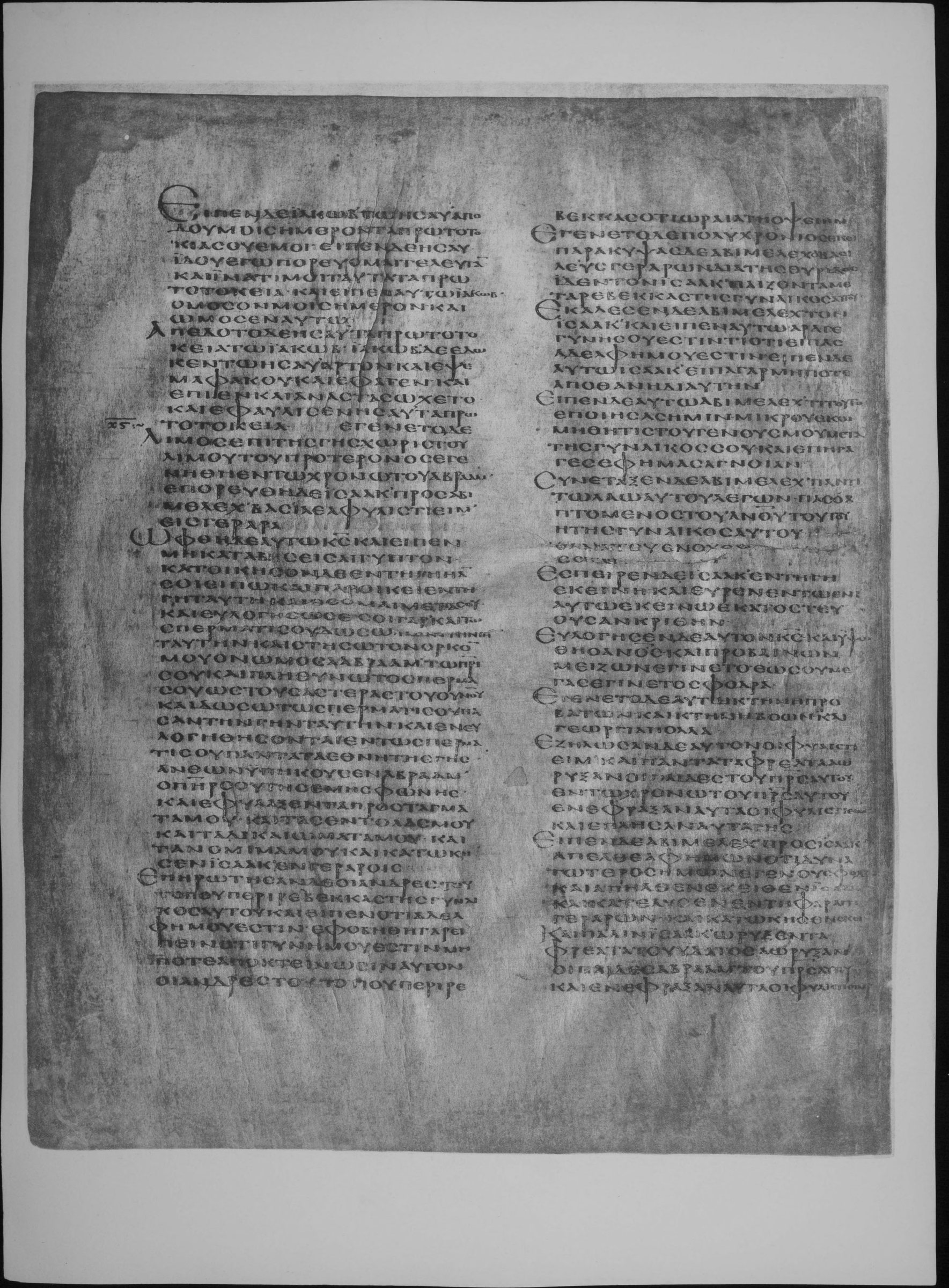
Genesis 25:25-30 is on fol. 15r (full-size facsimile of 1879-83, Internet Archive codex-alexandrinus leaf 50). The 1915 reduced facsimile prints beneath this page: Gen. xxv. 6-30. Checked on the plate: the page begins inside Genesis 25:6 (first words read: ΑΠΕΣΤΕΙΛΕΝ ΑΥΤΟΥΣ ΑΠΟ ΙΣΑΑΚ ΤΟΥ ΥΙΟΥ ΑΥΤΟΥ ΕΤΙ ΖΩΝΤΟΣ ΑΥΤΟΥ). Genesis 25:31-34 is on fol. 15v (full-size facsimile of 1879-83, Internet Archive codex-alexandrinus leaf 51). The 1915 reduced facsimile prints beneath this page: Gen. xxv. 31-xxvi. 18. Checked on the plate: the page begins at the start of Genesis 25:31 (first words read: ΕΙΠΕΝ ΔΕ ΙΑΚΩΒ ΤΩ ΗΣΑΥ ΑΠΟΔΟΥ ΜΟΙ ΣΗΜΕΡΟΝ ΤΑ ΠΡΩΤΟΤΟΚΙΑ ΣΟΥ).
25ἐξῆλθεν δὲ ὁ υἱὸς ὁ πρωτότοκος πυρράκης, ὅλος ὡσεὶ δορὰ δασύς· ἐπωνόμασεν δὲ τὸ ὄνομα αὐτοῦ Ἠσαύ. 26καὶ μετὰ τοῦτο ἐξῆλθεν ὁ ἀδελφὸς αὐτοῦ, καὶ ἡ χεὶρ αὐτοῦ ἐπειλημμένη τῆς πτέρνης Ἠσαύ· καὶ ἐκάλεσεν τὸ ὄνομα αὐτοῦ Ἰακώβ. Ἰσαὰκ δὲ ἦν ἐτῶν ἑξήκοντα ὅτε ἐγέννησεν αὐτοὺς Ῥεβέκκα. 27ηὐξήθησαν δὲ οἱ νεανίσκοι· καὶ ἦν Ἠσαὺ ἄνθρωπος εἰδὼς κυνηγεῖν, ἄγροικος· Ἰακὼβ δὲ ἦν ἄνθρωπος ἄπλαστος, οἰκῶν οἰκίαν. 28ἠγάπησεν δὲ Ἰσαὰκ τὸν Ἠσαύ, ὅτι ἡ θήρα αὐτοῦ βρῶσις αὐτῷ· Ῥεβέκκα δὲ ἠγάπα τὸν Ἰακώβ. 29Ἥψησεν δὲ Ἰακὼβ ἕψεμα· ἦλθεν δὲ Ἠσαὺ ἐκ τοῦ πεδίου ἐκλείπων. 30καὶ εἶπεν Ἠσαὺ τῷ Ἰακώβ Γεῦσόν με ἀπὸ τοῦ ἑψέματος τοῦ πυρροῦ τούτου, ὅτι ἐκλείπω ἐγώ· διὰ τοῦτο ἐκλήθη τὸ ὄνομα αὐτοῦ Ἐδώμ. 31εἶπεν δὲ Ἰακὼβ τῷ Ἠσαύ Ἀπόδου μοι σήμερον τὰ πρωτοτοκεῖά σου ἐμοί. 32εἶπεν δε Ἠσαύ Ἰδοὺ ἐγὼ πορεύομαι τελευτᾷν, καὶ ἵνα τί μοι ταῦτα τὰ πρωτοτοκεῖα; 33καὶ εἶπεν αὐτῷ Ἰακώβ Ὄμοσόν μοι σήμερον. καὶ ὤμοσεν αὐτῷ· ἀπέδοτο δὲ Ἠσαὺ τὰ πρωτοτοκεῖα τῷ Ἰακώβ. 34Ἰακὼβ δὲ ἔδωκεν τῷ Ἠσαὺ ἄρτον καὶ ἕψεμα φακοῦ· καὶ ἔφαγεν καὶ ἔπιεν, καὶ ἀναστὰς ᾤχετο· καὶ ἐφαύλισεν Ἠσαὺ τὰ πρωτοτοκεῖα.
25And the first came out red, hairy all over like a skin; and she called his name Esau. 26And after this came forth his brother, and his hand took hold of the heel of Esau; and she called his name Jacob. And Isaac was sixty years old when Rebecca bore them. 27And the lads grew, and Esau was a man skilled in hunting, dwelling in the country, and Jacob a simple man, dwelling in a house. 28And Isaac loved Esau, because his venison was his food, but Rebecca loved Jacob. 29And Jacob cooked pottage, and Esau came from the plain, fainting. 30And Esau said to Jacob, Let me taste of that red pottage, because I am fainting; therefore his name was called Edom. 31And Jacob said to Esau, Sell me this day thy birthright. 32And Esau said, Behold, I am going to die, and for what good does this birthright belong to me? 33And Jacob said to him, Swear to me this day; and he swore to him; and Esau sold his birthright to Jacob. 34And Jacob gave bread to Esau, and pottage of lentiles; and he ate and drank, and he arose and departed; so Esau slighted his birthright.
Cite
Sources
- Source: Codex Alexandrinus (British Library Royal MS 1 D. V) via the British Museum photographic facsimiles of 1879-83 and 1915 (Internet Archive) + Swete's Septuagint + Brenton's English (holding institution)
- Critical edition: H. B. Swete, The Old Testament in Greek according to the Septuagint (1909)
← previous · → next · v cycle view · l back to library