Genesis, Chapter 26 (Codex Alexandrinus)
Introduction
Genesis 26 in the Greek Old Testament (the Septuagint) as written in Codex Alexandrinus, a Greek Bible copied in the fifth century, probably in Egypt, and now in the British Library (Royal MS 1 D. V, the first of its four volumes). It is one of the three great early codices of the whole Greek Bible, with Codex Vaticanus and Codex Sinaiticus, and for Genesis 1:1-46:28, which Codex Vaticanus has lost, it is the oldest surviving complete Greek text (older papyri such as the Berlin Genesis papyrus and Chester Beatty 961 survive only in part).
This entry meets the strict three-criteria standard of the Theosis Library:
- Manuscript scan: the pages of Codex Alexandrinus carrying this chapter (fol. 15v, fol. 16r), from the full-size photographic (autotype) facsimile published by the British Museum in 1879-1883, as digitised on the Internet Archive. The verse range of every page comes from the reduced photographic facsimile of 1915, which prints it beneath each plate, and the opening words of every page were read on the plate to confirm the page and the verse it begins with. Each section links to the page or pages that hold its verses. Folio numbers are those written at the head of each leaf and visible on the plates.
- Original text: Swete's edition, which in Genesis 1:1-46:28 prints the text of Codex Alexandrinus itself (Codex Vaticanus has lost these chapters), with the spelling of A for the most part. Swete adds accents, breathings and punctuation and expands the abbreviated sacred names, so the plate shows the same text in unaccented capitals.
- English translation: Sir Lancelot C. L. Brenton, The Septuagint Version of the Old Testament (1844; 1851 edition), a translation of the Greek, public domain, from the eBible.org text.
How was this verified? (Provenance)
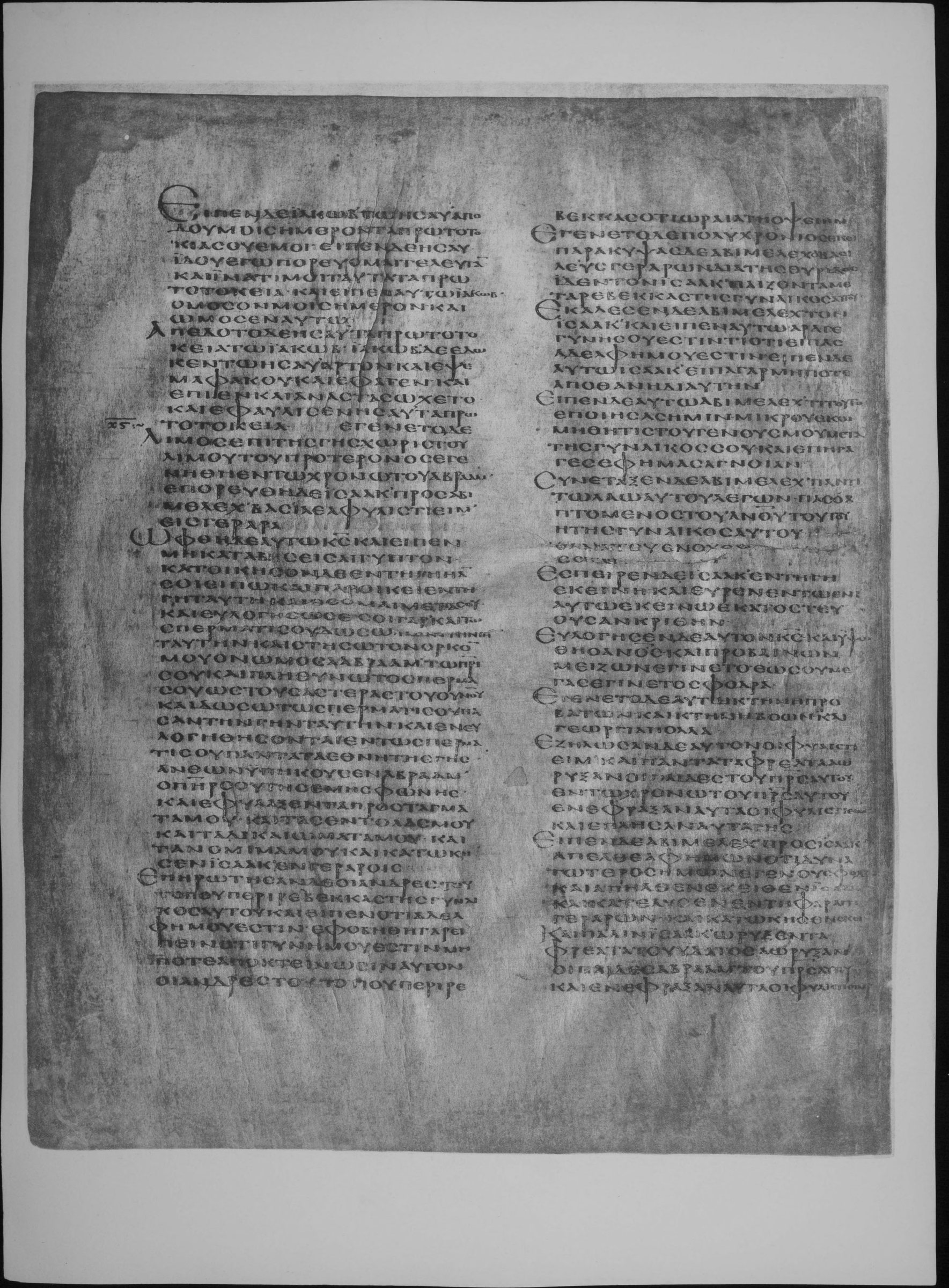
Where on the image
Genesis 26:1-8 is on fol. 15v (full-size facsimile of 1879-83, Internet Archive codex-alexandrinus leaf 51). The 1915 reduced facsimile prints beneath this page: Gen. xxv. 31-xxvi. 18. Checked on the plate: the page begins at the start of Genesis 25:31 (first words read: ΕΙΠΕΝ ΔΕ ΙΑΚΩΒ ΤΩ ΗΣΑΥ ΑΠΟΔΟΥ ΜΟΙ ΣΗΜΕΡΟΝ ΤΑ ΠΡΩΤΟΤΟΚΙΑ ΣΟΥ).
1Ἐγένετο δὲ λιμὸς ἐπὶ τῆς γῆς, χωρὶς τοῦ λιμοῦ τοῦ πρότερον ὃς ἐγενήθη ἐν τῷ χρόνῳ τοῦ Ἀβραάμ· ἐπορεύθη δὲ Ἰσαὰκ πρὸς Ἀβιμέλεχ βασιλέα Φυλιστιεὶμ εἰς Γέραρα. 2ὤφθη δὲ αὐτῷ Κύριος καὶ εἶπεν Μὴ καταβῇς εἰς Αἴγυπτον· κατοίκησον δὲ ἐν τῇ γῇ ᾗ ἄν σοι εἴπω. 3καὶ παροίκει ἐν τῇ γῇ ταύτῃ καὶ ἔσομαι μετὰ σοῦ καὶ εὐλογήσω σε· σοὶ γὰρ καὶ τῷ σπέρματί σου δώσω πᾶσαν τὴν γῆν ταύτην, καὶ στήσω τὸν ὅρκον μου ὃν ὤμοσα Ἀβραὰμ τῷ πατρί σου. 4καὶ πληθυνῶ τὸ σπέρμα σου ὡς τοὺς ἀστέρας τοῦ οὐρανοῦ, καὶ δώσω τῷ σπέρματί σου πᾶσαν τὴν γῆν ταύτην, καὶ ἐνευλογηθήσονται ἐν τῷ σπέρματί σου πάντα τὰ ἔθνη τῆς γῆς· 5ἀνθ᾽ ὧν ὑπήκουσεν Ἀβραὰμ ὁ πατήρ σου τῆς ἐμῆς φωνῆς, καὶ ἐφύλαξεν τὰ προστάγματά μου καὶ τὰς ἐντολάς μου καὶ τὰ δικαιώματά μου καὶ τὰ νόμιμά μου. 6καὶ κατῴκησεν Ἰσαὰκ ἐν Γεράροις. 7ἐπηρώτησαν δὲ οἱ ἄνδρες τοῦ τόπου περὶ Ῥεβέκκας τῆς γυναικὸς αὐτοῦ, καὶ εἶπεν ὅτι Ἀδελφή μού ἐστιν· ἐφοβήθη γὰρ εἰπεῖν ὅτι Γυνή μού ἐστιν, μή ποτε ἀποκτείνωσιν αὐτὸν οἱ ἄνδρες τοῦ τόπου περὶ Ῥεβέκκας, ὅτι ὡραία τῇ ὄψει ἦν. 8ἐγένετο δὲ πολυχρόνιος ἐκεῖ· παρακύψας δὲ Ἀβιμέλεχ ὁ βασιλεὺς Γεράρων διὰ τῆς θυρίδος ἴδεν τὸν Ἰσαὰκ παίζοντα μετὰ Ῥεβέκκας τῆς γυναικὸς αὐτοῦ.
1And there was a famine in the land, besides the former famine, which was in the time of Abraam; and Isaac went to Abimelech the king of the Phylistines to Gerara. 2And the Lord appeared to him and said, Go not down to Egypt, but dwell in the land, which I shall tell thee of. 3And sojourn in this land; and I will be with thee, and bless thee, for I will give to thee and to thy seed all this land; and I will establish my oath which I swore to thy father Abraam. 4And I will multiply thy seed as the stars of heaven; and I will give to thy seed all this land, and all the nations of the earth shall be blest in thy seed. 5Because Abraam thy father hearkened to my voice, and kept my injunctions, and my commandments, and my ordinances, and my statutes. 6And Isaac dwelt in Gerara. 7And the men of the place questioned him concerning Rebecca his wife, and he said, She is my sister, for he feared to say, She is my wife, lest at any time the men of the place should slay him because of Rebecca, because she was fair. 8And he remained there a long time, and Abimelech the king of Gerara leaned to look through the window, and saw Isaac sporting with Rebecca his wife.
Where on the image
Genesis 26:9-16 is on fol. 15v (full-size facsimile of 1879-83, Internet Archive codex-alexandrinus leaf 51). The 1915 reduced facsimile prints beneath this page: Gen. xxv. 31-xxvi. 18. Checked on the plate: the page begins at the start of Genesis 25:31 (first words read: ΕΙΠΕΝ ΔΕ ΙΑΚΩΒ ΤΩ ΗΣΑΥ ΑΠΟΔΟΥ ΜΟΙ ΣΗΜΕΡΟΝ ΤΑ ΠΡΩΤΟΤΟΚΙΑ ΣΟΥ).
9ἐκάλεσεν δὲ Ἀβιμέλεχ τὸν Ἰσαὰκ καὶ εἶπεν αὐτῷ Ἄρα γε γυνή σού ἐστιν· τί ὅτι εἶπας Ἀδελφή μού ἐστιν; εἶπεν δὲ αὐτῷ Ἰσαάκ Εἶπα γάρ Μή ποτε ἀποθάνω δι᾽ αὐτήν. 10εἶπεν δὲ αὐτῷ Ἀβιμέλεχ Τί τοῦτο ἐποίησας ἡμῖν; μικροῦ ἐκοιμήθη τις τοῦ γένους μου μετὰ τῆς γυναικός σου, καὶ ἐπήγαγες ἐφ᾽ ἡμᾶς ἄγνοιαν. 11συνέταξεν δὲ Ἀβιμέλεχ παντὶ τῷ λαῷ αὐτοῦ λέγων Πᾶς ὁ ἁπτόμενος τοῦ ἀνθρώπου τούτου ἢ τῆς γυναικὸς αὐτοῦ θανάτου ἔνοχος ἔσται. 12ἔσπειρεν δὲ Ἰσαὰκ ἐν τῇ γῇ ἐκείνῃ, καὶ εὗρεν ἐν τῷ ἐνιαυτῷ ἐκείνῳ ἑκατοστεύουσαν κριθήν· εὐλόγησεν δὲ αὐτὸν Κύριος. 13καὶ ὑψώθη ὁ ἄνθρωπος, καὶ προβαίνων μείζων ἐγίνετο ἕως οὗ μέγας ἐγίνετο σφόδρα· 14ἐγένετο δὲ αὐτῷ κτήνη προβάτων καὶ κτήνη βοῶν καὶ γεώργια πολλά. ἐζήλωσαν δὲ αὐτὸν οἱ Φυλιστιείμ· 15καὶ πάντα τὰ φρέατα ἃ ὤρυξαν οἱ παῖδες τοῦ πατρὸς αὐτοῦ ἐν τῷ χρόνῳ τοῦ πατρὸς αὐτοῦ, ἐνέφραξαν αὐτὰ οἱ Φυλιστιεὶμ καὶ ἔπλησαν αὐτὰ γῆς. 16εἶπεν δὲ Ἀβιμέλεχ πρὸς Ἰσαάκ Ἄπελθε ἀφ᾽ ἡμῶν, ὅτι δυνατώτερος ἡμῶν ἐγένου σφόδρα.
9And Abimelech called Isaac, and said to him, Is she then thy wife? why hast thou said, She is my sister? And Isaac said to him, I did so, for I said, Lest at any time I die on her account. 10And Abimelech said to him, Why hast thou done this to us? one of my kindred within a little had lain with thy wife, and thou wouldest have brought a sin of ignorance upon us. 11And Abimelech charged all his people, saying, Every man that touches this man and his wife shall be liable to death. 12And Isaac sowed in that land, and he found in that year barley an hundred-fold, and the Lord blessed him. 13And the man was exalted, and advancing he increased, till he became very great. 14And he had cattle of sheep, and cattle of oxen, and many tilled lands, and the Phylistines envied him. 15And all the wells which the servants of his father had dug in the time of his father, the Phylistines stopped them, and filled them with earth. 16And Abimelech said to Isaac, Depart from us, for thou art become much mightier than we.
Where on the image
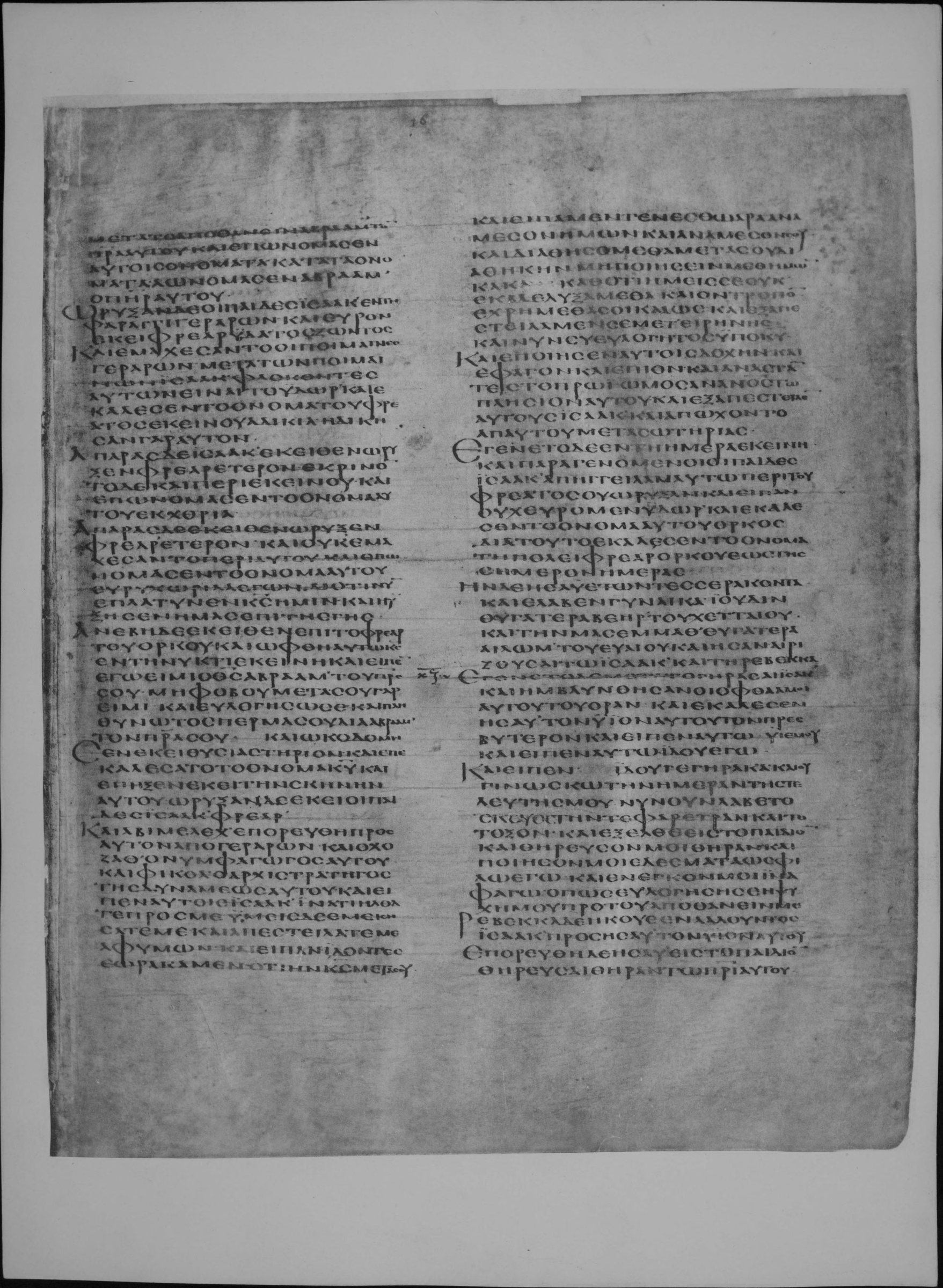
Genesis 26:17-18 is on fol. 15v (full-size facsimile of 1879-83, Internet Archive codex-alexandrinus leaf 51). The 1915 reduced facsimile prints beneath this page: Gen. xxv. 31-xxvi. 18. Checked on the plate: the page begins at the start of Genesis 25:31 (first words read: ΕΙΠΕΝ ΔΕ ΙΑΚΩΒ ΤΩ ΗΣΑΥ ΑΠΟΔΟΥ ΜΟΙ ΣΗΜΕΡΟΝ ΤΑ ΠΡΩΤΟΤΟΚΙΑ ΣΟΥ). Genesis 26:18-24 is on fol. 16r (full-size facsimile of 1879-83, Internet Archive codex-alexandrinus leaf 52). The 1915 reduced facsimile prints beneath this page: Gen. xxvi. 18-xxvii. 5. Checked on the plate: the page begins inside Genesis 26:18 (first words read: ΜΕΤΑ ΤΟ ΑΠΟΘΑΝΕΙΝ ΑΒΡΑΑΜ ΤΟΝ ΠΑΤΕΡΑ ΑΥΤΟΥ ΚΑΙ ΕΠΩΝΟΜΑΣΕΝ ΑΥΤΟΙΣ ΟΝΟΜΑΤΑ).
17καὶ ἀπῆλθεν ἐκεῖθεν Ἰσαὰκ καὶ κατέλυσεν ἐν τῇ φάραγγι Γεράρων, καὶ κατῴκησεν ἐκεῖ. 18καὶ πάλιν Ἰσαὰκ ὤρυξεν τὰ φρέατα τοῦ ὕδατος ἃ ὤρυξαν οἱ παῖδες Ἀβραὰμ τοῦ πατρὸς αὐτοῦ καὶ ἐνέφραξαν αὐτὰ οἱ Φυλιστιεὶμ μετὰ τὸ ἀποθανεῖν Ἀβραὰμ τὸν πατέρα αὐτοῦ· καὶ ἐπωνόμασεν αὐτοῖς ὀνόματα κατὰ τὰ ὀνόματα ἃ ὠνόμασεν Ἀβραὰμ ὁ πατὴρ αὐτοῦ. 19ὤρυξαν δὲ οἱ παῖδες Ἰσαὰκ ἐν τῇ φάραγγι Γεράρων, καὶ εὗρον ἐκεῖ φρέαρ ὕδατος ζῶντος. 20καὶ ἐμαχέσαντο οἱ ποιμένες Γεράρων μετὰ τῶν ποιμένων Ἰσαάκ, φάσκοντες αὐτῶν εἶναι τὸ ὕδωρ· καὶ ἐκάλεσεν τὸ ὄνομα τοῦ φρέατος ἐκείνου Ἀδικία· ἠδίκησαν γὰρ αὐτόν. 21ἀπάρας δὲ Ἰσαὰκ ἐκεῖθεν ὤρυξεν φρέαρ ἕτερον· ἐκρίνοντο δὲ καὶ περὶ ἐκείνου, καὶ ἐπωνόμασεν τὸ ὄνομα αὐτοῦ Ἐχθρία. 22ἀπάρας δὲ ἐκεῖθεν ὤρυξεν φρέαρ ἕτερον, καὶ οὐκ ἐμαχέσαντο περὶ αὐτοῦ· καὶ ἐπωνόμασεν τὸ ὄνομα αὐτοῦ Εὐρυχωρία, λέγων Διότι νῦν ἐπλάτυνεν Κύριος ἡμῖν καὶ ηὔξησεν ἡμᾶς ἐπὶ τῆς γῆς. 23ἀνέβη δὲ ἐκεῖθεν ἐπὶ τὸ φρέαρ τοῦ ὅρκου. 24καὶ ὤφθη αὐτῷ Κύριος ἐν τῇ νυκτὶ ἐκείνῃ, καὶ εἶπεν Ἐγώ εἰμι ὁ θεὸς Ἀβραὰμ τοῦ πατρός σου· μὴ φοβοῦ· μετὰ σοῦ γάρ εἰμι, καὶ εὐλογήσω σε καὶ πληθυνῶ τὸ σπέρμα σου διὰ Ἀβραὰμ τὸν πατέρα σου.
17And Isaac departed thence, and rested in the valley of Gerara, and dwelt there. 18And Isaac dug again the wells of water, which the servants of his father Abraam had dug, and the Phylistines had stopped them, after the death of his father Abraam; and he gave them names, according to the names by which his father named them. 19And the servants of Isaac dug in the valley of Gerara, and they found there a well of living water. 20And the shepherds of Gerara strove with the shepherds of Isaac, saying that the water was theirs; and they called the name of the well, Injury, for they injured him. 21And having departed thence he dug another well, and they strove also for that; and he named the name of it, Enmity. 22And he departed thence and dug another well; and they did not strive about that; and he named the name of it, Room, saying, Because now the Lord has made room for us, and has increased us upon the earth. 23And he went up thence to the well of the oath. 24And the Lord appeared to him in that night, and said, I am the God of Abraam thy father; fear not, for I am with thee, and I will bless thee, and multiply thy seed for the sake of Abraam thy father.
Where on the image
Genesis 26:25-32 is on fol. 16r (full-size facsimile of 1879-83, Internet Archive codex-alexandrinus leaf 52). The 1915 reduced facsimile prints beneath this page: Gen. xxvi. 18-xxvii. 5. Checked on the plate: the page begins inside Genesis 26:18 (first words read: ΜΕΤΑ ΤΟ ΑΠΟΘΑΝΕΙΝ ΑΒΡΑΑΜ ΤΟΝ ΠΑΤΕΡΑ ΑΥΤΟΥ ΚΑΙ ΕΠΩΝΟΜΑΣΕΝ ΑΥΤΟΙΣ ΟΝΟΜΑΤΑ).
25καὶ ᾠκοδόμησεν ἐκεῖ θυσιαστήριον καὶ ἐπεκαλέσατο τὸ ὄνομα Κυρίου, καὶ ἔπηξεν ἐκεῖ τὴν σκηνὴν αὐτοῦ· ὤρυξαν δὲ ἐκεῖ οἱ παῖδες Ἰσαὰκ φρέαρ. 26καὶ Ἀβιμέλεχ ἐπορεύθη πρὸς αὐτὸν ἀπὸ Γεράρων, καὶ Ὀχοζὰθ ὁ νυμφαγωγὸς αὐτοῦ καὶ Φικὸλ ὁ ἀρχιστράτηγος τῆς δυνάμεως αὐτοῦ. 27καὶ εἶπεν αὐτοῖς Ἰσαάκ Ἵνα τί ἤλθατε πρὸς μέ; ὑμεῖς δὲ ἐμισήσατέ με καὶ ἀπεστείλατέ με ἀφ᾽ ὑμῶν. 28καὶ εἶπαν Ἰδόντες ἑωράκαμεν ὅτι ἦν Κύριος μετὰ σοῦ, καὶ εἴπαμεν Γενέσθω ἀρὰ ἀνὰ μέσον ἡμῶν καὶ ἀνὰ μέσον σοῦ, καὶ διαθησόμεθα μετὰ σοῦ διαθήκην 29μὴ ποιήσειν μεθ᾽ ἡμῶν κακόν, καθότι ἡμεῖς σε οὐκ ἐβδελυξάμεθα, καὶ ὃν τρόπον ἐχρήμεθά σοι καλῶς καὶ ἐξαπεστείλαμέν σε μετ᾽ εἰρήνης· καὶ νῦν σὺ εὐλογητὸς ὑπὸ Κυρίου. 30καὶ ἐποίησεν αὐτοῖς δοχήν, καὶ ἔφαγον καὶ ἔπιον. 31καὶ ἀναστάντες τὸ πρωὶ ὤμοσαν ἄνθρωπος τῷ πλησίον αὐτοῦ· καὶ ἐξαπέστειλεν αὐτοὺς Ἰσαάκ, καὶ ἀπῴχοντο ἀπ᾽ αὐτοῦ μετὰ σωτηρίας. 32ἐγένετο δὲ ἐν τῇ ἡμέρᾳ ἐκείνῃ καὶ παραγενόμενοι οἱ παῖδες Ἰσαὰκ ἀπήγγειλαν αὐτῷ περὶ τοῦ φρέατος οὗ ὤρυξαν, καὶ εἶπαν Οὐχ εὕρομεν ὕδωρ.
25And he built there an altar, and called on the name of the Lord, and there he pitched his tent, and there the servants of Isaac dug a well in the valley of Gerara. 26And Abimelech came to him from Gerara, and so did Ochozath his friend, and Phichol the commander-in-chief of his army. 27And Isaac said to them, Wherefore have ye come to me? whereas ye hated me, and sent me away from you. 28And they said, We have surely seen that the Lord was with thee, and we said, Let there be an oath between us and thee, and we will make a covenant with thee, 29that thou shalt do no wrong by us, as we have not abhorred thee, and according as we have treated thee well, and have sent thee forth peaceably; and now thou art blessed of the Lord. 30And he made a feast for them, and they ate and drank. 31And they arose in the morning, and swore each to his neighbour; and Isaac sent them forth, and they departed from him in safety. 32And it came to pass in that day, that the servants of Isaac came and told him of the well which they had dug; and they said, We have not found water.
Where on the image
Genesis 26:33-35 is on fol. 16r (full-size facsimile of 1879-83, Internet Archive codex-alexandrinus leaf 52). The 1915 reduced facsimile prints beneath this page: Gen. xxvi. 18-xxvii. 5. Checked on the plate: the page begins inside Genesis 26:18 (first words read: ΜΕΤΑ ΤΟ ΑΠΟΘΑΝΕΙΝ ΑΒΡΑΑΜ ΤΟΝ ΠΑΤΕΡΑ ΑΥΤΟΥ ΚΑΙ ΕΠΩΝΟΜΑΣΕΝ ΑΥΤΟΙΣ ΟΝΟΜΑΤΑ).
33καὶ ἐκάλεσεν τὸ ὄνομα αὐτοῦ Ὅρκος· διὰ τοῦτο ἐκάλεσεν τὸ ὄνομα τῇ πόλει φρέαρ ὅρκου, ἕως τῆς σήμερον ἡμέρας. 34Ἦν δὲ Ἠσαὺ ἐτῶν τεσσεράκοντα καὶ ἔλαβεν γυναῖκα Ἰουδίν, θυγατέρα Βεὴρ τοῦ Χετταίου, καὶ τὴν Μασεμμάθ, θυγατέρα Αἰλὼμ τοῦ Εὑαίου· 35καὶ ἦσαν ἐρίζουσαι τῷ Ἰσαὰκ καὶ τῇ Ῥεβέκκᾳ.
33And he called it, Oath: therefore he called the name of that city, the Well of Oath, until this day. 34And Esau was forty years old; and he took to wife Judith the daughter of Beoch the Chettite, and Basemath, daughter of Helon the Chettite. 35And they were provoking to Isaac and Rebecca.
Cite
Sources
- Source: Codex Alexandrinus (British Library Royal MS 1 D. V) via the British Museum photographic facsimiles of 1879-83 and 1915 (Internet Archive) + Swete's Septuagint + Brenton's English (holding institution)
- Critical edition: H. B. Swete, The Old Testament in Greek according to the Septuagint (1909)
← previous · → next · v cycle view · l back to library