Genesis, Chapter 28 (Codex Alexandrinus)
Introduction
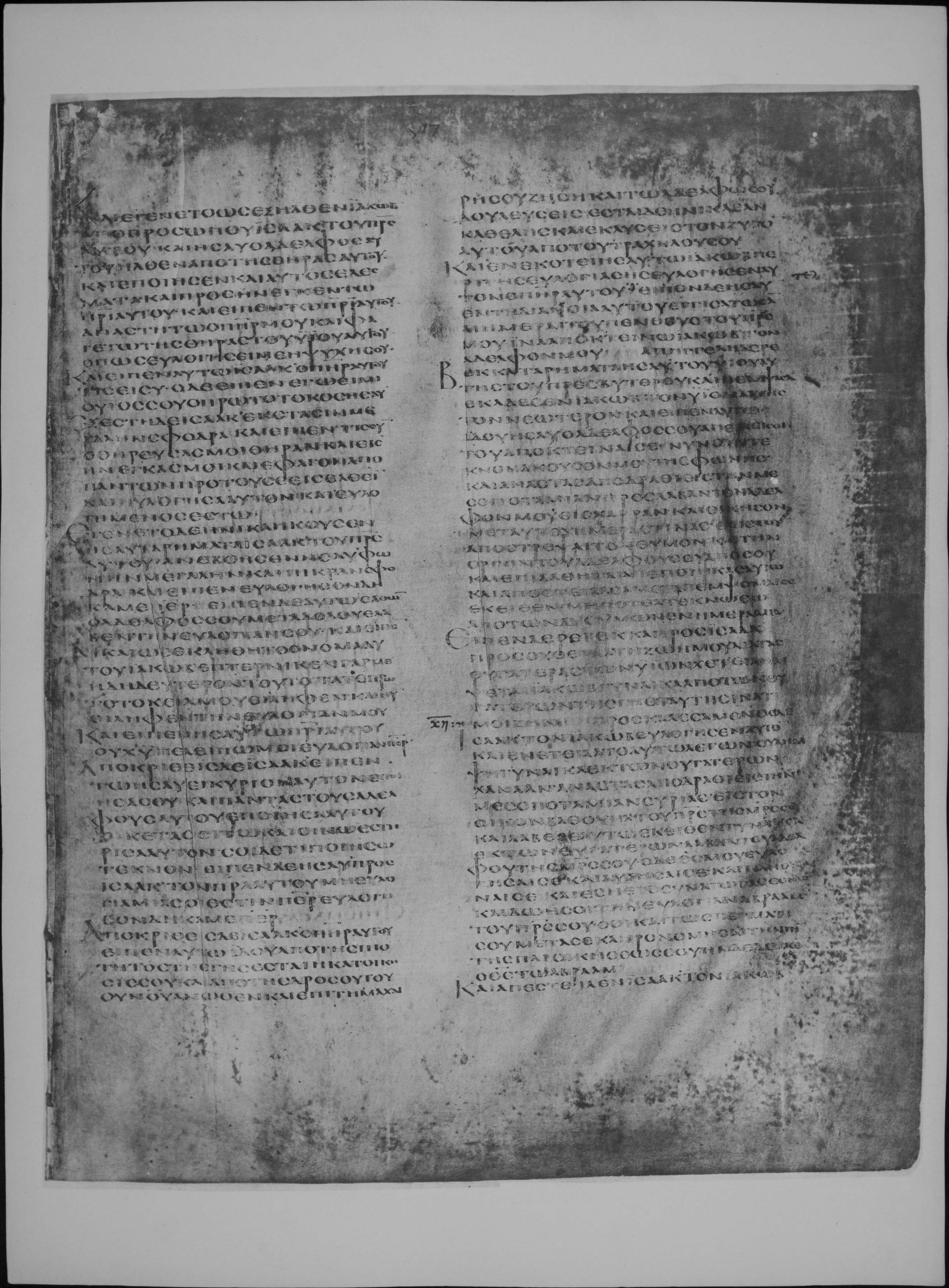
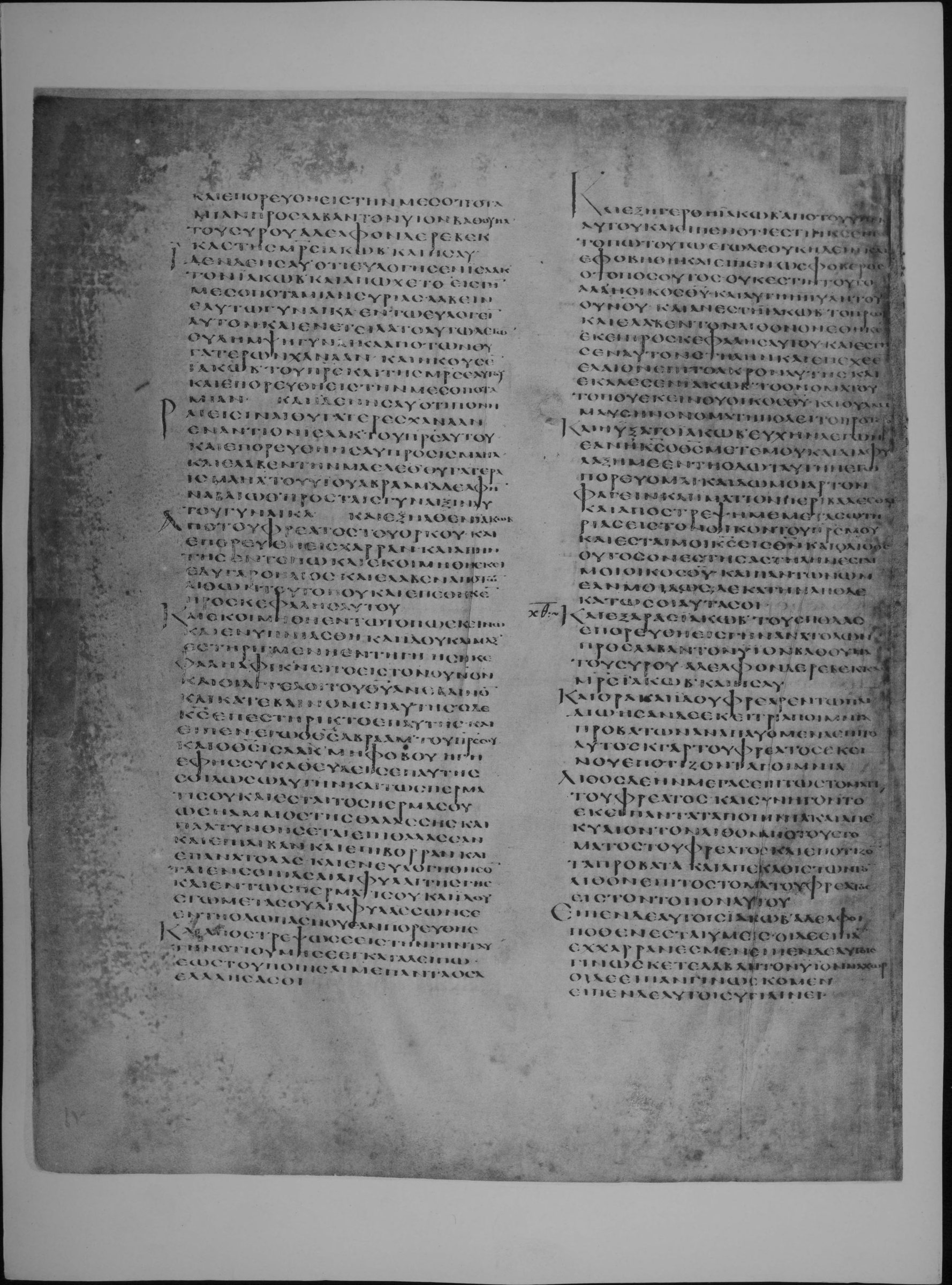
Genesis 28 in the Greek Old Testament (the Septuagint) as written in Codex Alexandrinus, a Greek Bible copied in the fifth century, probably in Egypt, and now in the British Library (Royal MS 1 D. V, the first of its four volumes). It is one of the three great early codices of the whole Greek Bible, with Codex Vaticanus and Codex Sinaiticus, and for Genesis 1:1-46:28, which Codex Vaticanus has lost, it is the oldest surviving complete Greek text (older papyri such as the Berlin Genesis papyrus and Chester Beatty 961 survive only in part).
This entry meets the strict three-criteria standard of the Theosis Library:
- Manuscript scan: the pages of Codex Alexandrinus carrying this chapter (fol. 17r, fol. 17v), from the full-size photographic (autotype) facsimile published by the British Museum in 1879-1883, as digitised on the Internet Archive. The verse range of every page comes from the reduced photographic facsimile of 1915, which prints it beneath each plate, and the opening words of every page were read on the plate to confirm the page and the verse it begins with. Each section links to the page or pages that hold its verses. Folio numbers are those written at the head of each leaf and visible on the plates.
- Original text: Swete's edition, which in Genesis 1:1-46:28 prints the text of Codex Alexandrinus itself (Codex Vaticanus has lost these chapters), with the spelling of A for the most part. Swete adds accents, breathings and punctuation and expands the abbreviated sacred names, so the plate shows the same text in unaccented capitals.
- English translation: Sir Lancelot C. L. Brenton, The Septuagint Version of the Old Testament (1844; 1851 edition), a translation of the Greek, public domain, from the eBible.org text.
How was this verified? (Provenance)
Where on the image
Genesis 28:1-5 is on fol. 17r (full-size facsimile of 1879-83, Internet Archive codex-alexandrinus leaf 54). The 1915 reduced facsimile prints beneath this page: Gen. xxvii. 30-xxviii. 5. Checked on the plate: the page begins inside Genesis 27:30 (first words read: ΚΑΙ ΕΓΕΝΕΤΟ ΩΣ ΕΞΗΛΘΕΝ ΙΑΚΩΒ ΑΠΟ ΠΡΟΣΩΠΟΥ ΙΣΑΑΚ ΤΟΥ ΠΑΤΡΟΣ ΑΥΤΟΥ). Genesis 28:5-8 is on fol. 17v (full-size facsimile of 1879-83, Internet Archive codex-alexandrinus leaf 55). The 1915 reduced facsimile prints beneath this page: Gen. xxviii. 5-xxix. 6. Checked on the plate: the page begins inside Genesis 28:5 (first words read: ΚΑΙ ΕΠΟΡΕΥΘΗ ΕΙΣ ΤΗΝ ΜΕΣΟΠΟΤΑΜΙΑΝ ΠΡΟΣ ΛΑΒΑΝ ΤΟΝ ΥΙΟΝ ΒΑΘΟΥΗΛ).
1προσκαλεσάμενος δὲ Ἰσαὰκ τὸν Ἰακὼβ εὐλόγησεν αὐτόν, καὶ ἐνετείλατο αὐτῷ λέγων Οὐ λήμψῃ γυναῖκα ἐκ τῶν θυγατέρων Χανάαν· 2ἀναστὰς ἀπόδραθι εἰς τὴν Μεσοποταμίαν Συρίας εἰς τὸν οἶκον Βαθουὴλ τοῦ πατρὸς τῆς μητρός σου, καὶ λάβε σεαυτῷ ἐκεῖθεν γυναῖκα ἐκ τῶν θυγατέρων Λαβὰν τοῦ ἀδελφοῦ τῆς μητρός σου. 3ὁ δὲ θεός μου εὐλογήσαι σε καὶ αὐξήσαι σε καὶ πληθύναι σε, καὶ ἔσῃ εἰς συναγωγὰς ἐθνῶν· 4καὶ δῴη σοι τὴν εὐλογίαν Ἀβραὰμ τοῦ πατρός σου, σοὶ καὶ τῷ σπέρματί σου μετὰ σέ, κληρονομῆσαι τὴν γῆν τῆς παροικήσεώς σου, ἣν δέδωκεν ὁ θεὸς τῷ Ἀβραάμ. 5καὶ ἀπέστειλεν Ἰσαὰκ τὸν Ἰακώβ, καὶ ἐπορεύθη εἰς τὴν Μεσοποταμίαν πρὸς Λαβὰν τὸν υἱὸν Βαθουὴλ τοῦ Σύρου, ἀδελφὸν δὲ Ῥεβέκκας τῆς μητρὸς Ἰακὼβ καὶ Ἠσαύ. 6ἴδεν δὲ Ἠσαὺ ὅτι εὐλόγησεν Ἰσαὰκ τὸν Ἰακὼβ καὶ ἀπῴχετο εἰς τὴν Μεσοποταμίαν Συρίας λαβεῖν ἑαυτῷ γυναῖκα, ἐν τῷ εὐλογεῖν αὐτόν, καὶ ἐνετείλατο αὐτῷ λέγων Οὐ λήμψῃ γυναῖκα ἀπὸ τῶν θυγατέρων Χανάαν· 7καὶ ἤκουσεν Ἰακὼβ τοῦ πατρὸς καὶ τῆς μητρὸς ἑαυτοῦ, καὶ ἐπορεύθη εἰς τὴν Μεσοποταμίαν. 8καὶ ἴδεν Ἠσαὺ ὅτι πονηραί εἰσιν αἱ θυγατέρες Χανάαν ἐναντίον Ἰσαὰκ τοῦ πατρὸς αὐτοῦ,
1And Isaac having called for Jacob, blessed him, and charged him, saying, Thou shalt not take a wife of the daughters of the Chananites. 2Rise and depart quickly into Mesopotamia, to the house of Bathuel the father of thy mother, and take to thyself thence a wife of the daughters of Laban thy mother's brother. 3And may my God bless thee, and increase thee, and multiply thee, and thou shalt become gatherings of nations. 4And may he give thee the blessing of my father Abraam, even to thee and to thy seed after thee, to inherit the land of thy sojourning, which God gave to Abraam. 5So Isaac sent away Jacob, and he went into Mesopotamia to Laban the son of Bethuel the Syrian, the brother of Rebecca the mother of Jacob and Esau. 6And Esau saw that Isaac blessed Jacob, and sent him away to Mesopotamia of Syria as he blessed him, to take to himself a wife thence, and that he charged him, saying, Thou shalt not take a wife of the daughters of the Chananites; 7and that Jacob hearkened to his father and his mother, and went to Mesopotamia of Syria. 8And Esau also having seen that the daughters of Chanaan were evil before his father Isaac,
Where on the image
Genesis 28:9-16 is on fol. 17v (full-size facsimile of 1879-83, Internet Archive codex-alexandrinus leaf 55). The 1915 reduced facsimile prints beneath this page: Gen. xxviii. 5-xxix. 6. Checked on the plate: the page begins inside Genesis 28:5 (first words read: ΚΑΙ ΕΠΟΡΕΥΘΗ ΕΙΣ ΤΗΝ ΜΕΣΟΠΟΤΑΜΙΑΝ ΠΡΟΣ ΛΑΒΑΝ ΤΟΝ ΥΙΟΝ ΒΑΘΟΥΗΛ).
9καὶ ἐπορεύθη Ἠσαὺ πρὸς Ἰσμαήλ, καὶ ἔλαβεν τὴν Μαελὲθ θυγατέρα Ἰσμαὴλ τοῦ υἱοῦ Ἀβραάμ, ἀδελφὴν Ναβαιώθ, πρὸς ταῖς γυναιξὶν αὐτοῦ γυναῖκα. 10Καὶ ἐξῆλθεν Ἰακὼβ ἀπὸ τοῦ φρέατος τοῦ ὅρκου, καὶ ἐπορεύθη εἰς Χαρράν. 11καὶ ἀπήντησεν τόπῳ καὶ ἐκοιμήθη ἐκεῖ· ἔδυ γὰρ ὁ ἥλιος· καὶ ἔλαβεν ἀπὸ τῶν λίθων τοῦ τόπου καὶ ἐπέθηκεν πρὸς κεφαλῆς αὐτοῦ, καὶ ἐκοιμήθη ἐν τῷ τόπῳ ἐκείνῳ. 12καὶ ἐνυπνιάσθη· καὶ ἰδοὺ κλίμαξ ἐστηριγμένη ἐν τῇ γῇ ἧς ἡ κεφαλὴ ἀφικνεῖτο εἰς τὸν οὐρανόν, καὶ οἱ ἄγγελοι τοῦ θεοῦ ἀνέβαινον καὶ κατέβαινον ἐπ᾽ αὐτῆς. 13ὁ δὲ Κύριος ἐπεστήρικτο ἐπ᾽ αὐτῆς καὶ εἶπεν Ἐγὼ ὁ θεὸς Ἀβραὰμ τοῦ πατρός σου καὶ ὁ θεὸς Ἰσαάκ· μὴ φοβοῦ· ἡ γῆ ἐφ᾽ ἧς σὺ καθεύδεις ἐπ᾽ αὐτῆς, σοὶ δώσω αὐτὴν καὶ τῷ σπέρματί σου. 14καὶ ἔσται τὸ σπέρμα σου ὡς ἡ ἄμμος τῆς θαλάσσης, καὶ πλατυνθήσεται ἐπὶ θάλασσαν καὶ ἐπὶ λίβα καὶ ἐπὶ βορρᾶν καὶ ἐπ᾽ ἀνατολάς· καὶ ἐνευλογηθήσονται ἐν σοὶ πᾶσαι αἱ φυλαὶ τῆς γῆς καὶ ἐν τῷ σπέρματί σου. 15καὶ ἰδού ἐγὼ μετὰ σοῦ, διαφυλάσσων σε ἐν τῇ ὁδῷ πάσῃ οὗ ἐὰν πορευθῇς, καὶ ἀποστρέψω σε εἰς τὴν γῆν ταύτην· ὅτι οὐ μή σε ἐγκαταλείπω ἕως τοῦ ποιῆσαί με πάντα ὅσα ἐλάλησά σοι. 16καὶ ἐξηγέρθη Ἰακὼβ ἀπὸ τοῦ ὕπνου αὐτοῦ καὶ εἶπεν ὅτι Ἔστιν Κύριος ἐν τῷ τόπῳ τούτῳ, ἐγὼ δὲ οὐκ ᾔδειν.
9Esau went to Ismael, and took Maeleth the daughter of Ismael, the son of Abraam, the sister of Nabeoth, a wife in addition to his other wives. 10And Jacob went forth from the well of the oath, and departed into Charrhan. 11And came to a certain place and slept there, for the sun had gone down; and he took one of the stones of the place, and put it at his head, and lay down to sleep in that place, 12and dreamed, and behold a ladder fixed on the earth, whose top reached to heaven, and the angels of God ascended and descended on it. 13And the Lord stood upon it, and said, I am the God of thy father Abraam, and the God of Isaac; fear not, the land on which thou liest, to thee will I give it, and to thy seed. 14And thy seed shall be as the sand of the earth; and it shall spread abroad to the sea, and the south, and the north, and to the east; and in thee and in thy seed shall all the tribes of the earth be blessed. 15And behold I am with thee to preserve thee continually in all the way wherein thou shalt go; and I will bring thee back to this land; for I will not desert thee, until I have done all that I have said to thee. 16And Jacob awaked out of his sleep, and said, The Lord is in this place, and I knew it not.
Where on the image
Genesis 28:17-22 is on fol. 17v (full-size facsimile of 1879-83, Internet Archive codex-alexandrinus leaf 55). The 1915 reduced facsimile prints beneath this page: Gen. xxviii. 5-xxix. 6. Checked on the plate: the page begins inside Genesis 28:5 (first words read: ΚΑΙ ΕΠΟΡΕΥΘΗ ΕΙΣ ΤΗΝ ΜΕΣΟΠΟΤΑΜΙΑΝ ΠΡΟΣ ΛΑΒΑΝ ΤΟΝ ΥΙΟΝ ΒΑΘΟΥΗΛ).
17καὶ ἐφοβήθη, καὶ εἶπεν Ὡς φοβερὸς ὁ τόπος οὗτος· οὐκ ἔστιν τοῦτο ἀλλ᾽ ἢ οἶκος θεοῦ, καὶ αὕτη ἡ πύλη τοῦ οὐρανοῦ. 18καὶ ἀνέστη Ἰακὼβ τὸ πρωί, καὶ ἔλαβεν τὸν λίθον ὃν ἔθηκεν ἐκεῖ πρὸς κεφαλῆς αὐτοῦ καὶ ἔστησεν αὐτὸν στήλην, καὶ ἐπέχεεν ἔλαιον ἐπὶ τὸ ἄκρον αὐτῆς 19καὶ ἐκάλεσεν Ἰακὼβ τὸ ὄνομα τοῦ τόπου ἐκείνου Οἶκος θεοῦ· καὶ Οὐλαμμαὺς ἦν ὄνομα τῇ πόλει τὸ πρότερον. 20καὶ ηὔξατο Ἰακὼβ εὐχὴν λέγων Ἐὰν ᾖ Κύριος ὁ θεὸς μετ᾽ ἐμοῦ, καὶ διαφυλάξῃ με ἐν τῇ ὁδῷ ταύτῃ ᾗ ἐγὼ πορεύομαι, καὶ δῷ μοι ἄρτον φαγεῖν καὶ ἱμάτιον περιβαλέσθαι, 21καὶ ἀποστρέψῃ με μετὰ σωτηρίας εἰς τὸν οἶκον τοῦ πατρός μου, καὶ ἔσται μοι Κύριος εἰς θεόν· 22καὶ ὁ λίθος οὗτος, ὃν ἔστησα στήλην, ἔσται μοι οἶκος θεοῦ· καὶ πάντων ὧν ἐάν μοι δῷς, δεκάτην ἀποδεκατώσω αὐτά σοι.
17And he was afraid, and said, How fearful is this place! this is none other than the house of God, and this is the gate of heaven. 18And Jacob rose up in the morning, and took the stone he had laid there by his head, and he set it up as a pillar, and poured oil on the top of it. 19And he called the name of that place, the House of God; and the name of the city before was Ulam-luz. 20And Jacob vowed a vow, saying, If the Lord God will be with me, and guard me throughout on this journey, on which I am going, and give me bread to eat, and raiment to put on, 21and bring me back in safety to the house of my father, then shall the Lord be for a God to me. 22And this stone, which I have set up for a pillar, shall be to me a house of God; and of all whatsoever thou shalt give me, I will tithe a tenth for thee.
Cite
Sources
- Source: Codex Alexandrinus (British Library Royal MS 1 D. V) via the British Museum photographic facsimiles of 1879-83 and 1915 (Internet Archive) + Swete's Septuagint + Brenton's English (holding institution)
- Critical edition: H. B. Swete, The Old Testament in Greek according to the Septuagint (1909)
← previous · → next · v cycle view · l back to library