Genesis, Chapter 29 (Codex Alexandrinus)
Introduction
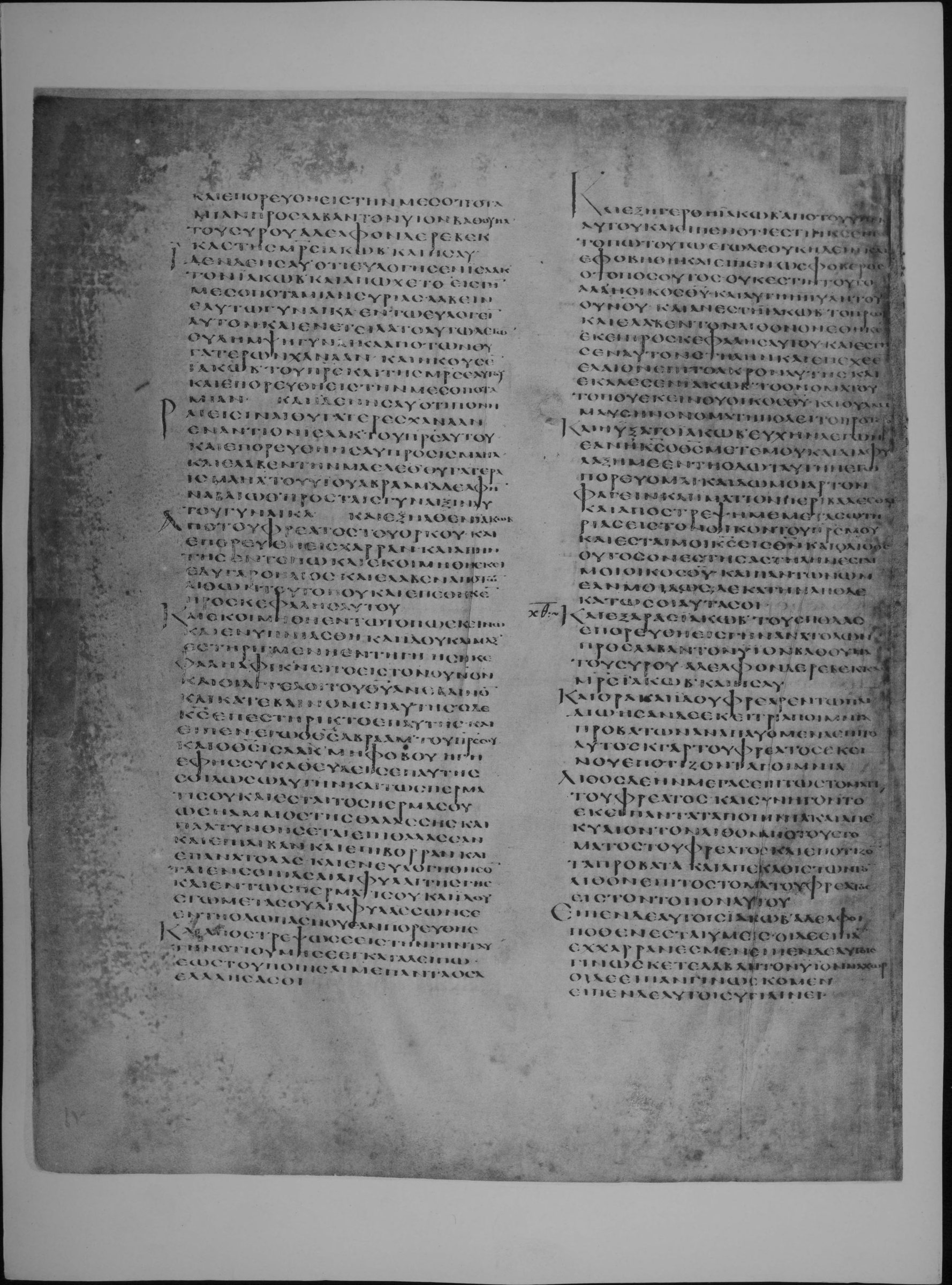
Genesis 29 in the Greek Old Testament (the Septuagint) as written in Codex Alexandrinus, a Greek Bible copied in the fifth century, probably in Egypt, and now in the British Library (Royal MS 1 D. V, the first of its four volumes). It is one of the three great early codices of the whole Greek Bible, with Codex Vaticanus and Codex Sinaiticus, and for Genesis 1:1-46:28, which Codex Vaticanus has lost, it is the oldest surviving complete Greek text (older papyri such as the Berlin Genesis papyrus and Chester Beatty 961 survive only in part).
This entry meets the strict three-criteria standard of the Theosis Library:
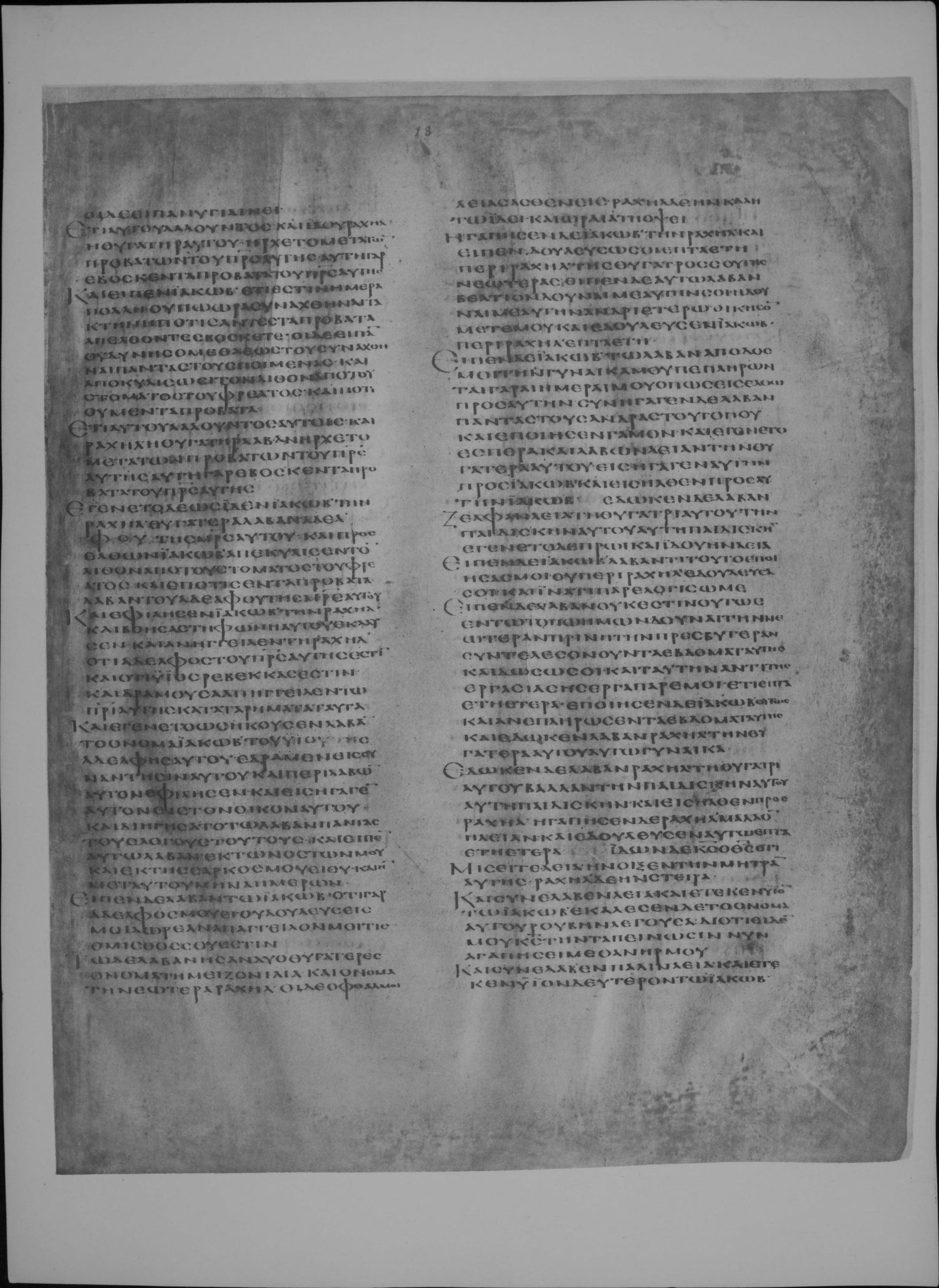
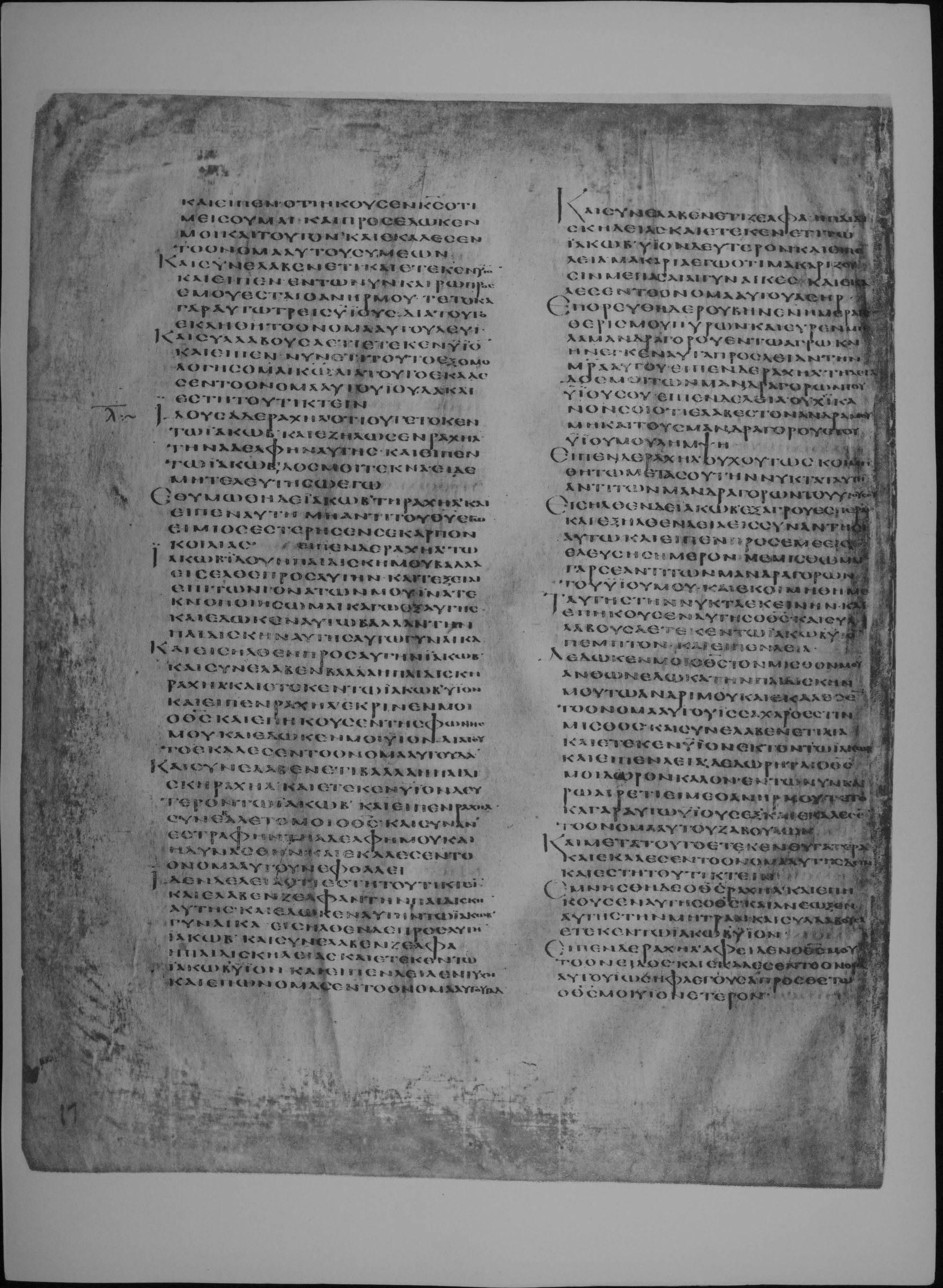
- Manuscript scan: the pages of Codex Alexandrinus carrying this chapter (fol. 17v, fol. 18r, fol. 18v), from the full-size photographic (autotype) facsimile published by the British Museum in 1879-1883, as digitised on the Internet Archive. The verse range of every page comes from the reduced photographic facsimile of 1915, which prints it beneath each plate, and the opening words of every page were read on the plate to confirm the page and the verse it begins with. Each section links to the page or pages that hold its verses. Folio numbers are those written at the head of each leaf and visible on the plates.
- Original text: Swete's edition, which in Genesis 1:1-46:28 prints the text of Codex Alexandrinus itself (Codex Vaticanus has lost these chapters), with the spelling of A for the most part. Swete adds accents, breathings and punctuation and expands the abbreviated sacred names, so the plate shows the same text in unaccented capitals.
- English translation: Sir Lancelot C. L. Brenton, The Septuagint Version of the Old Testament (1844; 1851 edition), a translation of the Greek, public domain, from the eBible.org text.
How was this verified? (Provenance)
Where on the image
Genesis 29:1-6 is on fol. 17v (full-size facsimile of 1879-83, Internet Archive codex-alexandrinus leaf 55). The 1915 reduced facsimile prints beneath this page: Gen. xxviii. 5-xxix. 6. Checked on the plate: the page begins inside Genesis 28:5 (first words read: ΚΑΙ ΕΠΟΡΕΥΘΗ ΕΙΣ ΤΗΝ ΜΕΣΟΠΟΤΑΜΙΑΝ ΠΡΟΣ ΛΑΒΑΝ ΤΟΝ ΥΙΟΝ ΒΑΘΟΥΗΛ). Genesis 29:6-8 is on fol. 18r (full-size facsimile of 1879-83, Internet Archive codex-alexandrinus leaf 56). The 1915 reduced facsimile prints beneath this page: Gen. xxix. 6-33. Checked on the plate: the page begins inside Genesis 29:6 (first words read: ΟΙ ΔΕ ΕΙΠΑΝ ΥΓΙΑΙΝΕΙ ΕΤΙ ΑΥΤΟΥ ΛΑΛΟΥΝΤΟΣ ΚΑΙ ΙΔΟΥ ΡΑΧΗΛ Η ΘΥΓΑΤΗΡ ΑΥΤΟΥ ΗΡΧΕΤΟ).
1Καὶ ἐξάρας Ἰακὼβ τοὺς πόδας ἐπορεύθη εἰς γῆν ἀνατολῶν πρὸς Λαβὰν τὸν υἱὸν Βαθουὴλ τοῦ Σύρου, ἀδελφὸν δὲ Ῥεβέκκας μητρὸς Ἰακὼβ καὶ Ἠσαύ. 2καὶ ὁρᾷ, καὶ ἰδοὺ φρέαρ ἐν τῷ πεδίῳ. ἦσαν δὲ ἐκεῖ τρία ποίμνια προβάτων ἀναπαυόμενα ἐπὶ τὸ αὐτό. ἐκ γὰρ τοῦ φρέατος ἐκείνου ἐπότιζον τὰ ποίμνια· λίθος δὲ ἦν μέγας ἐπὶ τῷ στόματι τοῦ φρέατος. 3καὶ συνήγοντο ἐκεῖ πάντα τὰ ποίμνια, καὶ ἀπεκύλιον τὸν λίθον ἀπὸ τοῦ στόματος τοῦ φρέατος, καὶ ἐπότιζον τὰ πρόβατα, καὶ ἀπεκαθίστων τὸν λίθον ἐπὶ τὸ στόμα τοῦ φρέατος εἰς τὸν τόπον αὐτοῦ. 4εἶπεν δὲ αὐτοῖς Ἰακώβ Ἀδελφοί, πόθεν ἐστὲ ὑμεῖς; οἱ δὲ εἶπαν Ἐκ Χαρράν ἐσμεν. 5εἶπεν δὲ αὐτοῖς Γινώσκετε Λαβὰν τὸν υἱὸν Ναχώρ; οἱ δὲ εἶπαν Γινώσκομεν. 6εἶπεν δὲ αὐτοῖς Ὑγιαίνει; οἱ δὲ εἶπαν Ὑγιαίνει. ἔτι αὐτοῦ λαλοῦντος καὶ ἰδοὺ Ῥαχὴλ ἡ θυγάτηρ αὐτοῦ ἤρχετο μετὰ τῶν προβάτων τοῦ πατρὸς αὐτῆς· αὐτὴ γὰρ ἔβοσκεν τὰ πρόβατα τοῦ πατρὸς αὐτῆς. 7καὶ εἶπεν Ἰακώβ Ἔτι ἐστὶν ἡμέρα πολλή, οὔπω ὥρα συναχθῆναι τὰ κτήνη· ποτίσαντες τὰ πρόβατα ἀπελθόντες βόσκετε. 8οἱ δὲ εἶπαν Οὐ δυνησόμεθα ἕως τοῦ συναχθῆναι πάντας τοὺς ποιμένας, καὶ ἀποκυλίσωσι τὸν λίθον ἀπὸ τοῦ στόματος τοῦ φρέατος, καὶ ποτιοῦμεν τὰ πρόβατα.
1And Jacob started and went to the land of the east to Laban, the son of Bathuel the Syrian, and the brother of Rebecca, mother of Jacob and Esau. 2And he looks, and behold! a well in the plain; and there were there three flocks of sheep resting at it, for out of that well they watered the flocks, but there was a great stone at the mouth of the well. 3And there were all the flocks gathered, and they used to roll away the stone from the mouth of the well, and water the flocks, and set the stone again in its place on the mouth of the well. 4And Jacob said to them, Brethren, whence are ye? and they said, We are of Charrhan. 5And he said to them, Know ye Laban, the son of Nachor? and they said, We do know him. 6And he said to them, Is he well? And they said, He is well. And behold Rachel his daughter came with the sheep. 7And Jacob said, It is yet high day, it is not yet time that the flocks be gathered together; water ye the flocks, and depart and feed them. 8And they said, We shall not be able, until all the shepherds be gathered together, and they shall roll away the stone from the mouth of the well, then we will water the flocks.
Where on the image
Genesis 29:9-16 is on fol. 18r (full-size facsimile of 1879-83, Internet Archive codex-alexandrinus leaf 56). The 1915 reduced facsimile prints beneath this page: Gen. xxix. 6-33. Checked on the plate: the page begins inside Genesis 29:6 (first words read: ΟΙ ΔΕ ΕΙΠΑΝ ΥΓΙΑΙΝΕΙ ΕΤΙ ΑΥΤΟΥ ΛΑΛΟΥΝΤΟΣ ΚΑΙ ΙΔΟΥ ΡΑΧΗΛ Η ΘΥΓΑΤΗΡ ΑΥΤΟΥ ΗΡΧΕΤΟ).
9ἔτι αὐτοῦ λαλοῦντος αὐτοῖς, καὶ Ῥαχὴλ ἡ θυγάτηρ Λαβὰν ἤρχετο μετὰ τῶν προβάτων τοῦ πατρὸς αὐτῆς· αὐτὴ γὰρ ἔβοσκεν τὰ πρόβατα τοῦ πατρὸς αὐτῆς. 10ἐγένετο δὲ ὡς ἴδεν Ἰακὼβ τὴν Ῥαχὴλ θυγατέρα Λαβὰν ἀδελφοῦ τῆς μητρὸς αὐτοῦ, καὶ προσελθὼν Ἰακὼβ ἀπεκύλισεν τὸν λίθον ἀπὸ τοῦ στόματος τοῦ φρέατος, καὶ ἐπότισεν τὰ πρόβατα Λαβὰν τοῦ ἀδελφοῦ τῆς μητρὸς αὐτοῦ. 11καὶ ἐφίλησεν Ἰακὼβ τὴν Ῥαχήλ, καὶ βοήσας τῇ φωνῇ αὐτοῦ ἔκλαυσεν. 12καὶ ἀνήγγειλεν τῇ Ῥαχὴλ ὅτι ἀδελφὸς τοῦ πατρὸς αὐτῆς ἐστίν, καὶ ὅτι υἱὸς Ῥεβέκκας ἐστίν· καὶ δραμοῦσα ἀπήγγειλεν τῷ πατρὶ αὐτῆς κατὰ τὰ ῥήματα ταῦτα. 13καὶ ἐγένετο ὡς ἤκουσεν Λαβὰν τὸ ὄνομα Ἰακὼβ τοῦ υἱοῦ τῆς ἀδελφῆς αὐτοῦ, ἔδραμεν εἰς συνάντησιν αὐτοῦ, καὶ περιλαβὼν αὐτὸν ἐφίλησεν, καὶ εἰσήγαγεν αὐτὸν εἰς τὸν οἶκον αὐτοῦ· καὶ διηγήσατο τῷ Λαβὰν πάντας τοὺς λόγους τούτους. 14καὶ εἶπεν αὐτῷ Λαβάν Ἐκ τῶν ὀστῶν μου καὶ ἐκ τῆς σαρκός μου εἶ σύ· καὶ ἦν μετ᾽ αὐτοῦ μῆνα ἡμερῶν. 15εἶπεν δὲ Λαβὰν τῷ Ἰακώβ Ὅτι γὰρ ἀδελφός μου εἶ, οὐ δουλεύσεις μοι δωρεάν· ἀπάγγειλόν μοι τίς ὁ μισθός σού ἐστιν. 16τῷ δὲ Λαβὰν ἦσαν δύο θυγατέρες· ὄνομα τῇ μείζονι Λεία, καὶ ὄνομα τῇ νεωτέρᾳ Ῥαχήλ.
9While he was yet speaking to them, behold, Rachel the daughter of Laban came with her father's sheep, for she fed the sheep of her father. 10And it came to pass when Jacob saw Rachel the daughter of Laban, his mother's brother, and the sheep of Laban, his mother's brother, that Jacob came and rolled away the stone from the mouth of the well, and watered the sheep of Laban, his mother's brother. 11And Jacob kissed Rachel, and cried with a loud voice and wept. 12And he told Rachel that he was the near relative of her father, and the son of Rebecca; and she ran and reported to her father according to these words. 13And it came to pass when Laban heard the name of Jacob, his sister's son, he ran to meet him, and embraced and kissed him, and brought him into his house; and he told Laban all these sayings. 14And Laban said to him, Thou art of my bones and of my flesh; and he was with him a full month. 15And Laban said to Jacob, Surely thou shalt not serve me for nothing, because thou art my brother; tell me what thy reward is to be. 16Now Laban had two daughters, the name of the elder was Lea, and the name of the younger, Rachel.
Where on the image
Genesis 29:17-24 is on fol. 18r (full-size facsimile of 1879-83, Internet Archive codex-alexandrinus leaf 56). The 1915 reduced facsimile prints beneath this page: Gen. xxix. 6-33. Checked on the plate: the page begins inside Genesis 29:6 (first words read: ΟΙ ΔΕ ΕΙΠΑΝ ΥΓΙΑΙΝΕΙ ΕΤΙ ΑΥΤΟΥ ΛΑΛΟΥΝΤΟΣ ΚΑΙ ΙΔΟΥ ΡΑΧΗΛ Η ΘΥΓΑΤΗΡ ΑΥΤΟΥ ΗΡΧΕΤΟ).
17οἱ δὲ ὀφθαλμοὶ Λείας ἀσθενεῖς· Ῥαχὴλ δὲ ἦν καλὴ τῷ εἴδει καὶ ὡραία τῇ ὄψει. 18ἠγάπησεν δὲ Ἰακὼβ τὴν Ῥαχήλ, καὶ εἶπεν Δουλεύσω σοι ἑπτὰ ἔτη περὶ Ῥαχὴλ τῆς θυγατρός σου τῆς νεωτέρας. 19εἶπεν δὲ αὐτῷ Λαβάν Βέλτιον δοῦναί με αὐτὴν σοὶ ἢ δοῦναί με αὐτὴν ἀνδρὶ ἑτέρῳ· οἴκησον μετ᾽ ἐμοῦ. 20καὶ ἐδούλευσεν Ἰακὼβ περὶ Ῥαχὴλ ἑπτὰ ἔτη. 21εἶπεν δὲ Ἰακὼβ τῷ Λαβάν Ἀπόδος μοι τὴν γυναῖκά μου, πεπλήρωνται γὰρ αἱ ἡμέραι μου, ὅπως εἰσέλθω πρὸς αὐτήν. 22συνήγαγεν δὲ Λαβὰν πάντας τοὺς ἄνδρας τοῦ τόπου καὶ ἐποίησεν γάμον. 23καὶ ἐγένετο ἑσπέρα, καὶ λαβὼν Λείαν τὴν θυγατέρα αὐτοῦ εἰσήγαγεν αὐτὴν πρὸς Ἰακώβ, καὶ εἰσῆλθεν πρὸς αὐτὴν Ἰακώβ. 24ἔδωκεν δὲ Λαβὰν Ζέλφαν Λείᾳ τῇ θυγατρὶ αὐτοῦ τὴν παιδίσκην αὐτοῦ αὐτῇ παιδίσκην.
17And the eyes of Lea were weak. But Rachel was beautiful in appearance, and exceedingly fair in countenance. 18And Jacob loved Rachel, and said, I will serve thee seven years for thy younger daughter Rachel. 19And Laban said to him, It is better that I should give her to thee, than that I should give her to another man; dwell with me. 20And Jacob served for Rachel seven years, and they were before him as a few days, by reason of his loving her. 21And Jacob said to Laban, Give me my wife, for my days are fulfilled, that I may go in to her. 22And Laban gathered together all the men of the place, and made a marriage-feast. 23And it was even, and he took his daughter Lea, and brought her in to Jacob, and Jacob went in to her. 24And Laban gave to his daughter Lea, Zelpha his handmaid, as a handmaid for her.
Where on the image
Genesis 29:25-32 is on fol. 18r (full-size facsimile of 1879-83, Internet Archive codex-alexandrinus leaf 56). The 1915 reduced facsimile prints beneath this page: Gen. xxix. 6-33. Checked on the plate: the page begins inside Genesis 29:6 (first words read: ΟΙ ΔΕ ΕΙΠΑΝ ΥΓΙΑΙΝΕΙ ΕΤΙ ΑΥΤΟΥ ΛΑΛΟΥΝΤΟΣ ΚΑΙ ΙΔΟΥ ΡΑΧΗΛ Η ΘΥΓΑΤΗΡ ΑΥΤΟΥ ΗΡΧΕΤΟ).
25ἐγένετο δὲ πρωί, καὶ ἰδοὺ ἦν Λεία· εἶπεν δὲ Ἰακὼβ Λαβάν Τί τοῦτο ἐποίησάς μοι; οὐ περὶ Ῥαχὴλ ἐδούλευσα σοί; καὶ ἵνα τί παρελογίσω με; 26εἶπεν δὲ Λαβάν Οὐκ ἔστιν οὕτως ἐν τῷ τόπῳ ἡμῶν, δοῦναι τὴν νεωτέραν πρὶν ἢ τὴν πρεσβυτέραν· 27συντέλεσον οὖν τὰ ἕβδομα ταύτης, καὶ δώσω σοι καὶ ταύτην ἀντὶ τῆς ἐργασίας ἧς ἐργᾷ παρ᾽ ἐμοὶ ἔτι ἑπτὰ ἔτη ἕτερα. 28ἐποίησεν δὲ Ἰακὼβ οὕτως, καὶ ἀνεπλήρωσεν τὰ ἕβδομα ταύτης· καὶ ἔδωκεν Λαβὰν Ῥαχὴλ τὴν θυγατέρα αὐτοῦ αὐτῷ γυναῖκα. 29ἔδωκεν δὲ Λαβὰν Ῥαχὴλ τῇ θυγατρὶ αὐτοῦ Βάλλαν τὴν παιδίσκην αὐτοῦ αὐτῇ παιδίσκην. 30καὶ εἰσῆλθεν πρὸς Ῥαχήλ· ἠγάπησεν δὲ Ῥαχὴλ μᾶλλον ἢ Λείαν· καὶ ἐδούλευσεν αὐτῷ ἑπτὰ ἔτη ἕτερα. 31Ἰδὼν δὲ Κύριος ὁ θεὸς ὅτι μισεῖται Λεία, ἤνοιξεν τὴν μήτραν αὐτῆς· Ῥαχὴλ δὲ ἦν στεῖρα. 32καὶ συνέλαβεν Λεία καὶ ἔτεκεν υἱὸν τῷ Ἰακώβ· ἐκάλεσεν δὲ τὸ ὄνομα αὐτοῦ Ῥουβὴν λέγουσα Διότι εἶδέν μου Κύριος τὴν ταπείνωσιν· νῦν ἀγαπήσει με ὁ ἀνήρ μου.
25And it was morning, and behold it was Lea; and Jacob said to Laban, What is this that thou hast done to me? did I not serve thee for Rachel? and wherefore hast thou deceived me? 26And Laban answered, It is not done thus in our country, to give the younger before the elder. 27Fulfil then her sevens, and I will give to thee her also in return for thy labour, which thou labourest with me, yet seven other years. 28And Jacob did so, and fulfilled her sevens; and Laban gave him his daughter Rachel to wife. 29And Laban gave to his daughter his handmaid Balla, for a handmaid to her. 30And he went in to Rachel; and he loved Rachel more than Lea; and he served him seven other years. 31And when the Lord God saw that Lea was hated, he opened her womb; but Rachel was barren. 32And Lea conceived and bore a son to Jacob; and she called his name, Ruben; saying, Because the Lord has looked on my humiliation, and has given me a son, now then my husband will love me.
Where on the image
Genesis 29:33 is on fol. 18r (full-size facsimile of 1879-83, Internet Archive codex-alexandrinus leaf 56). The 1915 reduced facsimile prints beneath this page: Gen. xxix. 6-33. Checked on the plate: the page begins inside Genesis 29:6 (first words read: ΟΙ ΔΕ ΕΙΠΑΝ ΥΓΙΑΙΝΕΙ ΕΤΙ ΑΥΤΟΥ ΛΑΛΟΥΝΤΟΣ ΚΑΙ ΙΔΟΥ ΡΑΧΗΛ Η ΘΥΓΑΤΗΡ ΑΥΤΟΥ ΗΡΧΕΤΟ). Genesis 29:33-35 is on fol. 18v (full-size facsimile of 1879-83, Internet Archive codex-alexandrinus leaf 57). The 1915 reduced facsimile prints beneath this page: Gen. xxix. 33-xxx. 24. Checked on the plate: the page begins inside Genesis 29:33 (first words read: ΚΑΙ ΕΙΠΕΝ ΟΤΙ ΗΚΟΥΣΕΝ ΚΣ ΟΤΙ ΜΙΣΟΥΜΑΙ ΚΑΙ ΠΡΟΣΕΔΩΚΕΝ ΜΟΙ).
33καὶ συνέλαβεν πάλιν Λεία καὶ ἔτεκεν υἱὸν δεύτερον τῷ Ἰακώβ, καὶ εἶπεν ὅτι Ἤκουσεν Κύριος ὅτι μισοῦμαι, καὶ προσέδωκέν μοι καὶ τοῦτον· καὶ ἐκάλεσεν τὸ ὄνομα αὐτοῦ Συμεών. 34καὶ συνέλαβεν ἔτι καὶ ἔτεκεν υἱόν, καὶ εἶπεν Ἐν τῷ νῦν καιρῷ πρὸς ἐμοῦ ἔσται ὁ ἀνήρ μου, τέτοκα γὰρ αὐτῷ τρεῖς υἱούς· διὰ τοῦτο ἐκλήθη τὸ ὄνομα αὐτοῦ Λευί. 35καὶ συλλαβοῦσα ἔτι ἔτεκεν υἱόν, καὶ εἶπεν Νῦν ἔτι τοῦτο ἐξομολογήσομαι Κυρίῳ· διὰ τοῦτο ἐκάλεσεν τὸ ὄνομα αὐτοῦ Ἰουδά. καὶ ἔστη τοῦ τίκτειν.
33And she conceived again, and bore a second son to Jacob; and she said, Because the Lord has heard that I am hated, he has given to me this one also; and she called his name, Simeon. 34And she conceived yet again, and bore a son, and said, In the present time my husband will be with me, for I have born him three sons; therefore she called his name, Levi. 35And having conceived yet again, she bore a son, and said, Now yet again this time will I give thanks to the Lord; therefore she called his name, Juda; and ceased bearing.
Cite
Sources
- Source: Codex Alexandrinus (British Library Royal MS 1 D. V) via the British Museum photographic facsimiles of 1879-83 and 1915 (Internet Archive) + Swete's Septuagint + Brenton's English (holding institution)
- Critical edition: H. B. Swete, The Old Testament in Greek according to the Septuagint (1909)
← previous · → next · v cycle view · l back to library