Genesis, Chapter 4 (Codex Alexandrinus)
Introduction
Genesis 4 in the Greek Old Testament (the Septuagint) as written in Codex Alexandrinus, a Greek Bible copied in the fifth century, probably in Egypt, and now in the British Library (Royal MS 1 D. V, the first of its four volumes). It is one of the three great early codices of the whole Greek Bible, with Codex Vaticanus and Codex Sinaiticus, and for Genesis 1:1-46:28, which Codex Vaticanus has lost, it is the oldest surviving complete Greek text (older papyri such as the Berlin Genesis papyrus and Chester Beatty 961 survive only in part).
This entry meets the strict three-criteria standard of the Theosis Library:
- Manuscript scan: the pages of Codex Alexandrinus carrying this chapter (fol. 2v, fol. 3r), from the full-size photographic (autotype) facsimile published by the British Museum in 1879-1883, as digitised on the Internet Archive. The verse range of every page comes from the reduced photographic facsimile of 1915, which prints it beneath each plate, and the opening words of every page were read on the plate to confirm the page and the verse it begins with. Each section links to the page or pages that hold its verses. Folio numbers are those written at the head of each leaf and visible on the plates.
- Original text: Swete's edition, which in Genesis 1:1-46:28 prints the text of Codex Alexandrinus itself (Codex Vaticanus has lost these chapters), with the spelling of A for the most part. Swete adds accents, breathings and punctuation and expands the abbreviated sacred names, so the plate shows the same text in unaccented capitals.
- English translation: Sir Lancelot C. L. Brenton, The Septuagint Version of the Old Testament (1844; 1851 edition), a translation of the Greek, public domain, from the eBible.org text.
How was this verified? (Provenance)
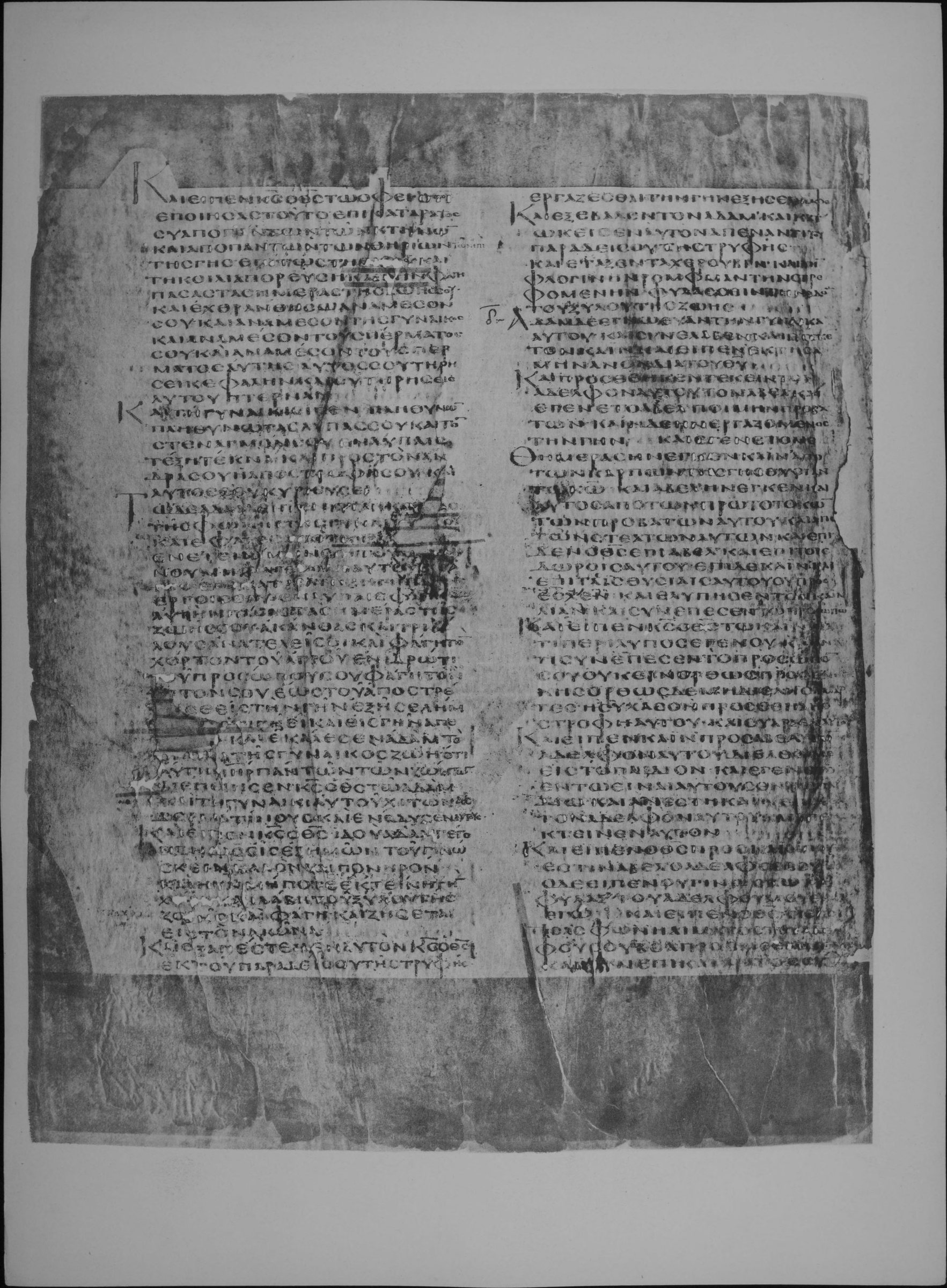
Where on the image
Genesis 4:1-8 is on fol. 2v (full-size facsimile of 1879-83, Internet Archive codex-alexandrinus leaf 25). The 1915 reduced facsimile prints beneath this page: Gen. iii. 14-iv. 11. Checked on the plate: the page begins at the start of Genesis 3:14 (first words read: ΚΑΙ ΕΙΠΕΝ ΚΣ Ο ΘΣ ΤΩ ΟΦΕΙ ΟΤΙ ΕΠΟΙΗΣΑΣ ΤΟΥΤΟ ΕΠΙΚΑΤΑΡΑΤΟΣ).
1Ἀδὰμ δὲ ἔγνω Εὕαν τὴν γυναῖκα αὐτοῦ, καὶ συνέλαβεν καὶ ἔτεκεν τὸν Κάιν. καὶ εἶπεν Ἐκτησάμην ἄνθρωπον διὰ τοῦ θεοῦ. 2καὶ προσέθηκεν τεκεῖν τὸν ἀδελφὸν αὐτοῦ τὸν Ἅβελ. Καὶ ἐγένετο Ἅβελ ποιμὴν προβάτων· Κάιν δὲ ἦν ἐργαζόμενος τὴν γῆν. 3καὶ ἐγένετο μεθ᾽ ἡμέρας ἤνεγκεν Κάιν ἀπὸ τῶν καρπῶν τῆς γῆς θυσίαν τῷ κυρίῳ· 4καὶ Ἅβελ ἤνεγκεν καὶ αὐτὸς ἀπὸ τῶν πρωτοτόκων τῶν προβάτων αὐτοῦ καὶ ἀπὸ τῶν στεάτων αὐτῶν. καὶ ἔπιδεν ὁ θεὸς ἐπὶ Ἅβελ καὶ ἐπὶ τοῖς δώροις αὐτοῦ· 5ἐπὶ δὲ Κάιν καὶ ἐπὶ ταῖς θυσίαις αὐτοῦ οὐ προσέσχεν. καὶ ἐλύπησεν τὸν Κάιν λίαν καὶ συνέπεσεν τῷ προσώπῳ. 6καὶ εἶπεν Κύριος ὁ θεὸς τῷ Κάιν Ἵνα τί περίλυπος ἐγένου, καὶ ἵνα τί συνέπεσεν τὸ πρόσωπόν σου; 7οὐκ ἐὰν ὀρθῶς προσενέγκῃς, ὀρθῶς δὲ μὴ διέλῃς, ἥμαρτες; ἡσύχασον· πρὸς σὲ ἡ ἀποστροφὴ αὐτοῦ, καὶ σὺ ἄρξεις αὐτοῦ. 8καὶ εἶπεν Κάιν πρὸς Ἅβελ τὸν ἀδελφὸν αὐτοῦ Διέλθωμεν εἰς τὸ πεδίον. καὶ ἐγένετο ἐν τῷ εἶναι αὐτοὺς ἐν τῷ πεδίῳ καὶ ἀνέστη Κάιν ἐπὶ Ἅβελ τὸν ἀδελφὸν αὐτοῦ καὶ ἀπέκτεινεν αὐτόν.
1And Adam knew Eve his wife, and she conceived and brought forth Cain and said, I have gained a man through God. 2And she again bore his brother Abel. And Abel was a keeper of sheep, but Cain was a tiller of the ground. 3And it was so after some time that Cain brought of the fruits of the earth a sacrifice to the Lord. 4And Abel also brought of the firstborn of his sheep and of his fatlings, and God looked upon Abel and his gifts, 5but Cain and his sacrifices he regarded not, and Cain was exceedingly sorrowful and his countenance fell. 6And the Lord God said to Cain, Why art thou become very sorrowful and why is thy countenance fallen? 7Hast thou not sinned if thou hast brought it rightly, but not rightly divided it? be still, to thee shall be his submission, and thou shalt rule over him. 8And Cain said to Abel his brother, Let us go out into the plain; and it came to pass that when they were in the plain Cain rose up against Abel his brother, and slew him.
Where on the image
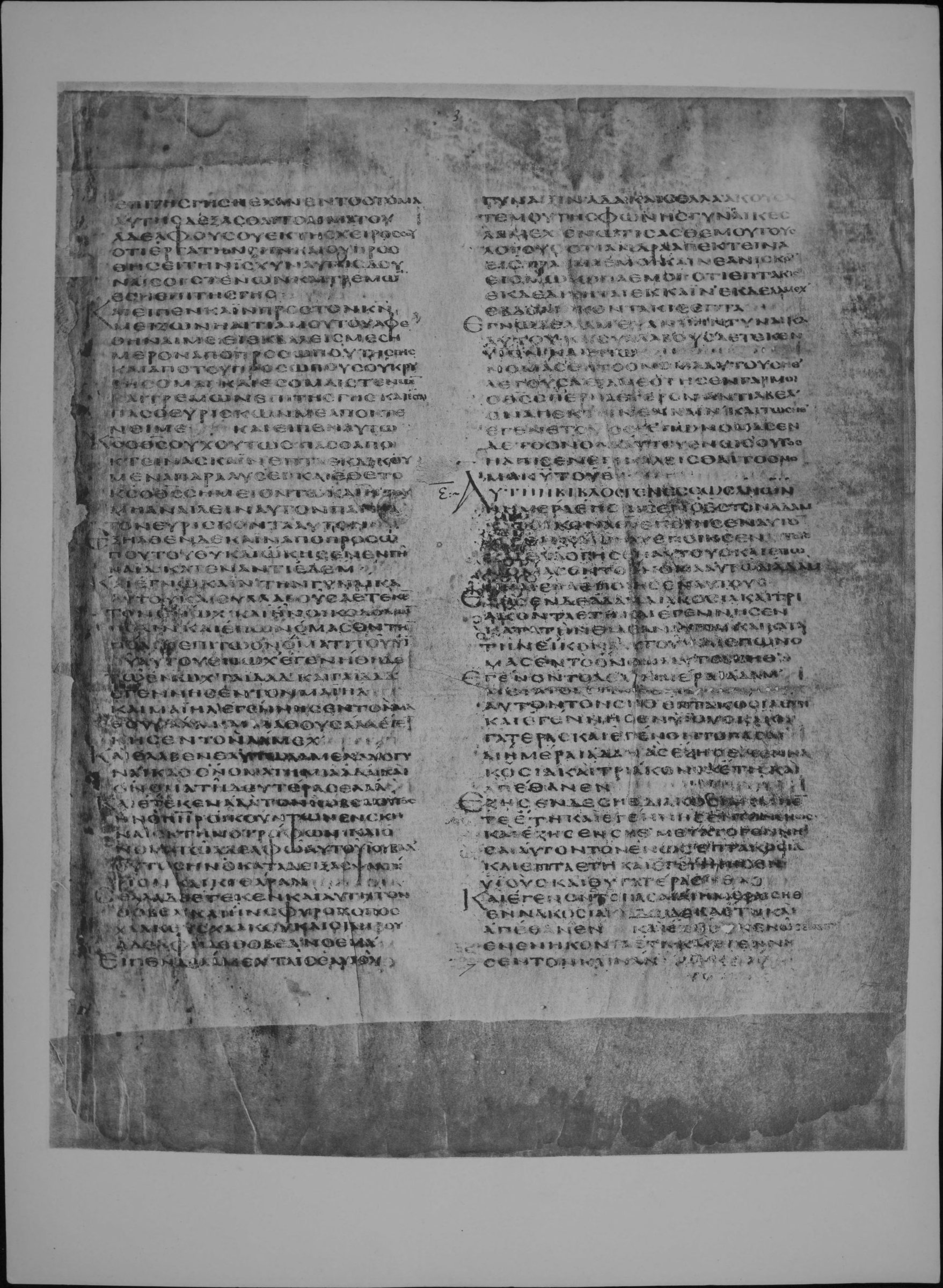
Genesis 4:9-11 is on fol. 2v (full-size facsimile of 1879-83, Internet Archive codex-alexandrinus leaf 25). The 1915 reduced facsimile prints beneath this page: Gen. iii. 14-iv. 11. Checked on the plate: the page begins at the start of Genesis 3:14 (first words read: ΚΑΙ ΕΙΠΕΝ ΚΣ Ο ΘΣ ΤΩ ΟΦΕΙ ΟΤΙ ΕΠΟΙΗΣΑΣ ΤΟΥΤΟ ΕΠΙΚΑΤΑΡΑΤΟΣ). Genesis 4:11-16 is on fol. 3r (full-size facsimile of 1879-83, Internet Archive codex-alexandrinus leaf 26). The 1915 reduced facsimile prints beneath this page: Gen. iv. 11-v. 9. Checked on the plate: the page begins inside Genesis 4:11 (first words read: ΤΗΣ ΓΗΣ Η ΕΧΑΝΕΝ ΤΟ ΣΤΟΜΑ ΑΥΤΗΣ ΔΕΞΑΣΘΑΙ ΤΟ ΑΙΜΑ ΤΟΥ ΑΔΕΛΦΟΥ ΣΟΥ).
9καὶ εἶπεν ὁ θεὸς πρὸς Κάιν Ποῦ ἐστιν Ἅβελ ὁ ἀδελφός σου; ὁ δὲ εἶπεν Οὐ γινώσκω· μὴ φύλαξ τοῦ ἀδελφοῦ μού εἰμι ἐγώ; 10καὶ εἶπεν ὁ θεός Τί ἐποίησας; φωνὴ αἵματος τοῦ ἀδελφοῦ σου βοᾷ πρὸς μὲ ἐκ τῆς γῆς. 11καὶ νῦν ἐπικατάρατος σὺ ἐπὶ τῆς γῆς, ἣ ἔχανεν τὸ στόμα αὐτῆς δέξασθαι τὸ αἷμα τοῦ ἀδελφοῦ σου ἐκ τῆς χειρός σου. 12ὅτι ἐργᾷ τὴν γῆν, καὶ οὐ προσθήσει τὴν ἰσχὺν αὐτῆς δοῦναί σοι· στένων καὶ τρέμων ἔσῃ ἐπὶ τῆς γῆς. 13καὶ εἶπεν Κάιν πρὸς τὸν κύριον Μείζων ἡ αἰτία μου τοῦ ἀφεθῆναί με. 14εἰ ἐκβαλεῖς με σήμερον ἀπὸ προσώπου τῆς γῆς, καὶ ἀπὸ τοῦ προσώπου σου κρυβήσομαι, καὶ ἔσομαι στένων καὶ τρέμων ἐπὶ τῆς γῆς· καὶ πᾶς ὁ εὑρίσκων με ἀποκτενεῖ με. 15καὶ εἶπεν αὐτῷ Κύριος ὁ θεός Οὐχ οὕτως· πᾶς ὁ ἀποκτείνας Κάιν ἑπτὰ ἐκδικούμενα παραλύσει. καὶ ἔθετο Κύριος ὁ θεὸς σημεῖον τῷ Κάιν τοῦ μὴ ἀνελεῖν αὐτὸν πάντα τὸν εὑρίσκοντα αὐτόν. 16ἐξῆλθεν δὲ Κάιν ἀπὸ προσώπου τοῦ θεοῦ καὶ ᾤκησεν ἐν γῇ Ναὶδ κατέναντι Ἔδεμ.
9And the Lord God said to Cain, Where is Abel thy brother? and he said, I know not, am I my brother's keeper? 10And the Lord said, What hast thou done? the voice of thy brother's blood cries to me out of the ground. 11And now thou art cursed from the earth which has opened her mouth to receive thy brother's blood from thy hand. 12When thou tillest the earth, then it shall not continue to give its strength to thee: thou shalt be groaning and trembling on the earth. 13And Cain said to the Lord God, My crime is too great for me to be forgiven. 14If thou castest me out this day from the face of the earth, and I shall be hidden from thy presence, and I shall be groaning and trembling upon the earth, then it will be that any one that finds me shall slay me. 15And the Lord God said to him, Not so, any one that slays Cain shall suffer seven-fold vengeance; and the Lord God set a mark upon Cain that no one that found him might slay him. 16So Cain went forth from the presence of God and dwelt in the land of Nod over against Edem.
Where on the image
Genesis 4:17-26 is on fol. 3r (full-size facsimile of 1879-83, Internet Archive codex-alexandrinus leaf 26). The 1915 reduced facsimile prints beneath this page: Gen. iv. 11-v. 9. Checked on the plate: the page begins inside Genesis 4:11 (first words read: ΤΗΣ ΓΗΣ Η ΕΧΑΝΕΝ ΤΟ ΣΤΟΜΑ ΑΥΤΗΣ ΔΕΞΑΣΘΑΙ ΤΟ ΑΙΜΑ ΤΟΥ ΑΔΕΛΦΟΥ ΣΟΥ).
17Καὶ ἔγνω Κάιν τὴν γυναῖκα αὐτοῦ, καὶ συλλαβοῦσα ἔτεκεν τὸν Ἑνώχ. καὶ ἦν οἰκοδομῶν πόλιν· καὶ ἐπωνόμασεν τὴν πόλιν ἐπὶ τῷ ὀνόματι τοῦ υἱοῦ αὐτοῦ Ἑνώχ. 18ἐγενήθη δὲ τῷ Ἑνὼχ Γαιδάδ, καὶ Γαιδὰδ ἐγέννησεν τὸν Μαιήλ, καὶ Μαιὴλ ἐγέννησεν τὸν Μαθουσαλά, καὶ Μαθουσαλὰ ἐγέννησεν τὸν Λάμεχ. 19καὶ ἔλαβεν ἑαυτῷ Λάμεχ δύο γυναῖκας· ὄνομα τῇ μιᾷ Ἀδά, καὶ ὄνομα τῇ δευτέρᾳ Σελλά. 20καὶ ἔτεκεν Ἀδὰ τὸν Ἰωβέλ· οὗτος ἦν ὁ πατὴρ οἰκούντων ἐν σκηναῖς κτηνοτρόφων. 21καὶ ὄνομα τῷ ἀδελφῷ αὐτοῦ Ἰουβάλ· οὗτος ἦν ὁ καταδείξας ψαλτήριον καὶ κιθάραν. 22Σελλὰ δὲ ἔτεκεν καὶ αὐτὴ τὸν Θόβελ· καὶ ἦν σφυροκόπος χαλκεὺς χαλκοῦ καὶ σιδήρου. ἀδελφὴ δὲ Θόβελ Νοεμά. 23εἶπεν δὲ Λάμεχ ταῖς ἑαυτοῦ γυναιξίν Ἀδὰ καὶ Σελλά, ἀκούσατέ μου τῆς φωνῆς· γυναῖκες Λάμεχ, ἐνωτίσασθέ μου τοὺς λόγους· ὅτι ἄνδρα ἀπέκτεινα εἰς τραῦμα ἐμοί, καὶ νεανίσκον εἰς μώλωπα ἐμοί· 24ὅτι ἑπτάκις ἐκδεδίκηται ἐκ Κάιν, ἐκ δὲ Λάμεχ ἑβδομηκοντάκις ἑπτά. 25Ἔγνω δὲ Ἀδὰμ Εὕαν τὴν γυναῖκα αὐτοῦ, καὶ συλλαβοῦσα ἔτεκεν υἱόν. καὶ ἐπωνόμασεν τὸ ὄνομα αὐτοῦ Σὴθ λέγουσα Ἐξανέστησεν γάρ μοι ὁ θεὸς σπέρμα ἕτερον ἀντὶ Ἅβελ, ὃν ἀπέκτεινεν Κάιν. 26καὶ τῷ Σὴθ ἐγένετο υἱός, ἐπωνόμασεν δὲ τὸ ὄνομα αὐτοῦ Ἐνώς· οὗτος ἤλπισεν ἐπικαλεῖσθαι τὸ ὄνομα Κυρίου τοῦ θεοῦ.
17And Cain knew his wife, and having conceived she bore Enoch; and he built a city; and he named the city after the name of his son, Enoch. 18And to Enoch was born Gaidad; and Gaidad begot Maleleel; and Maleleel begot Mathusala; and Mathusala begot Lamech. 19And Lamech took to himself two wives; the name of the one was Ada, and the name of the second Sella. 20And Ada bore Jobel; he was the father of those that dwell in tents, feeding cattle. 21And the name of his brother was Jubal; he it was who invented the psaltery and harp. 22And Sella also bore Thobel; he was a smith, a manufacturer both of brass and iron; and the sister of Thobel was Noëma. 23And Lamech said to his wives, Ada and Sella, Hear my voice, ye wives of Lamech, consider my words, because I have slain a man to my sorrow and a youth to my grief. 24Because vengeance has been exacted seven times on Cain's behalf, on Lamech's it shall be seventy times seven. 25And Adam knew Eve his wife, and she conceived and bore a son, and called his name Seth, saying, For God has raised up to me another seed instead of Abel, whom Cain slew. 26And Seth had a son, and he called his name Enos: he hoped to call on the name of the Lord God.
Cite
Sources
- Source: Codex Alexandrinus (British Library Royal MS 1 D. V) via the British Museum photographic facsimiles of 1879-83 and 1915 (Internet Archive) + Swete's Septuagint + Brenton's English (holding institution)
- Critical edition: H. B. Swete, The Old Testament in Greek according to the Septuagint (1909)
← previous · → next · v cycle view · l back to library