Genesis, Chapter 3 (Codex Alexandrinus)
Introduction
Genesis 3 in the Greek Old Testament (the Septuagint) as written in Codex Alexandrinus, a Greek Bible copied in the fifth century, probably in Egypt, and now in the British Library (Royal MS 1 D. V, the first of its four volumes). It is one of the three great early codices of the whole Greek Bible, with Codex Vaticanus and Codex Sinaiticus, and for Genesis 1:1-46:28, which Codex Vaticanus has lost, it is the oldest surviving complete Greek text (older papyri such as the Berlin Genesis papyrus and Chester Beatty 961 survive only in part).
Verse division: the digital Swete text prints 2:25 at the head of 3:1; it is shown in the entry for chapter 2 as 2:25, as Brenton numbers it.
This entry meets the strict three-criteria standard of the Theosis Library:
- Manuscript scan: the pages of Codex Alexandrinus carrying this chapter (fol. 2r, fol. 2v), from the full-size photographic (autotype) facsimile published by the British Museum in 1879-1883, as digitised on the Internet Archive. The verse range of every page comes from the reduced photographic facsimile of 1915, which prints it beneath each plate, and the opening words of every page were read on the plate to confirm the page and the verse it begins with. Each section links to the page or pages that hold its verses. Folio numbers are those written at the head of each leaf and visible on the plates.
- Original text: Swete's edition, which in Genesis 1:1-46:28 prints the text of Codex Alexandrinus itself (Codex Vaticanus has lost these chapters), with the spelling of A for the most part. Swete adds accents, breathings and punctuation and expands the abbreviated sacred names, so the plate shows the same text in unaccented capitals.
- English translation: Sir Lancelot C. L. Brenton, The Septuagint Version of the Old Testament (1844; 1851 edition), a translation of the Greek, public domain, from the eBible.org text.
How was this verified? (Provenance)
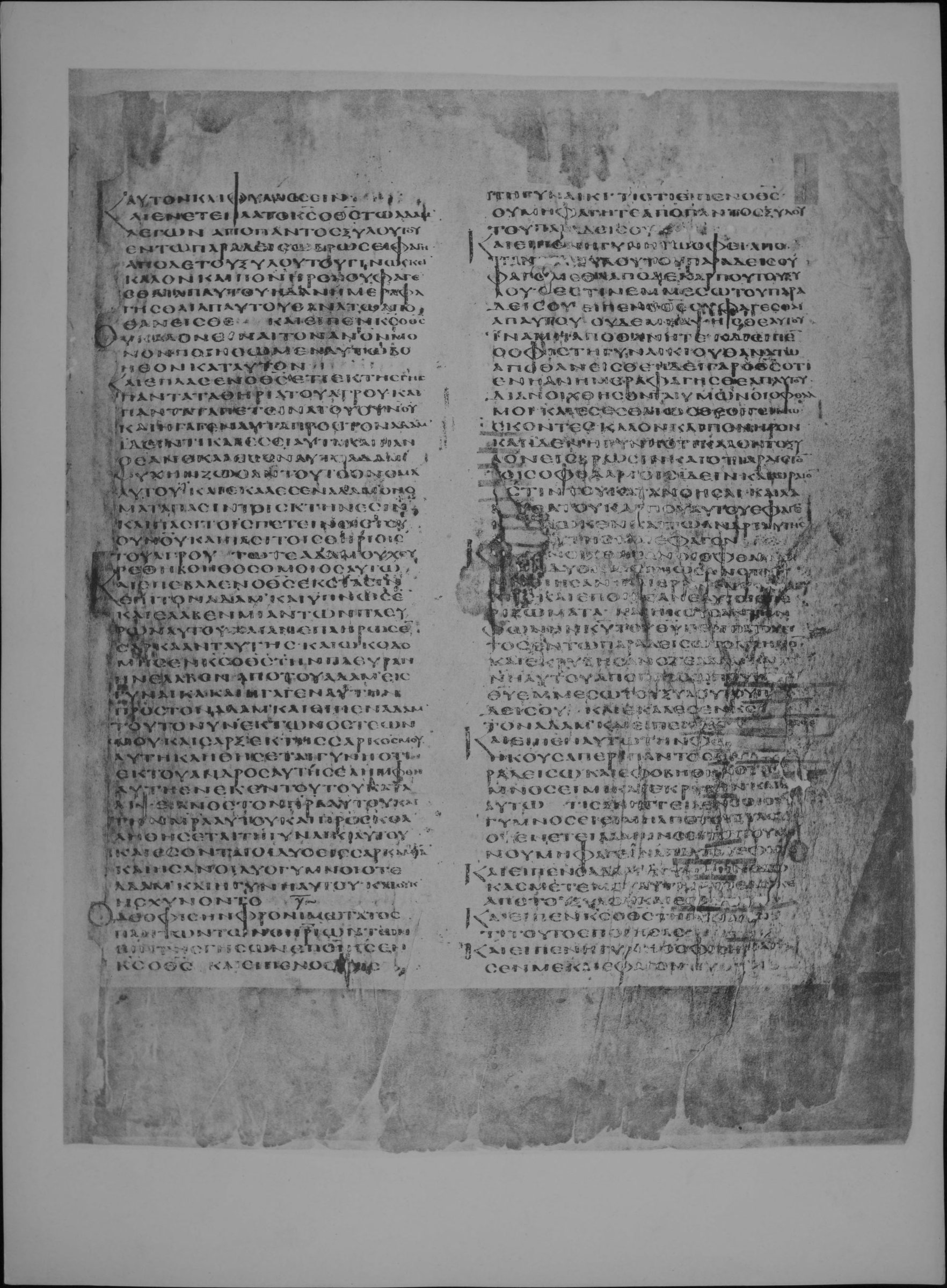
Where on the image
Genesis 3:1-8 is on fol. 2r (full-size facsimile of 1879-83, Internet Archive codex-alexandrinus leaf 24). The 1915 reduced facsimile prints beneath this page: Gen. ii. 15-iii. 13. Checked on the plate: the page begins inside Genesis 2:15 (first words read: ΑΥΤΟΝ ΚΑΙ ΦΥΛΑΣΣΕΙΝ ΚΑΙ ΕΝΕΤΕΙΛΑΤΟ ΚΣ Ο ΘΣ ΤΩ ΑΔΑΜ ΛΕΓΩΝ).
1Ὁ δὲ ὄφις ἦν φρονιμώτατος πάντων τῶν θηρίων τῶν ἐπὶ τῆς γῆς ὧν ἐποίησεν Κύριος ὁ θεός· καὶ εἶπεν ὁ ὄφις τῇ γυναικί Τί ὅτι εἶπεν ὁ θεός Οὐ μὴ φάγητε ἀπὸ παντὸς ξύλου τοῦ παραδείσου; 2καὶ εἶπεν ἡ γυνὴ τῷ ὄφει Ἀπὸ παντὸς ξύλου τοῦ παραδείσου φαγόμεθα· 3ἀπὸ δὲ καρποῦ τοῦ ξύλου ὅ ἐστιν ἐν μέσῳ τοῦ παραδείσου, εἶπεν ὁ θεός Οὐ φάγεσθε ἀπ᾽ αὐτοῦ οὐδὲ μὴ ἅψησθε αὐτοῦ, ἵνα μὴ ἀποθάνητε. 4καὶ εἶπεν ὁ ὄφις τῇ γυναικί Οὐ θανάτῳ ἀποθανεῖσθε· 5ᾔδει γὰρ ὁ θεὸς ὅτι ἐν ᾗ ἂν ἡμὲρᾳ φάγησθε ἀπ᾽ αὐτοῦ, διανοιχθήσονται ὑμῶν οἱ ὀφθαλμοί, καὶ ἔσεσθε ὡς θεοί, γινώσκοντες καλὸν καὶ πονηρόν. 6καὶ ἴδεν ἡ γυνὴ ὅτι καλὸν τὸ ξύλον εἰς βρῶσιν, καὶ ὅτι ἀρεστὸν τοῖς ὀφθαλμοῖς ἰδεῖν καὶ ὡραῖόν ἐστιν τοῦ κατανοῆσαι, καὶ λαβοῦσα τοῦ καρποῦ αὐτοῦ ἔφαγεν· καὶ ἔδωκεν καὶ τῷ ἀνδρὶ αὐτῆς μετ᾽ αὐτῆς, καὶ ἔφαγον. 7καὶ διηνοίχθησαν οἱ ὀφθαλμοὶ τῶν δύο, καὶ ἔγνωσαν ὅτι γυμνοὶ ἦσαν· καὶ ἔρραψαν φύλλα συκῆς καὶ ἐποίησαν ἑαυτοῖς περιζώματα. 8Καὶ ἤκουσαν τὴν φωνὴν Κυρίου τοῦ θεοῦ περιπατοῦντος ἐν τῷ παραδείσῳ τὸ δειλινόν· καὶ ἐκρύβησαν ὅ τε Ἀδὰμ καὶ ἡ γυνὴ αὐτοῦ ἀπὸ προσώπου Κυρίου τοῦ θεοῦ ἐν μέσῳ τοῦ ξύλου τοῦ παραδείσου.
1Now the serpent was the most crafty of all the brutes on the earth, which the Lord God made, and the serpent said to the woman, Wherefore has God said, Eat not of every tree of the garden? 2And the woman said to the serpent, We may eat of the fruit of the trees of the garden, 3but of the fruit of the tree which is in the midst of the garden, God said, Ye shall not eat of it, neither shall ye touch it, lest ye die. 4And the serpent said to the woman, Ye shall not surely die. 5For God knew that in whatever day ye should eat of it your eyes would be opened, and ye would be as gods, knowing good and evil. 6And the woman saw that the tree was good for food, and that it was pleasant to the eyes to look upon and beautiful to contemplate, and having taken of its fruit she ate, and she gave to her husband also with her, and they ate. 7And the eyes of both were opened, and they perceived that they were naked, and they sewed fig leaves together, and made themselves aprons to go round them. 8And they heard the voice of the Lord God walking in the garden in the afternoon; and both Adam and his wife hid themselves from the face of the Lord God in the midst of the trees of the garden.
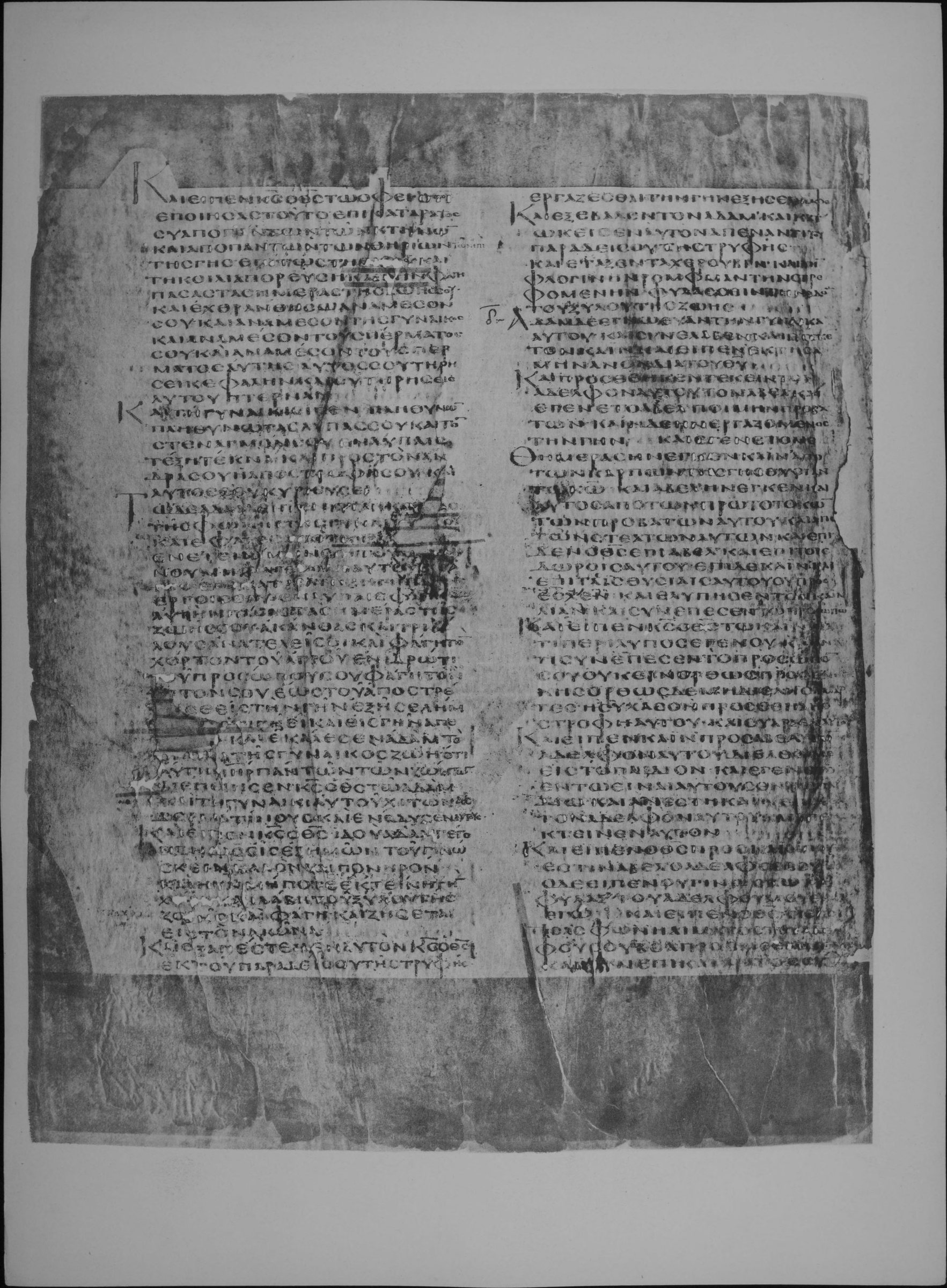
Where on the image
Genesis 3:9-13 is on fol. 2r (full-size facsimile of 1879-83, Internet Archive codex-alexandrinus leaf 24). The 1915 reduced facsimile prints beneath this page: Gen. ii. 15-iii. 13. Checked on the plate: the page begins inside Genesis 2:15 (first words read: ΑΥΤΟΝ ΚΑΙ ΦΥΛΑΣΣΕΙΝ ΚΑΙ ΕΝΕΤΕΙΛΑΤΟ ΚΣ Ο ΘΣ ΤΩ ΑΔΑΜ ΛΕΓΩΝ). Genesis 3:14-16 is on fol. 2v (full-size facsimile of 1879-83, Internet Archive codex-alexandrinus leaf 25). The 1915 reduced facsimile prints beneath this page: Gen. iii. 14-iv. 11. Checked on the plate: the page begins at the start of Genesis 3:14 (first words read: ΚΑΙ ΕΙΠΕΝ ΚΣ Ο ΘΣ ΤΩ ΟΦΕΙ ΟΤΙ ΕΠΟΙΗΣΑΣ ΤΟΥΤΟ ΕΠΙΚΑΤΑΡΑΤΟΣ).
9καὶ ἐκάλεσεν Κύριος ὁ θεὸς τὸν Ἀδὰμ καὶ εἶπεν αὐτῷ Ἀδάμ, ποῦ εἶ; 10καὶ εἶπεν αὐτῷ Τὴν φωνήν σου ἤκουσα περιπατοῦντος ἐν τῷ παραδείσῳ, καὶ ἐφοβήθην, ὅτι γυμνός εἰμι, καὶ ἐκρύβην. 11καὶ εἶπεν αὐτῷ Τίς ἀνήγγειλέν σοι ὅτι γυμνὸς εἶ, εἰ μὴ ἀπὸ τοῦ ξύλου οὗ ἐνετειλάμην σοι τούτου μόνου μὴ φαγεῖν, ἀπ᾽ αὐτοῦ ἔφαγες; 12καὶ εἶπεν ὁ Ἀδάμ Ἡ γυνή, ἣν ἔδωκας μετ᾽ ἐμοῦ, αὕτη μοι ἔδωκεν ἀπὸ τοῦ ξύλου, καὶ ἔφαγον. 13καὶ εἶπεν Κύριος ὁ θεὸς τῇ γυναικί Τί τοῦτο ἐποίησας; καὶ εἶπεν ἡ γυνή Ὁ ὄφις ἠπάτησέν με, καὶ ἔφαγον. 14καὶ εἶπεν Κύριος ὁ θεὸς τῷ ὄφει Ὅτι ἐποίησας τοῦτο, ἐπικατάρατος σὺ ἀπὸ πάντων τῶν κτηνῶν καὶ ἀπὸ πάντων τῶν θηρίων τῆς γῆς· ἐπὶ τῷ στήθει σου καὶ τῇ κοιλίᾳ πορεύσῃ, καὶ γῆν φάγῃ πάσας τὰς ἡμέρας τῆς ζωῆς σου. 15καὶ ἔχθραν θήσω ἀνὰ μέσον σου καὶ ἀνὰ μέσον τῆς γυναικός, καὶ ἀνὰ μέσον τοῦ σπέρματός σου καὶ ἀνὰ μέσον τοῦ σπέρματος αὐτῆς· αὐτός σου τηρήσει κεφαλήν, καὶ σὺ τηρήσεις αὐτοῦ πτέρναν. 16καὶ τῇ γυναικὶ εἶπεν Πληθύνων πληθυνῶ τὰς λύπας σου καὶ τὸν στεναγμόν σου· ἐν λύπαις τέξῃ τέκνα, καὶ πρὸς τὸν ἄνδρα σου ἡ ἀποστροφή σου, καὶ αὐτός σου κυριεύσει.
9And the Lord God called Adam and said to him, Adam, where art thou? 10And he said to him, I heard thy voice as thou walkedst in the garden, and I feared because I was naked and I hid myself. 11And God said to him, Who told thee that thou wast naked, unless thou hast eaten of the tree concerning which I charged thee of it alone not to eat? 12And Adam said, The woman whom thou gavest to be with me—she gave me of the tree and I ate. 13And the Lord God said to the woman, Why hast thou done this? And the woman said, The serpent deceived me and I ate. 14And the Lord God said to the serpent, Because thou hast done this thou art cursed above all cattle and all the brutes of the earth, on thy breast and belly thou shalt go, and thou shalt eat earth all the days of thy life. 15And I will put enmity between thee and the woman and between thy seed and her seed, he shall watch against thy head, and thou shalt watch against his heel. 16And to the woman he said, I will greatly multiply thy pains and thy groanings; in pain thou shalt bring forth children, and thy submission shall be to thy husband, and he shall rule over thee.
Where on the image
Genesis 3:17-24 is on fol. 2v (full-size facsimile of 1879-83, Internet Archive codex-alexandrinus leaf 25). The 1915 reduced facsimile prints beneath this page: Gen. iii. 14-iv. 11. Checked on the plate: the page begins at the start of Genesis 3:14 (first words read: ΚΑΙ ΕΙΠΕΝ ΚΣ Ο ΘΣ ΤΩ ΟΦΕΙ ΟΤΙ ΕΠΟΙΗΣΑΣ ΤΟΥΤΟ ΕΠΙΚΑΤΑΡΑΤΟΣ).
17τῷ δὲ Ἀδὰμ εἶπεν Ὅτι ἤκουσας τῆς φωνῆς τῆς γυναικός σου καὶ ἔφαγες ἀπὸ τοῦ ξύλου οὗ ἐνετειλάμην σοι τούτου μόνου μὴ φαγεῖν, ἀπ᾽ αὐτοῦ ἔφαγες, ἐπικατάρατος ἡ γῆ ἐν τοῖς ἔργοις σου· ἐν λύπαις φάγῃ αὐτὴν πάσας τὰς ἡμέρας τῆς ζωῆς σου· 18ἀκάνθας καὶ τριβόλους ἀνατελεῖ σοι, καὶ φάγῃ τὸν χόρτον τοῦ ἀγροῦ. 19ἐν ἱδρῶτι τοῦ προσώπου σου φάγῃ τὸν ἄρτον σου ἕως τοῦ ἀποστρέψαι σε εἰς τὴν γῆν ἐξ ἧς ἐλήμφθης· ὅτι γῆ εἶ καὶ εἰς γῆν ἀπελεύσῃ. 20Καὶ ἐκάλεσεν Ἀδὰμ τὸ ὄνομα τῆς γυναικὸς Ζωή, ὅτι αὕτη μήτηρ πάντων τῶν ζώντων. 21καὶ ἐποίησεν Κύριος ὁ θεὸς τῷ Ἀδὰμ καὶ τῇ γυναικὶ αὐτοῦ χιτῶνας δερματίνους, καὶ ἐνέδυσεν αὐτούς. 22Καὶ εἶπεν Κύριος ὁ θεός Ἰδοὺ Ἀδὰμ γέγονεν ὡς εἷς ἐξ ἡμῶν, τοῦ γινώσκειν καλὸν καὶ πονηρόν· καὶ νῦν μή ποτε ἐκτείνῃ τὴν χεῖρα καὶ λάβῃ τοῦ ξύλου τῆς ζωῆς καὶ φάγῃ, καὶ ζήσεται εἰς τὸν αἰῶνα. 23καὶ ἐξαπέστειλεν αὐτὸν Κύριος ὁ θεὸς ἐκ τοῦ παραδείσου τῆς τρυφῆς, ἐργάζεσθαι τὴν γῆν ἐξ ἧς ἐλήμφθη. 24καὶ ἐξέβαλεν τὸν Ἀδὰμ καὶ κατῴκισεν αὐτὸν ἀπέναντι τοῦ παραδείσου τῆς τρυφῆς, καὶ ἔταξεν τὰ χερουβὶν καὶ τὴν φλογίνην ῥομφαίαν τὴν στρεφομένην φυλάσσειν τὴν ὁδὸν τοῦ ξύλου τῆς ζωῆς.
17And to Adam he said, Because thou hast hearkened to the voice of thy wife, and eaten of the tree concerning which I charged thee of it only not to eat—of that thou hast eaten, cursed is the ground in thy labours, in pain shalt thou eat of it all the days of thy life. 18Thorns and thistles shall it bring forth to thee, and thou shalt eat the herb of the field. 19In the sweat of thy face shalt thou eat thy bread until thou return to the earth out of which thou wast taken, for earth thou art and to earth thou shalt return. 20And Adam called the name of his wife Life, because she was the mother of all living. 21And the Lord God made for Adam and his wife garments of skin, and clothed them. 22And God said, Behold, Adam is become as one of us, to know good and evil, and now lest at any time he stretch forth his hand, and take of the tree of life and eat, and so he shall live for ever— 23So the Lord God sent him forth out of the garden of Delight to cultivate the ground out of which he was taken. 24And he cast out Adam and caused him to dwell over against the garden of Delight, and stationed the cherubs and the fiery sword that turns about to keep the way of the tree of life.
Cite
Sources
- Source: Codex Alexandrinus (British Library Royal MS 1 D. V) via the British Museum photographic facsimiles of 1879-83 and 1915 (Internet Archive) + Swete's Septuagint + Brenton's English (holding institution)
- Critical edition: H. B. Swete, The Old Testament in Greek according to the Septuagint (1909)
← previous · → next · v cycle view · l back to library