Habakkuk, Chapter 2 (Codex Alexandrinus)
Introduction
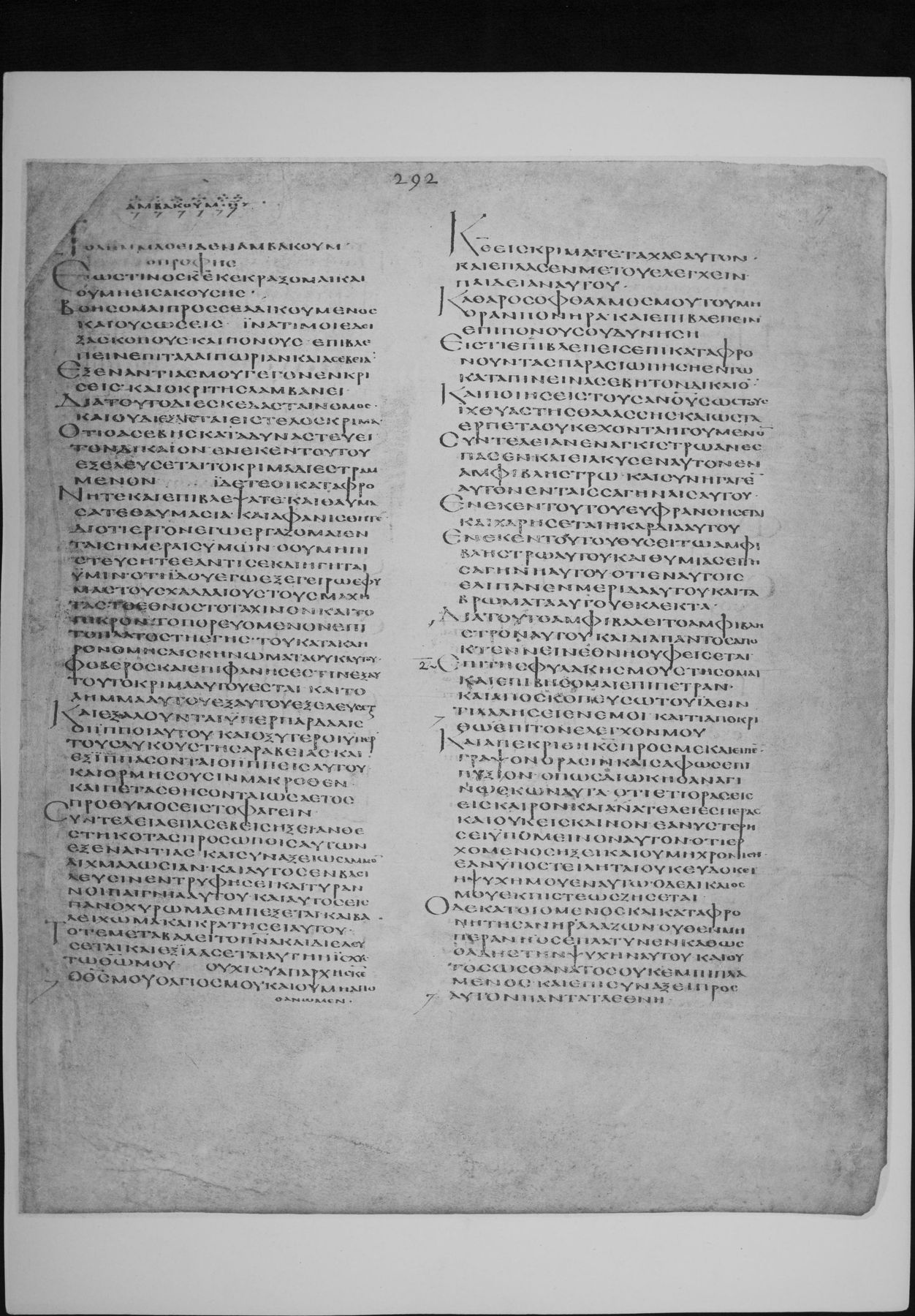
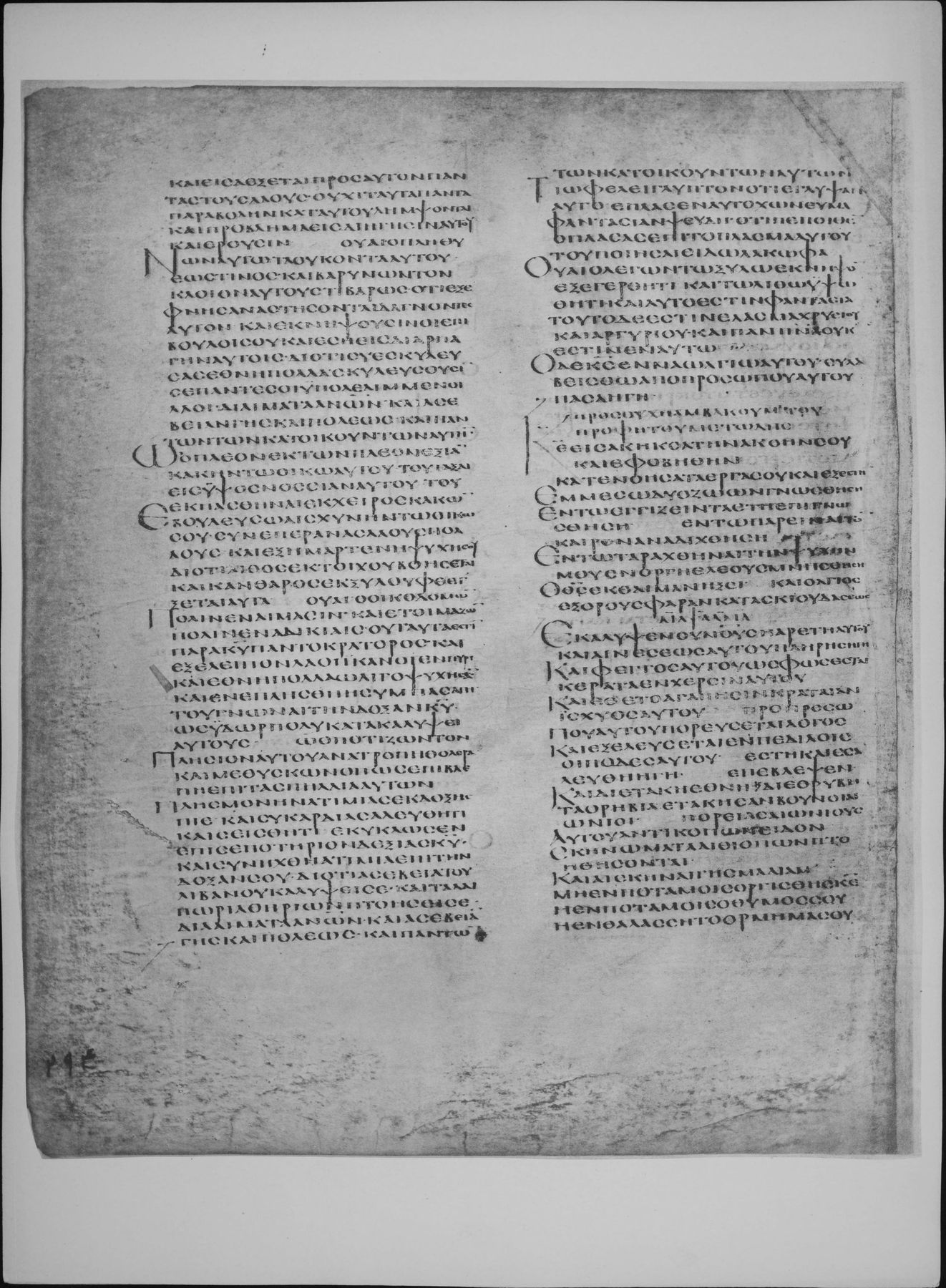
Habakkuk 2 in the Greek Old Testament (the Septuagint) as written in Codex Alexandrinus, a Greek Bible copied in the fifth century, probably in Egypt, and now in the British Library (Royal MS 1 D. VI, the second of its four volumes). It is one of the three great early codices of the whole Greek Bible, with Codex Vaticanus and Codex Sinaiticus.
This entry meets the strict three-criteria standard of the Theosis Library:
- Manuscript scan: the pages of Codex Alexandrinus carrying this chapter (fol. 292r, fol. 292v), from the full-size photographic (autotype) facsimile published by the British Museum in 1879-1883, as digitised on the Internet Archive. The verse range of every page comes from the reduced photographic facsimile of 1936, which prints it beneath each plate, and the opening words of every page were read on the plate to confirm the page and the verse it begins with. Each section links to the page or pages that hold its verses. Folio numbers are those written at the head of each leaf and visible on the plates.
- Original text: Swete's edition, which here prints the text of Codex Vaticanus (Vat. gr. 1209), the base of his edition, and gives the readings of Alexandrinus only in his apparatus. The Greek column is therefore Vaticanus' text; where Alexandrinus differs, the plate shows what Alexandrinus reads.
- English translation: Sir Lancelot C. L. Brenton, The Septuagint Version of the Old Testament (1844; 1851 edition), a translation of the Greek, public domain, from the eBible.org text.
How was this verified? (Provenance)
Where on the image
Habakkuk 2:1-5 is on fol. 292r (full-size facsimile of 1879-83, Internet Archive codex-alexandrinus leaf 608). The 1936 reduced facsimile prints beneath this page: Hab. i. 1-ii. 5. Checked on the plate: the page begins at the start of Habakkuk 1:1 (first words read: ΤΟ ΛΗΜΜΑ Ο ΕΙΔΕΝ ΑΜΒΑΚΟΥΜ Ο ΠΡΟΦΗΤΗΣ ΕΩΣ ΤΙΝΟΣ ΚΕ ΚΕΚΡΑΞΟΜΑΙ ΚΑΙ ΟΥ ΜΗ ΕΙΣΑΚΟΥΣΗΣ). Habakkuk 2:5-8 is on fol. 292v (full-size facsimile of 1879-83, Internet Archive codex-alexandrinus leaf 609). The 1936 reduced facsimile prints beneath this page: Hab. ii. 5-iii. 8. Checked on the plate: the page begins inside Habakkuk 2:5 (first words read: ΚΑΙ ΕΙΣΔΕΞΕΤΑΙ ΠΡΟΣ ΑΥΤΟΝ ΠΑΝΤΑΣ ΤΟΥΣ ΛΑΟΥΣ ΟΥΧΙ ΤΑΥΤΑ ΠΑΝΤΑ ΠΑΡΑΒΟΛΗΝ ΚΑΤ ΑΥΤΟΥ ΛΗΜΨΟΝΤΑΙ).
1Ἐπὶ τῆς φυλακῆς μου στήσομαι καὶ ἐπιβήσομαι ἐπὶ πέτραν, καὶ ἀποσκοπεύσω τοῦ ἰδεῖν τί λαλήσει ἐν ἐμοί, καὶ τί ἀποκριθῶ ἐπὶ τὸν ἔλεγχόν μου. 2καὶ ἀπεκρίθη πρὸς μὲ Κύριος καὶ εἶπεν Γράψον ὅρασιν καὶ σαφῶς εἰς πυξίον, ὅπως διώκῃ ὁ ἀναγινώσκων αὐτά. 3διότι ἔτι ὅρασις εἰς καιρόν, καὶ ἀνατελεῖ εἰς πέρας καὶ οὐκ εἰς κενόν· ἐὰν ὑστερήσῃ, ὑπόμεινον αὐτόν, ὅτι ἐρχόμενος ἥξει καὶ οὐ μὴ χρονίσῃ. 4ἐὰν ὑποστείληται, οὐκ εὐδοκεῖ ἡ ψυχή μου ἐν αὐτῷ· ὁ δὲ δίκαιος ἐκ πίστεώς μου ζήσεται. 5ὁ δὲ κατοιόμενος καταφρονητής· οὐδὲν μὴ περάνῃ· ὃς ἐπλάτυνεν καθὼς ᾅδης τὴν ψυχὴν αὐτοῦ, καὶ οὗτος ὡς θάνατος οὐκ ἐμπιπλάμενος, καὶ ἐπισυνάξει ἐπ᾽ αὐτὸν πάντα τὰ ἔθνη, καὶ εἰσδέξεται πρὸς αὐτὸν πάντας τοὺς λαούς. 6οὐχὶ ταῦτα πάντα παραβολὴν κατ᾽ αὐτοῦ λήμψονται καὶ πρόβλημα εἰς διήγησιν αὐτοῦ; καὶ ἐροῦσιν Οὐαὶ ὁ πληθύνων ἑαυτῷ τὰ οὐκ ὄντα αὐτοῦ· ἕως τίνος; καὶ βαρύνων τὸν κλοιὸν αὐτοῦ στιβαρῶς. 7ὅτι ἐξαίφνης ἀναστήσονται δάκνοντες αὐτόν, καὶ ἐκνήψουσιν οἱ ἐπίβουλοί σου, καὶ ἔσῃ εἰς διαρπαγὴν αὐτοῖς. 8διότι ἐσκύλευσας ἔθνη πολλά, σκυλεύσουσιν πάντες οἱ ὑπολελιμμένοι λαοί, δι᾽ αἵματα ἀνθρώπων καὶ ἀσεβείας γῆς καὶ πὸλεως καὶ πάντων τῶν κατοικούντων αὐτήν.
1I will stand upon my watch, and mount upon the rock, and watch to see what he will say by me, and what I shall answer when I am reproved. 2And the Lord answered me and said, Write the vision, and that plainly on a tablet, that he that reads it may run. 3For the vision is yet for a time, and it shall shoot forth at the end, and not in vain: though he should tarry, wait for him; for he will surely come, and will not tarry. 4If he should draw back, my soul has no pleasure in him: but the just shall live by my faith. 5But the arrogant man and the scorner, the boastful man, shall not finish anything; who has enlarged his desire as the grave, and like death he is never satisfied, and he will gather to himself all the nations, and will receive to himself all the peoples. 6Shall not all these take up a parable against him? and a proverb to tell against him? and they shall say, Woe to him that multiplies to himself the possessions which are not his! how long? and who heavily loads his yoke. 7For suddenly there shall arise up those that bite him, and they that plot against thee shall awake, and thou shalt be a plunder to them. 8Because thou hast spoiled many nations, all the nations that are left shall spoil thee, because of the blood of men, and the sins of the land and city, and of all that dwell in it.
Where on the image
Habakkuk 2:9-16 is on fol. 292v (full-size facsimile of 1879-83, Internet Archive codex-alexandrinus leaf 609). The 1936 reduced facsimile prints beneath this page: Hab. ii. 5-iii. 8. Checked on the plate: the page begins inside Habakkuk 2:5 (first words read: ΚΑΙ ΕΙΣΔΕΞΕΤΑΙ ΠΡΟΣ ΑΥΤΟΝ ΠΑΝΤΑΣ ΤΟΥΣ ΛΑΟΥΣ ΟΥΧΙ ΤΑΥΤΑ ΠΑΝΤΑ ΠΑΡΑΒΟΛΗΝ ΚΑΤ ΑΥΤΟΥ ΛΗΜΨΟΝΤΑΙ).
9Ὢ ὁ πλεονεκτῶν πλεονεξίαν κακὴν τῷ οἴκῳ αὐτοῦ, τοῦ τάξαι εἰς ὕψος νοσσιὰν αὐτοῦ, τοῦ ἐκσπασθῆναι ἐκ χειρὸς κακῶν· 10ἐβουλεύσω αἰσχύνην τῷ οἴκῳ σου, συνεπέρανας λαοὺς πολλούς, καὶ ἐξήμαρτεν ἡ ψυχή σου· 11διότι λίθος ἐκ τοίχου βοήσεται, καὶ κάνθαρος ἐκ ξύλου φθέγξεται αὐτά. 12Οὐαὶ ὁ οἰκοδομῶν πόλιν ἐν αἵμασιν, καὶ ἑτοιμάζων πόλιν ἐν ἀδικίαις. 13οὐ ταῦτά ἐστιν παρὰ Κυρίου Παντοκράτορος; καὶ ἐξέλιπον λαοὶ ἱκανοὶ ἐν πυρί, καὶ ἔθνη πολλὰ ὠλιγοψύχησαν. 14ὅτι ἐμπλησθήσεται ἡ γῆ τοῦ γνῶναι τὴν δόξαν Κυρίου, ὡς ὕδωρ κατακαλύψει αὐτούς. 15Ὢ ὁ ποτίζων τὸν πλησίον αὐτοῦ ἀνατροπῇ θολερᾷ, καὶ μεθύσκων, ὅπως ἐπιβλέπῃ ἐπὶ τὰ σπήλαια αὐτῶν. 16πλησμονὴν ἀτιμίας ἐκ δόξης πίε καὶ σύ· καρδίᾳ σαλεύθητι καὶ σείσθητι· ἐκύκλωσεν ἐπὶ σὲ ποτήριον δεξιᾶς Κυρίου, καὶ συνήχθη ἀτιμία ἐπὶ τὴν δόξαν σου.
9Woe to him that covets an evil covetousness to his house, that he may set his nest on high, that he may be delivered from the power of evils. 10Thou hast devised shame to thy house, thou hast utterly destroyed many nations, and thy soul has sinned. 11For the stone shall cry out of the wall, and the beetle out of the timber shall speak. 12Woe to him that builds a city with blood, and establishes a city by unrighteousness. 13Are not these things of the Lord Almighty? surely many people have been exhausted in the fire, and many nations have fainted. 14For the earth shall be filled with the knowledge of the glory of the Lord; it shall cover them as water. 15Woe to him that gives his neighbour to drink the thick lees of wine, and intoxicates him, that he may look upon their secret parts. 16Drink thou also thy fill of disgrace instead of glory: shake, O heart, and quake, the cup of the right hand of the Lord has come round upon thee, and dishonour has gathered upon thy glory.
Where on the image
Habakkuk 2:17-20 is on fol. 292v (full-size facsimile of 1879-83, Internet Archive codex-alexandrinus leaf 609). The 1936 reduced facsimile prints beneath this page: Hab. ii. 5-iii. 8. Checked on the plate: the page begins inside Habakkuk 2:5 (first words read: ΚΑΙ ΕΙΣΔΕΞΕΤΑΙ ΠΡΟΣ ΑΥΤΟΝ ΠΑΝΤΑΣ ΤΟΥΣ ΛΑΟΥΣ ΟΥΧΙ ΤΑΥΤΑ ΠΑΝΤΑ ΠΑΡΑΒΟΛΗΝ ΚΑΤ ΑΥΤΟΥ ΛΗΜΨΟΝΤΑΙ).
17διότι ἀσέβεια τοῦ Λιβάνου καλύψει σε, καὶ ταλαιπωρία θηρίων πτοήσει σε, διὰ αἵματα ἀνθρώπων καὶ ἀσεβείας γῆς καὶ πόλεως καὶ πάντων τῶν κατοικούντων αὐτήν. 18Τί ὠφελεῖ γλυπτόν, ὅτι ἔγλυψαν αὐτό; ἔπλασεν αὐτὸ χώνευμα, φαντασίαν ψευδῆ, ὅτι πέποιθεν ὁ πλάσας ἐπὶ τὸ πλάσμα αὐτοῦ τοῦ ποιῆσαι εἴδωλα κωφά. 19οὐαὶ ὁ λέγων τῷ ξύλῳ Ἔκνηψον ἐξεγέρθητι, καὶ τῷ λίθῳ Ὑψώθητι· καὶ αὐτό ἐστιν φαντασία, τοῦτο δέ ἐστιν ἔλασμα χρυσίου καὶ ἀργυρίου, καὶ πᾶν πνεῦμα οὐκ ἔστιν ἐν αὐτῷ. 20ὁ δὲ κύριος ἐν ναῷ ἁγίῳ αὐτοῦ· εὐλαβείσθω ἀπὸ προσώπου πᾶσα ἡ γῆ.
17For the ungodliness of Libanus shall cover thee, and distress because of wild beasts shall dismay thee, because of the blood of men, and the sins of the land and city, and of all that dwell in it. 18What profits it the graven image, that they have graven it? one has made it a molten work, a false image; for the maker has trusted in his work, to make dumb idols. 19Woe to him that says to the wood, Awake, arise; and to the stone, Be thou exalted! whereas it is an image, and this is a casting of gold and silver, and there is no breath in it. 20But the Lord is in his holy temple: let all the earth fear before him.
Cite
Sources
- Source: Codex Alexandrinus (British Library Royal MS 1 D. VI) via the British Museum photographic facsimiles of 1879-83 and 1936 (Internet Archive) + Swete's Septuagint + Brenton's English (holding institution)
- Critical edition: H. B. Swete, The Old Testament in Greek according to the Septuagint (1909)
← previous · → next · v cycle view · l back to library