Hosea, Chapter 4 (Codex Alexandrinus)
Introduction
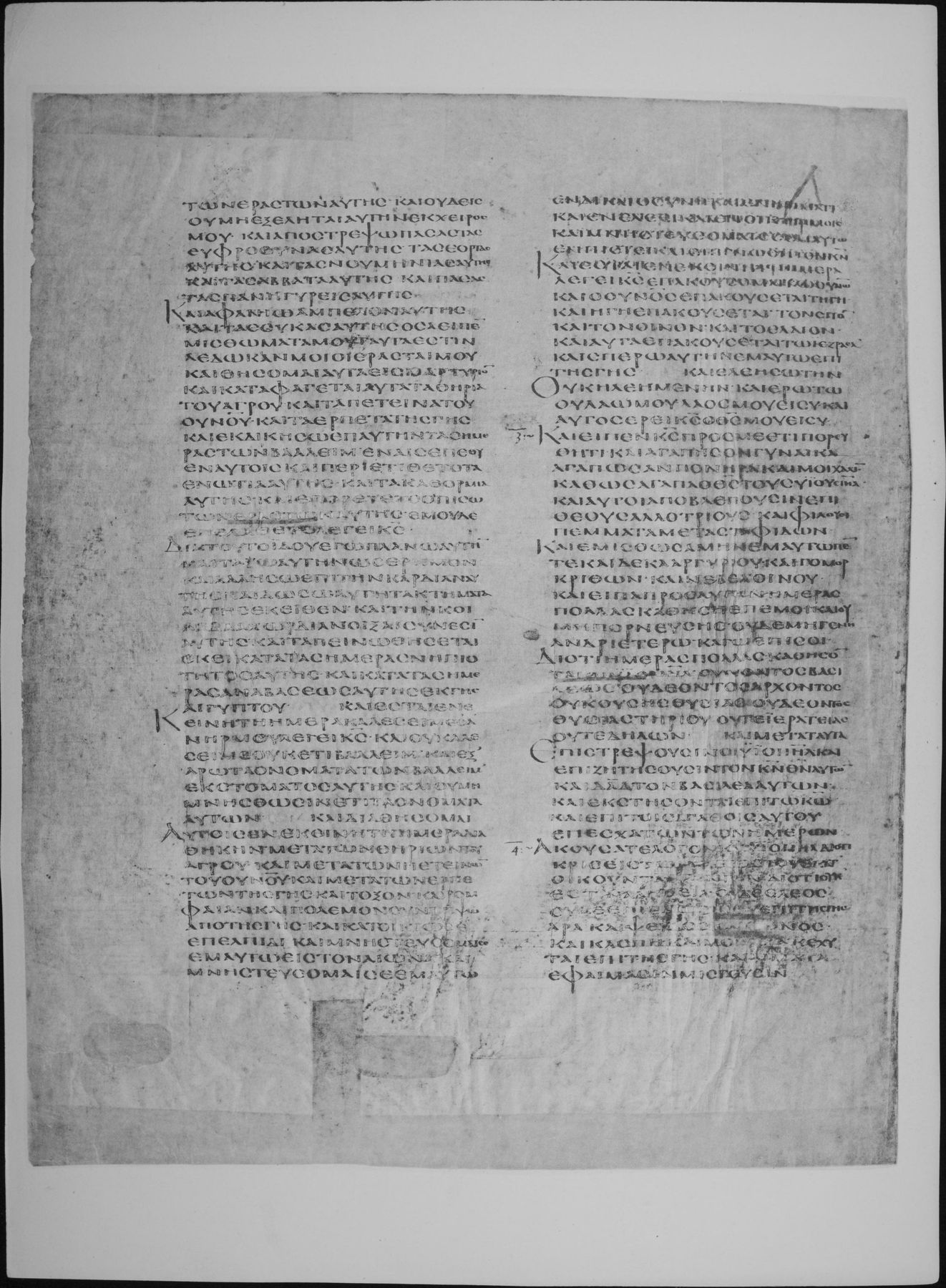
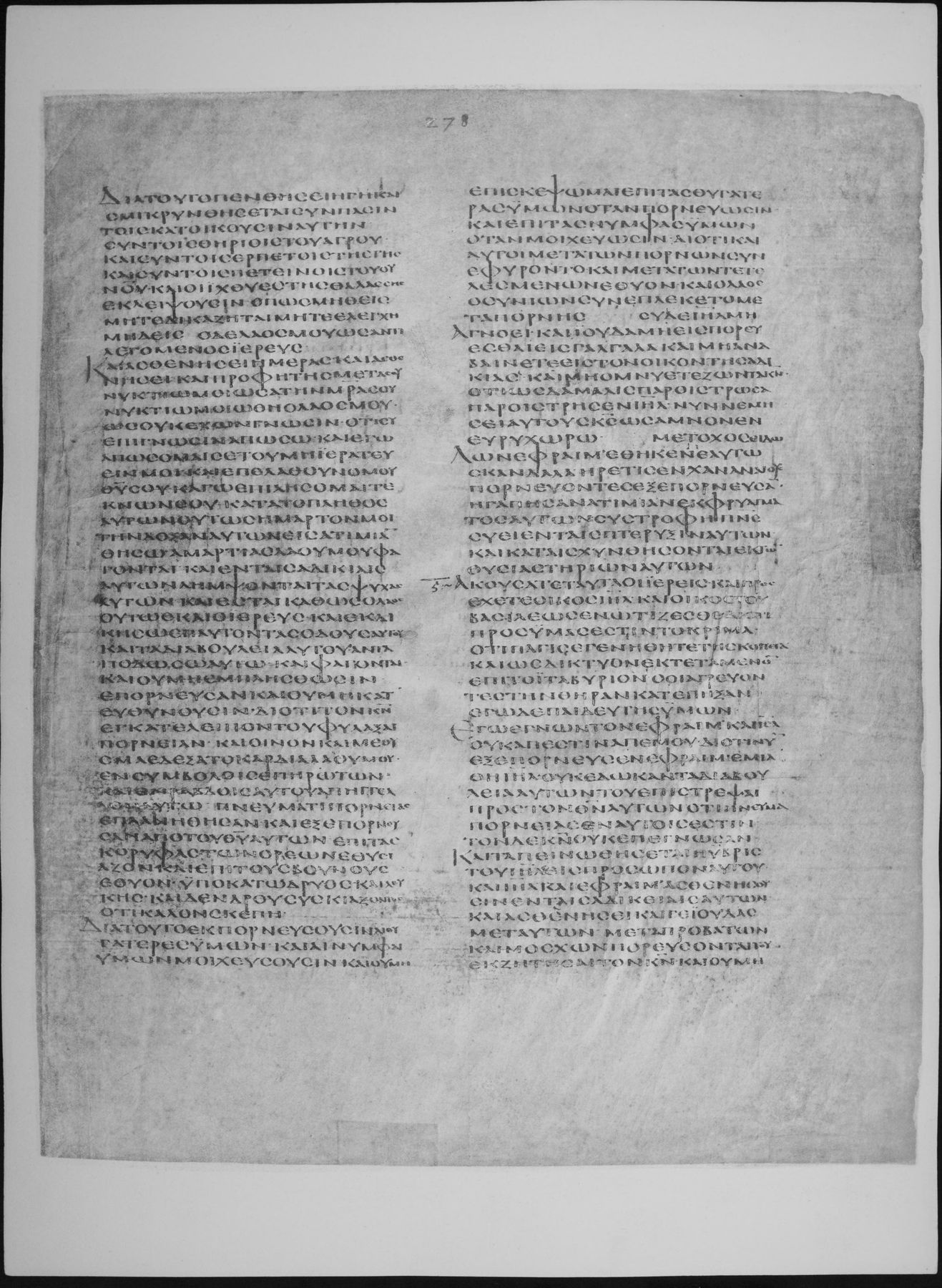
Hosea 4 in the Greek Old Testament (the Septuagint) as written in Codex Alexandrinus, a Greek Bible copied in the fifth century, probably in Egypt, and now in the British Library (Royal MS 1 D. VI, the second of its four volumes). It is one of the three great early codices of the whole Greek Bible, with Codex Vaticanus and Codex Sinaiticus.
This entry meets the strict three-criteria standard of the Theosis Library:
- Manuscript scan: the pages of Codex Alexandrinus carrying this chapter (fol. 277v, fol. 278r), from the full-size photographic (autotype) facsimile published by the British Museum in 1879-1883, as digitised on the Internet Archive. The verse range of every page comes from the reduced photographic facsimile of 1936, which prints it beneath each plate, and the opening words of every page were read on the plate to confirm the page and the verse it begins with. Each section links to the page or pages that hold its verses. Folio numbers are those written at the head of each leaf and visible on the plates.
- Original text: Swete's edition, which here prints the text of Codex Vaticanus (Vat. gr. 1209), the base of his edition, and gives the readings of Alexandrinus only in his apparatus. The Greek column is therefore Vaticanus' text; where Alexandrinus differs, the plate shows what Alexandrinus reads.
- English translation: Sir Lancelot C. L. Brenton, The Septuagint Version of the Old Testament (1844; 1851 edition), a translation of the Greek, public domain, from the eBible.org text.
How was this verified? (Provenance)
Where on the image
Hosea 4:1-2 is on fol. 277v (full-size facsimile of 1879-83, Internet Archive codex-alexandrinus leaf 579). The 1936 reduced facsimile prints beneath this page: Hos. ii. 10-iv. 2. Checked on the plate: the page begins inside Hosea 2:10 (first words read: ΤΩΝ ΕΡΑΣΤΩΝ ΑΥΤΗΣ ΚΑΙ ΟΥΔΕΙΣ ΟΥ ΜΗ ΕΞΕΛΗΤΑΙ ΑΥΤΗΝ ΕΚ ΧΕΙΡΟΣ ΜΟΥ ΚΑΙ ΑΠΟΣΤΡΕΨΩ ΠΑΣΑΣ ΤΑΣ ΕΥΦΡΟΣΥΝΑΣ). Hosea 4:3-8 is on fol. 278r (full-size facsimile of 1879-83, Internet Archive codex-alexandrinus leaf 580). The 1936 reduced facsimile prints beneath this page: Hos. iv. 3-v. 6. Checked on the plate: the page begins at the start of Hosea 4:3 (first words read: ΔΙΑ ΤΟΥΤΟ ΠΕΝΘΗΣΕΙ Η ΓΗ ΚΑΙ ΣΜΙΚΡΥΝΘΗΣΕΤΑΙ ΣΥΝ ΠΑΣΙ ΤΟΙΣ ΚΑΤΟΙΚΟΥΣΙΝ ΑΥΤΗΝ).
1Ἀκούσατε λόγον Κυρίου, υἱοὶ Ἰσραήλ, ὅτι κρίσις τῷ κυρίῳ πρὸς τοὺς κατοικοῦντας τὴν γῆν, διότι οὐκ ἔστιν ἀλήθεια οὐδὲ ἔλεος οὐδὲ ἐπίγνωσις θεοῦ ἐπὶ τῆς γῆς· 2ἀρὰ καὶ ψεῦδος καὶ φόνος καὶ κλοπὴ καὶ μοιχεία κέχυται ἐπὶ τῆς γῆς, καὶ αἵματα ἐφ᾽ αἵμασιν μίσγουσιν. 3διὰ τοῦτο πενθήσει ἡ γῆ, καὶ μικρυνθήσεται σὺν πᾶσιν τοῖς κατοικοῦσιν αὐτήν, σὺν τοῖς θηρίοις τοῦ ἀγροῦ καὶ σὺν τοῖς ἑρπετοῖς τῆς γῆς καὶ σὺν τοῖς πετεινοῖς τοῦ οὐρανοῦ, καὶ οἱ ἰχθύες τῆς θαλάσσης ἐκλεὶψουσιν, 4ὅπως μηδεὶς μήτε δικάζηται μήτε ἐλέγχῃ μηδείς. ὁ δὲ λαός μου ὡς ἀντιλεγόμενος ἱερεύς, 5καὶ ἀσθενήσει ἡμέρας, καὶ ἀσθενήσει προφήτης μετὰ σοῦ· νυκτὶ ὡμοίωσα τὴν μητέρα σου, 6ὡμοιώθη ὁ λαός μου ὡς οὐκ ἔχων γνῶσιν· ὅτι σὺ ἐπίγνωσιν ἀπώσω, κἀγὼ ἀπώσομαι σὲ τοῦ ἱερατεύειν μοι· καὶ ἐπελάθου νόμον θεοῦ σου, κἀγὼ ἐπιλήσομαι τέκνων σου. 7κατὰ τὸ πλῆθος αὐτῶν οὕτως ἥμαρτόν μοι· τὴν δόξαν αὐτῶν εἰς ἀτιμίαν θήσομαι, 8ἁμαρτίας λαοῦ μου φάγονται, καὶ ἐν ταῖς ἀδικίαις αὐτῶν λήμψονται τὰς ψυχὰς αὐτῶν.
1Hear the word of the Lord, ye children of Israel: for the Lord has a controversy with the inhabitants of the land, because there is no truth, nor mercy, nor knowledge of God in the land. 2Cursing, and lying, and murder, and theft, and adultery abound in the land, and they mingle blood with blood. 3Therefore shall the land mourn, and shall be diminished with all that dwell in it, with the wild beasts of the field, and the reptiles of the earth, and with the birds of the sky, and the fish of the sea shall fail: 4that neither any one may plead, nor any one reprove another: but my people are as a priest spoken against. 5Therefore they shall fall by day, and the prophet with thee shall fall: I have compared thy mother unto night. 6My people are like as if they had no knowledge: because thou hast rejected knowledge, I will also reject thee, that thou shalt not minister as priest to me: and as thou hast forgotten the law of thy God, I also will forget thy children. 7According to their multitude, so they sinned against me: I will turn their glory into shame. 8They will devour the sins of my people, and will set their hearts on their iniquities.
Where on the image
Hosea 4:9-16 is on fol. 278r (full-size facsimile of 1879-83, Internet Archive codex-alexandrinus leaf 580). The 1936 reduced facsimile prints beneath this page: Hos. iv. 3-v. 6. Checked on the plate: the page begins at the start of Hosea 4:3 (first words read: ΔΙΑ ΤΟΥΤΟ ΠΕΝΘΗΣΕΙ Η ΓΗ ΚΑΙ ΣΜΙΚΡΥΝΘΗΣΕΤΑΙ ΣΥΝ ΠΑΣΙ ΤΟΙΣ ΚΑΤΟΙΚΟΥΣΙΝ ΑΥΤΗΝ).
9καὶ ἔσται καθὼς ὁ λαὸς οὕτως καὶ ὁ ἱερεύς, καὶ ἐκδικήσω ἐπ᾽ αὐτὸν τὰς ὁδοὺς αὐτοῦ, καὶ τὰ διαβούλια αὐτοῦ ἀνταποδώσω αὐτῷ. 10καὶ φάγονται καὶ οὐ μὴ ἐμπλησθῶσιν, ἐπόρνευσαν καὶ οὐ μὴ κατευθύνωσιν, διότι τὸν κύριον ἐγκατέλιπον τοῦ φυλάξαι 11πορνείαν. καὶ οἶνον καὶ μέθυσμα ἐδέξατο καρδία λαοῦ μου· 12ἐν συμβόλοις ἐπηρώτων, καὶ ἐν ῥάβδοις αὐτοῦ ἀπήγγελλον αὐτῷ· πνεύματι πορνείας ἐπλανήθησαν καὶ ἐξεπόρνευσαν ἀπὸ τοῦ θεοῦ αὐτῶν. 13ἐπὶ τὰς κορυφὰς τῶν ὀρέων ἐθυσίαζον, καὶ ἐπὶ τοὺς βουνοὺς ἔθυον ὑποκάτω δρυὸς καὶ λεύκης καὶ δένδρου συσκιάζοντος, ὅτι καλὸν σκέπη. διὰ τοῦτο ἐκπορνεύσουσιν αἱ θυγατέρες ὑμῶν, καὶ αἱ νύμφαι ὑμῶν μοιχεύσουσιν· 14καὶ οὐ μὴ ἐπισκέψωμαι ἐπὶ τὰς θυγατέρας ὑμῶν ὅταν πορνεύωσιν, καὶ ἐπὶ τὰς νύμφας ὑμῶν ὅταν μοιχεύωσιν· ὅτι αὐτοὶ μετὰ τῶν πορνῶν συνεφύροντο, καὶ μετὰ τῶν τετελεσμένων ἔθυον, καὶ ὁ λαὸς ὁ συνίων συνεπλέκετο μετὰ πόρνης. 15σὺ δέ, Ἰσραήλ, μὴ ἀγνόει, καὶ Ἰούδα, μὴ εἰσπορεύεσθε εἰς Γάλγαλα, καὶ μὴ ἀναβαίνετε εἰς τὸν οἶκον Ὤν, καὶ μὴ ὀμνύετε ζῶντα Κύριον. 16διότι ὡς δάμαλις παροιστρῶσα παροίστρησεν Ἰσραήλ· νῦν νεμήσει αὐτοὺς Κύριος ὡς ἀμνὸν ἐν εὐρυχώρῳ.
9And the priest shall be as the people: and I will avenge on them their ways, and I will recompense to them their counsels. 10And they shall eat, and shall not be satisfied: they have gone a-whoring, and shall by no means prosper: because they have left off to take heed to the Lord. 11The heart of my people has gladly engaged in fornication and wine and strong drink. 12They asked counsel by means of signs, and they reported answer to them by their staves: they have gone astray in a spirit of whoredom, and gone grievously a-whoring from their God. 13They have sacrificed on the tops of the mountains, and on the hills they have sacrificed under the oak and poplar, and under the shady tree, because the shade was good: therefore your daughters shall go a-whoring, and your daughters-in-law shall commit adultery. 14And I will not visit upon your daughters when they shall commit fornication, nor your daughters-in-law when they shall commit adultery: for they themselves mingled themselves with harlots, and sacrificed with polluted ones, and the people that understood not entangled itself with a harlot. 15But thou, Israel, be not ignorant, and go ye not, men of Juda, to Galgala; and go not up to the house of On, and swear not by the living Lord. 16For Israel was maddened like a mad heifer: now the Lord will feed them as a lamb in a wide place.
Where on the image
Hosea 4:17-19 is on fol. 278r (full-size facsimile of 1879-83, Internet Archive codex-alexandrinus leaf 580). The 1936 reduced facsimile prints beneath this page: Hos. iv. 3-v. 6. Checked on the plate: the page begins at the start of Hosea 4:3 (first words read: ΔΙΑ ΤΟΥΤΟ ΠΕΝΘΗΣΕΙ Η ΓΗ ΚΑΙ ΣΜΙΚΡΥΝΘΗΣΕΤΑΙ ΣΥΝ ΠΑΣΙ ΤΟΙΣ ΚΑΤΟΙΚΟΥΣΙΝ ΑΥΤΗΝ).
17μέτοχος εἰδώλων Ἐφράιμ ἔθηκεν ἑαυτῷ σκάνδαλα, 18ᾑρέτισεν Χαναναίους· πορνεύοντες ἐξεπόρνευσαν, ἠγάπησαν ἀτιμίαν ἐκ φρυάγματος αὐτῆς. 19συστροφὴ πνεύματος σὺ εἶ ἐν ταῖς πτέρυξιν αὐτῆς, καὶ καταισχυνθήσονται ἐκ τῶν θυσιαστηρίων αὐτῶν.
17Ephraim, joined with idols, has laid stumbling-blocks in his own way. 18He has chosen the Chananites: they have grievously gone a-whoring: they have loved dishonour through her insolence. 19Thou art a blast of wind in her wings, and they shall be ashamed because of their altars.
Cite
Sources
- Source: Codex Alexandrinus (British Library Royal MS 1 D. VI) via the British Museum photographic facsimiles of 1879-83 and 1936 (Internet Archive) + Swete's Septuagint + Brenton's English (holding institution)
- Critical edition: H. B. Swete, The Old Testament in Greek according to the Septuagint (1909)
← previous · → next · v cycle view · l back to library