Isaiah, Chapter 11 (Codex Alexandrinus)
Introduction
Isaiah 11 in the Greek Old Testament (the Septuagint) as written in Codex Alexandrinus, a Greek Bible copied in the fifth century, probably in Egypt, and now in the British Library (Royal MS 1 D. VI, the second of its four volumes). It is one of the three great early codices of the whole Greek Bible, with Codex Vaticanus and Codex Sinaiticus.
This entry meets the strict three-criteria standard of the Theosis Library:
- Manuscript scan: the pages of Codex Alexandrinus carrying this chapter (fol. 307r, fol. 307v), from the full-size photographic (autotype) facsimile published by the British Museum in 1879-1883, as digitised on the Internet Archive. The verse range of every page comes from the reduced photographic facsimile of 1936, which prints it beneath each plate, and the opening words of every page were read on the plate to confirm the page and the verse it begins with. Each section links to the page or pages that hold its verses. Folio numbers are those written at the head of each leaf and visible on the plates.
- Original text: Swete's edition, which here prints the text of Codex Vaticanus (Vat. gr. 1209), the base of his edition, and gives the readings of Alexandrinus only in his apparatus. The Greek column is therefore Vaticanus' text; where Alexandrinus differs, the plate shows what Alexandrinus reads.
- English translation: Sir Lancelot C. L. Brenton, The Septuagint Version of the Old Testament (1844; 1851 edition), a translation of the Greek, public domain, from the eBible.org text.
How was this verified? (Provenance)
Where on the image
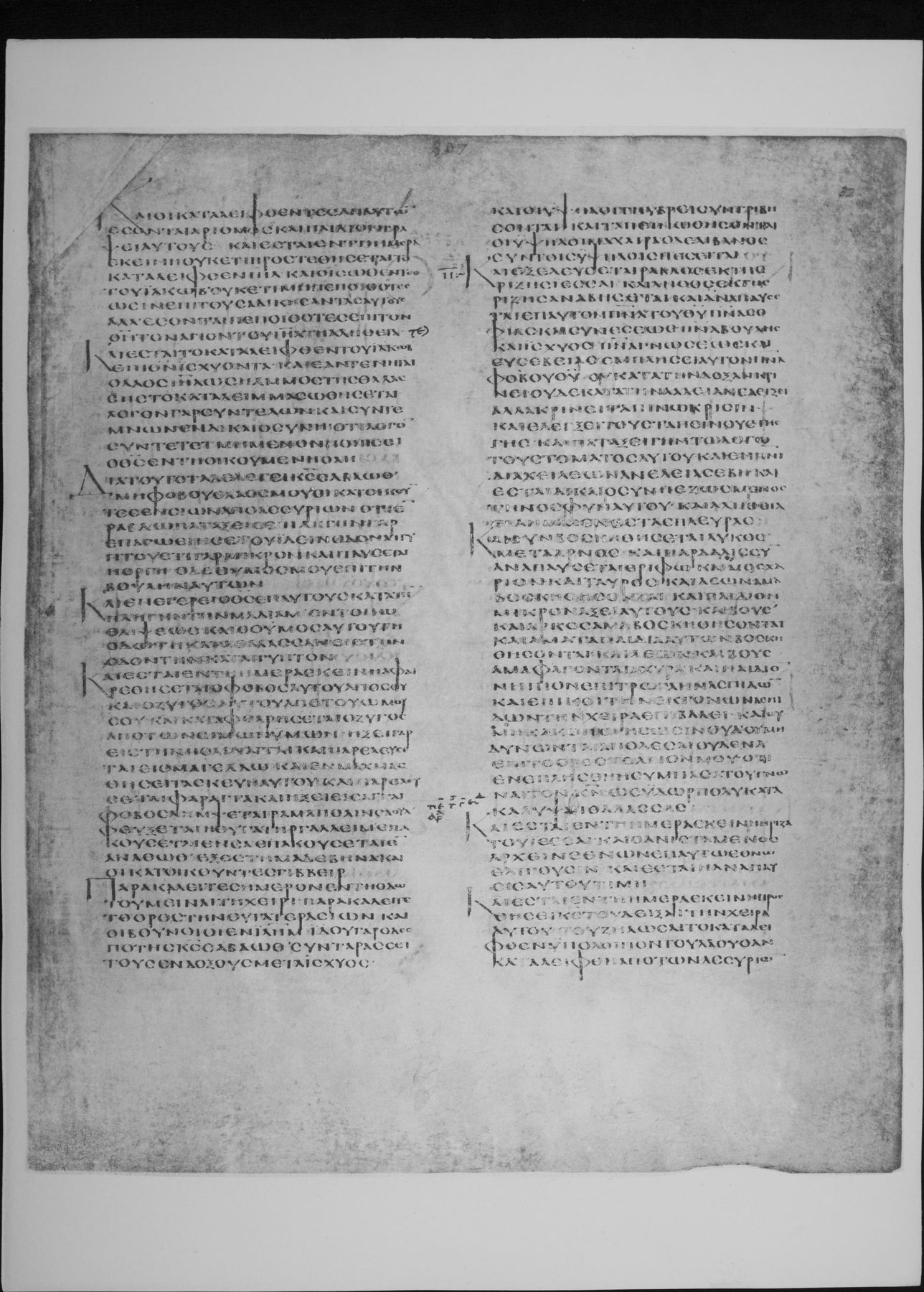
Isaiah 11:1-8 is on fol. 307r (full-size facsimile of 1879-83, Internet Archive codex-alexandrinus leaf 638). The 1936 reduced facsimile prints beneath this page: Is. x. 19-xi. 11. Checked on the plate: the page begins at the start of Isaiah 10:19 (first words read: ΚΑΙ ΟΙ ΚΑΤΑΛΕΙΦΘΕΝΤΕΣ ΑΠ ΑΥΤΩΝ ΕΣΟΝΤΑΙ ΑΡΙΘΜΟΣ ΚΑΙ ΠΑΙΔΙΟΝ ΓΡΑΨΕΙ ΑΥΤΟΥΣ).
1Καὶ ἐξελεύσεται ῥάβδος ἐκ τῆς ῥίζης Ἰεσσαί, καὶ ἄνθος ἐκ τῆς ῥίζης ἀναβήσεται. 2καὶ ἀναπαύσεται ἐπ᾽ αὐτὸν πνεῦμα τοῦ θεοῦ, πνεῦμα σοφίας καὶ συνέσεως, πνεῦμα βουλῆς καὶ ἰσχύος, πνεῦμα γνώσεως καὶ εὐσεβείας· 3ἐμπλήσει αὐτὸν πνεῦμα φόβου θεοῦ. οὐ κατὰ τὴν δόξαν κρινεῖ, οὐδὲ κατὰ τὴν λαλιὰν ἐλέγξει, 4ἀλλὰ κρινεῖ ταπεινῷ κρίσιν, καὶ ἐλέγξει τοὺς ταπεινοὺς τῆς γῆς, καὶ πατάξει γῆν τῷ λόγῳ τοῦ στόματος αὐτοῦ, καὶ ἐν πνεύματι διὰ χειλέων ἀνελεῖ ἀσεβῆ· 5καὶ ἔσται δικαιοσύνῃ ἐζωσμένος τὴν ὀσφὺν αὐτοῦ, καὶ ἀληθείᾳ εἱλημένος τὰς πλευράς. 6καὶ συνβοσκηθήσεται λύκος μετὰ ἀρνός, καὶ πάρδαλις συναναπαύσεται ἐρίφῳ, καὶ μοσχάριον καὶ ταῦρος καὶ λέων ἅμα βοσκηθήσονται, καὶ παιδίον μικρὸν ἄξει αὐτούς· 7καὶ βοῦς καὶ ἄρκος ἅμα βοσκηθήσονται, καὶ ἅμα τὰ παιδία αὐτῶν ἔσονται, καὶ λέων ὡς βοῦς φάγονται ἄχυρα· 8καὶ παιδίον νήπιον ἐπὶ τρωγλῶν ἀσπίδων, καὶ ἐπὶ κοίτην ἐκγόνων ἀσπίδων τὴν χεῖρα ἐπιβαλεῖ.
1And there shall come forth a rod out of the root of Jesse, and a blossom shall come up from his root: 2and the Spirit of God shall rest upon him, the spirit of wisdom and understanding, the spirit of counsel and strength, the spirit of knowledge and godliness shall fill him; 3the spirit of the fear of God. He shall not judge according to appearance, nor reprove according to report: 4but he shall judge the cause of the lowly, and shall reprove the lowly of the earth: and he shall smite the earth with the word of his mouth, and with the breath of his lips shall he destroy the ungodly one. 5And he shall have his loins girt with righteousness, and his sides clothed with truth. 6And the wolf shall feed with the lamb, and the leopard shall lie down with the kid; and the young calf and bull and lion shall feed together; and a little child shall lead them. 7And the ox and bear shall feed together; and their young shall be together: and the lion shall eat straw like the ox. 8And an infant shall put his hand on the holes of asps, and on the nest of young asps.
Where on the image
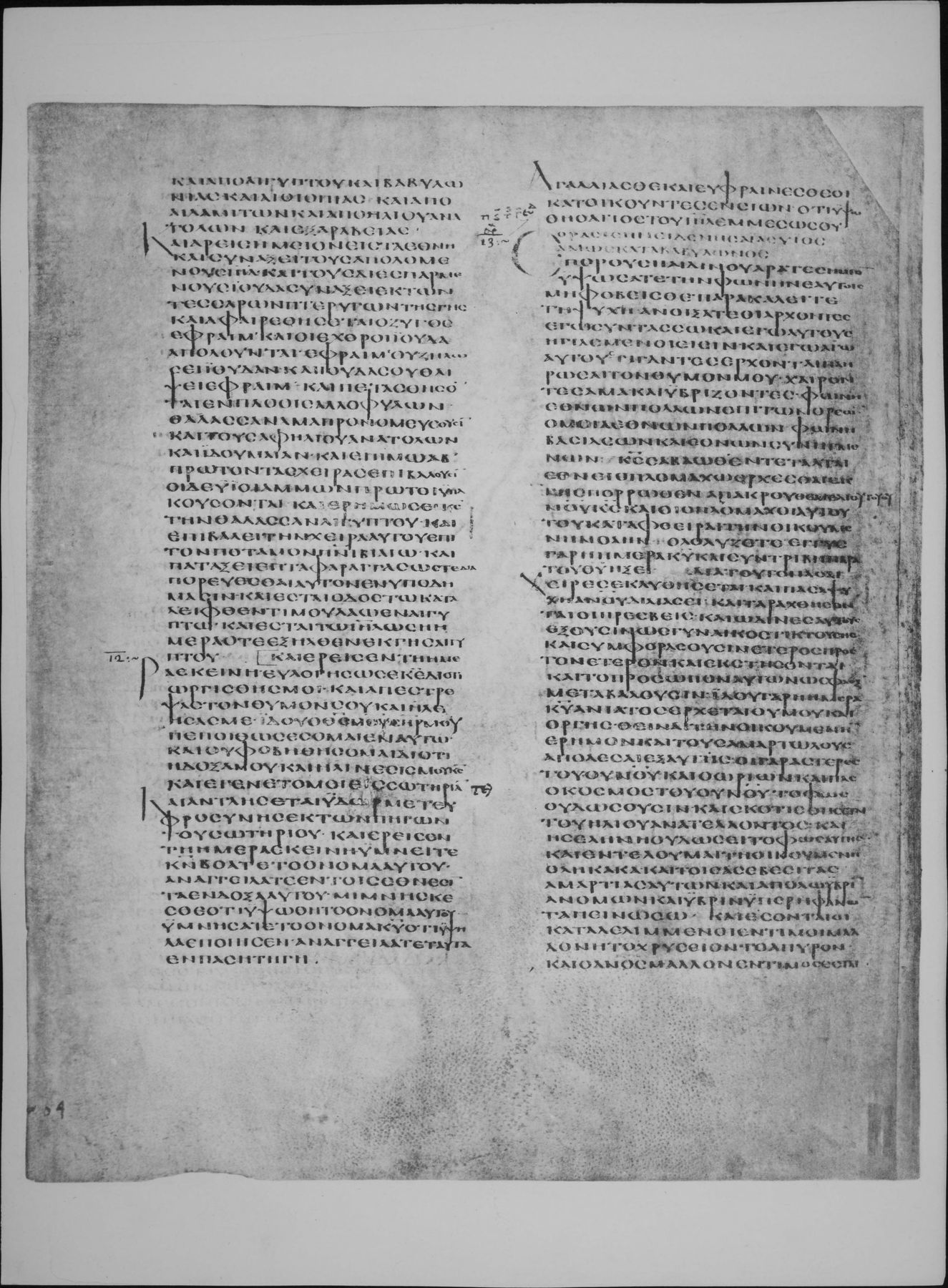
Isaiah 11:9-11 is on fol. 307r (full-size facsimile of 1879-83, Internet Archive codex-alexandrinus leaf 638). The 1936 reduced facsimile prints beneath this page: Is. x. 19-xi. 11. Checked on the plate: the page begins at the start of Isaiah 10:19 (first words read: ΚΑΙ ΟΙ ΚΑΤΑΛΕΙΦΘΕΝΤΕΣ ΑΠ ΑΥΤΩΝ ΕΣΟΝΤΑΙ ΑΡΙΘΜΟΣ ΚΑΙ ΠΑΙΔΙΟΝ ΓΡΑΨΕΙ ΑΥΤΟΥΣ). Isaiah 11:11-16 is on fol. 307v (full-size facsimile of 1879-83, Internet Archive codex-alexandrinus leaf 639). The 1936 reduced facsimile prints beneath this page: Is. xi. 11-xiii. 12. Checked on the plate: the page begins inside Isaiah 11:11 (first words read: ΚΑΙ ΒΑΒΥΛΩΝΙΑΣ ΚΑΙ ΑΙΘΙΟΠΙΑΣ ΚΑΙ ΑΠΟ ΑΙΛΑΜΙΤΩΝ ΚΑΙ ΑΠΟ ΗΛΙΟΥ ΑΝΑΤΟΛΩΝ).
9καὶ οὐ μὴ κακοποιήσουσιν οὐδὲ μὴ δύνωνται ἀπολέσαι οὐδένα ἐπὶ τὸ ὄρος τὸ ἅγιόν μου, ὅτι ἐνεπλήσθη ἡ σύμπασα τοῦ γνῶναι τὸν κύριον, ὡς ὕδωρ πολὺ κατακαλύψαι θαλάσσας. 10καὶ ἔσται ἐν τῇ ἡμέρᾳ ἐκείνῃ ἡ ῥίζα τοῦ Ἰεσσαὶ καὶ ὁ ἀνιστάμενος ἄρχειν ἐθνῶν, ἐπ᾽ αὐτῷ ἔθνη ἐλπιοῦσιν. καὶ ἔσται ἡ ἀνάπαυσις αὐτοῦ τιμή. 11Καὶ ἔσται τῇ ἡμέρᾳ ἐκείνῃ προσθήσει ὁ κύριος τοῦ δεῖξαι τὴν χεῖρα αὐτοῦ τοῦ ζηλῶσαι τὸ καταλειφθὲν ὑπόλοιπον τοῦ λαοῦ, ὃ ἂν καταλειφθῇ ὑπὸ τῶν Ἀσσυρίων καὶ ἀπὸ Αἰγύπτου καὶ ἀπὸ Βαβυλωνίας καὶ Αἰθιοπίας καὶ ἀπὸ Αἰλαμειτῶν καὶ ἀπὸ ἡλίου ἀνατολῶν καὶ ἐξ Ἀραβίας. 12καὶ ἀρεῖ σημεῖον εἰς τὰ ἔθνη, καὶ συνάξει τοὺς ἀπολομένους Ἰσραήλ, καὶ τοὺς διεσπαρμένους Ἰούδα συνάξει ἐκ τῶν τεσσάρων πτερύγων τῆς γῆς. 13καὶ ἀφαιρεθήσεται ὁ ζῆλος Ἐφράιμ, καὶ οἱ ἐχθροὶ Ἰούδα ἀπολοῦνται· Ἐφράιμ οὐ ζηλώσει Ἰούδαν, καὶ Ἰούδας οὐ θλίψει Ἐφράιμ. 14καὶ πετασθήσονται ἐν πλοίοις ἀλλοφύλων· θάλασσαν ἅμα προνομεύσουσιν καὶ τοὺς ἀφ᾽ ἡλίου ἀνατολῶν καὶ Ἰδουμαίαν, καὶ ἐπὶ Μωὰβ πρῶτον τὰς χεῖρας ἐπιβαλοῦσιν, οἱ δὲ υἱοὶ Ἀμμὼν πρῶτοι ὑπακούσονται. 15καὶ ἐρημώσει Κύριος τὴν θάλασσαν Αἰγύπτου, καὶ ἐπιβαλεῖ τὴν χεῖρα αὐτοῦ ἐπὶ τὸν ποταμὸν πνεύματι βιαίῳ, καὶ πατάξει ἑπτὰ φάραγγας ὥστε διαπορεύεσθαι αὐτὸν ἐν ὑποδήμασιν· 16καὶ ἔσται δίοδος τῷ καταλειφθέντι μου λαῷ ἐν Αἰγύπτῳ, καὶ ἔσται τῷ Ἰσραὴλ ὡς ἡ ἡμέρα ὅτε ἐξῆλθεν ἐκ γῆς Αἰγύπτου.
9And they shall not hurt, nor shall they at all be able to destroy any one on my holy mountain: for the whole world is filled with the knowledge of the Lord, as much water covers the seas. 10And in that day there shall be a root of Jesse, and he that shall arise to rule over the Gentiles; in him shall the Gentiles trust, and his rest shall be glorious. 11And it shall be in that day, that the Lord shall again shew his hand, to be zealous for the remnant that is left of the people, which shall be left by the Assyrians, and that from Egypt, and from the country of Babylon, and from Ethiopia, and from the Elamites, and from the rising of the sun, and out of Arabia. 12And he shall lift up a standard for the nations, and he shall gather the lost ones of Israel, and he shall gather the dispersed of Juda from the four corners of the earth. 13And the envy of Ephraim shall be taken away, and the enemies of Juda shall perish: Ephraim shall not envy Juda, and Juda shall not afflict Ephraim. 14And they shall fly in the ships of the Philistines: they shall at the same time spoil the sea, and them that come from the east, and Idumea: and they shall lay their hands on Moab first; but the children of Ammon shall first obey them. 15And the Lord shall make desolate the sea of Egypt; and he shall lay his hand on the river with a strong wind, and he shall smite the seven channels, so that men shall pass through it dry-shod. 16And there shall be a passage for my people that is left in Egypt: and it shall be to Israel as the day when he came forth out of the land of Egypt.
Cite
Sources
- Source: Codex Alexandrinus (British Library Royal MS 1 D. VI) via the British Museum photographic facsimiles of 1879-83 and 1936 (Internet Archive) + Swete's Septuagint + Brenton's English (holding institution)
- Critical edition: H. B. Swete, The Old Testament in Greek according to the Septuagint (1909)
← previous · → next · v cycle view · l back to library