Isaiah, Chapter 10 (Codex Alexandrinus)
Introduction
Isaiah 10 in the Greek Old Testament (the Septuagint) as written in Codex Alexandrinus, a Greek Bible copied in the fifth century, probably in Egypt, and now in the British Library (Royal MS 1 D. VI, the second of its four volumes). It is one of the three great early codices of the whole Greek Bible, with Codex Vaticanus and Codex Sinaiticus.
Numbering: Swete's Greek and Brenton's English number or divide some verses of this chapter differently (Swete 10:28-29 = Brenton 10:28-29). Each column keeps its own verse numbers, and sections are cut only where the two texts agree, so each section holds the same passage in both languages.
This entry meets the strict three-criteria standard of the Theosis Library:
- Manuscript scan: the pages of Codex Alexandrinus carrying this chapter (fol. 306v, fol. 307r), from the full-size photographic (autotype) facsimile published by the British Museum in 1879-1883, as digitised on the Internet Archive. The verse range of every page comes from the reduced photographic facsimile of 1936, which prints it beneath each plate, and the opening words of every page were read on the plate to confirm the page and the verse it begins with. Each section links to the page or pages that hold its verses. Folio numbers are those written at the head of each leaf and visible on the plates.
- Original text: Swete's edition, which here prints the text of Codex Vaticanus (Vat. gr. 1209), the base of his edition, and gives the readings of Alexandrinus only in his apparatus. The Greek column is therefore Vaticanus' text; where Alexandrinus differs, the plate shows what Alexandrinus reads.
- English translation: Sir Lancelot C. L. Brenton, The Septuagint Version of the Old Testament (1844; 1851 edition), a translation of the Greek, public domain, from the eBible.org text.
How was this verified? (Provenance)
Where on the image
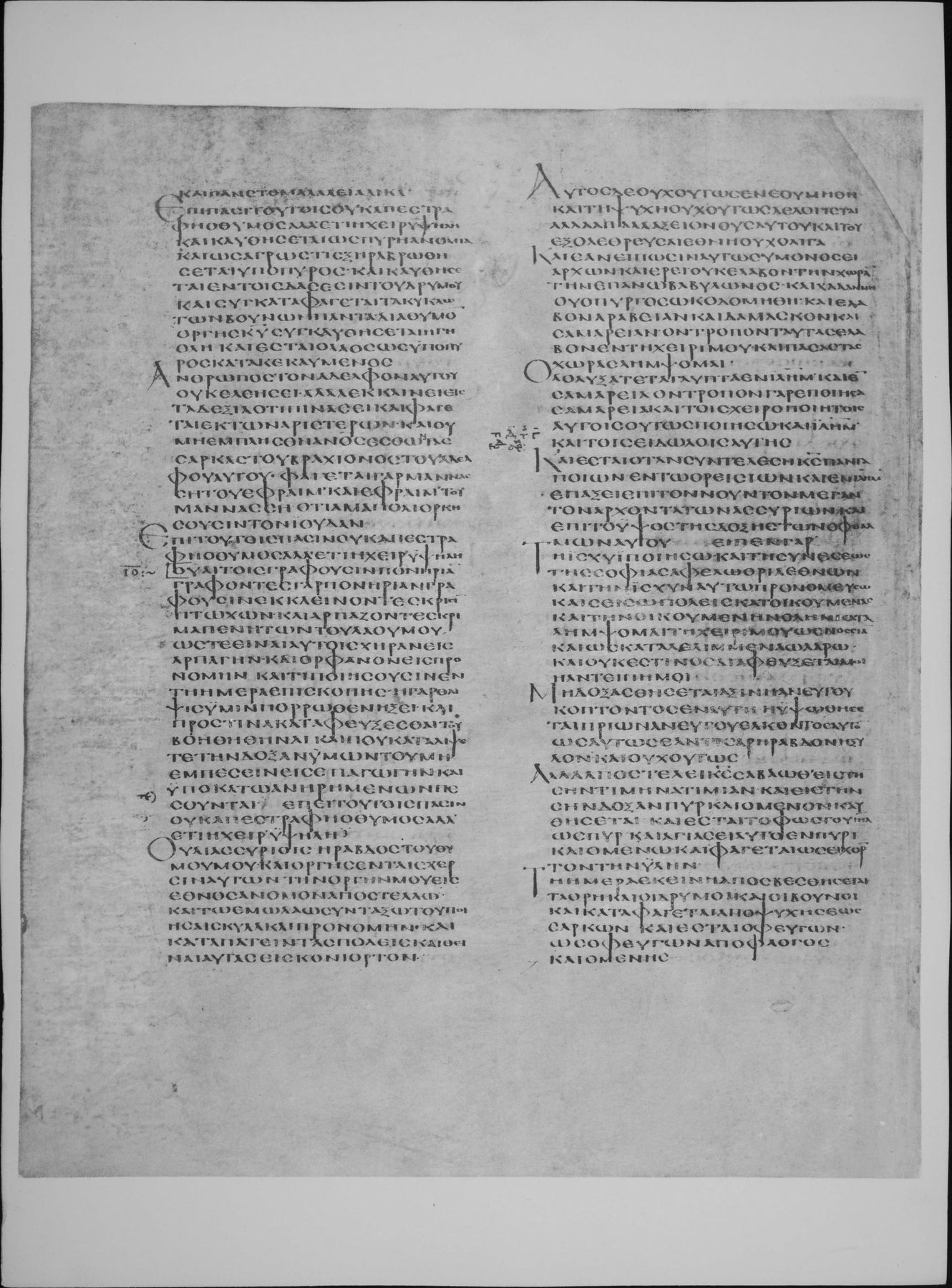
Isaiah 10:1-8 is on fol. 306v (full-size facsimile of 1879-83, Internet Archive codex-alexandrinus leaf 637). The 1936 reduced facsimile prints beneath this page: Is. ix. 17-x. 18. Checked on the plate: the page begins inside Isaiah 9:17 (first words read: ΚΑΙ ΠΑΝ ΣΤΟΜΑ ΛΑΛΕΙ ΑΔΙΚΑ ΕΠΙ ΠΑΣΙ ΤΟΥΤΟΙΣ ΟΥΚ ΑΠΕΣΤΡΑΦΗ Ο ΘΥΜΟΣ).
1Οὐαὶ τοῖς γράφουσιν πονηρίαν· γράφοντες γὰρ πονηρίαν γράφουσιν, 2ἐκκλίνοντες κρίσιν πτωχῶν, ἁρπάζοντες κρίμα πενήτων τοῦ λαοῦ μου, ὥστε εἶναι αὐτοῖς χήραν εἰς ἁρπαγὴν καὶ ὀρφανὸν εἰς προνομήν. 3καὶ τί ποιήσουσιν τῇ ἡμέρᾳ τῆς ἐπισκοπῆς; ἡ γὰρ θλίψις ὑμῖν πόρρωθεν ἥξει· καὶ πρὸς τίνα καταφεύξεσθε τοῦ βοηθηθῆναι; καὶ ποῦ καταλείψετε τὴν δόξαν ὑμῶν 4τοῦ μὴ ἐμπεσεῖν εἰς ἀπαγωγήν; ἐπὶ πᾶσι τούτοις οὐκ ἀπεστράφη ἡ ὀργή, ἀλλ᾽ ἔτι ἡ χεὶρ ὑψηλή. 5Οὐαὶ Ἀσσυρίοις, ἡ ῥάβδος τοῦ θυμοῦ μου καὶ ἡ ὀργή ἐστιν ἐν ταῖς χερσὶν αὐτῶν. 6τὴν ὀργήν μου εἰς ἔθνος ἄνομον ἀποστελῶ, καὶ τῷ ἐμῷ λαῷ συντάξω ποιῆσαι σκῦλα καὶ προνομήν, καὶ καταπατεῖν τὰς πόλεις καὶ θεῖναι αὐτὰς εἰς κονιορτόν. 7αὐτὸς δὲ οὐχ οὕτως ἐνεθυμήθη, καὶ τῇ ψυχῇ οὐχ οὕτως λελόγισται· ἀλλὰ ἀπαλλάξει ὁ νοῦς αὐτοῦ, καὶ τοῦ ἔθνη ἐξολοθρεῦσαι οὐκ ὀλίγα. 8καὶ ἐὰν εἴπωσιν αὐτῷ Σὺ μόνος εἶ ἄρχων,
1Woe to them that write wickedness; for when they write they do write wickedness, 2perverting the cause of the poor, violently wresting the judgment of the needy ones of my people, that the widow may be a prey to them, and the orphan a spoil. 3And what will they do in the day of visitation? for affliction shall come to you from afar: and to whom will ye flee for help? and where will ye leave your glory, 4that ye may not fall into captivity? 5Woe to the Assyrians; the rod of my wrath, and anger are in their hands. 6I will send my wrath against a sinful nation, and I will charge my people to take plunder and spoil, and to trample the cities, and to make them dust. 7But he meant not thus, neither did he devise thus in his soul: but his mind shall change, and that to destroy nations not a few. 8And if they should say to him, Thou alone art ruler;
Where on the image
Isaiah 10:9-16 is on fol. 306v (full-size facsimile of 1879-83, Internet Archive codex-alexandrinus leaf 637). The 1936 reduced facsimile prints beneath this page: Is. ix. 17-x. 18. Checked on the plate: the page begins inside Isaiah 9:17 (first words read: ΚΑΙ ΠΑΝ ΣΤΟΜΑ ΛΑΛΕΙ ΑΔΙΚΑ ΕΠΙ ΠΑΣΙ ΤΟΥΤΟΙΣ ΟΥΚ ΑΠΕΣΤΡΑΦΗ Ο ΘΥΜΟΣ).
9καὶ ἐρεῖ Οὐκ ἔλαβον τὴν χώραν τὴν ἐπάνω Βαβυλῶνος καὶ Χαλαννή, οὗ ὁ πύργος ᾠκοδομήθη; καὶ ἔλαβον Ἀραβίαν καὶ Δαμασκὸν καὶ Σαμάρειαν· 10ὃν τρόπον ταύτας ἔλαβον, καὶ πάσας τὰς ἀρχὰς λήμψομαι. ὀλολύξατε, τὰ γλυπτὰ ἐν Ἰερουσαλὴμ καὶ ἐν Σαμαρείᾳ· 11ὃν τρόπον γὰρ ἐποίησα Σαμαρείᾳ καὶ τοῖς χειροποιήτοις αὐτῆς, οὕτως ποιήσω καὶ Ἰερουσαλὴμ καὶ τοῖς εἰδώλοις αὐτῆς. 12Καὶ ἔσται ὅταν συντελέσῃ Κύριος πάντα ποιῶν ἐν τῷ ὄρει Σειὼν καὶ Ἰερουσαλήμ, ἐπάξει ἐπὶ τὸν νοῦν τὸν μέγαν, ἐπὶ τὸν ἄρχοντα τῶν Ἀσσυρίων, καὶ ἐπὶ τὸ ὕψος τῆς δόξης τῶν ὀφθαλμῶν αὐτοῦ. 13εἶπεν γάρ Ἐν τῇ ἰσχύι ποιήσω, καὶ ἐν τῇ σοφίᾳ τῆς συνέσεως ἀφελῶ ὅρια ἐθνῶν, καὶ τὴν ἰσχὺν αὐτῶν προνομεύσω· 14καὶ σείσω πόλεις κατοικουμένας, καὶ τὴν οἰκουμένην ὅλην καταλήμψομαι τῇ χειρὶ ὡς νοσσιάν, καὶ ὡς καταλελιμμένα ὠὰ ἀρῶ· καὶ οὐκ ἔστιν ὃς διαφεύξεταί με ἢ ἀντείπῃ μοι. 15μὴ δοξασθήσεται ἀξίνη ἄνευ τοῦ κόπτοντος ἐν αὐτῇ; ἢ ὑψωθήσεται πρίων ἄνευ τοῦ ἕλκοντος αὐτόν; ὡς ἄν τις ἄρῃ ῥάβδον ἢ ξύλον, καὶ οὐχ οὕτως; 16ἀλλὰ ἀποστελεῖ Κύριος σαβαὼθ εἰς τὴν σὴν τιμὴν ἀτιμίαν, καὶ εἰς τὴν σὴν δόξαν πῦρ καιόμενον καυθήσεται·
9then shall he say, Have I not taken the country above Babylon and Chalanes, where the tower was built? and have I not taken Arabia, and Damascus, and Samaria? 10As I have taken them, I will also take all the kingdoms: howl, ye idols in Jerusalem, and in Samaria. 11For as I did to Samaria and her idols, so will I do also to Jerusalem and her idols. 12And it shall come to pass, when the Lord shall have finished doing all things on mount Sion and Jerusalem, that I will visit upon the proud heart, even upon the ruler of the Assyrians, and upon the boastful haughtiness of his eyes. 13For he said, I will act in strength, and in the wisdom of my understanding I will remove the boundaries of nations, and will spoil their strength. 14And I will shake the inhabited cities: and I will take with my hand all the world as a nest: and I will even take them as eggs that have been left; and there is none that shall escape me, or contradict me. 15Shall the axe glorify itself without him that hews with it? or shall the saw lift up itself without him that uses it, as if one should lift a rod or staff? but it shall not be so; 16but the Lord of hosts shall send dishonour upon thine honour, and burning fire shall be kindled upon thy glory.
Where on the image
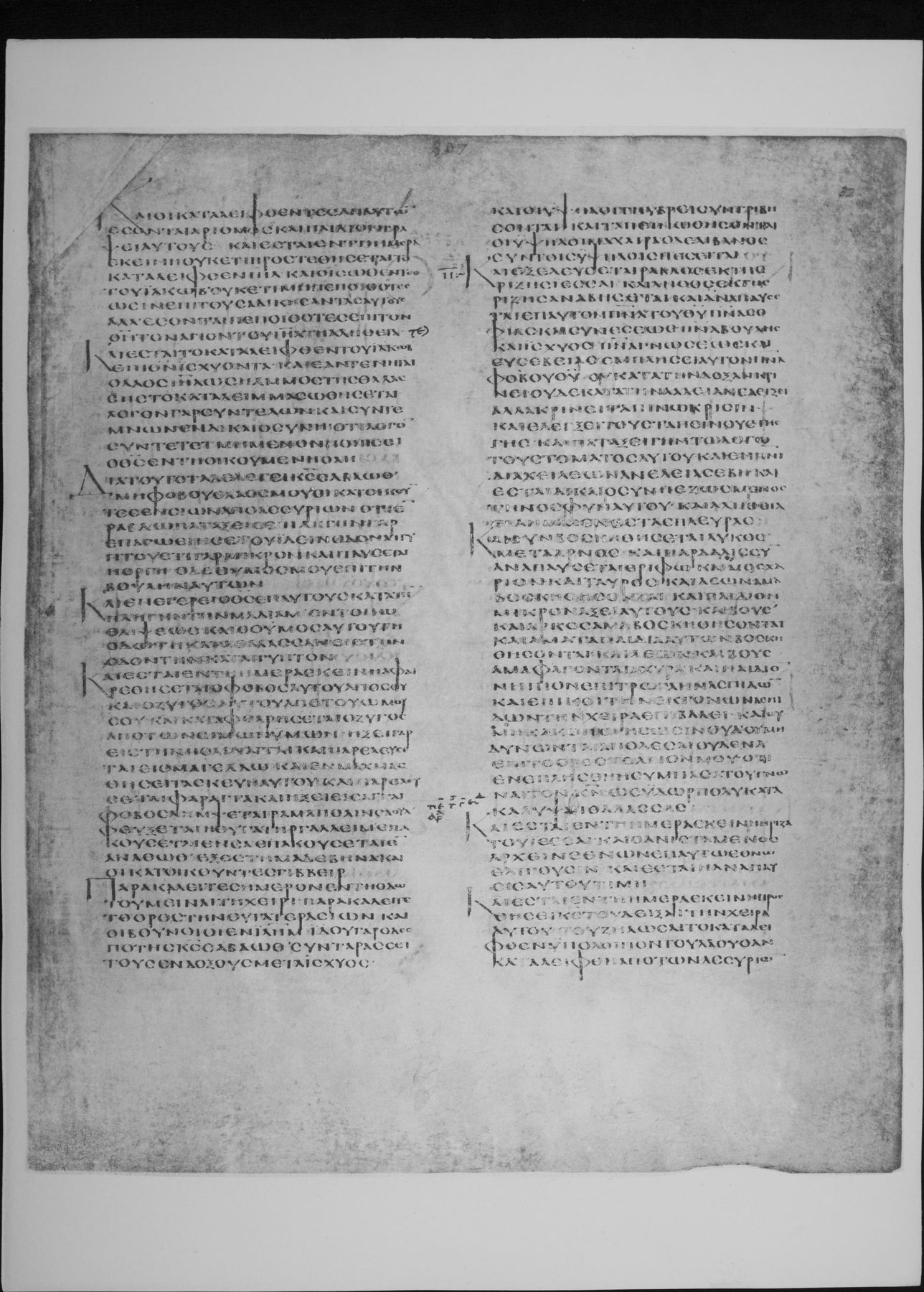
Isaiah 10:17-18 is on fol. 306v (full-size facsimile of 1879-83, Internet Archive codex-alexandrinus leaf 637). The 1936 reduced facsimile prints beneath this page: Is. ix. 17-x. 18. Checked on the plate: the page begins inside Isaiah 9:17 (first words read: ΚΑΙ ΠΑΝ ΣΤΟΜΑ ΛΑΛΕΙ ΑΔΙΚΑ ΕΠΙ ΠΑΣΙ ΤΟΥΤΟΙΣ ΟΥΚ ΑΠΕΣΤΡΑΦΗ Ο ΘΥΜΟΣ). Isaiah 10:19-24 is on fol. 307r (full-size facsimile of 1879-83, Internet Archive codex-alexandrinus leaf 638). The 1936 reduced facsimile prints beneath this page: Is. x. 19-xi. 11. Checked on the plate: the page begins at the start of Isaiah 10:19 (first words read: ΚΑΙ ΟΙ ΚΑΤΑΛΕΙΦΘΕΝΤΕΣ ΑΠ ΑΥΤΩΝ ΕΣΟΝΤΑΙ ΑΡΙΘΜΟΣ ΚΑΙ ΠΑΙΔΙΟΝ ΓΡΑΨΕΙ ΑΥΤΟΥΣ).
17καὶ ἔσται τὸ φῶς τοῦ Ἰσραὴλ εἰς πῦρ, καὶ ἁγιάσει αὐτὸν ἐν πυρὶ καιομένῳ, καὶ φάγεται ὡσεὶ χόρτον τὴν ὕλην. 18τῇ ἡμέρᾳ ἐκείνῃ ἀποσβεσθήσεται τὰ ὄρη καὶ οἱ βουνοὶ καὶ οἱ δρυμοί, καὶ καταφάγεται ἀπὸ ψυχῆς ἕως σαρκῶν· καὶ ἔσται ὁ φεύγων ὡς ὁ φεύγων ἀπὸ φλογὸς καιομένης· 19καὶ οἱ καταλειφθέντες ἀπ᾽ αὐτῶν ἔσονται ἀριθμός, καὶ παιδίον γράψει αὐτούς. 20Καὶ ἔσται ἐν τῇ ἡμέρᾳ ἐκείνῃ οὐκέτι προστεθήσεται τὸ καταλειφθὲν Ἰσραήλ, καὶ οἱ σωθέντες τοῦ Ἰακὼβ οὐκέτι μὴ πεποιθότες ὦσιν ἐπὶ τοὺς ἀδικήσαντας αὐτούς, ἀλλὰ ἔσονται πεποιθότες ἐπὶ τὸν θεὸν τὸν ἃγιον τοῦ Ἰσραὴλ τῇ ἀληθείᾳ. 21καὶ ἔσται τὸ καταλειφθὲν τοῦ Ἰακὼβ ἐπὶ θεὸν ἰσχύοντα. 22καὶ ἐὰν γένηται ὁ λαὸς Ἰσραὴλ ὡς ἡ ἄμμος τῆς θαλάσσης, τὸ κατάλιμμα αὐτῶν σωθήσεται· λόγον συντελῶν καὶ συντέμνων ἐν δικαιοσύνῃ, 23ὅτι λόγον συντετμημένον ποιήσει Κύριος ἐν τῇ οἰκουμένῃ ὅλῃ. 24Διὰ τοῦτο τάδε λέγει Κύριος σαβαώθ Μὴ φοβοῦ, ὁ λαός μου, οἱ κατοικοῦντες ἐν Σειών, ἀπὸ Ἀσσυρίων, ὅτι ἐν ῥάβδῳ πατάξει σε· πληγὴν γὰρ ἐπάγω ἐπὶ σέ, τοῦ ἰδεῖν ὁδὸν Αἰγύπτου.
17And the light of Israel shall be for a fire, and he shall sanctify him with burning fire, and it shall devour the wood as grass. 18In that day the mountains shall be consumed, and the hills, and the forests, and fire shall devour both soul and body: and he that flees shall be as one fleeing from burning flame. 19And they that are left of them shall be a small number, and a child shall write them. 20And it shall come to pass in that day that the remnant of Israel shall no more join themselves with, and the saved of Jacob shall no more trust in, them that injured them; but they shall trust in the Holy God of Israel, in truth. 21And the remnant of Jacob shall trust on the mighty God. 22And though the people of Israel be as the sand of the sea, a remnant of them shall be saved. 23He will finish the work, and cut it short in righteousness: because the Lord will make a short work in all the world. 24Therefore thus saith the Lord of hosts, Be not afraid, my people who dwell in Sion, of the Assyrians, because he shall smite thee with a rod: for I am bringing a stroke upon thee, that thou mayest see the way of Egypt.
Where on the image
Isaiah 10:25-34 is on fol. 307r (full-size facsimile of 1879-83, Internet Archive codex-alexandrinus leaf 638). The 1936 reduced facsimile prints beneath this page: Is. x. 19-xi. 11. Checked on the plate: the page begins at the start of Isaiah 10:19 (first words read: ΚΑΙ ΟΙ ΚΑΤΑΛΕΙΦΘΕΝΤΕΣ ΑΠ ΑΥΤΩΝ ΕΣΟΝΤΑΙ ΑΡΙΘΜΟΣ ΚΑΙ ΠΑΙΔΙΟΝ ΓΡΑΨΕΙ ΑΥΤΟΥΣ).
25ἔτι γὰρ μικρὸν καὶ παύσεται ἡ ὀργή, ὁ δὲ θυμός μου ἐπὶ τὴν βουλὴν αὐτῶν· 26καὶ ἐγερεῖ ὁ θεὸς ἐπ᾽ αὐτοὺς κατὰ τὴν πληγὴν Μαδιὰμ ἐν τόπῳ θλίψεως, καὶ ὁ θυμὸς αὐτοῦ τῇ ὁδῷ τῇ κατὰ θάλασσαν, εἰς τὴν ὁδὸν τὴν κατ᾽ Αἴγυπτον. 27καὶ ἔσται ἐν τῇ ἡμέρᾳ ἐκείνῃ ἀφαιρεθήσεται ὁ ζυγὸς αὐτοῦ ἀπὸ τοῦ ὤμου σου, καὶ ὁ φόβος αὐτοῦ ἀπὸ σοῦ, καὶ καταφθαρήσεται ὁ ζυγὸς ἀπὸ τῶν ὤμων ὑμῶν. 28ἥξει γὰρ εἰς τὴν πόλιν Ἀγγαί, 29καὶ παρελεύσεται εἰς Μαγεδώ, καὶ ἐν Μαχμὰς θήσει τὰ σκεύη αὐτοῦ· καὶ παρελεύσεται φάραγγα καὶ ἥξει εἰς Ἀγγαί, φόβος λήμψεται Ῥαμὰ πόλιν Σαούλ. φεύξεται 30ἡ θυγάτηρ Γαλείμ, ἐπακούσεται ἐν Σά, ἐπακούσεται ἐν Ἀναθώθ· 31καὶ ἐξέστη Μαδεβηνὰ καὶ οἱ κατοικοῦντες Γιββείρ. 32παρακαλεῖτε σήμερον ἐν ὁδῷ τοῦ μεῖναι, τῇ χειρὶ παρακαλεῖτε τὸ ὄρος τὴν θυγατέρα Σειών, καὶ οἱ βουνοὶ οἱ ἐν Ἰερουσαλήμ. 33ἰδοὺ ὁ δεσπότης Κύριος σαβαὼθ συνταράσσει τοὺς ἐνδόξους μετὰ ἰσχύος, καὶ οἱ ὑψηλοὶ τῇ ὕβρει συντριβήσονται, καὶ οἱ ὑψηλοὶ ταπεινωθήσονται, 34καὶ πεσοῦνται ὑψηλοὶ μαχαίρᾳ, ὁ δὲ Λίβανος σὺν τοῖς ὑψηλοῖς πεσεῖται.
25For yet a little while, and the indignation shall cease: but my wrath shall be against their council. 26And God will stir up enemies against them, according to the stroke of Madiam in the place of affliction: and his wrath shall be by the way of the sea, even to the way that leads to Egypt. 27And it shall come to pass in that day, that his yoke shall be taken away from thy shoulder, and his fear from thee, and the yoke shall be destroyed from off your shoulders. 28For he shall arrive at the city of Angai, and shall pass on to Maggedo, and shall lay up his stores in Machmas. 29And he shall pass by the valley, and shall arrive at Angai: fear shall seize upon Rama, the city of Saul. 30The daughter of Gallim shall flee; Laisa shall hear; one shall hear in Anathoth. 31Madebena also is amazed, and the inhabitants of Gibbir. 32Exhort ye them to-day to remain in the way: exhort ye beckoning with the hand the mountain, the daughter of Sion, even ye hills that are in Jerusalem. 33Behold, the Lord, the Lord of hosts, will mightily confound the glorious ones; and the haughty in pride shall be crushed, and the lofty shall be brought low: 34and the lofty ones shall fall by the sword, and Libanus shall fall with his lofty ones.
Cite
Sources
- Source: Codex Alexandrinus (British Library Royal MS 1 D. VI) via the British Museum photographic facsimiles of 1879-83 and 1936 (Internet Archive) + Swete's Septuagint + Brenton's English (holding institution)
- Critical edition: H. B. Swete, The Old Testament in Greek according to the Septuagint (1909)
← previous · → next · v cycle view · l back to library