Isaiah, Chapter 13 (Codex Alexandrinus)
Introduction
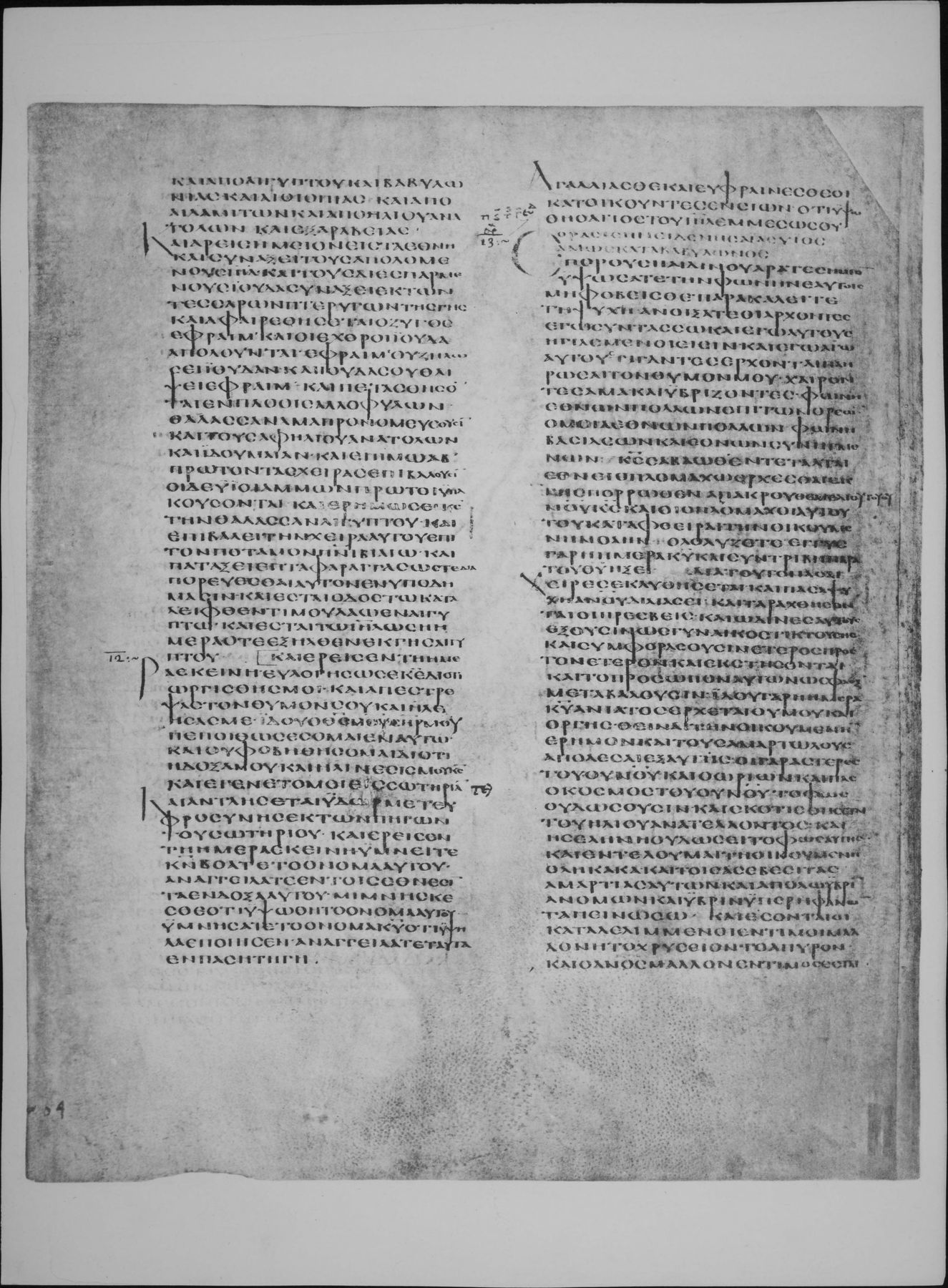
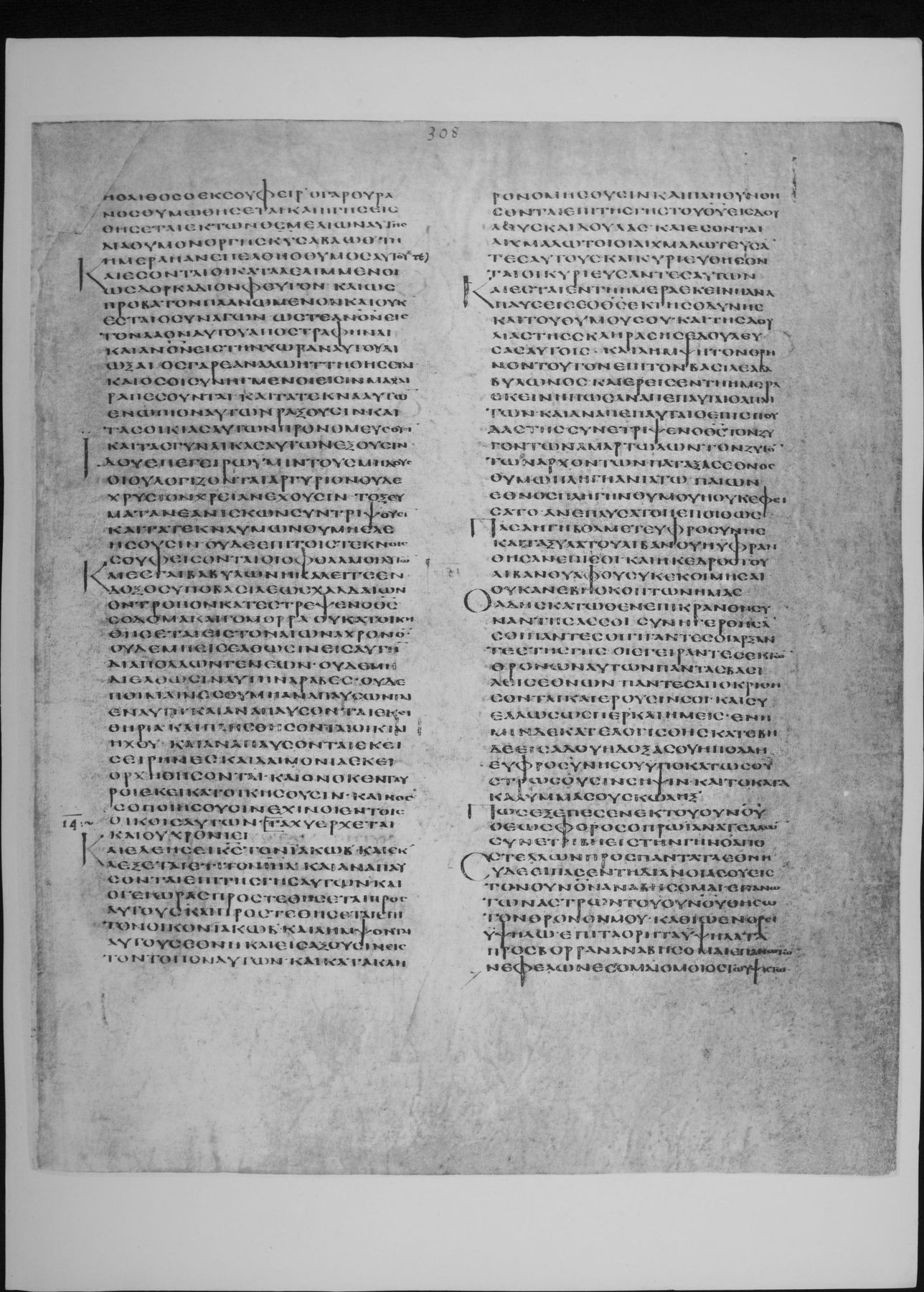
Isaiah 13 in the Greek Old Testament (the Septuagint) as written in Codex Alexandrinus, a Greek Bible copied in the fifth century, probably in Egypt, and now in the British Library (Royal MS 1 D. VI, the second of its four volumes). It is one of the three great early codices of the whole Greek Bible, with Codex Vaticanus and Codex Sinaiticus.
This entry meets the strict three-criteria standard of the Theosis Library:
- Manuscript scan: the pages of Codex Alexandrinus carrying this chapter (fol. 307v, fol. 308r), from the full-size photographic (autotype) facsimile published by the British Museum in 1879-1883, as digitised on the Internet Archive. The verse range of every page comes from the reduced photographic facsimile of 1936, which prints it beneath each plate, and the opening words of every page were read on the plate to confirm the page and the verse it begins with. Each section links to the page or pages that hold its verses. Folio numbers are those written at the head of each leaf and visible on the plates.
- Original text: Swete's edition, which here prints the text of Codex Vaticanus (Vat. gr. 1209), the base of his edition, and gives the readings of Alexandrinus only in his apparatus. The Greek column is therefore Vaticanus' text; where Alexandrinus differs, the plate shows what Alexandrinus reads.
- English translation: Sir Lancelot C. L. Brenton, The Septuagint Version of the Old Testament (1844; 1851 edition), a translation of the Greek, public domain, from the eBible.org text.
How was this verified? (Provenance)
Where on the image
Isaiah 13:1-8 is on fol. 307v (full-size facsimile of 1879-83, Internet Archive codex-alexandrinus leaf 639). The 1936 reduced facsimile prints beneath this page: Is. xi. 11-xiii. 12. Checked on the plate: the page begins inside Isaiah 11:11 (first words read: ΚΑΙ ΒΑΒΥΛΩΝΙΑΣ ΚΑΙ ΑΙΘΙΟΠΙΑΣ ΚΑΙ ΑΠΟ ΑΙΛΑΜΙΤΩΝ ΚΑΙ ΑΠΟ ΗΛΙΟΥ ΑΝΑΤΟΛΩΝ).
1Ὅρασις ἣν εἶδεν Ἠσαίας υἱὸς Ἀμὼς κατὰ Βαβυλῶνος. 2Ἐπ᾽ ὄρους πεδινοῦ ἄρατε σημεῖον, ὑψώσατε τὴν φωνὴν αὐτοῖς, παρακαλεῖτε τῇ χειρί· ἀνοίξατε, οἱ ἄρχοντες. 3ἐγὼ συντάσσω, καὶ ἐγώ, αὐτούς· γίγαντες ἔρχονται πληρῶσαι τὸν θυμόν μου χαίροντες ἅμα καὶ ὑβρίζοντες. 4φωνὴ ἐθνῶν πολλῶν ἐπὶ τῶν ὀρέων, ὁμοία ἐθνῶν πολλῶν, φωνὴ βασιλέων καὶ ἐθνῶν συνηγμένων. Κύριος σαβαὼθ ἐντέταλται ἔθνει ὁπλομάχῳ 5ἔρχεσθαι ἐκ γῆς πόρρωθεν ἀπ᾽ ἄκρου θεμελίου τοῦ οὐρανοῦ, Κύριος καὶ οἱ ὁπλομάχοι αὐτοῦ, καταφθεῖραι πᾶσαν τὴν οἰκουμένην. 6ὀλολύζετε· ἐγγὺς γὰρ ἡμέρα Κυρίου, καὶ συντριβὴ παρὰ τοῦ θεοῦ ἥξει. 7διὰ τοῦτο πᾶσα χεὶρ ἐκλυθήσεται, καὶ πᾶσα ψυχὴ ἀνθρώπου δειλιάσει· 8ταραχθήσονται οἱ πρέσβεις, καὶ ὠδῖνες αὐτοὺς ἕξουσιν ὡς γυναικὸς τικτούσης· καὶ συμφοράσουσιν ἕτερος πρὸς τὸν ἕτερον καὶ ἐκστήσονται, καὶ τὸ πρόσωπον αὐτῶν ὡς φλὸξ μεταβαλοῦσιν.
1The Vision which Esaias son of Amos saw against Babylon. 2Lift up a standard on the mountain of the plain, exalt the voice to them, beckon with the hand, open the gates, ye rulers. 3I give command, and I bring them: giants are coming to fulfil my wrath, rejoicing at the same time and insulting. 4A voice of many nations on the mountains, even like to that of many nations; a voice of kings and nations gathered together: the Lord of hosts has given command to a war-like nation, 5to come from a land afar off, from the utmost foundation of heaven; the Lord and his warriors are coming to destroy all the world. 6Howl ye, for the day of the Lord is near, and destruction from God shall arrive. 7Therefore every hand shall become powerless, and every soul of man shall be dismayed. 8The elders shall be troubled, and pangs shall seize them, as of a woman in travail: and they shall mourn one to another, and shall be amazed, and shall change their countenance as a flame.
Where on the image
Isaiah 13:9-12 is on fol. 307v (full-size facsimile of 1879-83, Internet Archive codex-alexandrinus leaf 639). The 1936 reduced facsimile prints beneath this page: Is. xi. 11-xiii. 12. Checked on the plate: the page begins inside Isaiah 11:11 (first words read: ΚΑΙ ΒΑΒΥΛΩΝΙΑΣ ΚΑΙ ΑΙΘΙΟΠΙΑΣ ΚΑΙ ΑΠΟ ΑΙΛΑΜΙΤΩΝ ΚΑΙ ΑΠΟ ΗΛΙΟΥ ΑΝΑΤΟΛΩΝ). Isaiah 13:12-16 is on fol. 308r (full-size facsimile of 1879-83, Internet Archive codex-alexandrinus leaf 640). The 1936 reduced facsimile prints beneath this page: Is. xiii. 12-xiv. 14. Checked on the plate: the page begins inside Isaiah 13:12 (first words read: ΤΟ ΕΝ ΣΟΥΦΕΙΡ Ο ΓΑΡ ΟΥΡΑΝΟΣ ΘΥΜΩΘΗΣΕΤΑΙ ΚΑΙ Η ΓΗ ΣΕΙΣΘΗΣΕΤΑΙ).
9ἰδοὺ γὰρ ἡμέρα Κυρίου ἔρχεται ἀνίατος θυμοῦ καὶ ὀργῆς, θεῖναι τὴν οἰκουμένην ἔρημον καὶ τοὺς ἁμαρτωλοὺς ἀπολέσαι ἐξ αὐτῆς. 10οἱ γὰρ ἀστέρες τοῦ οὐρανοῦ καὶ ὁ Ὠρείων καὶ πᾶς ὁ κόσμος τοῦ οὐρανοῦ τὸ φῶς οὐ δώσουσιν, καὶ σκοτισθήσεται τοῦ ἡλίου ἀνατέλλοντος, καὶ ἡ σελήνη οὐ δώσει τὸ φῶς αὐτῆς. 11καὶ ἐντελοῦμαι τῇ οἰκουμένῃ ὅλῃ κακά, καὶ τοῖς ἀσεβέσιν τὰς ἁμαρτίας αὐτῶν· καὶ ἀπολῶ ὕβριν ἀνόμων, καὶ ὕβριν ὑπερηφάνων ταπεινώσω. 12καὶ ἔσονται οἱ καταλελιμμένοι ἔντιμοι μᾶλλον ἢ τὸ χρυσίον τὸ ἄπυρον, καὶ ἄνθρωπος μᾶλλον ἔντιμος ἔσται ἢ ὁ λίθος ὁ ἐν Σουφείρ. 13ὁ γὰρ οὐρανὸς θυμωθήσεται, καὶ ἡ γῆ σεισθήσεται ἐκ τῶν θεμελίων αὐτῆς, διὰ θυμὸν ὀργῆς Κυρίου σαβαώθ, τῇ ἡμέρᾳ ᾗ ἂν ἐπέλθῃ ὁ θυμὸς αὐτοῦ. 14καὶ ἔσονται οἱ καταλελιμμένοι ὡς δορκάδιον φεῦγον καὶ ὡς πρόβατον πλανώμενον, καὶ οὐκ ἔσται ὁ συνάγων, ὥστε ἄνθρωπον εἰς τὸν λαὸν αὐτοῦ ἀποστραφῆναι· καὶ ἄνθρωπος εἰς τὴν χώραν ἑαυτοῦ διώξεται. 15ὃς γὰρ ἂν ἁλῷ ἡττηθήσεται, καὶ οἵτινες συνηγμένοι εἰσὶν μαχαίρᾳ πεσοῦνται. 16καὶ τὰ τέκνα αὐτῶν ῥάξουσιν ἐνώπιον αὐτῶν, καὶ τὰς οἰκίας αὐτῶν προνομεύσουσιν, καὶ τὰς γυναῖκας αὐτῶν ἕξουσιν.
9For behold! the day of the Lord is coming which cannot be escaped, a day of wrath and anger, to make the world desolate, and to destroy sinners out of it. 10For the stars of heaven, and Orion, and all the host of heaven, shall not give their light; and it shall be dark at sunrise, and the moon shall not give her light. 11And I will command evils for the whole world, and will visit their sins on the ungodly: and I will destroy the pride of transgressors, and will bring low the pride of the haughty. 12And they that are left shall be more precious than gold tried in the fire; and a man shall be more precious than the stone that is in Suphir. 13For the heaven shall be enraged, and the earth shall be shaken from her foundation, because of the fierce anger of the Lord of hosts, in the day in which his wrath shall come on. 14And they that are left shall be as a fleeing fawn, and as a stray sheep, and there shall be none to gather them: so that a man shall turn back to his people, and a man shall flee to his own land. 15For whosoever shall be taken shall be overcome; and they that are gathered together shall fall by the sword. 16And they shall dash their children before their eyes; and they shall spoil their houses, and shall take their wives.
Where on the image
Isaiah 13:17-22 is on fol. 308r (full-size facsimile of 1879-83, Internet Archive codex-alexandrinus leaf 640). The 1936 reduced facsimile prints beneath this page: Is. xiii. 12-xiv. 14. Checked on the plate: the page begins inside Isaiah 13:12 (first words read: ΤΟ ΕΝ ΣΟΥΦΕΙΡ Ο ΓΑΡ ΟΥΡΑΝΟΣ ΘΥΜΩΘΗΣΕΤΑΙ ΚΑΙ Η ΓΗ ΣΕΙΣΘΗΣΕΤΑΙ).
17ἰδοὺ ἐπεγείρω ὑμῖν τοὺς Μήδους, οἳ οὐ λογίζονται ἀργύριον οὐδὲ χρυσίου χρείαν ἔχουσιν. 18τοξεύματα νεανίσκων συντρίψουσιν, καὶ τὰ τέκνα ὑμῶν οὐ μὴ ἐλεήσωσιν, οὐδὲ ἐπὶ τοῖς τέκνοις σου φείσονται οἱ ὀφθαλμοὶ αὐτῶν. 19καὶ ἔσται Βαβυλών, ἣ καλεῖται ἔνδοξος ἀπὸ βασιλέως Χαλδαίων, ὃν τρόπον κατέστρεψεν ὁ θεὸς Σόδομα καὶ Γόμορρα· 20οὐ κατοικηθήσεται εἰς τὸν αἰῶνα χρόνον, οὐδὲ μὴ εἰσέλθωσιν εἰς αὐτὴν διὰ πολλῶν γενεῶν, οὐδὲ μὴ διέλθωσιν αὐτὴν Ἄραβες, οὐδὲ ποιμένες οὐ μὴ ἀναπαύσονται ἐν αὐτῇ. 21καὶ ἀναπαύσονται ἐκεῖ θηρία, καὶ ἐμπλησθήσονται αἱ οἰκίαι ἤχου; καὶ ἀναπαύσονται ἐκεῖ σειρῆνες, καὶ δαιμόνια ἐκεῖ ὀρχήσονται, 22καὶ ὀνοκένταυροι ἐκεῖ κατοικήσουσιν, καὶ νοσσοποιήσουσιν ἐχῖνοι ἐν τοῖς οἴκοις αὐτῶν. ταχὺ ἔρχεται καὶ οὐ χρονιεῖ.
17Behold, I will stir up against you the Medes, who do not regard silver, neither have they need of gold. 18They shall break the bows of the young men; and they shall have no mercy on your children; nor shall their eyes spare thy children. 19And Babylon, which is called glorious by the king of the Chaldeans, shall be as when God overthrew Sodoma and Gomorrha. 20It shall never be inhabited, neither shall any enter into it for many generations: neither shall the Arabians pass through it; nor shall shepherds at all rest in it. 21But wild beasts shall rest there; and the houses shall be filled with howling; and monsters shall rest there, and devils shall dance there, 22and satyrs shall dwell there; and hedgehogs shall make their nests in their houses. It will come soon, and will not tarry.
Cite
Sources
- Source: Codex Alexandrinus (British Library Royal MS 1 D. VI) via the British Museum photographic facsimiles of 1879-83 and 1936 (Internet Archive) + Swete's Septuagint + Brenton's English (holding institution)
- Critical edition: H. B. Swete, The Old Testament in Greek according to the Septuagint (1909)
← previous · → next · v cycle view · l back to library