Isaiah, Chapter 14 (Codex Alexandrinus)
Introduction
Isaiah 14 in the Greek Old Testament (the Septuagint) as written in Codex Alexandrinus, a Greek Bible copied in the fifth century, probably in Egypt, and now in the British Library (Royal MS 1 D. VI, the second of its four volumes). It is one of the three great early codices of the whole Greek Bible, with Codex Vaticanus and Codex Sinaiticus.
This entry meets the strict three-criteria standard of the Theosis Library:
- Manuscript scan: the pages of Codex Alexandrinus carrying this chapter (fol. 308r, fol. 308v), from the full-size photographic (autotype) facsimile published by the British Museum in 1879-1883, as digitised on the Internet Archive. The verse range of every page comes from the reduced photographic facsimile of 1936, which prints it beneath each plate, and the opening words of every page were read on the plate to confirm the page and the verse it begins with. Each section links to the page or pages that hold its verses. Folio numbers are those written at the head of each leaf and visible on the plates.
- Original text: Swete's edition, which here prints the text of Codex Vaticanus (Vat. gr. 1209), the base of his edition, and gives the readings of Alexandrinus only in his apparatus. The Greek column is therefore Vaticanus' text; where Alexandrinus differs, the plate shows what Alexandrinus reads.
- English translation: Sir Lancelot C. L. Brenton, The Septuagint Version of the Old Testament (1844; 1851 edition), a translation of the Greek, public domain, from the eBible.org text.
How was this verified? (Provenance)
Where on the image
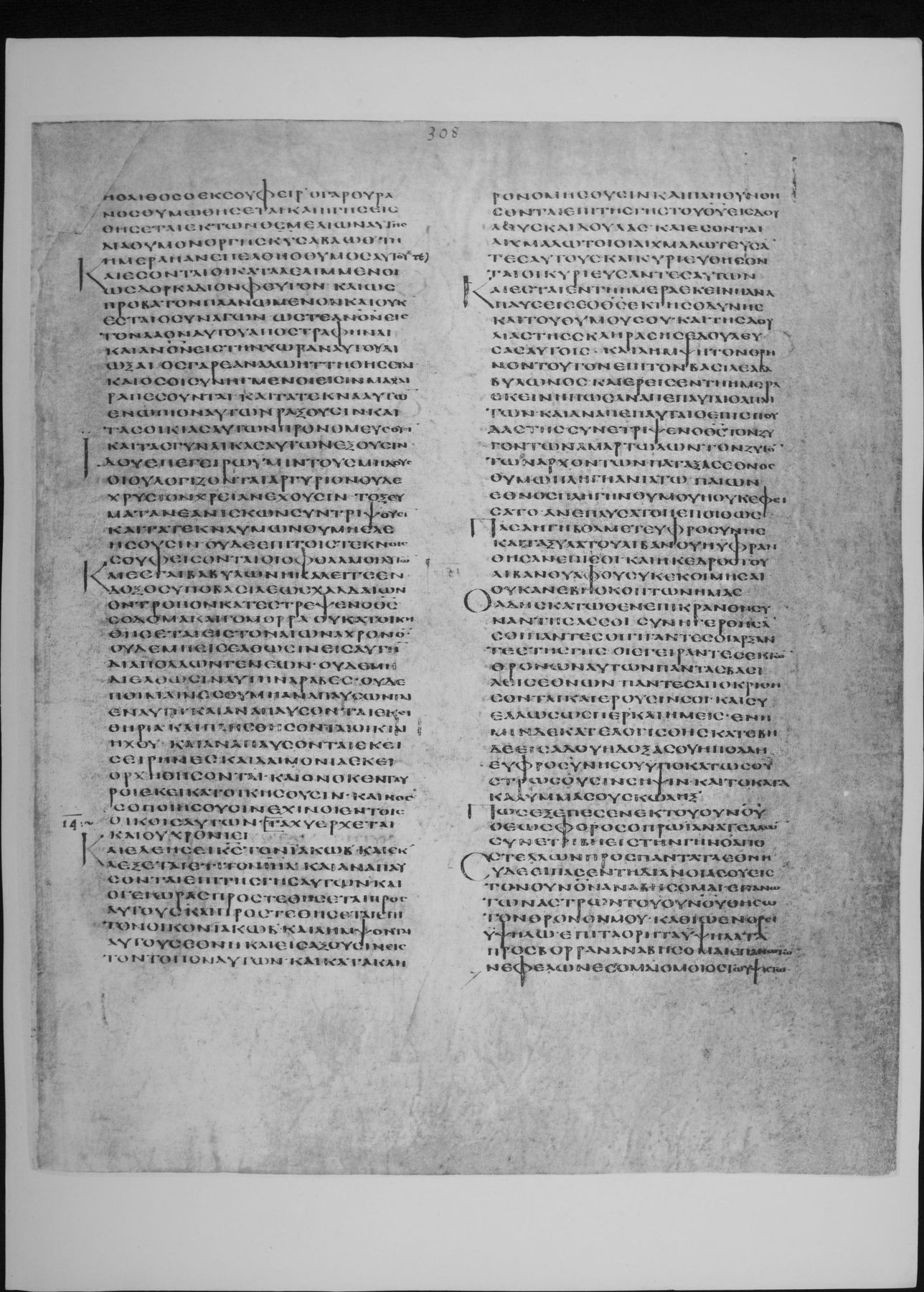
Isaiah 14:1-8 is on fol. 308r (full-size facsimile of 1879-83, Internet Archive codex-alexandrinus leaf 640). The 1936 reduced facsimile prints beneath this page: Is. xiii. 12-xiv. 14. Checked on the plate: the page begins inside Isaiah 13:12 (first words read: ΤΟ ΕΝ ΣΟΥΦΕΙΡ Ο ΓΑΡ ΟΥΡΑΝΟΣ ΘΥΜΩΘΗΣΕΤΑΙ ΚΑΙ Η ΓΗ ΣΕΙΣΘΗΣΕΤΑΙ).
1Καὶ ἐλεήσει Κύριος τὸν Ἰακώβ, καὶ ἐκλέξεται ἔτι τὸν Ἰσραήλ, καὶ ἀναπαύσονται ἐπὶ τῆς γῆς αὐτῶν, καὶ ὁ γιώρας προστεθήσεται πρὸς αὐτούς, καὶ προστεθήσεται πρὸς τὸν οἶκον Ἰακώβ, 2καὶ λήμψονται αὐτοὺς ἔθνη καὶ εἰσάξουσιν εἰς τὸν τόπον αὐτῶν, καὶ κατακληρονομήσουσιν, καὶ πληθυνθήσονται ἐπὶ τῆς γῆς εἰς δούλους καὶ δούλας· καὶ ἔσονται αἰχμάλωτοι οἱ αἰχμαλωτεύσαντες αὐτούς, καὶ κυριευθήσονται οἱ κυριεύσαντες αὐτῶν. 3Καὶ ἔσται τῇ ἡμέρᾳ ἐκείνῃ ἀναπαύσει σε Κύριος ἀπὸ τῆς ὀδύνης καὶ τοῦ θυμοῦ σου τῆς δουλείας σου τῆς σκληρᾶς ἧς ἐδούλευσας αὐτοῖς. 4καὶ λήμψῃ τὸν θρῆνον τοῦτον ἐπὶ τὸν βασιλέα Βαβυλῶνος, καὶ ἐρεῖς Πῶς ἀναπέπαυται ὁ ἀπαιτῶν, καὶ ἀναπέπαυται ὁ ἐπισπουδαστής; 5συνέτριψεν Κύριος τὸν ζυγὸν τῶν ἁμαρτωλῶν, τὸν ζυγὸν τῶν ἀρχόντων· 6πατάξας ἔθνος θυμῷ πληγῇ ἀνιάτῳ, παίων ἔθνος πληγὴν θυμοῦ ἣ οὐκ ἐφείσατο, ἀνεπαύσατο πεποιθώς. 7πᾶσα ἡ γῆ βοᾷ μετ᾽ εὐφροσύνης, 8καὶ τὰ ξύλα τοῦ Λιβάνου εὐφράνθησαν ἐπὶ σοὶ καὶ ἡ κέδρος τοῦ Λιβάνου Ἀφ᾽ οὗ σὺ κεκοίμησαι, οὐκ ἀνέβη ὁ κόπτων ἡμᾶς.
1And the Lord will have mercy on Jacob, and will yet choose Israel, and they shall rest on their land: and the stranger shall be added to them, yea, shall be added to the house of Jacob. 2And the Gentiles shall take them, and bring them into their place: and they shall inherit them, and they shall be multiplied upon the land for servants and handmaidens: and they that took them captives shall become captives to them; and they that had lordship over them shall be under their rule. 3And it shall come to pass in that day, that the Lord shall give thee rest from thy sorrow and vexation, and from thy hard servitude wherein thou didst serve them. 4And thou shalt take up this lamentation against the king of Babylon, 5The Lord has broken the yoke of sinners, the yoke of princes. 6Having smitten a nation in wrath, with an incurable plague, smiting a nation with a wrathful plague, which spared them not, he rested in quiet. 7All the earth cries aloud with joy: 8the trees also of Libanus rejoice against thee, and the cedar of Libanus, saying, From the time that thou hast been laid low, no one has come up to cut us down.
Where on the image
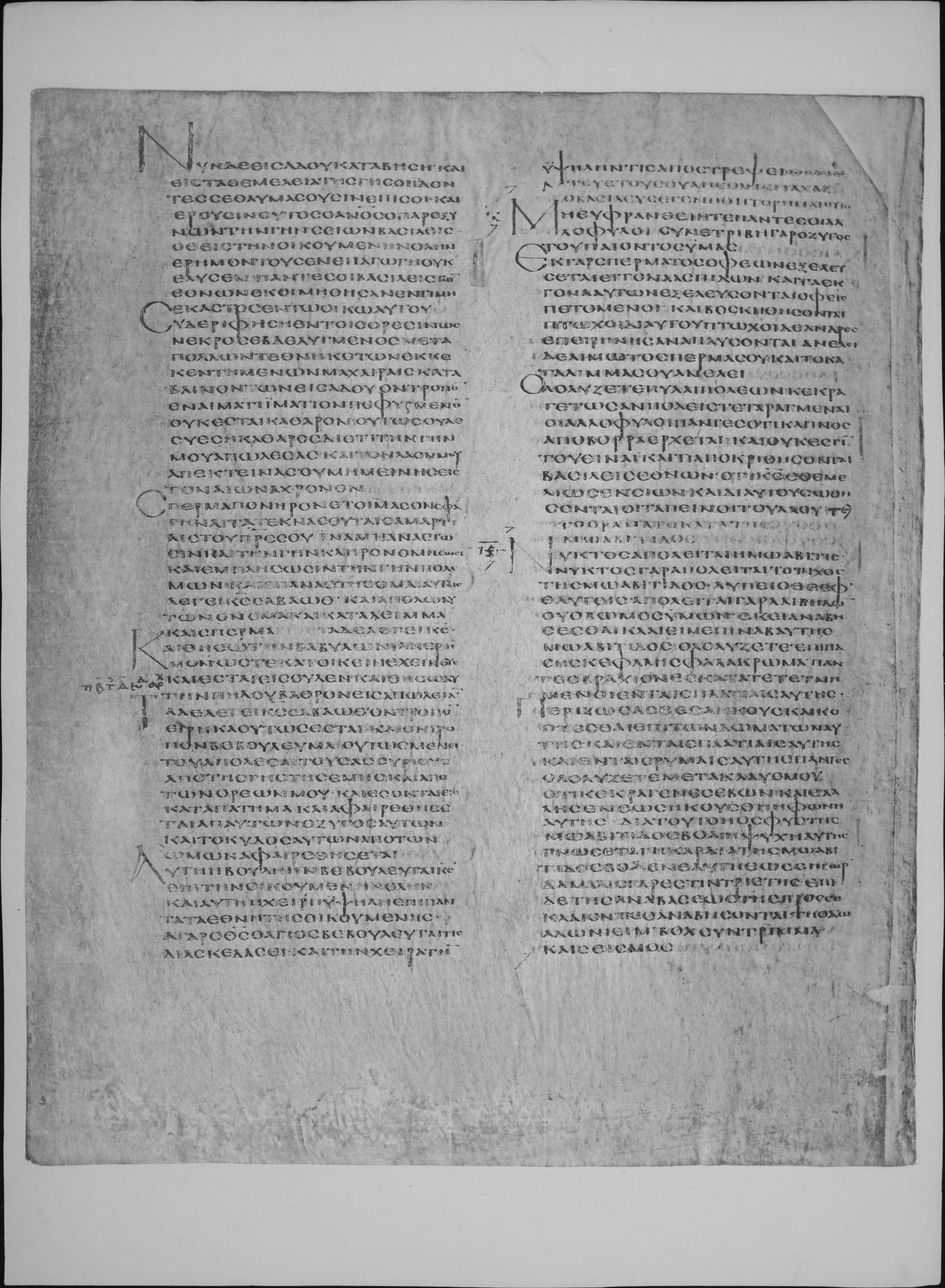
Isaiah 14:9-14 is on fol. 308r (full-size facsimile of 1879-83, Internet Archive codex-alexandrinus leaf 640). The 1936 reduced facsimile prints beneath this page: Is. xiii. 12-xiv. 14. Checked on the plate: the page begins inside Isaiah 13:12 (first words read: ΤΟ ΕΝ ΣΟΥΦΕΙΡ Ο ΓΑΡ ΟΥΡΑΝΟΣ ΘΥΜΩΘΗΣΕΤΑΙ ΚΑΙ Η ΓΗ ΣΕΙΣΘΗΣΕΤΑΙ). Isaiah 14:15-16 is on fol. 308v (full-size facsimile of 1879-83, Internet Archive codex-alexandrinus leaf 641). The 1936 reduced facsimile prints beneath this page: (caption not legible in the scan; range bounded by the captions of leaves 68 and 70). Checked on the plate: the page begins at the start of Isaiah 14:15 (first words read: ΝΥΝ ΔΕ ΕΙΣ ΑΔΟΥ ΚΑΤΑΒΗΣΗ ΚΑΙ ΕΙΣ ΤΑ ΘΕΜΕΛΙΑ ΤΗΣ ΓΗΣ ΟΙ ΙΔΟΝΤΕΣ ΣΕ ΘΑΥΜΑΣΟΥΣΙΝ).
9ὁ ᾅδης κάτωθεν ἐπικράνθη συναντήσας σοι· συνηγέρθησάν σοι πάντες οἱ γίγαντες οἱ ἄρξαντες τῆς γῆς, οἱ ἐγείραντες ἐκ τῶν θρόνων αὐτῶν πάντας βασιλεῖς ἐθνῶν. 10πάντες ἀποκριθήσονται καὶ ἐροῦσίν σοι Καὶ σὺ ἑάλως ὥσπερ καὶ ἡμεῖς, ἐν ἡμῖν δὲ κατελογίσθης. 11κατέβη εἰς ᾅδου ἡ δόξα σου, ἡ πολλὴ εὐφροσύνη σου· ὑποκάτω σου στρώσουσιν σῆψιν, καὶ τὸ κατακάλυμμά σου σκώληξ. 12πῶς ἐξέπεσεν ἐκ τοῦ οὐρανοῦ ὁ ἑωσφόρος ὁ πρωὶ ἀνατέλλων; συνετρίβη εἰς τὴν γῆν ὁ ἀποστέλλων πρὸς πάντα τὰ ἔθνη. 13σὺ δὲ εἶπας τῇ διανοίᾳ σου Εἰς τὸν οὐρανὸν ἀναβήσομαι, ἐπάνω τῶν ἀστέρων τοῦ οὐρανοῦ θήσω τὸν θρόνον μου, καθιῶ ἐν ὄρει ὑψηλῷ ἐπὶ τὰ ὄρη τὰ ὑψηλὰ τὰ πρὸς βορρᾶν, 14ἀναβήσομαι ἐπάνω τῶν νεφῶν, ἔσομαι ὅμοιος τῷ ὑψίστῳ. 15νῦν δὲ εἰς ᾅδην καταβήσῃ καὶ εἰς τὰ θεμέλια τῆς γῆς. 16οἱ ἰδόντες σε θαυμάσονται ἐπὶ σοὶ καὶ ἐροῦσιν Οὗτος ὁ ἄνθρωπος ὁ παροξύνων τὴν γῆν, σείων βασιλεῖς,
9Hell from beneath is provoked to meet thee: all the great ones that have ruled over the earth have risen up together against thee, they that have raised up from their thrones all the kings of the nations. 10All shall answer and say to thee, Thou also hast been taken, even as we; and thou art numbered amongst us. 11Thy glory has come down to Hades, and thy great mirth: under thee they shall spread corruption, and the worm shall be thy covering. 12How has Lucifer, that rose in the morning, fallen from heaven! He that sent orders to all the nations is crushed to the earth. 13But thou saidst in thine heart, I will go up to heaven, I will set my throne above the stars of heaven: I will sit on a lofty mount, on the lofty mountains toward the north: 14I will go up above the clouds; I will be like the Most High. 15But now thou shalt go down to hell, even to the foundations of the earth. 16They that see thee shall wonder at thee, and say, This is the man that troubled the earth, that made kings to shake;
Where on the image
Isaiah 14:17-24 is on fol. 308v (full-size facsimile of 1879-83, Internet Archive codex-alexandrinus leaf 641). The 1936 reduced facsimile prints beneath this page: (caption not legible in the scan; range bounded by the captions of leaves 68 and 70). Checked on the plate: the page begins at the start of Isaiah 14:15 (first words read: ΝΥΝ ΔΕ ΕΙΣ ΑΔΟΥ ΚΑΤΑΒΗΣΗ ΚΑΙ ΕΙΣ ΤΑ ΘΕΜΕΛΙΑ ΤΗΣ ΓΗΣ ΟΙ ΙΔΟΝΤΕΣ ΣΕ ΘΑΥΜΑΣΟΥΣΙΝ).
17ὁ θεὶς τὴν οἰκουμένην ὅλην ἔρημον, καὶ τὰς πόλεις αὐτοῦ καθεῖλεν, τοὺς ἐν ἐπαγωγῇ οὐκ ἔλυσεν. 18πάντες οἱ βασιλεῖς τῶν ἐθνῶν ἐκοιμήθησαν ἐν τιμῇ, ἄνθρωπος ἐν τῷ οἴκῳ αὐτοῦ· 19σὺ δὲ ῥιφήσῃ ἐν τοῖς ὄρεσιν, ὡς νεκρὸς ἐβδελυγμένος, μετὰ πολλῶν τεθνηκότων ἐκκεκεντημένων μαχαίραις καταβαινόντων εἰς ᾅδου. ὃν τρόπον ἱμάτιον ἐν αἵματι πεφυρμένον οὐκ ἔσται καθαρόν, 20οὕτως οὐδὲ σὺ ἔσῃ καθαρός, διότι τὴν γῆν μου ἀπώλεσας καὶ τὸν λαόν μου ἀπέκτεινας· οὐ μὴ μείνῃς εἰς τὸν αἰῶνα χρόνον, σπέρμα πονηρόν. 21ἑτοίμασον τὰ τέκνα σου σφαγῆναι ταῖς ἁμαρτίαις τοῦ πατρὸς αὐτῶν, ἵνα μὴ ἀναστῶσιν καὶ τὴν γῆν κληρονομήσωσιν καὶ ἐμπλήσωσι τὴν γῆν πολέμων. 22καὶ ἐπαναστήσομαι αὐτοῖς, λέγει Κύριος σαβαώθ, καὶ ἀπολῶ αὐτῶν ὄνομα καὶ κατάλιμμα καὶ σπέρμα· τάδε λέγει Κύριος. 23καὶ θήσω τὴν Βαβυλωνίαν ἔρημον ὥστε κατοικεῖν ἐχίνους, καὶ ἔσται εἰς οὐδέν· καὶ θήσω αὐτὴν πηλοῦ βάραθρον εἰς ἀπώλειαν. 24Τάδε λέγει Κύριος σαβαώθ Ὃν τρόπον εἴρηκα οὕτως ἔσται, καὶ ὃν τρόπον βεβούλευμαι οὕτως μενεῖ,
17that made the whole world desolate, and destroyed its cities; he loosed not those who were in captivity. 18All the kings of the nations lie in honour, every man in his house. 19But thou shalt be cast forth on the mountains, as a loathed carcase, with many dead who have been pierced with swords, going down to the grave. 20As a garment defiled with blood shall not be pure, so neither shalt thou be pure; because thou hast destroyed my land, and hast slain my people: thou shalt not endure for ever,— thou an evil seed. 21Prepare thy children to be slain for the sins of their father; that they arise not, and inherit the earth, nor fill the earth with wars. 22And I will rise up against them, saith the Lord of hosts, and I will destroy their name, and remnant, and seed: thus saith the Lord. 23And I will make the region of Babylon desert, so that hedgehogs shall dwell there, and it shall come to nothing: and I will make it a pit of clay for destruction. 24Thus saith the Lord of hosts, As I have said, so it shall be: and as I have purposed, so the matter shall remain:
Where on the image
Isaiah 14:25-32 is on fol. 308v (full-size facsimile of 1879-83, Internet Archive codex-alexandrinus leaf 641). The 1936 reduced facsimile prints beneath this page: (caption not legible in the scan; range bounded by the captions of leaves 68 and 70). Checked on the plate: the page begins at the start of Isaiah 14:15 (first words read: ΝΥΝ ΔΕ ΕΙΣ ΑΔΟΥ ΚΑΤΑΒΗΣΗ ΚΑΙ ΕΙΣ ΤΑ ΘΕΜΕΛΙΑ ΤΗΣ ΓΗΣ ΟΙ ΙΔΟΝΤΕΣ ΣΕ ΘΑΥΜΑΣΟΥΣΙΝ).
25τοῦ ἀπολέσαι τοὺς Ἀσσυρίους ἐπὶ τῆς γῆς τῆς ἐμῆς καὶ ἐπὶ τῶν ὀρέων μου· καὶ ἔσονται εἰς καταπάτημα, καὶ ἀφαιρεθήσεται ἀπ᾽ αὐτῶν ὁ ζυγὸς αὐτῶν, καὶ τὸ κῦδος αὐτῶν ἀπὸ τῶν ὤμων ἀφαιρεθήσεται. 26αὕτη ἡ βουλὴ ἣν βεβούλευται Κύριος ἐπὶ τὴν οἰκουμένην ὅλην, καὶ αὕτη ἡ χεὶρ ἡ ὑψηλὴ ἐπὶ πάντα τὰ ἔθνη. 27ἃ γὰρ ὁ θεὸς ὁ ἅγιος βεβούλευται, τίς διασκεδάσει; καὶ τὴν χεῖρα αὐτοῦ τὴν ὑψηλὴν τίς ἀποστρέψει; 28Τοῦ ἔτους οὗ ἀπέθανεν ὁ βασιλεὺς Ἀχὰζ ἐγενήθη τὸ ῥῆμα τοῦτο. 29Μὴ εὐφρανθείητε, πάντες οἱ ἀλλόφυλοι, συνετρίβη γὰρ ὁ ζυγὸς τοῦ παίοντος ὑμᾶς· ἐκ γὰρ σπέρματος ὄφεως ἐξελεύσεται ἔκγονα ἀσπίδων, καὶ τὰ ἔκγονα αὐτῶν ἐξελεύσονται ὄφεις πετάμενοι. 30καὶ βοσκηθήσονται πτωχοὶ δι᾽ αὐτοῦ· πτωχοὶ δὲ ἄνθρωποι ἐπὶ εἰρήνης ἀναπαύσονται· ἀνελεῖ δὲ λιμῷ τὸ σπέρμα σου, καὶ τὸ κατάλειμμά σου ἀνελεῖ. 31ὀλολύξατε, πύλαι πόλεων, κεκραγέτωσαν πόλεις τεταραγμέναι, οἱ ἀλλόφυλοι πάντες, ὅτι ἀπὸ βορρᾶ καπνὸς ἔρχεται, καὶ οὐκ ἔστιν τοῦ εἶναι. 32καὶ τί ἀποκριθήσονται βασιλεῖς ἐθνῶν; ὅτι Κύριος ἐθεμελίωσεν Σειών, καὶ δι᾽ αὐτοῦ σωθήσονται οἱ ταπεινοὶ τοῦ λαοῦ.
25even to destroy the Assyrians upon my land, and upon my mountains: and they shall be for trampling; and their yoke shall be taken away from them, and their glory shall be taken away from their shoulders. 26This is the purpose which the Lord has purposed upon the whole earth: and this the hand that is uplifted against all the nations. 27For what the Holy God has purposed, who shall frustrate? and who shall turn back his uplifted hand? 28In the year in which king Achaz died this word came. 29Rejoice not, all ye Philistines, because the yoke of him that smote you is broken: for out of the seed of the serpent shall come forth the young of asps, and their young shall come forth flying serpents. 30And the poor shall be fed by him, and poor men shall rest in peace: but he shall destroy thy seed with hunger, and shall destroy thy remnant. 31Howl, ye gates of cities; let the cities be troubled and cry, even all the Philistines: for smoke is coming from the north, and there is no possibility of living. 32And what shall the kings of the nations answer? That the Lord has founded Sion, and by him the poor of the people shall be saved.
Cite
Sources
- Source: Codex Alexandrinus (British Library Royal MS 1 D. VI) via the British Museum photographic facsimiles of 1879-83 and 1936 (Internet Archive) + Swete's Septuagint + Brenton's English (holding institution)
- Critical edition: H. B. Swete, The Old Testament in Greek according to the Septuagint (1909)
← previous · → next · v cycle view · l back to library