Isaiah, Chapter 2 (Codex Alexandrinus)
Introduction
Isaiah 2 in the Greek Old Testament (the Septuagint) as written in Codex Alexandrinus, a Greek Bible copied in the fifth century, probably in Egypt, and now in the British Library (Royal MS 1 D. VI, the second of its four volumes). It is one of the three great early codices of the whole Greek Bible, with Codex Vaticanus and Codex Sinaiticus.
This entry meets the strict three-criteria standard of the Theosis Library:
- Manuscript scan: the pages of Codex Alexandrinus carrying this chapter (fol. 302v, fol. 303r), from the full-size photographic (autotype) facsimile published by the British Museum in 1879-1883, as digitised on the Internet Archive. The verse range of every page comes from the reduced photographic facsimile of 1936, which prints it beneath each plate, and the opening words of every page were read on the plate to confirm the page and the verse it begins with. Each section links to the page or pages that hold its verses. Folio numbers are those written at the head of each leaf and visible on the plates.
- Original text: Swete's edition, which here prints the text of Codex Vaticanus (Vat. gr. 1209), the base of his edition, and gives the readings of Alexandrinus only in his apparatus. The Greek column is therefore Vaticanus' text; where Alexandrinus differs, the plate shows what Alexandrinus reads.
- English translation: Sir Lancelot C. L. Brenton, The Septuagint Version of the Old Testament (1844; 1851 edition), a translation of the Greek, public domain, from the eBible.org text.
How was this verified? (Provenance)
Where on the image
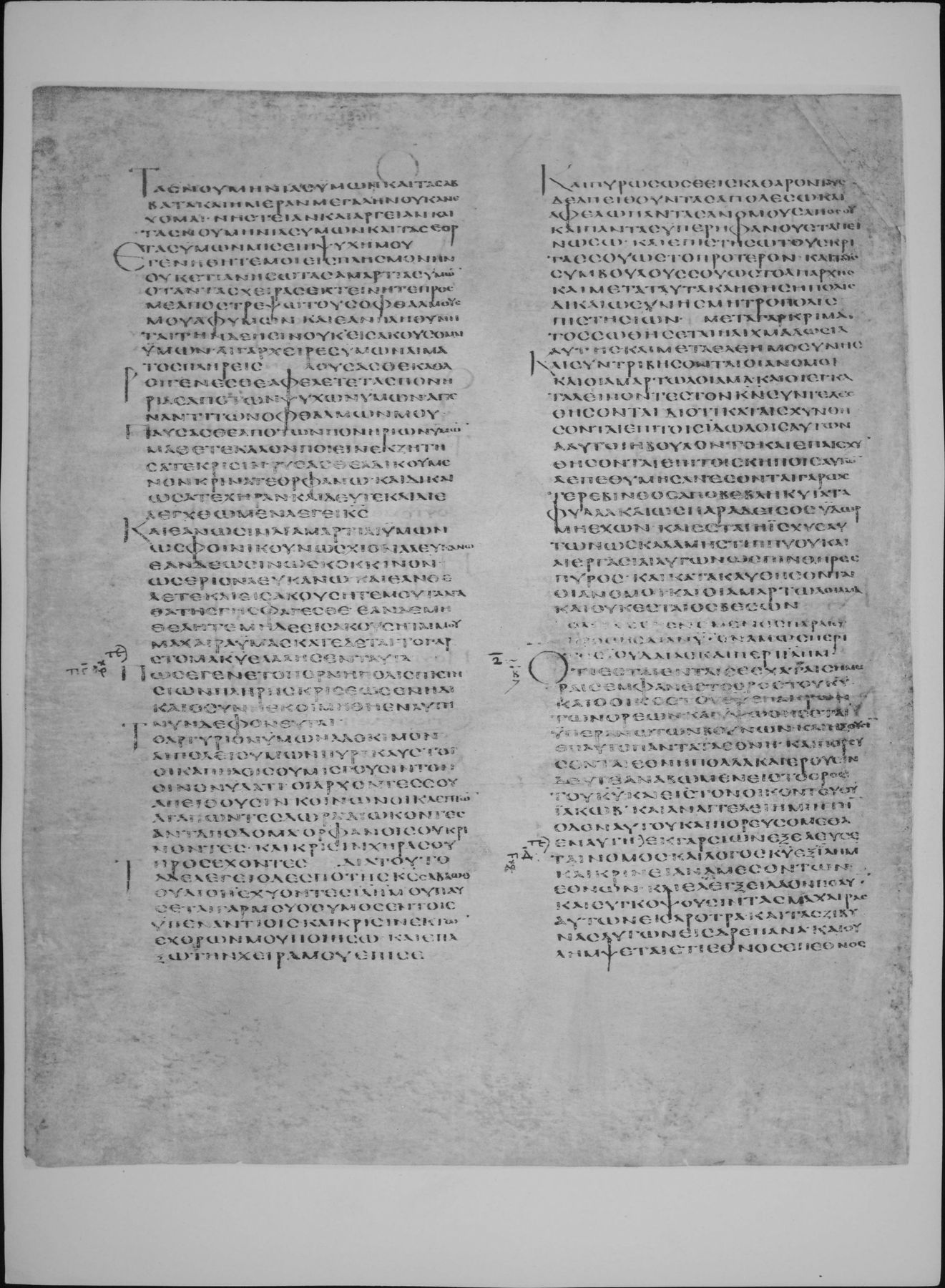
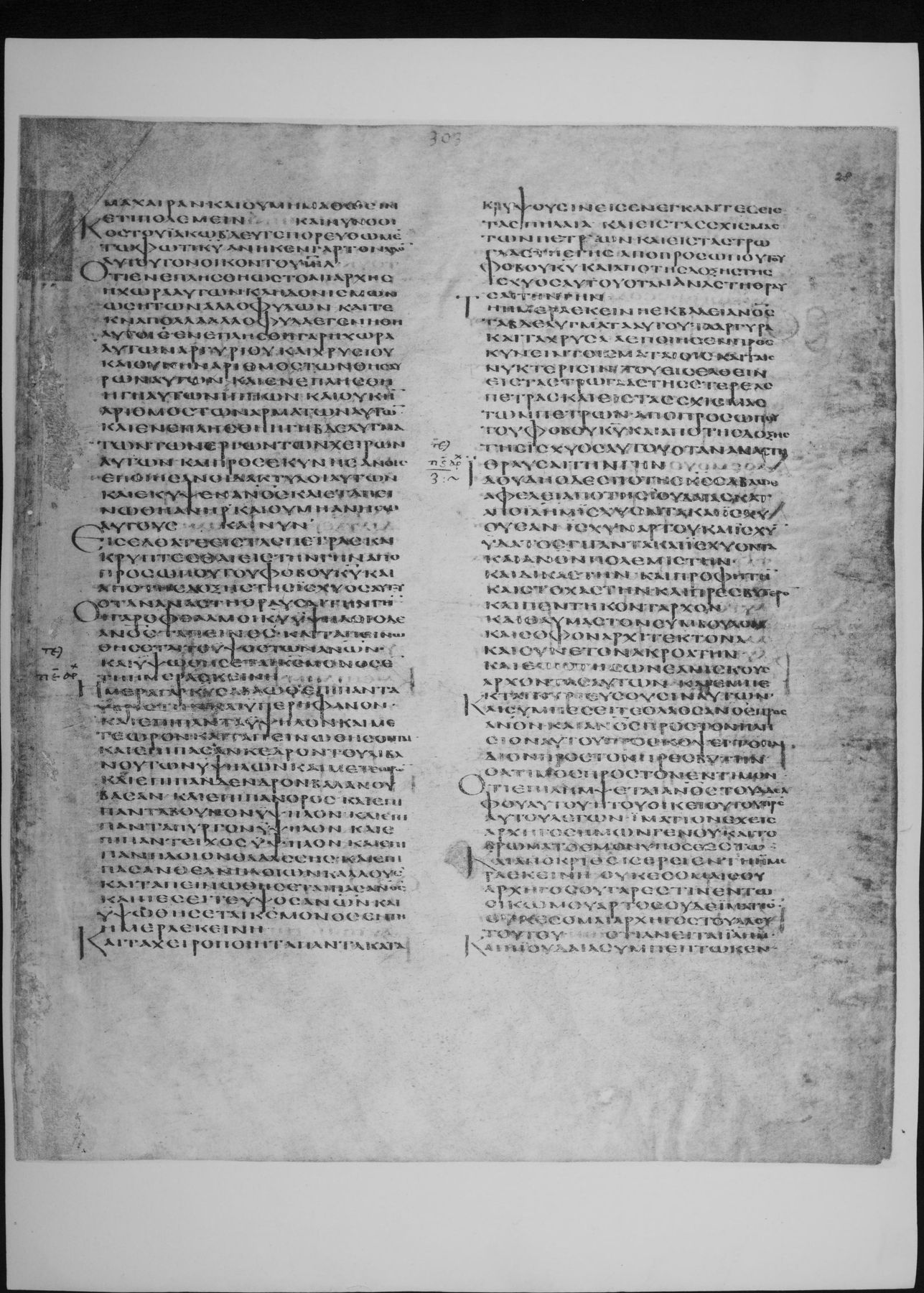
Isaiah 2:1-4 is on fol. 302v (full-size facsimile of 1879-83, Internet Archive codex-alexandrinus leaf 629). The 1936 reduced facsimile prints beneath this page: (caption not legible in the scan; range bounded by the captions of leaves 56 and 58). Checked on the plate: the page begins inside Isaiah 1:13 (first words read: ΤΑΣ ΝΟΥΜΗΝΙΑΣ ΥΜΩΝ ΚΑΙ ΤΑ ΣΑΒΒΑΤΑ ΚΑΙ ΗΜΕΡΑΝ ΜΕΓΑΛΗΝ ΟΥΚ ΑΝΕΧΟΜΑΙ ΝΗΣΤΕΙΑΝ ΚΑΙ ΑΡΓΙΑΝ). Isaiah 2:4-8 is on fol. 303r (full-size facsimile of 1879-83, Internet Archive codex-alexandrinus leaf 630). The 1936 reduced facsimile prints beneath this page: Is. ii. 4-iii. 8. Checked on the plate: the page begins inside Isaiah 2:4 (first words read: ΜΑΧΑΙΡΑΝ ΚΑΙ ΟΥ ΜΗ ΜΑΘΩΣΙΝ ΕΤΙ ΠΟΛΕΜΕΙΝ ΚΑΙ ΝΥΝ Ο ΟΙΚΟΣ ΙΑΚΩΒ ΔΕΥΤΕ ΠΟΡΕΥΘΩΜΕΝ).
1Ὁ λόγος ὁ γενόμενος πρὸς Ἠσαίαν υἱὸν Ἀμὼς περὶ τῆς Ἰουδαίας καὶ περὶ Ἰερουσαλήμ. 2Ὅτι ἔσται ἐν ταῖς ἐσχάταις ἡμέραις ἐμφανὲς τὸ ὄρος Κυρίου, καὶ ὁ οἶκος τοῦ θεοῦ ἐπ᾽ ἄκρου τῶν ὀρέων, καὶ ὑψωθήσεται ὑπεράνω τῶν βουνῶν, καὶ ἥξουσιν ἐπ᾽ αὐτὸ πάντα τὰ ἔθνη. 3καὶ πορεύσονται ἔθνη πολλὰ καὶ ἐροῦσιν Δεῦτε καὶ ἀναβῶμεν εἰς τὸ ὄρος Κυρίου καὶ εἰς τὸν οἶκον τοῦ θεοῦ Ἰακώβ, καὶ ἀναγγελεῖ ἡμῖν τὴν ὁδὸν αὐτοῦ, καὶ πορευσόμεθα ἐν αὐτῇ. ἐκ γὰρ Σειὼν ἐξελεύσεται νόμος, καὶ λόγος Κυρίου ἐξ Ἰερουσαλήμ· 4καὶ κρινεῖ ἀνὰ μέσον τῶν ἐθνῶν, καὶ ἐξελέγξει λαὸν πολύν· καὶ συγκόψουσιν τὰς μαχαίρας αὐτῶν εἰς ἄροτρα καὶ τὰς ζιβύνας αὐτῶν εἰς δρέπανα, καὶ οὐ λήμψεται ἔθνος ἐπ᾽ ἔθνος μάχαιραν, καὶ οὐ μὴ μάθωσιν ἔτι πολεμεῖν. 5Καὶ νῦν, ὁ οἶκος Ἰακώβ, δεῦτε πορευθῶμεν τῷ φωτὶ Κυρίου. 6ἀνῆκεν γὰρ τὸν λαὸν αὐτοῦ τὸν οἶκον τοῦ Ἰσραήλ· ὅτι ἐνεπλήσθη ὡς τὸ ἀπ᾽ ἀρχῆς ἡ χώρα αὐτῶν κληδονισμῶν, ὡς ἡ τῶν ἀλλοφύλων, καὶ τέκνα πολλὰ ἀλλόφυλα ἐγενήθη αὐτοῖς. 7ἐνεπλήσθη γὰρ ἡ χώρα αὐτῶν ἀργυρίου καὶ χρυσίου, καὶ οὐκ ἦν ἀριθμὸς τῶν θησαυρῶν αὐτῶν· καὶ ἐνεπλήσθη ἡ γῆ ἵππων, καὶ οὐκ ἦν ἀριθμὸς τῶν ἁρμάτων αὐτῶν· 8καὶ ἐνεπλήσθη ἡ γῆ βδελυγμάτων τῶν ἔργων τῶν χειρῶν αὐτῶν, καὶ προσεκύνησαν ἃ ἐποίησαν οἱ δάκτυλοι αὐτῶν·
1The word which came to Esaias the son of Amos concerning Judea, and concerning Jerusalem. 2For in the last days the mountain of the Lord shall be glorious, and the house of God shall be on the top of the mountains, and it shall be exalted above the hills; and all nations shall come to it. 3And many nations shall go and say, Come, and let us go up to the mountain of the Lord, and to the house of the God of Jacob; and he will tell us his way, and we will walk in it: for out of Sion shall go forth the law, and the word of the Lord out of Jerusalem. 4And he shall judge among the nations, and shall rebuke many people: and they shall beat their swords into plough-shares, and their spears into sickles: and nation shall not take up sword against nation, neither shall they learn to war any more. 5And now, O house of Jacob, come, and let us walk in the light of the Lord. 6For he has forsaken his people the house of Israel, because their land is filled as at the beginning with divinations, as the land of the Philistines, and many strange children were born to them. 7For their land is filled with silver and gold, and there was no number of their treasures; their land also is filled with horses, and there was no number of their chariots. 8And the land is filled with abominations, even the works of their hands; and they have worshipped the works which their fingers made.
Where on the image
Isaiah 2:9-16 is on fol. 303r (full-size facsimile of 1879-83, Internet Archive codex-alexandrinus leaf 630). The 1936 reduced facsimile prints beneath this page: Is. ii. 4-iii. 8. Checked on the plate: the page begins inside Isaiah 2:4 (first words read: ΜΑΧΑΙΡΑΝ ΚΑΙ ΟΥ ΜΗ ΜΑΘΩΣΙΝ ΕΤΙ ΠΟΛΕΜΕΙΝ ΚΑΙ ΝΥΝ Ο ΟΙΚΟΣ ΙΑΚΩΒ ΔΕΥΤΕ ΠΟΡΕΥΘΩΜΕΝ).
9καὶ ἔκυψεν ἄνθρωπος καὶ ἐταπεινώθη ἀνήρ, καὶ οὐ μὴ ἀνήσω αὐτούς. 10καὶ νῦν εἰσέλθετε εἰς τὰς πέτρας καὶ κρύπτεσθε εἰς τὴν γῆν ἀπὸ προσώπου τοῦ φόβου Κυρίου καὶ ἀπὸ τῆς δόξης τῆς ἰσχύος αὐτοῦ, ὅταν ἀναστῇ θραῦσαι τὴν γῆν. 11οἱ γὰρ ὀφθαλμοὶ Κυρίου ὑψηλοί, ὁ δὲ ἄνθρωπος ταπεινός· καὶ ταπεινωθήσεται τὸ ὕψος τῶν ἀνθρώπων, καὶ ὑψωθήσεται Κύριος μόνος ἐν τῇ ἡμέρᾳ ἐκείνῃ. 12ἡμέρα γὰρ Κυρίου σαβαὼθ ἐπὶ πάντα ὑβριστὴν καὶ ὑπερήφανον καὶ ἐπὶ πάντα ὑψηλὸν καὶ μετέωρον, καὶ ταπεινωθήσονται, 13καὶ ἐπὶ πᾶσαν κέδρον τοῦ Λιβάνου τῶν ὑψηλῶν καὶ μετεώρων, καὶ ἐπὶ πᾶν δένδρον βαλάνου Βασάν, 14καὶ ἐπὶ πᾶν ὄρος, καὶ ἐπὶ πάντα βουνὸν ὑψηλόν, 15καὶ ἐπὶ πάντα πύργον ὑψηλόν, καὶ ἐπὶ πᾶν τεῖχος ὑψηλόν, 16καὶ ἐπὶ πᾶν πλοῖον θαλάσσης, καὶ ἐπὶ πᾶσαν θέαν πλοίων κάλλους·
9And the mean man bowed down, and the great man was humbled: and I will not pardon them. 10Now therefore enter ye into the rocks, and hide yourselves in the earth, for fear of the Lord, and by reason of the glory of his might, when he shall arise to strike terribly the earth. 11For the eyes of the Lord are high, but man is low; and the haughtiness of men shall be brought low, and the Lord alone shall be exalted in that day. 12For the day of the Lord of hosts shall be upon every one that is proud and haughty, and upon every one that is high and towering, and they shall be brought down; 13and upon every cedar of Libanus, of them that are high and towering, and upon every oak of Basan, 14and upon every high mountain, and upon every high hill, 15and upon every high tower, and upon every high wall, 16and upon every ship of the sea, and upon every display of fine ships.
Where on the image
Isaiah 2:17-21 is on fol. 303r (full-size facsimile of 1879-83, Internet Archive codex-alexandrinus leaf 630). The 1936 reduced facsimile prints beneath this page: Is. ii. 4-iii. 8. Checked on the plate: the page begins inside Isaiah 2:4 (first words read: ΜΑΧΑΙΡΑΝ ΚΑΙ ΟΥ ΜΗ ΜΑΘΩΣΙΝ ΕΤΙ ΠΟΛΕΜΕΙΝ ΚΑΙ ΝΥΝ Ο ΟΙΚΟΣ ΙΑΚΩΒ ΔΕΥΤΕ ΠΟΡΕΥΘΩΜΕΝ).
17καὶ ταπεινωθήσεται πᾶς ἄνθρωπος, καὶ πεσεῖται ὕβρις ἀνθρώπων, καὶ ὑψωθήσεται Κύριος μόνος ἐν τῇ ἡμέρᾳ ἐκείνῃ. 18καὶ τὰ χειροποίητα πάντα κατακρύψουσιν, 19εἰσενέγκαντες εἰς τὰ σπήλαια καὶ εἰς τὰς σχισμὰς τῶν πετρῶν καὶ εἰς τὰς τρώγλας τῆς γῆς, ἀπὸ προσώπου τοῦ φόβου Κυρίου καὶ ἀπὸ τῆς δόξης τῆς ἰσχύος αὐτοῦ, ὅταν ἀναστῇ θραῦσαι τὴν γῆν. 20τῇ γὰρ ἡμέρᾳ ἐκείνῃ ἐκβαλεῖ ἄνθρωπος τὰ βδελύγματα αὐτοῦ τὰ ἀργυρᾶ καὶ τὰ χρυσᾶ, ἃ ἐποίησαν προσκυνεῖν, τοῖς ματαίοις καὶ ταῖς νυκτερίσιν, 21τοῦ εἰσελθεῖν εἰς τὰς τρώγλας τῆς στερεᾶς πέτρας καὶ εἰς τὰς σχισμὰς τῶν πετρῶν, ἀπὸ προσώπου τοῦ φόβου Κυρίου καὶ ἀπὸ τῆς δόξης τῆς ἰσχύος αὐτοῦ, ὅταν ἀναστῇ θραῦσαι τὴν γῆν.
17And every man shall be brought low, and the pride of men shall fall: and the Lord alone shall be exalted in that day. 18And they shall hide all idols made with hands, 19having carried them into the caves, and into the clefts of the rocks, and into the caverns of the earth, for fear of the Lord, and by reason of the glory of his might, when he shall arise to strike terribly the earth. 20For in that day a man shall cast forth his silver and gold abominations, which they made in order to worship vanities and bats; 21to enter into the caverns of the solid rock, and into the clefts of the rocks, for fear of the Lord, and by reason of the glory of his might, when he shall arise to strike terribly the earth.
Cite
Sources
- Source: Codex Alexandrinus (British Library Royal MS 1 D. VI) via the British Museum photographic facsimiles of 1879-83 and 1936 (Internet Archive) + Swete's Septuagint + Brenton's English (holding institution)
- Critical edition: H. B. Swete, The Old Testament in Greek according to the Septuagint (1909)
← previous · → next · v cycle view · l back to library