Isaiah, Chapter 3 (Codex Alexandrinus)
Introduction
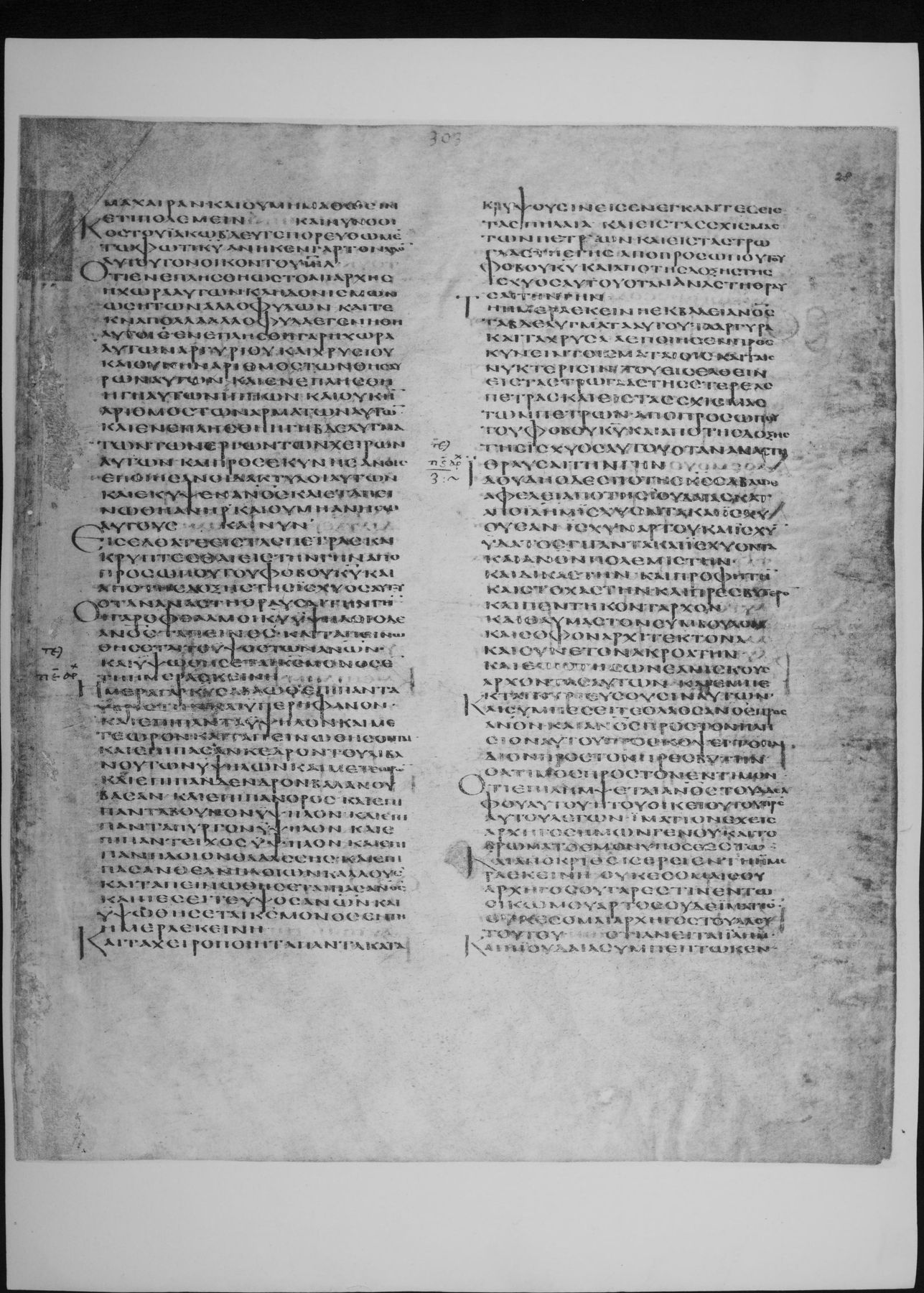
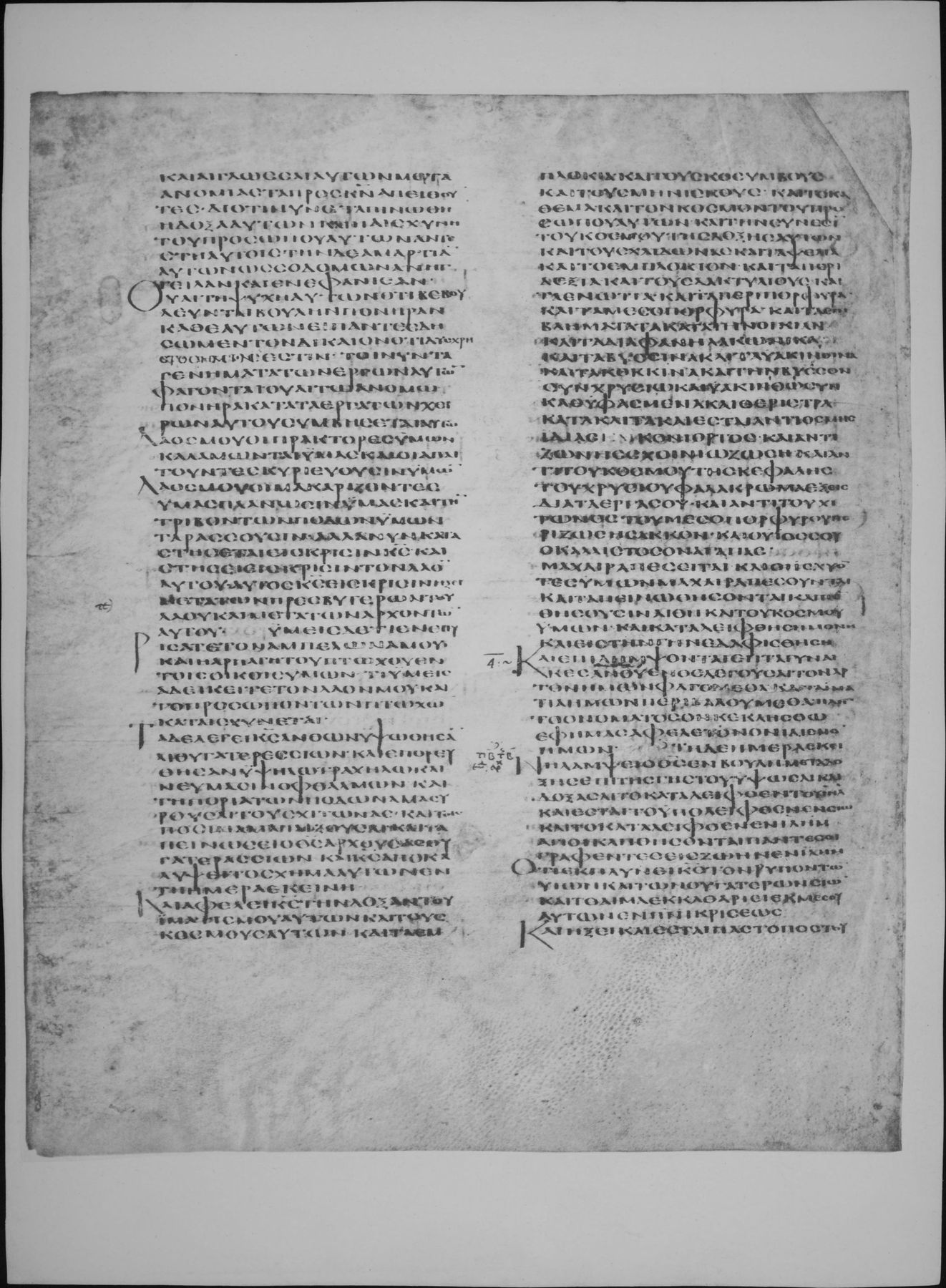
Isaiah 3 in the Greek Old Testament (the Septuagint) as written in Codex Alexandrinus, a Greek Bible copied in the fifth century, probably in Egypt, and now in the British Library (Royal MS 1 D. VI, the second of its four volumes). It is one of the three great early codices of the whole Greek Bible, with Codex Vaticanus and Codex Sinaiticus.
This entry meets the strict three-criteria standard of the Theosis Library:
- Manuscript scan: the pages of Codex Alexandrinus carrying this chapter (fol. 303r, fol. 303v), from the full-size photographic (autotype) facsimile published by the British Museum in 1879-1883, as digitised on the Internet Archive. The verse range of every page comes from the reduced photographic facsimile of 1936, which prints it beneath each plate, and the opening words of every page were read on the plate to confirm the page and the verse it begins with. Each section links to the page or pages that hold its verses. Folio numbers are those written at the head of each leaf and visible on the plates.
- Original text: Swete's edition, which here prints the text of Codex Vaticanus (Vat. gr. 1209), the base of his edition, and gives the readings of Alexandrinus only in his apparatus. The Greek column is therefore Vaticanus' text; where Alexandrinus differs, the plate shows what Alexandrinus reads.
- English translation: Sir Lancelot C. L. Brenton, The Septuagint Version of the Old Testament (1844; 1851 edition), a translation of the Greek, public domain, from the eBible.org text.
How was this verified? (Provenance)
Where on the image
Isaiah 3:1-8 is on fol. 303r (full-size facsimile of 1879-83, Internet Archive codex-alexandrinus leaf 630). The 1936 reduced facsimile prints beneath this page: Is. ii. 4-iii. 8. Checked on the plate: the page begins inside Isaiah 2:4 (first words read: ΜΑΧΑΙΡΑΝ ΚΑΙ ΟΥ ΜΗ ΜΑΘΩΣΙΝ ΕΤΙ ΠΟΛΕΜΕΙΝ ΚΑΙ ΝΥΝ Ο ΟΙΚΟΣ ΙΑΚΩΒ ΔΕΥΤΕ ΠΟΡΕΥΘΩΜΕΝ). Isaiah 3:8 is on fol. 303v (full-size facsimile of 1879-83, Internet Archive codex-alexandrinus leaf 631). The 1936 reduced facsimile prints beneath this page: Is. iii. 8-iv. 5. Checked on the plate: the page begins inside Isaiah 3:8 (first words read: ΚΑΙ Η ΓΛΩΣΣΑ ΑΥΤΩΝ ΜΕΤΑ ΑΝΟΜΙΑΣ ΤΑ ΠΡΟΣ ΚΝ ΑΠΕΙΘΟΥΝΤΕΣ ΔΙΟΤΙ ΝΥΝ ΕΤΑΠΕΙΝΩΘΗ Η ΔΟΞΑ ΑΥΤΩΝ).
1Ἰδοὺ δὴ ὁ δεσπότης Κύριος σαβαὼθ ἀφελεῖ ἀπὸ Ἰερουσαλὴμ καὶ ἀπὸ τῆς Ἰουδαίας ἰσχύοντα καὶ ἰσχύουσαν, ἰσχὺν ἄρτου καὶ ἰσχὺν ὕδατος, 2γίγαντα καὶ ἰσχύοντα καὶ ἄνθρωπον πολεμιστὴν καὶ δικαστὴν καὶ προφήτην καὶ στοχαστὴν καὶ πρεσβύτερον 3καὶ πεντηκόνταρχον καὶ θαυμαστὸν σύμβουλον καὶ σοφὸν ἀρχιτέκτονα καὶ συνετὸν ἀκροατήν· 4καὶ ἐπιστήσω νεανίσκους ἄρχοντας αὐτῶν, καὶ ἐμπαῖκται κυριεύσουσιν αὐτῶν. 5καὶ συμπεσεῖται ὁ λαός, ἄνθρωπος πρὸς ἄνθρωπον, καὶ ἄνθρωπος πρὸς τὸν πλησίον αὐτοῦ· προσκόψει τὸ παιδίον πρὸς τὸν πρεσβύτην, ὁ ἄτιμος πρὸς τὸν ἔντιμον. 6ὅτι ἐπιλήμψεται ἄνθρωπος τοῦ ἀδελφοῦ αὐτοῦ ἢ τοῦ οἰκείου τοῦ πατρὸς αὐτοῦ λέγων Ἱμάτιον ἔχεις, ἀρχηγὸς ἡμῶν γενοῦ, καὶ τὸ βρῶμα τὸ ἐμὸν ὑπὸ σὲ ἔστω. 7καὶ ἀποκριθεὶς ἐρεῖ ἐν τῇ ἡμέρᾳ ἐκείνῃ Οὐκ ἔσομαί σου ἀρχηγός· οὐ γὰρ ἔστιν ἐν τῷ οἴκῳ μου ἄρτος οὐδὲ ἱμάτιον· οὐκ ἔσομαι ἀρχηγὸς τοῦ λαοῦ τούτου. 8ὅτι ἀνεῖται Ἰερουσαλὴμ καὶ ἡ Ἰουδαία συμπέπτωκεν, καὶ αἱ γλῶσσαι αὐτῶν μετὰ ἀνομίας, τὰ πρὸς Κύριον ἀπειθοῦντες· διότι νῦν ἐταπεινώθη ἡ δόξα αὐτῶν,
1Behold now, the Lord, the Lord of hosts, will take away from Jerusalem and from Judea the mighty man and mighty woman, the strength of bread, and the strength of water, 2the great and mighty man, the warrior and the judge, and the prophet, and the counsellor, and the elder, 3the captain of fifty also, and the honourable counsellor, and the wise artificer, and the intelligent hearer. 4And I will make youths their princes, and mockers shall have dominion over them. 5And the people shall fall, man upon man, and every man upon his neighbour: the child shall insult the elder man, and the base the honourable. 6For a man shall lay hold of his brother, as one of his father's household, saying, Thou hast raiment, be thou our ruler, and let my meat be under thee. 7And he shall answer in that day, and say, I will not be thy ruler; for I have no bread in my house, nor raiment: I will not be the ruler of this people. 8For Jerusalem is ruined, and Judea has fallen, and their tongues have spoken with iniquity, disobedient as they are towards the Lord.
Where on the image
Isaiah 3:9-16 is on fol. 303v (full-size facsimile of 1879-83, Internet Archive codex-alexandrinus leaf 631). The 1936 reduced facsimile prints beneath this page: Is. iii. 8-iv. 5. Checked on the plate: the page begins inside Isaiah 3:8 (first words read: ΚΑΙ Η ΓΛΩΣΣΑ ΑΥΤΩΝ ΜΕΤΑ ΑΝΟΜΙΑΣ ΤΑ ΠΡΟΣ ΚΝ ΑΠΕΙΘΟΥΝΤΕΣ ΔΙΟΤΙ ΝΥΝ ΕΤΑΠΕΙΝΩΘΗ Η ΔΟΞΑ ΑΥΤΩΝ).
9καὶ ἡ αἰσχύνη τοῦ προσώπου αὐτῶν ἀντέστη αὐτοῖς· τὴν δὲ ἁμαρτίαν αὐτῶν ὡς Σοδόμων ἀνήγγειλαν καὶ ἐνεφάνισαν. οὐαὶ τῇ ψυχῇ αὐτῶν, διότι βεβούλευνται βουλὴν πονηρὰν καθ᾽ ἑαυτῶν, 10εἰπόντες Δήσωμεν τὸν δίκαιον, ὅτι δύσχρηστος ἡμῖν ἐστιν· τοίνυν τὰ γενήματα τῶν ἔργων αὐτῶν φάγονται. 11οὐαὶ τῷ ἀνόμῳ· πονηρὰ κατὰ τὰ ἔργα τῶν χειρῶν αὐτοῦ συμβήσεται αὐτῷ. 12λαός μου, οἱ πράκτορες ὑμῶν καλαμῶνται ὑμᾶς, καὶ οἱ ἀπαιτοῦντες κυριεύουσιν ὑμῶν. λαός μου, οἱ μακαρίζοντες ὑμᾶς πλανῶσιν ὑμᾶς καὶ τὸν τρίβον τῶν ποδῶν ὑμῶν ταράσσουσιν. 13ἀλλὰ νῦν καταστήσεται εἰς κρίσιν Κύριος, καὶ στήσει εἰς κρίσιν τὸν λαὸν αὐτοῦ· 14αὐτὸς Κύριος εἰς κρίσιν ἥξει μετὰ τῶν πρεσβυτέρων τοῦ λαοῦ καὶ μετὰ τῶν ἀρχόντων αὐτοῦ. ὑμεῖς δὲ τί ἐνεπυρίσατε τὸν ἀμπελῶνά μου, καὶ ἡ ἁρπαγὴ τοῦ πτωχοῦ ἐν τοῖς οἴκοις ὑμῶν; 15τί ὑμεῖς ἀδικεῖτε τὸν λαόν μου, καὶ τὸ πρόσωπον τῶν πτωχῶν καταισχύνετε; 16Τάδε λέγει Κύριος Ἀνθ᾽ ὧν ὑψώθησαν αἱ θυγατέρες Σειών, καὶ ἐπορεύθησαν ὑψηλῷ τραχήλῳ καὶ ἐν νεύμασιν ὀφθαλμῶν, καὶ τῇ πορείᾳ τῶν ποδῶν ἅμα σύρουσαι τοὺς χιτῶνας καὶ τοῖς ποσὶν ἅμα παίζουσαι,
9Wherefore now their glory has been brought low, and the shame of their countenance has withstood them, and they have proclaimed their sin as Sodom, and made it manifest. 10Woe to their soul, for they have devised an evil counsel against themselves, saying against themselves, Let us bind the just, for he is burdensome to us: therefore shall they eat the fruits of their works. 11Woe to the transgressor! evils shall happen to him according to the works of his hands. 12O my people, your exactors strip you, and extortioners rule over you: O my people, they that pronounce you blessed lead you astray, and pervert the path of your feet. 13But now the Lord will stand up for judgment, and will enter into judgment with his people. 14The Lord himself shall enter into judgment with the elders of the people, and with their rulers: but why have ye set my vineyard on fire, and why is the spoil of the poor in your houses? 15Why do ye wrong my people, and shame the face of the poor? 16Thus saith the Lord, Because the daughters of Sion are haughty, and have walked with an outstretched neck, and with winking of the eyes, and motion of the feet, at the same time drawing their garments in trains, and at the same time sporting with their feet:
Where on the image
Isaiah 3:17-26 is on fol. 303v (full-size facsimile of 1879-83, Internet Archive codex-alexandrinus leaf 631). The 1936 reduced facsimile prints beneath this page: Is. iii. 8-iv. 5. Checked on the plate: the page begins inside Isaiah 3:8 (first words read: ΚΑΙ Η ΓΛΩΣΣΑ ΑΥΤΩΝ ΜΕΤΑ ΑΝΟΜΙΑΣ ΤΑ ΠΡΟΣ ΚΝ ΑΠΕΙΘΟΥΝΤΕΣ ΔΙΟΤΙ ΝΥΝ ΕΤΑΠΕΙΝΩΘΗ Η ΔΟΞΑ ΑΥΤΩΝ).
17καὶ ταπεινώσει ὁ θεὸς ἀρχούσας θυγατέρας Σειών. καὶ Κύριος ἀνακαλύψει τὸ σχῆμα αὐτῶν 18ἐν τῇ ἡμέρᾳ ἐκείνῃ· καὶ ἀφελεῖ Κύριος τὴν δόξαν τοῦ ἱματισμοῦ αὐτῶν, τὰ ἐμπλόκια καὶ τοὺς κοσύμβους καὶ τοὺς μηνίσκους, 19καὶ τὸ κάθεμα καὶ τὸν κόσμον τοῦ προσώπου αὐτῶν, 20καὶ τὴν σύνθεσιν τοῦ κόσμου τῆς δόξης, καὶ τοὺς χλιδῶνας καὶ τὰ ψέλια καὶ τὸ ἐμπλόκιον καὶ τοὺς δακτυλίους καὶ τὰ περιδέξια καὶ τὰ ἐνώτια, 21καὶ τὰ περιπόρφυρα καὶ τὰ μεσοπόρφυρα, 22καὶ τὰ ἐπιβλήματα τὰ κατὰ τὴν οἰκίαν καὶ τὰ διαφανῆ Λακωνικά, 23καὶ τὰ βύσσινα καὶ τὰ ὑακίνθινα καὶ κόκκινα, καὶ τὴν βύσσον, σὺν χρυσῷ καὶ ὑακίνθῳ συνκαθυφασμένα, καὶ θέριστρα κατάκλιτα. 24καὶ ἔσται ἀντὶ ὀσμῆς ἡδείας κονιορτός, καὶ ἀντὶ ζώνης σχοινίῳ ζώσῃ, καὶ ἀντὶ τοῦ κόσμου τῆς κεφαλῆς τοῦ χρυσίου φαλάκρωμα ἕξεις διὰ τὰ ἔργα σου, καὶ ἀντὶ τοῦ χιτῶνος τοῦ μεσοπορφύρου περιζώσῃ σάκκον. 25καὶ ὁ υἱός σου ὁ κάλλιστος ὃν ἀγαπᾷς μαχαίρᾳ πεσεῖται, καὶ οἱ ἰσχύοντες ὑμῶν μαχαίρᾳ πεσοῦνται καὶ ταπεινωθήσονται· 26καὶ πενθήσουσιν αἱ θῆκαι τοῦ κόσμου ὑμῶν, καὶ καταλειφθήσῃ μόνη καὶ εἰς τὴν γῆν ἐδαφισθήσῃ.
17therefore the Lord will humble the chief daughters of Sion, and the Lord will expose their form in that day; 18and the Lord will take away the glory of their raiment, the curls and the fringes, and the crescents, 19and the chains, and the ornaments of their faces, 20and the array of glorious ornaments, and the armlets, and the bracelets, and the wreathed work, and the finger-rings, and the ornaments for the right hand, and the ear-rings, 21and the garments with scarlet borders, and the garments with purple grounds, 22and the shawls to be worn in the house, and the Spartan transparent dresses, 23and those made of fine linen, and the purple ones, and the scarlet ones, and the fine linen, interwoven with gold and purple, and the light coverings for couches. 24And there shall be instead of a sweet smell, dust; and instead of a girdle, thou shalt gird thyself with a rope; and instead of a golden ornament for the head, thou shalt have baldness on account of thy works; and instead of a tunic with a scarlet ground, thou shalt gird thyself with sackcloth. 25And thy most beautiful son whom thou lovest shall fall by the sword; and your mighty men shall fall by the sword, and shall be brought low. 26And the stores of your ornaments shall mourn, and thou shalt be left alone, and shalt be levelled with the ground.
Cite
Sources
- Source: Codex Alexandrinus (British Library Royal MS 1 D. VI) via the British Museum photographic facsimiles of 1879-83 and 1936 (Internet Archive) + Swete's Septuagint + Brenton's English (holding institution)
- Critical edition: H. B. Swete, The Old Testament in Greek according to the Septuagint (1909)
← previous · → next · v cycle view · l back to library