Isaiah, Chapter 26 (Codex Alexandrinus)
Introduction
Isaiah 26 in the Greek Old Testament (the Septuagint) as written in Codex Alexandrinus, a Greek Bible copied in the fifth century, probably in Egypt, and now in the British Library (Royal MS 1 D. VI, the second of its four volumes). It is one of the three great early codices of the whole Greek Bible, with Codex Vaticanus and Codex Sinaiticus.
This entry meets the strict three-criteria standard of the Theosis Library:
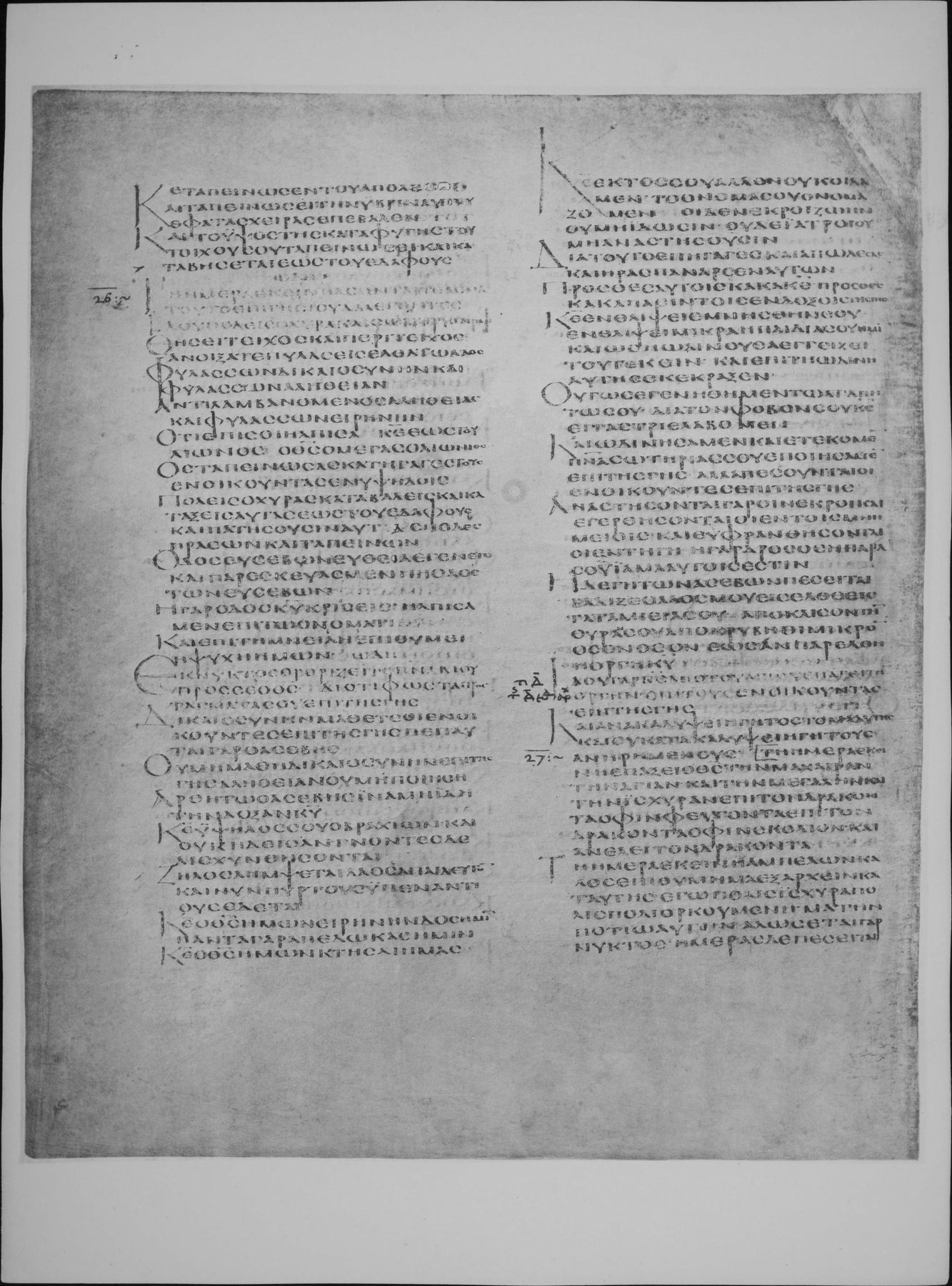
- Manuscript scan: the page of Codex Alexandrinus carrying this chapter (fol. 312v), from the full-size photographic (autotype) facsimile published by the British Museum in 1879-1883, as digitised on the Internet Archive. The verse range of every page comes from the reduced photographic facsimile of 1936, which prints it beneath each plate, and the opening words of every page were read on the plate to confirm the page and the verse it begins with. Each section links to the page or pages that hold its verses. Folio numbers are those written at the head of each leaf and visible on the plates.
- Original text: Swete's edition, which here prints the text of Codex Vaticanus (Vat. gr. 1209), the base of his edition, and gives the readings of Alexandrinus only in his apparatus. The Greek column is therefore Vaticanus' text; where Alexandrinus differs, the plate shows what Alexandrinus reads.
- English translation: Sir Lancelot C. L. Brenton, The Septuagint Version of the Old Testament (1844; 1851 edition), a translation of the Greek, public domain, from the eBible.org text.
How was this verified? (Provenance)
Where on the image
Isaiah 26:1-8 is on fol. 312v (full-size facsimile of 1879-83, Internet Archive codex-alexandrinus leaf 649). The 1936 reduced facsimile prints beneath this page: Is. xxv. 11-xxvii. 3. Checked on the plate: the page begins inside Isaiah 25:11 (first words read: ΚΑΙ ΤΑΠΕΙΝΩΣΕΙ ΤΗΝ ΥΒΡΙΝ ΑΥΤΟΥ ΕΦ Α ΤΑΣ ΧΕΙΡΑΣ ΕΠΕΒΑΛΕΝ ΚΑΙ ΤΟ ΥΨΟΣ ΤΗΣ ΚΑΤΑΦΥΓΗΣ).
1Τῇ ἡμέρᾳ ἐκείνῃ ᾄσονται τὸ ᾆσμα τοῦτο ἐπὶ γῆς τῆς Ἰουδαίας Ἰδοὺ πόλις ἰσχυρά, καὶ σωτήριον θήσει τὸ τεῖχος καὶ περίτειχος. 2ἀνοίξατε πύλας, εἰσελθέτω λαὸς φυλάσσων δικαιοσύνην καὶ φυλάσσων ἀλήθειαν, 3ἀντιλαμβανόμενος ἀληθείας καὶ φυλάσσων εἰρήνην· ὅτι ἐπὶ σοὶ ἐλπίδι 4ἤλπισαν, Κύριε, ἕως τοῦ αἰῶνος, ὁ θεὸς ὁ μέγας ὁ αἰώνιος, 5ὃς ταπεινώσας κατήγαγες τοὺς ἐνοικοῦντας ἐν ὑψηλοῖς· πόλεις ὀχυρὰς καταβαλεῖς καὶ κατάξεις ἕως ἐδάφους, 6καὶ πατήσουσιν αὐτοὺς πόδες πρᾳέων καὶ ταπεινῶν. 7ὁδὸς εὐσεβῶν εὐθεῖα ἐγένετο, ἡ ὁδὸς τῶν εὐσεβῶν καὶ παρεσκευασμένη. 8ἡ γὰρ ὁδὸς Κυρίου κρίσις· ἠλπίσαμεν ἐπὶ τῷ ὀνόματί σου καὶ ἐπὶ τῇ μνείᾳ
1In that day they shall sing this song in the land of Judea; Behold a strong city; and he shall make salvation its wall and bulwark. 2Open ye the gates, let the nation enter that keeps righteousness, and keeps truth, 3supporting truth, and keeping peace: for on thee, O Lord, 4they have trusted with confidence for ever, the great, the eternal God; 5who hast humbled and brought down them that dwell on high, thou shalt cast down strong cities, and bring them to the ground. 6And the feet of the meek and lowly shall trample them. 7The way of the godly is made straight: the way of the godly is also prepared. 8For the way of the Lord is judgment: we have hoped in thy name, and on the remembrance of thee,
Where on the image
Isaiah 26:9-16 is on fol. 312v (full-size facsimile of 1879-83, Internet Archive codex-alexandrinus leaf 649). The 1936 reduced facsimile prints beneath this page: Is. xxv. 11-xxvii. 3. Checked on the plate: the page begins inside Isaiah 25:11 (first words read: ΚΑΙ ΤΑΠΕΙΝΩΣΕΙ ΤΗΝ ΥΒΡΙΝ ΑΥΤΟΥ ΕΦ Α ΤΑΣ ΧΕΙΡΑΣ ΕΠΕΒΑΛΕΝ ΚΑΙ ΤΟ ΥΨΟΣ ΤΗΣ ΚΑΤΑΦΥΓΗΣ).
9ᾗ ἐπιθυμεῖ ἡ ψυχὴ ἡμῶν· ἐκ νυκτὸς ὀρθρίζει τὸ πνεῦμά μου πρὸς σέ, ὁ θεός, διότι φῶς τὰ προστάγματά σου ἐπὶ τῆς γῆς. δικαιοσύνην μάθετε, οἱ ἐνοικοῦντες ἐπὶ τῆς γῆς. 10πέπαυται γὰρ ὁ ἀσεβής· πᾶς ὃς οὐ μὴ μάθῃ δικαιοσύνην ἐπὶ τῆς γῆς, ἀλήθειαν οὐ μὴ ποιήσει· ἀρθήτω ὁ ἀσεβής, ἵνα μὴ ἴδῃ τὴν δόξαν Κυρίου. 11Κύριε, ὑψηλός σου ὁ βραχίων καὶ οὐκ ᾔδεισαν, γνόντες δὲ αἰσχυνθήσονται· ζῆλος λήμψεται λαὸν ἀπαίδευτον, καὶ νῦν πῦρ τοὺς ὑπεναντίους ἔδεται. 12Κύριε ὁ θεὸς ἡμῶν, εἰρήνην δὸς ἡμῖν, πάντα γὰρ ἀπέδωκας ἡμῖν. 13κτῆσαι ἡμᾶς, Κύριε· ἐκτὸς σοῦ ἄλλον οὐκ οἴδαμεν, τὸ ὄνομά σου ὀνομάζομεν. 14οἱ δὲ νεκροὶ ζωὴν οὐ μὴ ἴδωσιν, οὐδὲ ἰατροὶ οὐ μὴ ἀναστήσουσιν· διὰ τοῦτο ἐπήγαγες καὶ ἀπώλεσας καὶ ἦρες πᾶν ἄρσεν αὐτῶν. 15πρόσθες αὐτοῖς κακά, Κύριε, πρόσθες κακὰ τοῖς ἐνδόξοις τῆς γῆς. 16Κύριε, ἐν θλίψει ἐμνήσθην σου, ἐν θλίψει μικρᾷ ἡ παιδία σου ἡμῖν.
9which our soul longs for: my spirit seeks thee very early in the morning, O God, for thy commandments are a light on the earth: learn righteousness, ye that dwell upon the earth. 10For the ungodly one is put down: no one who will not learn righteousness on the earth, shall be able to do the truth: let the ungodly be taken away, that he see not the glory of the Lord. 11O Lord, thine arm is exalted, yet they knew it not: but when they know they shall be ashamed: jealousy shall seize upon an untaught nation, and now fire shall devour the adversaries. 12O Lord our God, give us peace: for thou hast rendered to us all things. 13O Lord our God, take possession of us: O Lord, we know not any other beside thee: we name thy name. 14But the dead shall not see life, neither shall physicians by any means raise them up: therefore thou hast brought wrath upon them, and slain them, and hast taken away every male of them. Bring more evils upon them, O Lord; 15bring more evils on the glorious ones of the earth. 16Lord, in affliction I remembered thee; thy chastening was to us with small affliction.
Where on the image
Isaiah 26:17-21 is on fol. 312v (full-size facsimile of 1879-83, Internet Archive codex-alexandrinus leaf 649). The 1936 reduced facsimile prints beneath this page: Is. xxv. 11-xxvii. 3. Checked on the plate: the page begins inside Isaiah 25:11 (first words read: ΚΑΙ ΤΑΠΕΙΝΩΣΕΙ ΤΗΝ ΥΒΡΙΝ ΑΥΤΟΥ ΕΦ Α ΤΑΣ ΧΕΙΡΑΣ ΕΠΕΒΑΛΕΝ ΚΑΙ ΤΟ ΥΨΟΣ ΤΗΣ ΚΑΤΑΦΥΓΗΣ).
17καὶ ὡς ἡ ὠδίνουσα ἐγγίζει τεκεῖν, ἐπὶ τῇ ὠδῖνι αὐτῆς ἐκέκραξεν, οὕτως ἐγενήθημεν τῷ ἀγαπητῷ σου. 18διὰ τὸν φόβον σου, Κύριε, ἐν γαστρὶ ἐλάβομεν καὶ ὠδινήσαμεν καὶ ἐτέκομεν· πνεῦμα σωτηρίας σου ἐποιήσαμεν ἐπὶ τῆς γῆς, ἀλλὰ πεσοῦνται πάντες οἱ ἐνοικοῦντες ἐπὶ τῆς γῆς. 19ἀναστήσονται οἱ νεκροί, καὶ ἐγερθήσονται οἱ ἐν τοῖς μνημείοις, καὶ εὐφρανθήσονται οἱ ἐν τῇ γῇ· ἡ γὰρ δρόσος ἡ παρὰ σοῦ ἴαμα αὐτοῖς ἐστιν, ἡ δὲ γῆ τῶν ἀσεβῶν πεσεῖται. 20Βάδιζε, λαός μου, εἴσελθε εἰς τὰ ταμεῖά σου, ἀπόκλεισον τὴν θύραν σου, ἀποκρύβηθι μικρὸν ὅσον ὅσον, ἕως ἂν παρέλθῃ ἡ ὀργὴ Κυρίου. 21ἰδοὺ γὰρ Κύριος ἀπὸ τοῦ ἁγίου ἐπάγει τὴν ὀργὴν ἐπὶ τοὺς ἐνοικοῦντας ἐπὶ τῆς γῆς· καὶ ἀνακαλύψει ἡ γῆ τὸ αἷμα αὐτῆς, καὶ οὐ κατακαλύψει τοὺς ἀνῃρημένους.
17And as a woman in travail draws nigh to be delivered, and cries out in her pain; so have we been to thy beloved. 18We have conceived, O Lord, because of thy fear, and have been in pain, and have brought forth the breath of thy salvation, which we have wrought upon the earth: we shall not fall, but all that dwell upon the land shall fall. 19The dead shall rise, and they that are in the tombs shall be raised, and they that are in the earth shall rejoice: for the dew from thee is healing to them: but the land of the ungodly shall perish. 20Go, my people, enter into thy closets, shut thy door, hide thyself for a little season, until the anger of the Lord have passed away. 21For, behold, the Lord is bringing wrath from his holy place upon the dwellers on the earth: the earth also shall disclose her blood, and shall not cover her slain.
Cite
Sources
- Source: Codex Alexandrinus (British Library Royal MS 1 D. VI) via the British Museum photographic facsimiles of 1879-83 and 1936 (Internet Archive) + Swete's Septuagint + Brenton's English (holding institution)
- Critical edition: H. B. Swete, The Old Testament in Greek according to the Septuagint (1909)
← previous · → next · v cycle view · l back to library