Isaiah, Chapter 38 (Codex Alexandrinus)
Introduction
Isaiah 38 in the Greek Old Testament (the Septuagint) as written in Codex Alexandrinus, a Greek Bible copied in the fifth century, probably in Egypt, and now in the British Library (Royal MS 1 D. VI, the second of its four volumes). It is one of the three great early codices of the whole Greek Bible, with Codex Vaticanus and Codex Sinaiticus.
Numbering: Swete's Greek and Brenton's English number or divide some verses of this chapter differently (Swete 38:14 = Brenton 38:14-15). Each column keeps its own verse numbers, and sections are cut only where the two texts agree, so each section holds the same passage in both languages.
This entry meets the strict three-criteria standard of the Theosis Library:
- Manuscript scan: the pages of Codex Alexandrinus carrying this chapter (fol. 318r, fol. 318v), from the full-size photographic (autotype) facsimile published by the British Museum in 1879-1883, as digitised on the Internet Archive. The verse range of every page comes from the reduced photographic facsimile of 1936, which prints it beneath each plate, and the opening words of every page were read on the plate to confirm the page and the verse it begins with. Each section links to the page or pages that hold its verses. Folio numbers are those written at the head of each leaf and visible on the plates.
- Original text: Swete's edition, which here prints the text of Codex Vaticanus (Vat. gr. 1209), the base of his edition, and gives the readings of Alexandrinus only in his apparatus. The Greek column is therefore Vaticanus' text; where Alexandrinus differs, the plate shows what Alexandrinus reads.
- English translation: Sir Lancelot C. L. Brenton, The Septuagint Version of the Old Testament (1844; 1851 edition), a translation of the Greek, public domain, from the eBible.org text.
How was this verified? (Provenance)
Where on the image
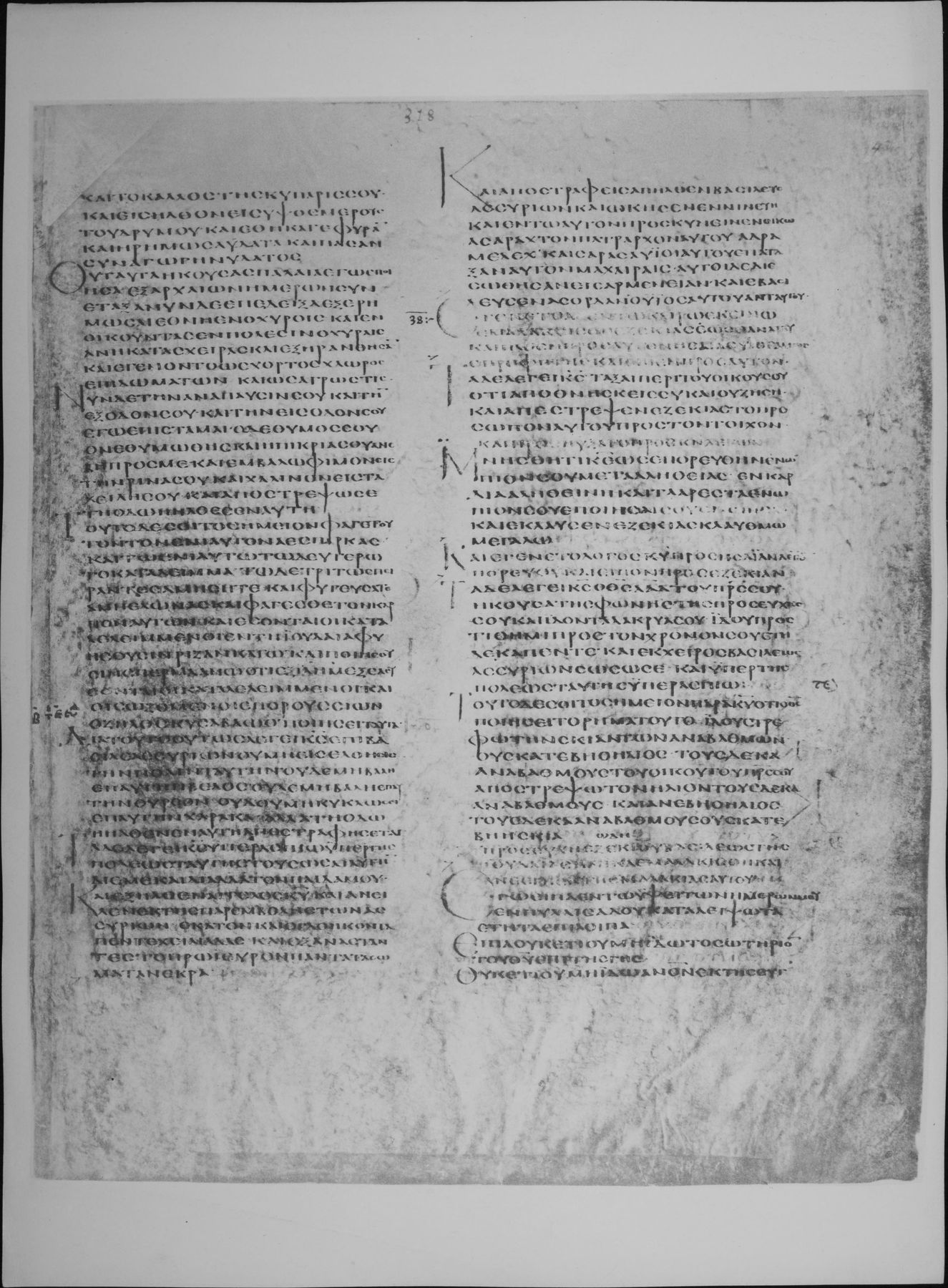
Isaiah 38:1-8 is on fol. 318r (full-size facsimile of 1879-83, Internet Archive codex-alexandrinus leaf 660). The 1936 reduced facsimile prints beneath this page: Is. xxxvii. 24-xxxviii. 12. Checked on the plate: the page begins inside Isaiah 37:24 (first words read: ΚΑΙ ΤΟ ΚΑΛΛΟΣ ΤΗΣ ΚΥΠΑΡΙΣΣΟΥ ΚΑΙ ΕΙΣΗΛΘΟΝ ΕΙΣ ΥΨΟΣ ΤΟΥ ΔΡΥΜΟΥ).
1Ἐγένετο δὲ ἐν τῷ καιρῷ ἐκείνῳ ἐμαλακίσθη Ἑζεκίας ἕως θανάτου· καὶ ἦλθεν πρὸς αὐτὸν Ἠσαίας υἱὸς Ἀμὼς ὁ προφήτης καὶ εἶπεν πρὸς αὐτόν Τάδε λέγει Κύριος Τάξαι περὶ τοῦ οἴκου σου, ἀποθνήσκεις γὰρ σὺ καὶ οὐ ζήσῃ. 2καὶ ἀπέστρεψεν Ἑζεκίας τὸ πρόσωπον αὐτοῦ πρὸς τὸν τοῖχον, καὶ προσεύξατο πρὸς Κύριον 3λέγων Μνήσθητι, Κύριε, ὡς ἐπορεύθην ἐνώπιόν σου μετὰ ἀληθείας ἐν καρδίᾳ ἀληθινῇ, καὶ τὰ ἀρεστὰ ἐνώπιόν σου ἐποίησα· καὶ ἔκλαυσεν Ἑζεκίας κλαυθμῷ μεγάλῳ. 4καὶ ἐγένετο λόγος Κυρίου πρὸς Ἠσαίαν λέγων 5Πορεύθητι καὶ εἰπὸν Ἑζεκίᾳ Τάδε λέγει Κύριος ὁ θεὸς Δαυεὶδ τοῦ πατρός σου Ἤκουσα τῆς προσευχῆς σου καὶ εἶδον τὰ δάκρυά σου· ἰδοὺ προστίθημι πρὸς τὸν χρόνον σου ἔτη δέκα πέντε· 6καὶ ἐκ χειρὸς βασιλέως Ἀσσυρίων ῥύσομαί σε καὶ τὴν πόλιν ταύτην, καὶ ὑπερασπιῶ ὑπὲρ τῆς πόλεως ταύτης. 7τοῦτο δέ σοι τὸ σημεῖον παρὰ Κυρίου ὅτι ποιήσει ὁ θεὸς τὸ ῥῆμα τοῦτο· 8ἰδοὺ ἐγὼ στρέφω τὴν σκιὰν τῶν ἀναβαθμῶν οὓς κατέβη τοὺς δέκα ἀναβαθμοὺς τοῦ οἴκου τοῦ πατρός σου ὁ ἥλιος, ἀποστρέψω τὸν ἥλιον τοὺς δέκα ἀναβαθμούς. καὶ ἀνέβη ὁ ἥλιος τοὺς δέκα ἀναβαθμοὺς οὓς κατέβη ἡ σκιά.
1And it came to pass at that time, that Ezekias was sick even to death. And Esaias the prophet the son of Amos came to him, and said to him, Thus saith the Lord, Give orders concerning thy house: for thou shalt die, and not live. 2And Ezekias turned his face to the wall, and prayed to the Lord, saying, 3Remember, O Lord, how I have walked before thee in truth, with a true heart, and have done that which was pleasing in thy sight. And Ezekias wept bitterly. 4And the word of the Lord came to Esaias, saying, Go, and say to Ezekias, 5Thus saith the Lord, the God of David thy father, I have heard thy prayer, and seen thy tears: behold, I will add to thy time fifteen years. 6And I will deliver thee and this city out of the hand of the king of the Assyrians: and I will defend this city. 7And this shall be a sign to thee from the Lord, that God will do this thing; 8behold, I will turn back the shadow of the degrees of the dial by which ten degrees on the house of thy father the sun has gone down—I will turn back the sun the ten degrees; so the sun went back the ten degrees by which the shadow had gone down.
Where on the image
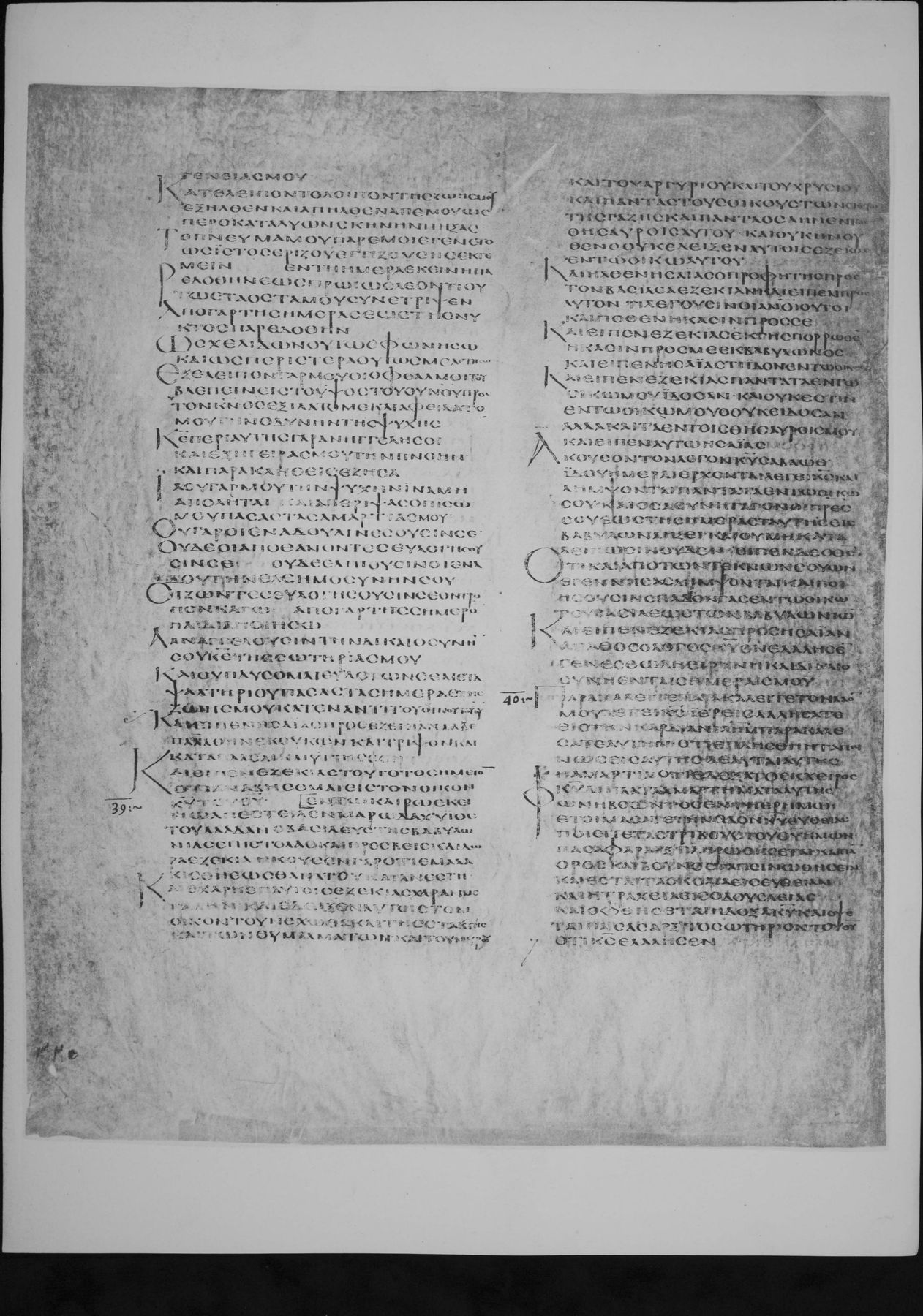
Isaiah 38:9-12 is on fol. 318r (full-size facsimile of 1879-83, Internet Archive codex-alexandrinus leaf 660). The 1936 reduced facsimile prints beneath this page: Is. xxxvii. 24-xxxviii. 12. Checked on the plate: the page begins inside Isaiah 37:24 (first words read: ΚΑΙ ΤΟ ΚΑΛΛΟΣ ΤΗΣ ΚΥΠΑΡΙΣΣΟΥ ΚΑΙ ΕΙΣΗΛΘΟΝ ΕΙΣ ΥΨΟΣ ΤΟΥ ΔΡΥΜΟΥ). Isaiah 38:12-17 is on fol. 318v (full-size facsimile of 1879-83, Internet Archive codex-alexandrinus leaf 661). The 1936 reduced facsimile prints beneath this page: Is. xxxviii. 12-xl. 5. Checked on the plate: the page begins inside Isaiah 38:12 (first words read: ΓΕΝΕΙΑΣ ΜΟΥ ΕΞΗΛΘΕΝ ΚΑΙ ΑΠΗΛΘΕΝ ΑΠ ΕΜΟΥ ΩΣ Ο ΚΑΤΑΛΥΩΝ ΣΚΗΝΗΝ ΠΗΞΑΣ).
9Προσευχὴ Ἑζεκίου βασιλέως Ἰουδαίας ἡνίκα ἐμαλακίσθη καὶ ἀνέστη ἐκ τῆς μαλακίας αὐτοῦ. 10Ἐγὼ εἶπα Ἐν τῷ ὕψει τῶν ἡμερῶν μου ἐν πύλαις ᾅδου καταλείψω τὰ ἔτη τὰ ἐπίλοιπα. 11εἶπα Οὐκέτι μὴ ἴδω τὸ σωτήριον τοῦ θεοῦ ἐπὶ γῆς ζώντων, οὐκέτι μὴ ἴδω τὸ σωτήριον τοῦ Ἰσραὴλ ἐπὶ γῆς, οὐκέτι μὴ ἴδω ἄνθρωπον. 12ἐξέλιπεν ἐκ τῆς συγγενίας μου, κατέλιπον τὸ ἐπίλοιπον τῆς ζωῆς μου, ἐξῆλθεν καὶ ἀπῆλθεν ἀπ᾽ ἐμοῦ ὥσπερ ὁ σκηνὴν καταλύων πήξας· ὡς ἱστὸς τὸ πνεῦμά μου παρ᾽ ἐμοὶ ἐγένετο ἐρίθου ἐγγιζούσης ἐκτεμεῖν. 13ἐν τῇ ἡμέρᾳ ἐκείνῃ παρεδόθην ἕως πρωὶ ὡς λέοντι. συνέτριψεν πάντα τὰ ὀστᾶ μου· ἀπὸ γὰρ τῆς ἡμέρας ἕως νυκτὸς παρεδόθην. 14ὡς χελιδών, οὕτως φωνήσω, καὶ ὡς περιστερά, οὕτως μελετῶ· ἐξέλιπον γάρ μου οἱ ὀφθαλμοὶ τοῦ βλέπειν εἰς τὸ ὕψος τοῦ οὐρανοῦ πρὸς τὸν κύριον, ὃς ἐξείλατό με καὶ ἀφείλατό μου τὴν ὀδύνην τῆς ψυχῆς. 16Κύριε, περὶ αὐτῆς γὰρ ἀνηγγέλη σοι, καὶ ἐξήγειράς μου τὴν πνοήν, καὶ παρακληθεὶς ἔζησα. 17εἵλου γάρ μου τὴν ψυχὴν ἵνα μὴ ἀπόληται, καὶ ἀπέριψας ὀπίσω μου πάσας τὰς ἁμαρτίας.
9The Prayer of Ezekias king of Judea, when he had been sick, and was recovered from his sickness. 10I said in the end of my days, I shall go to the gates of the grave: I shall part with the remainder of my years. 11I said, I shall no more at all see the salvation of God in the land of the living: I shall no more at all see the salvation of Israel on the earth: I shall no more at all see man. 12My life has failed from among my kindred: I have parted with the remainder of my life: it has gone forth and departed from me, as one that having pitched a tent takes it down again: my breath was with me as a weaver's web, when she that weaves draws nigh to cut off the thread. 13In that day I was given up as to a lion until the morning: so has he broken all my bones: for I was so given up from day even to night. 14As a swallow, so will I cry, and as a dove, so do I mourn: for mine eyes have failed with looking to the height of heaven to the Lord, who has delivered me, 15and removed the sorrow of my soul. 16Yea, O Lord, for it was told thee concerning this; and thou hast revived my breath; and I am comforted, and live. 17For thou hast chosen my soul, that it should not perish: and thou hast cast all my sins behind me.
Where on the image
Isaiah 38:18-22 is on fol. 318v (full-size facsimile of 1879-83, Internet Archive codex-alexandrinus leaf 661). The 1936 reduced facsimile prints beneath this page: Is. xxxviii. 12-xl. 5. Checked on the plate: the page begins inside Isaiah 38:12 (first words read: ΓΕΝΕΙΑΣ ΜΟΥ ΕΞΗΛΘΕΝ ΚΑΙ ΑΠΗΛΘΕΝ ΑΠ ΕΜΟΥ ΩΣ Ο ΚΑΤΑΛΥΩΝ ΣΚΗΝΗΝ ΠΗΞΑΣ).
18οὐ γὰρ οἱ ἐν ᾅδου αἰνέσουσίν σε, οὐδὲ οἱ ἀποθανόντες εὐλογήσουσίν σε, οὐδὲ ἐλπιοῦσιν οἱ ἐν ᾅδου τὴν ἐλεημοσύνην σου. 19οἱ ζῶντες εὐλογήσουσίν σε ὃν τρόπον κἀγώ· ἀπὸ γὰρ τῆς σήμερον παιδία ποιήσω, ἅ ἀναγγελοῦσιν τὴν δικαιοσύνην σου, 20θεὲ τῆς σωτηρίας μου· καὶ οὐ παύσομαι εὐλογῶν σε μετὰ ψαλτηρίου πάσας τὰς ἡμέρας τῆς ζωῆς μου κατέναντι τοῦ οἴκου τοῦ θεοῦ. 21Καὶ εἶπεν Ἠσαίας πρὸς Ἑζεκίαν Λάβε παλάθην ἐκ σύκων καὶ τρίψον καὶ κατάπλασαι, καὶ ὑγιὴς ἔσῃ. 22καὶ εἶπεν Ἑζεκίας Τοῦτο σημεῖον πρὸς Ἑζεκίαν ὅτι ἀναβήσομαι εἰς τὸν οἶκον τοῦ θεοῦ.
18For they that are in the grave shall not praise thee, neither shall the dead bless thee, neither shall they that are in Hades hope for thy mercy. 19The living shall bless thee, as I also do: for from this day shall I beget children, who shall declare thy righteousness, 20O God of my salvation; and I will not cease blessing thee with the psaltery all the days of my life before the house of God. 21Now Esaias had said to Ezekias; Take a cake of figs, and mash them, and apply them as a plaister, and thou shalt be well. 22And Ezekias said, This is a sign to Ezekias, that I shall go up to the house of God.
Cite
Sources
- Source: Codex Alexandrinus (British Library Royal MS 1 D. VI) via the British Museum photographic facsimiles of 1879-83 and 1936 (Internet Archive) + Swete's Septuagint + Brenton's English (holding institution)
- Critical edition: H. B. Swete, The Old Testament in Greek according to the Septuagint (1909)
← previous · → next · v cycle view · l back to library